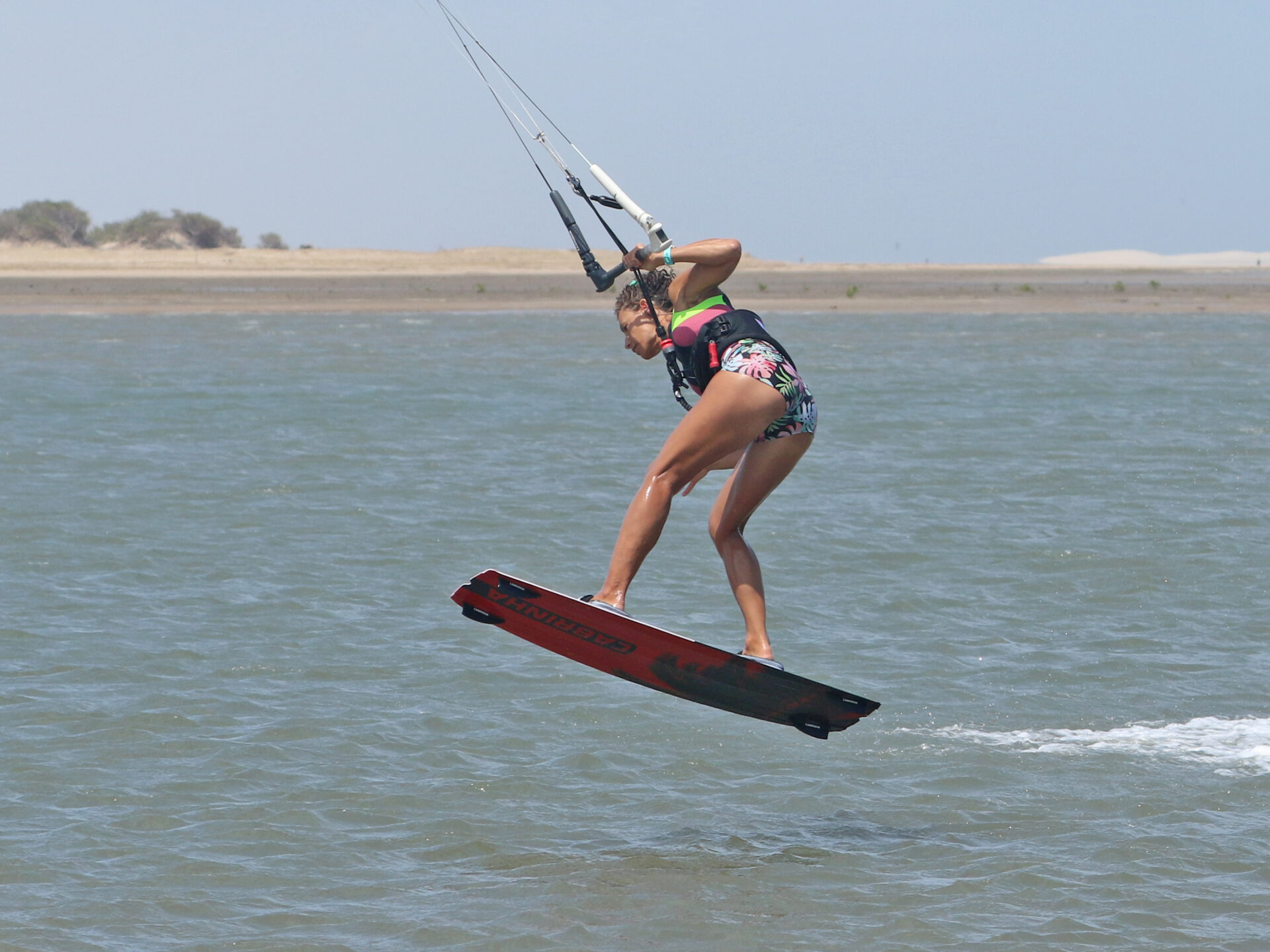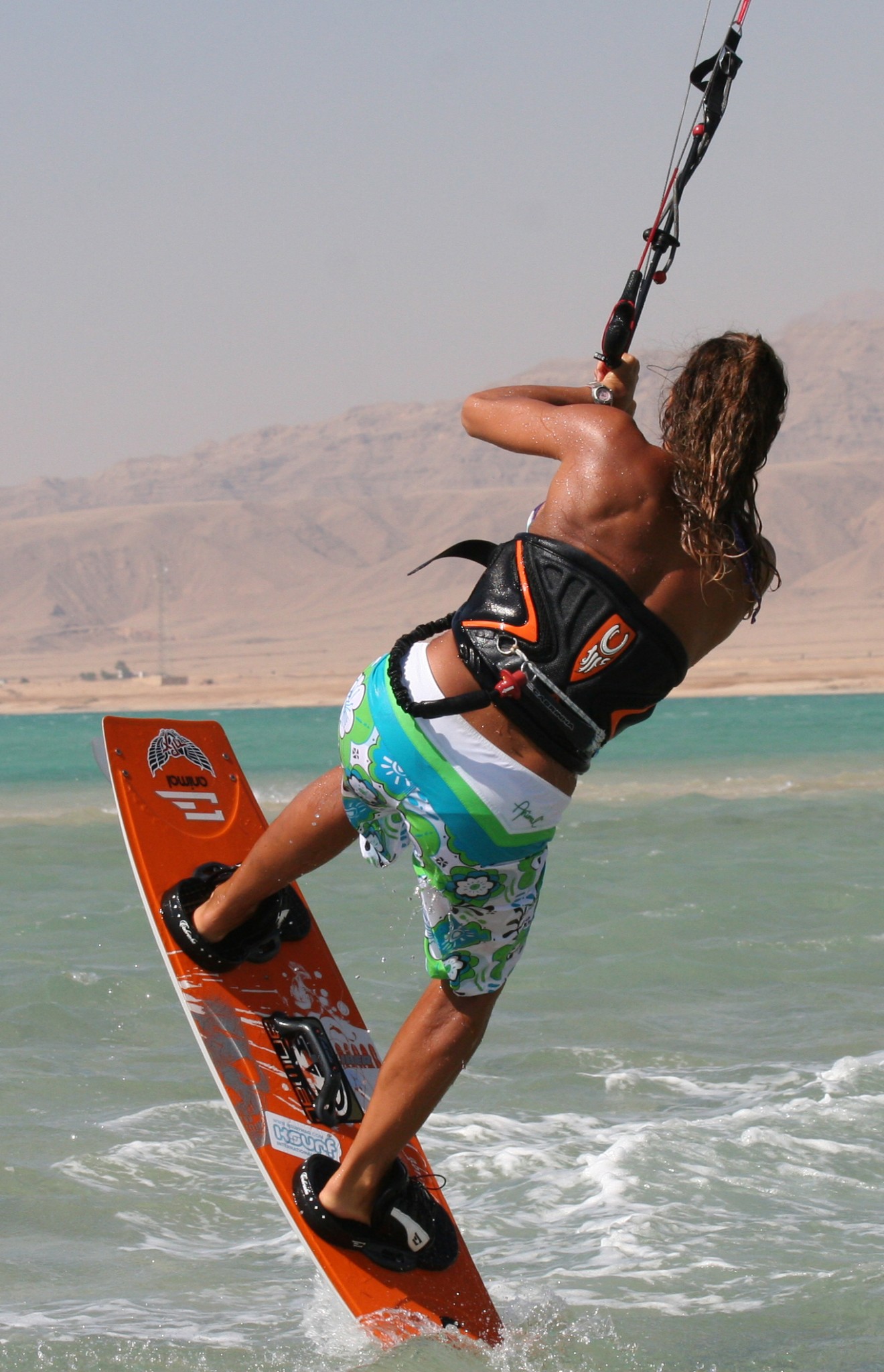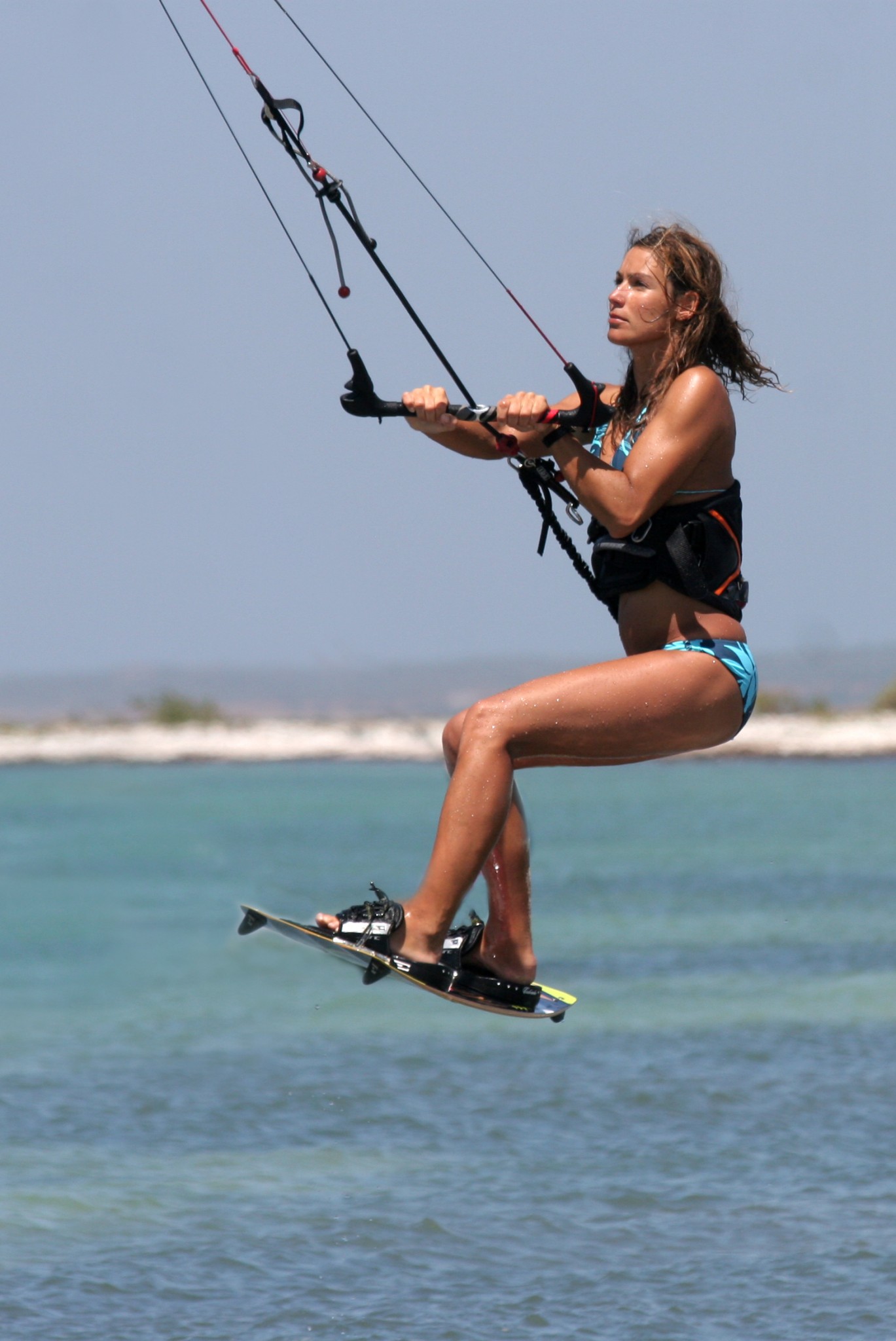

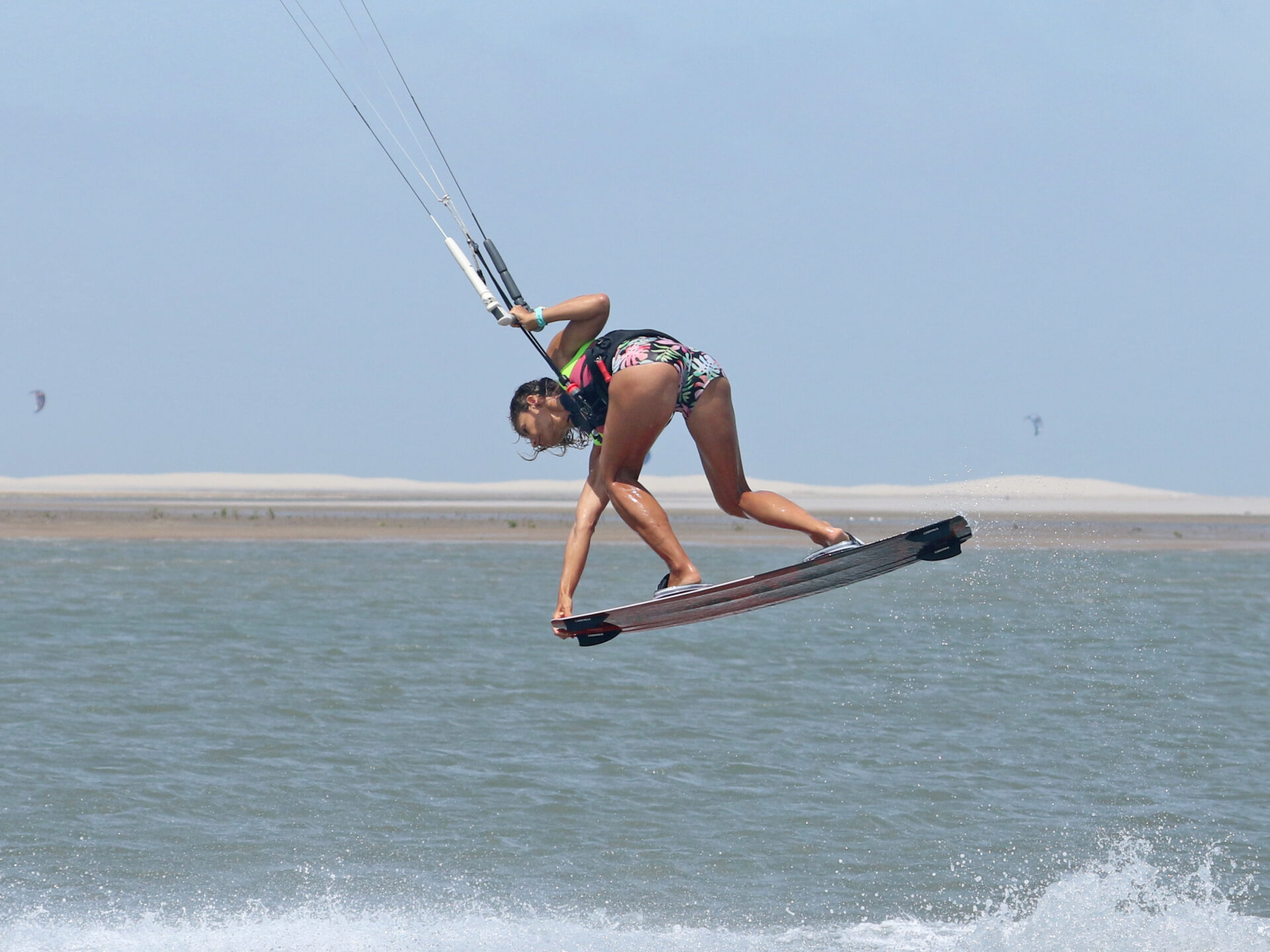
The nose grab is an absolute classic popped trick. It’s guaranteed to get you buzzing and makes for a proper money shot in your holiday snaps. We’re keeping things sensible and looking at the hooked in variant. This type of low altitude move is all about adding some style and as well as working deliciously in flat water, it’s just begging to be thrown down of a little kicker. If it’s not howling with no PB in sight, this’ll put the smile right back on your face.
We’re going have a look at the approach and pop on the way to the grab, as without a decent take off you just won’t get pulled into the right position. However, we are assuming that you can already pop, we’re just going to ramp it up a bit. It is possible to learn this with the kite higher, as a hybrid style pop, but you will find it more difficult to get a decent tweak and your board’s tail won’t kick up. It’s also worth noting that if you can already back hand nose grab in a jump, the movement won’t be quite so alien, but who doesn’t love a challenge anyway?
Your Approach is Everything Pic A.
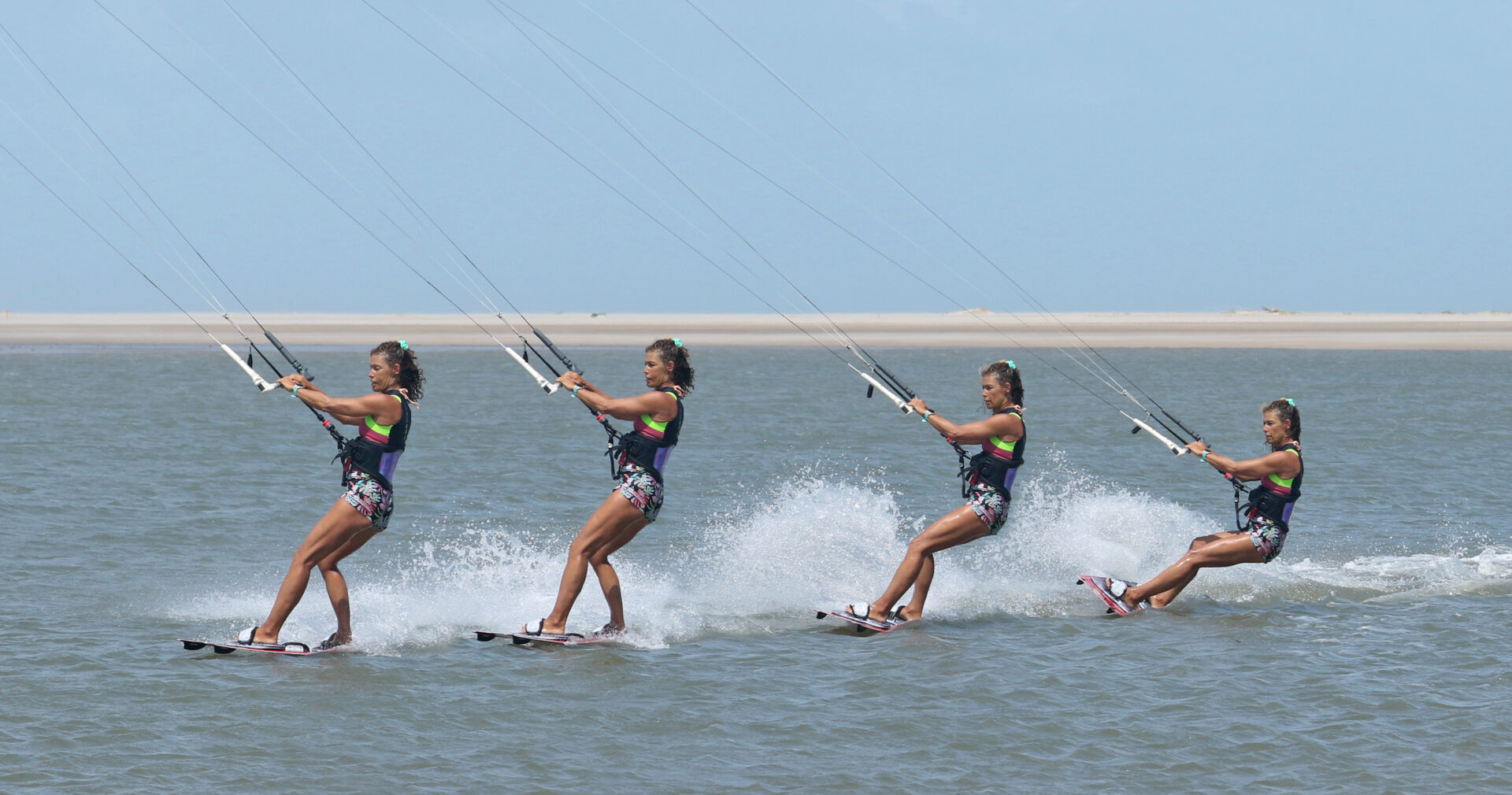
They say that power is nothing without control, and when it comes to popping it couldn’t be more true. You can come in with all the speed and power in the world, but without control and timing you’re on a hiding to nowhere. Check out this sequence and you can see the following from Karine.
Popping is all about tension, so it’s a good place to start, riding with comfortable speed on an edge with your kite around 11 or 1 o’clock. This way your kite is parked in the right place, and you can feel it. You don’t want to be heading hard upwind, but you need this tension. The more power you have, the more tension you need and therefore the more upwind you’ll need to point.
Popping Stance. To pop you need to be using the curvy tail part of your board. This helps and encourages the board to carve up. You need to move your hips back a fraction and open them to get more onto your back foot. You can’t pop if you’re not riding the tail of your board.
Direction. It’s imperative to bear away to pop. Bearing away has two effects on your pop. Firstly, as you bear away, your kite drops a little deeper (more downwind) in the window. This gives you something to pop against and directs you in that direction once airborne, making the landing easier. Secondly, by bearing away you have time and space to drop and carve up without stopping. Try to pop from upwind and you’ll find it rather hard going.
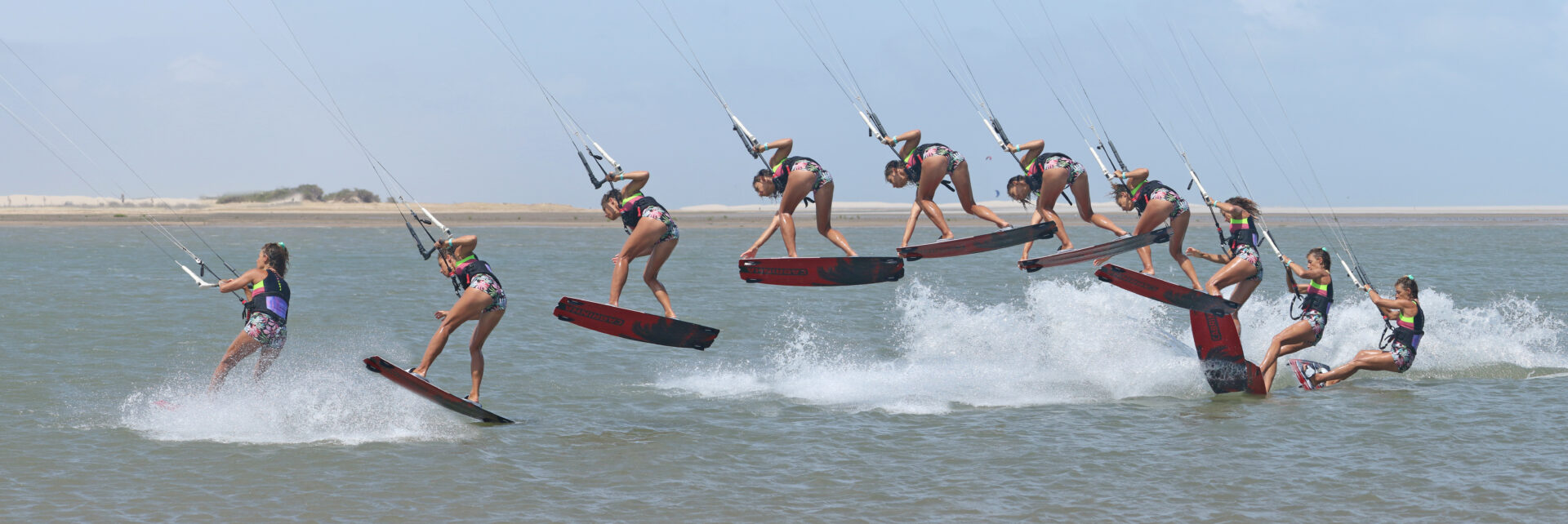
To bear away relax your legs and stand up gently over the board. Make sure you keep your hips and shoulders upwind, don’t bend over like those freestyle pros! The more upwind your initial approach, the further you’ll need to bear off.
Timing. The aim is to do all of the above in a dynamic way, changing direction sufficiently and quickly enough to move the kite and drop tension so that you can pop. However, avoid leaning forward and carving off the wind on your toe-side edge, as this will then make it harder to get back on your heels and carve up.
Final thought. You need to keep your bar around the sweet spot. You’re changing direction to dump power. If you push the bar out, your kite will fly forward towards the edge of the window and you’ll have nothing to pop against!
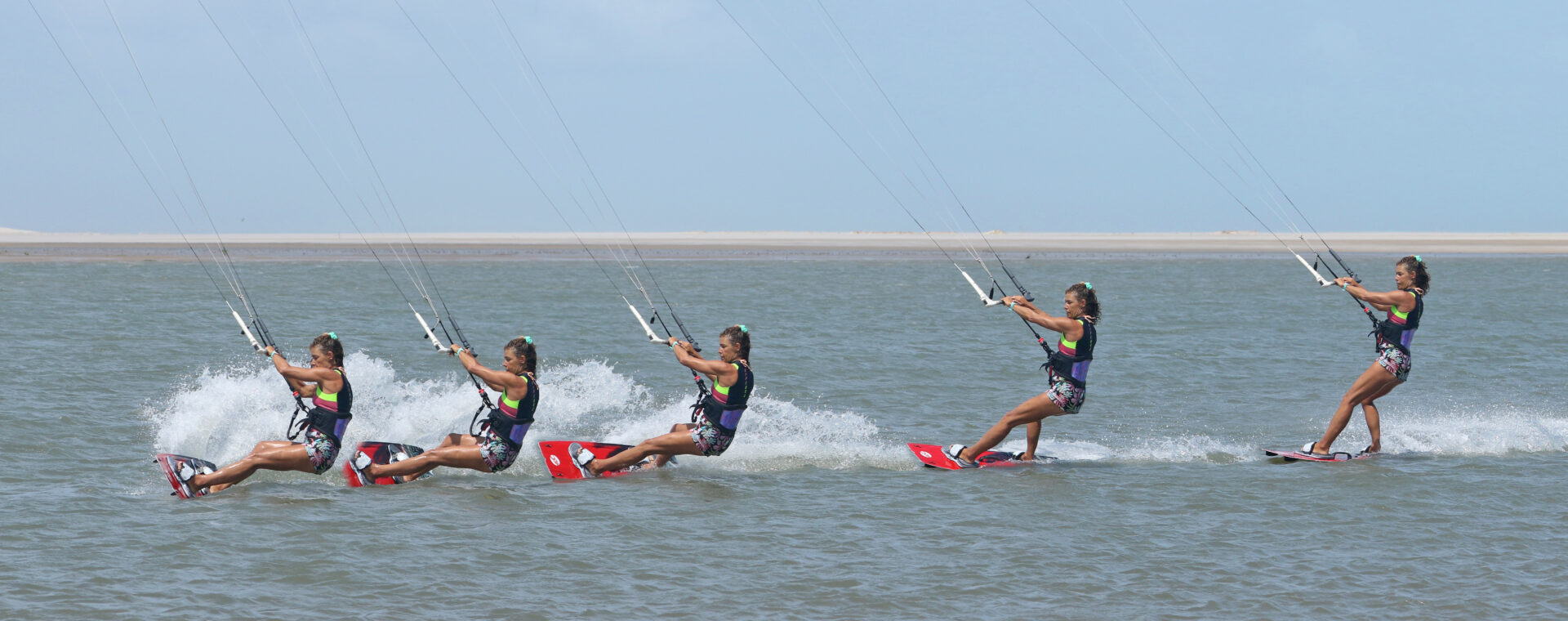
Dynamic Carve Pic B.
Now that you’re set up you need to get a wiggle on and carve back up. To carve you need to drop your bum low, drive through your legs, forcing the board against the water, so that it’ll turn back upwind. You can see that Karine now feathers her bar out so that she can sit her derriere down. She turns her head gently to look where she wants to go and keeps her front leg rigid (not to be confused with locked out straight. With her bum low she resists through her legs and the board carves up. Don’t lean your shoulders back as your drop, as this will make you pull on the bar. In essence as long as you’re using the tail, it’s just a matter of getting back on your edge whist maintaining this position.
POP – Own It Pic C.
We say this for every pop move, you have to make it happen and you decide when it happens. If you wait for something, nothing happens! For this move you want a mean pop so that you can get into a shifty-esque position. That’s why your approach and carve are so important. Get them right and you’re in the perfect position to stamp against your board and pop yourself off the water. You can see her that Karine’s rear leg has extended, she’s given it 180% against her back leg. Timing wise it’s better to pop too early than too late, or else you’ll slow down too much. As you pop, leave the bar on the sweet spot, don’t pull. You’ve got enough on your plate resisting against your carve without having to deal with extra pull from the kite.
As you pop release your back hand and bring your front knee up.
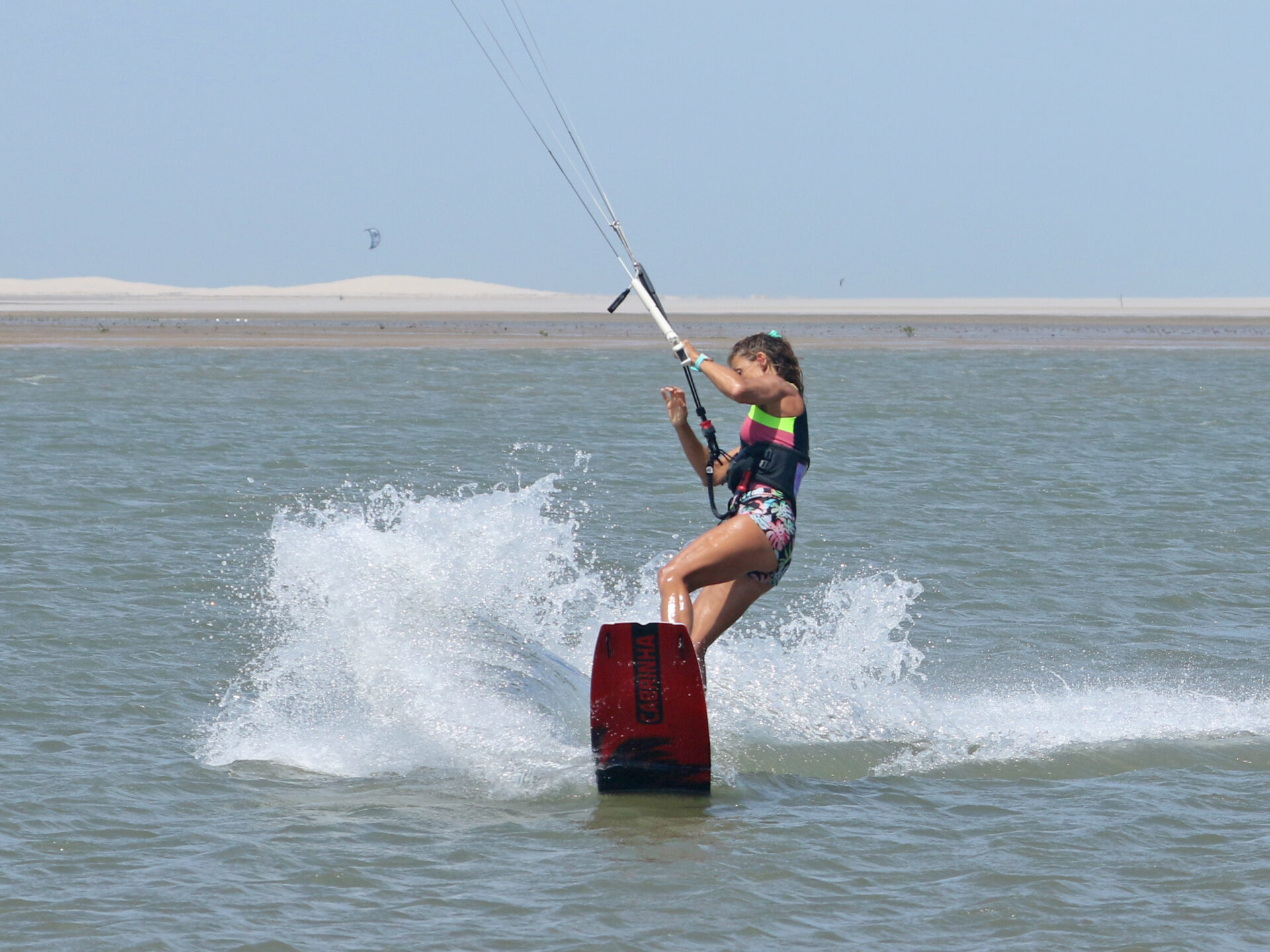
Upper Body Twist Pic D.
You’re hooked in, you’ve popped and somehow, you’re supposed to reach the nose of your board. It may seem like Twister on steroids, but the nose is well within reach if you take the right, but not the most direct path. First off, your centre line and harness are in the way. You can’t reach through, so you need to drop your head and twist your rear shoulder down and around. It seems counter intuitive, but you’re rolling towards the water, not reaching for the nose!
Lower Body Twist Pic E.
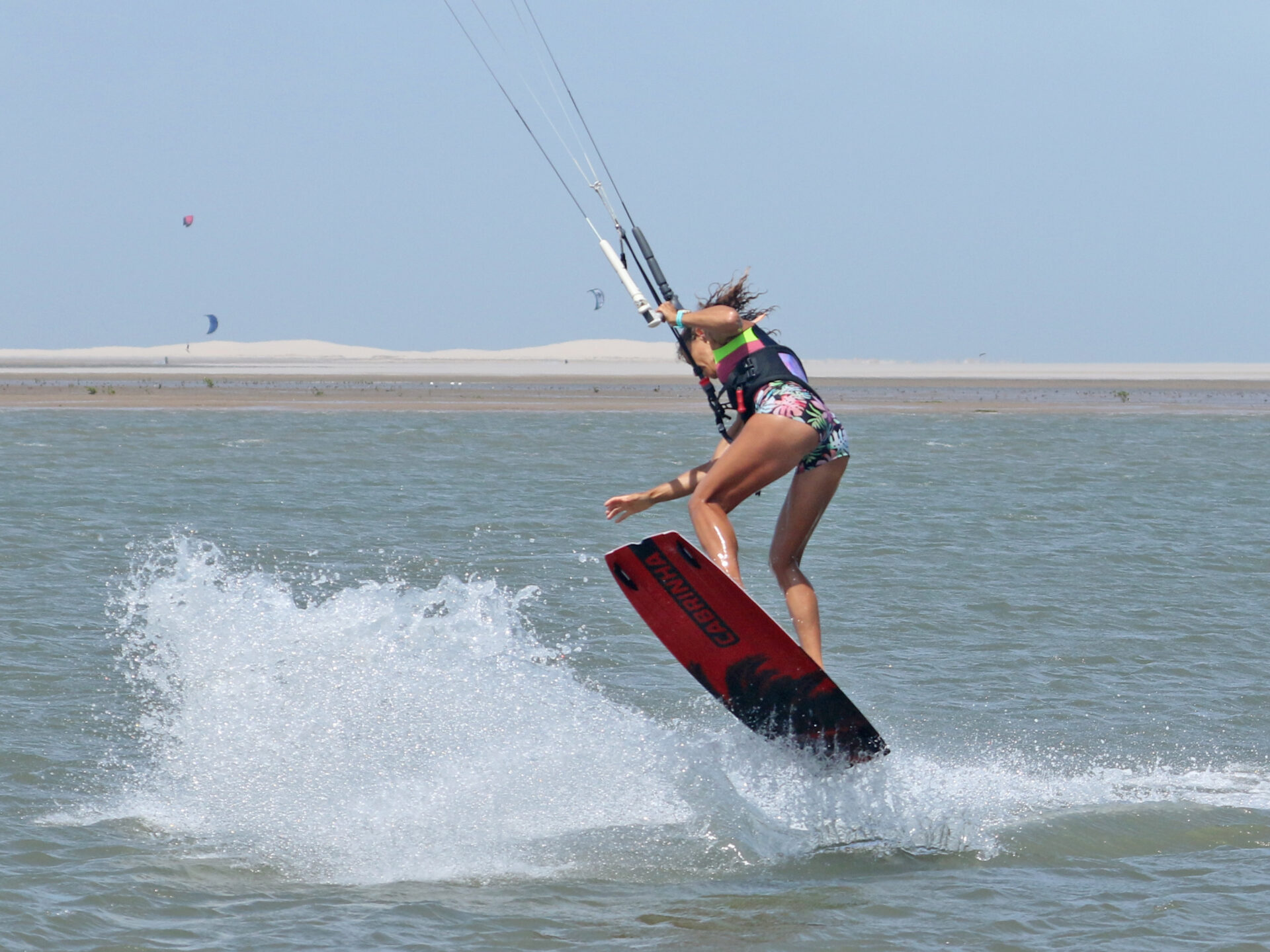
The combined effect of the board popping up of the water, the kite pulling you forward and you dropping and twisting. By not aiming for the board, Karine’s hand is now pretty close. Here you can see what’s going on. Firstly, Karine has dropped and twisted her body as above. Secondly, she is now pulling her front knee under and across her body, twisting her hips and lower body in the opposite direction of her upper body. This brings everything closer.
Grab Pic F.
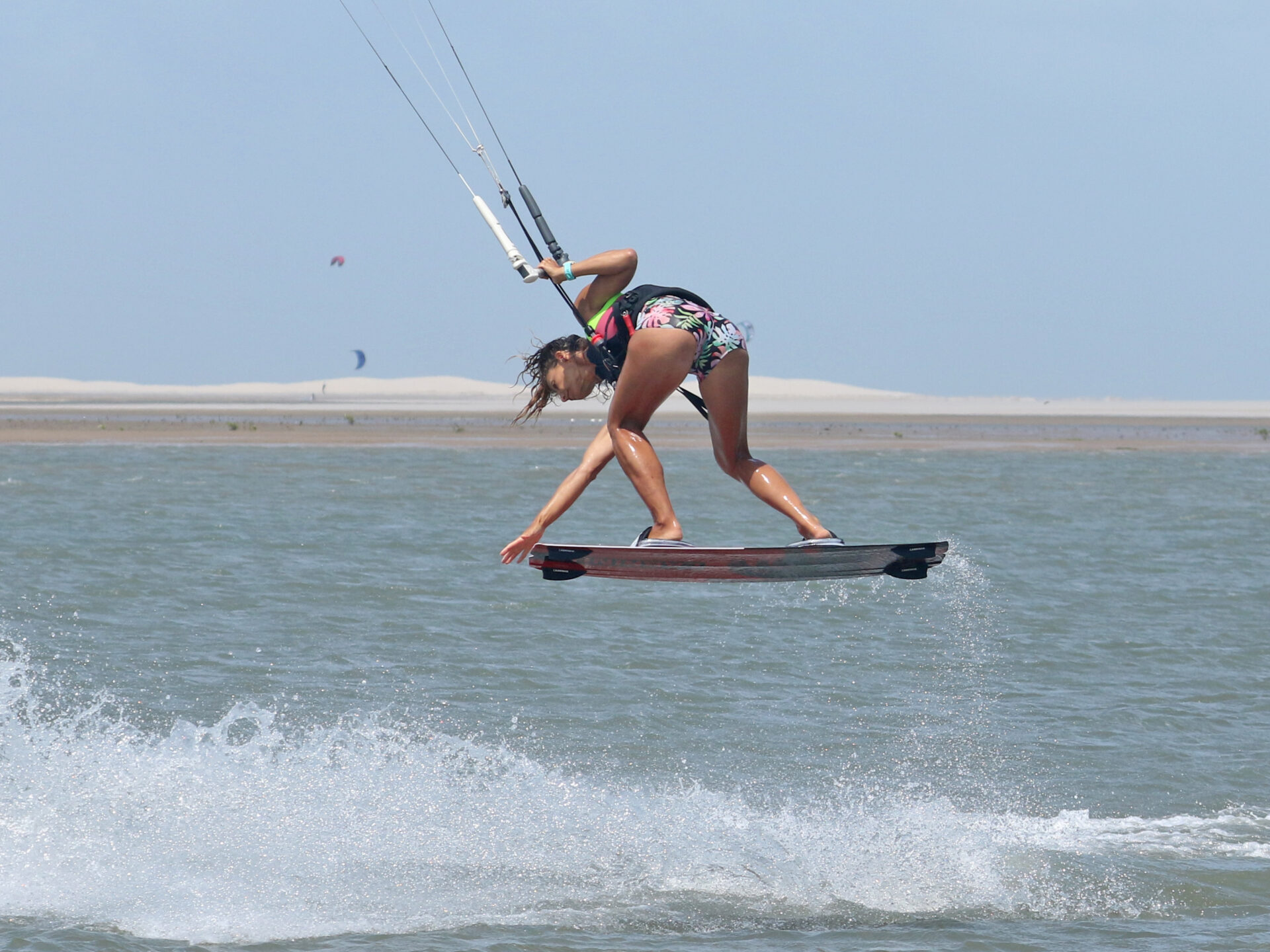
Your aim, the holy grail, a nose grab. With the two hemispheres of your body twisting against each other your board is now withing reach. It’s worth noting that Karine’s bar is still out on the sweet spot. If you pull the bar in, it’s impossible to twist. This action really feels good, and although it’ll be over in the blink of an eye, feeling the board kick up behind you as you tickle its nose is really quite sublime.
Gravity Pic G.
Now before we get too ethereal, you will be coming quickly back down to earth. The good news is that as long as you release your grab and lift your head, your board will drop underneath you and you should be able to stomp the landing. You can see that Karine’s board is swinging underneath her and with her momentum directed off the wind from her initial approach the landing should be comfortable.
Top Tips
First and foremost, you should try the twists and grab on land. If you don’t understand the movement, you’ll struggle to get the grab in the extremely short time you have from your pop.
To start with you can position the kite higher or go for a hybrid pop with a tiny bit of kite movement to give yourself more time offered by the kite to get the grab.
Check out the full sequence and have a look at the video on the IKSURFMAG channel.
Common Problems
If your board is not kicking up behind you, you’re not getting enough pop. Throwing yourself forward doesn’t help, but kicking yourself upwind against your edge does.
If you’re twisting fine but still missing the grab, try extending your back leg. This should tilt the nose up a touch, whereas if you pull your back leg up, it’ll tip the nose away from you.
Keystones
- 1. Approach on an edge with kite around 11 or 1, hips back in popping stance
- 2. Bear away
- 3. Carve and pop hard
- 4. Release back hand and twist down
- 5. Lift knee and twist across - Grab