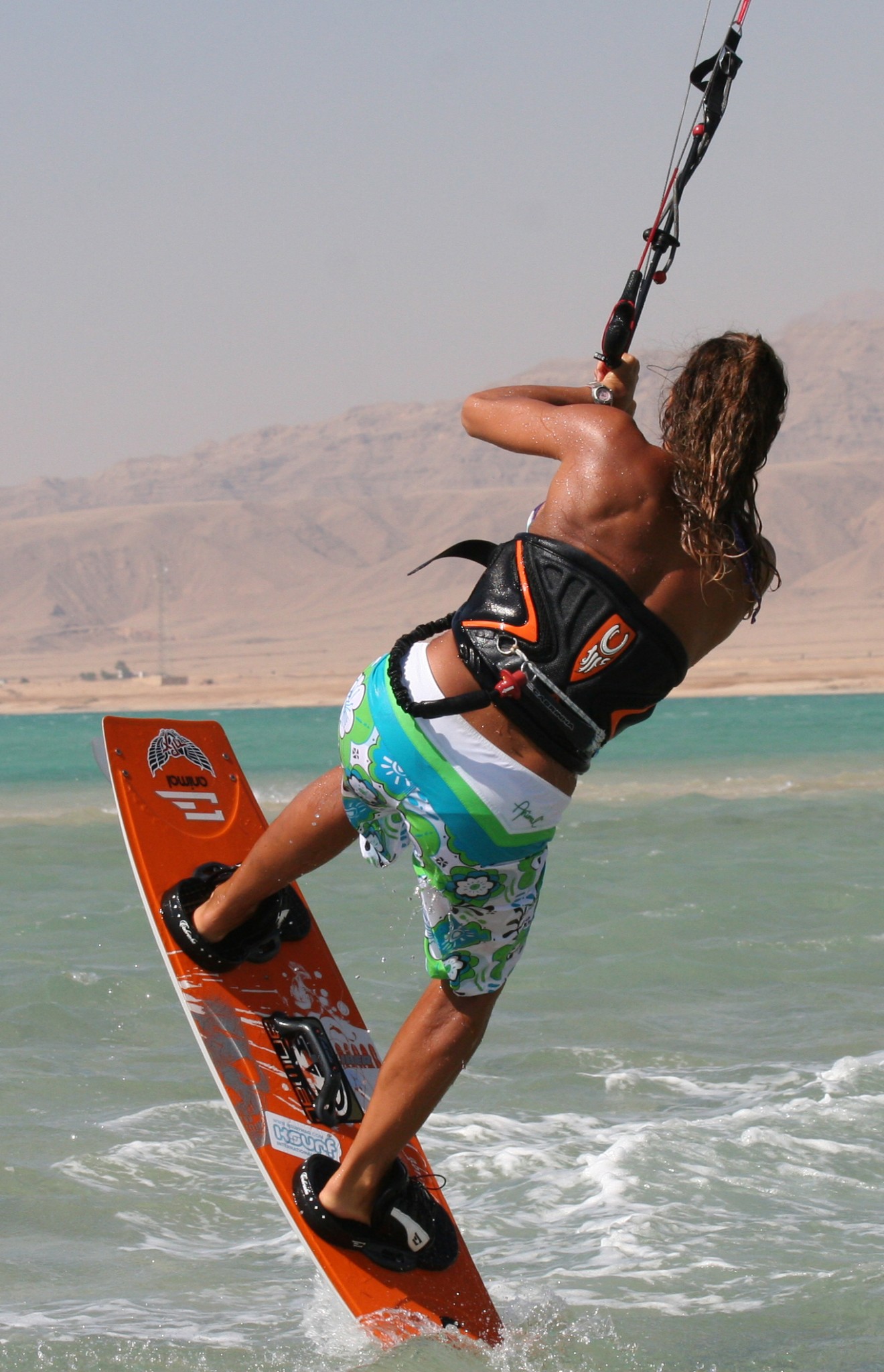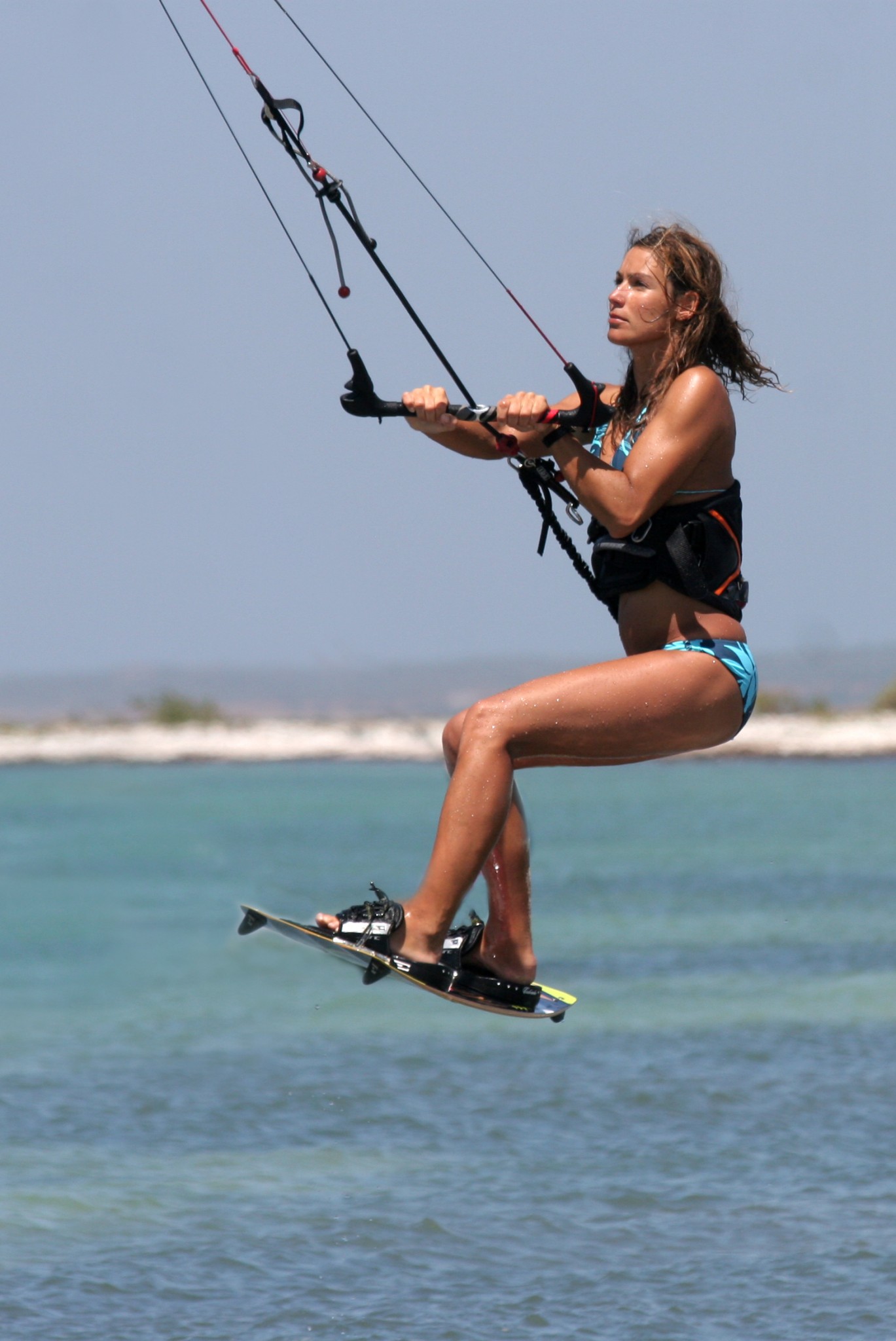

Here’s a perfect transition for those of you who have a fondness of kiting in reverse! Riding blind opens the door to a whole new world of tricks and this one is a fun way to change direction without leaving the water, whilst quite possibly leaving your peers in a state of confusion. Your aim is to reverse in blind, down-loop and ride out toe-side! This works well as blind is for many the mirror opposite of your toeside. If this tickles your fancy, read on…
Having a good grasp of blind is imperative, as is having some experience with down-loops or under-turns. Being able to ride blind with both hands on the bar is a massive advantage. As such it’s a good plan to trim your sweet spot a bit closer so that you can reach the bar. You’ll need tension in your lines and control of both board and kit to come out of this smelling of roses. Let’s start with a quick pop to blind refresher with the aim of keeping tension.
Pop to Blind Sequence 1.
Position your kite no higher than 1 or 11 o’clock. You need tension, so come in on an edge, but don’t push too hard upwind. Your aim is a low pop and a quick turn. However, it’s still very much two movements, the pop up and then the turn to blind. You don’t want much height, as this can slow you down on landing.
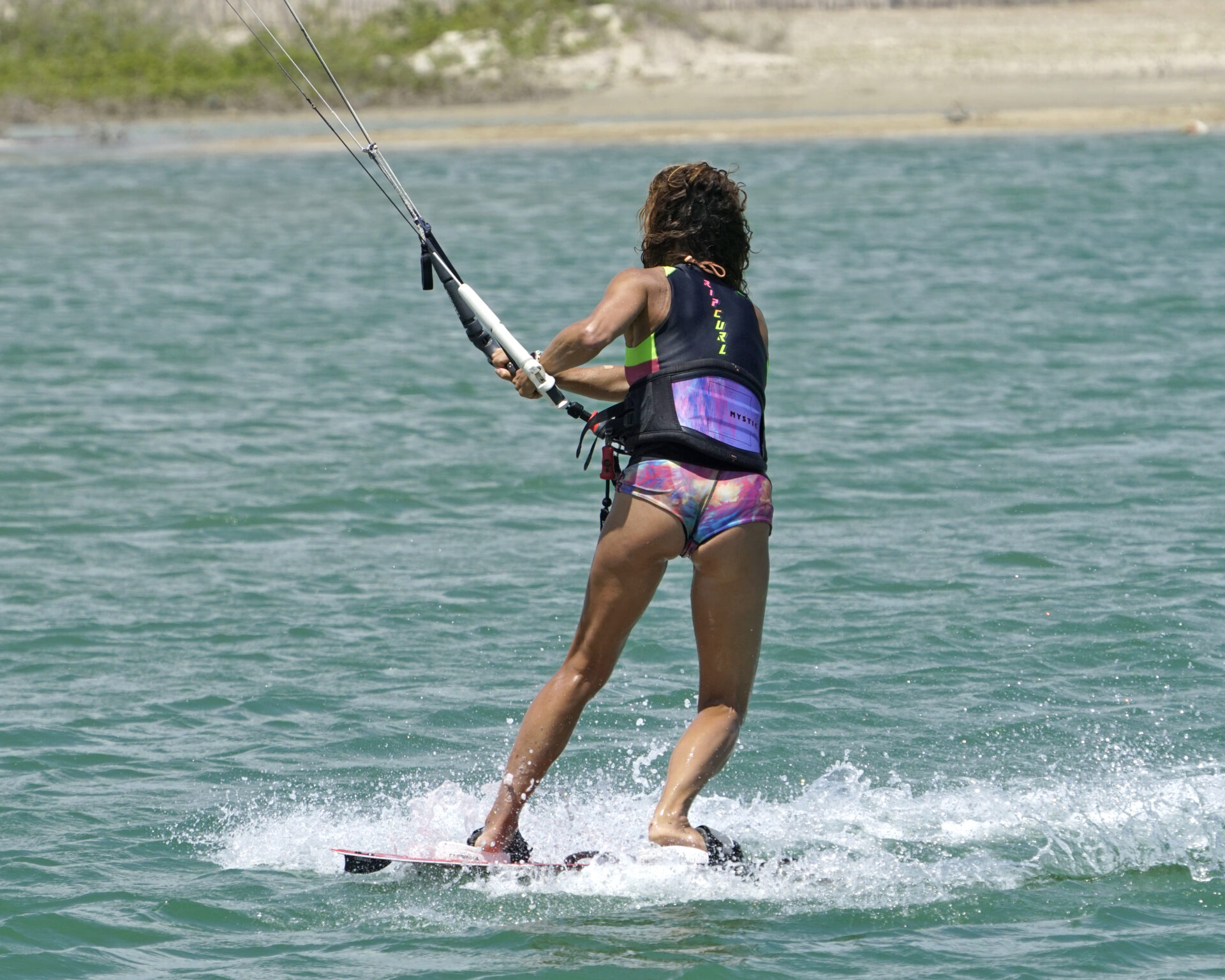
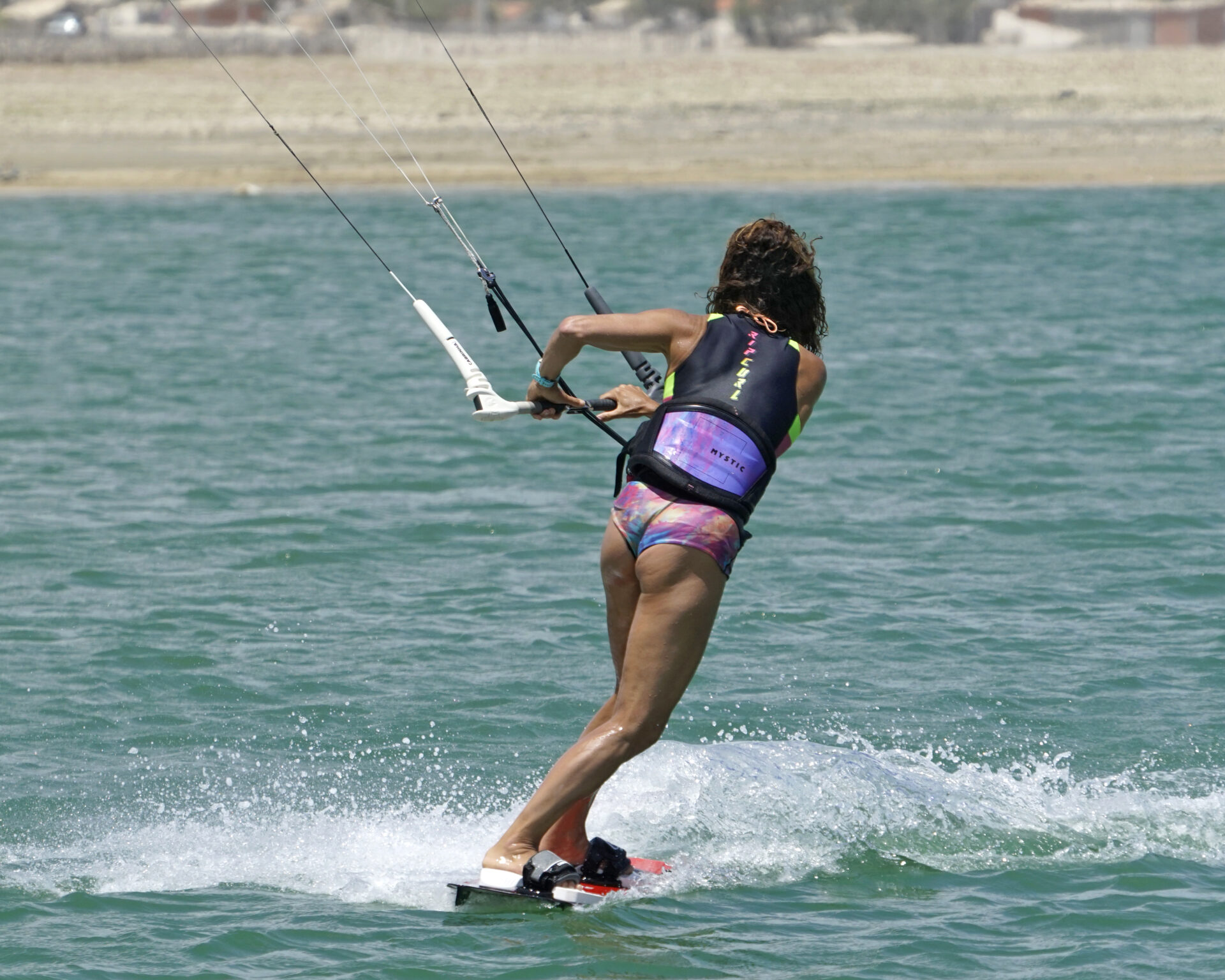
Relax your edge just a smidgen, so that you can drop and pop without moving the kite. Looking at Karine you can see how she’s first popped by stamping up, off her edge with both hands on the bar. Only once she’s up does she release her rear hand, push the bar out, before turning her body and board. She brings her knees up to give herself room without too much height and lands upright over the board with a bit of edge. Try not to land too nose first, as this will pivot you off the wind. Once Karine lands, she drops her shoulders and commits her weight upwind and onto the balls of her feet before sheeting the bar in back to the sweet spot.
Two Hands Pic A.
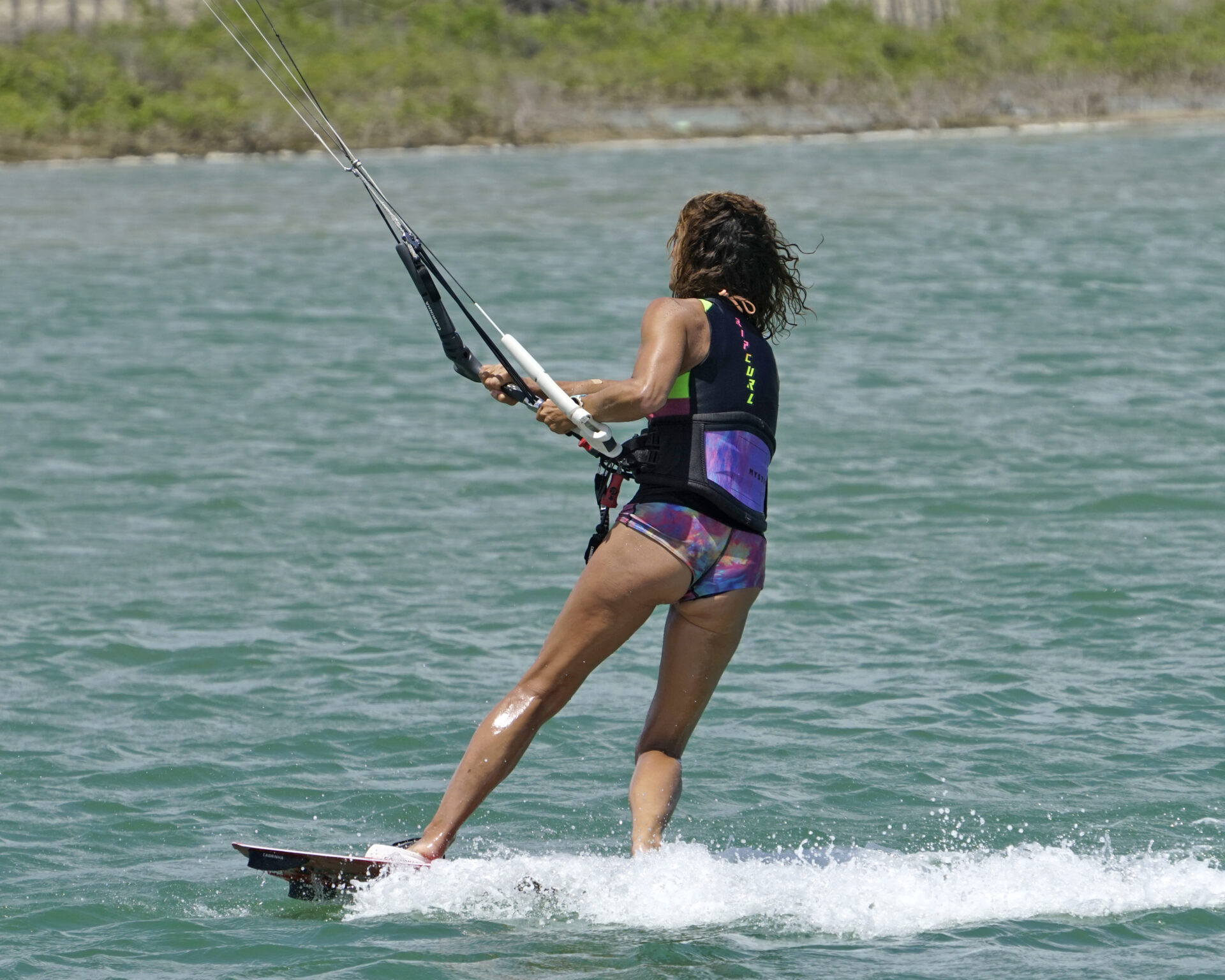
Keeping your hips and lower body still to keep your edge, you can now twist your upper body, turn your head, and get your free hand back on the bar. Karine has her head up so that her body and leg are in line, which drives the board forwards. She twists her head and shoulders to look where she’s going and can now control the kite with both hands. You should be able to ride in this position, if not you won’t be sufficiently in control for the move. If you can it’s time for the transition…
First job, check that the coast is clear. We’d suggest you do this before popping to blind as you’ll get a better view:)
Kite Up Pic B.
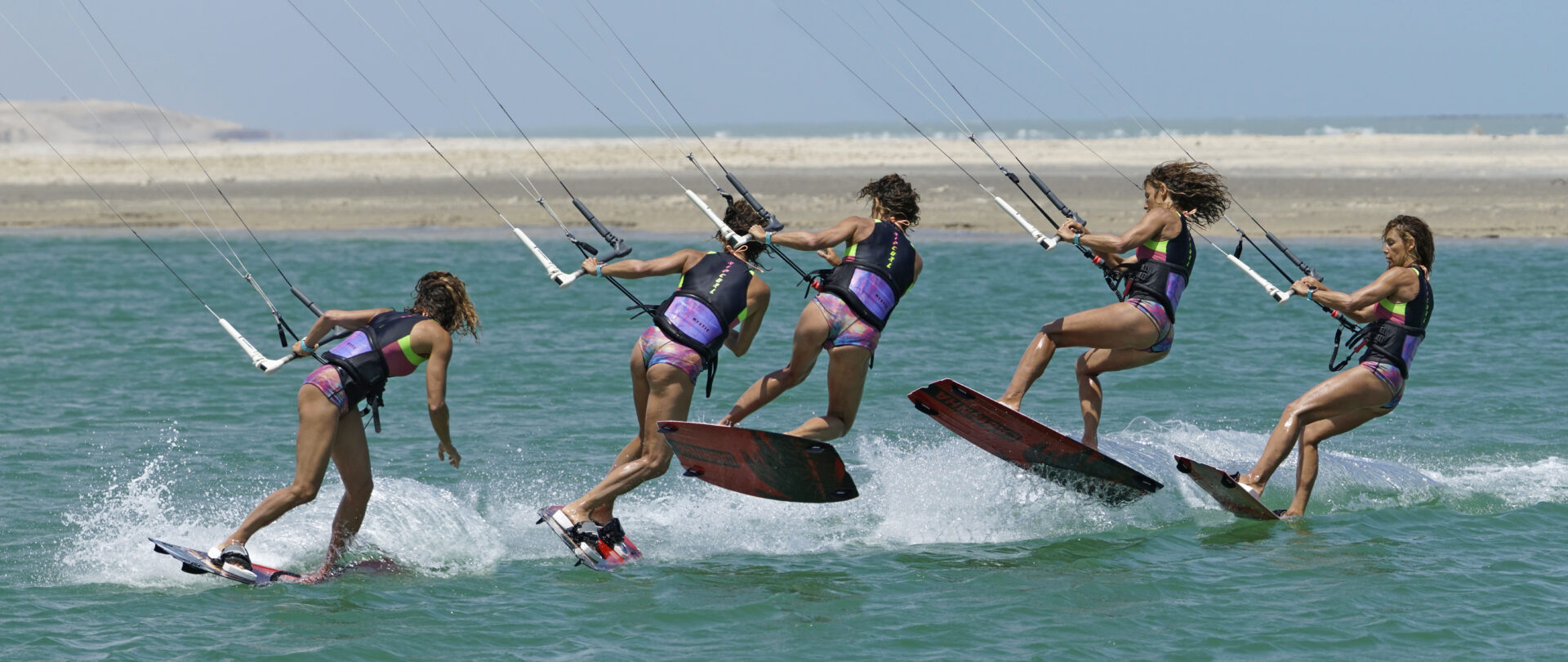
Just as in any form of down-loop it’s always prudent to position your kite a bit higher to give yourself room and lessen the pull. You don’t want to move it all the way to 12, but rather a tad too high than regrettably too low. Steer the kite up with both hands and as the kite moves, ease the bar out so that it doesn’t pull you off your edge. The bonus here is that as you ease the bar out, your board will turn a little further upwind, which prepares you for the turn. Here you can see that as Karine gently moves the kite up and feathers her bar out, her board turns further upwind. This gives her a better view of downwind, takes some speed off and sets the board up nicely for the rest of the move.
Weight Shift Pic C.
As the board slows, you’ll do exactly what you do in a normal transition. Shift your wait forward towards your leading foot. As you move your weight, you’re getting yourself steady and ready for the eventual pull. You can see that compared to the last photo Karine’s board has flattened off from nose to tail because her weight moved forward. If her kite was lower and she was moving quicker she’d sink the nose, but because she’s slowed and turned upwind everything is hunky-dory.
Slide & Loop Pic D.
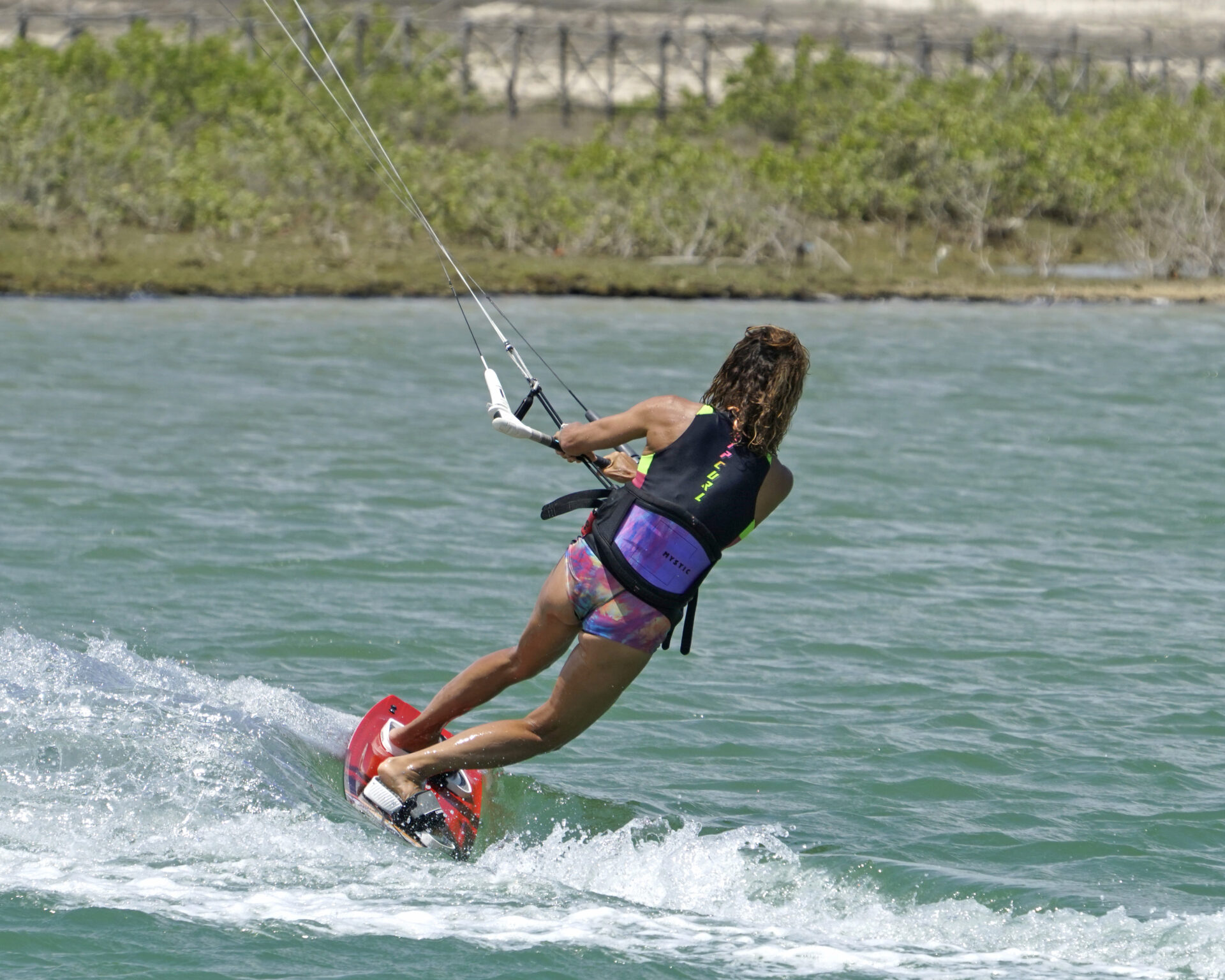
Now that you’re ready it’s time. As the title suggests there are two parts to this. Firstly, you’ll slide the board with your trailing foot, so that you’re not on an edge. This bit is pretty simple as when you’re blind the board always wants to slide. As soon as the board slides, it’s your thumbs up to loop the kite. Keeping the bar on the sweet spot give it the beans, pulling down on your lead hand and pushing up on your rear hand. Here Karine’s board is sliding, and she pulls the trigger on her down-loop. Game on!
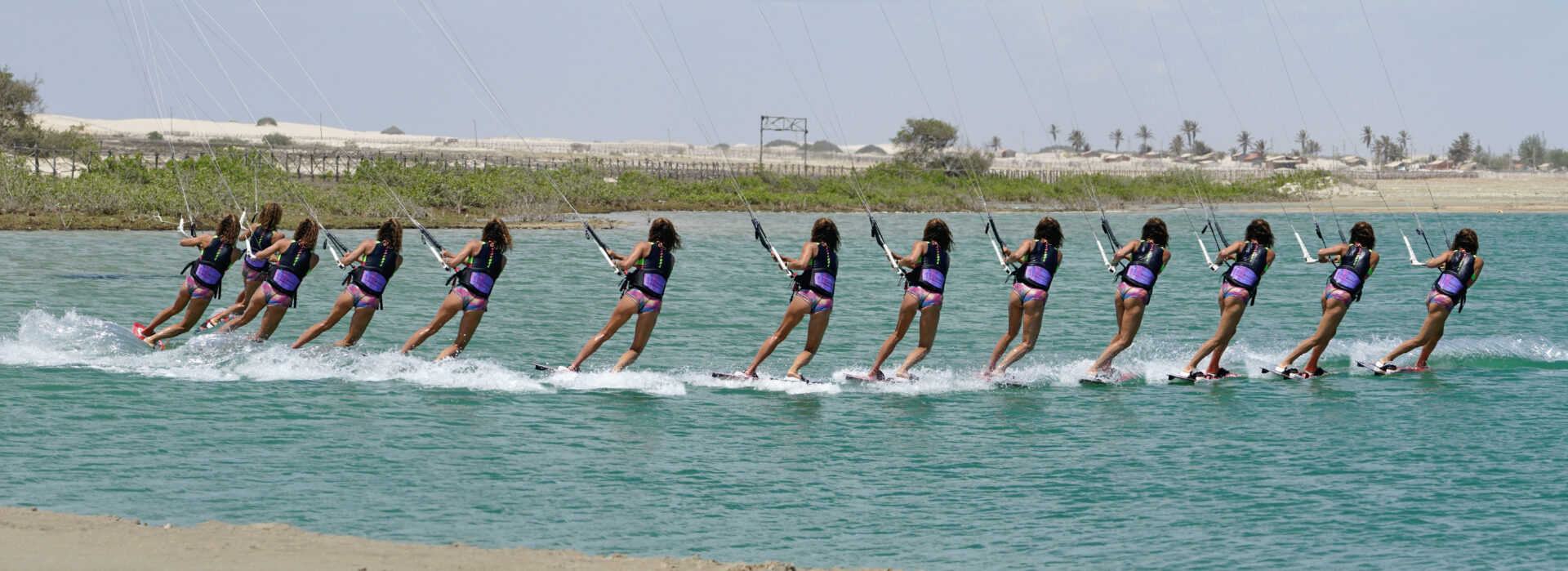
Lock In & Follow Pic E.
As your kite starts to turn down, lock the bar in so that your kite continues into the loop, keeping as much pull push as you can. As the board slides, keep your weight on the balls of your feet. As if by magic you’ll feel your toe-side edge bite in and the board will start to carve downwind, following the kite. Keep your eyes on the kite. Karine is watching her kite, she’s on her toe side edge and is carving down and through the wind. Perfect.
Level Off Pic F.
Your aim is to exit with speed, so you don’t want your kite to loop all the way back up to 12. Keep your eyes on it, and once it’s climbing and heading forward in the new direction you can level the bar off and fly it forwards. Once you level, it’s the perfect time to let the bar out so that your kite can fly happily to the edge of the window. All the while you keep carving. Here Karine is still very much committed to carving around, her kite is climbing forward so she levels the bar and eases it out so that her kite can breathe.
Ride Out Pic G.
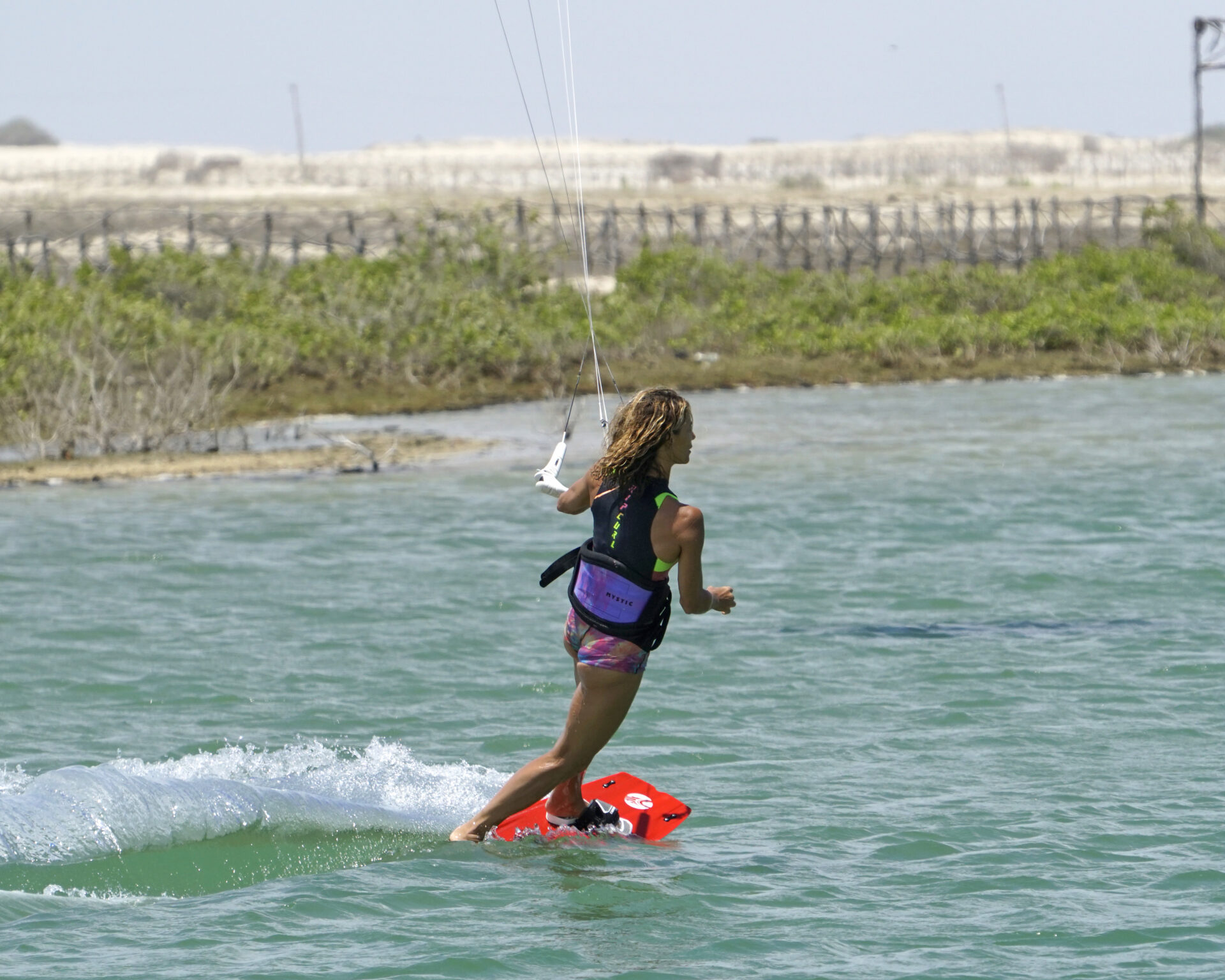
All that’s left is to open your hips, centre your weight and ride out toe-side. Karine relaxes into her usual toe side stance, drops her front hand off the bar and cruises out. Happy days.
Top Tips
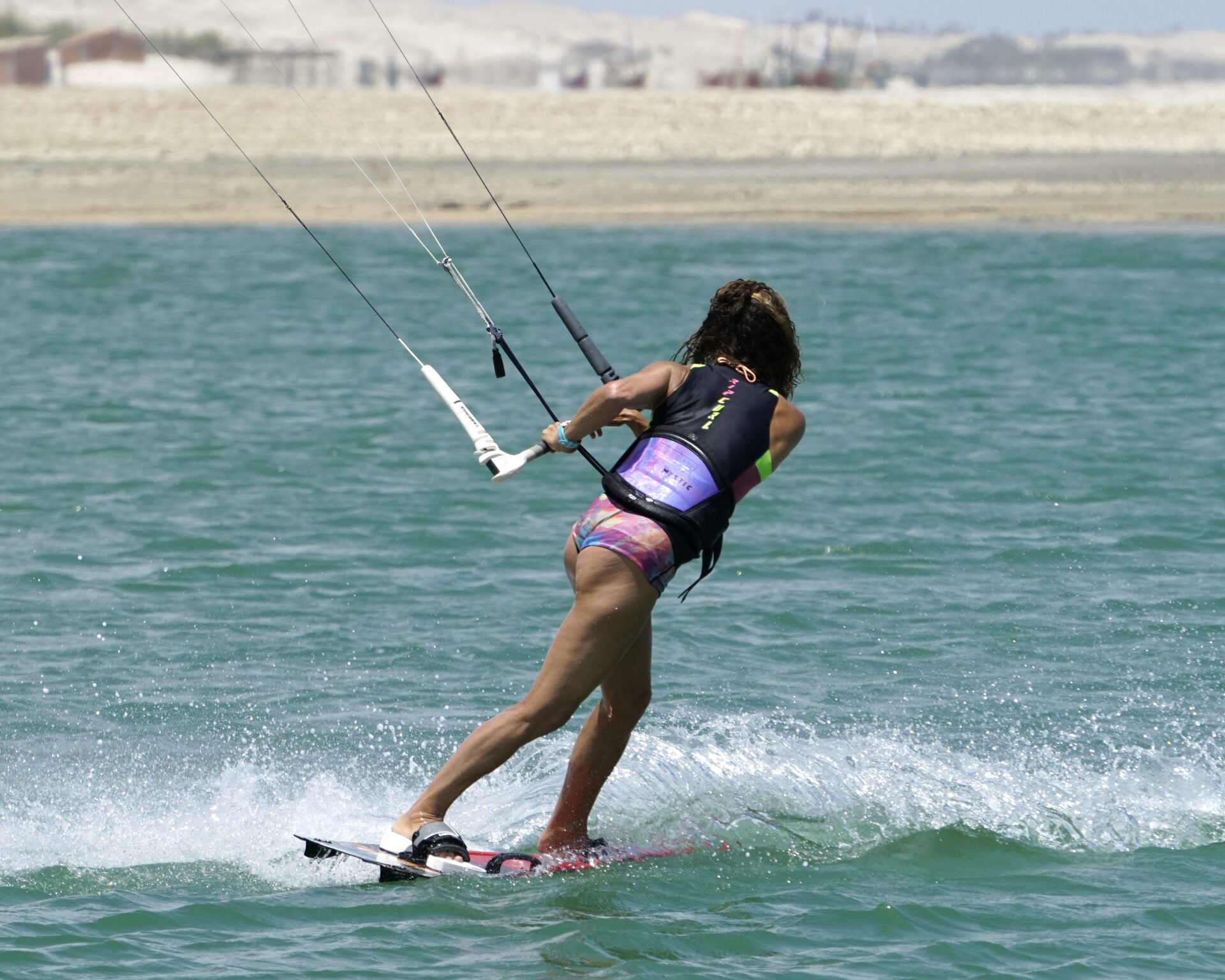
For many of us, riding blind with two hands on the bar will already be a challenge. If this is new to you, work on this first. Trimming your sweet spot closer and only rotating your shoulders are key.
Moving on, you can then practice drifting the kite up and feathering your bar out as you would do in a conventional slide turn.
Once you’re confident with these you’re good to go. Just make sure that you’re not overpowered and that you have plenty of space.
Common Problems
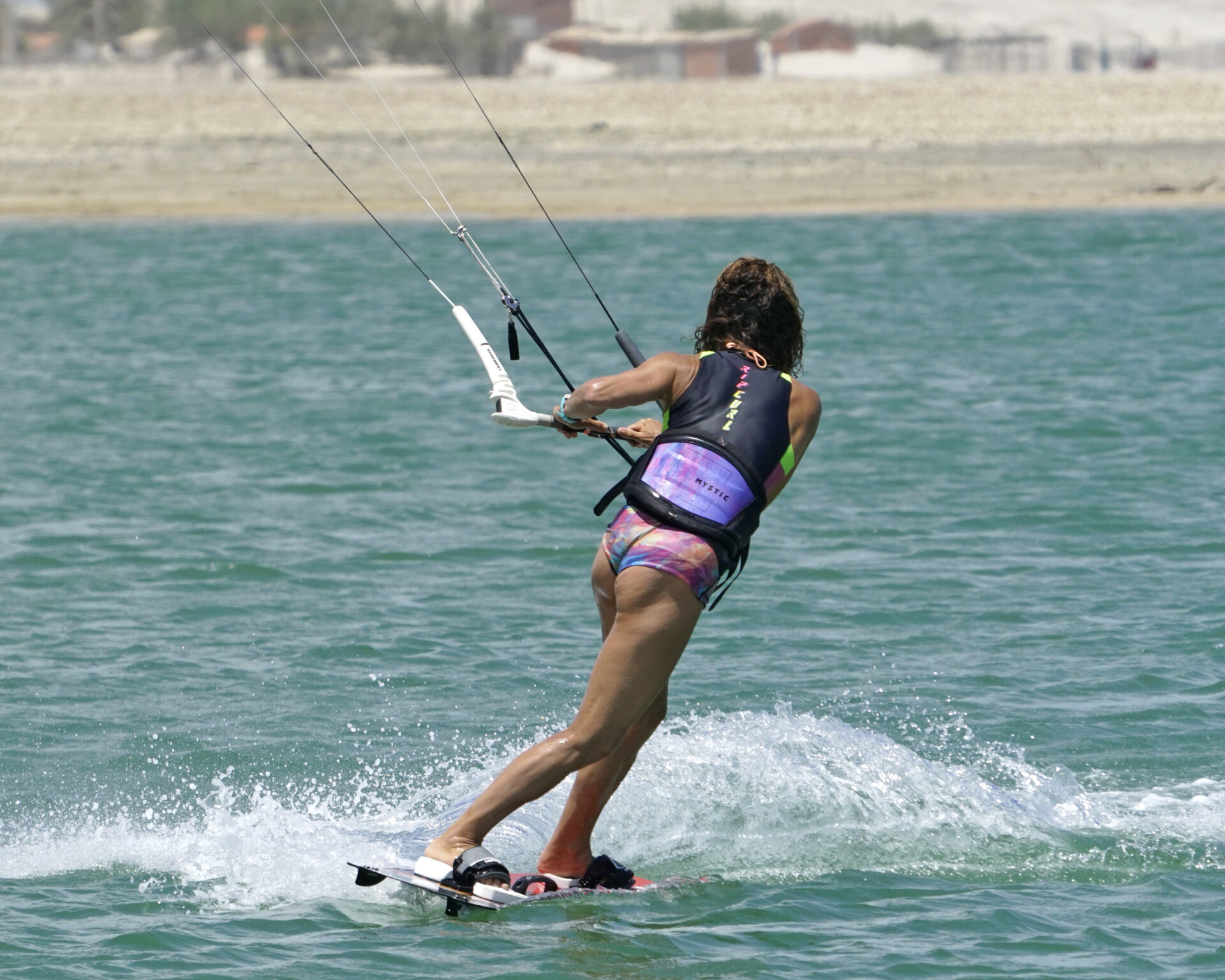
If you’re getting pulled backwards as you go for your down-loop, it’s a sure sign that you haven’t turned up enough and haven’t got the board sliding. Realistically you’re looping from an edge! Ease the bar out and turn your head to look at the kite, and make sure you move your bum over that leading, upwind foot.
If you’re crashing your kite during the loop. Firstly, make sure it starts high enough. Secondly make sure the bar is on the sweet spot and stays on the sweet spot. If you let it out as the power comes on the kite will stop turning and crash, so lock in. However, be aware if you pull the bar in past the sweet spot the kite will stall and likely crash too!
Keystones
- 1.Trim your sweet spot close
- 2.Two hands on the bar once you’re blind
- 3.Lift kite and ease bar out to edge up
- 4.Shift weight
- 5.Pull-push and lock in watching your kite as it loops