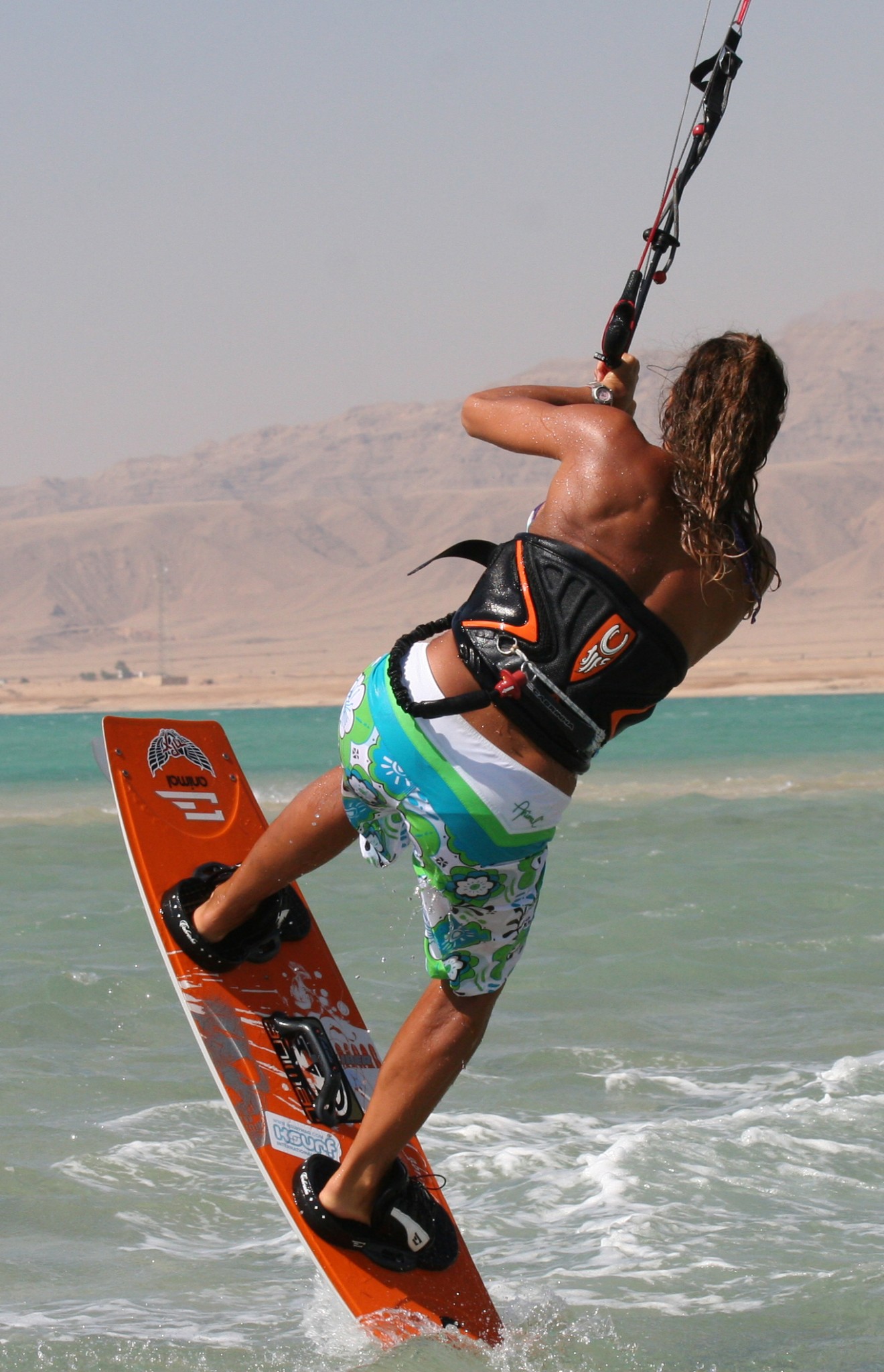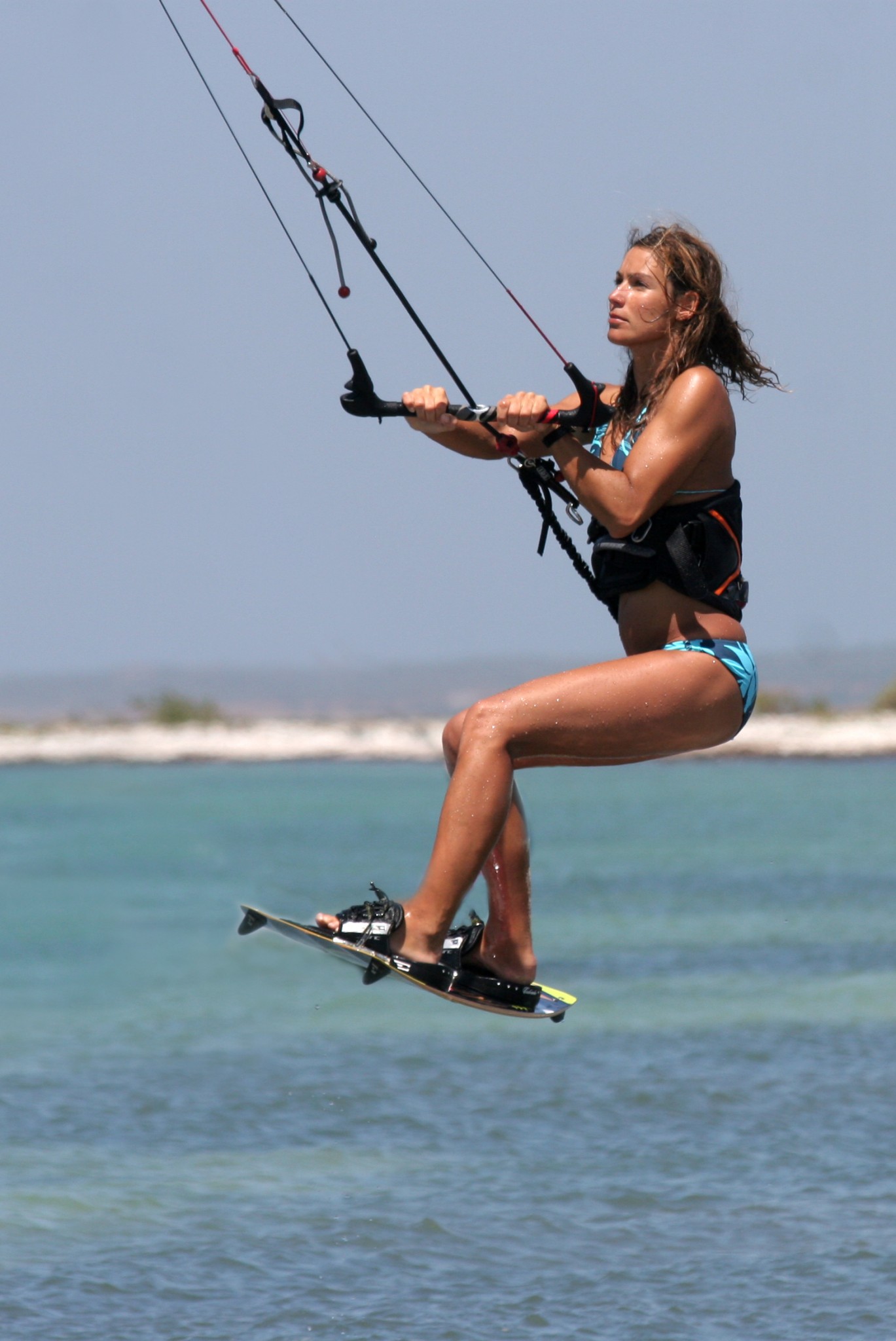

Some time back we took you through a beach start method where you anchor the board by putting one foot in the front strap to stop it misbehaving and running off whilst you fly the kite. As effective a method as that may be, the launch can often be preceded by a game of hop scotch as you pogo around on one leg waiting for the perfect moment and your kite to support you. In still water this patience is often rewarded, but once nature starts to move the goalposts things can get a little more interesting. Enter the 2 foot springing solution. By standing on both feet before springing into your straps, you’ll be more dynamic, possibly more stylish and definitely more effective.
All the principals are much the same, bar the hopping, so let’s see how you’re going to add this beauty to your box of tricks. We’d highly recommend not learning this in onshore conditions unless you have a lot of space and water down wind. Avoid rocky bottoms, sea urchins, mussel beds and a crashing shore-break! You get the picture.
Prep Pic A.
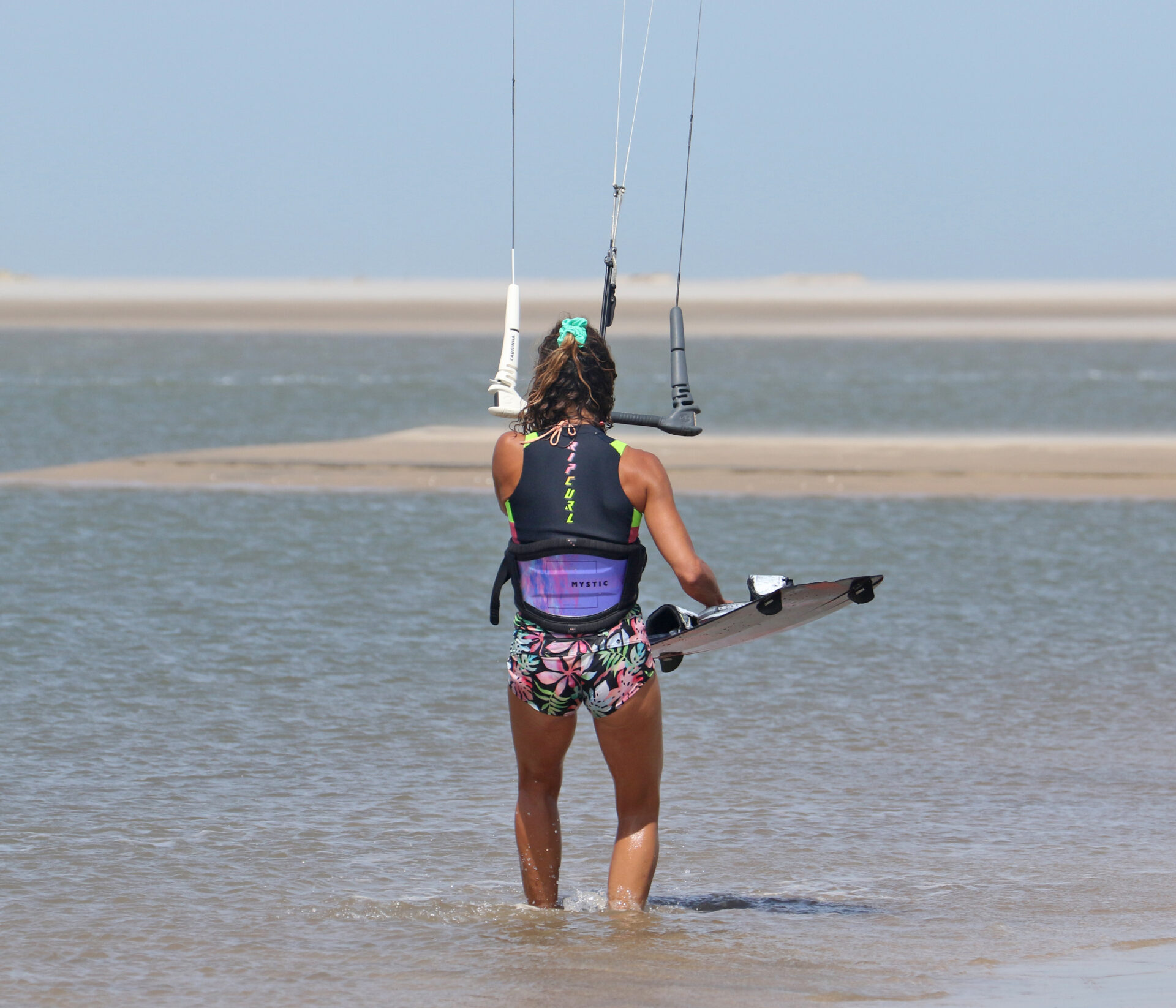
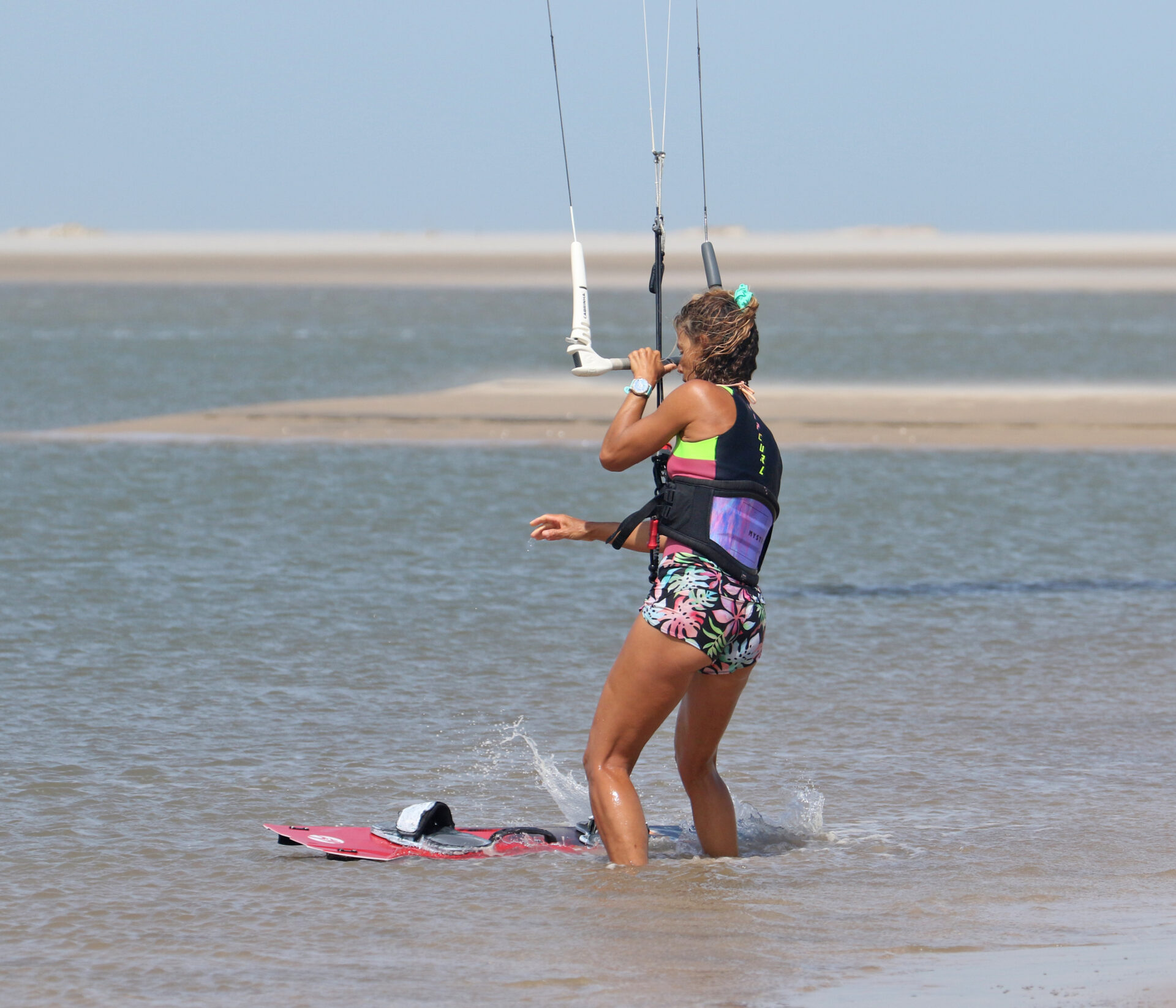
How deep you need to start will depend on the spot, wind direction and space. Ideally you don’t want to be any deeper than half way up your shin. This gives you a good balance between a soft landing if you get it wrong, and an easy enough spring onto the board. Hold the board in your rear hand and control the kite with your front hand. A handle will make this a lot simpler. If you don’t have one hold the board in the middle on the toe side edge. Position your kite behind you, as you would to water start. In this case as Karine will be riding off to her left, she positions her kite between 12:30 and 1 o’clock. Keep a little tension in your steering lines to help keep your kite stable. This is your ready position. Walk in like this and you’ll avoid all sorts of faffing around, swapping hands, repositioning the kite, dropping the board, and generally getting all out of sorts as you rush to get ready.
Board Drop Pic B.
Have yourself a last little check that the coast is clear. Make sure that you have your back into the wind. This will help get the board in the right place and give you the best support when trying to get on it. You want the board in front and in front! By this we mean slightly down wind of you, and slightly to the side that you’ll be going. This allows you to jump with the pull of the kite. You can either drop or place the board in front of you. Dropping it has the benefit of being quicker and you can get the board further away from you. Drop the board so that it lands a little tail and heel side edge first. This means that the board will move away from you, rather than cork back at you! The board should lie across the wind, or ever so slightly up wind, but definitely not pointing off the wind. This will give you a solid platform to land on. Whilst learning, if the board does skew off at the wrong angle you can push either the nose or tail with a foot to get it positioned correctly. However, once you’ve got it sussed, you’ll want this to be quick. You can see that Karine has dropped her board in front of her, tail and heel side edge first, whilst keeping tension on her lines. She’s ready.
Power Up Pic C.
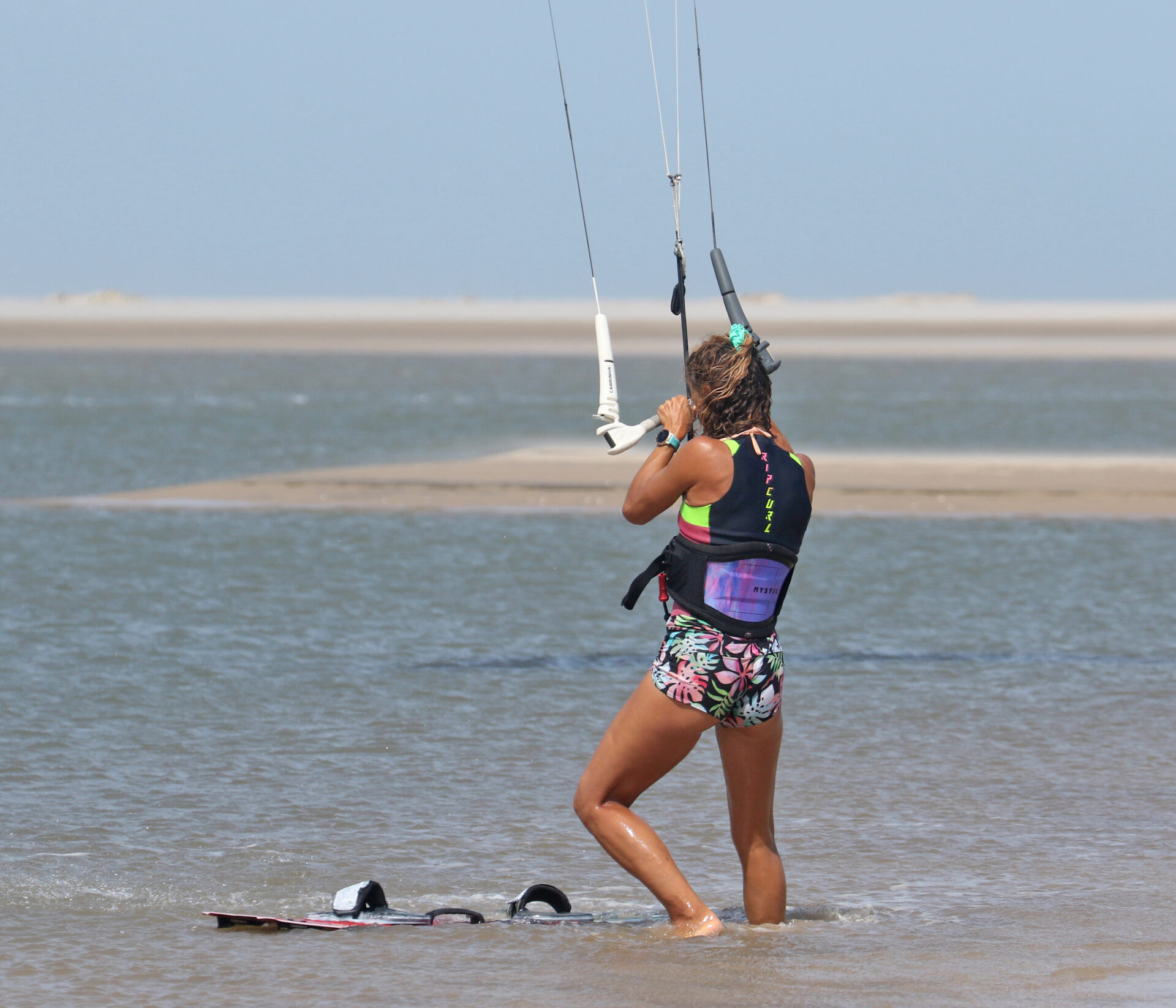
Time to get the kite moving. The idea is much the same as the one footed variant, you want your kite to move up and over 12 o’clock so that it offers you lift and support. You need to be positive; you are stationary! With both hands now on the bar steer your kite forward to get it moving. Make sure that your bar is on the sweet spot so that you’ll feel the lift and the kite traces the edge of the window. As you do this concentrate on the board. With two hands on her bar, Karine steers her kite forward whilst looking at her straps and waits to feel the kite lift.
Level & Jump Pic D.
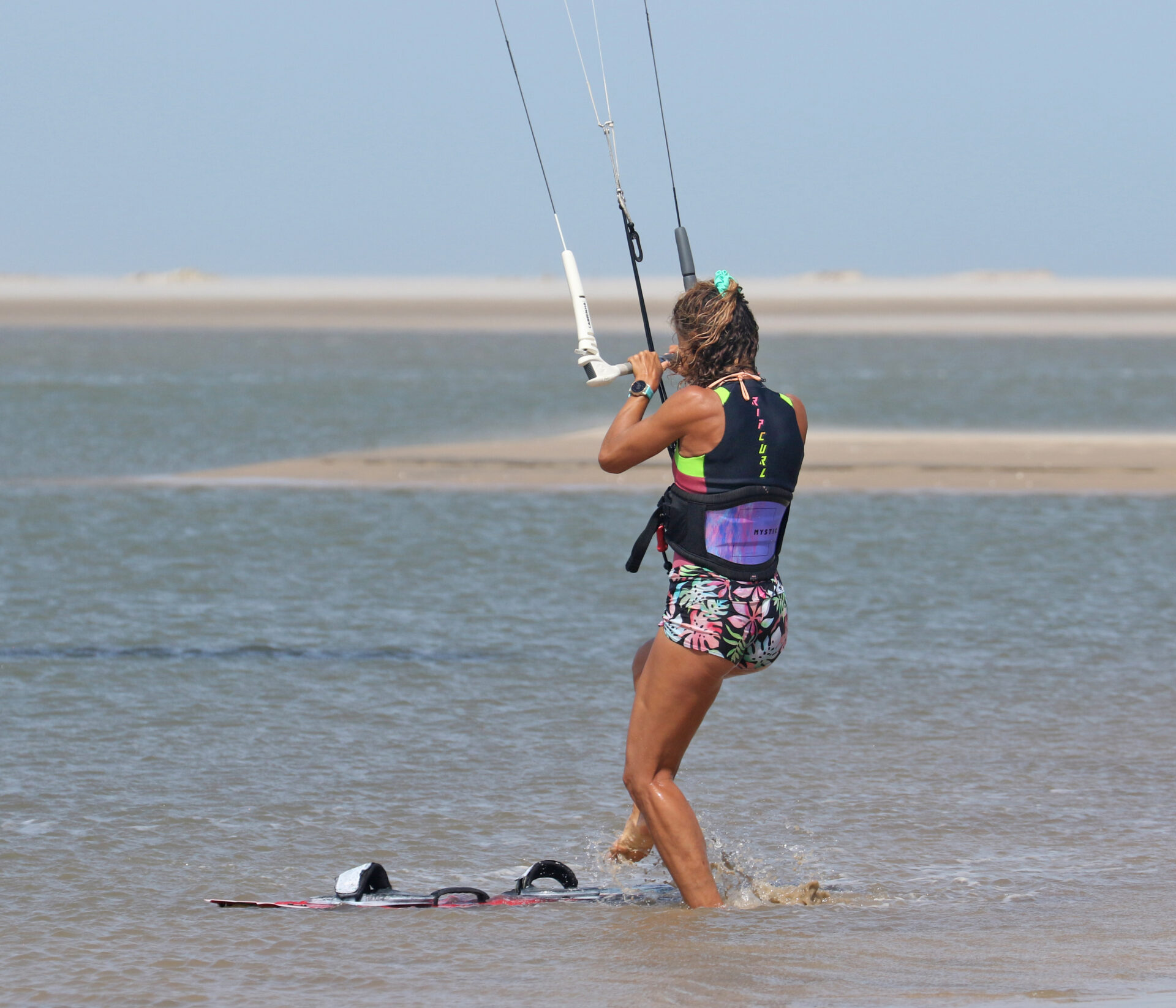
Although this is a 2 footed beach start, you’ll realistically be quick stepping:) What we mean is that you’ll be leading with your rear foot, so it’ll be the first one off the seabed. You won’t be springing off both feet at exactly the same time. The idea is to use the lift from the kite to float you up a few centimetres and support you whilst you slot your feet in. By going back foot first it’ll keep the nose up and prevent you from submarining. As you feel the kite lift, level the bar so that the kite slows down and doesn’t hammer down toward the water. With the bar level and your eyes on your rear strap, spring up off your front foot, pulling on the bar if you need some extra juice and aim your back foot at the strap. You can see that Karine has levelled her bar, has her eyes on the prize and is going back foot first.

Back Foot Hokey Cokey Pic E.
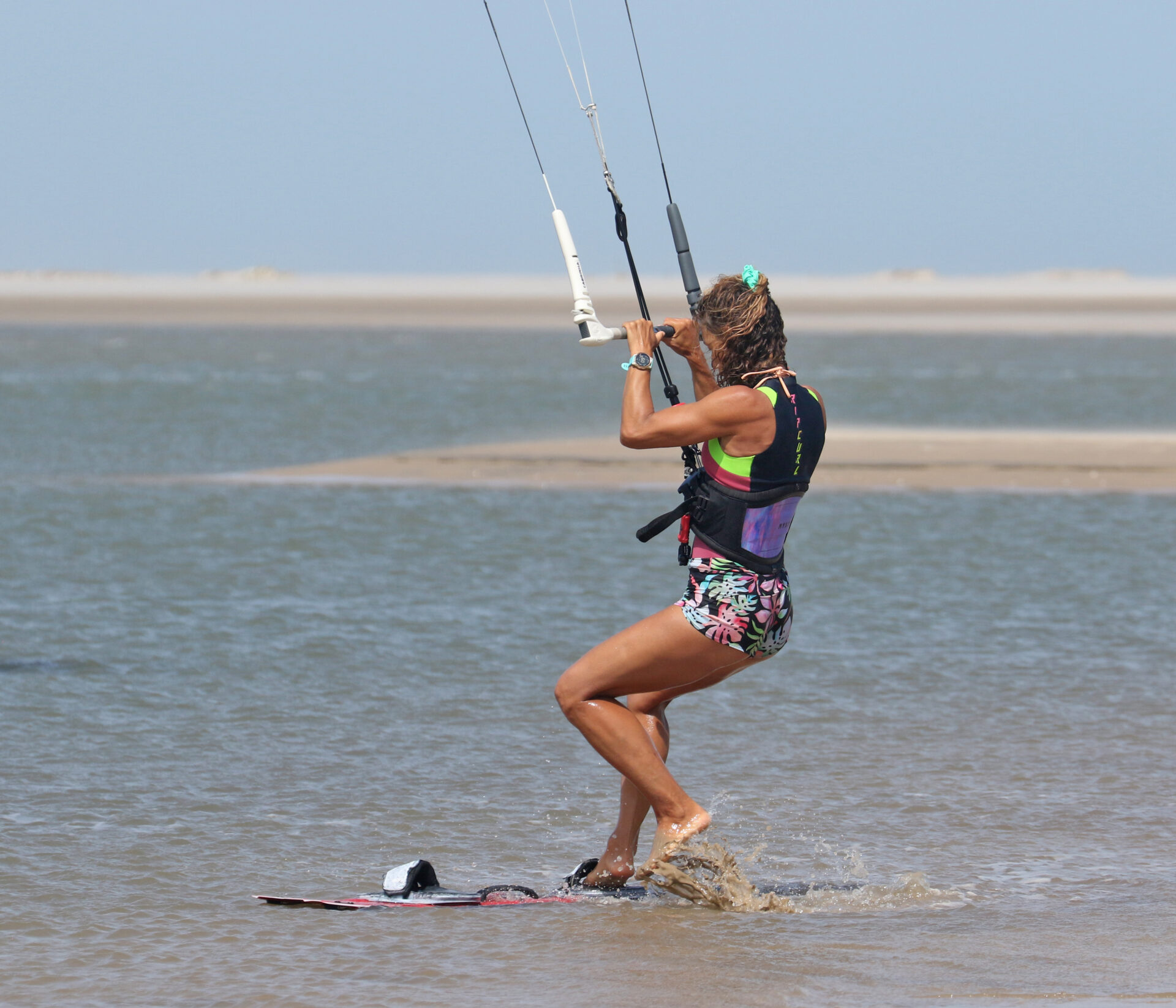
Even though you’ll be landing rear foot first to stop the nose from sinking, you do need to keep your weight centred. This way with the kite’s support you’ll stay balanced. If you lean back against the kite or towards the back of the board, you’ll slide the board away and dip your cheeks in the water. Stay upright and guide your rear foot in with your leg. Karine guides her foot in whilst keeping the bar level, herself upright, whilst using the kite for support. As her back foot homes in on the strap Karine can lift her front leg.
Front Foot Hokey Cokey Pic F.
Looking at the front strap and still supported under the kite, Karine jams her front foot in too. Rah, rah, rah!
Power On Pig G.
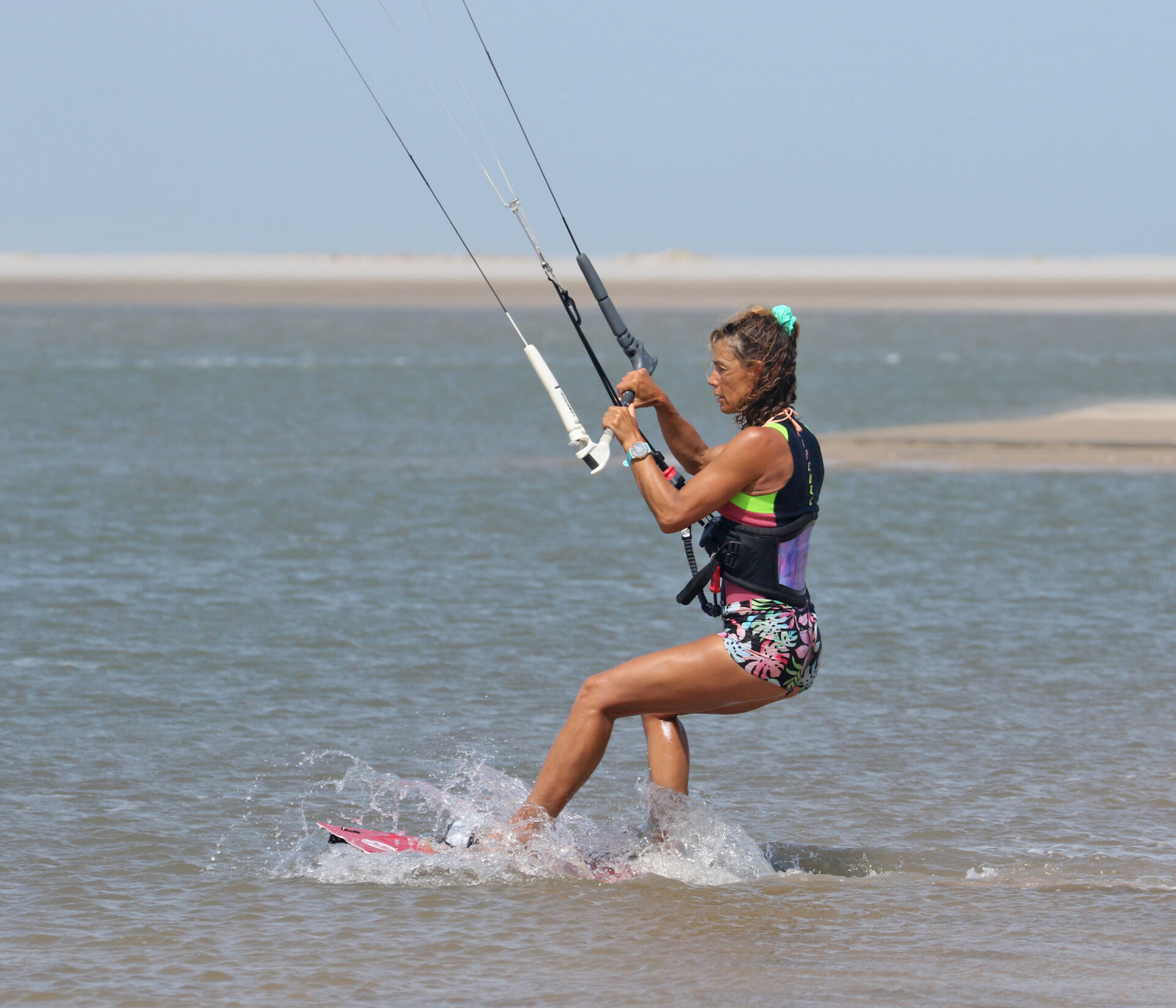
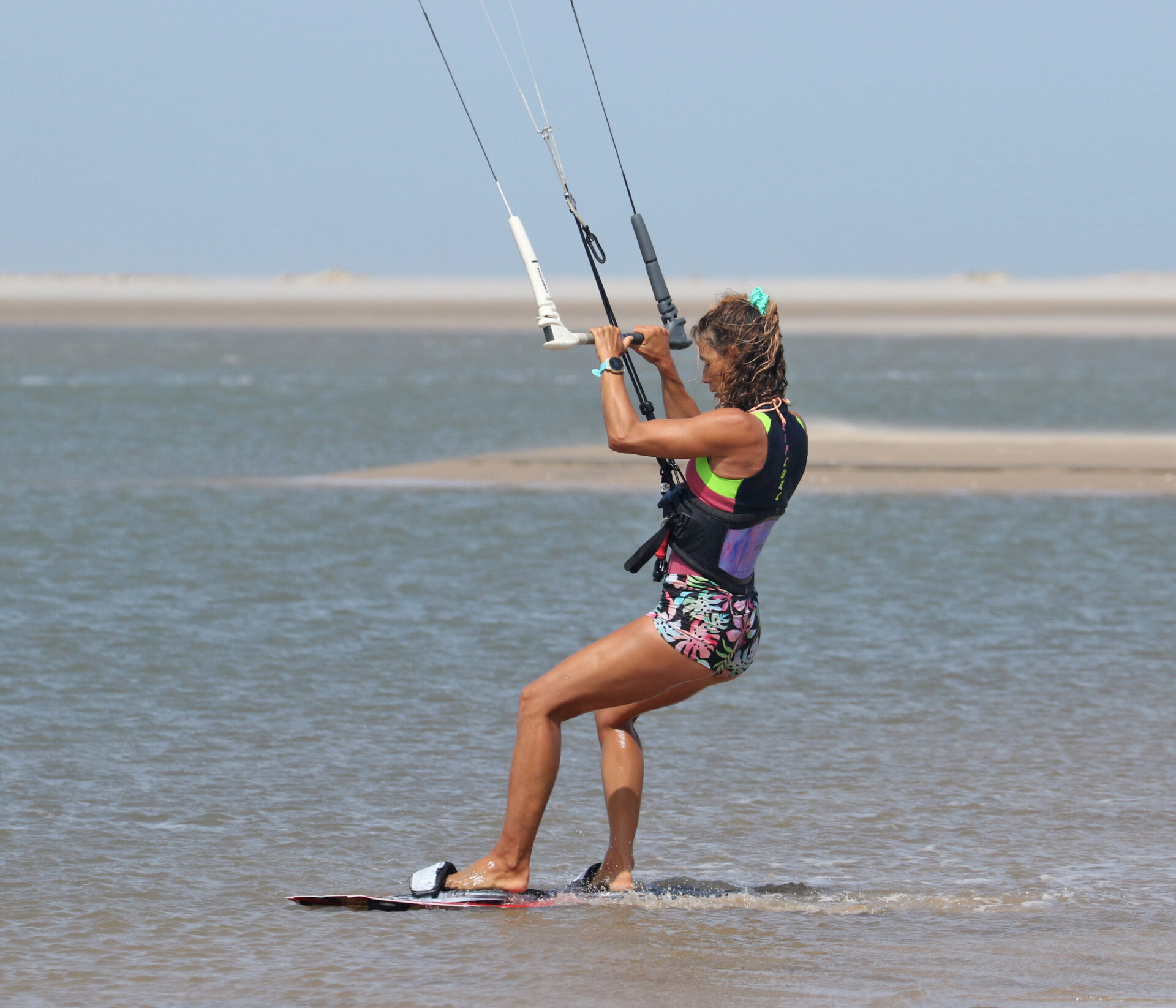
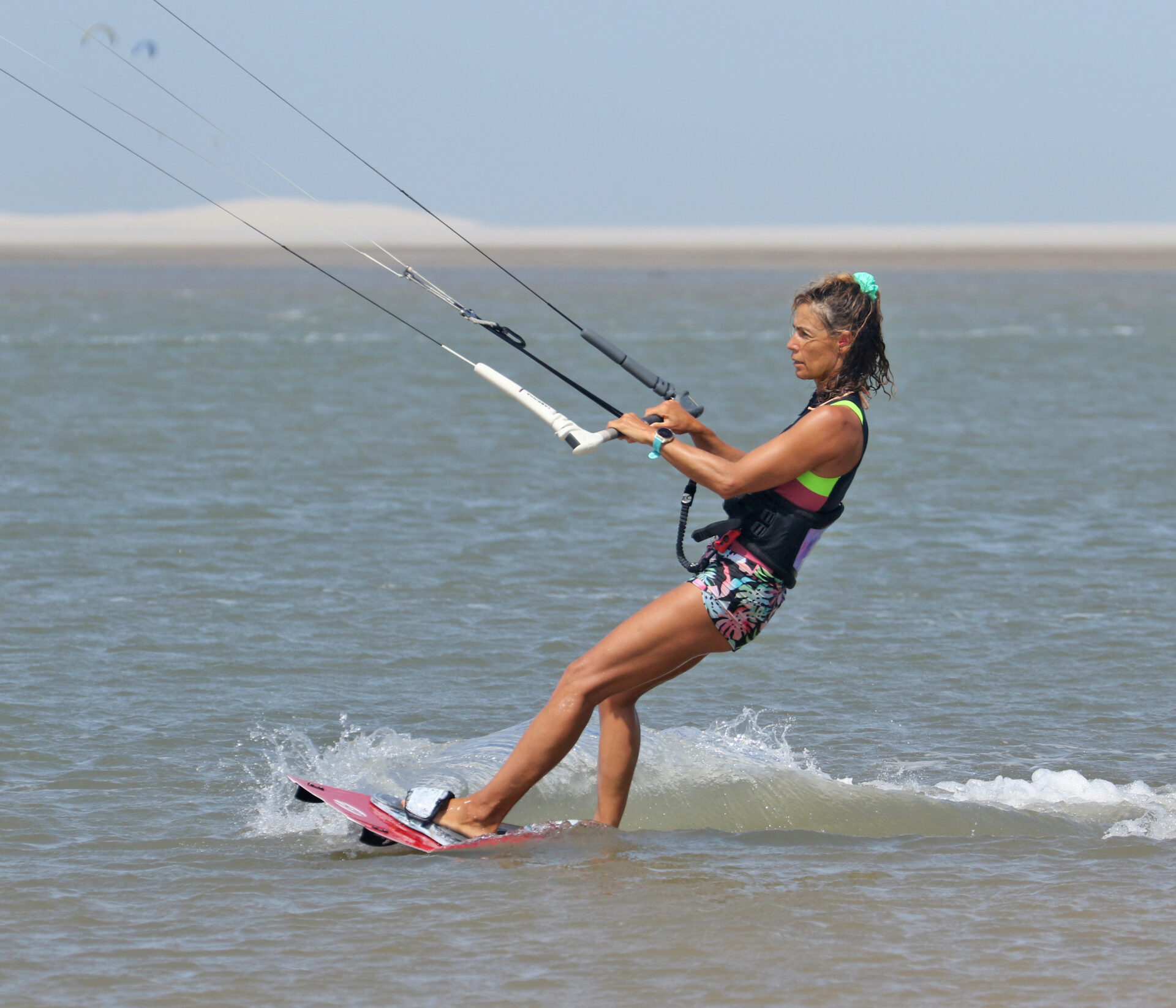
With the kite moving slowly forward and both feet roundabouts where they belong, your need to direct your effort to the somewhat urgent need of kiting. The kite’s support won’t last long, so first job is to get your kite moving faster, so dive it. It will be so very tempting to pull on the bar as the support fades, but if you do, you’ll stall your kite and dip your derriere. Focus on keeping the bar on the sweet spot whilst push-pulling to dive your kite and generate power through movement. As you do this, wiggle your feet so that they slide fully into the straps and look forwards. Karine is diving her kite, and rather than lean back looking for power, she sits her weight onto her heels whilst keeping her upper body upright and bar on the sweet spot.
Edge and Control Pic H.
Once the kite pulls you can then look upwind, get back onto your edge and take your kite back up. As the power comes on, Karine turns her head upwind, engages her edge, moves her hips back into her riding stance, drives against it, and steers her kite back up to keep the power on and her kite dry.
Top Tips
The best way to learn this beach start is to break it into 2 parts, firstly the lift, spring and get your feet in. The emphasis here should be to land comfortably with both feet in the straps and the kite supporting you. Without the dive you’ll then drop slowly back into the water, and as you do you can dive the kite to pull you back up. Once you’re comfortable with this you can then anticipate the drop and dive the kite earlier and earlier until you exit dry and relatively powered.
Have a look at the sequence and videos to see the complete move, and also the video to see the movement of the kite.
Common Problems
The most common mistake is to start with the kite too high. If you start with the kite at 12 o’clock, the power will not come on until the kite pulls low and forward. The result is you get pulled across the front of the board, whilst manically attempting to lean back against the power. You’ll either catapult over the front or have the board tea tray out in front of you as you fly off the back. Remember, you need the lift to support you getting on, and then the power to ride off.
If you are getting the lift but still seem to be sliding off the back of the board, it’s the result of the board pointing too far off the wind.
If you keep dropping back into the water, regardless of what you do, make a point of focusing on what your arms and harness do. Your arms are just for steering the kite, and your harness should be taking your weight. If you hold onto the power through the bar you’re both unable to steer the kite nor control it from the sweet spot.
Keystones
- Kite just behind you.
- Bar in front hand, board in back hand.
- Drop board across the wind, steer kite up and over.
- Go up with lift, back foot first.
- Once in, dive hard.
Technique videos