
This move has a whole plethora of names, but whatever you call it will fade into complete insignificance when compared to a highly polished execution of the move itself. Yes, it is showboating to the max close to the beach, and yes if you get it wrong you may look a bit silly, but at least you’ll give everyone else a good giggle. This is a very achievable trick, since there’s no need to get the board back on. It works in various wind directions, and when you get it right, it looks the Don
However, it does come with a warning! Jumping onto land has inherent risks, so please take care, make sure there are no obstacles to befriend, no other kiters to tangle with and no other beach users to terrify or injure.
A while back we took you through the nose grab version of this trick. Here, we’ll take you through the heelside edge variant. This is the simplest grab, and it’s the easiest way to get the board off. This means that you’ll be using the back hand to hold the board and the front hand to control the kite.
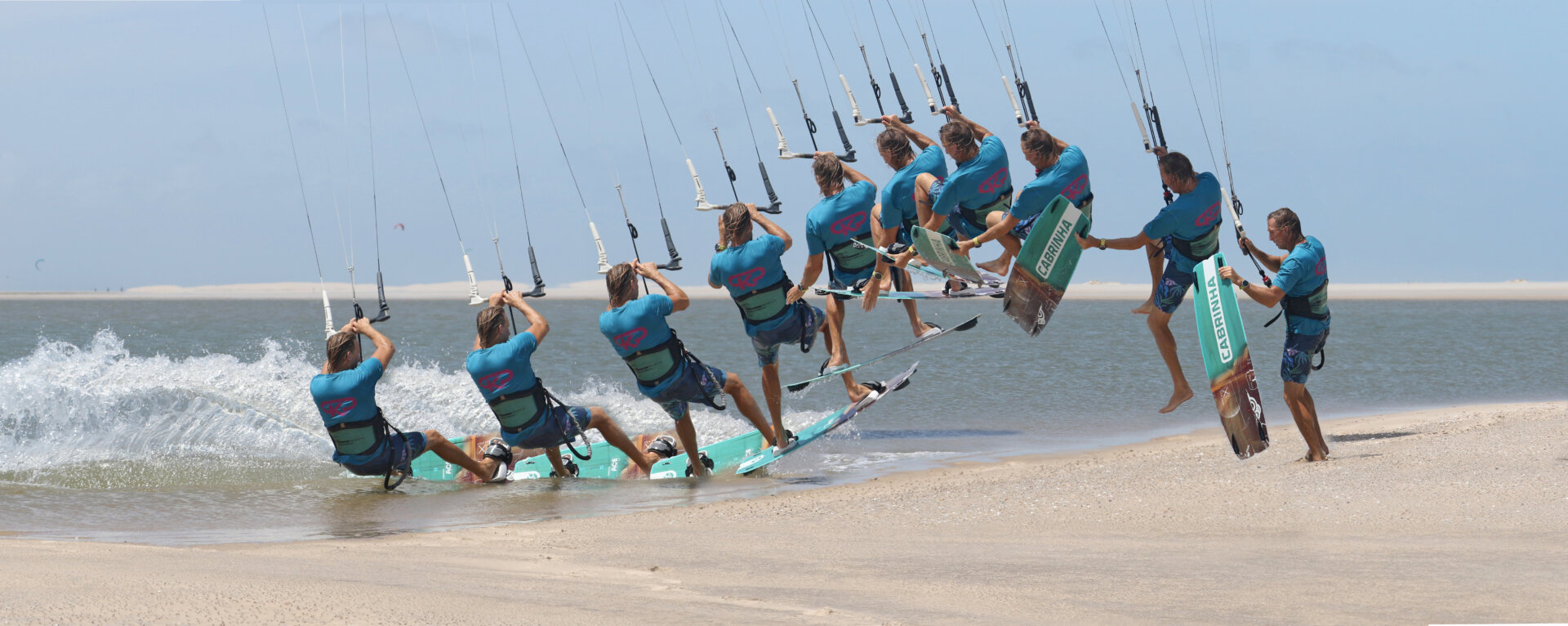
Approach Pic A.
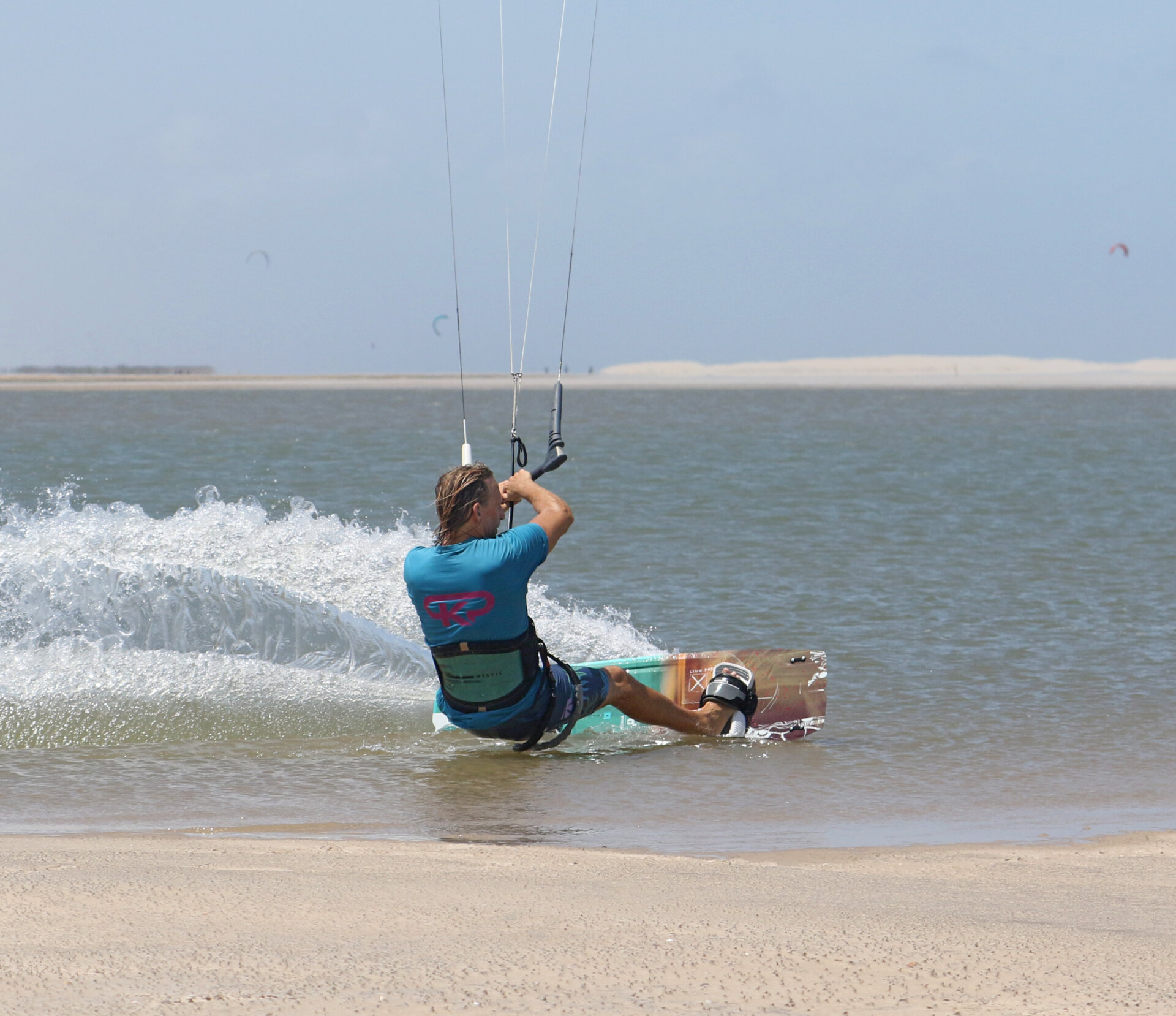
Before you start this move, it is worth appreciating that your goal is to land on your feet, on what could be uneven or even uncomfortable. This means that your landing wants to be soft. Hence you don’t want bags of speed or tonnes of lift. That said, you do need an edge for tension, so head upwind to keep the lines tight whilst slowing yourself down. It can help to let the bar out a touch, so you can point higher and kill some momentum. Your kite wants to be parked either at 1 or 11 o’clock, depending on which direction you’re heading. This way you can still send it without the kite travelling too far back. Think air gybe. In preparation of getting the board off, it never hurts to wiggle your feet loose in the straps. The final point is distance! How far from the hard stuff should you take off? If in doubt, further out. It’s undoubtedly preferable to land in the water than to plough up the beach on your trusty ride. Looking at the pic, Christian is on a decent edge, not hammering in, his bar is out a tad, and he’s still given the kite a good send from 11 o’clock. If you could see his feet, they would be ever so slightly back on the pads.
Take-Off Pic B.
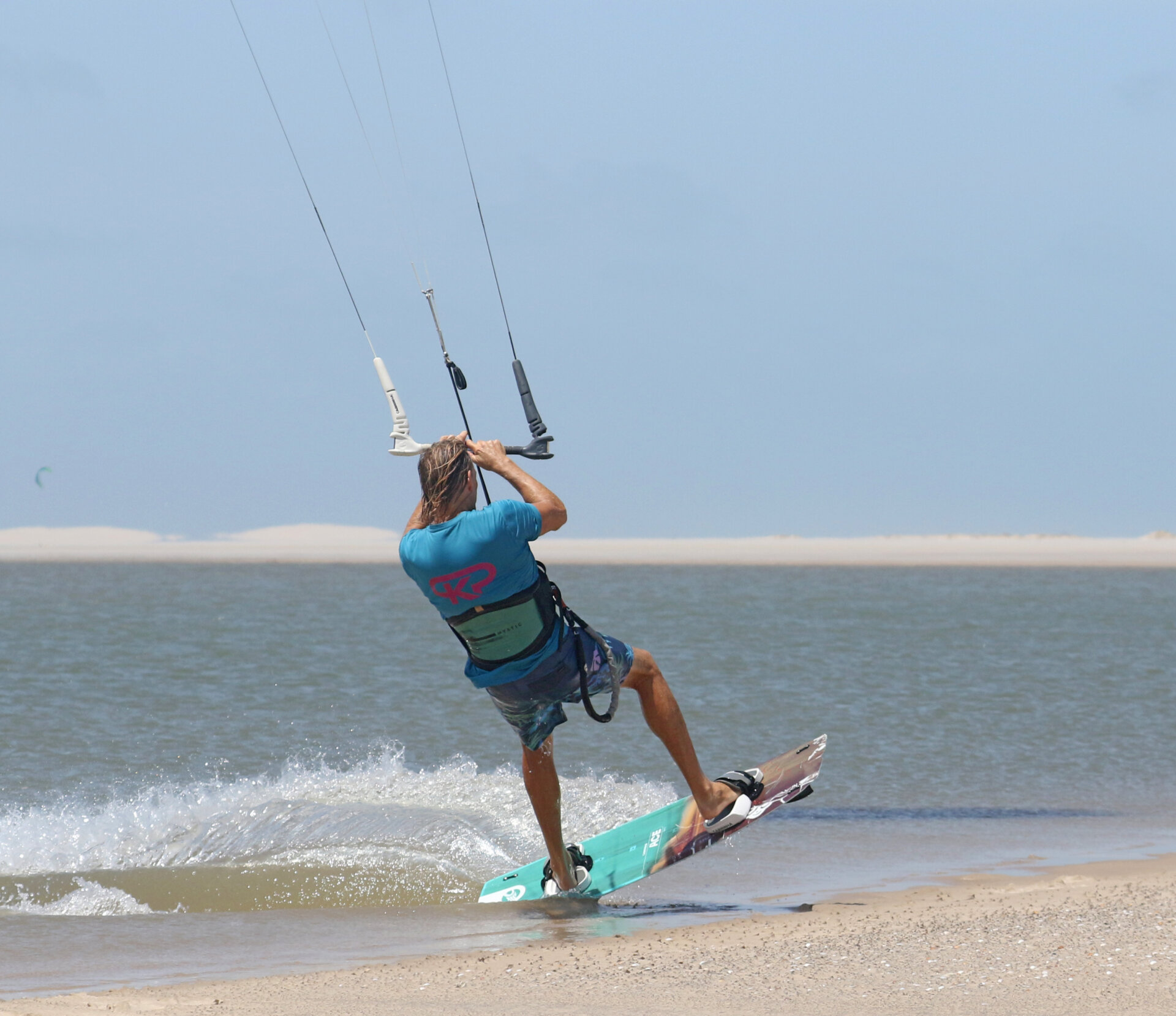
Once again think air gybe. You want to dump momentum, stop the kite going back, give yourself a helping leg up and use the lift you’ve asked for from the kite. All before your grind up the beach. Looking at Christian, he’s carved up to put the brakes on, he’s fully levelled the bar to stop the kite moving further back, he’s kicking off against the edge with his back leg to initiate the take-off, and he’s pulling in on the bar for lift.
Grab Pic C.
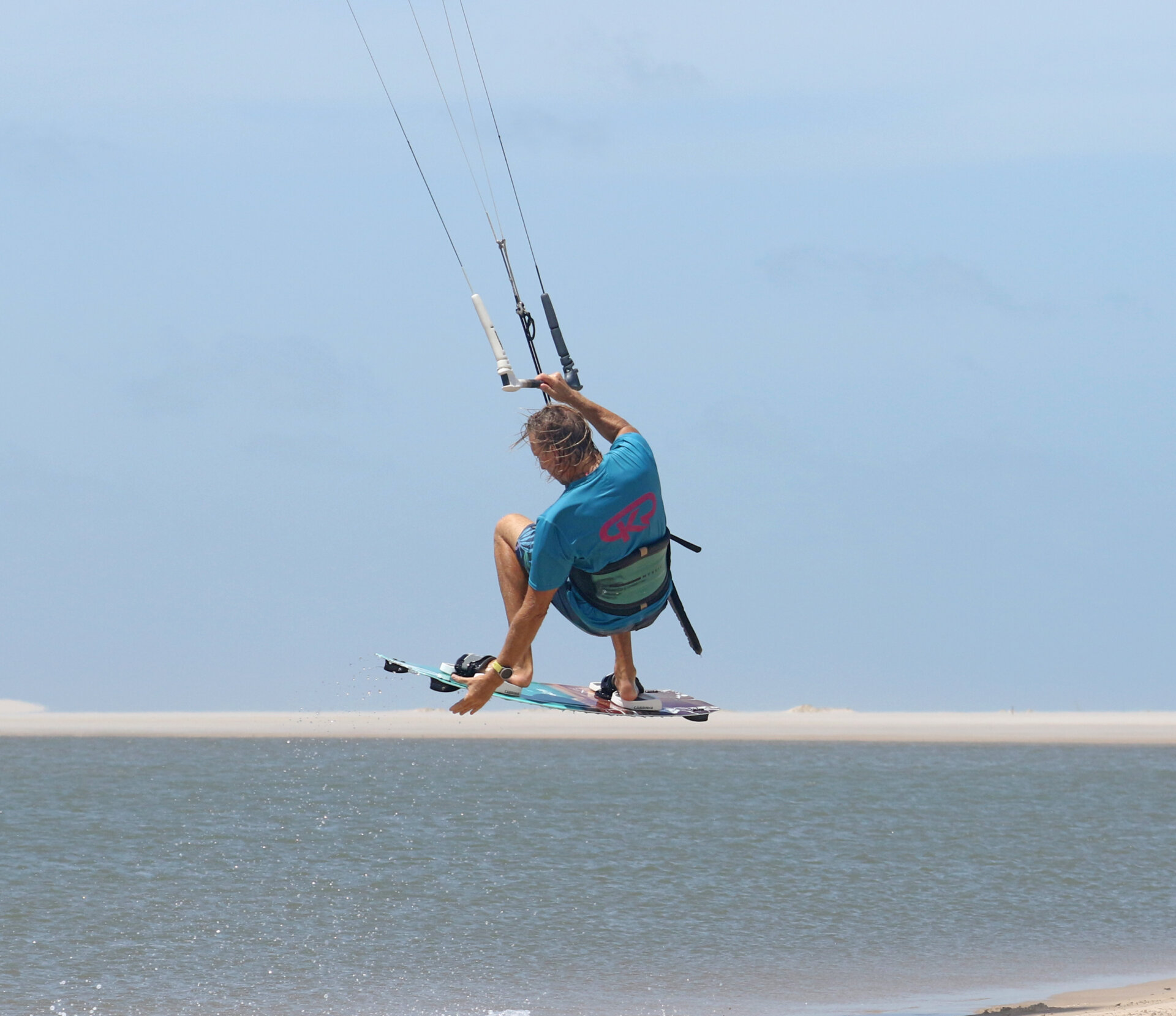
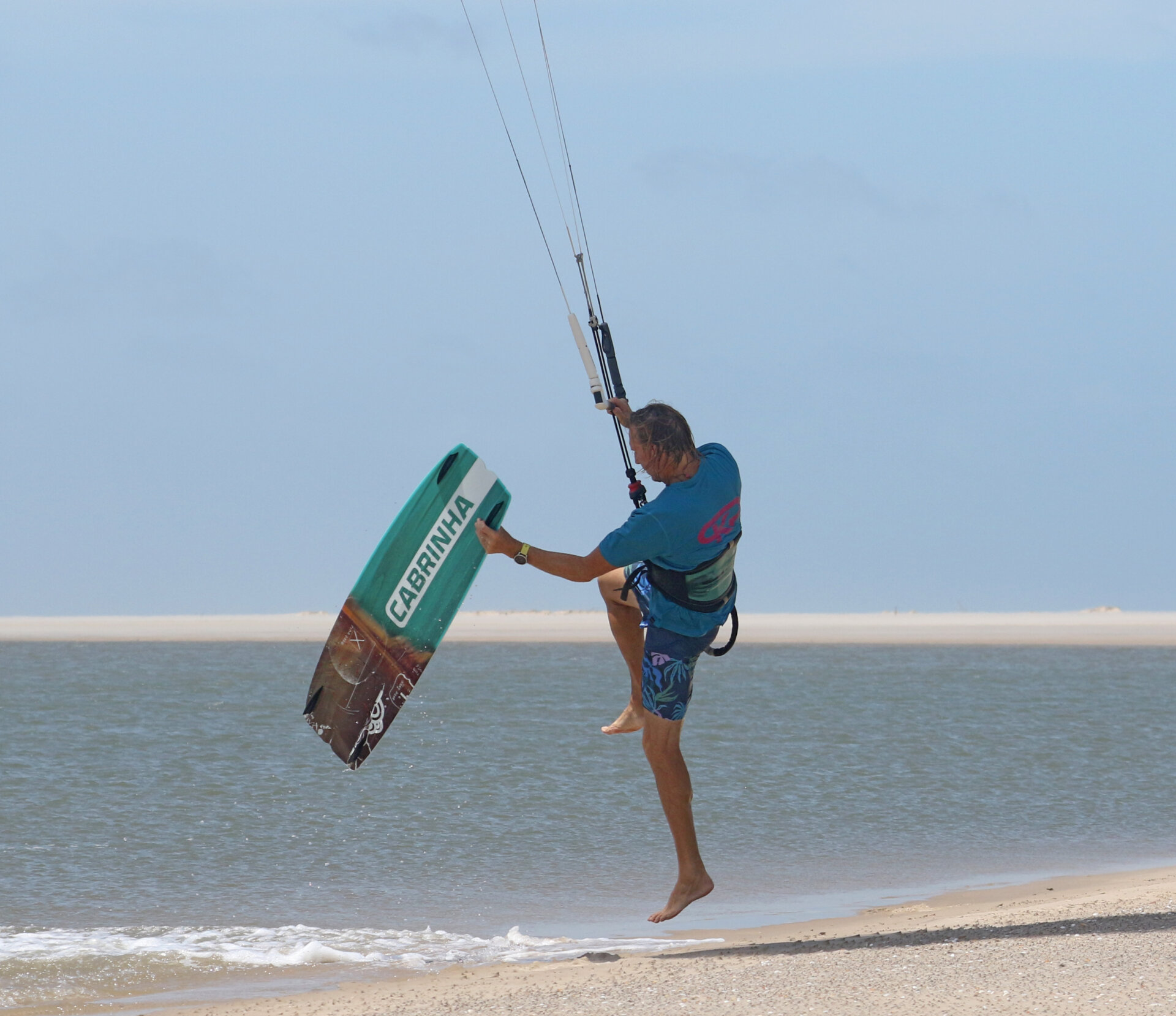
As soon as you can, you must focus on getting the grab. The idea is not to jump high, so without serious hangtime you need to get on with it. Christian immediately releases his rear hand, quite literally looking for the grab. He’s lifting his knees high to bring the board up towards his hand whilst focusing on where he’ll grab. With his front hand centred on the bar, he keeps it both level and on the sweet spot for float. You can see here how his heels are overhanging his pads, as he’s pulled his feet back in the straps so that they’ll slip out easily. It’s vital to keep the bar on the sweet spot. If you dump power when you release your rear hand, you will encourage the kite to overfly as you pendulum underneath it. Not the end of the world in the water but best avoided over the shallows.
Board Off Pic D.
Once you get a solid grab on the board, somewhere near the fin on your heelside edge, you can slide your feet out. Keep your toeside edge up and push the board up and away from you so that you can slide both feet out, pulling them toward you. Christian still has the bar on the sweet spot, and he’s holding his board at arm’s length.
The Drop Pic E.
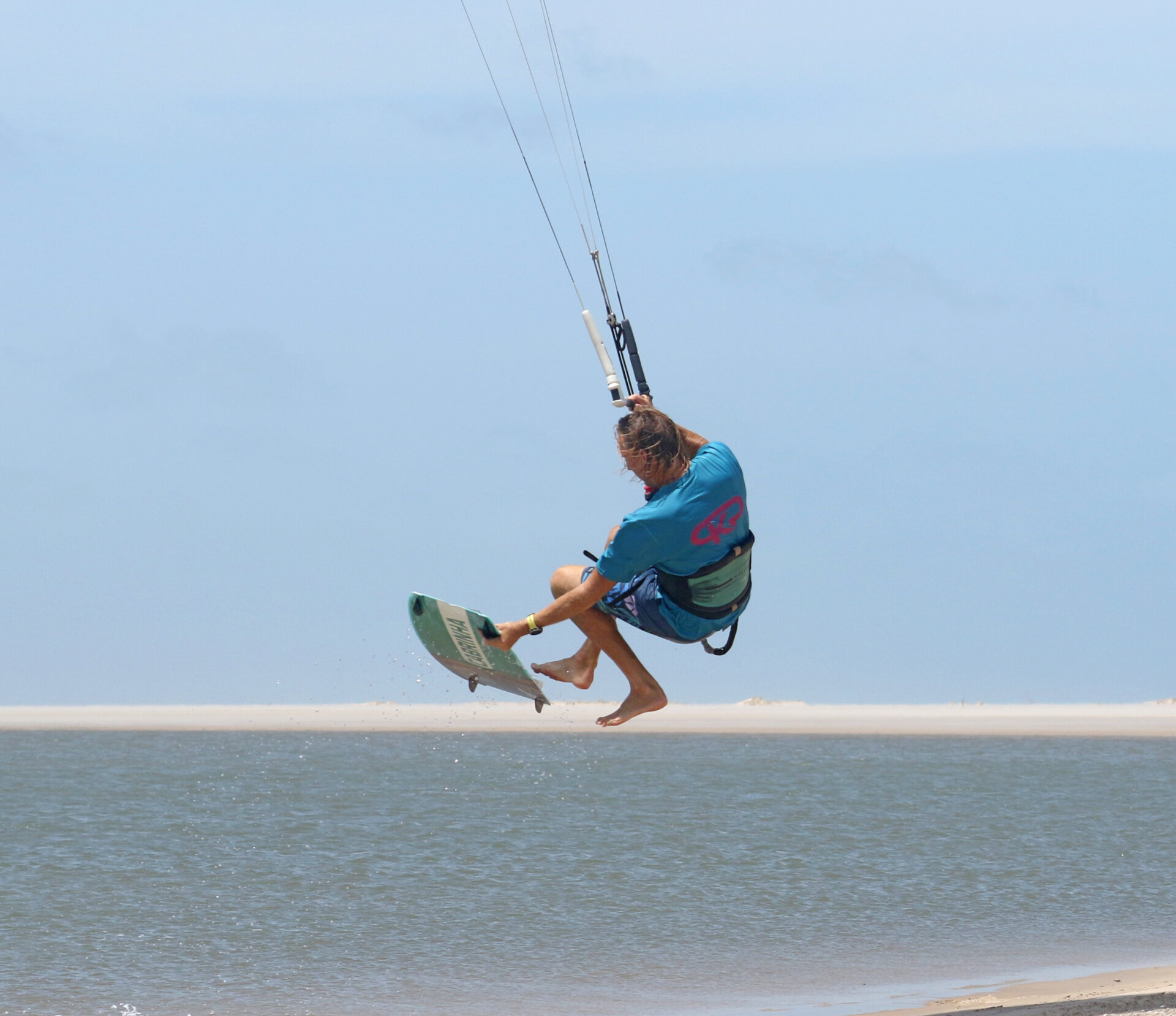
You want a soft landing, and the only way for such a marshmallow landing is to keep the bar in on the sweet spot, with tension on the lines. Looking at the pic, you can also see that Christian is using his front hand to steer the kite ever so slightly forwards. He’s doing this to make sure the kite comes up and over 12 o’clock which will give him more support and put him down more gently. Christian keeps his board well away to his side and holds it high so that it won’t hit him or the ground.
Touch Down Pic F.
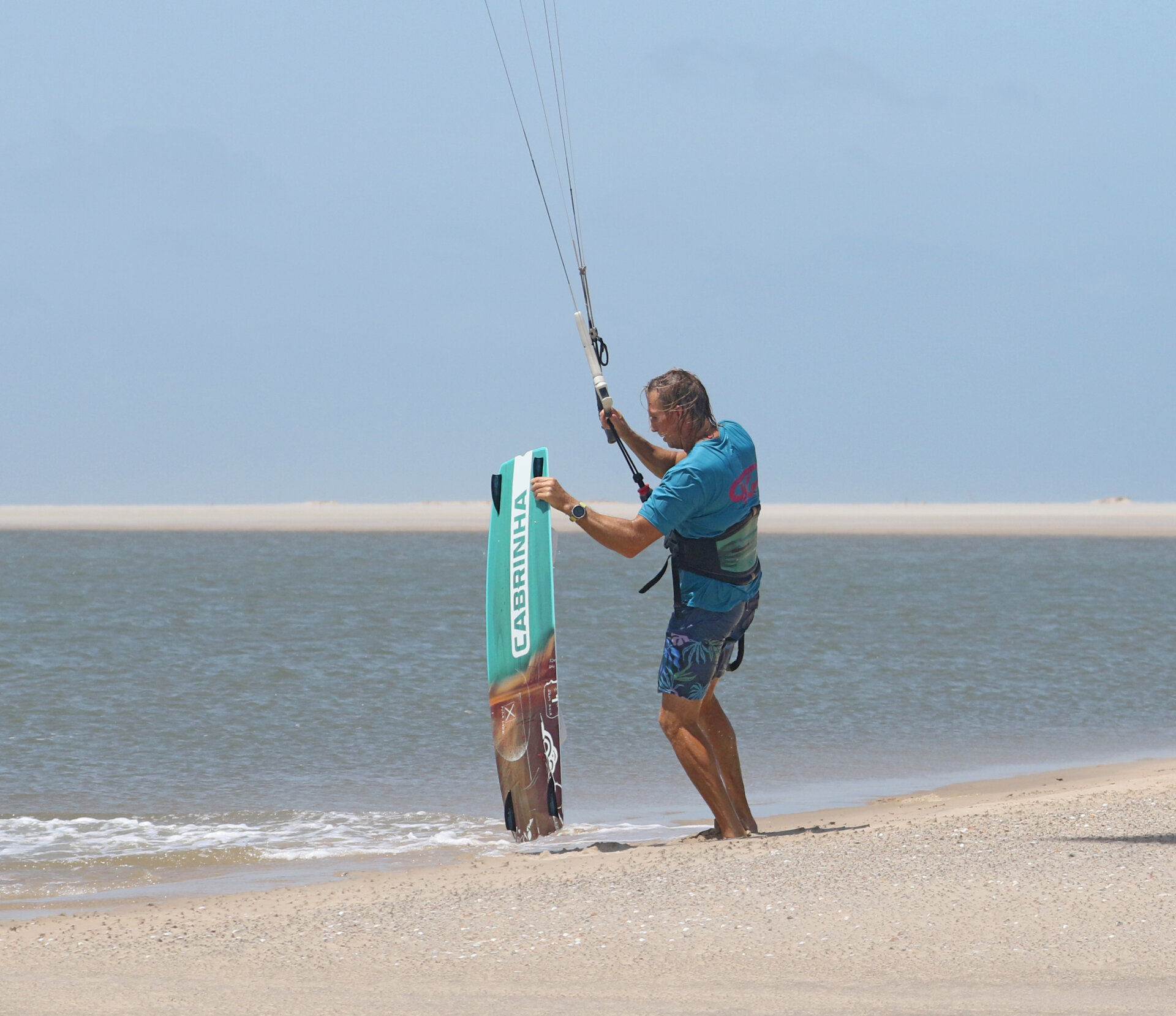
If all goes well, you’ll come down nice and soft. Keeping the board away from you guarantees 10 toes, and moving the kite gently forwards maintains that everything is moving slowly forwards in the same direction. Here Christian still has his board at arm’s length and up, his bar is on the sweet spot. Absorb the landing with your knees and make sure that you keep tension on the lines.
Top Tips
If you already have experience of taking the board off, you have an advantage. For those of you with no prior freeing of the feet, it is a good idea to practice the board off in deep water to get the idea. Then as briefly flirted with earlier, to start attempting this you could do a lot worse than aiming to land in shallow water. Once you feel confident and get the hang of all the parts, it’s then time for the full-blown dress rehearsal.
Have a look at the sequence and videos for the full walkthrough.
Common Problems
If you’re struggling to get your feet out. Make sure to lift the board to you, knees up and in front of you, rather than flicking the board behind you under your bum and reaching down. With the board up and forwards, it will slip off your feet as you pull them out. You can also loosen your straps, making it easier to drop your feet out.
If you go flying up the beach and struggle to control yourself, the kite and your landing, it’s a sure sign of too much speed. Take it easy, use your edge and make sure that you don’t have your kite to high to start with. This way, you can get the lift without breaking any speed limits.
Sketchy landings with slack lines and a kite that is threatening to drop are far from ideal. It means that you’ve sent the kite too far, or too long and you’ve possibly let the bar out. Try a short sharp send and make sure that you level the bar before taking off. Pre-empt your take off with a little kick and steer the kite forwards with your backhand
Keystones
- Controlled speed and kite at 11 or 1
- Short sharp send
- Level and stamp
- Early grab
- Drop feet, keep bord away and tension on the lines