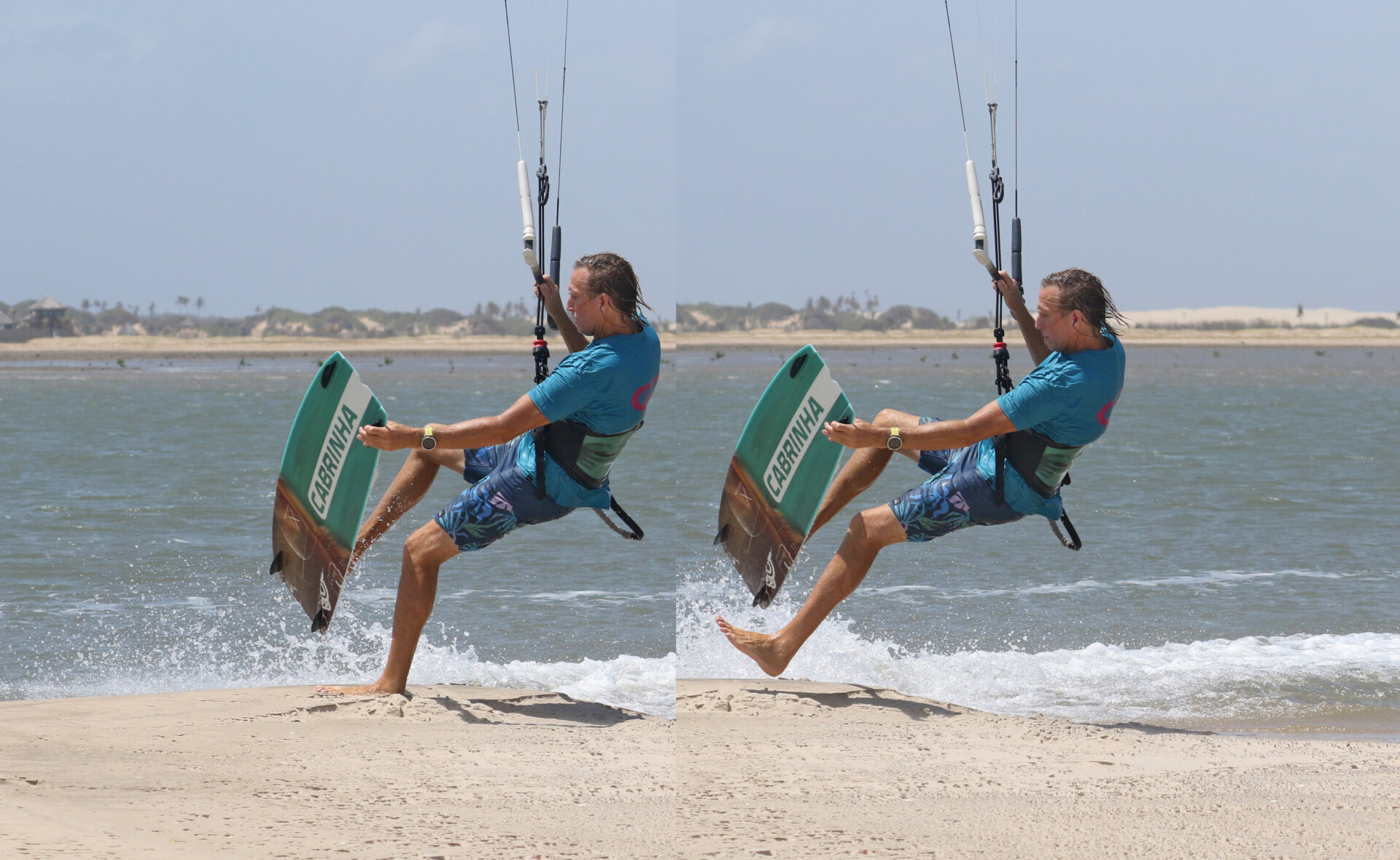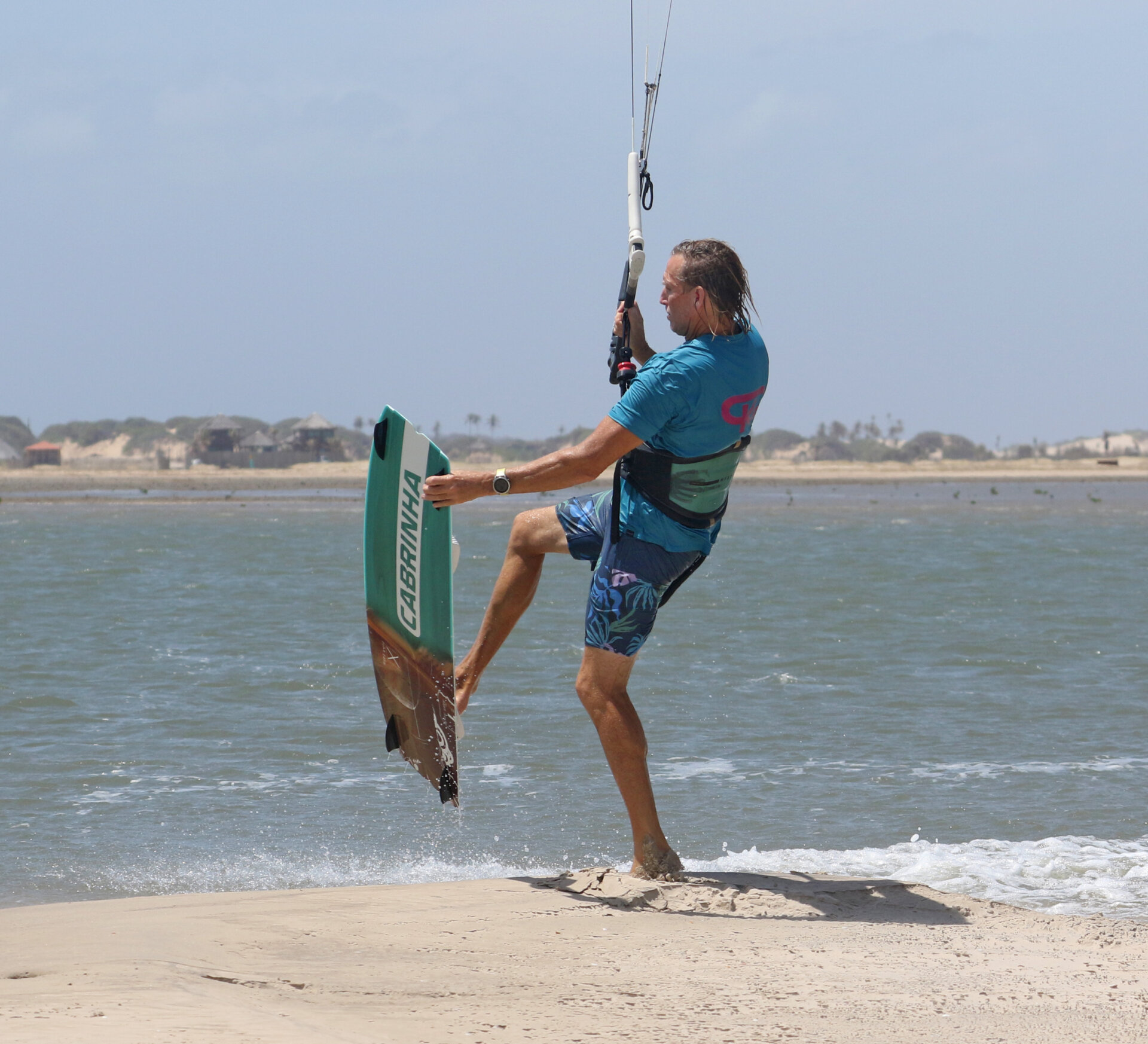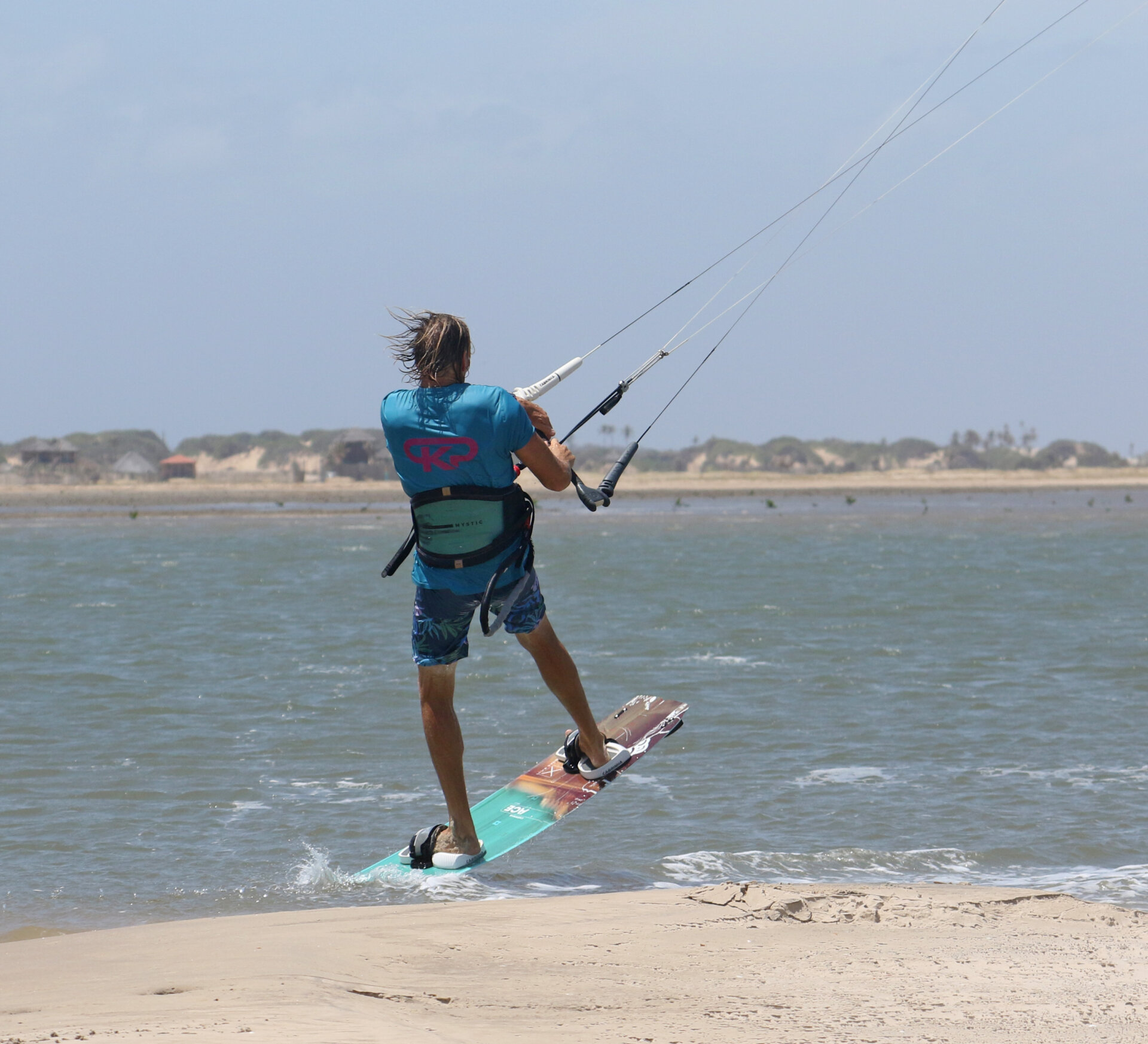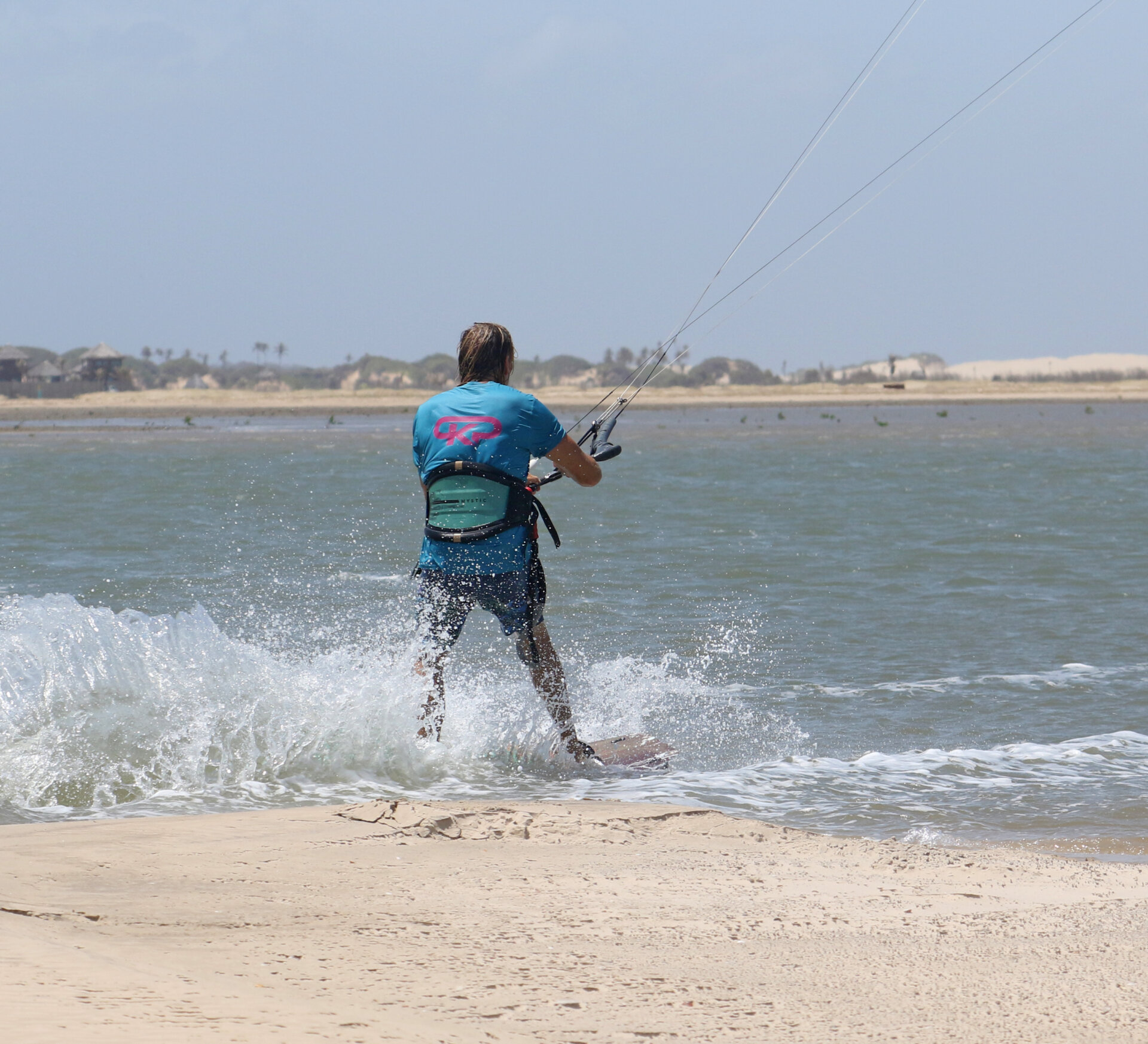

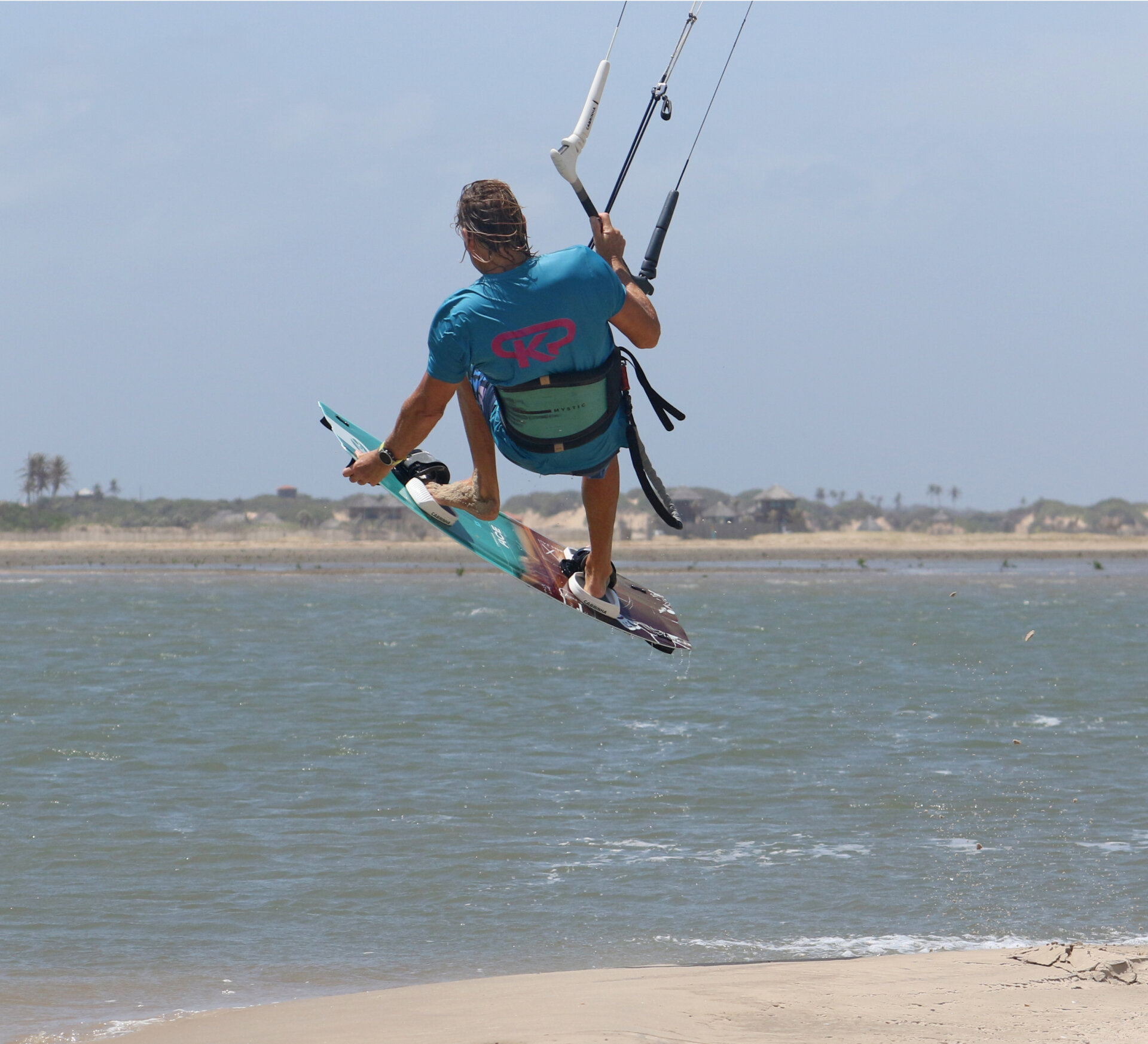
The Foot Plant Transition is a veritable blast from the past, conjuring memories of Vari and the original rock star crew going absolutely bananas in Los Roques all those years ago. The great news is, if you’ve been working on the beach bounce from last issue you’ve already got the beach approach and depart prep done! If you haven’t already, it’s also worth honing your grabbed jump transition and then perfecting the foot out variant. These two will polish the combo of your one-handed kite diving skills, whilst you’re busy with the minor inconvenience of both freeing and replacing your foot, and they will also help no end with your landing. Final thought on wind direction here. You really want to try this onto a sand bank with some offshore bias in the wind. This way you can use the kite to pull you downwind away from your landing zone, rather than back the other way!
With these chestnuts in mind, let’s have a look at what you need to do.
The Approach Pic A
This is where your beach bounce comes in rather handy. You should have a pretty good idea of take-off speed, distance from beach and kite send. It’s all going to be very similar here. Line tension is your friend. Edging hard will reduce your speed, keep tension and enable you to judge when to send the kite. It’s also worth wiggling your front foot loose in the strap so that it’ll slide out easily when required. You need to be positive with your bar input as you want the kite moving up to create early lift. You can see that Christian is on a hard edge, driving upwind and he’s given the bar a decent send with his back hand whilst his front hand is stretched out forward to lead him upwind and be ready to grab the board extremely early.
Take Off Pic B
Timing is key here. The aim is to take off early, pre-empting your kite. This way you’ll be in the air before the kite has had a chance to travel too far, which will make the later part of the move considerably easier! As long as you’ve given the kite a short but sharp send, the kite will be moving and ready to lift you as soon as you ask it to. You aim is to kick against your edge to help the kite lift you up off the water. The hard carve will kill your speed and forward momentum so you shouldn’t float too far once you’ve popped. Here Christian carves up and stamps off his back foot, pulling in on the bar a touch. He’s reaching forwards towards the nose of the board, looking for the grab. You can see from the lines that his kite hasn’t gone past 12 o’clock as he’s stamped early.
Foot Out Pic C.
Time is of the essence. There’s not much of it, so you quite literally need to get a wiggle on! Lift your front knee high to your chest and focus on the board, grab it around the fin with your front hand. Hold your board toe side edge up, so that you can slide your foot down whilst lifting your board off it. You’ll be grateful now if you pre-wiggled your front foot loose! It’s imperative that you keep the bar in around the sweet spot to keep support and float. You can see in the photo that Christian hasn’t travelled far between now and the previous one, but he’s already got his front foot out.
The Plant Pic D.
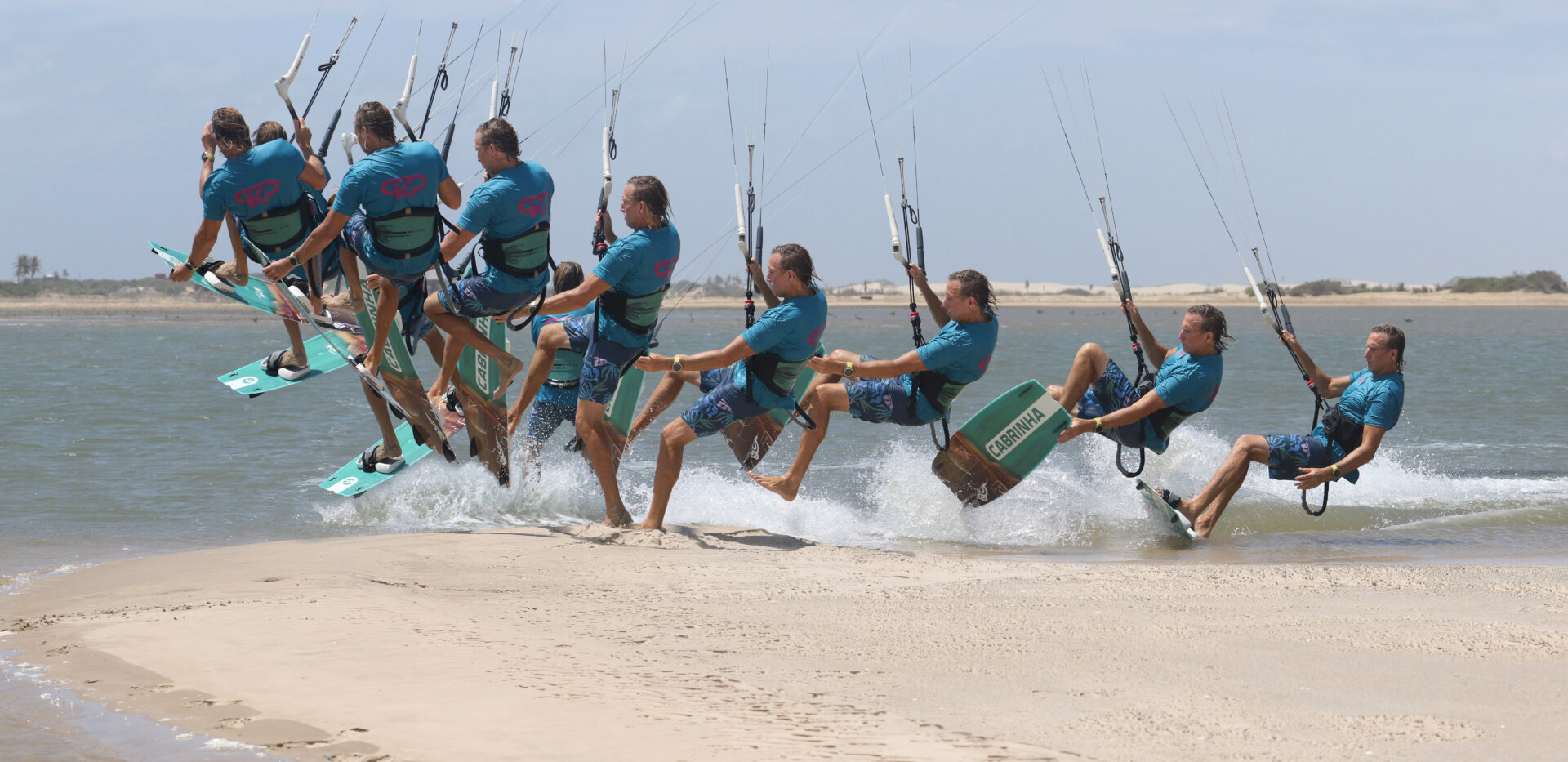
You’re now primed to plant your front foot. Stretch your leg out in anticipation. This will keep you high and make the second half of the move easier, whilst also enabling you to absorb any impact if you’ve come in a bit too fast. Your kite will have travelled past 12, so you can brake by pulling the bar in a little more and slow your forward momentum. That said this is all happening rather quickly! You can see that Christian is looking at where his foot will land and has stretched his leg forward. As he lands and plants his foot, he absorbs the pressure by bending his leg. This also coils the spring and will give him something to launch off. By having your foot in front of you, you have more time for the next bit. If you land over your foot, you’ll move past it and won’t have any oomph for the spring.
Spring Pic E.
This step is all about commitment. You can really spring up hard off your leg, whilst pulling in on the bar for some extra lift and dive your kite hard to pull you away from your sandbar. Stating the obvious this will only work if your kite hasn’t travelled too far back already! Christian holds the board away from him, extends up off his leg and pulls the bar in whilst diving the kite hard. Your commitment will pay off, as even though diving the kite with one foot on the sand feels wrong, it will reward you with lift and pull. This will actually give you more time and more chance to get your foot back in the strap and stomp the landing in the water.
Foot In Pic F.
Your one footed jump transition is about to come in very useful! Your next job is to get your foot back in the strap. Hold the board up and lift your knee so that you can hook your toes under the strap. As soon as you feel it you can pull the board to jam your foot snugly in. You can see that Christian has got a decent spring off the beach, he’s watching his foot in whilst diving his kite hard. At this stage your kite will be pulling, this is a good thing even if your synapses disagree.
Reception Pic G
Once your foot is in you can release the grab and drop your undercarriage for a tail first landing. Allow yourself to follow the pull, twisting your hips to get the board pointing off the wind. Christian touches down tail first with his board pointing slightly off the wind. He’s aiming at his kite to so that the pull and his momentum will keep him moving, and he’s replaced his hand on the bar. Nearly there!
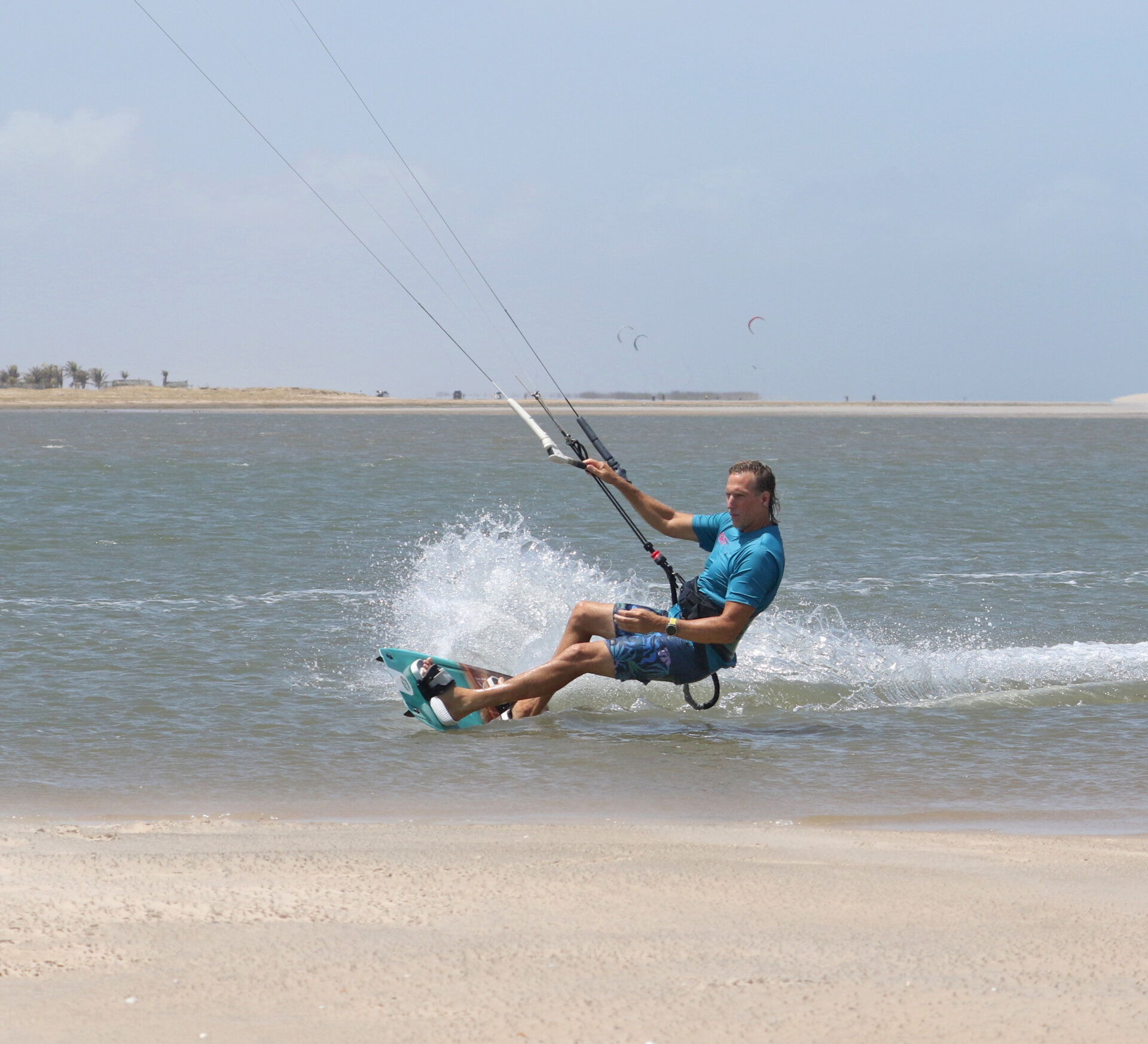
Claim It Pic H.
All of the above has happened pretty quickly and with only one hand on the bar. This means that even if you’ve reproduced a textbook version, your kite will still be diving hard straight down at the water. To keep it and yourself dry you’ll need to steer it back up sharpish. Remember your kite will only respond if you let the bar out to the sweet spot. If you don’t your kite will stall, you’ll sink and it’s back to the drawing board! Christian is frantically pull/pushing on his bar and will immediately ease it out so that his kite climbs and pulls.
Top Tips
It’s best to try this at a relatively slow speed on soft sand at first. This way you can concentrate on the carve, take-off and getting the foot out. If it’s slow and gentle, then you have the option to stop once you’ve planted your foot. By doing this you’ll get your bearings and can then attack it with more verve. Once you spring and dive, you’re committing to the landing and more importantly the pullwhich means that you need to have the foot back in.
The best wind direction for learning is offshore to whatever you tend to plant your foot on. This will work if the wind is cross once you have it mastered, but it’ll be much harder to learn. Suffice to say this isn’t a move for any wind with some onshore in it!
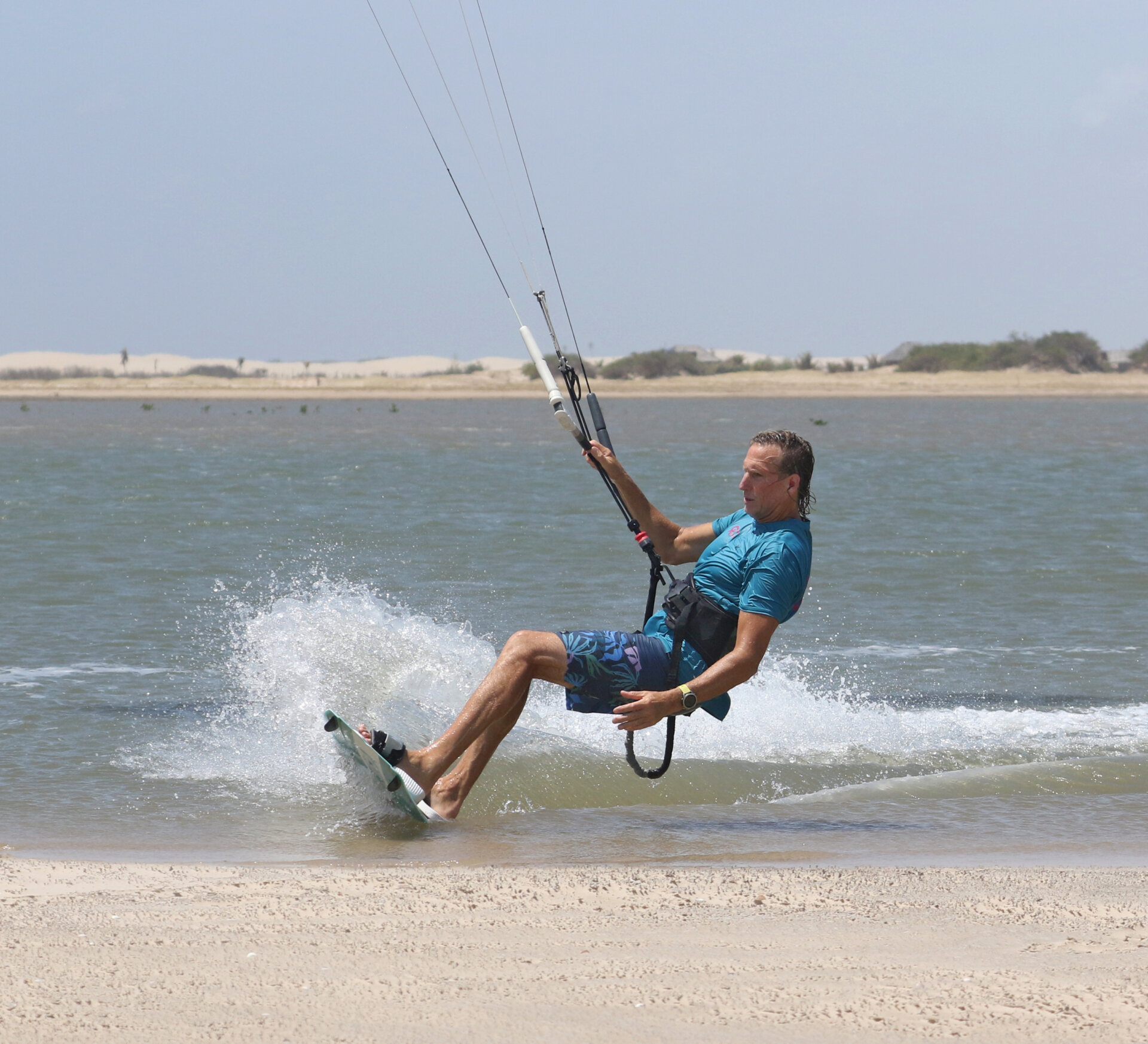
Loosen your front foot in the strap on your approach, so that it’ll slip out easily. If you fight to pull it out, you’ll be losing precious time and most likely concentrate too much on this and not enough on the kite.
Check out the sequence for a step by step run through and the video for real time glory.
Common Problems
If you find that your kite has moved too far back in the window, and that once you plant your foot you are either off balance or you have nothing to lift and pull you away. This can be a direct result of letting the bar out to turn more upwind as it allows the kite to drift back unhindered. Instead edge hard and make sure you kick off before the kite reaches 12. This way your kite will be more above you and it’ll be ready when you need it.
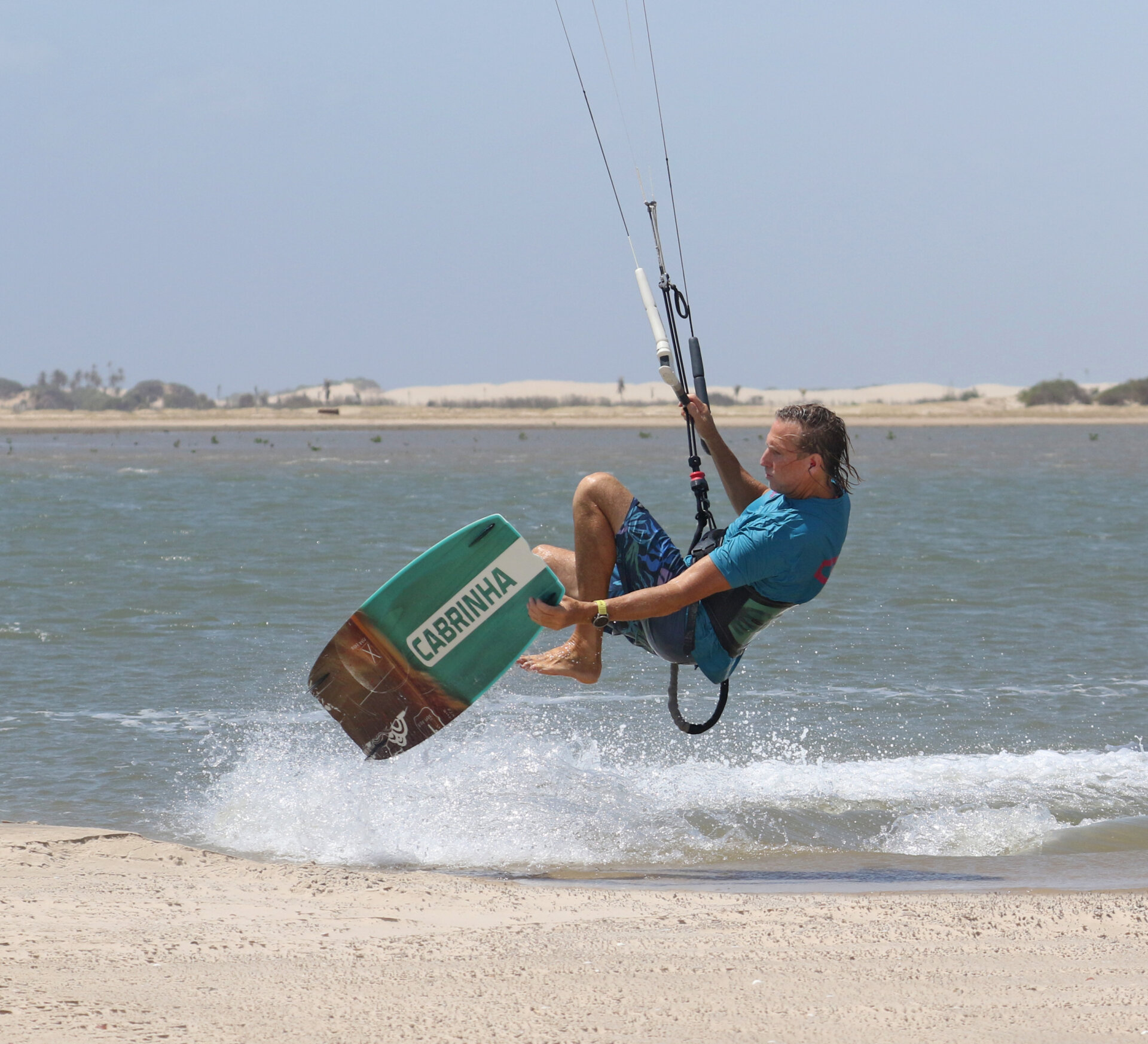
If you’re having trouble getting your foot back in. Chances are that rather than diving the kite for landing, you’re trying to get your foot in first. There is not enough time to do these two separately. The trick is to dive the kite, which will counterintuitively give you more time and float, which you can use to get your foot comfortably back into the strap.
Keystones
- Good edge, short sharp send
- Hard carve upwind with front hand off
- Early pop and pull
- Quickly grab and slip foot out, stretching leg out in front of you.
- Pull, hop and dive whilst pulling board onto your foot