

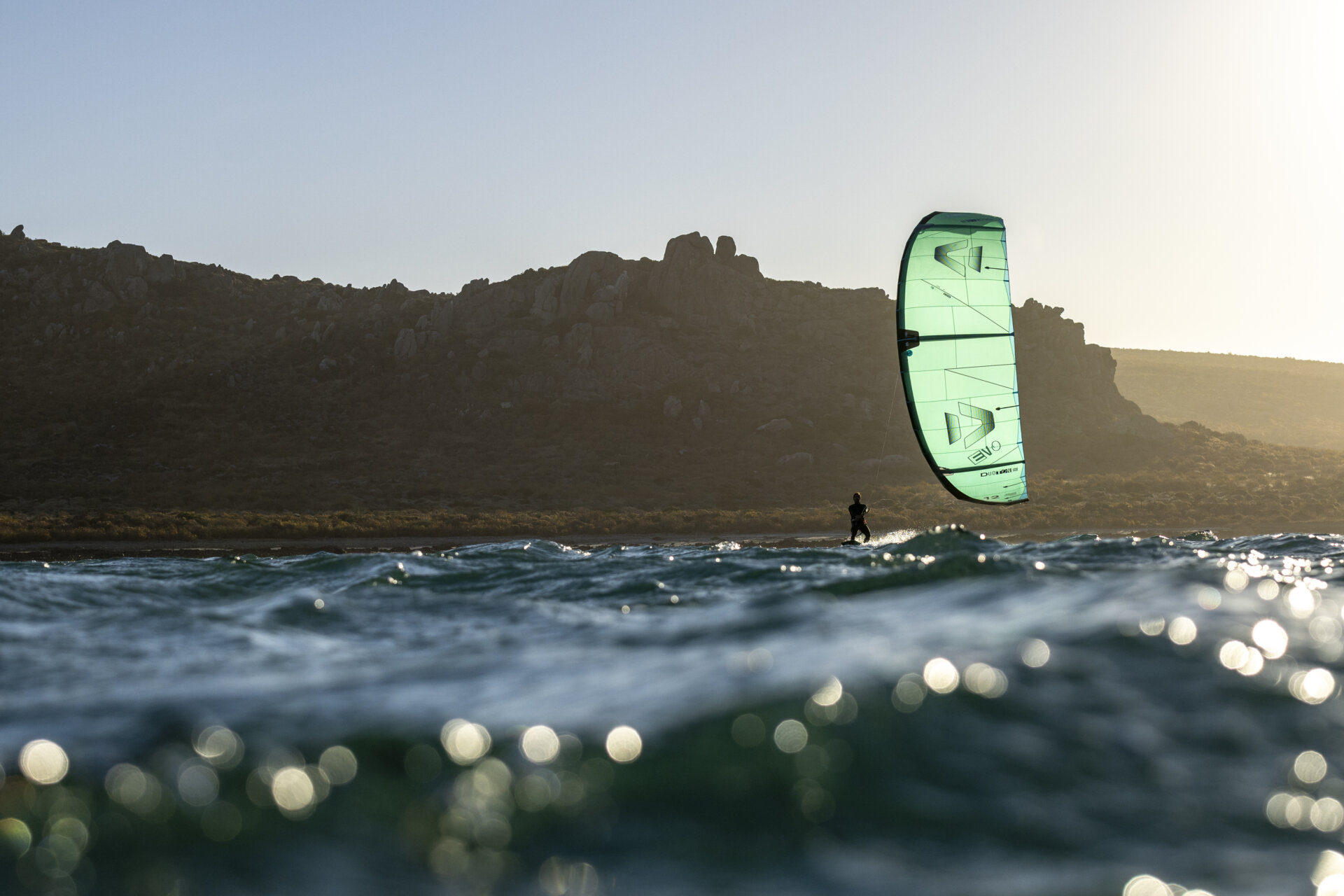
From the early days of freestyle competition to global expeditions, product development and a lifelong partnership with Duotone, Reno Romeu has built one of kiteboarding’s most enduring careers. We caught up with the Brazilian rider to talk about growing up on the water, the evolution of professional kiteboarding, his passion for travel and what it really takes to remain relevant after two decades at the highest level.
Reno Romeu has been a familiar face in kiteboarding for as long as many riders can remember. A former Brazilian and South American champion, World Tour competitor, television presenter, product tester and long-standing member of the Duotone team, his career has stretched across several distinct eras of the sport.
He joined the brand that would eventually become Duotone in 2006 and, twenty years later, remains one of its most trusted riders. He is still regularly called upon for demanding photo shoots, remote expeditions and product development trips, while also helping to operate one of Brazil’s most ambitious kiteboarding destinations.
It is a remarkable level of longevity in an industry where professional careers can be brief and brand relationships often change with each new season. For Reno, however, it all started much more simply, with a childhood spent around boats and the ocean.
His father owned a sailboat when Reno was born, and much of his early life was spent travelling along the Brazilian coast with his family. He began sailing at around five years old and grew up with the ocean as a constant presence.
When kiteboarding began appearing on the beaches of Rio de Janeiro, Reno was intrigued by the colourful kites moving backwards and forwards across the skyline, although it was his father who first pushed the pair towards taking lessons.
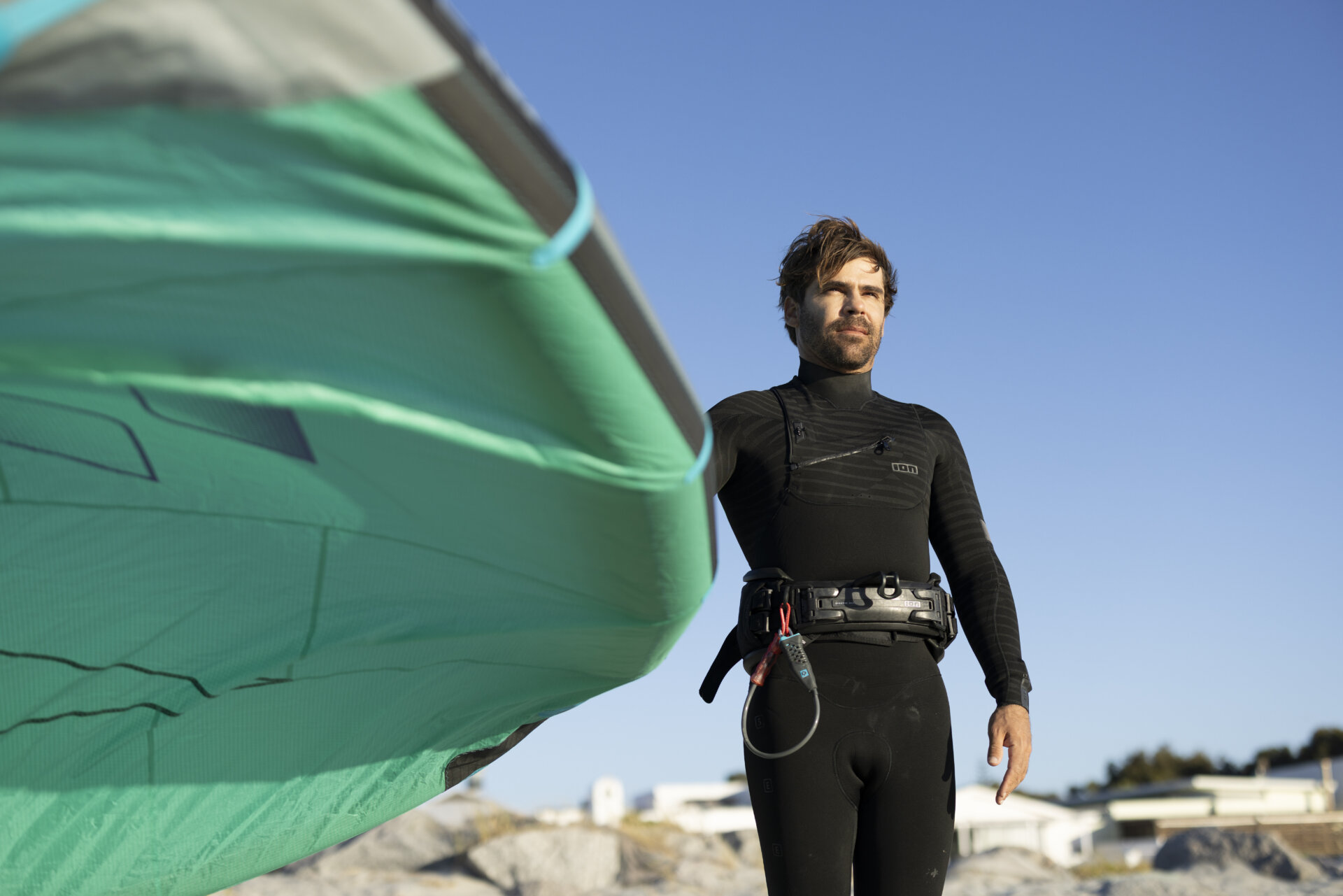
“I never really told my dad that I wanted to learn. He was the one who invited me to do the course with him. As soon as I started, I fell in love with the sport.”
“I never really told my dad that I wanted to learn,” Reno explains. “He was the one who invited me to do the course with him. As soon as I started, I fell in love with the sport.”
That first lesson in 2002 quickly developed into something much more serious. Reno began entering local competitions before progressing to the Brazilian circuit. In 2006, at just sixteen years old, he became Brazilian champion. Two years later, he added a South American title before stepping onto the international stage.
He would spend around eight years competing on the World Tour, eventually finishing as high as fourth overall. It was a period when freestyle kiteboarding enjoyed an extensive international calendar, with events taking place across Europe, Australia, Thailand, Mexico, New Caledonia, Morocco and beyond.
“You can plan a kite trip without even thinking about the forecast because you know you are going to have wind.”
The schedule brought exposure, experience and plenty of adventure, but it also placed enormous demands on the riders. A season could begin in March and continue until November, with more than one event taking place in some months.
“There was no stop,” says Reno. “You would finish the season in November and then immediately start training for the next year. By the end of the season, we were all riding worse than we had been at the beginning because there was so much travelling and competing.”
For Reno, that workload was compounded by the distances involved in travelling from Brazil. While many European riders remained on the continent between events, Reno preferred to return home whenever there was enough time. Even a break of seven or ten days could be enough to tempt him back to Rio before heading out again for the next competition.
“I love travelling and exploring, but I also love where I live,” he says. “If I had a week or ten days, I preferred to come home, train here and then go back feeling fresh.”
Kiting Beneath the Mountains
Rio may not offer the dependable trade winds found in northern Brazil, but what it lacks in consistency it makes up for with one of the most spectacular backdrops in kiteboarding. From the water, riders can look back towards the city, framed by Rio’s famous mountains and landmarks. On the right day, with wind and swell working together, Reno believes it can deliver an unforgettable session.
“To kite in Rio is beautiful,” he says. “You can see the mountains, Christ the Redeemer, Sugarloaf Mountain and the whole city from the ocean. The point of view from the water is spectacular.”
“When you are young, you want to prove that you are the best. The only thing that mattered to me was competing and winning.”
Conditions, however, can vary dramatically. Depending on the arrival of cold fronts, Rio can produce anything from flat water and no wind to powerful conditions with four-metre waves. It is a very different proposition from the northeast of Brazil, where the strength and consistency of the trade winds have transformed the region into one of the world’s leading kiteboarding destinations.
Reno has watched that transformation take place over the course of his career. Areas that once had only a handful of hotels and kite centres now offer everything from simple pousadas to luxury accommodation commanding thousands of dollars per night.
New airports and improved domestic flight connections have also made previously remote locations significantly easier to reach. Jericoacoara Airport, for example, places visitors within approximately twenty-five minutes of destinations such as Preá and neighbouring kite spots.
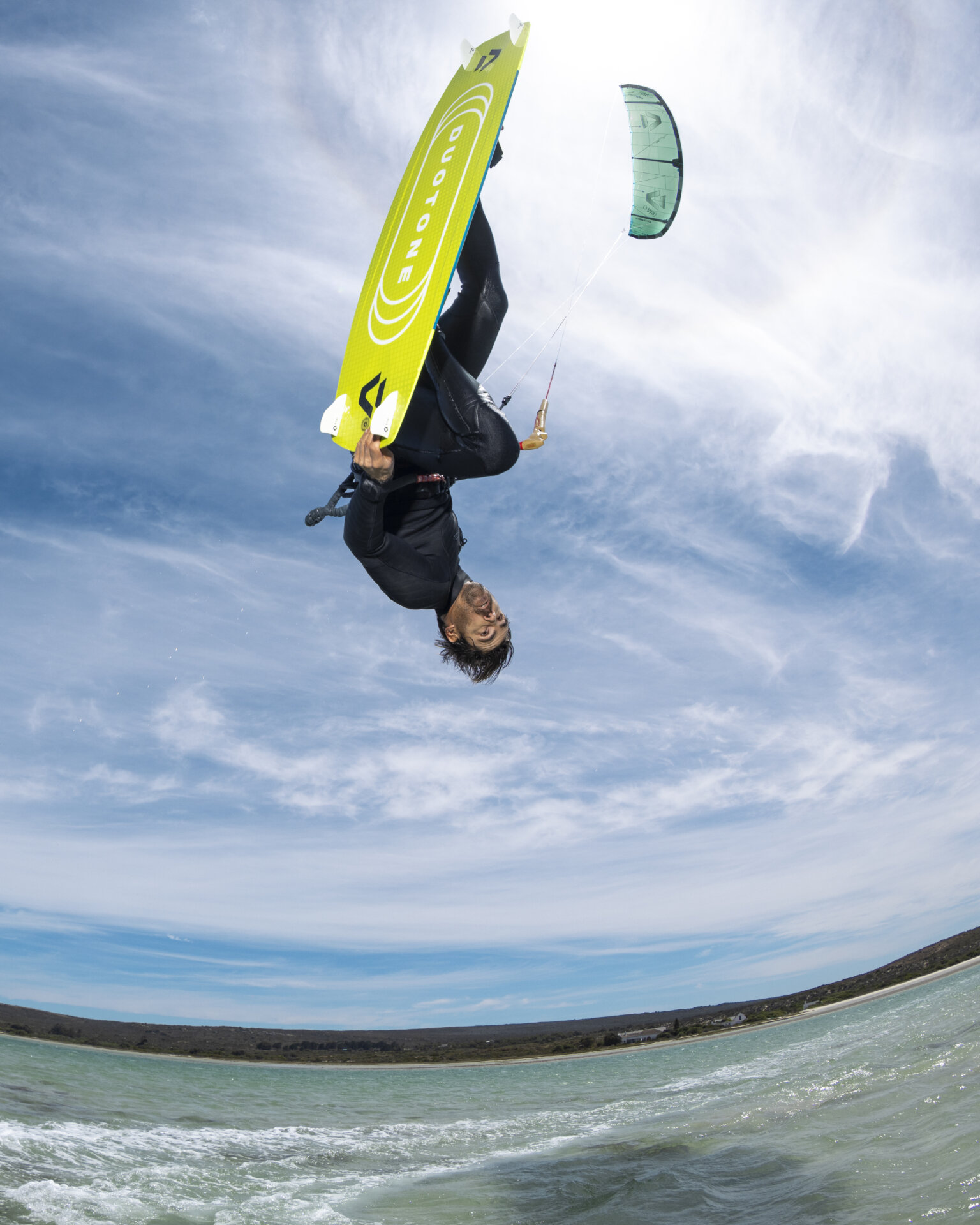
“I always had a great relationship with Duotone. I always believed they had the best team and were investing more than anyone else in developing the sport.”
The attraction is not just the wind but the sheer scale of the coastline. Reno describes a stretch of more than one thousand kilometres where riders can travel north through a succession of beaches, lagoons and downwind routes.
“You can plan a kite trip without even thinking about the forecast because you know you are going to have wind,” he says. “It is like planning a surf trip knowing the waves will be epic every day, or a ski trip knowing there will always be powder.”
The supporting infrastructure has grown alongside the sport. Riders can now hire teams to pump equipment, carry water, organise vehicles and follow them along the coast during extended downwinders. Reno believes this combination of wind, space, warm water and service has helped Brazil establish a unique position within global kite tourism.
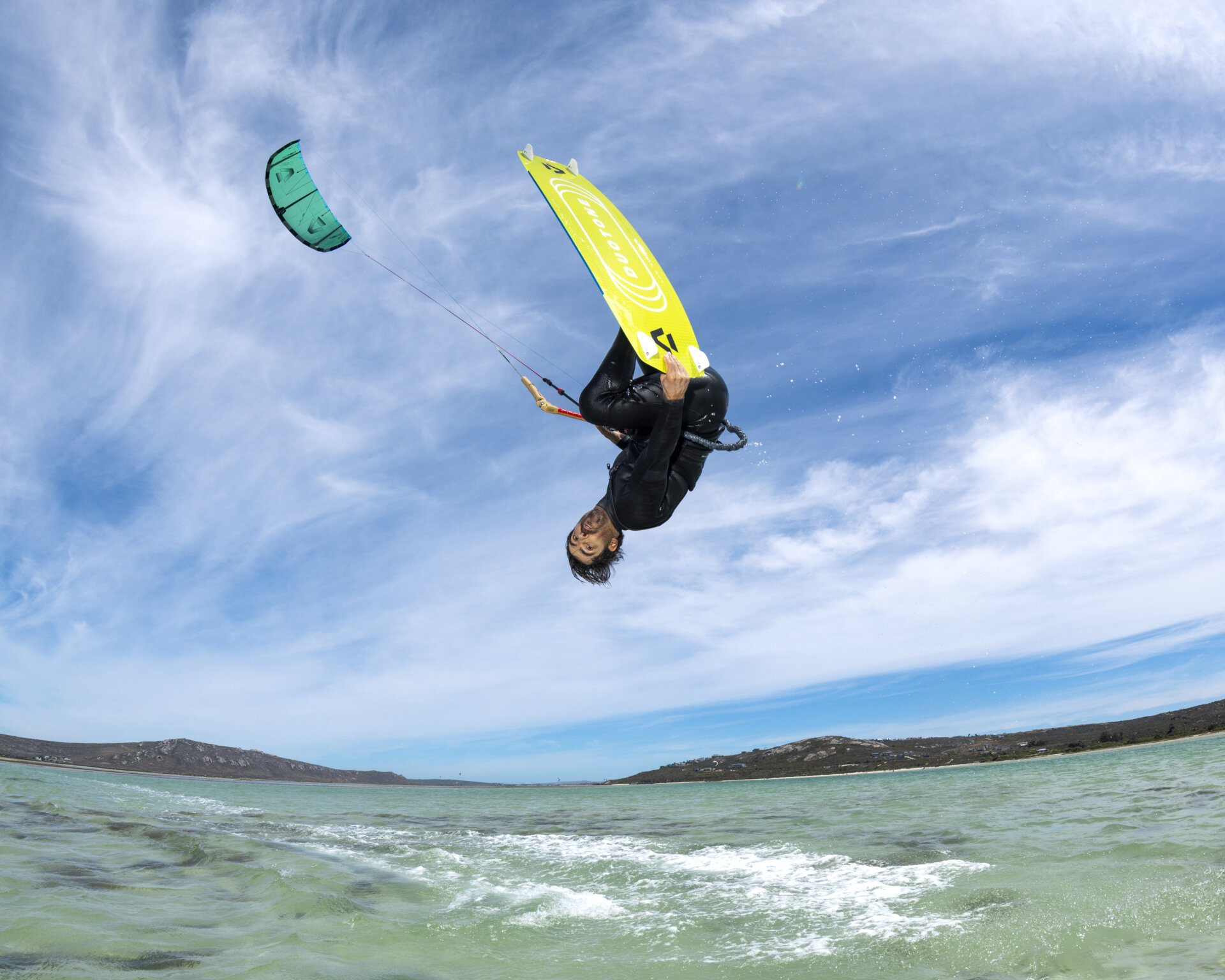
“For me, Los Roques is the only place I have to go back to every year. It gives me peace and refuels my energy.”
Joining the Young Blood Team
Reno’s relationship with Duotone began long before the brand carried its current name. He was initially supported as a national rider before attending one of the early North Kiteboarding Young Blood camps in Spain.
At the time, he was already outperforming some of the international riders at World Tour events and was viewed as one of Brazil’s most promising young competitors. His performance at the camp earned him a place on the international team. Like many ambitious young riders, Reno’s initial focus was entirely on competition.
“When you are young, you want to prove that you are the best,” he says. “The only thing that mattered to me was competing and winning. I did not understand the bigger picture.”
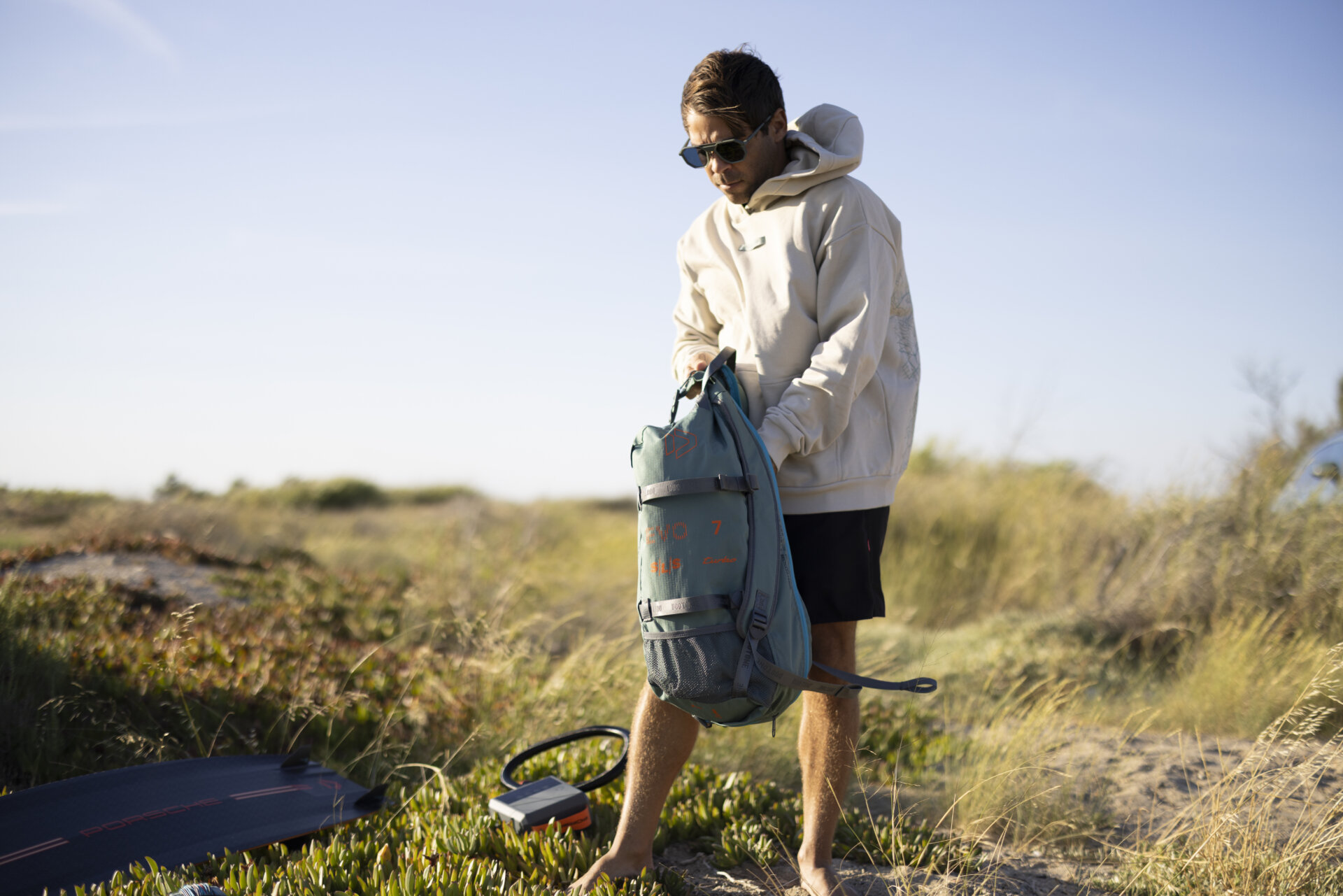
“Our goal is to make the easiest and most comfortable kite for the average customer.”
That bigger picture would become increasingly important as both his career and the sport evolved. Reno believes competition no longer holds the same influence over the wider kiteboarding market that it did during his early years.
The expansion of kiteboarding into multiple disciplines has created more opportunities, but it has also fragmented the competitive landscape. While freestyle once sat at the centre of professional kiteboarding, today’s riders are spread across big air, waves, hydrofoil racing, park riding and other disciplines.
At the same time, many recreational kiters are more interested in travel, lifestyle and memorable experiences than in following the latest competition results.
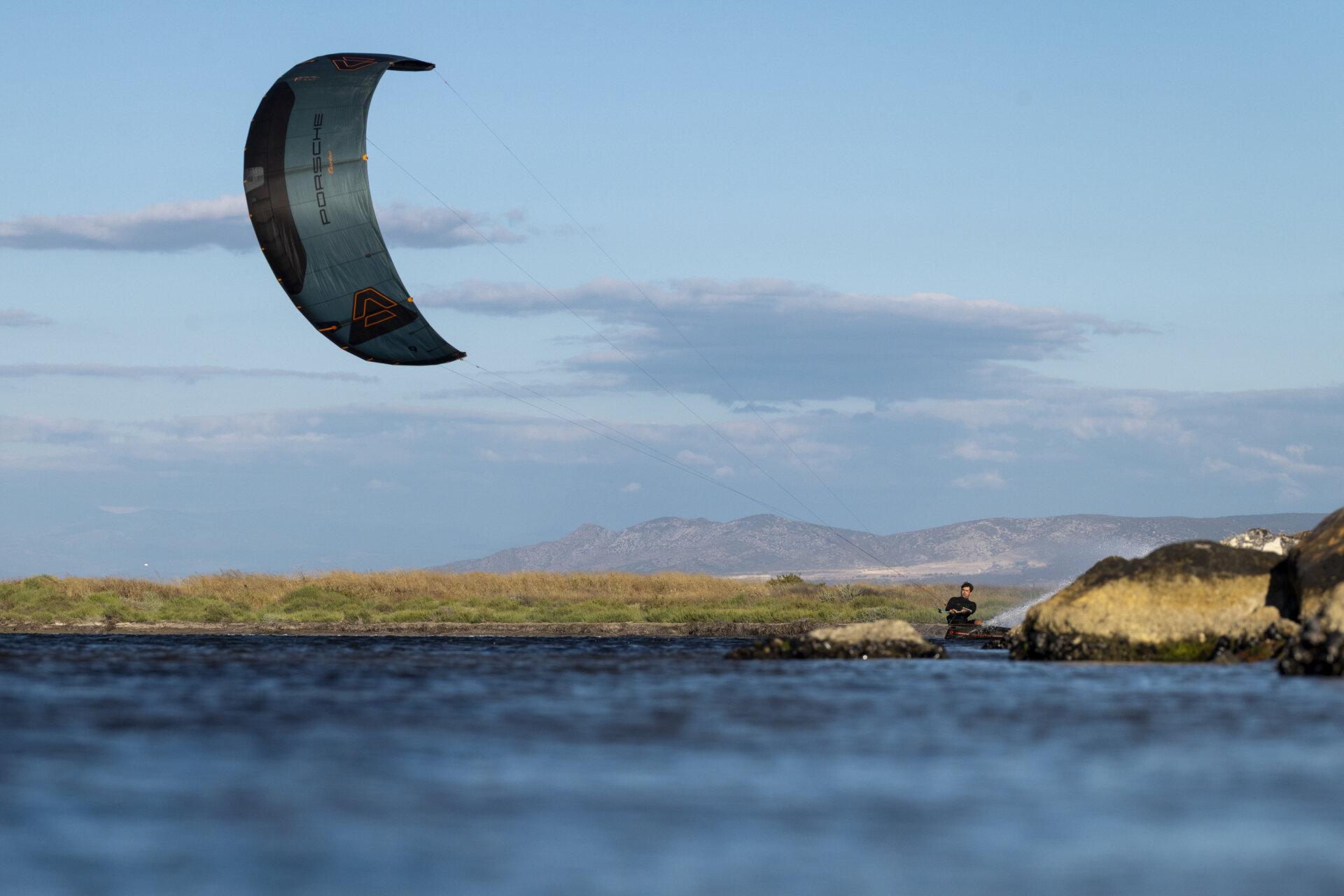
“You can have what feels like the perfect kite and then change the stitching on one seam. The kite is technically the same, but suddenly it feels completely different.”
“Most people practising kiteboarding today probably do not know who the current world champion is in each discipline,” says Reno. “They are more interested in kite trips, good services, beautiful locations and having a great experience.”
That change helped Reno recognise that being a professional rider required more than podium finishes. It meant understanding the brand, supporting product development, creating useful content and becoming someone the company could trust. His relationship with Duotone has now lasted for two decades, making him one of the longest-serving figures within the organisation.
“I always had a great relationship with Duotone,” he says. “I always believed they had the best team and were investing more than anyone else in developing the sport.”
“Try to understand the company’s goals and work with them. They are not looking for a world champion who has a bad attitude on the beach.”
There was also a deeper alignment between Reno’s outlook and the way the brand presented kiteboarding. For him, the sport has always represented freedom, nature and the possibility of building a different kind of life.
“I try to encourage people to chase their dreams,” he explains. “I have friends who had experiences with me, changed their jobs and now have a much better life. Kiteboarding can send that message, but people can find the same feeling through whatever they are passionate about.”
Staying Relevant
Remaining a professional athlete for twenty years requires more than physical ability. Reno is open about the fact that his relationship with kiteboarding has changed since his competition days. He no longer feels the need to spend four hours on the water every day. A forty-minute session can now be enough. What has sustained his interest is the constant possibility of learning something new.
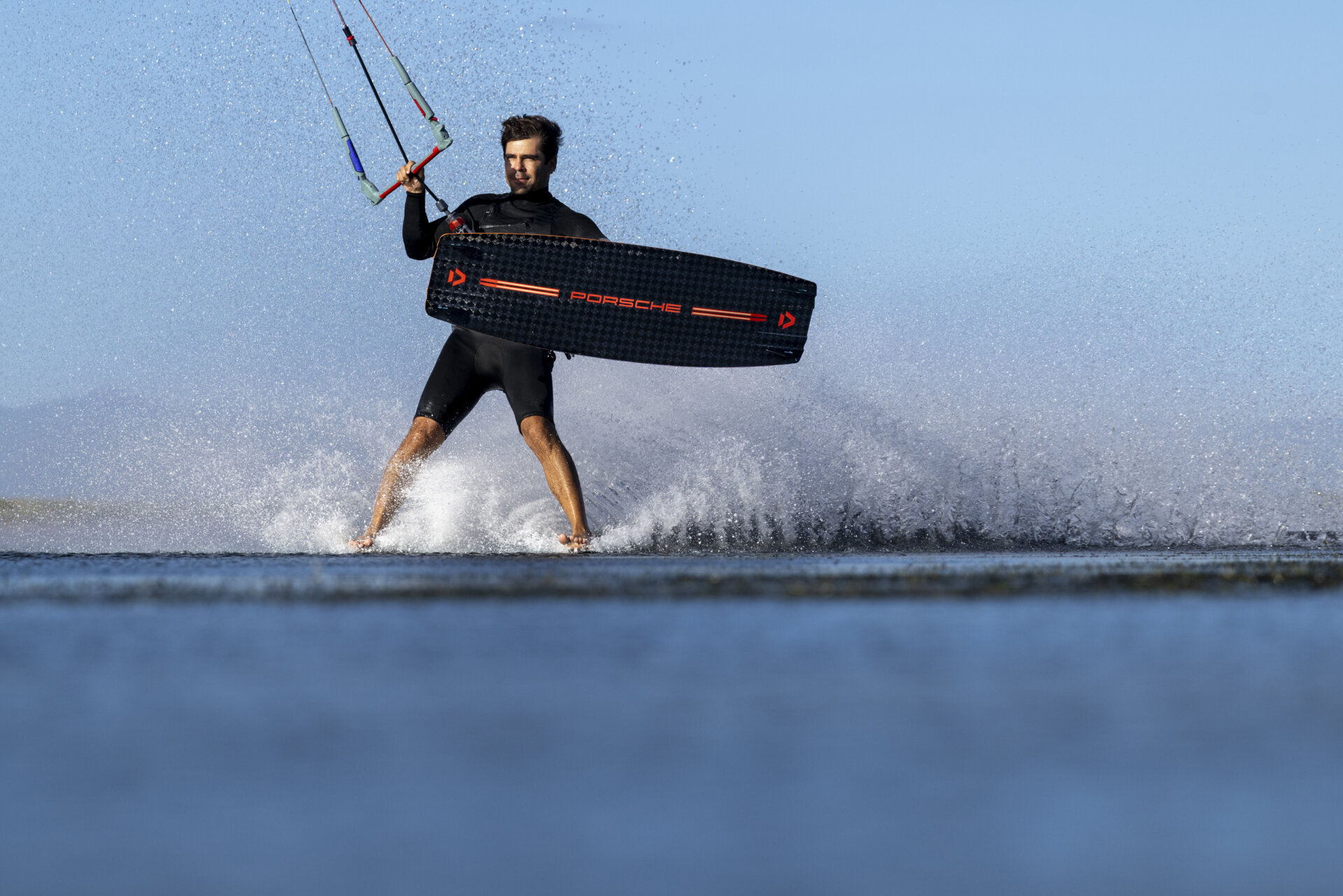
Kiteboarding has continued to evolve technically, while Reno’s own role has expanded into marketing, photography, filmmaking and research and development.
“I am a very curious person,” he says. “I like physics and aerodynamics. I like thinking about how the kite flies and how we can develop it.”
His experience behind the camera has also become a major part of his value to Duotone. Reno spent more than five years working on a Brazilian television series that took him to locations including Mongolia and Iceland. Producing programmes in demanding environments taught him how photographers and filmmakers think, where riders need to position themselves and what makes an image usable.
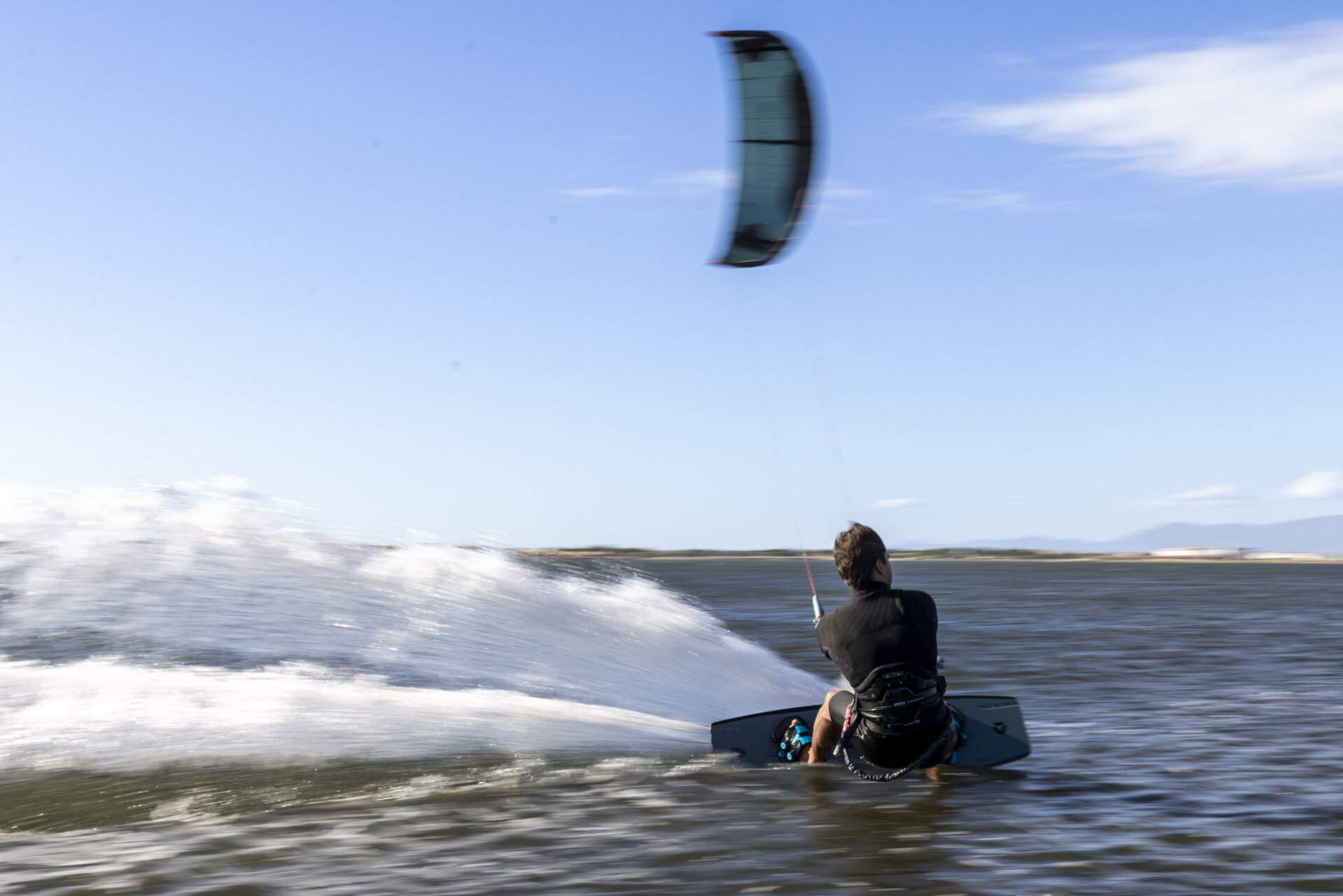
That knowledge now allows him to work efficiently on commercial shoots, particularly when conditions are difficult and the production team needs a rider capable of repeating precise movements.
“I know exactly what they are looking for,” he explains. “I understand how I need to position myself in the photo, what I need to do and what the Duotone market wants.”
It is perhaps no surprise that Reno is often among the first names on the call sheet when a shoot involves rough terrain, difficult access or challenging conditions.
The Place That Calls Him Back
Despite travelling extensively throughout his career, one location continues to stand apart for Reno: Los Roques in Venezuela. The remote archipelago has become somewhere he feels compelled to revisit every year. Its combination of clear water, flat-water lagoons, marine life and open downwind routes offers exceptional kiteboarding, but its deeper appeal lies in the sense of peace it provides.
“For me, Los Roques is the only place I have to go back to every year,” he says. “It gives me peace and refuels my energy so I can go home and continue working.”
That attachment eventually led him to establish the Reno Romeu Experience, an annual trip based aboard catamarans within the archipelago. The first event took place in 2016. Reno admits that the original motivation was partly personal: creating the trip gave him a reason to return to a destination he loved while also building a sustainable business around the experience.
The relatively moderate wind makes Los Roques well suited to riders wanting to improve technical tricks, while the abundance of flat-water locations creates endless possibilities for coaching and exploration.
Building the Ultimate Kite Club
Reno has since become involved in another major kiteboarding venture closer to home. Carnaúba Wind House is a large private members’ club in northeastern Brazil, with a Duotone Pro Center operating within the wider facility. The site includes accommodation, restaurants, a gym, sauna, recovery facilities, children’s areas, sports courts and access to a full range of kite and wing equipment.
Members purchase a lifetime membership that allows them to stay at the property for a set period each year. Accommodation and access to the club’s facilities are included, while members and their families can use the equipment available through the Duotone Pro Center. The concept has been designed to remove many of the logistical barriers associated with travelling for kiteboarding. Guests can arrive with hand luggage rather than transporting bags filled with kites, boards and foils.
“You can travel light, arrive on Thursday and go home on Sunday,” says Reno. “Everything is there: kites, boards, wings and all the equipment you can imagine.”
The centre is located within roughly twenty-five minutes of Jericoacoara Airport and currently has close to four hundred members. A particularly innovative element is the club’s “kite lift” system. Inspired by the way ski resorts transport visitors uphill, a buggy leaves the club every hour and carries riders to a selection of points further up the coast. Guests can then downwind back to the club or continue to another collection point further along the beach.
“When you go skiing, you take the lift up and only have to think about coming down,” Reno explains. “We wanted the same thing for kiteboarding. You jump in the buggy, go upwind and do as many downwinders as you want.”
It is a simple idea that solves one of the persistent problems surrounding downwind travel: organising vehicles, drivers, collection points and groups of riders. For Reno, it is another example of how the future of kiteboarding may depend as much on creating better experiences as it does on competition results.
Porsche Performance
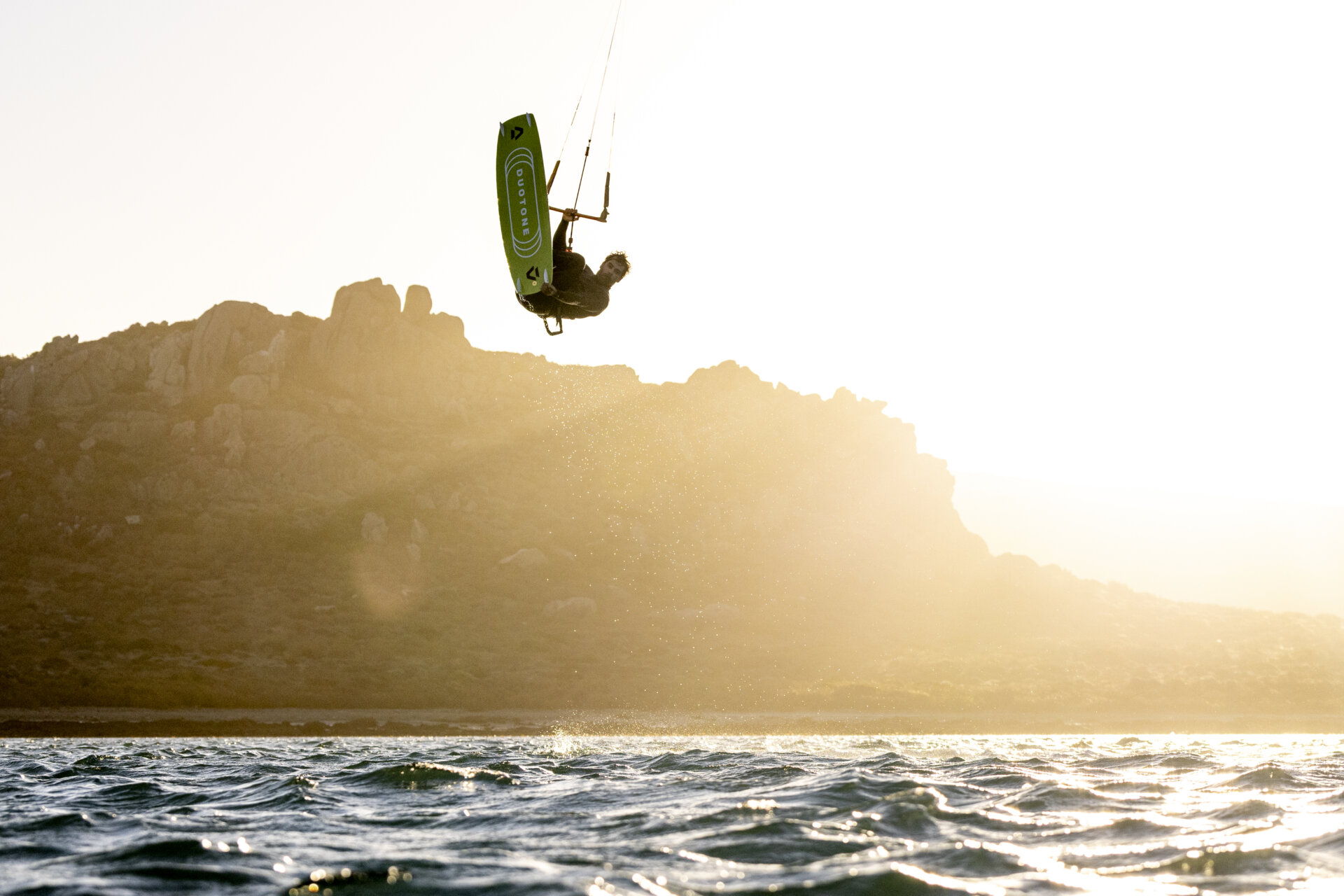
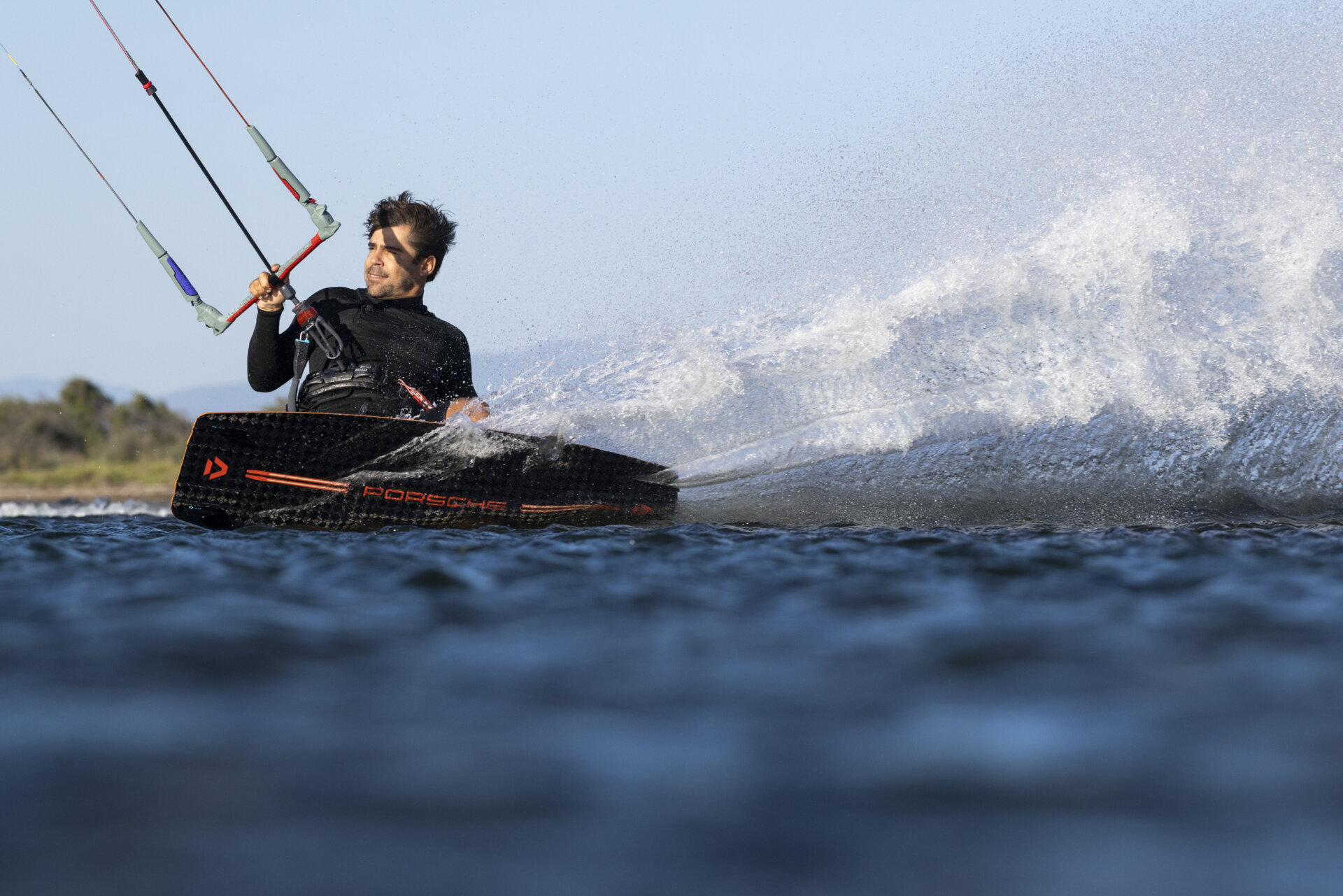
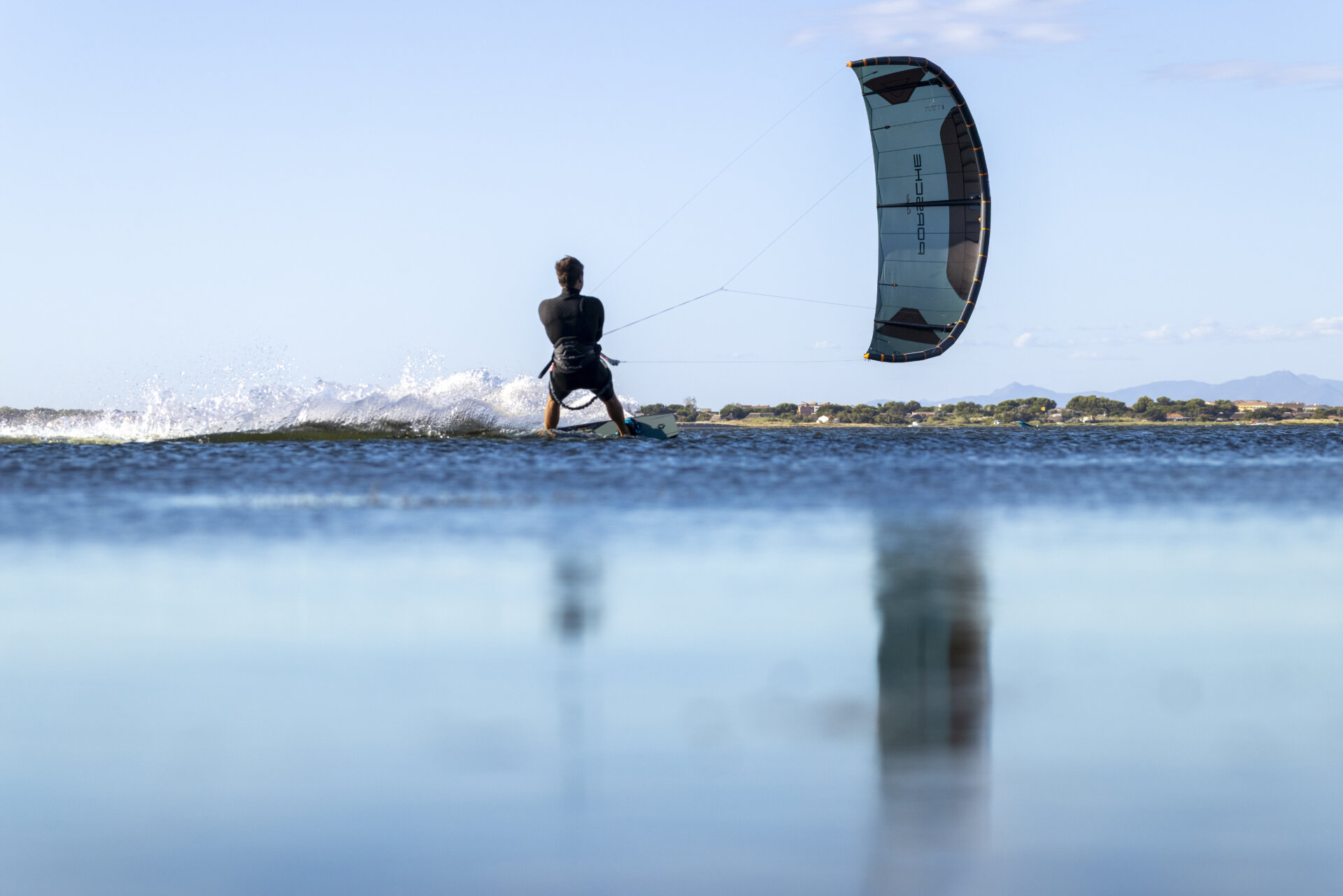
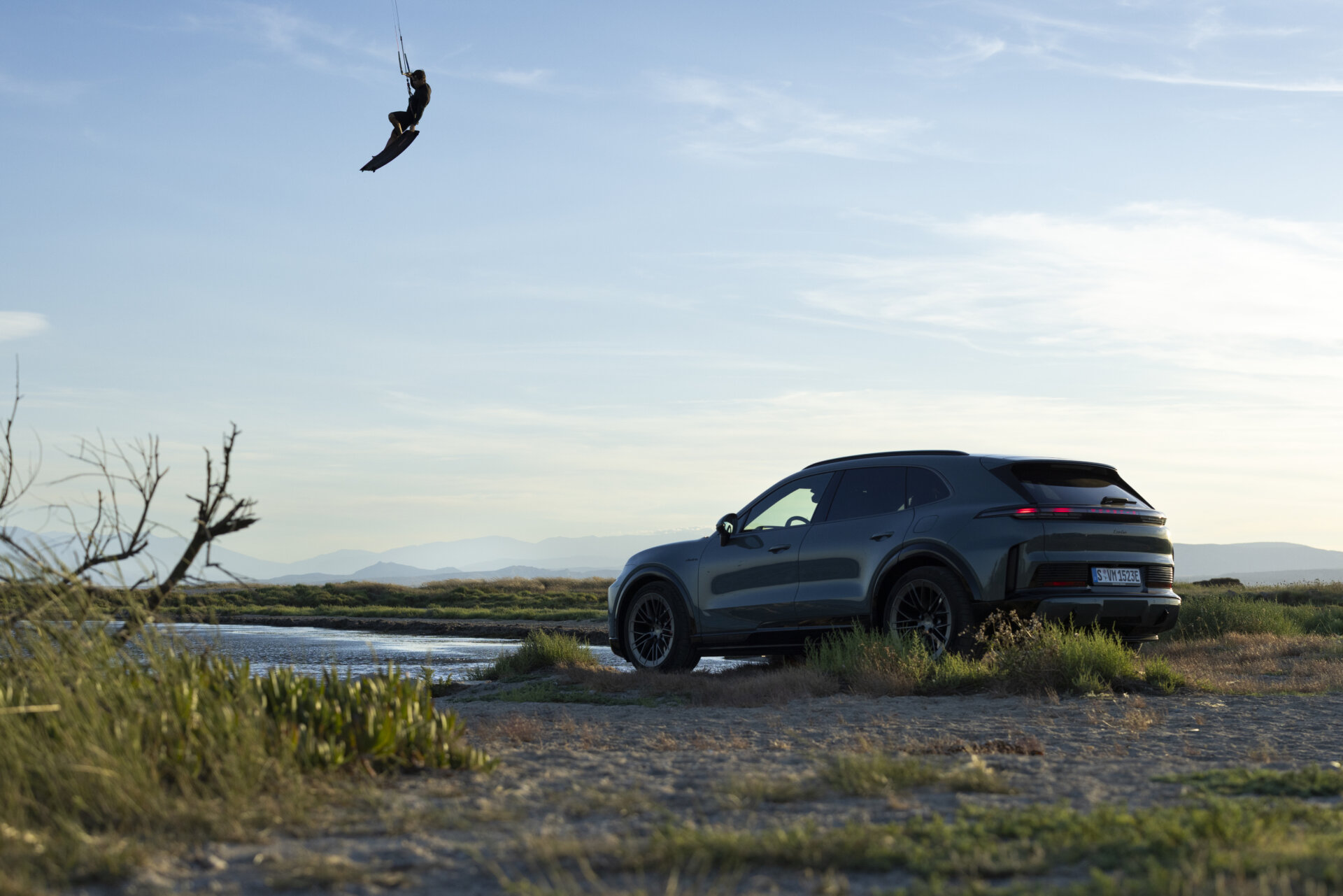
Reno recently travelled to Le Barcarès in southern France for Duotone’s latest collaborative shoot with Porsche. The campaign centres on a limited-edition collection inspired by the Porsche Cayenne Turbo Electric, including a special pre-release version of the 2027 Evo SLS, a matching Jaime SLS, control bar and electric pump.
The production involved a demanding schedule built around sunrise and sunset. The crew would leave the accommodation at around five in the morning, shoot until mid-morning, return home to eat and sleep, and then head back out for the evening light.
“We were sleeping for around six hours, but it was divided into two parts,” says Reno. “It was tiring, but we got some epic shots.”
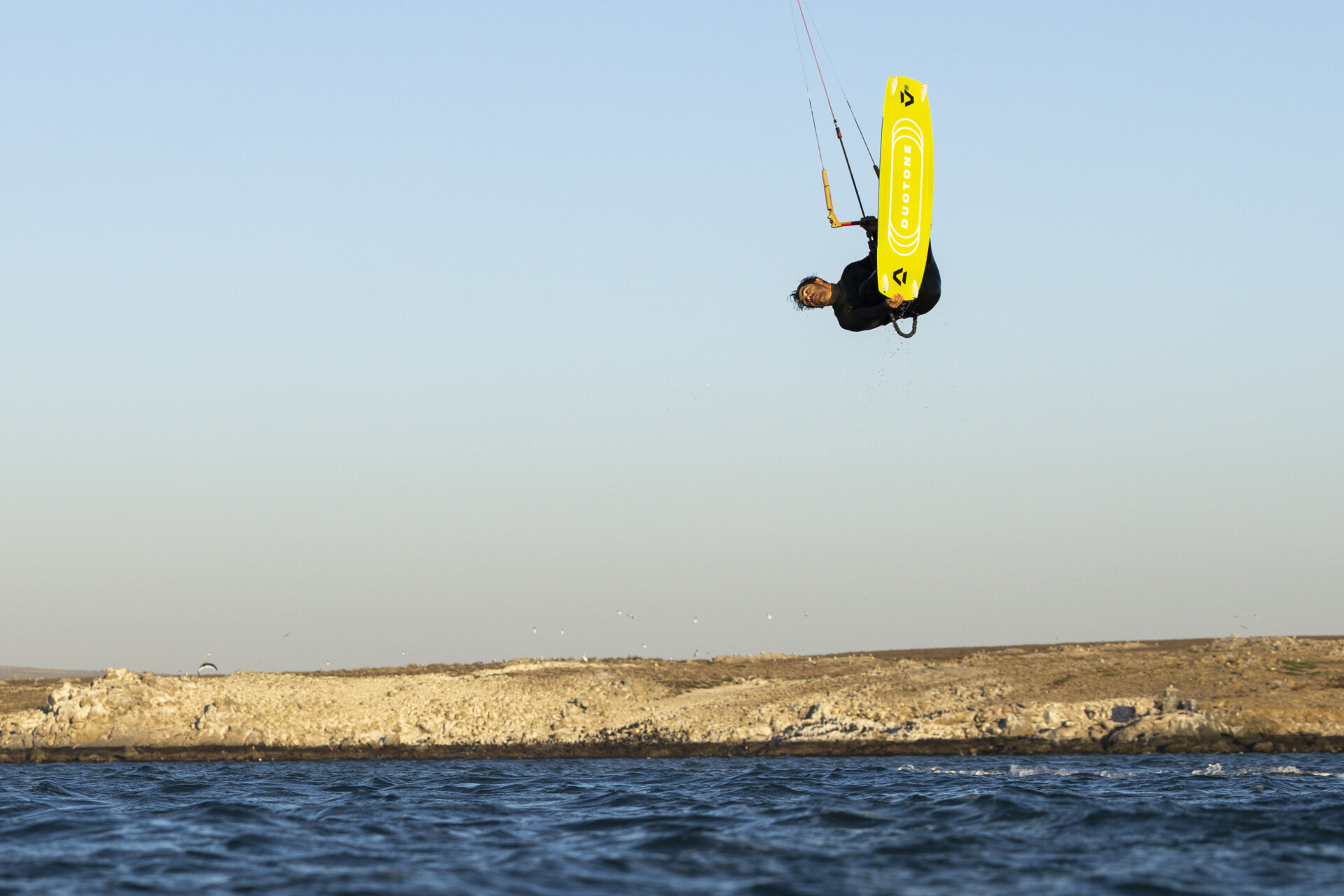
The process required Reno to repeat movements countless times while the production team experimented with angles, shutter speeds and the relationship between the rider, kite and vehicle. A kite might need to pass through a precise section of the frame or sit between two windows on the car, all while Reno dealt with inconsistent wind.
The vehicle itself provided another memorable element. With a reported output of 1,156 horsepower, its acceleration made a considerable impression.
“When you put your foot down, you are glued to the seat,” Reno laughs. “It is crazy.”
Inside the Testing Process
Beyond the campaign imagery, Reno has become deeply involved in Duotone’s development programme. He regularly travels to Europe to test kites alongside the design and research teams, with particular involvement in the Evo, Evo D/LAB, Evo SLS and Juice ranges. He also contributes to Rebel testing and attends larger development trips involving staff from across the business.
Testing can involve sizes from six to seventeen metres, with each kite used while underpowered, correctly powered and overpowered. The aim is not simply to create a kite that works for Reno. Every product must accommodate riders of different weights, experience levels and riding styles.
“Our goal is to make the easiest and most comfortable kite for the average customer,” he explains. “If the Rebel is easier for someone learning to jump, it is also easier for me to jump higher.”
The Evo is developed as a playful all-rounder, while the Rebel is focused more specifically on accessible jumping performance. The Neo is refined around wave riding and downwind use, where predictable drift and stability are essential. Reno is particularly enthusiastic about the challenge of refining small details. Kite development rarely involves making one dramatic change and immediately seeing a perfect result. Instead, performance can shift due to alterations measured in millimetres.
Changing a closing seam, adjusting the tension around the trailing edge or modifying the relationship between two panels can transform the way a kite flies.
“You can have what feels like the perfect kite and then change the stitching on one seam,” he says. “The kite is technically the same, but suddenly it feels completely different.”
That sensitivity makes consistent manufacturing an enormous challenge. While panels can be cut by machine, much of the final assembly remains dependent on skilled workers. The development process therefore extends far beyond the designer and test riders. Production teams work inside the factories to improve quality control, while separate departments experiment with materials that may not reach the market for several years.
Reno believes this work is often invisible to customers, particularly when discussions turn towards product pricing.
“People do not understand how many prototypes we make,” he says. “There are also prototypes for innovations that might not appear for five years or more. Somebody has to pay for that development if we want to keep moving the sport forward.”
The final product is the result of a large team rather than one individual. Designers, riders, material specialists and production staff all have to deliver their part of the process. That environment is not always peaceful, especially during group testing trips when strong opinions collide.
“There are a lot of discussions and sometimes a lot of fights,” Reno admits. “But I think that is what makes the product good. If everybody stayed relaxed and simply agreed with each other, it would not be the same.”
More Than Winning
After twenty years as a professional rider, Reno’s advice to the next generation is rooted in everything he learned beyond competition. Young riders naturally want to win. They want the equipment that will make their latest trick easier and the opportunity to prove themselves against their peers.
Those ambitions remain important, but Reno believes they must be balanced with an understanding of how the wider industry operates.
Professional riders ultimately depend on companies selling products. A rider who helps the brand develop equipment, reach customers and build a positive reputation may therefore be more valuable than a world champion who behaves badly or shows little interest in the company beyond receiving a salary.
“Try to understand the company’s goals and work with them,” he says. “They are not looking for a world champion who has a bad attitude on the beach, is rude to people or does not care about what is happening inside the company.”
For Reno, representing a sponsor means genuinely wearing the shirt. It means arriving when needed, creating content, helping with development and understanding how individual success fits within the larger organisation.
The stronger the company becomes, the more it can invest in new products, marketing, athletes and the future of the sport.
Reno’s career is perhaps the clearest evidence that this approach works. His competitive results first earned him attention, but it has been his adaptability, professionalism and willingness to contribute that have kept him at the heart of Duotone for twenty years.
He has evolved from a young competitor focused solely on winning into a rider capable of contributing across product design, marketing, production and customer experience. Through it all, the foundation has remained the same: a genuine love for kiteboarding, a fascination with how things work and a willingness to show up when the opportunity arrives.
In an industry that constantly searches for the next young talent, Reno Romeu has demonstrated the value of something much harder to manufacture: experience, reliability and staying power.