

Kitesurfing in Kalpitiya
Why Visit?
Kalpitiya has become one of Sri Lanka’s main kitesurfing areas, with two wind seasons, large lagoons and a good choice of spots around the peninsula.
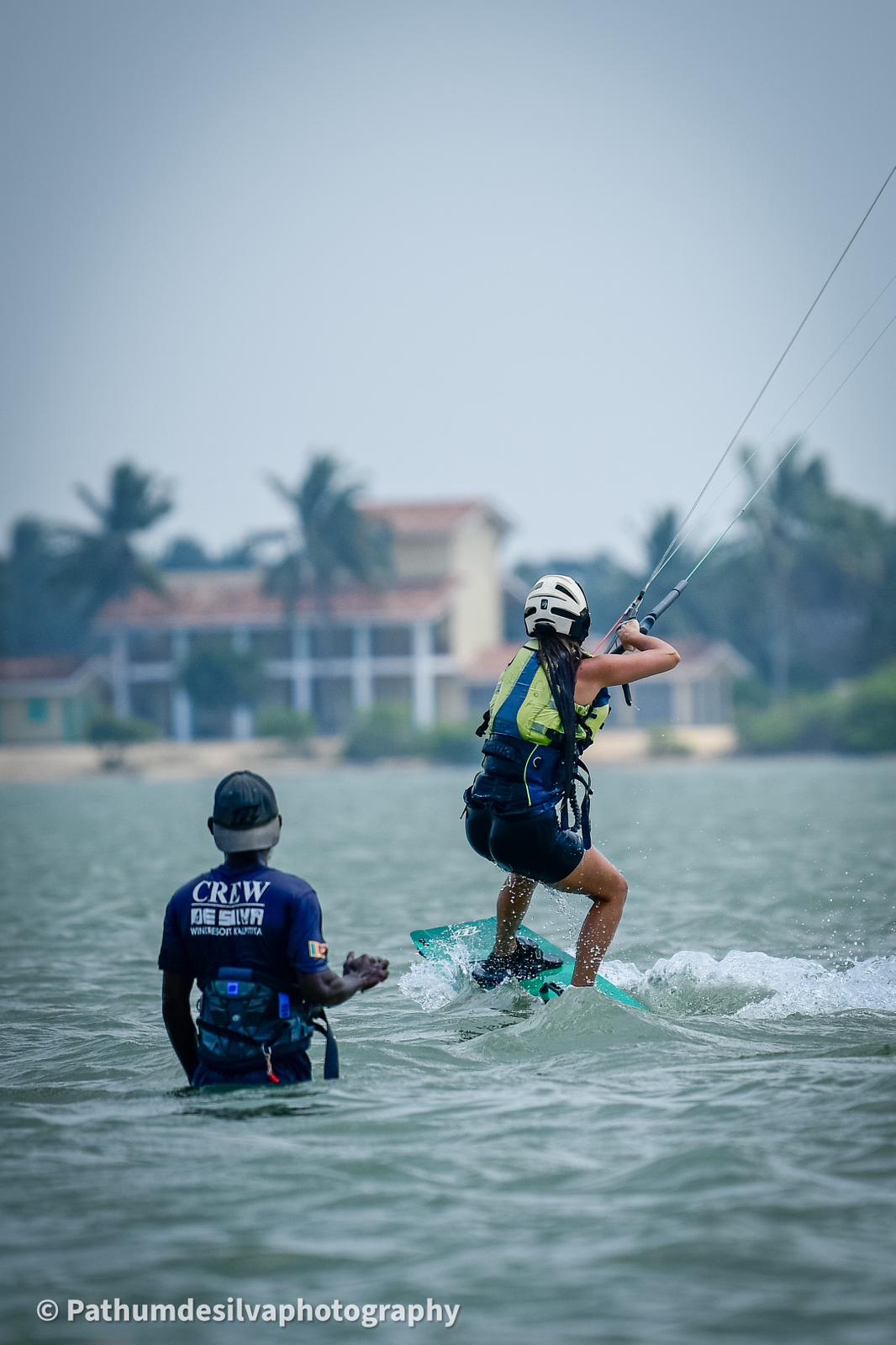
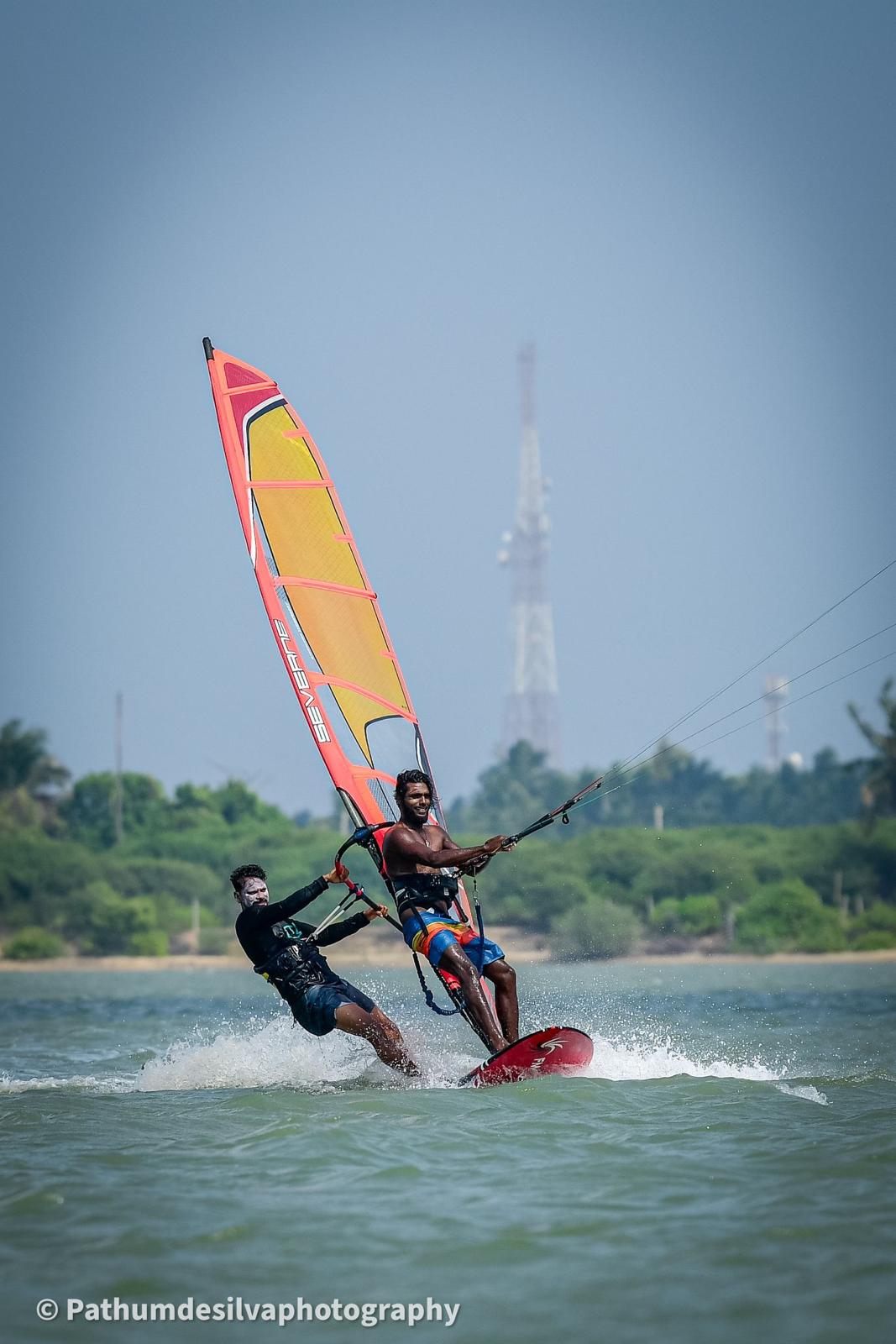
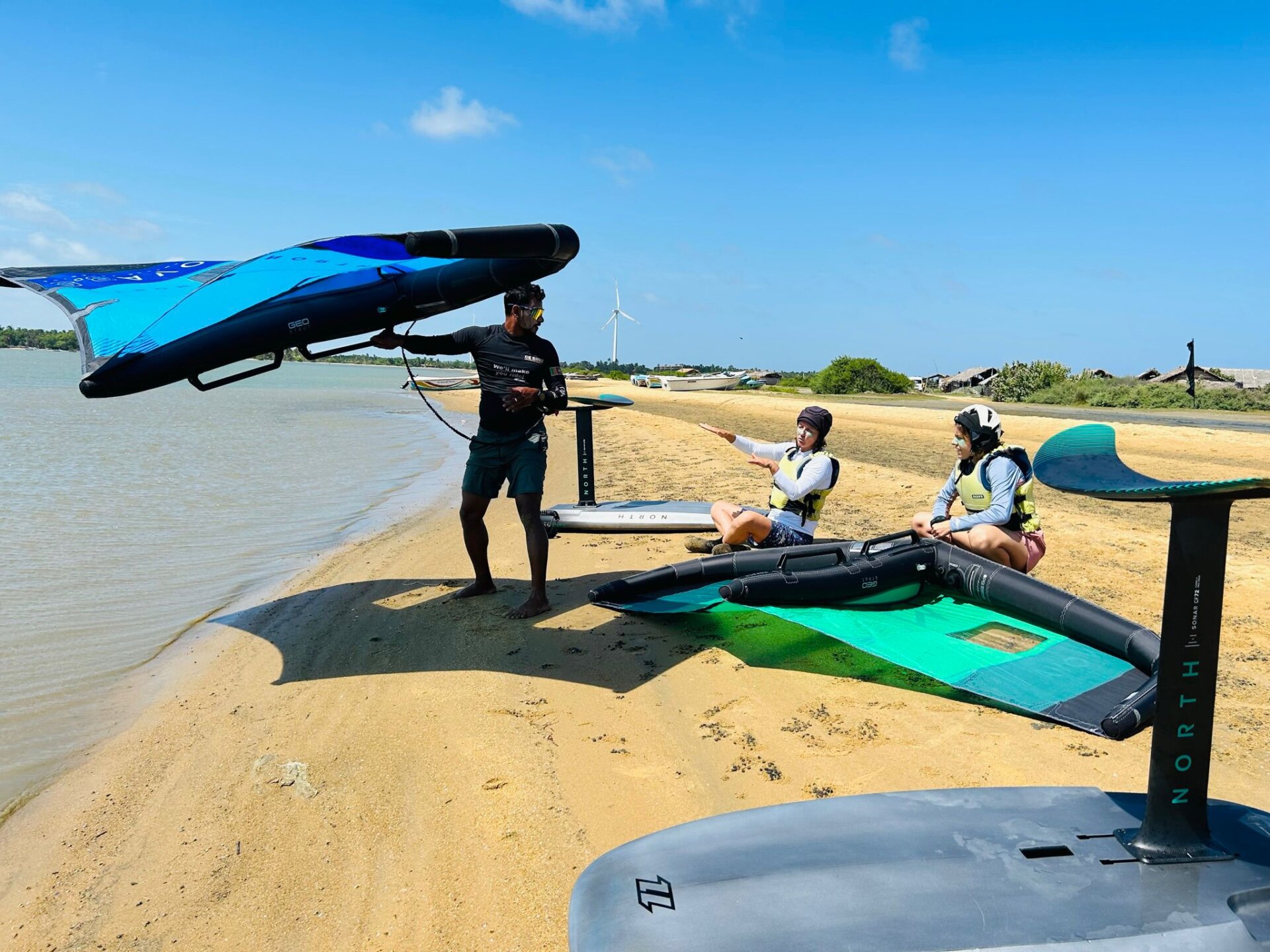
The Kalpitiya Big Lagoon is where most people first get on the water. There is plenty of space, predominantly flat water and large shallow sections, which makes it a good place to learn. Once you’re independent, the lagoon also has plenty of room for freeriding and freestyle.
Stay a little longer and the map starts to open up. Depending on the season and conditions, you can take a boat to Vella Island, kite smaller lagoons and sandbanks, join a downwinder or cross over to the Indian Ocean for a completely different session.
Schools & Recommended Businesses in Kalpitiya


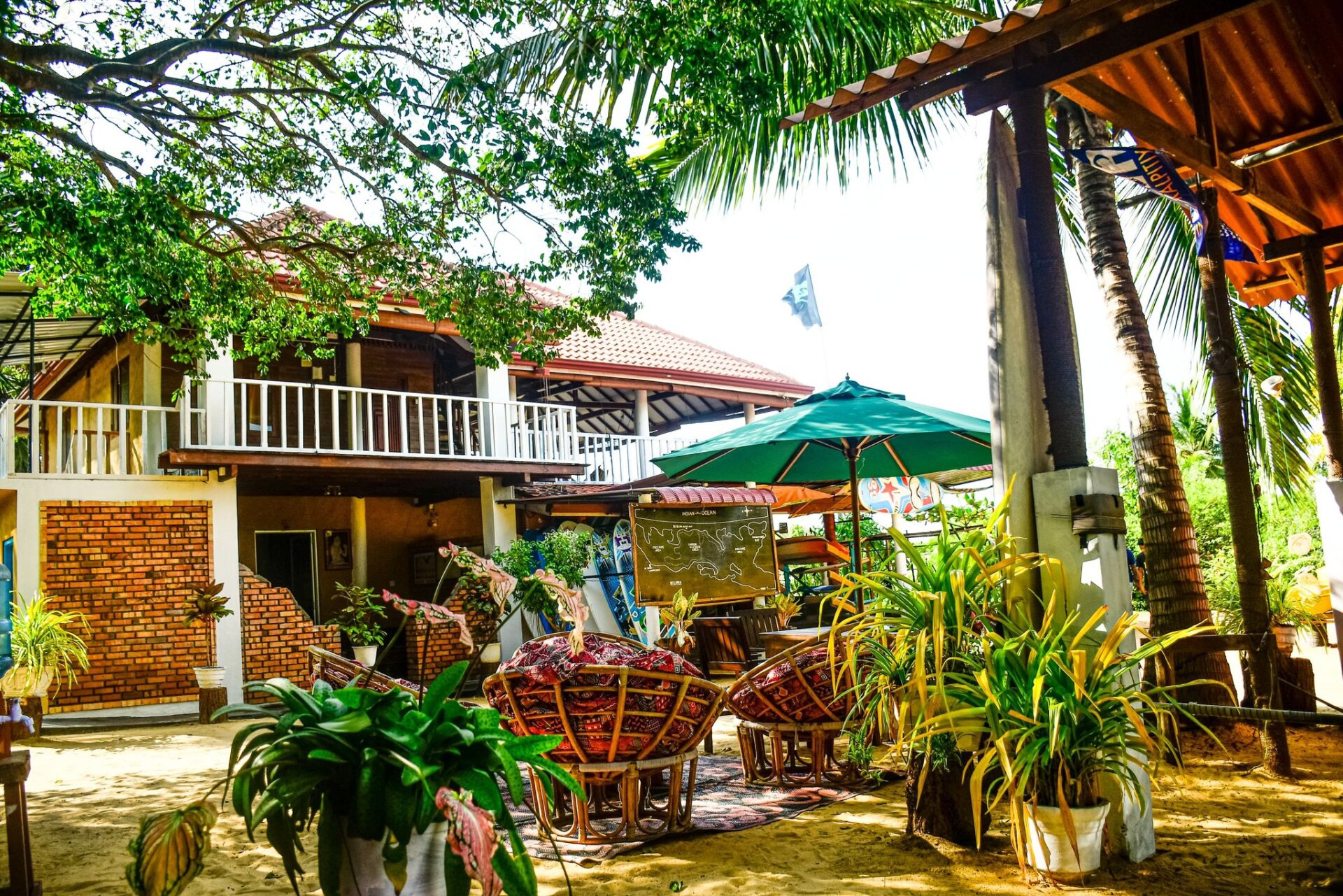
Those trips also show you more of Kalpitiya itself. The spots and camps are scattered between fishing villages, coconut land and small local shops, and things get quiet quickly once you leave the main road. Most evenings revolve around the camps and a handful of local restaurants and bars.
Wind and Weather
Kalpitiya has two main kite seasons, and they feel quite different.
The summer season runs from around mid-May to mid-October and is generally the stronger and more consistent of the two. The south-west monsoon brings wind that tends to start earlier in the day and can continue through much of the afternoon.
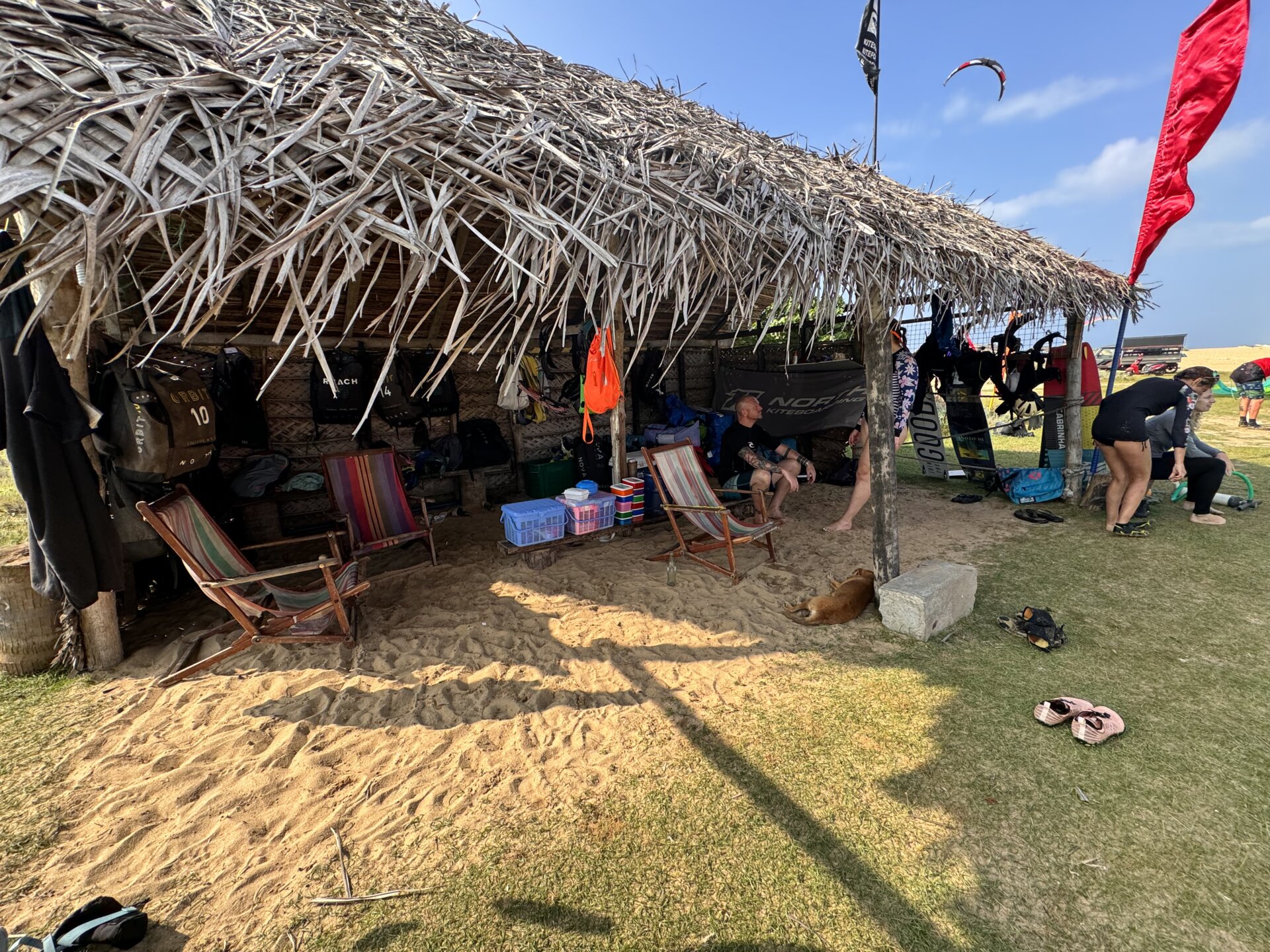
Winter runs from around mid-December to mid-March. The wind is generally lighter than in summer and often starts building towards midday before continuing through the afternoon.
The change in wind direction also changes where you can ride. Summer is the main season for trips to Vella Island, Mini Vella and Dream Spot, as well as downwinders around the Puttalam Lagoon. In winter, the smaller Kandakuliya Lagoon works particularly well for independent riders.
Temperatures stay warm throughout both kite seasons, and so does the water. A wetsuit is generally unnecessary; a rashguard and good sun protection are usually enough.
Outside the two main kite seasons, the wind is less reliable, so these months are not as consistent for a dedicated kitesurfing trip.
Getting Around
For everyday life in Kalpitiya, you’ll probably end up using tuk-tuks most of the time. They’re easy to arrange for a trip into town, dinner at another camp or a short ride between the villages.
Some kite schools provide their own transport to teaching areas and other kite spots. If you’re staying at a kite camp, you generally don’t need to hire a car simply to get to the water.
For airport transfers, day trips and longer journeys, a car with a driver is usually the easiest option. Drivers can also be arranged for several days if you want to combine Kalpitiya with other parts of Sri Lanka.
Public transport is available, but buses and trains are less convenient if you’re travelling with kite equipment or trying to reach one of the camps outside Kalpitiya town.
Food and Drink
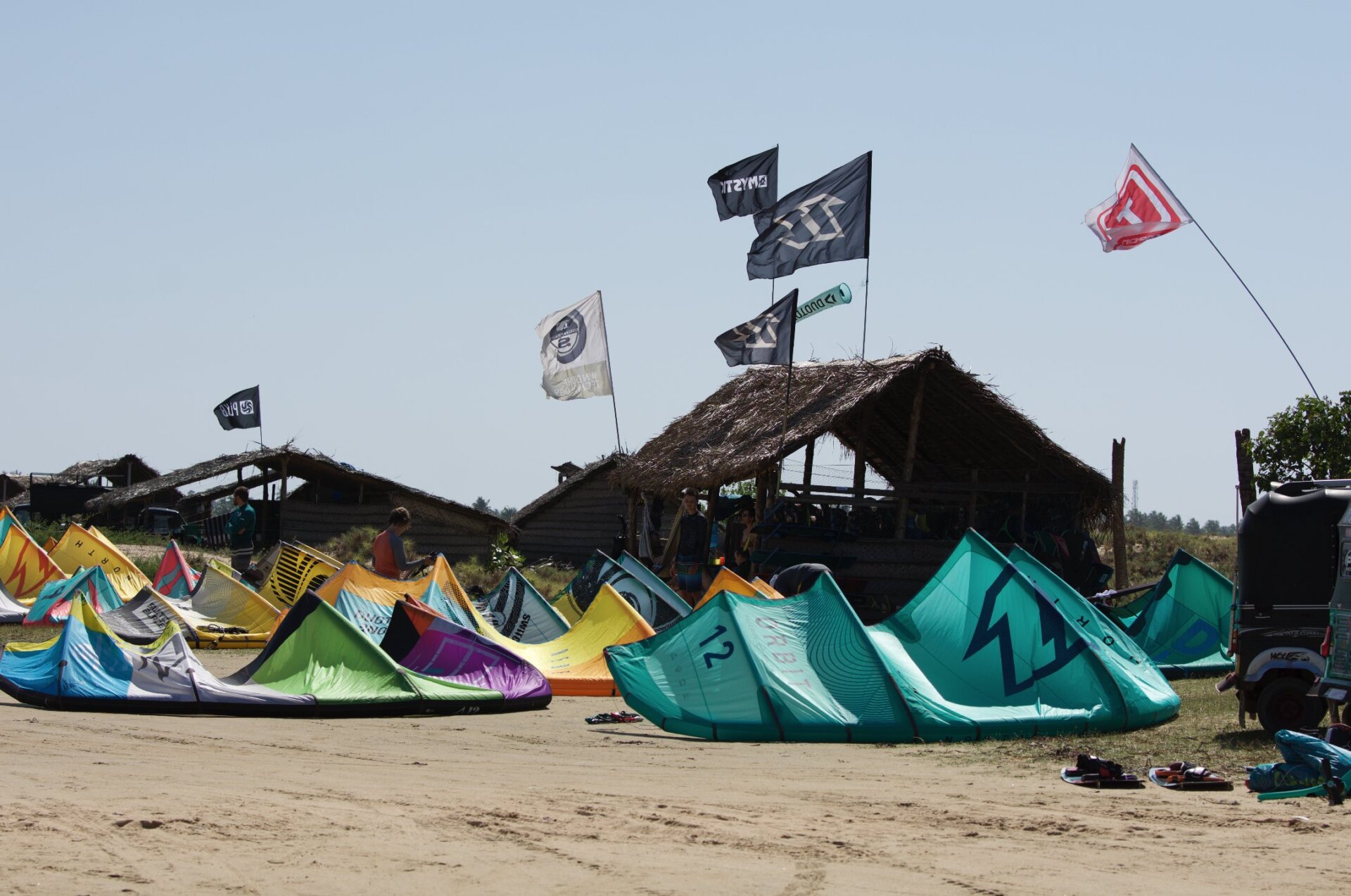
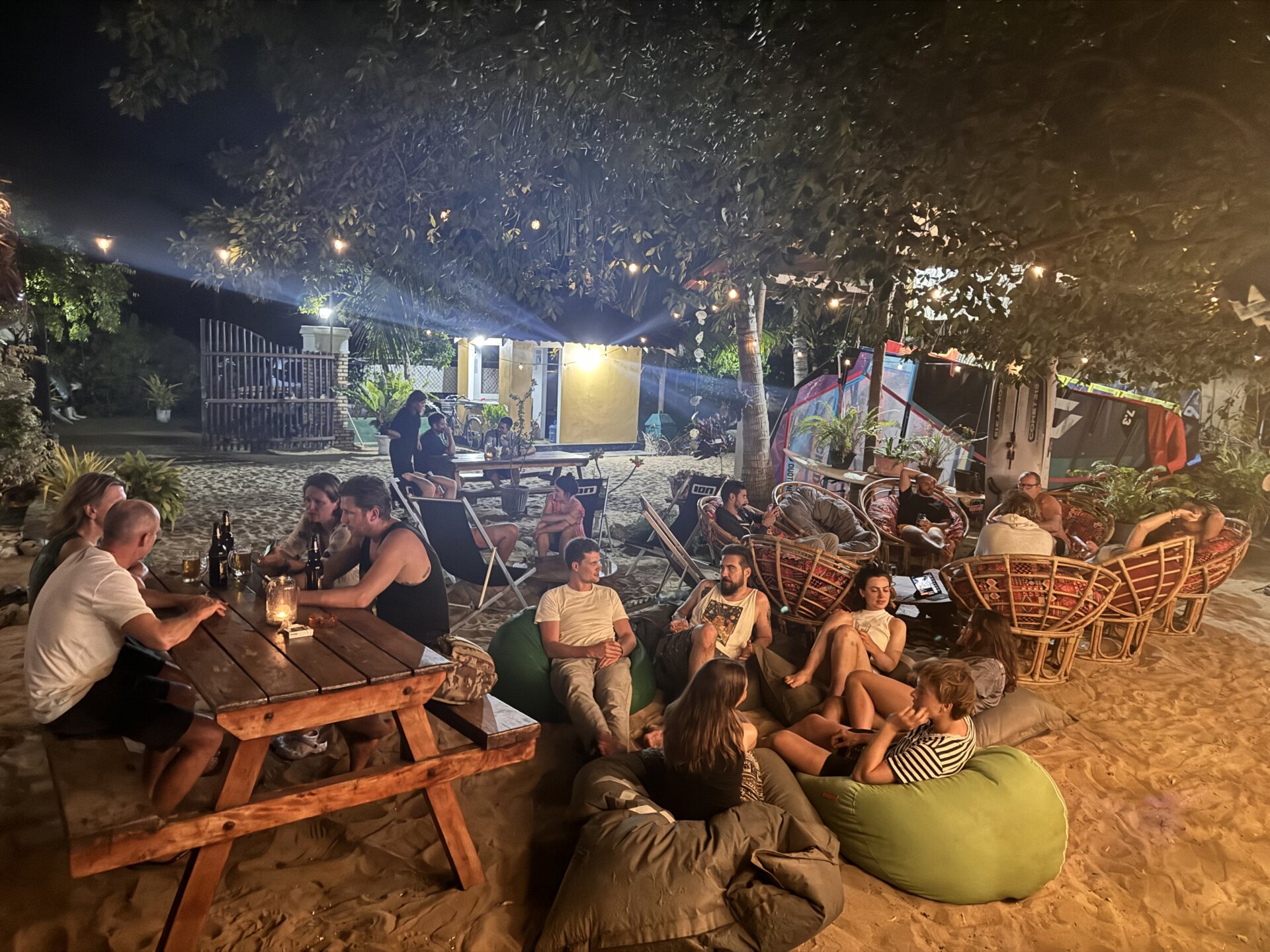
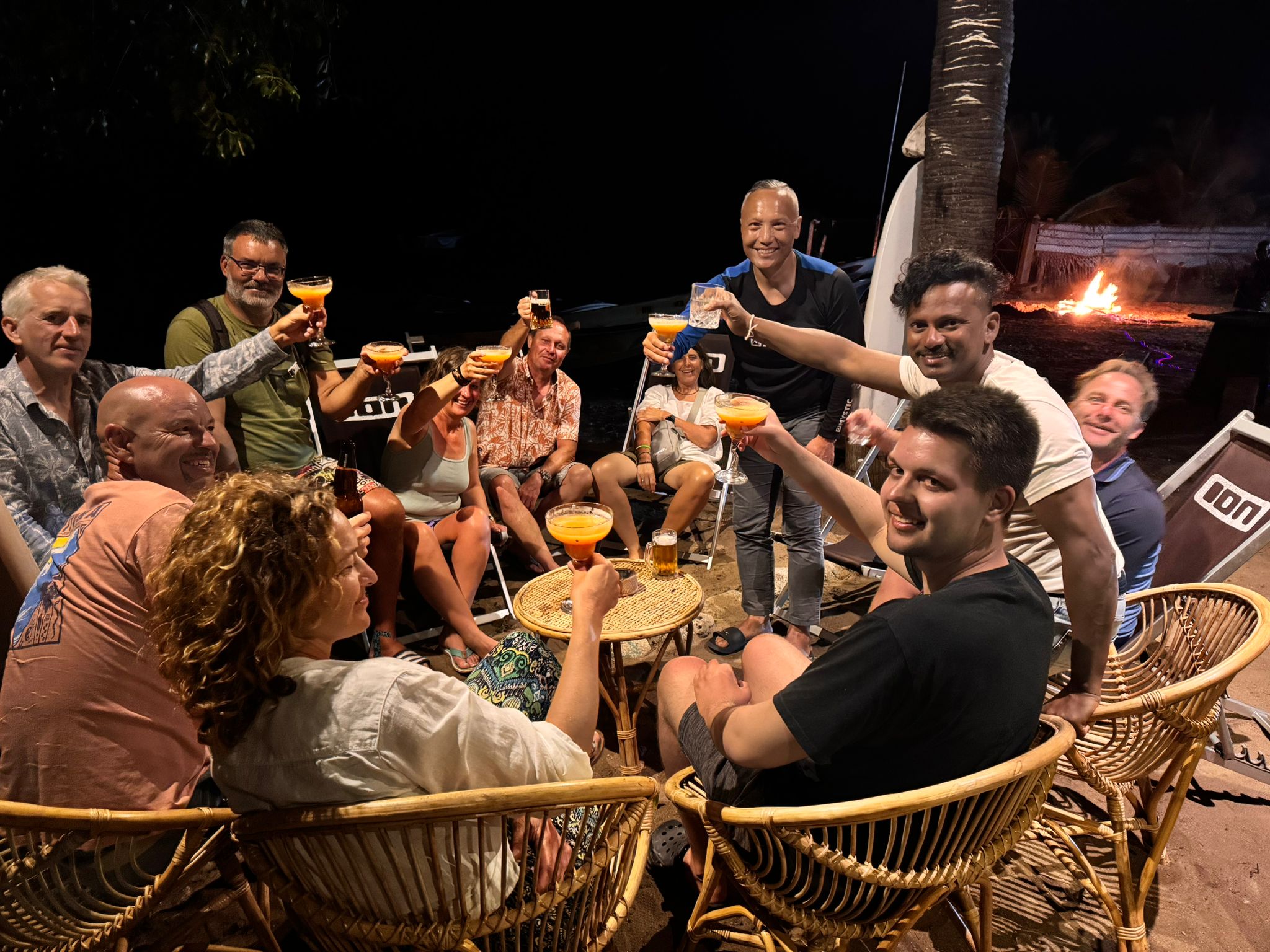
Food in Kalpitiya is closely tied to camp life. Many of the larger kite camps have their own restaurants and bars, and communal dinners are often where people meet after a day on the water.
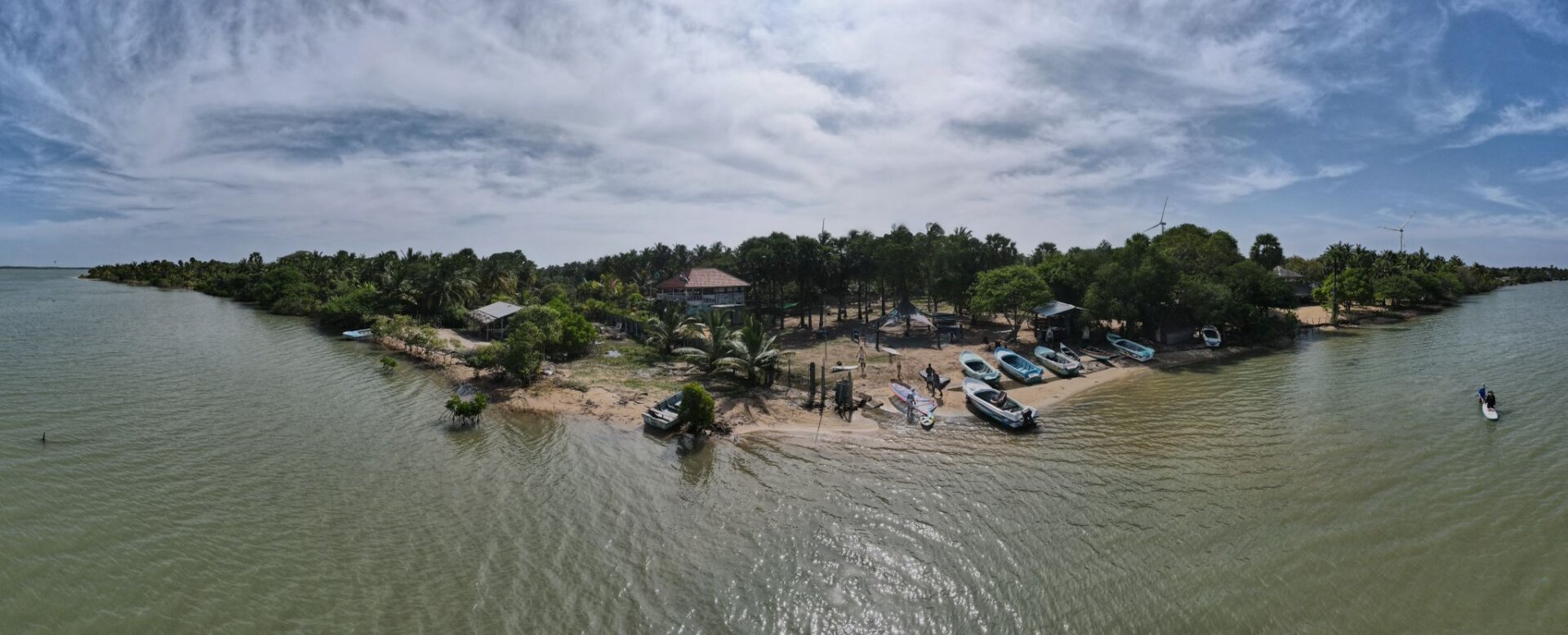
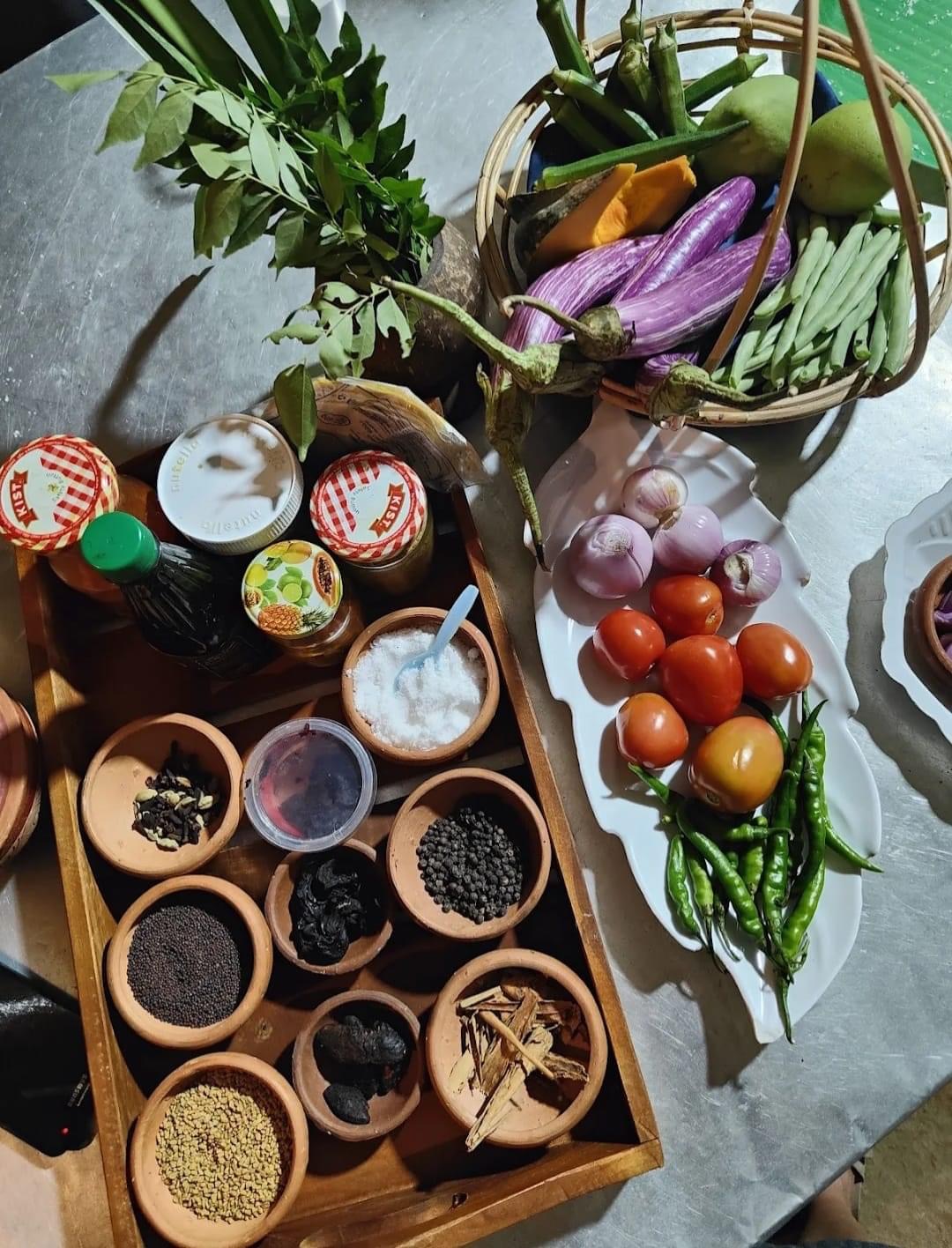
It’s worth eating outside the camps too. Small local restaurants and food stalls serve rice and curry, kottu, hoppers, fresh fish and other Sri Lankan dishes, and new places continue to open around the peninsula.
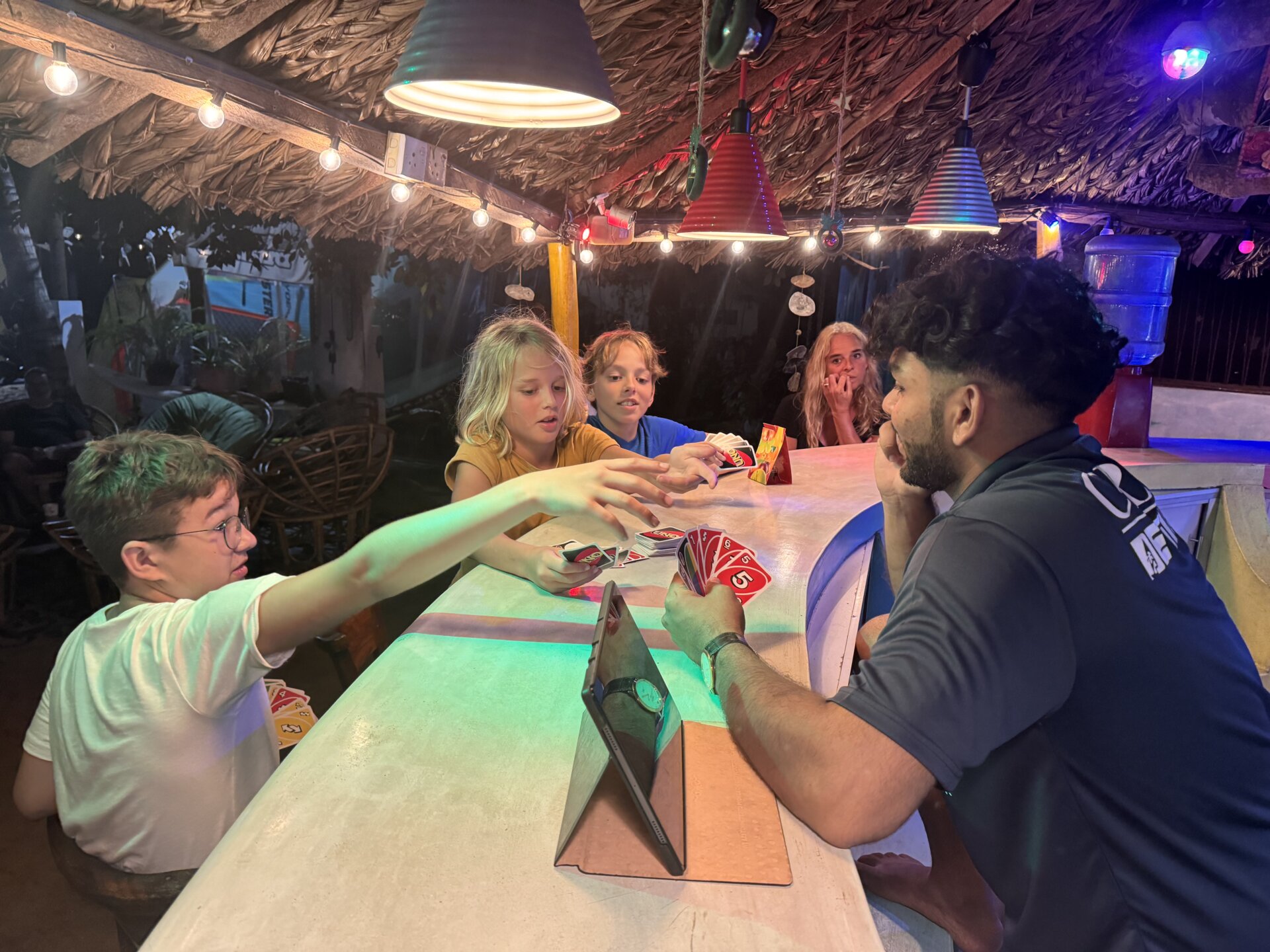
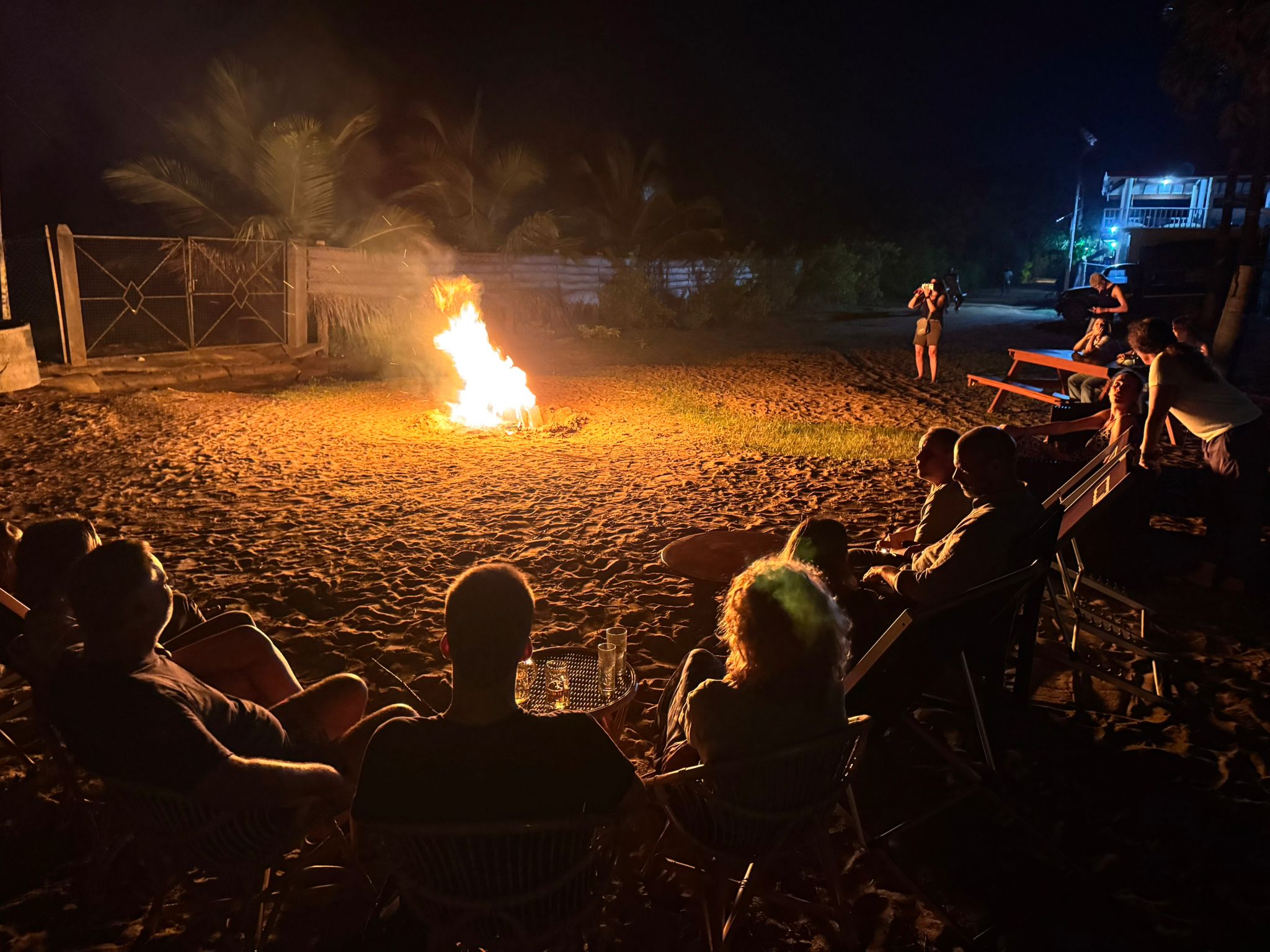
Evenings are generally relaxed. You might stay at camp after dinner, head somewhere else for a drink or go into town for food, but Kalpitiya isn’t a big nightlife destination. The social scene is small and informal, which is very much part of the rhythm here.
No Wind?
A no-wind day is a good chance to see a different side of Kalpitiya.
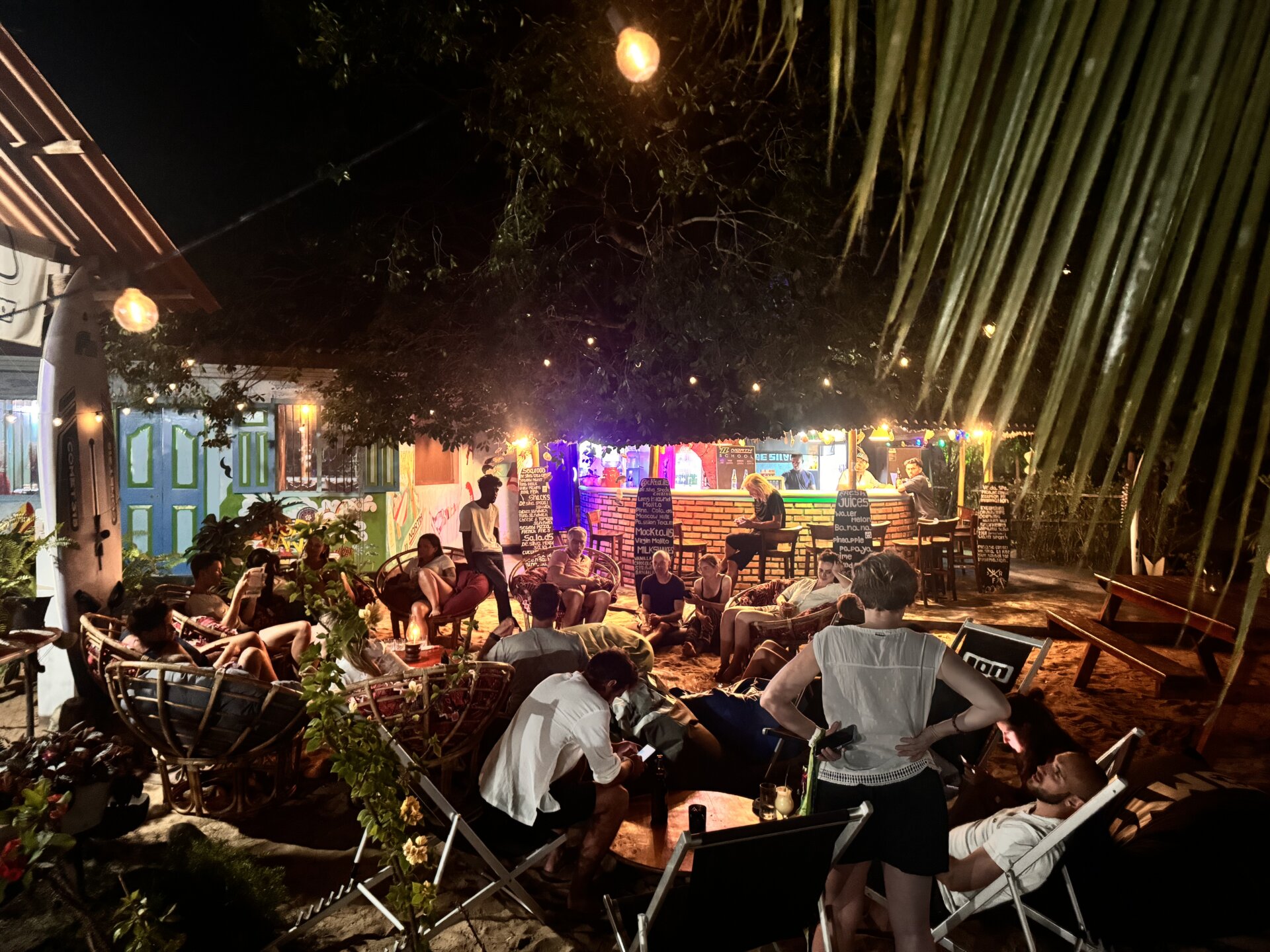
During the winter months, calmer mornings are often when people head out to sea. Between November and April, this is the main season for dolphin and whale watching, and Kalpitiya is particularly known for its spinner dolphins. It is also the main diving season, with local dive centres running trips to Bar Reef and other sites off the coast when conditions allow.
If you’d rather stay close to camp, there’s no real need to make a plan. Have a slow breakfast, join a yoga class, book a massage or take a SUP or kayak out. Kalpitiya town is also worth a wander if you want to see a little more of everyday life beyond the kite camps.
For a full day away, Wilpattu National Park is close enough for a safari from Kalpitiya. Leopards and sloth bears are among the animals the park is known for, alongside elephants, water buffalo, deer and plenty of birdlife. Depending on the tour, the journey can be made overland or include a boat crossing.
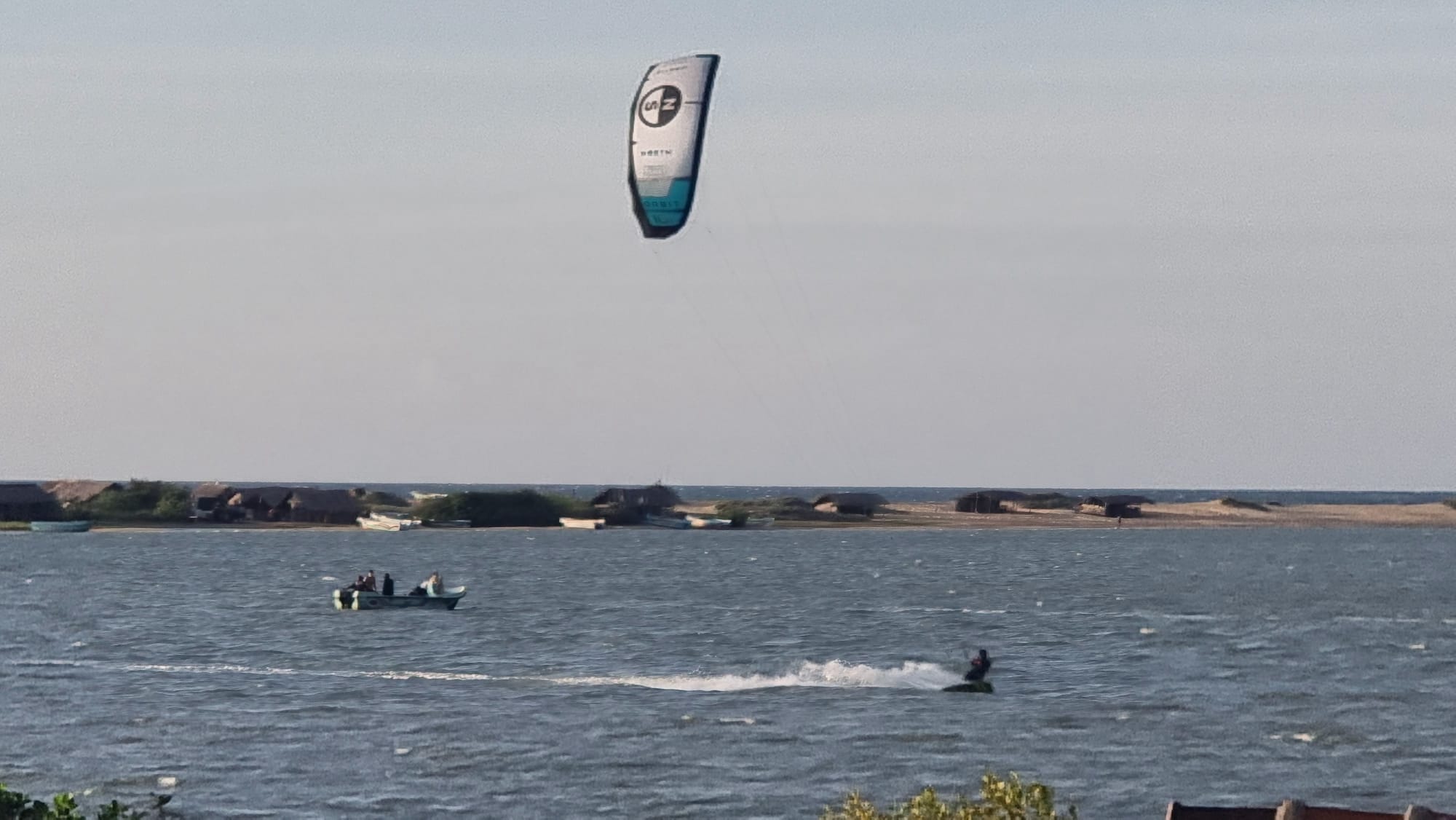
Another option is Anuradhapura, one of Sri Lanka’s ancient capitals, where huge stupas, temples and monasteries are spread across a large archaeological area. It’s a longer day out, but an easy way to add some of Sri Lanka’s history to a trip that might otherwise revolve almost entirely around the water.
Internet
Wi-Fi and mobile data are widely available around Kalpitiya, although speed and reliability depend on where you stay.
Most established kite camps provide Wi-Fi, and a local SIM card with mobile data is an inexpensive backup.
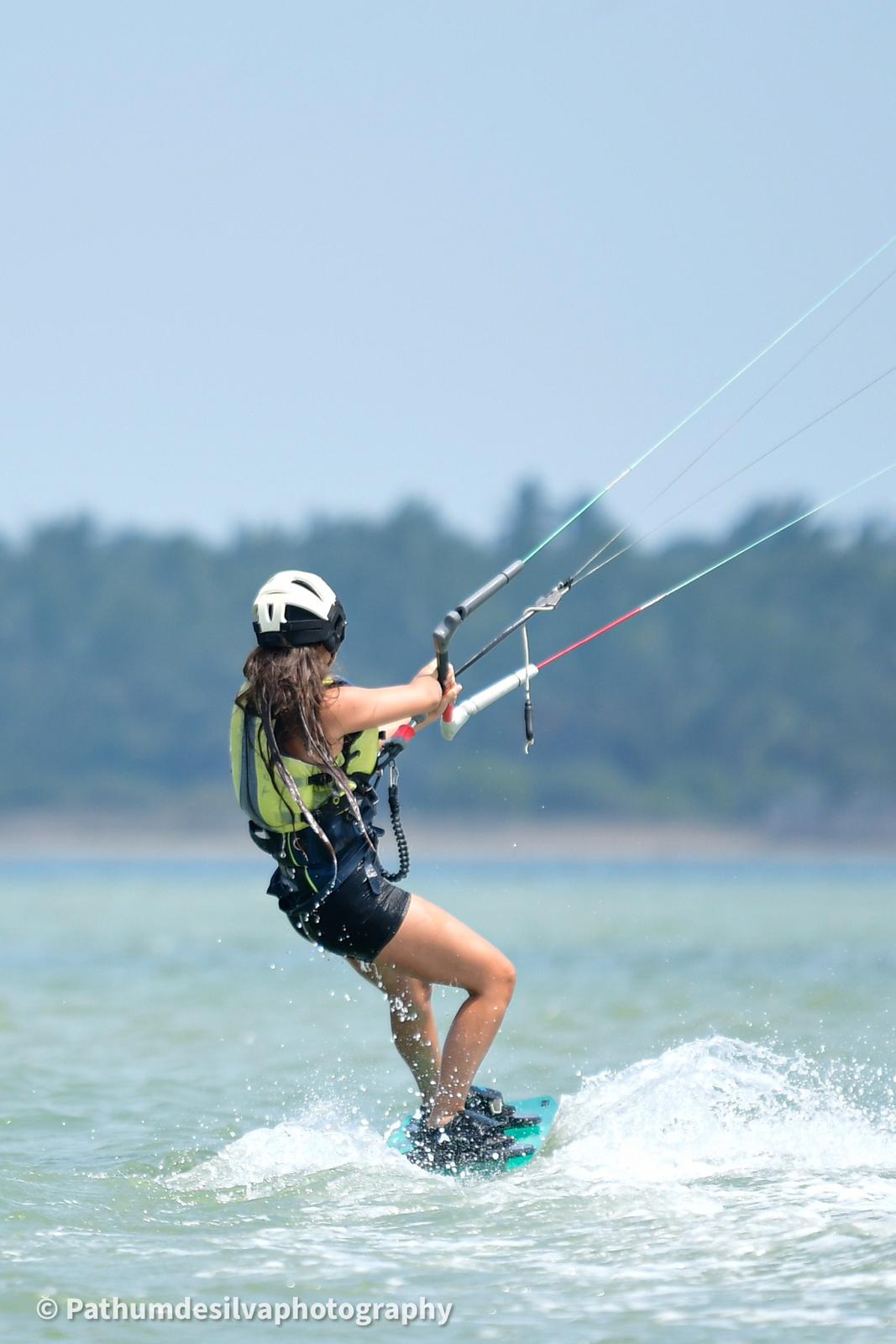
Working remotely from Kalpitiya is possible, but if you depend on a stable connection for video calls or large uploads, it’s worth checking the current setup directly with your accommodation before booking.
Accommodation
Where you stay in Kalpitiya affects the rhythm of your kite trip more than you might expect. The camps and guesthouses are spread between the Kalpitiya Big Lagoon, Kandakuliya and the surrounding villages, so access to the water and the atmosphere can be quite different from one place to another.
Some accommodation is closely connected to a kite centre and teaching area, while other places put you closer to the ocean or a smaller seasonal lagoon. If you’re coming primarily to kite, it’s worth looking at where you’ll actually be riding as well as the room itself.
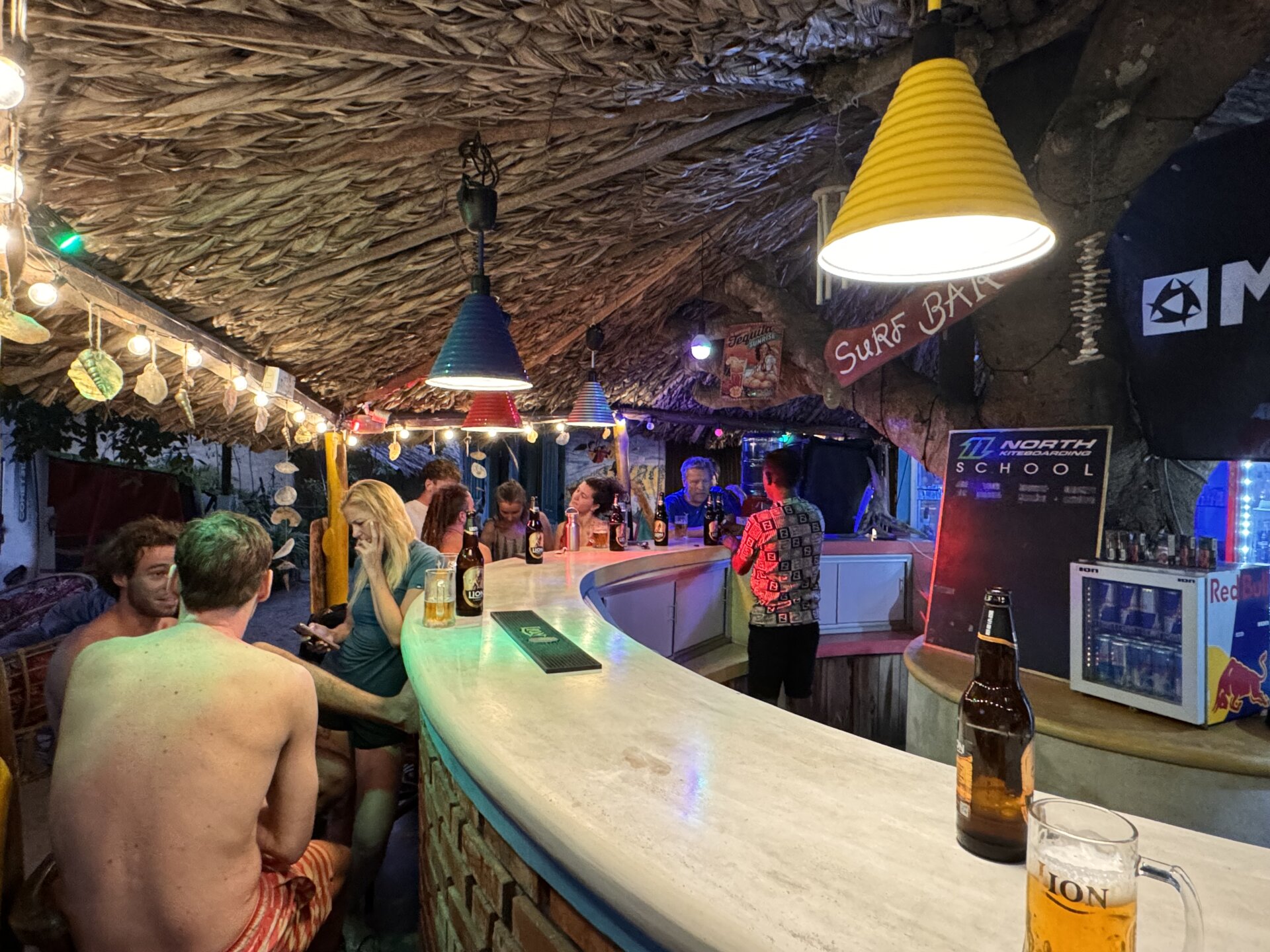
De Silva Windresort & Palmresort
De Silva has two neighbouring properties close to the southern side of the Kalpitiya Big Lagoon.
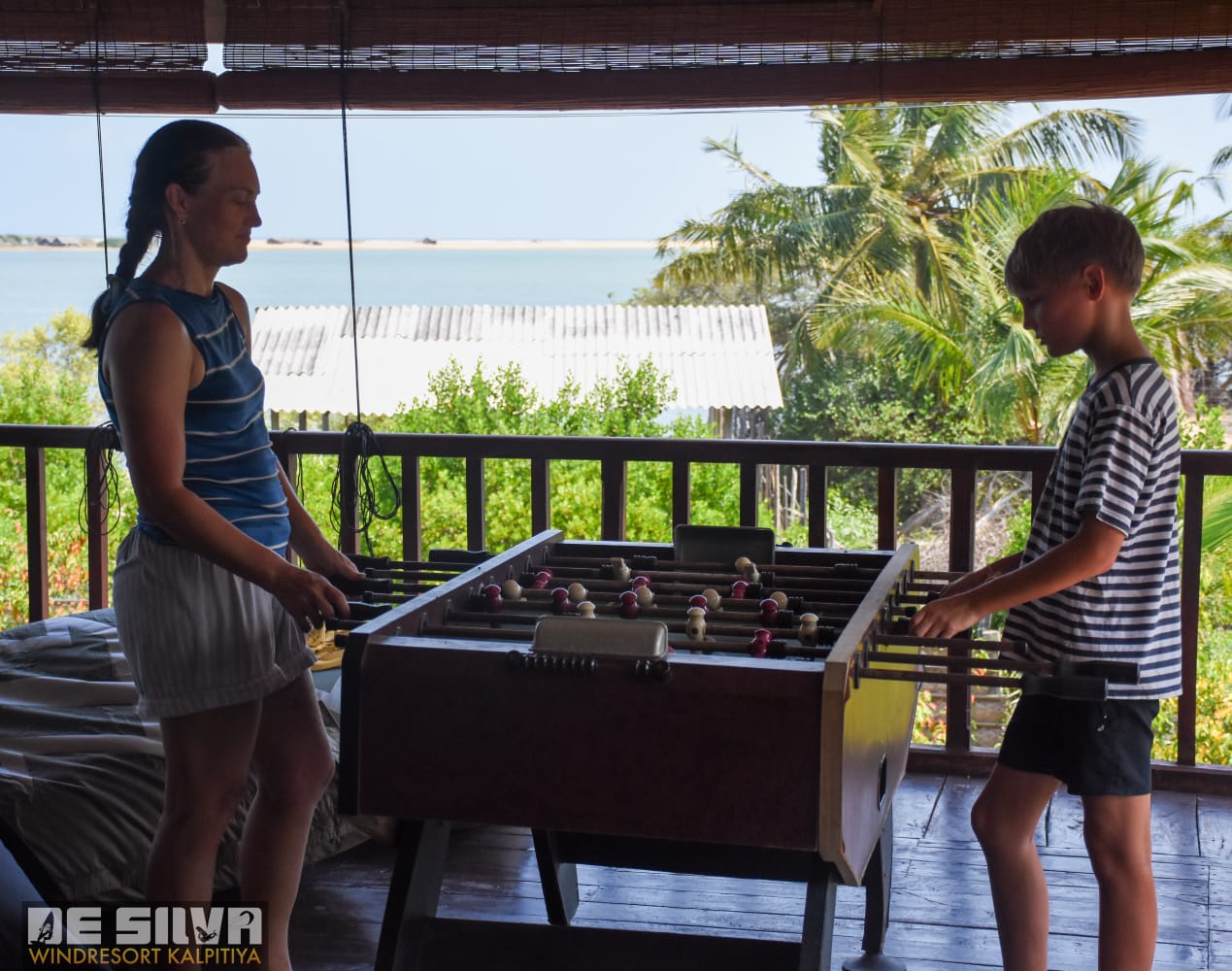
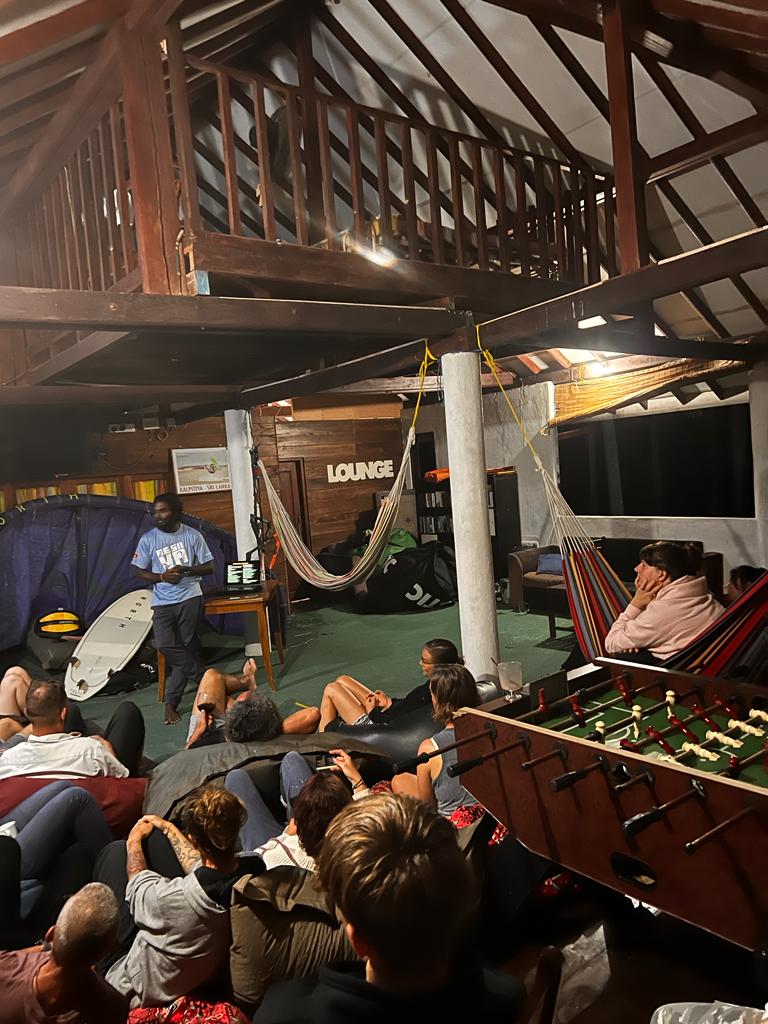
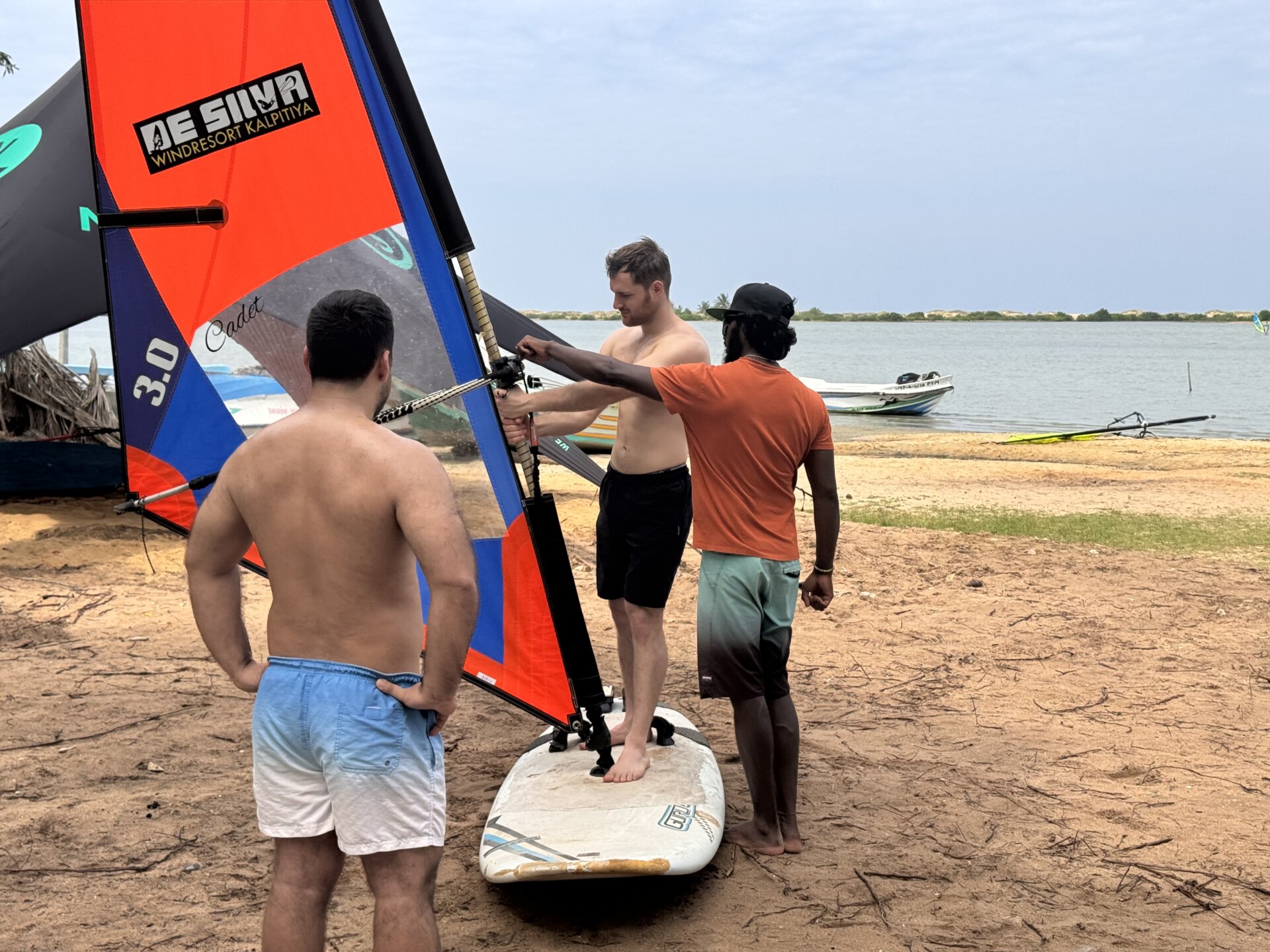
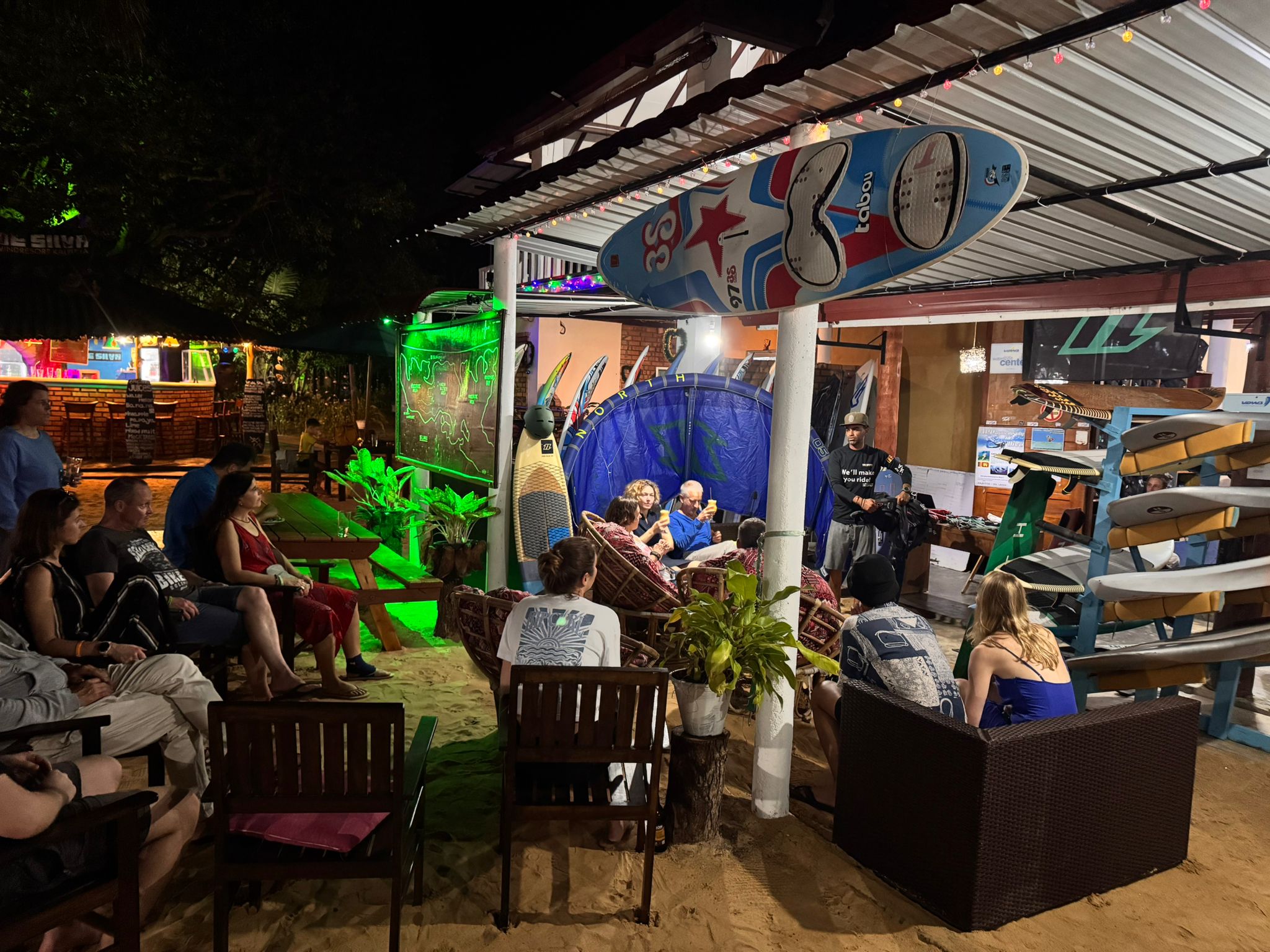
The Windresort is the simpler, watersports-focused option, with rooms and cabanas set among palms. The kite centre, storage, restaurant and bar are all on site.
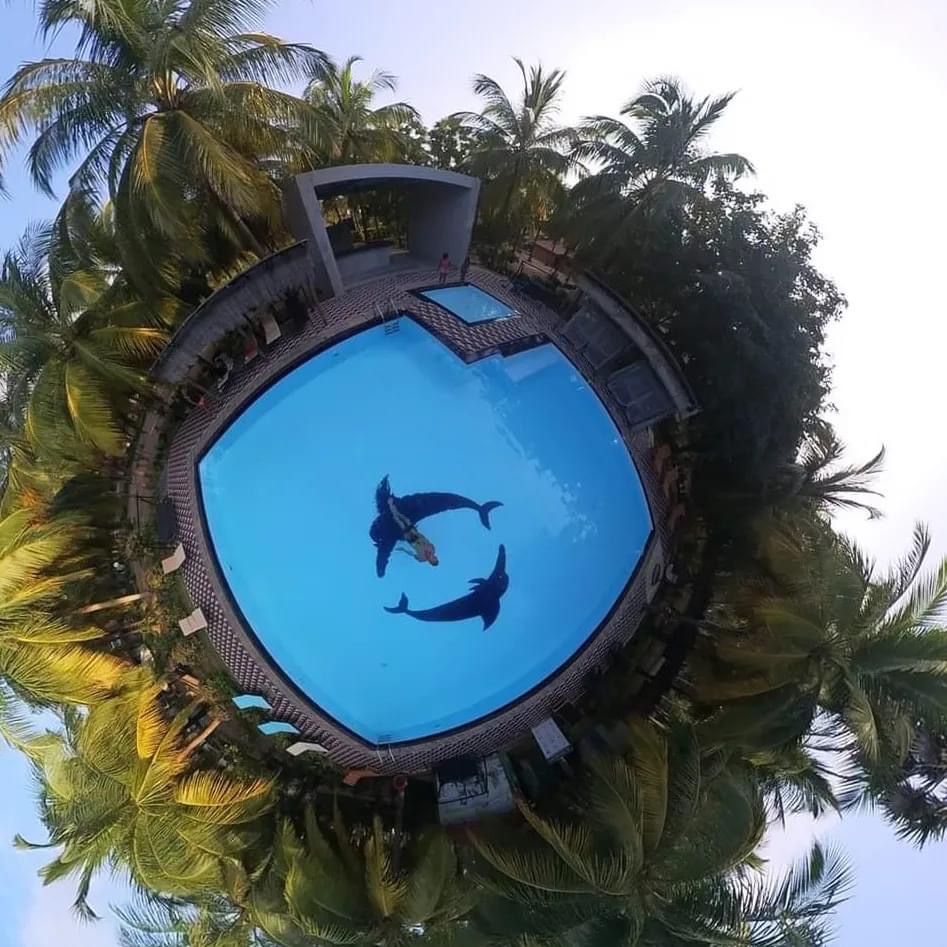
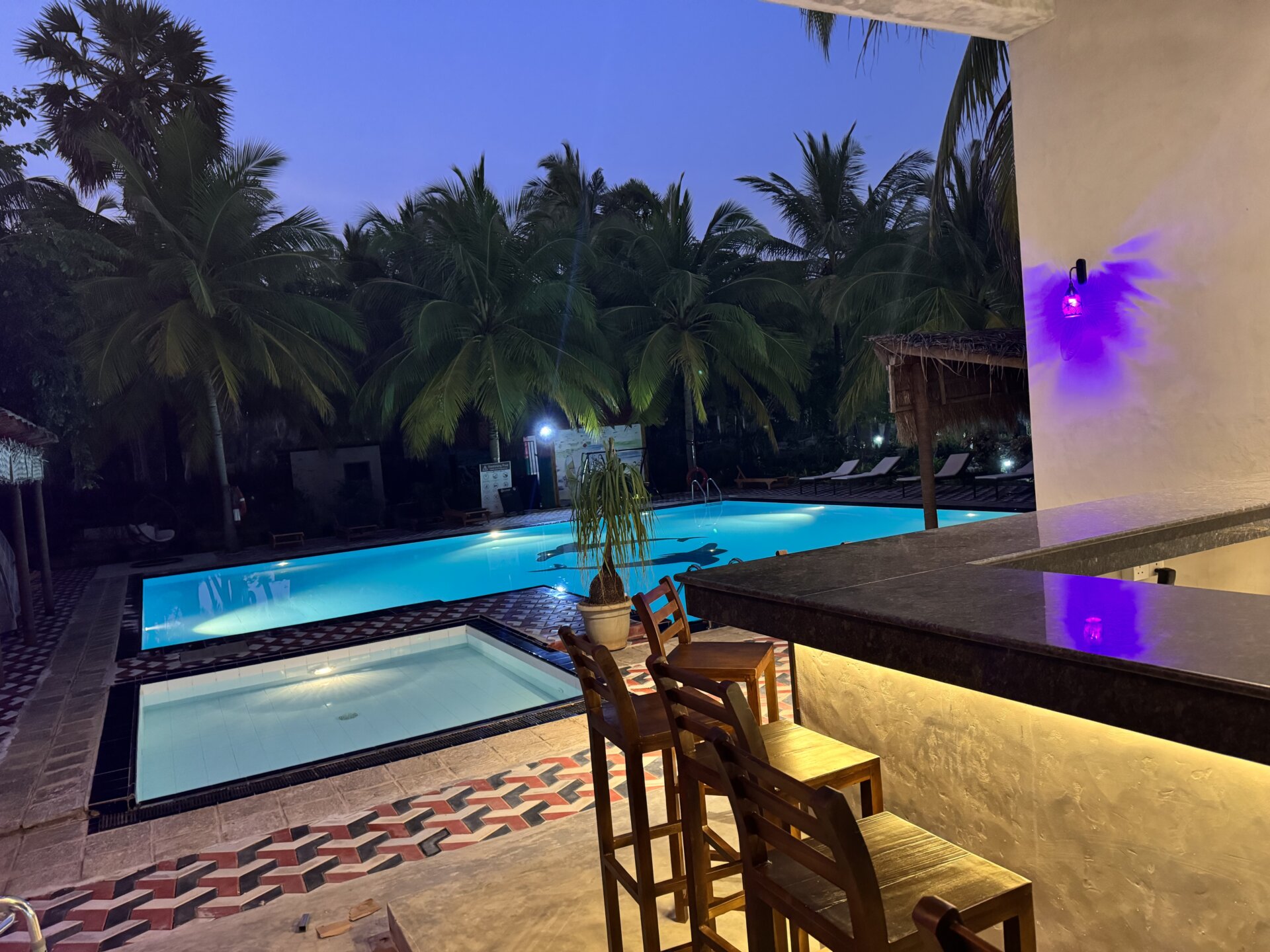
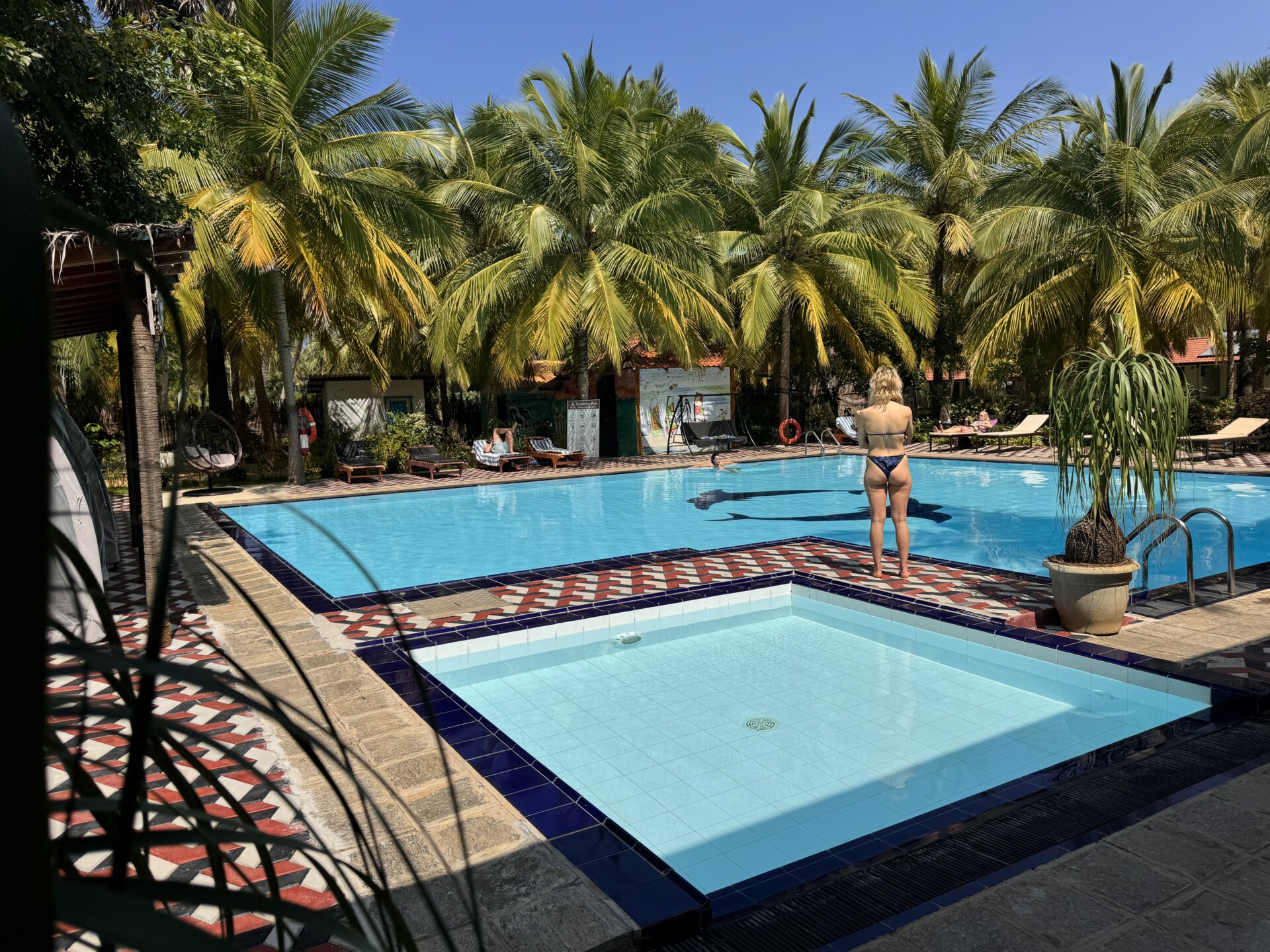
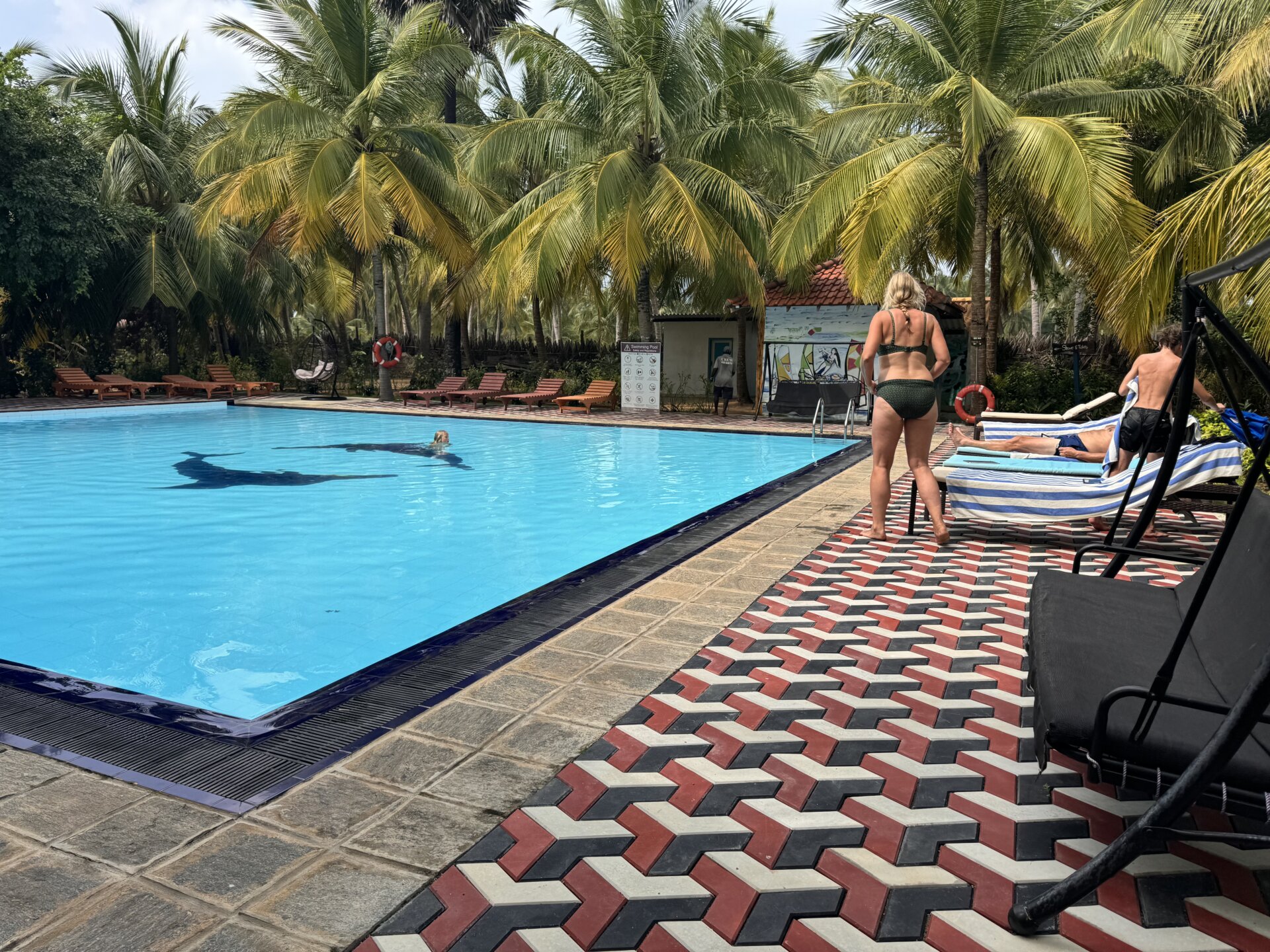
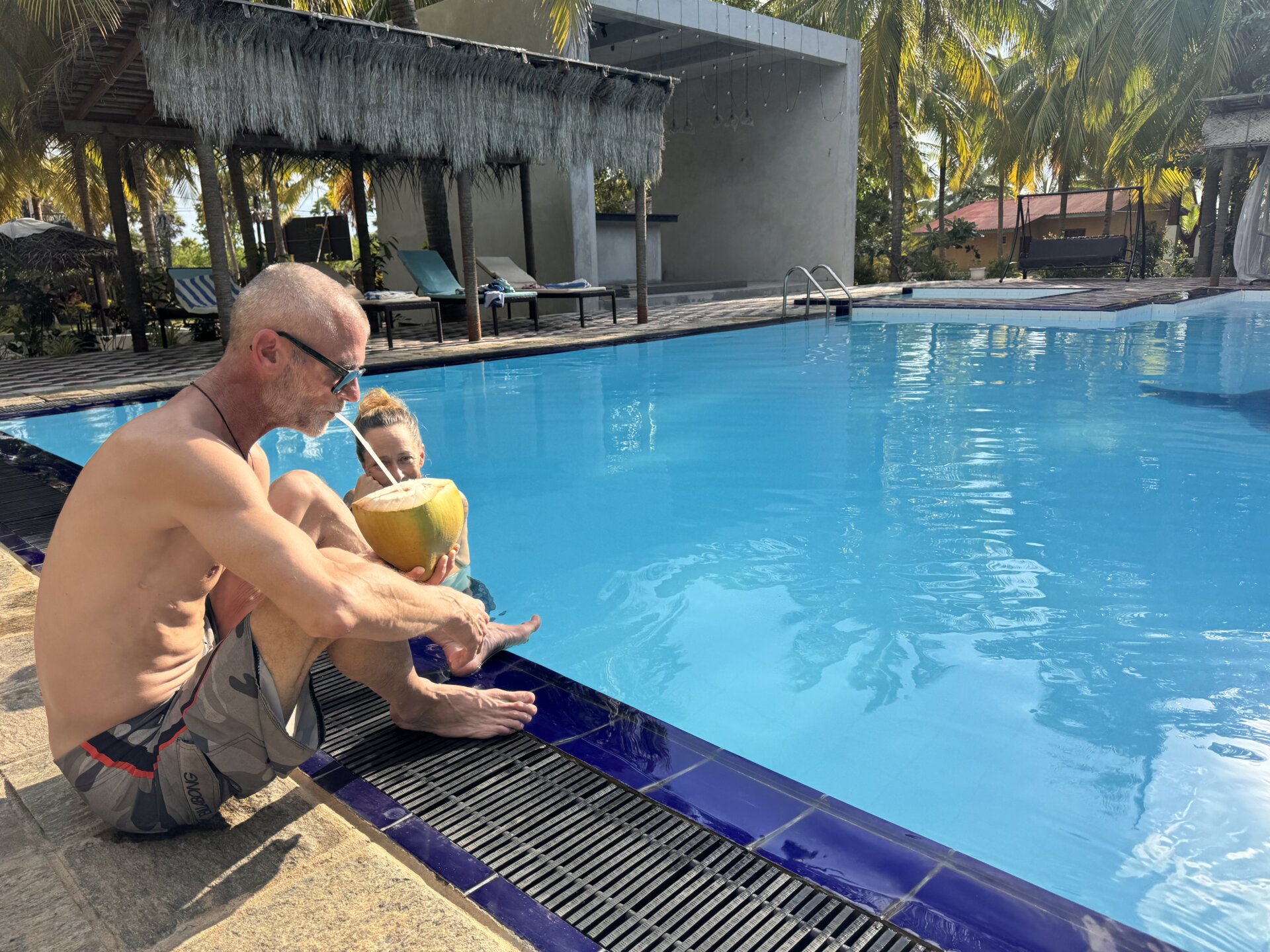
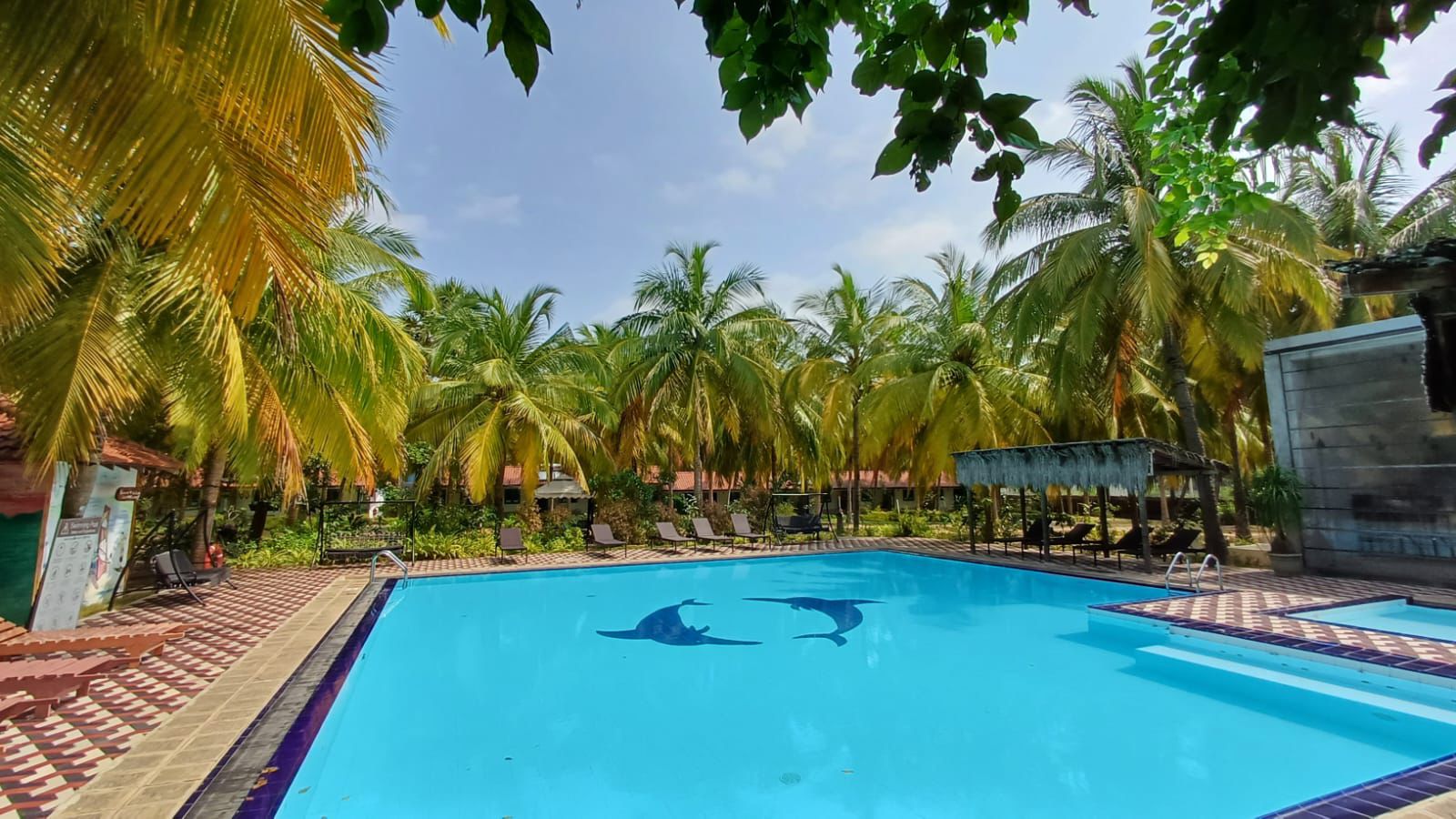
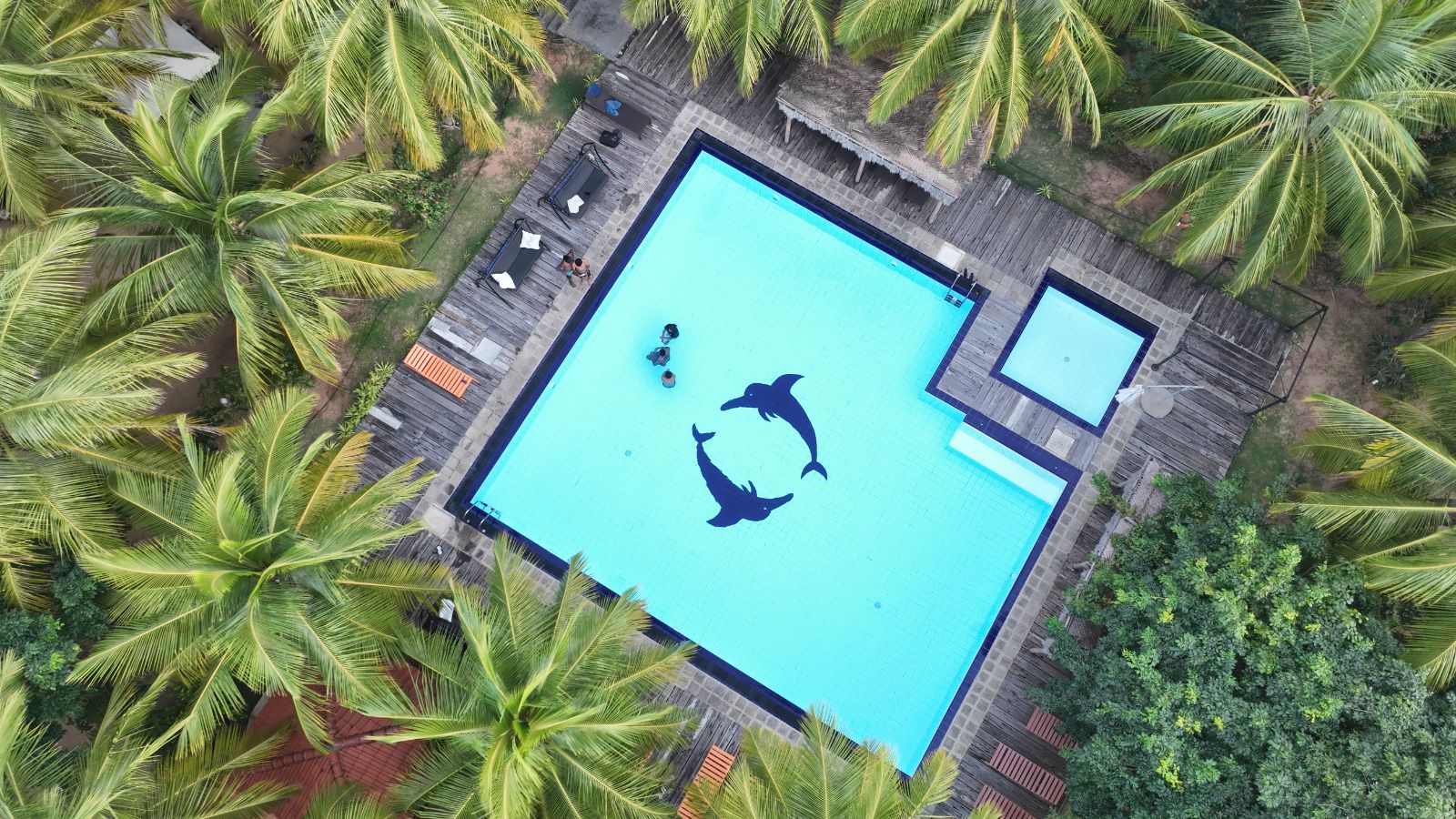
The nearby Palmresort offers air-conditioned rooms and a large swimming pool with a separate children’s area. Guests staying at the Windresort can also use the Palmresort pool.
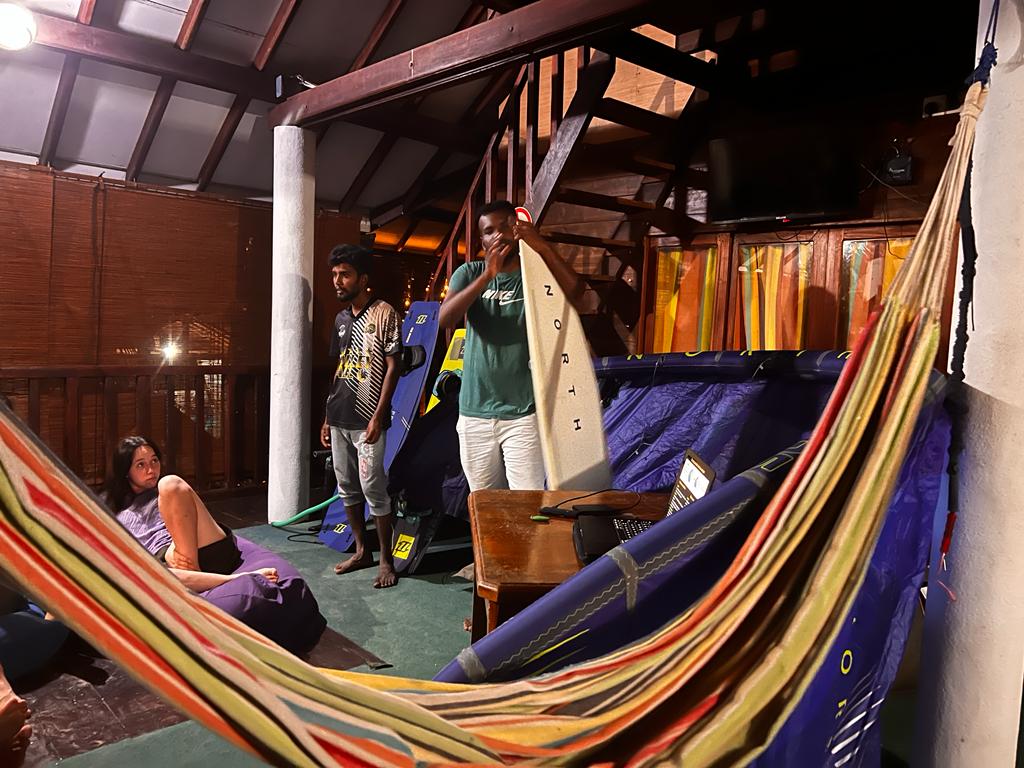
Both properties provide easy access to the De Silva watersports centre and its teaching area at the Big Lagoon.
Kitesurfing Lanka
Kitesurfing Lanka is in Kandakuliya, on a former coconut property next to a lagoon and the Indian Ocean.
There are Glamping Tents and Garden, Lagoon View and Beach Bungalows, as well as a Four Bedroom Villa that can be booked as a studio, by floor or as the complete villa.
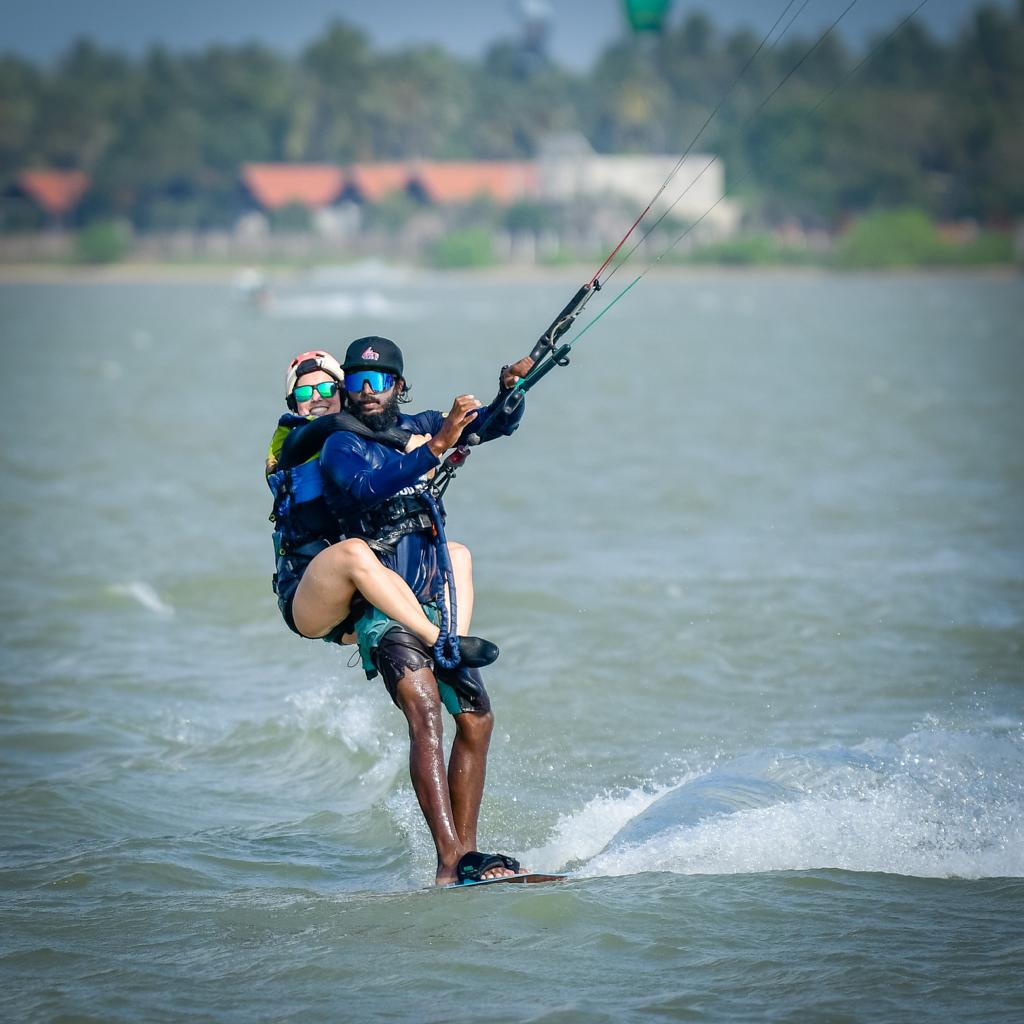
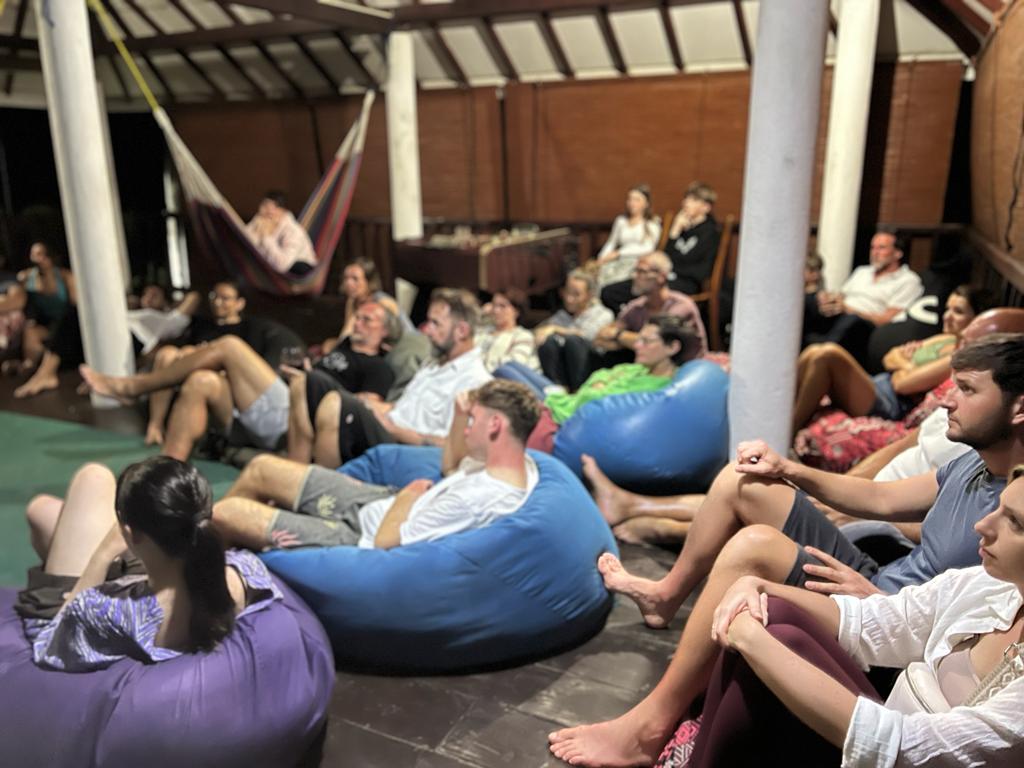
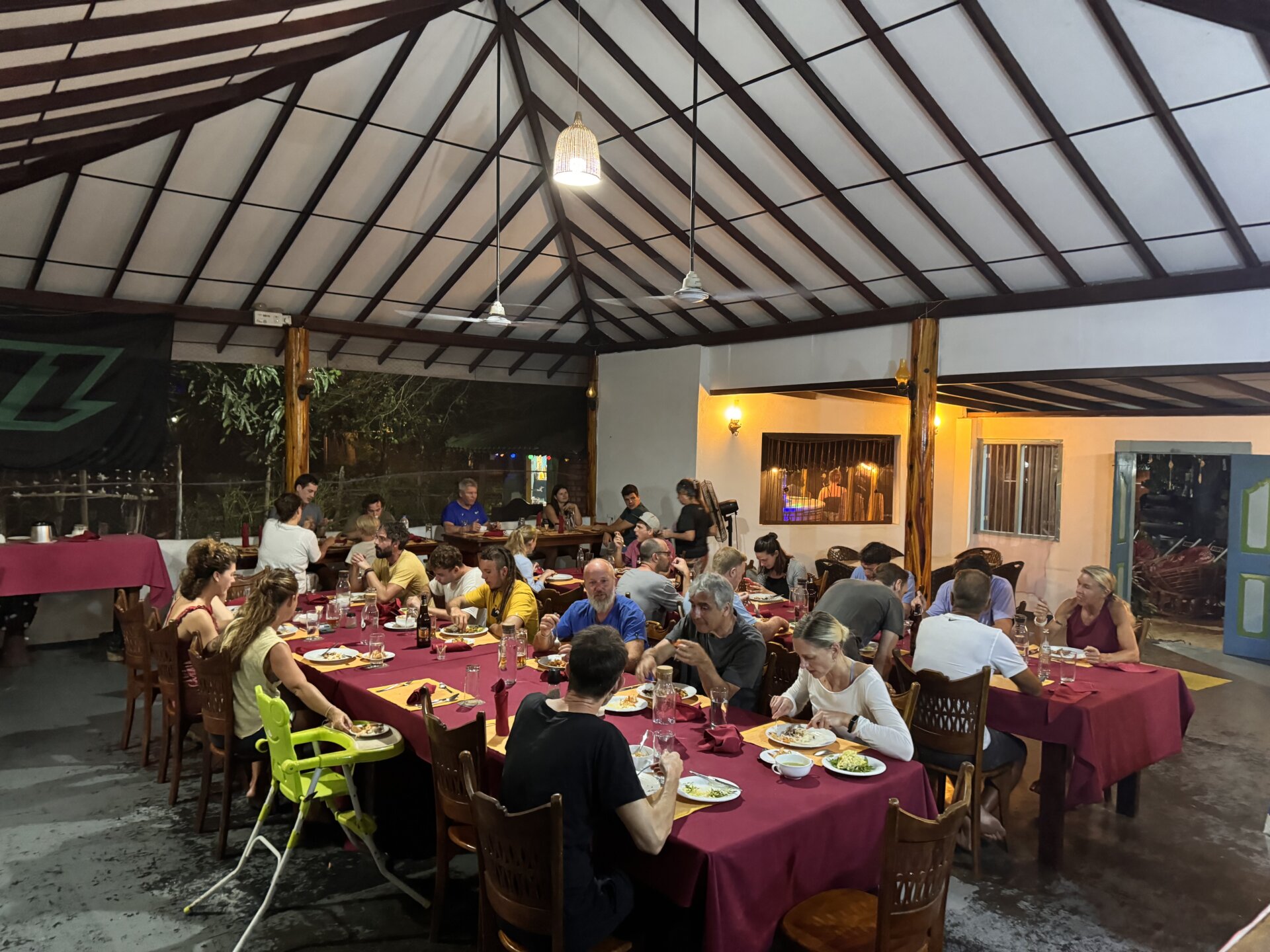
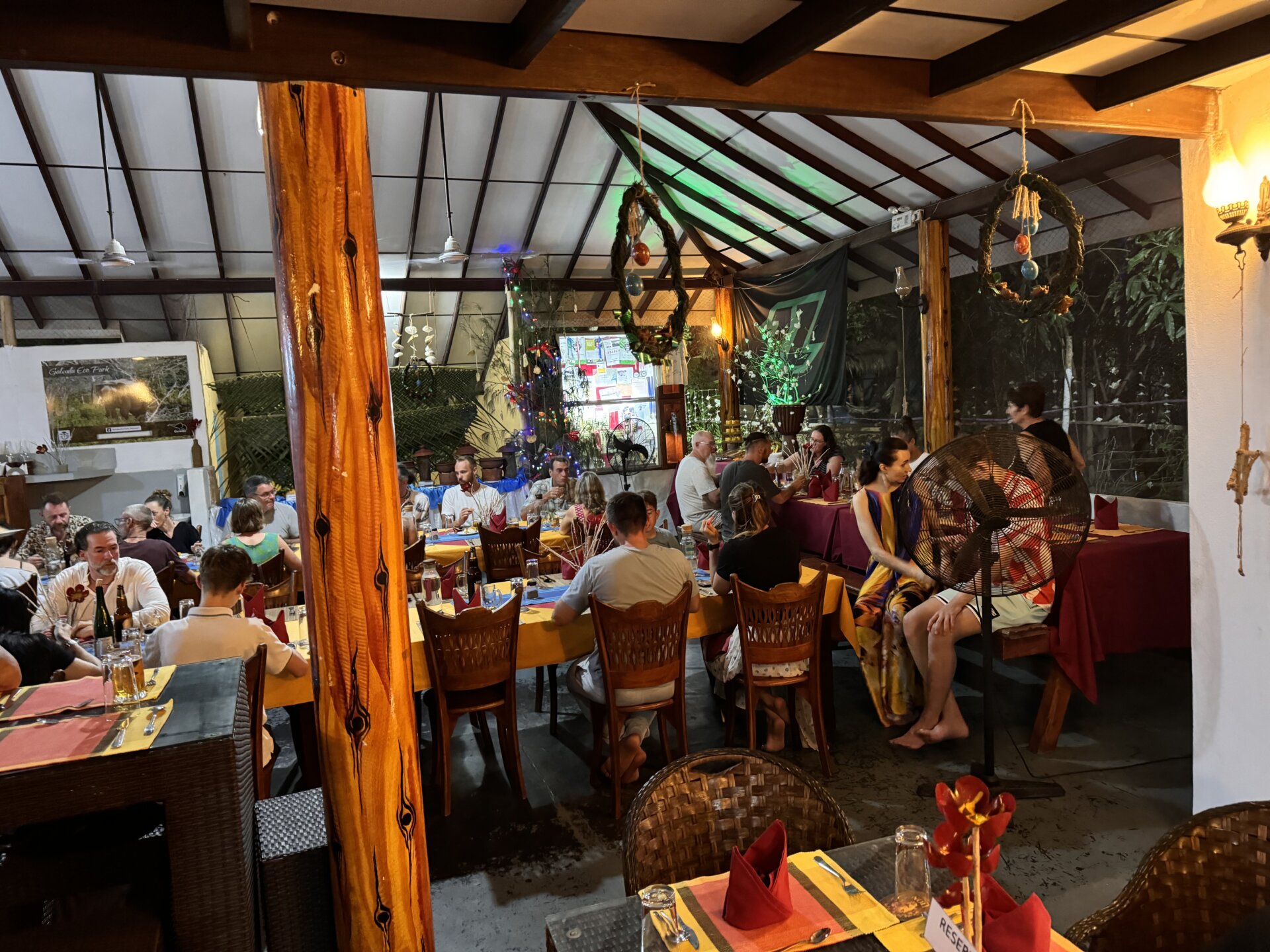
Full board is included, with breakfast, lunch and dinner served at long communal tables in the camp restaurant. If you’re travelling alone, you tend to meet people quickly simply because everyone ends up eating together.
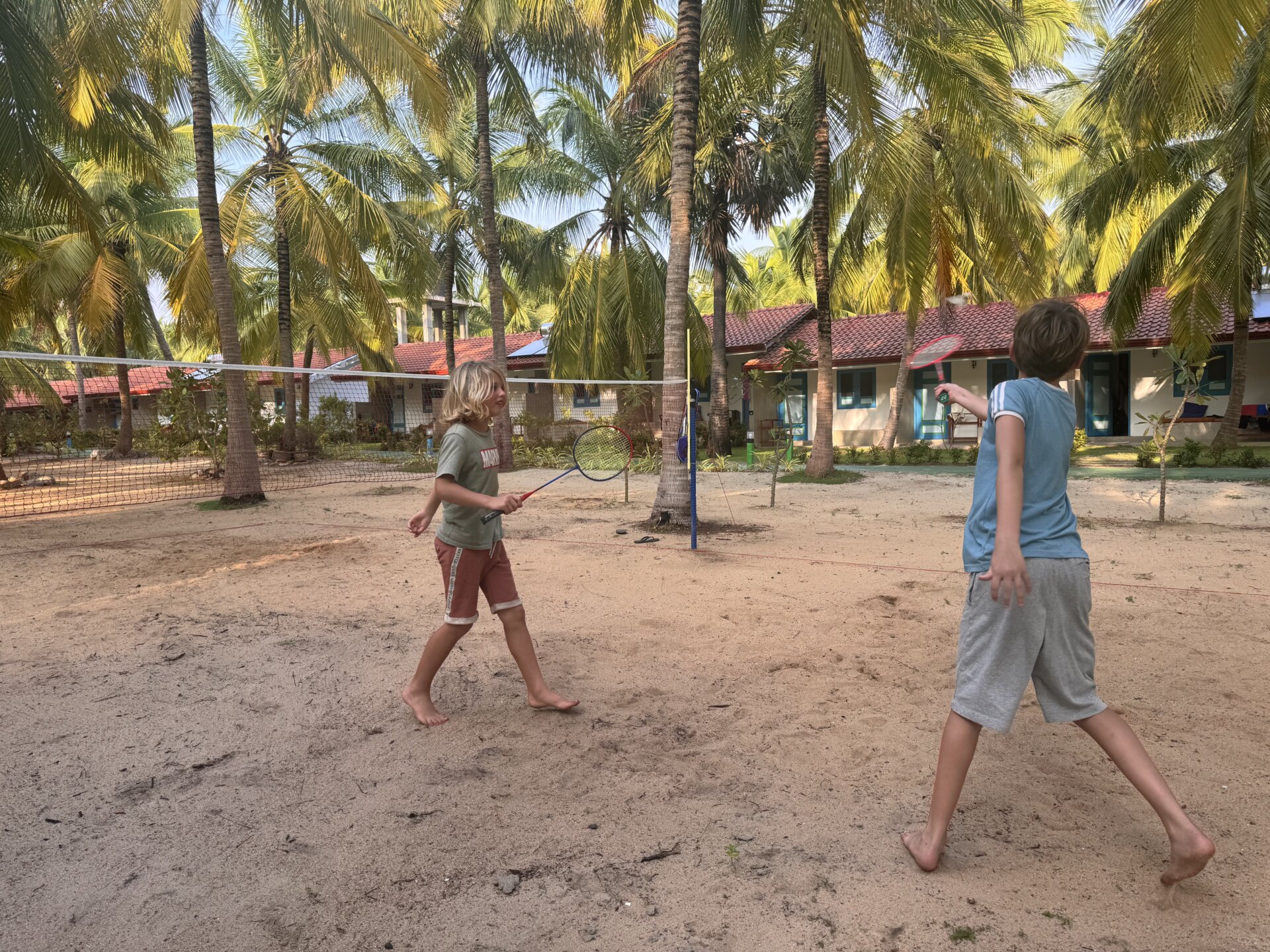
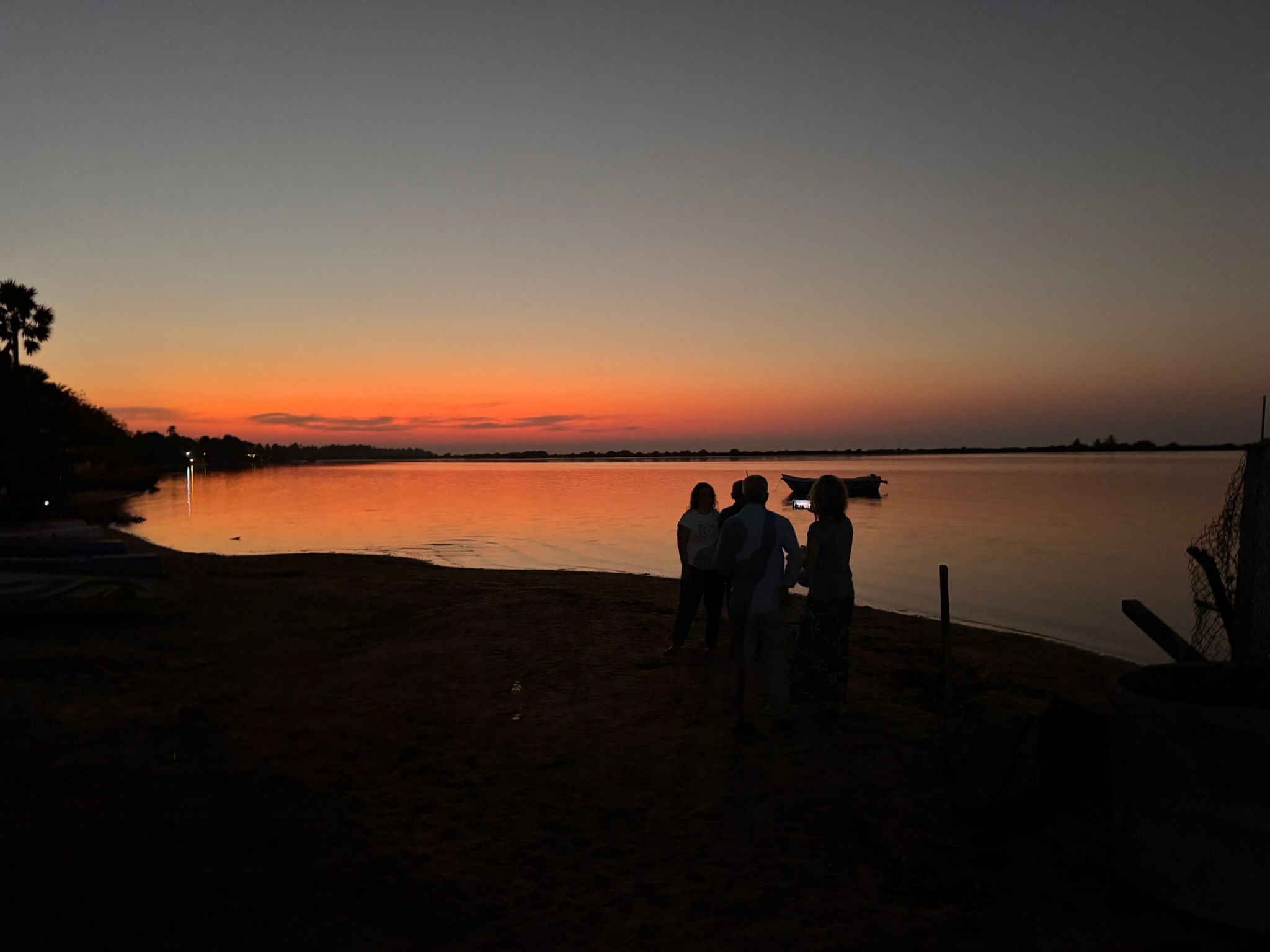
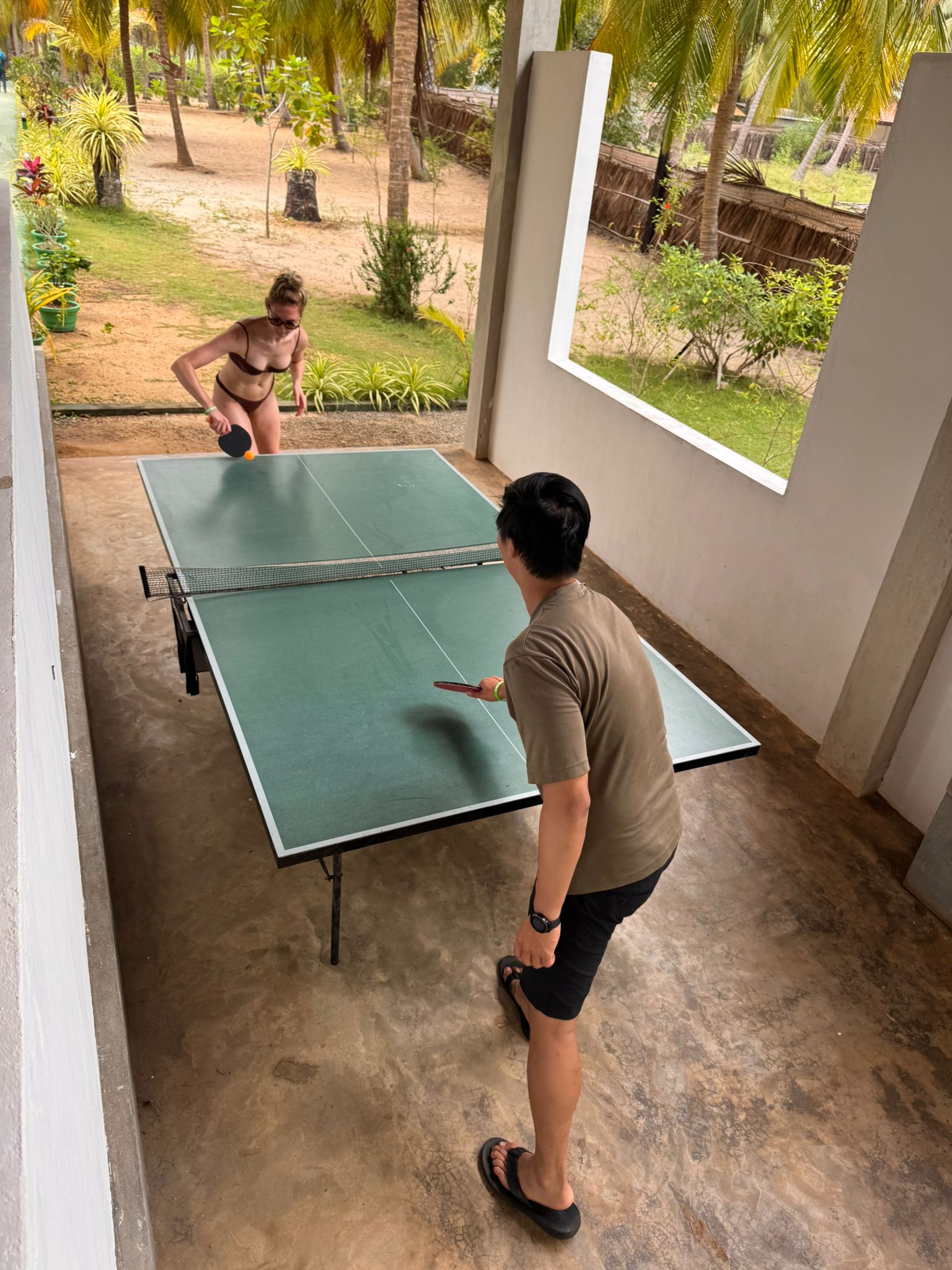
Around the camp there is a yoga shala, Beach Gym, volleyball, table tennis and massage, as well as the Camp Bar and the Sunset Bar & Restaurant beside the beach.
In winter, independent riders can walk from the camp straight to the small lagoon and kite there. Lessons take place at the Kalpitiya Big Lagoon, less than ten minutes away by KSL’s free shuttle.
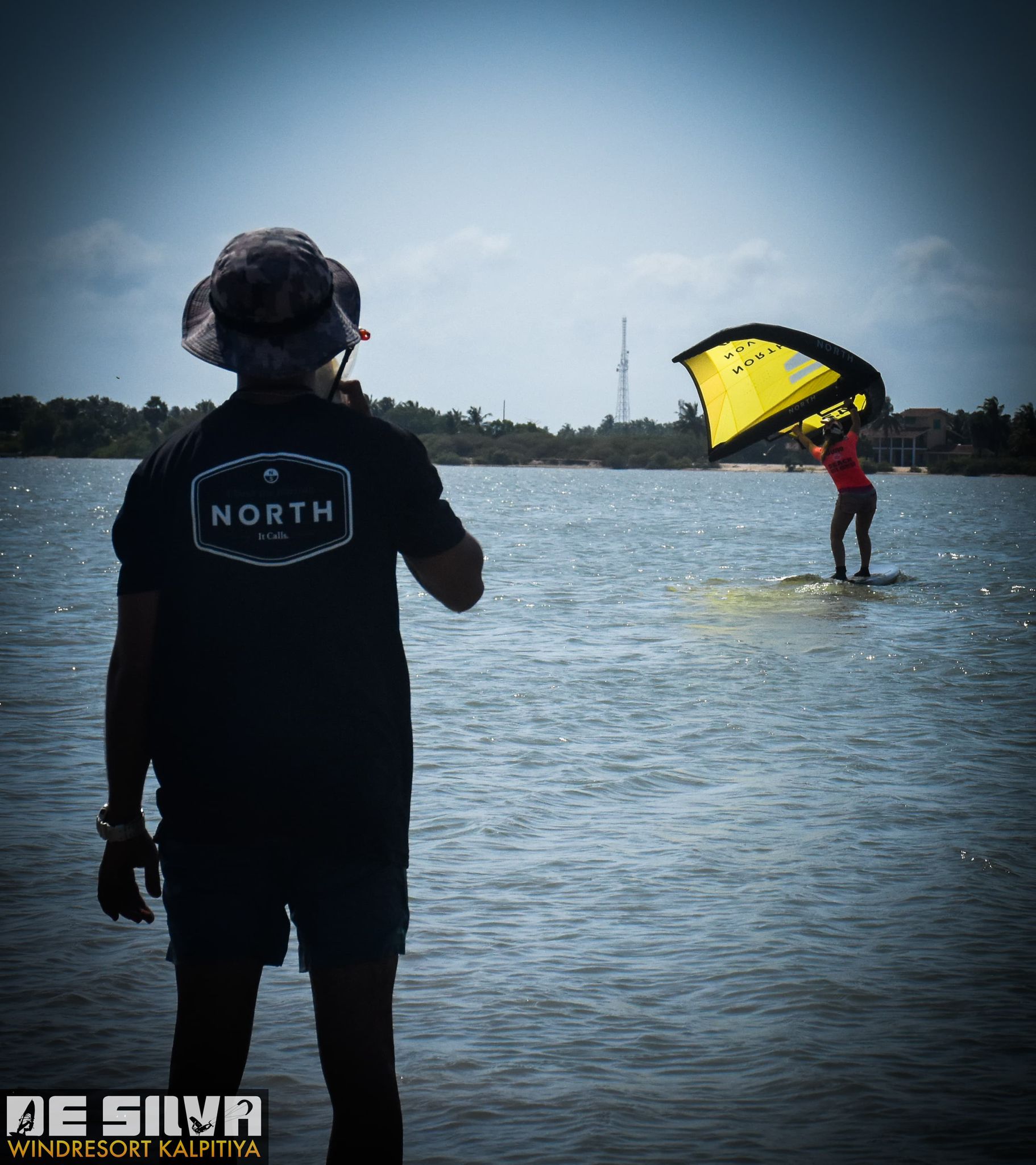
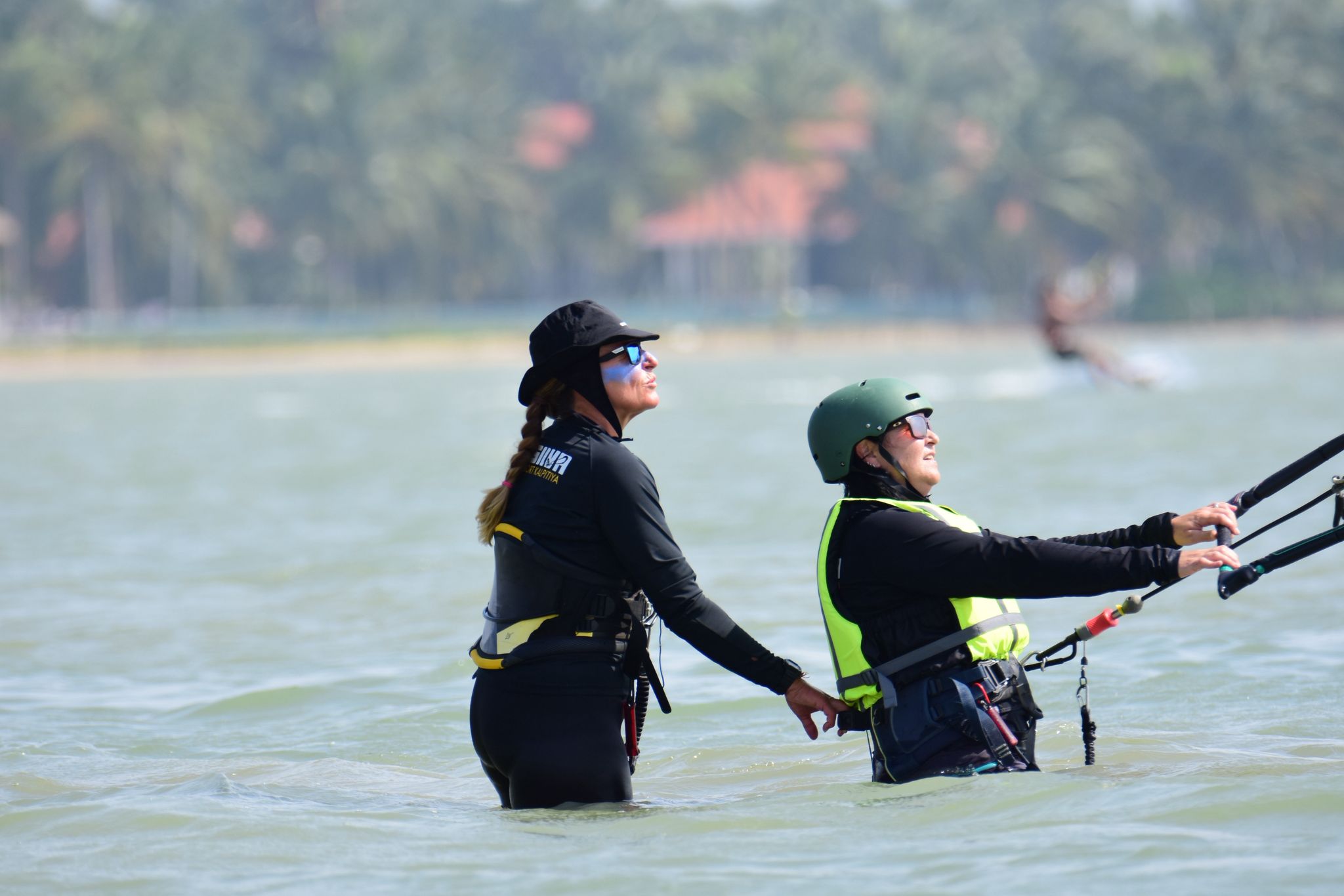
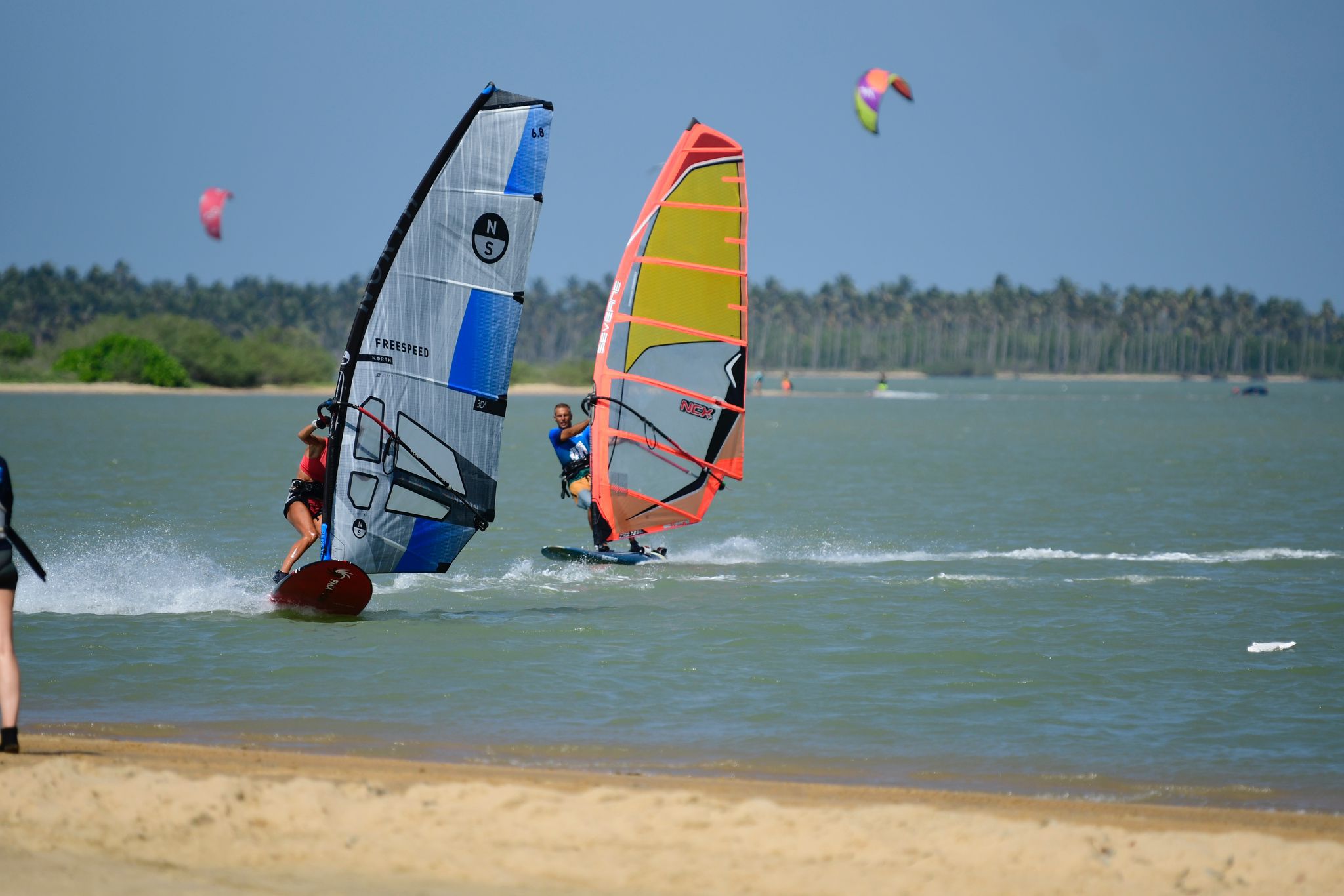
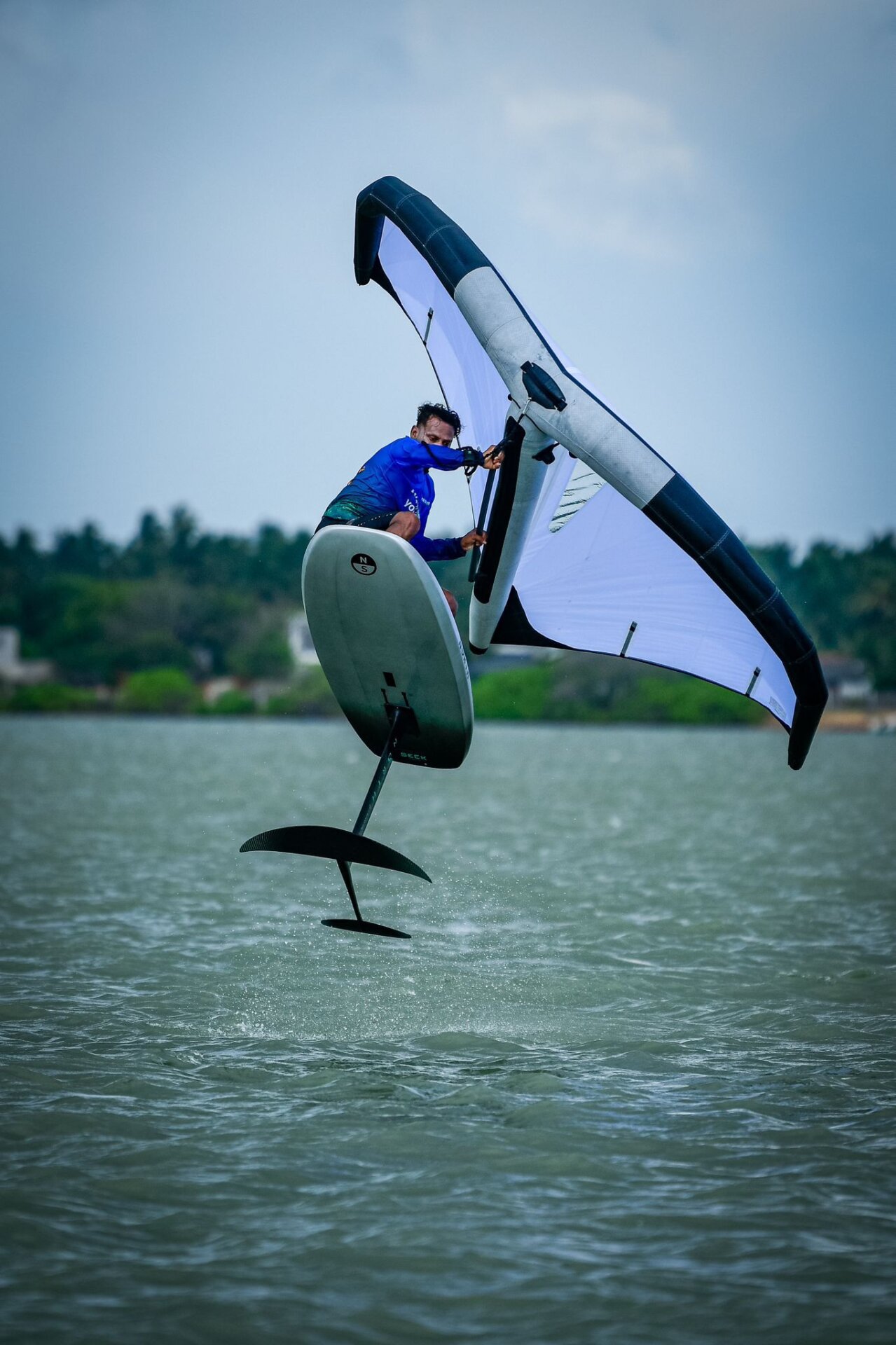
Where Are the Best Kitesurfing Spots in Kalpitiya?
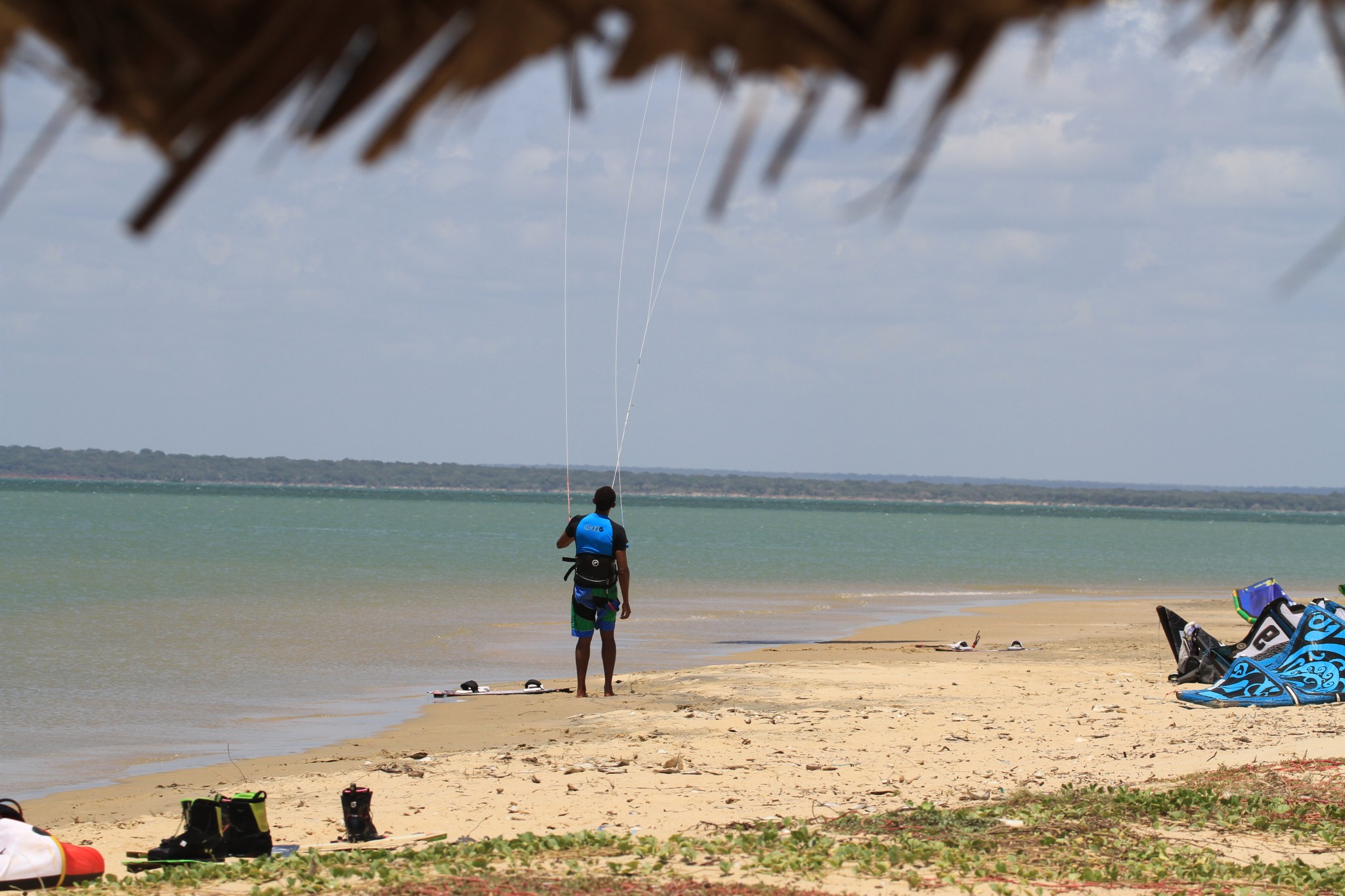
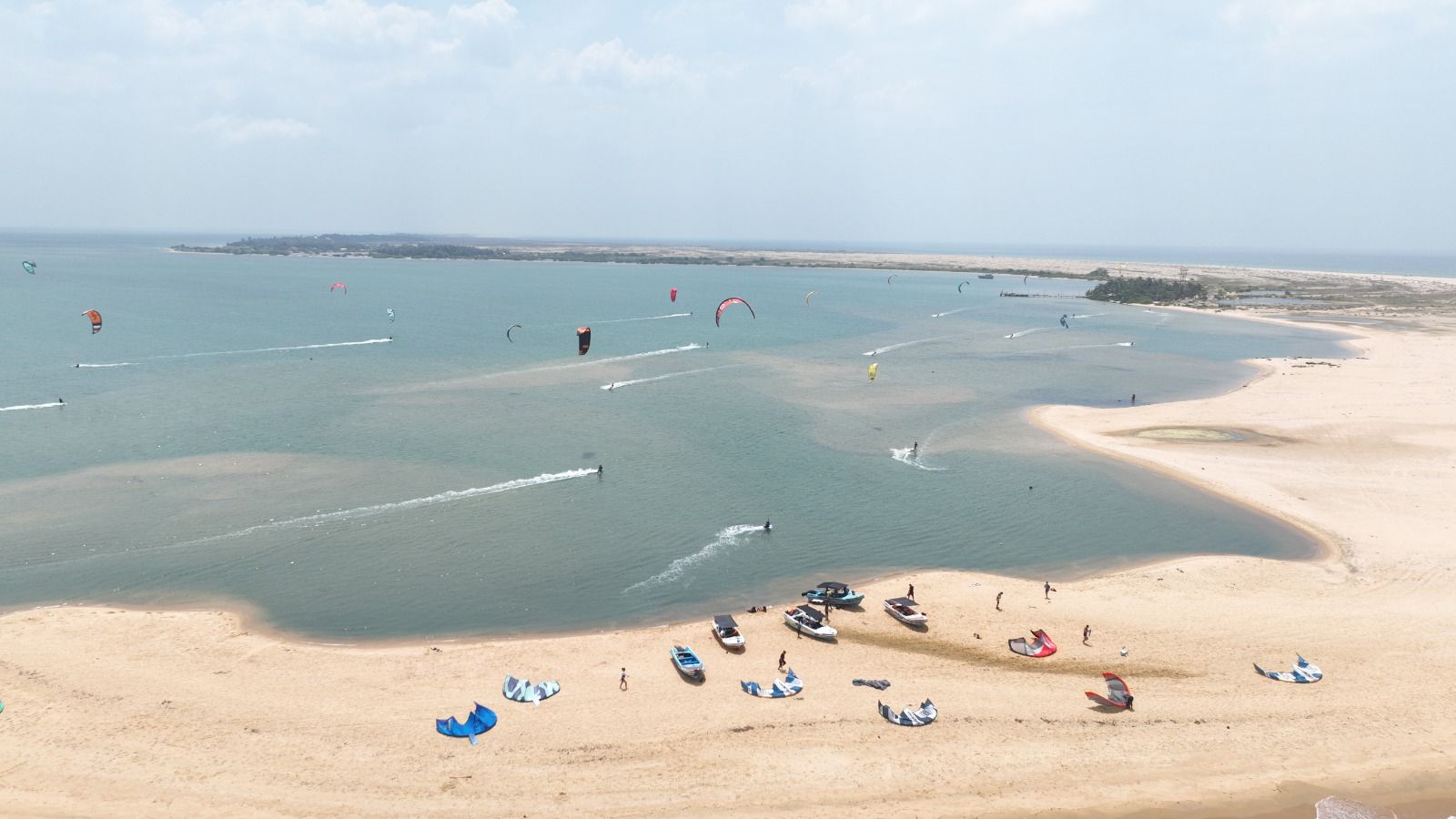
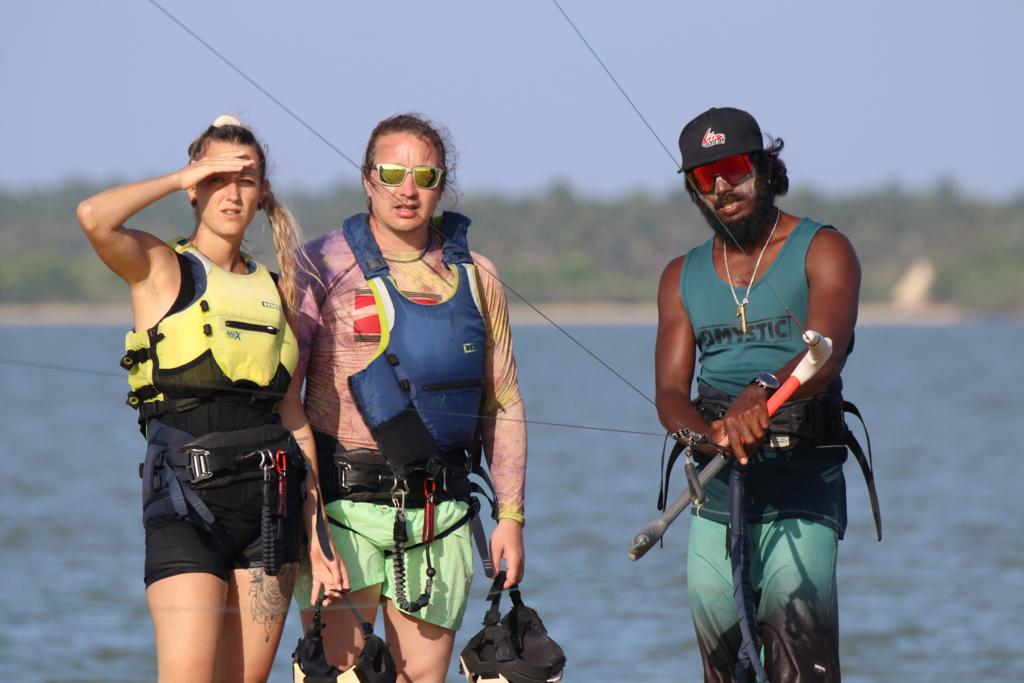
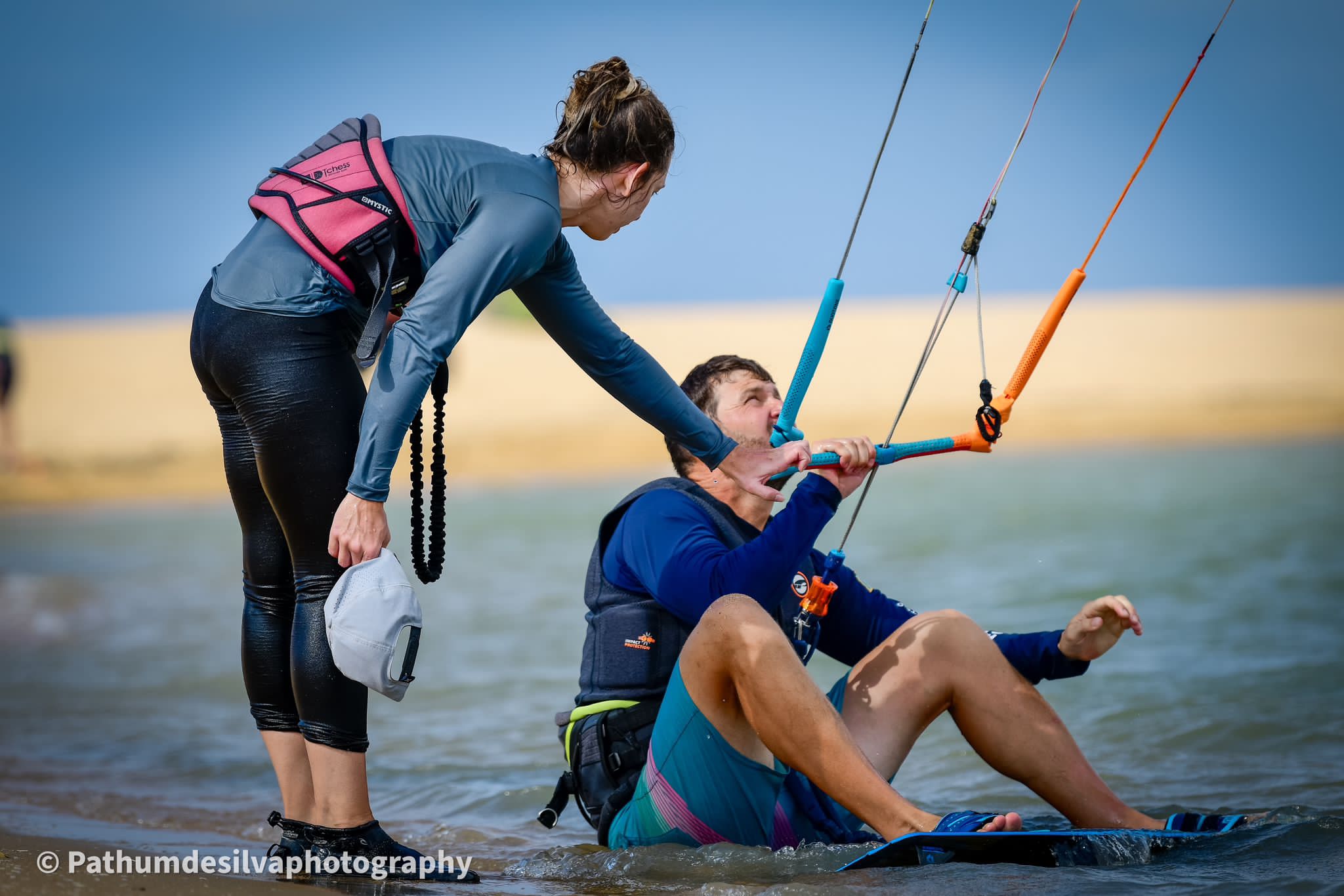
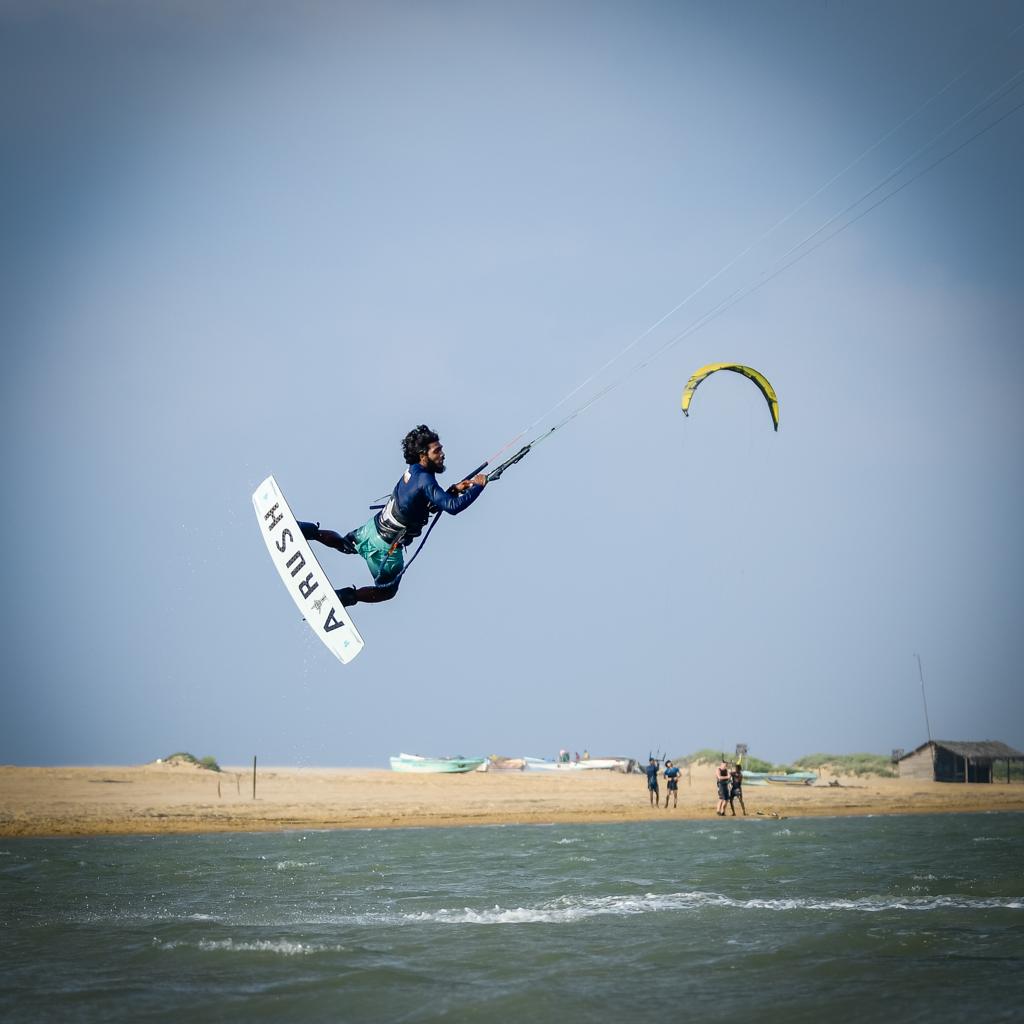
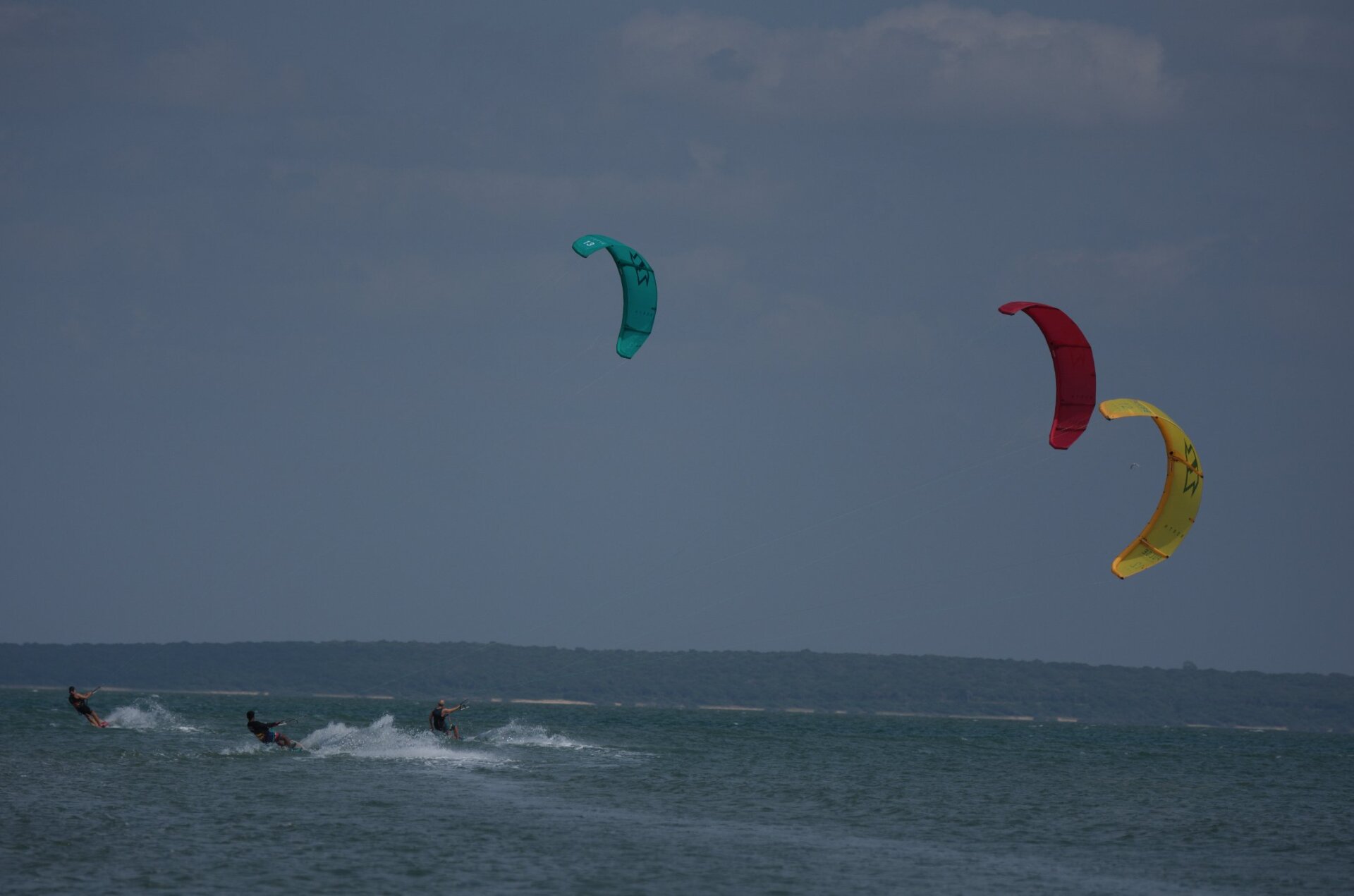
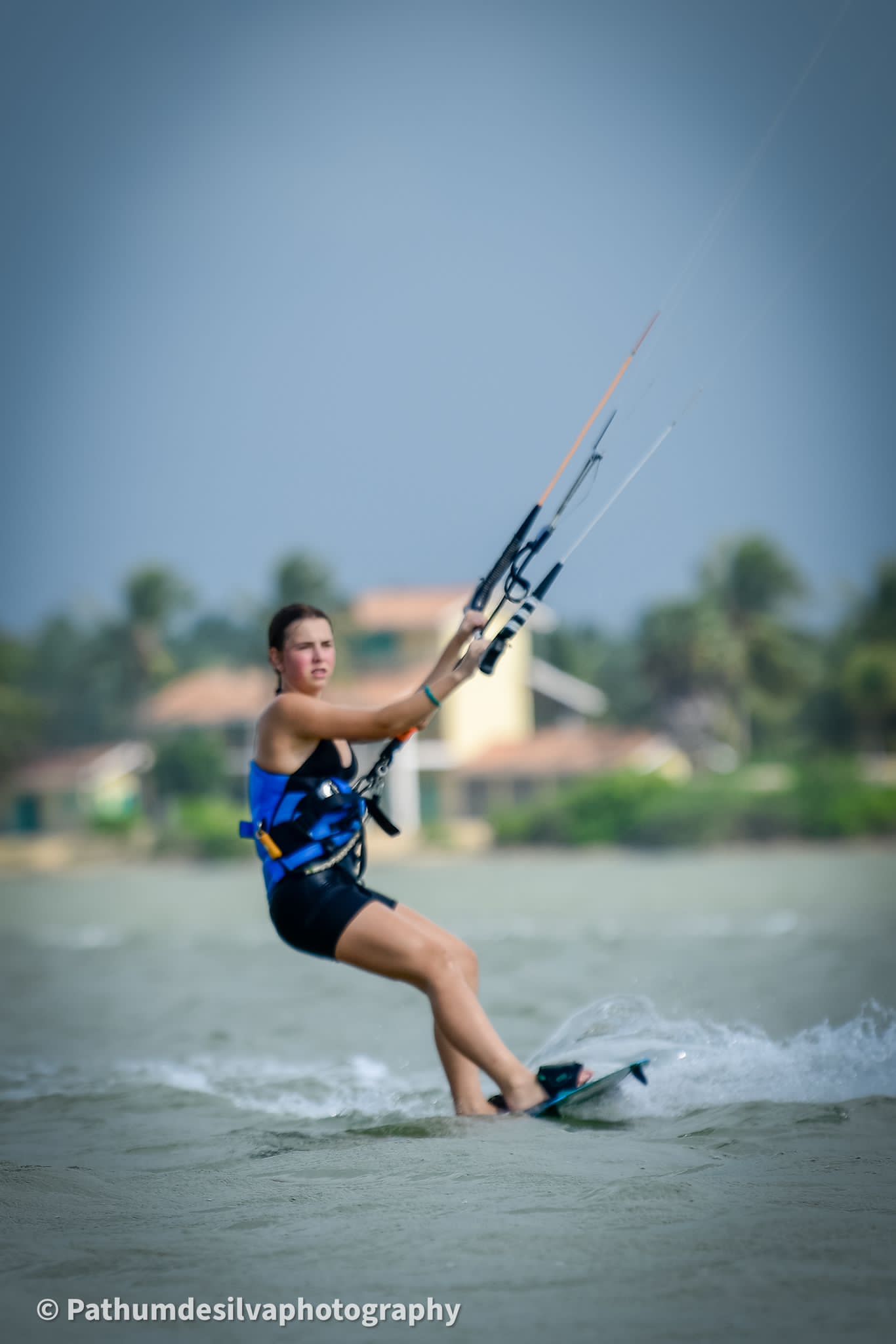
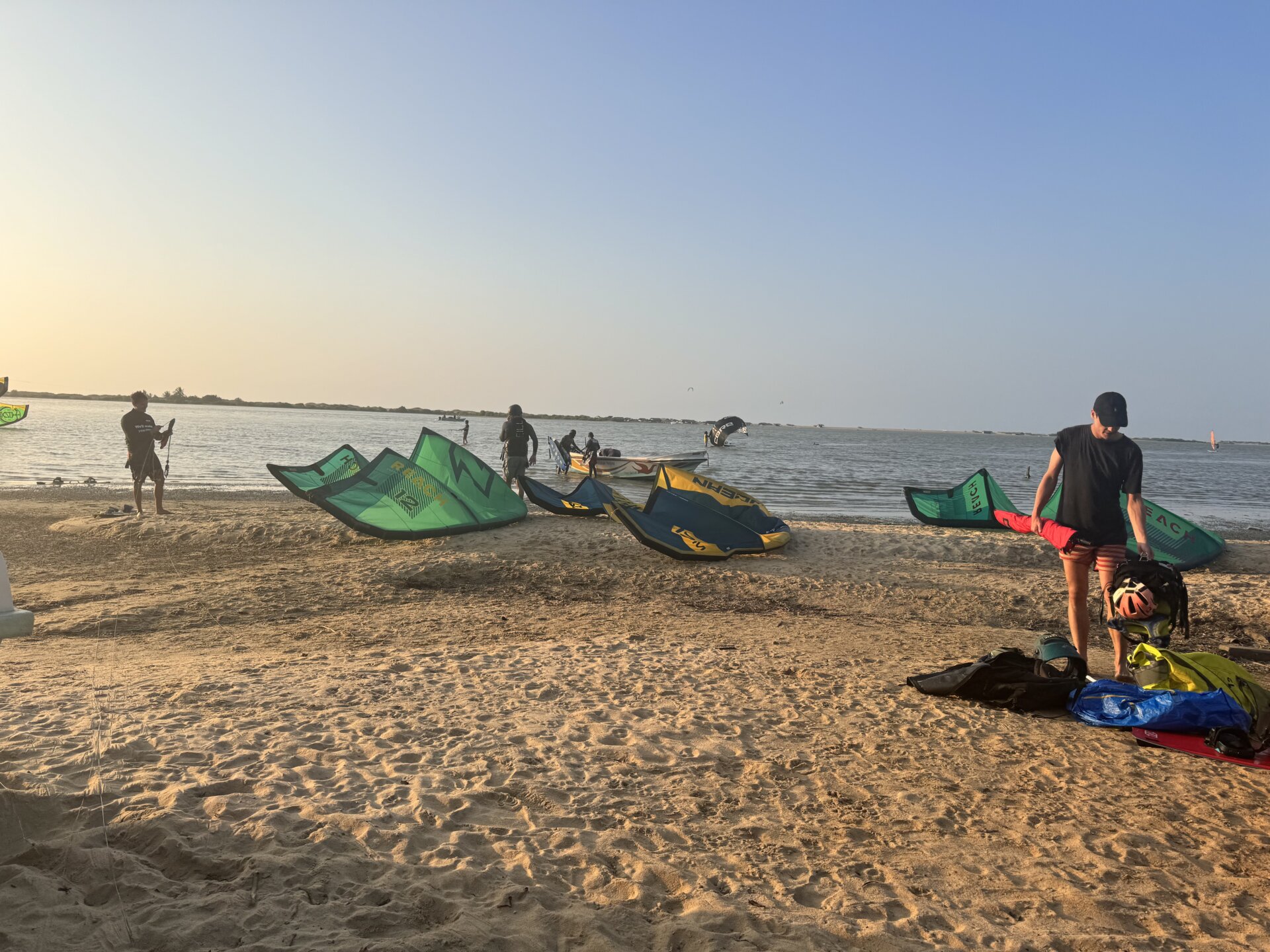
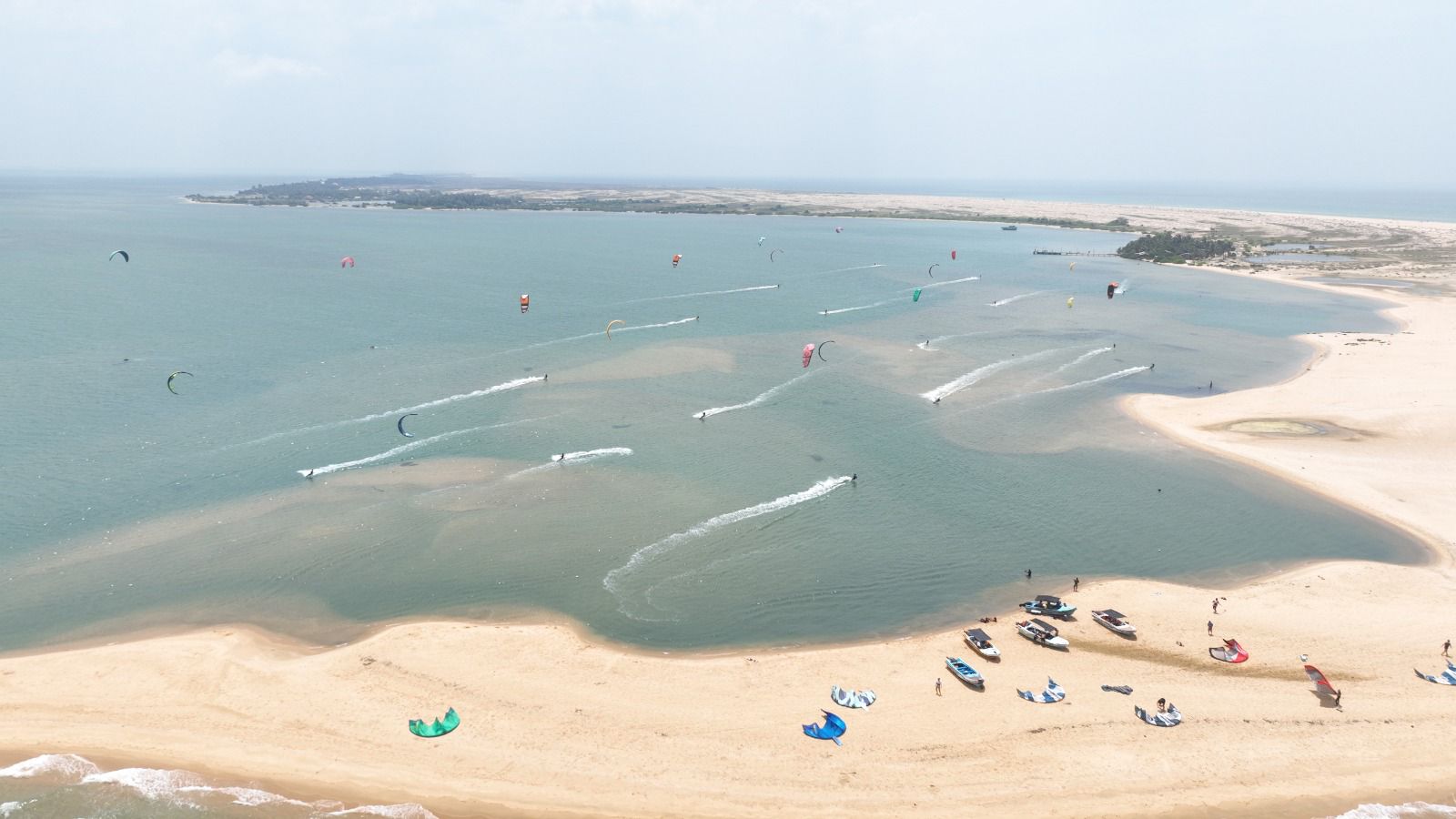
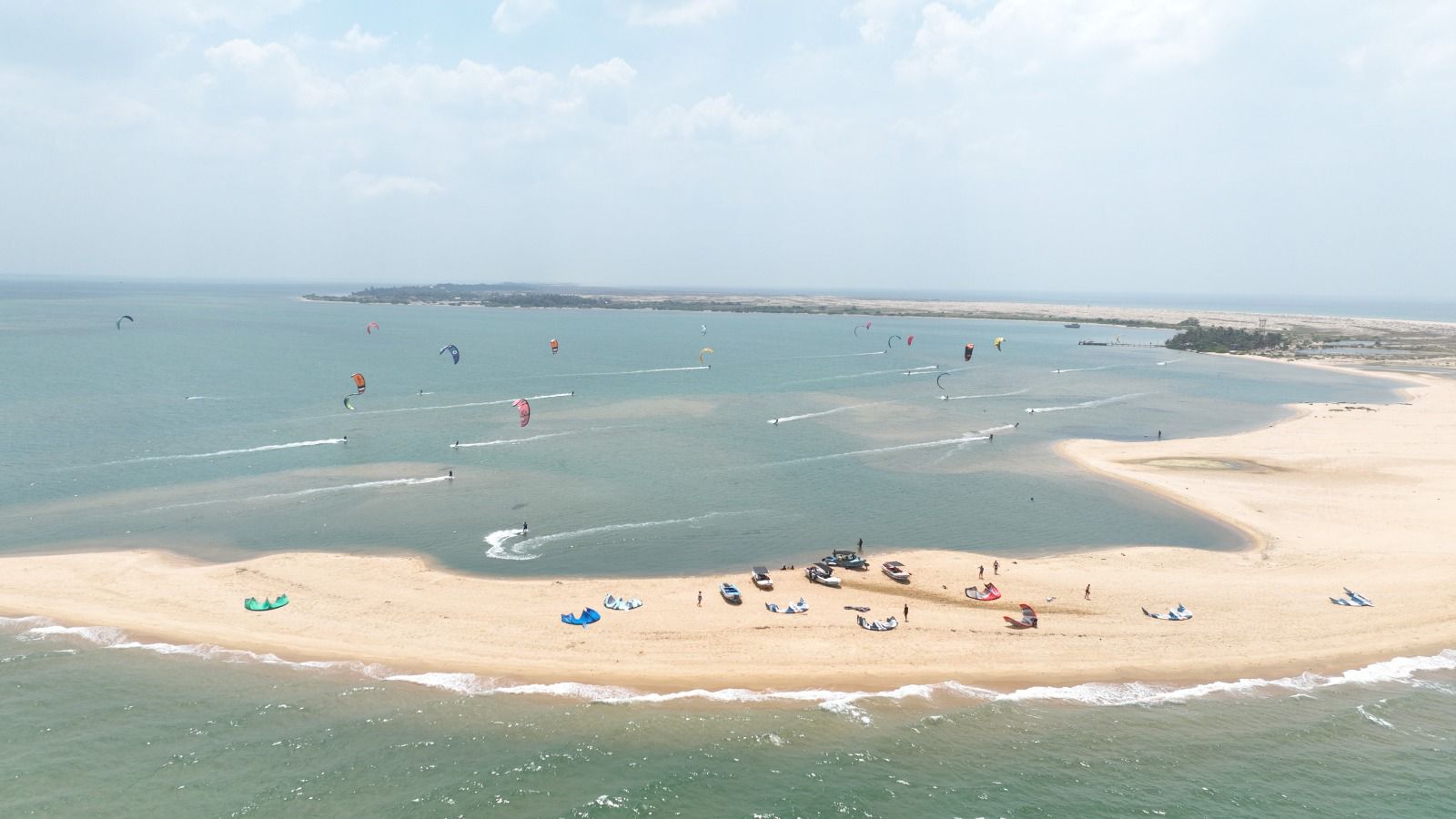
The Kalpitiya Big Lagoon is the main kitesurfing and teaching spot in the area. It is roughly two kilometres long and around one kilometre wide, with a narrow sandbank separating the lagoon from the Indian Ocean.
There is plenty of space, predominantly flat water and large shallow sections. Beginners have room to learn, while freeriders and freestylers have plenty of space once they are independent.
The bottom is mostly sandy around the edges, becoming muddier and deeper towards parts of the centre. Shoes can be useful, especially when you’re learning and spending more time standing in the water.
Different kite schools use their own areas for teaching, while independent riders have the wider lagoon to explore.
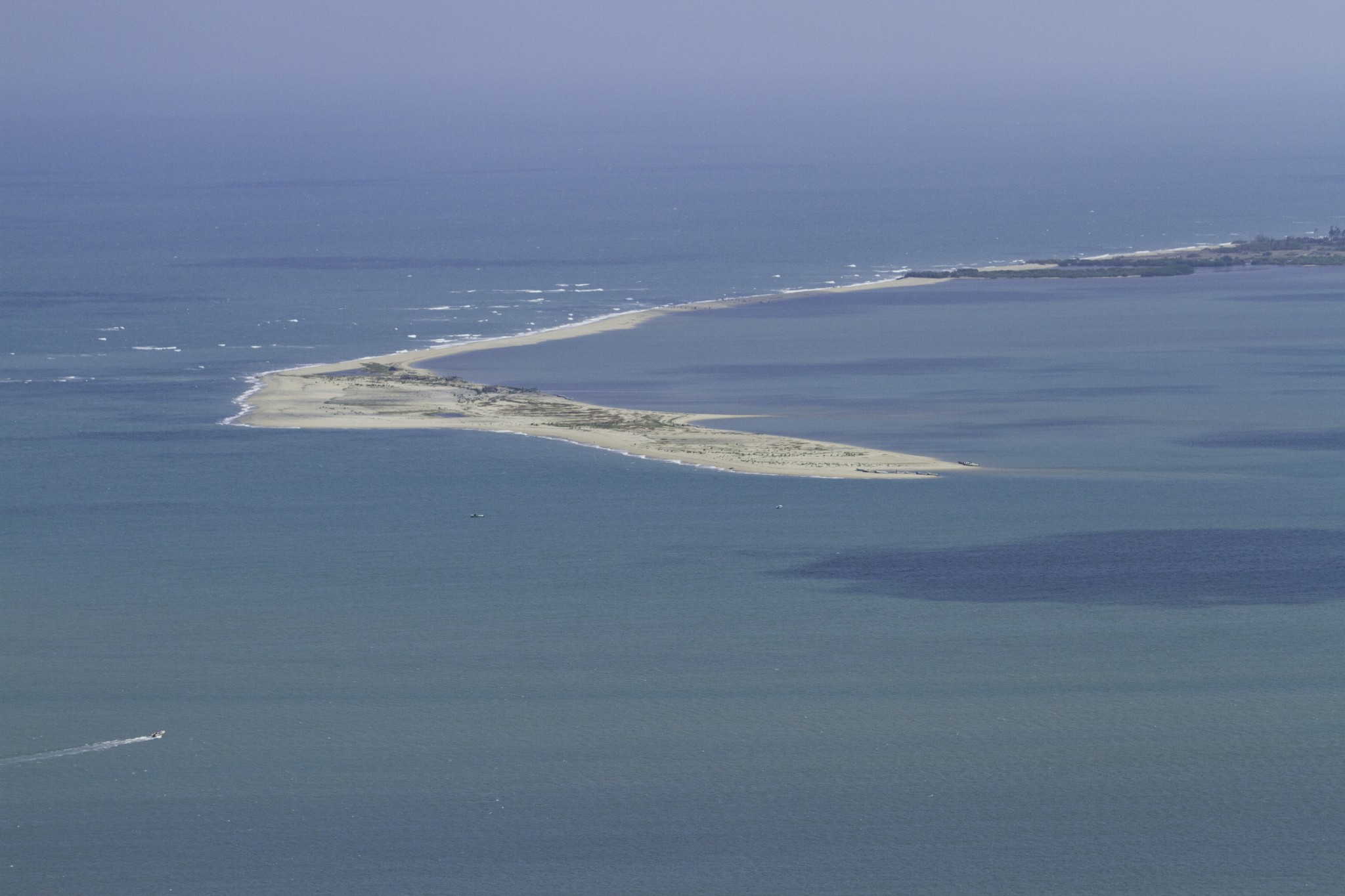
This smaller lagoon sits directly in front of Kitesurfing Lanka and comes into its own during the winter season, when the wind direction suits the spot.
If you’re staying at KSL and riding independently, you can walk from the camp straight to the water and launch from the lagoon. Lessons still take place at the Kalpitiya Big Lagoon in both seasons.
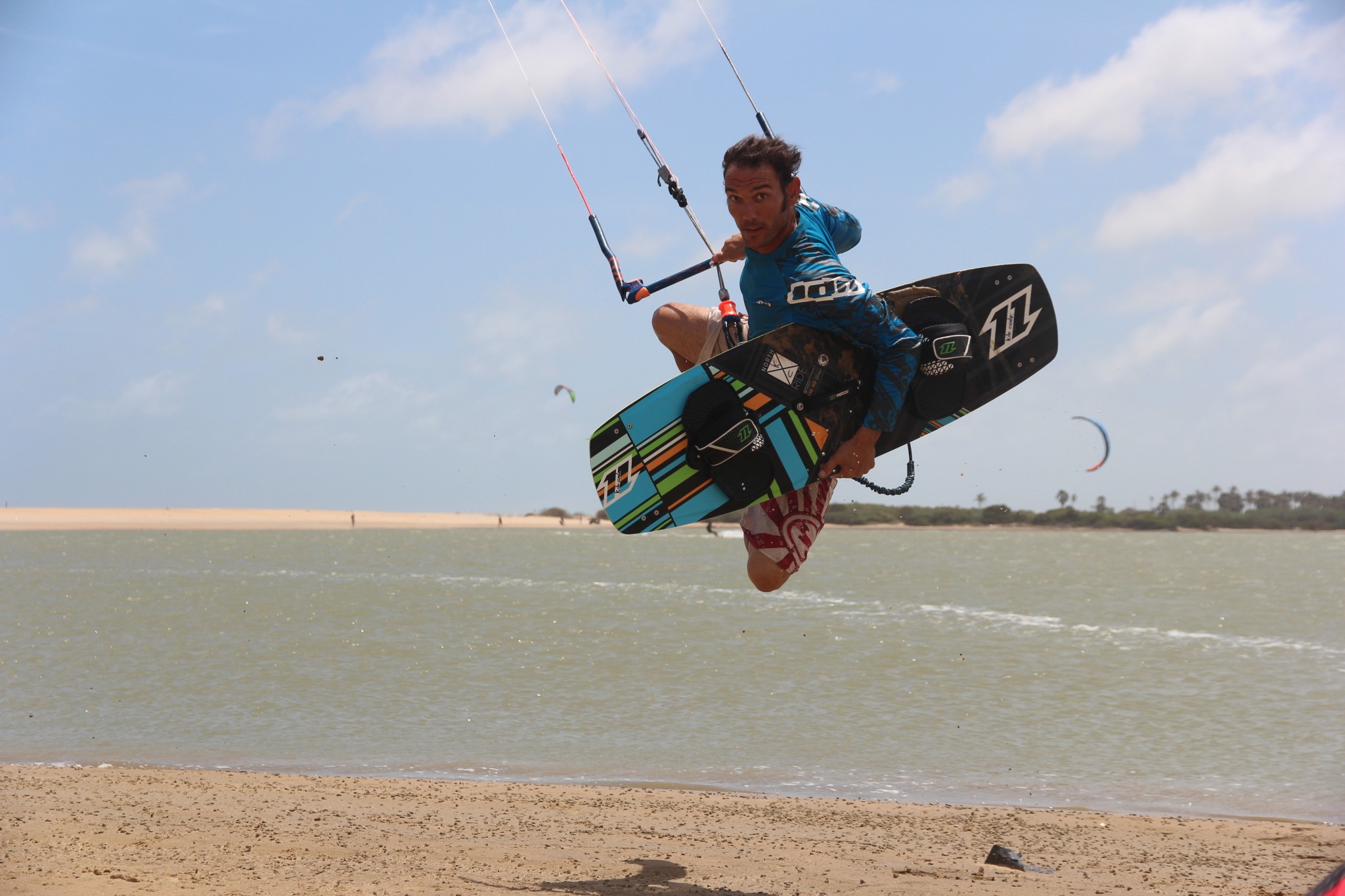
Cross the narrow strip of land from Kandakuliya Lagoon and you’re on the Indian Ocean at Donkey Spot.
It’s a completely different session from riding inside the lagoon, with chop and waves depending on the day.
In summer the wind is side-offshore and there is no rescue service on the ocean side, so this is a spot for confident, independent riders who can judge the conditions before heading out.
Vella Island
Vella is one of the classic summer kite trips from Kalpitiya and worth setting aside a good part of the day for.
The long sandbank creates very flat water on its sheltered side, with strong, clean wind. It is reached by boat and is best suited to independent riders.
The trip north takes you through the lagoon system and past fishing communities before you reach the island. Getting there is part of the day rather than simply a transfer to another kite spot.
Mini Vella
Mini Vella gives you a similar setup to Vella Island on a smaller scale, with protected flat water and clean wind behind the island.
Depending on the conditions and where you start, it can also be combined with a downwinder.
Dream Spot
Dream Spot is another summer option and is closer to Kalpitiya than Vella Island.
A narrow sandbank separates the lagoon from the Indian Ocean, so you have flat water on one side and open-sea conditions on the other.
Puttalam Lagoon & Downwinders
The wider Puttalam Lagoon has numerous islands, sandbanks and other places to ride.
Depending on the wind, water level and conditions, different spots can be reached by boat or vehicle or included as part of a downwinder.
If you’re staying in Kalpitiya for a little longer, it’s worth leaving some flexibility in your plans rather than deciding on every spot in advance. Local schools can choose different trips according to the conditions.
When Is the Best Time to Go?
The windiest months in Kalpitiya are January, February, May, June, July, August, September, October, December.
Historical Wind Statistics
Plan Your Trip
Destination Map
 Open in Google Maps
 Getting There
At a Glance
Sri Lanka Essentials
- Currency
- LKR (Sri Lankan rupee)
- Languages
- Sinhala, Tamil
- Population
- 21,763,170
- Capital
- Sri Jayawardenepura Kotte
- Time Zone
- UTC+05:30