
There are few places in the world that have achieved legendary status in kitesurfing quite like Le Morne. Long before drone footage filled our social feeds and every destination could be explored with a few taps on a phone, this corner of Mauritius was already captivating riders through magazine covers, films and stories passed around beaches across the globe.
Arriving for the first time, it’s immediately clear why.
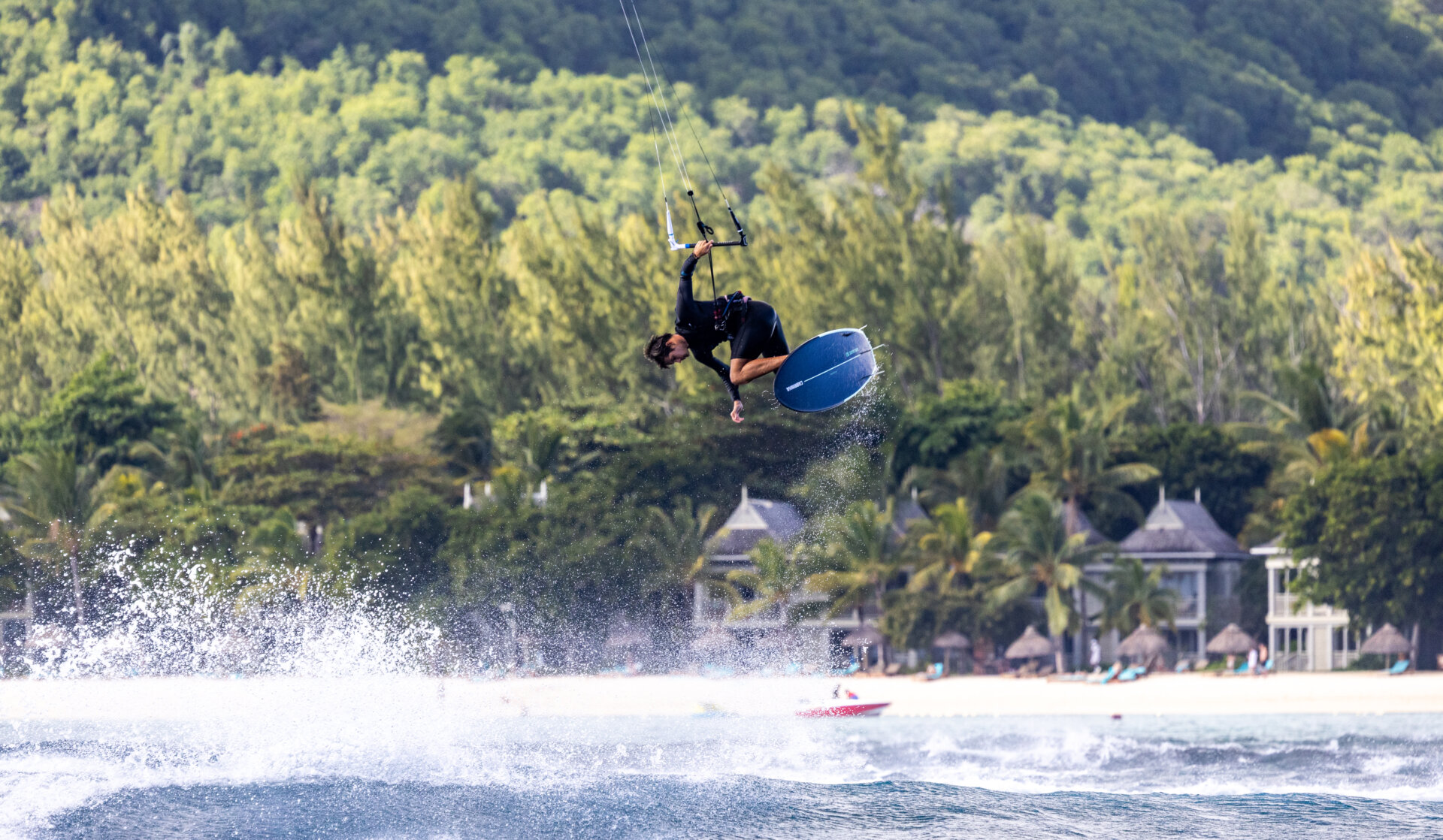
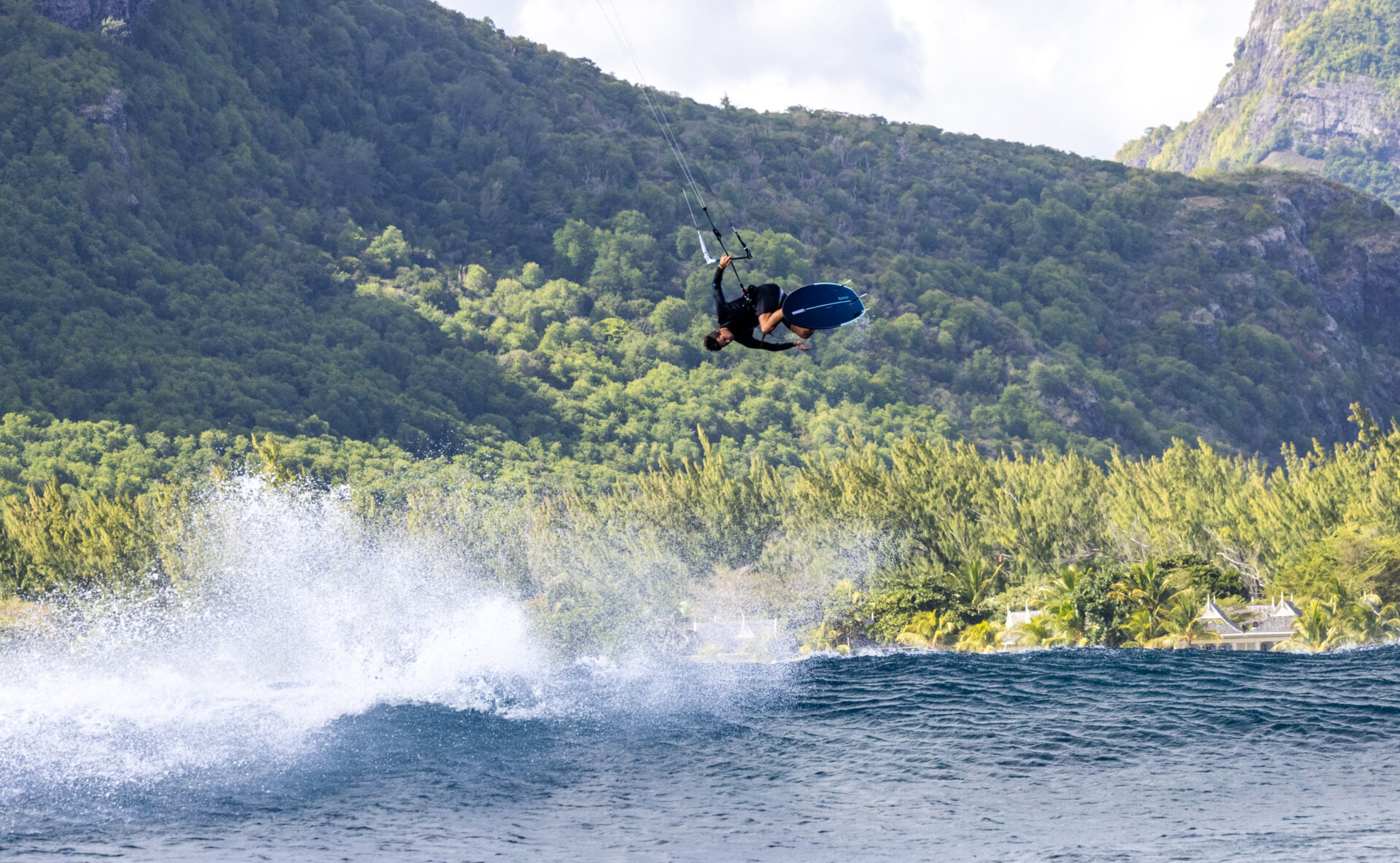
Standing proudly above the island’s south-west coast, Le Morne Brabant dominates the skyline. The UNESCO World Heritage mountain rises almost vertically from the turquoise lagoon below, creating one of the most recognisable landscapes in the sport. Beneath it lies a vast stretch of warm, crystal-clear water protected by an outer reef, while beyond the reef, long Indian Ocean swells peel across coral breaks that have become part of kitesurfing folklore.
For many riders, Le Morne has always been the ultimate destination. A place where warm trade winds, world-class riding and laid-back island life come together to create something genuinely special.
The beauty of Le Morne is that it offers something for almost everyone. Beginners can take their first lessons in the sheltered lagoon, progressing riders have endless space to improve, freestyle enthusiasts can find beautifully flat sections of water, while experienced wave riders have some of the most famous reef breaks on the planet sitting just beyond the lagoon.
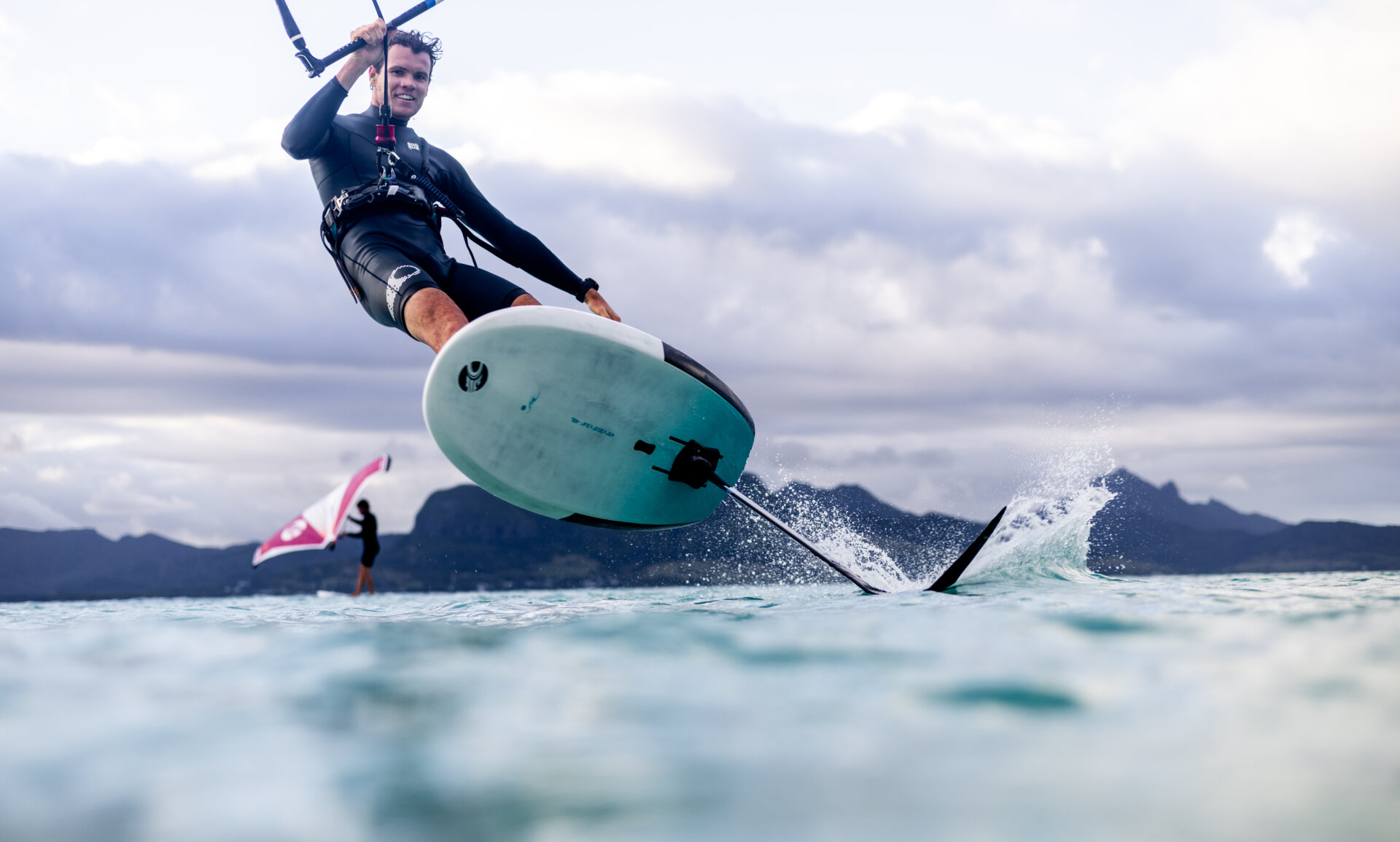
The lagoon itself is one of Le Morne’s greatest attractions. Protected by the reef, the water remains remarkably flat in many areas despite the trade winds blowing steadily across it. The colours almost seem unreal, shifting from pale turquoise over the shallows to deep sapphire blue as the water deepens towards the reef. It’s the kind of place where you’ll often stop for a moment between runs simply to appreciate your surroundings.
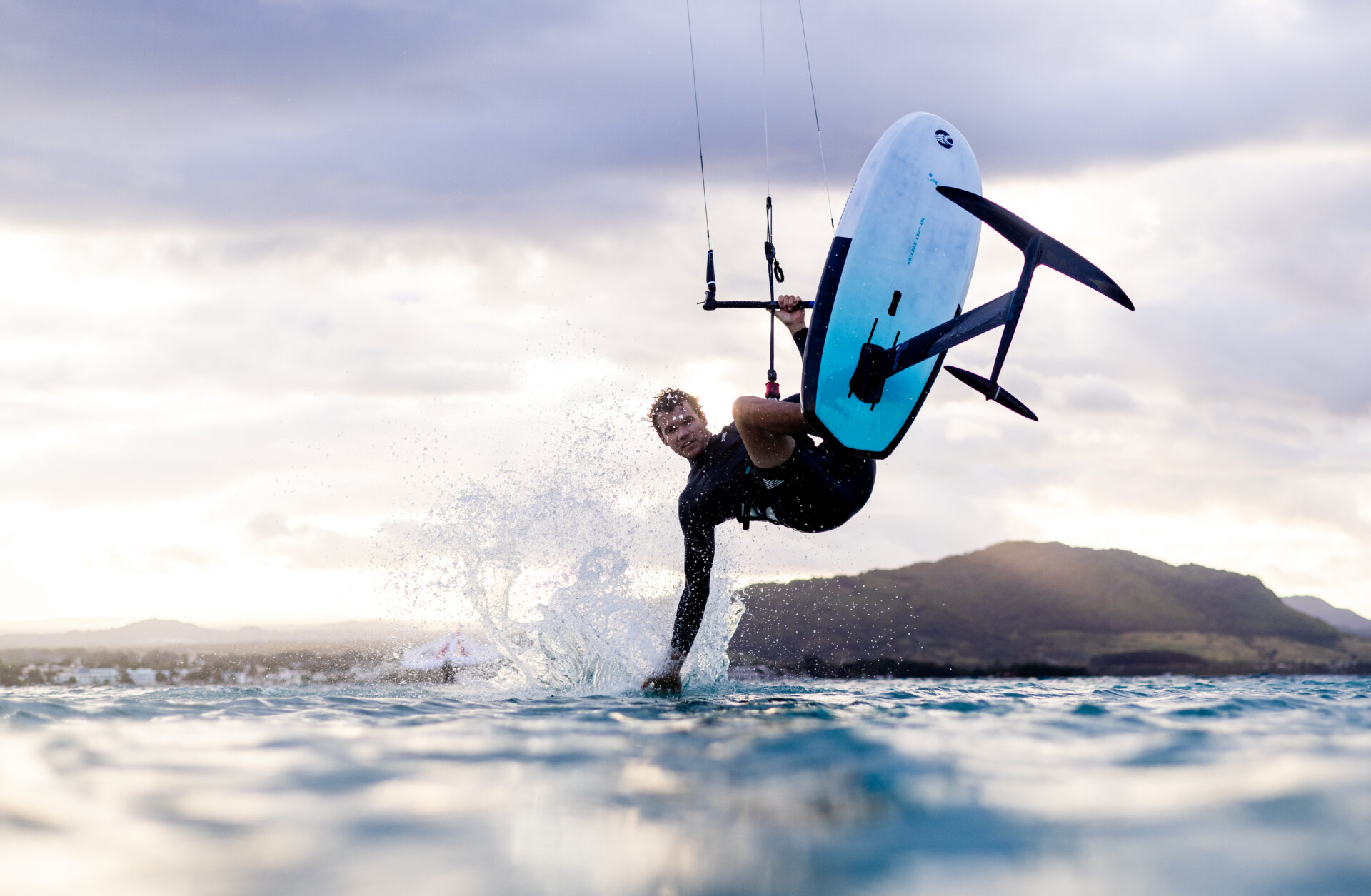
The prevailing south-east trade winds blow side-shore across the beach for much of the season, creating reliable conditions from May through to November. Water temperatures rarely require more than a shorty or lightweight wetsuit, and many visitors happily ride in boardshorts or bikinis throughout their stay. Combined with year-round warm weather, it’s easy to understand why so many European riders escape their own winters for a week or two in Mauritius.
For experienced wave riders, the names alone are enough to stir excitement.
The Legendary Reef Breaks
I’ve been fortunate enough to visit Mauritius many times over the years, and I’ve been lucky enough to score One Eye at its very best. What makes Le Morne so special is that it genuinely offers something for every rider, regardless of experience.
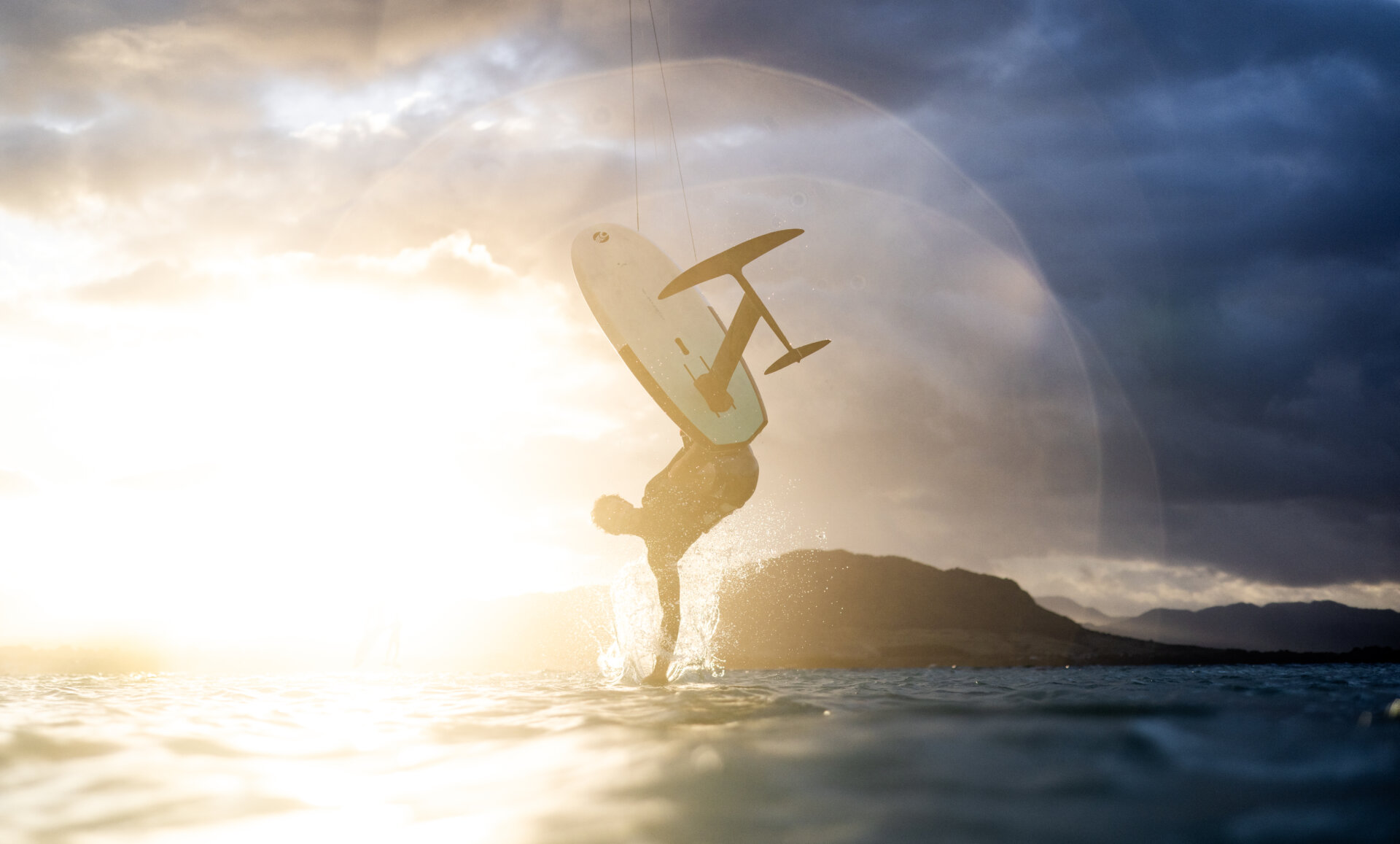
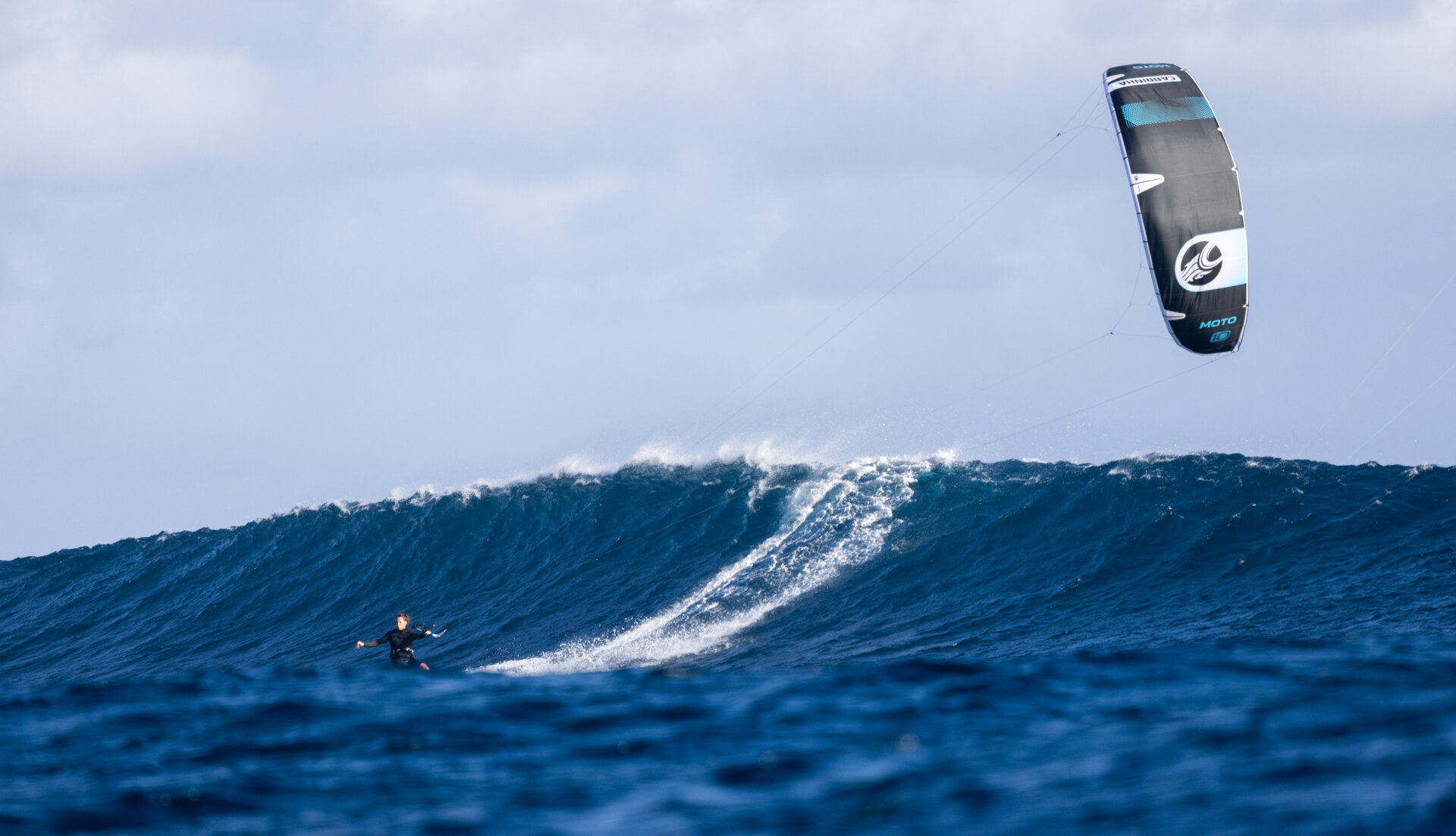
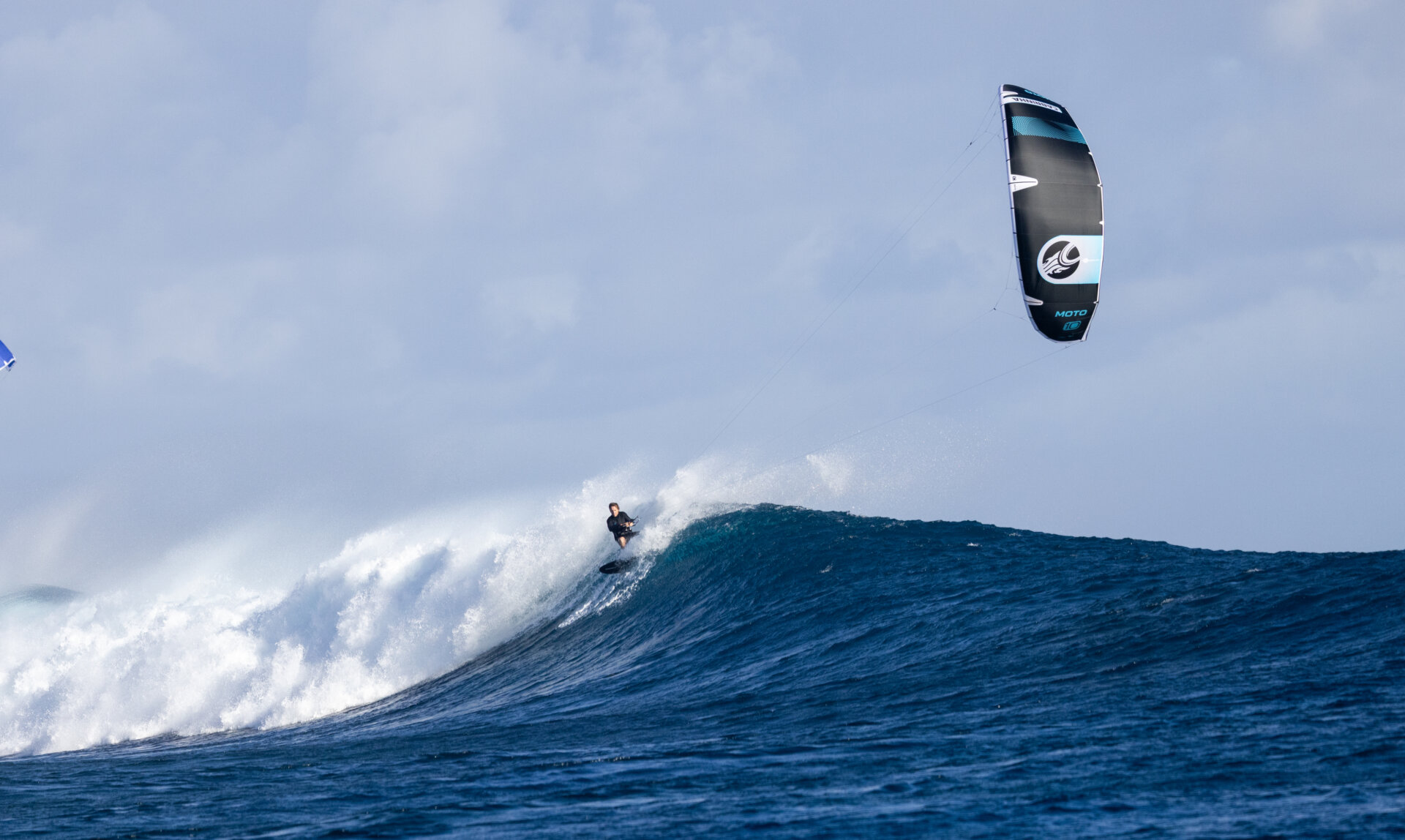
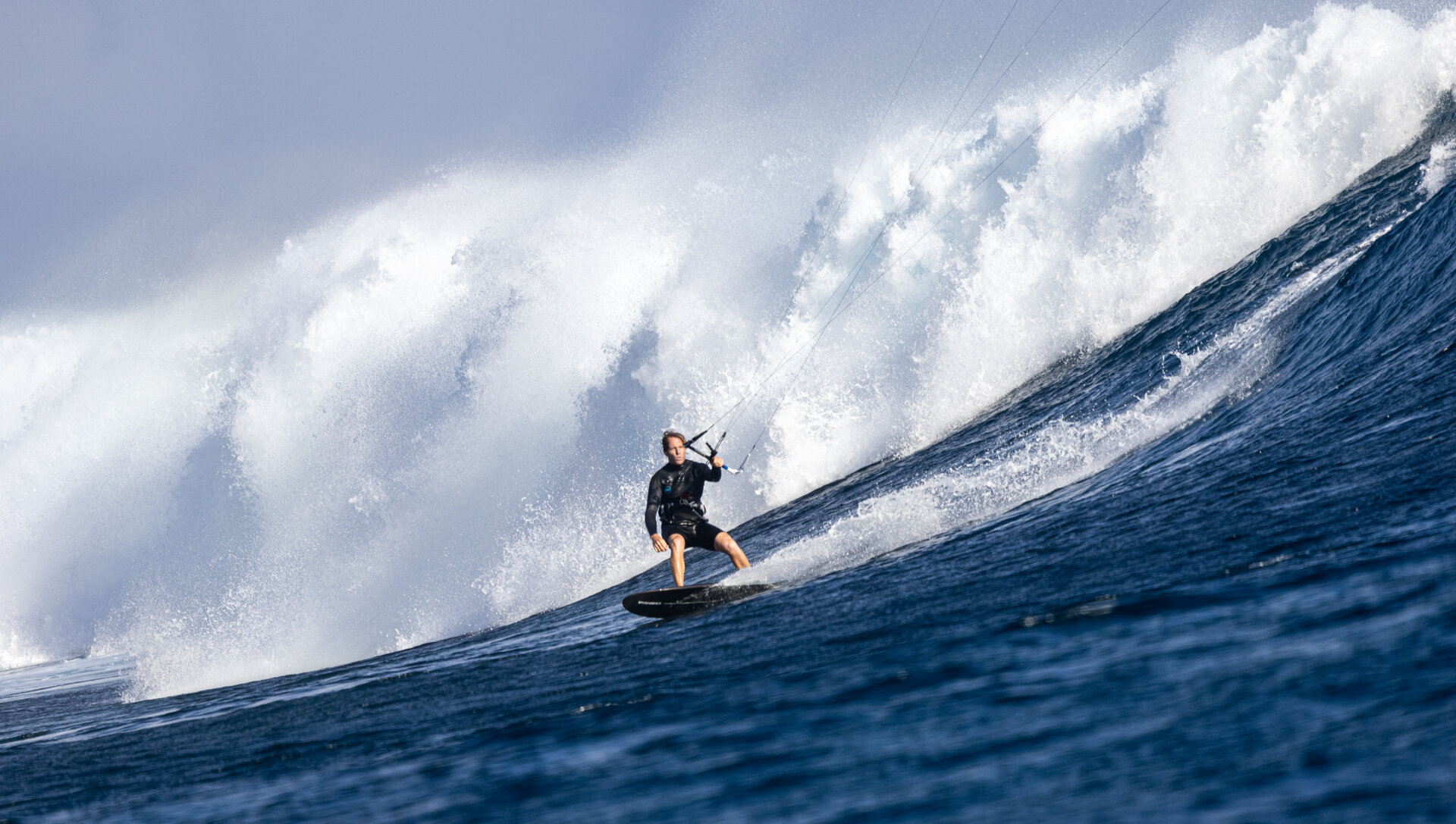
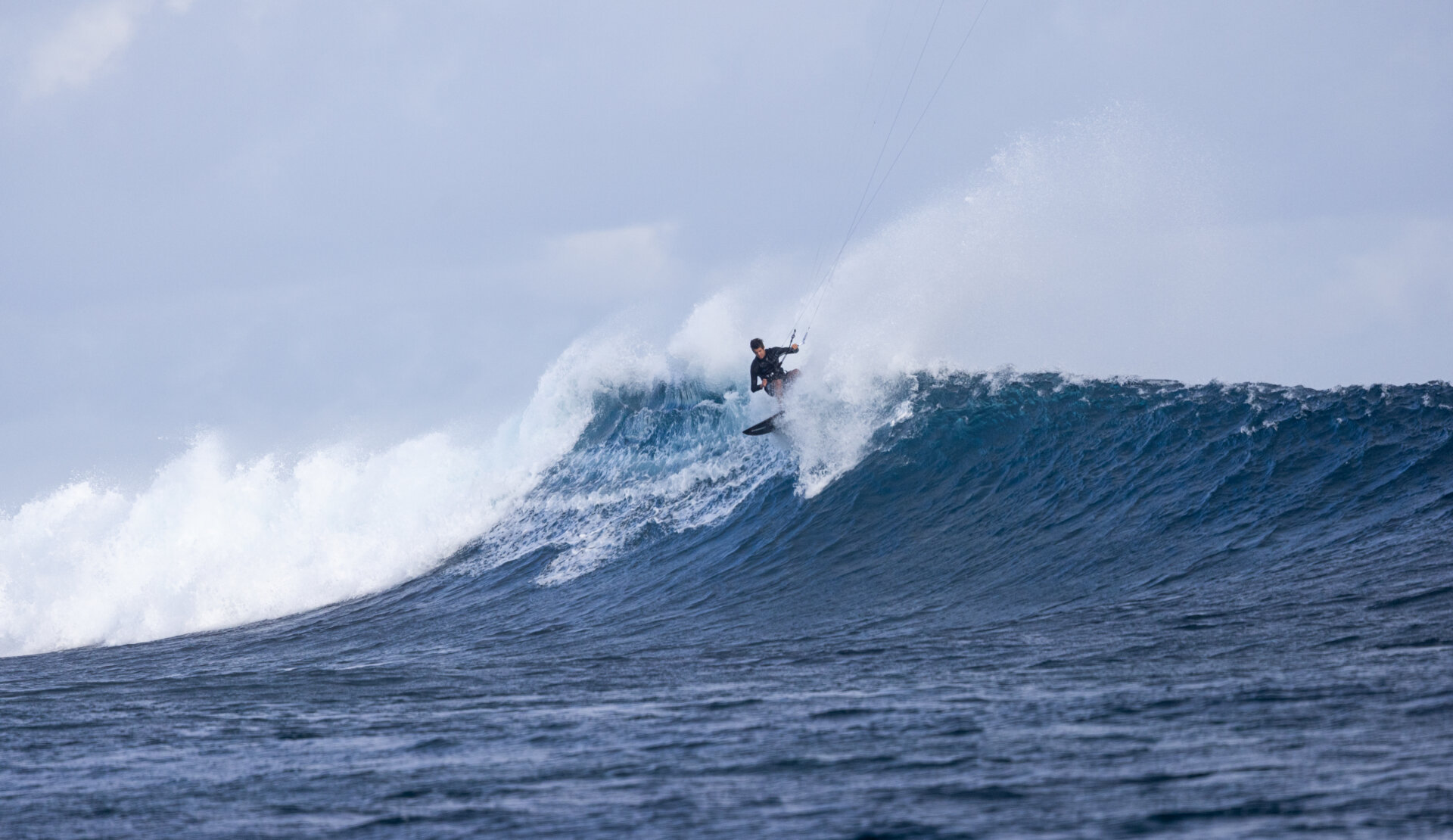
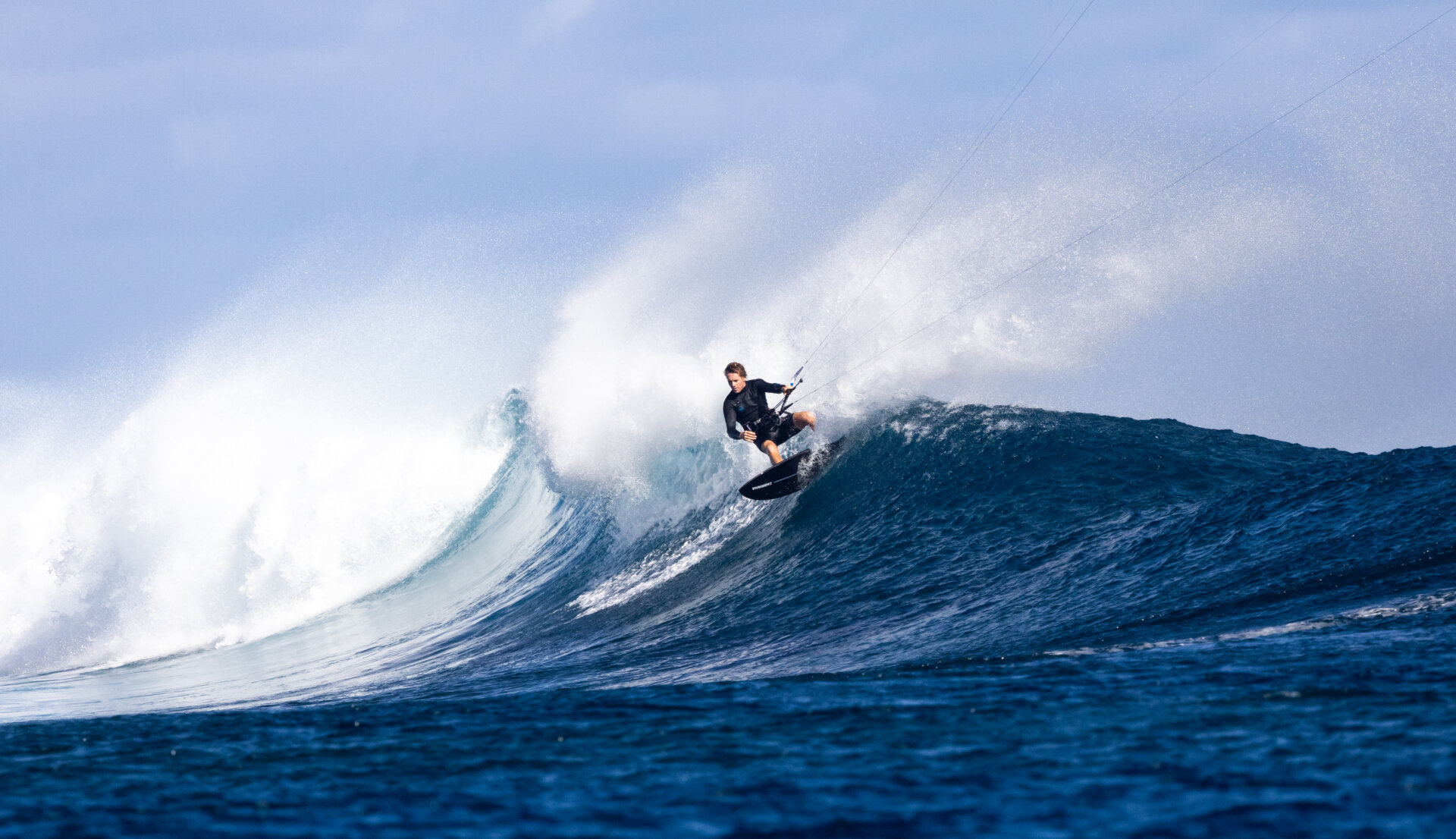
You can learn to kitesurf in the safety of the lagoon, take your first steps into wave riding on the forgiving walls at Little Reef, then progress out to Manawa. Manawa is one of my favourite waves anywhere in the world. Long, peeling left-handers break over deep water, offering plenty of time to set your rail and really enjoy the ride. If things don’t quite go to plan, there’s always the security of the nearby channel, making it a fantastic place to build confidence in proper reef waves.
Then there’s One Eye.
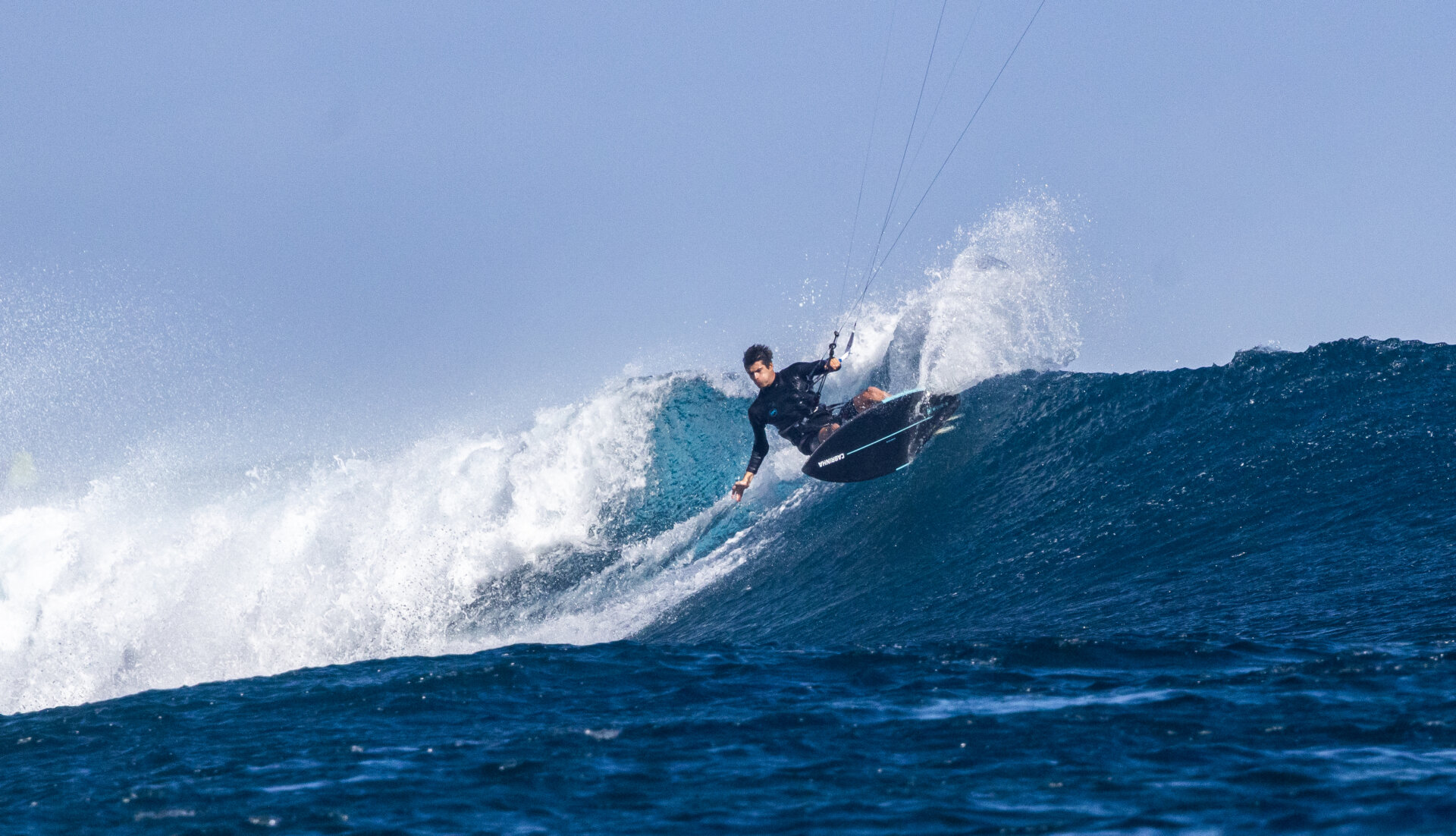
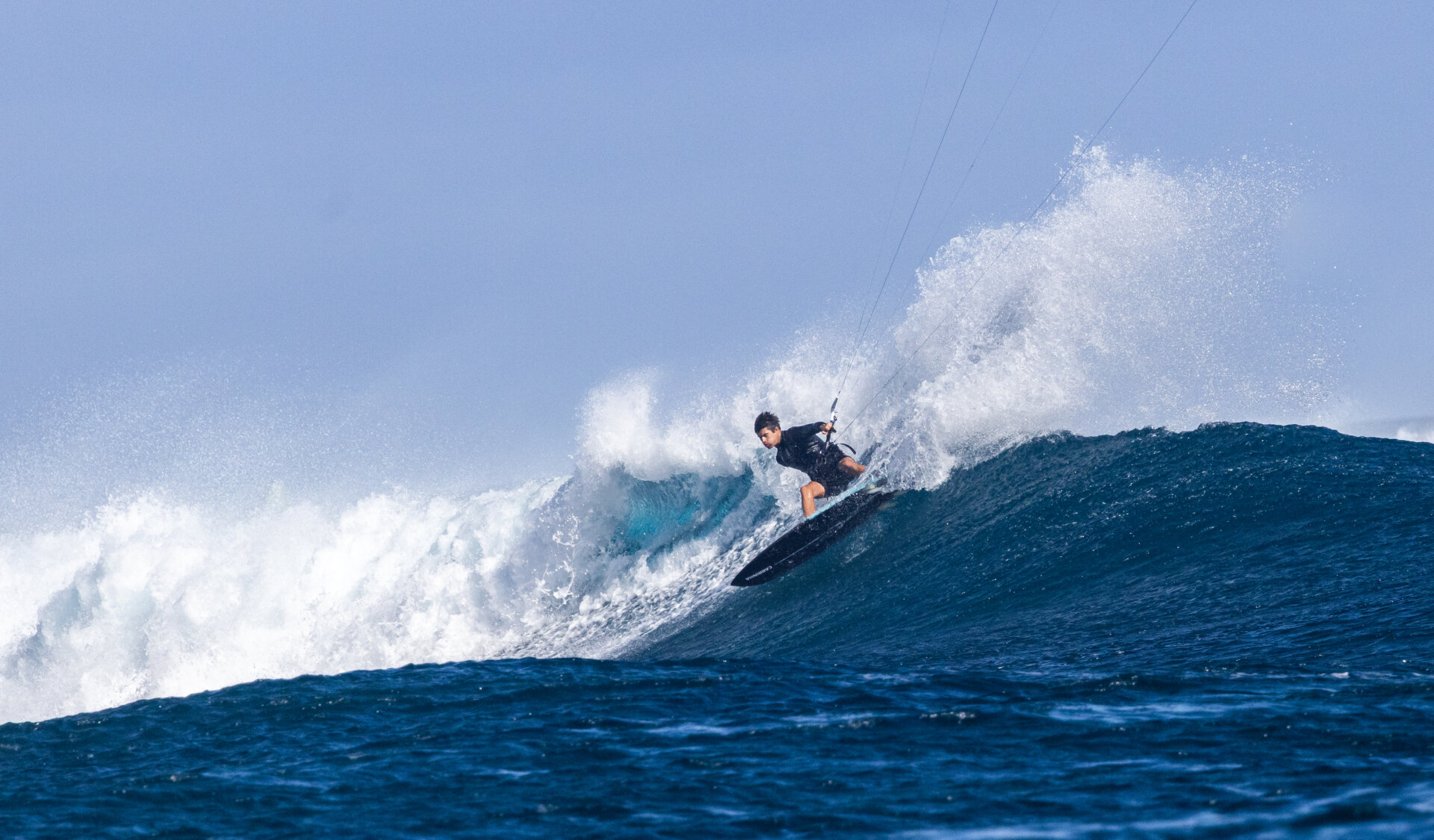
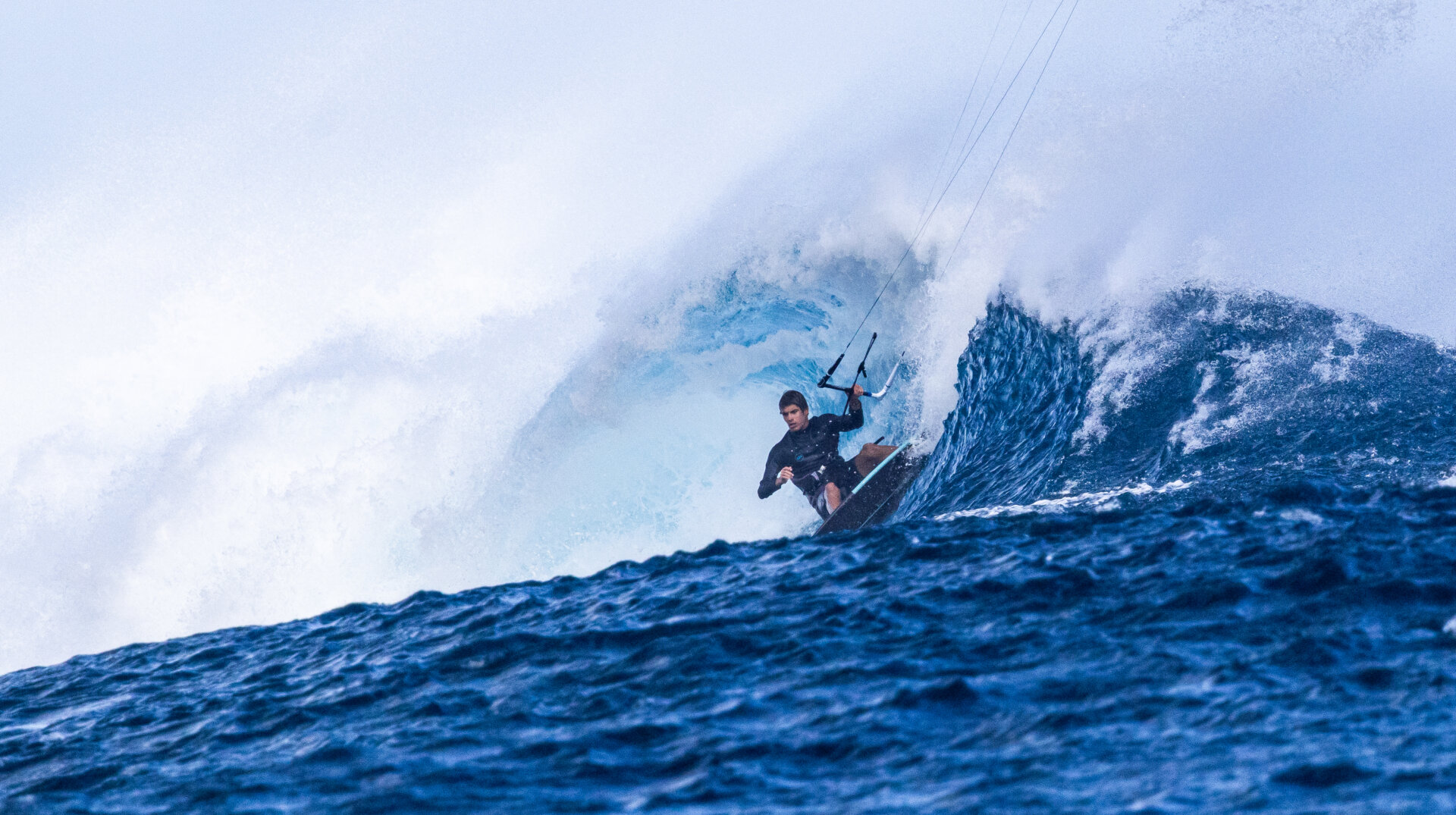
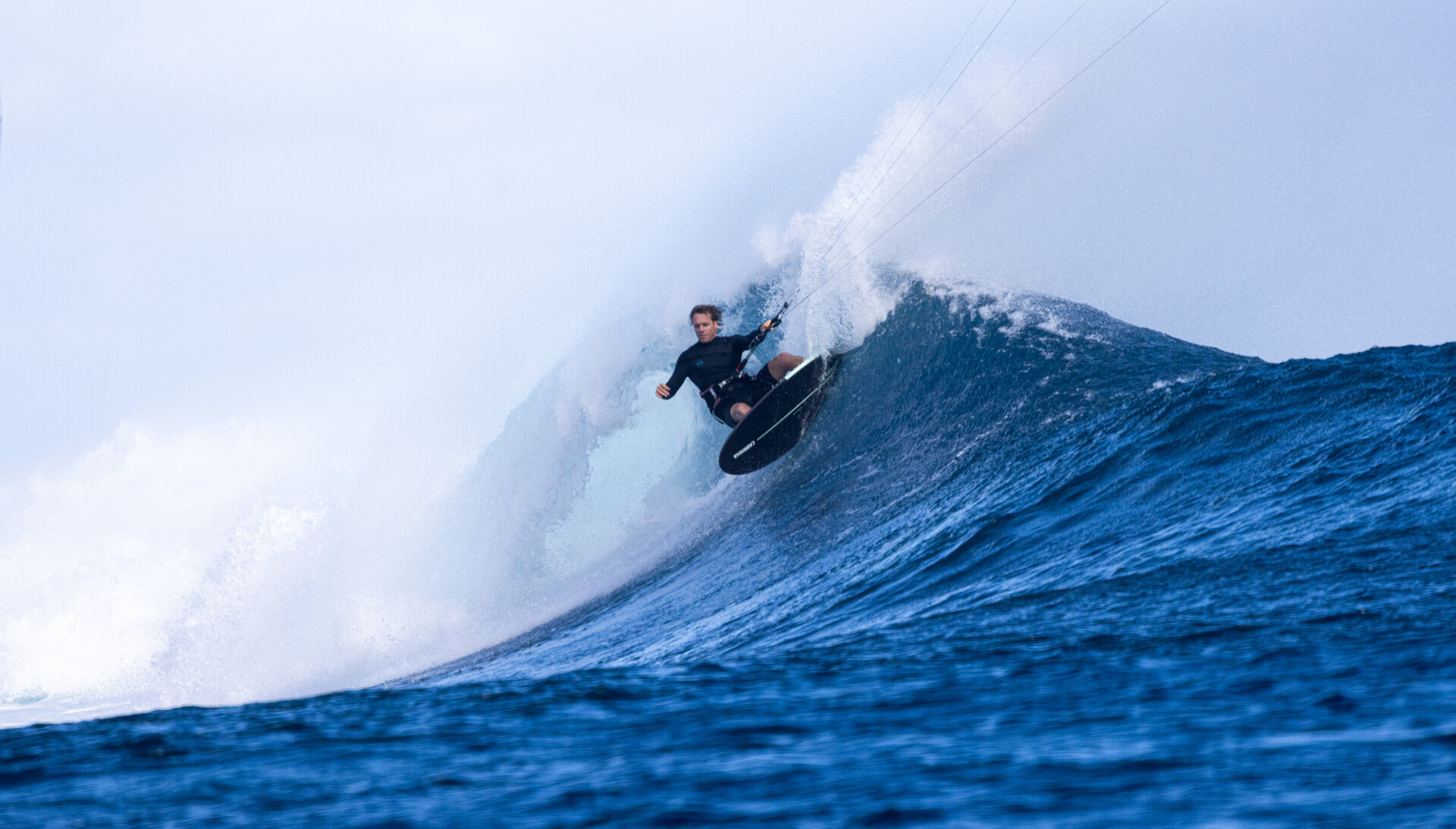
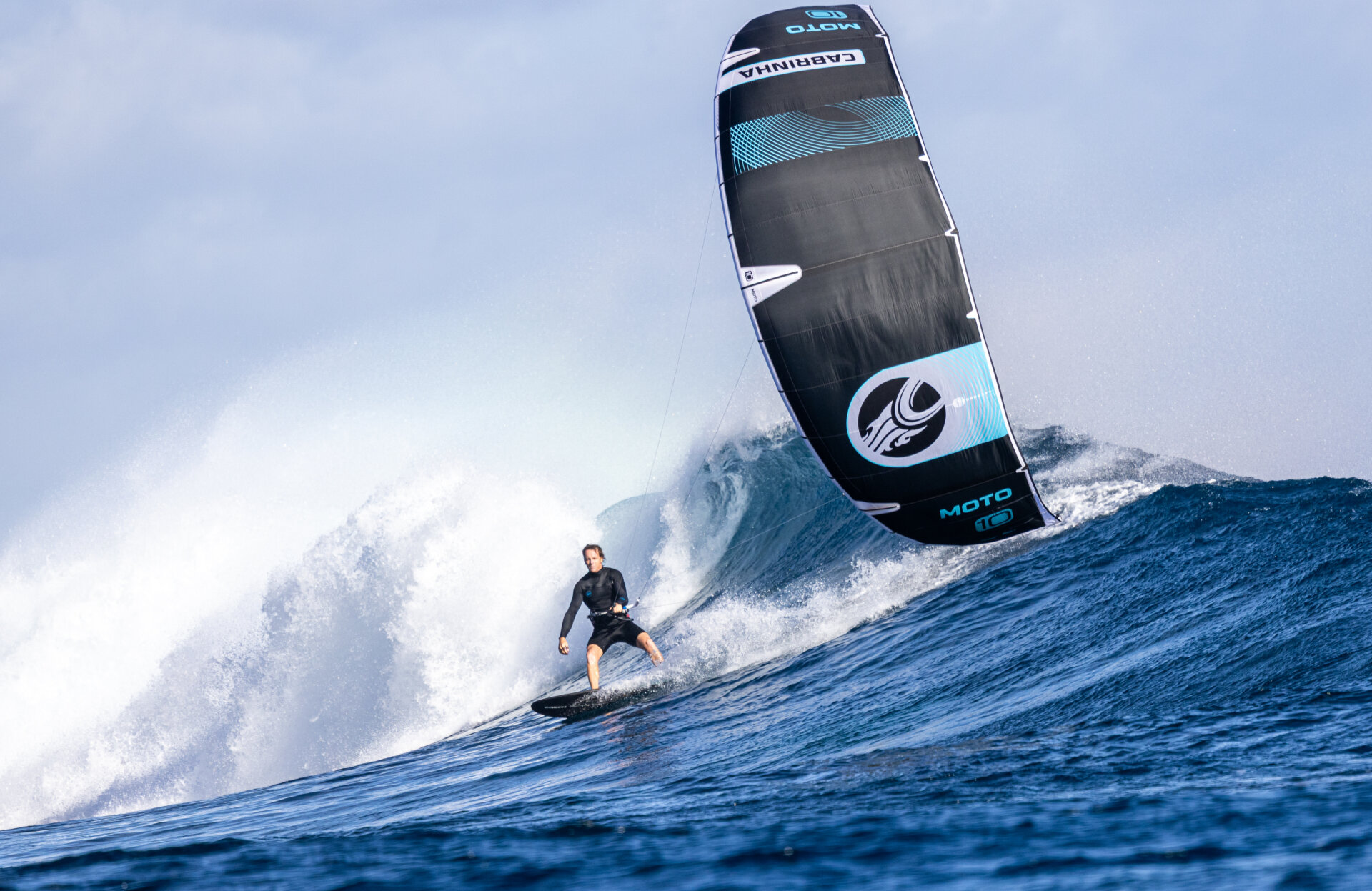
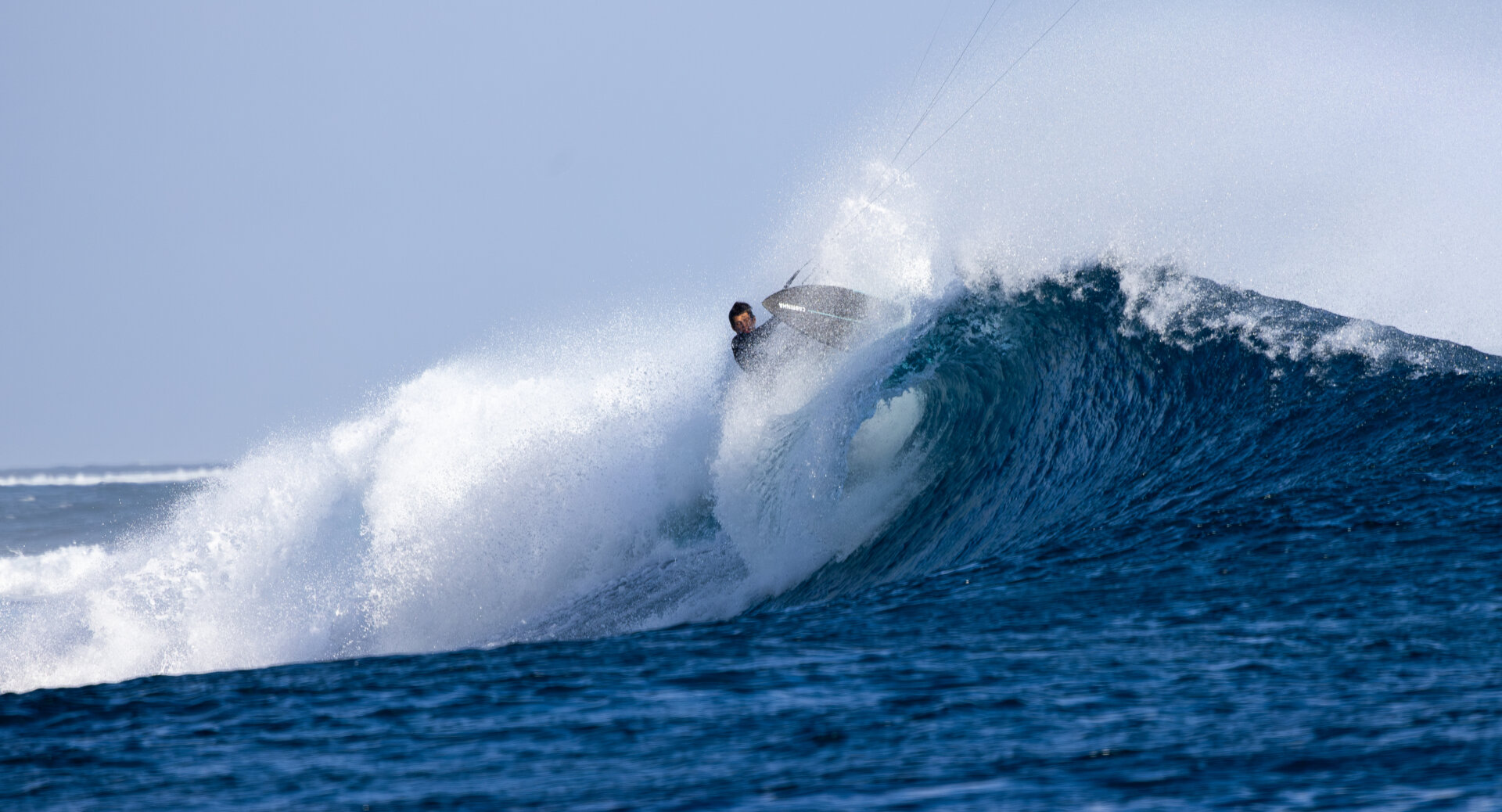
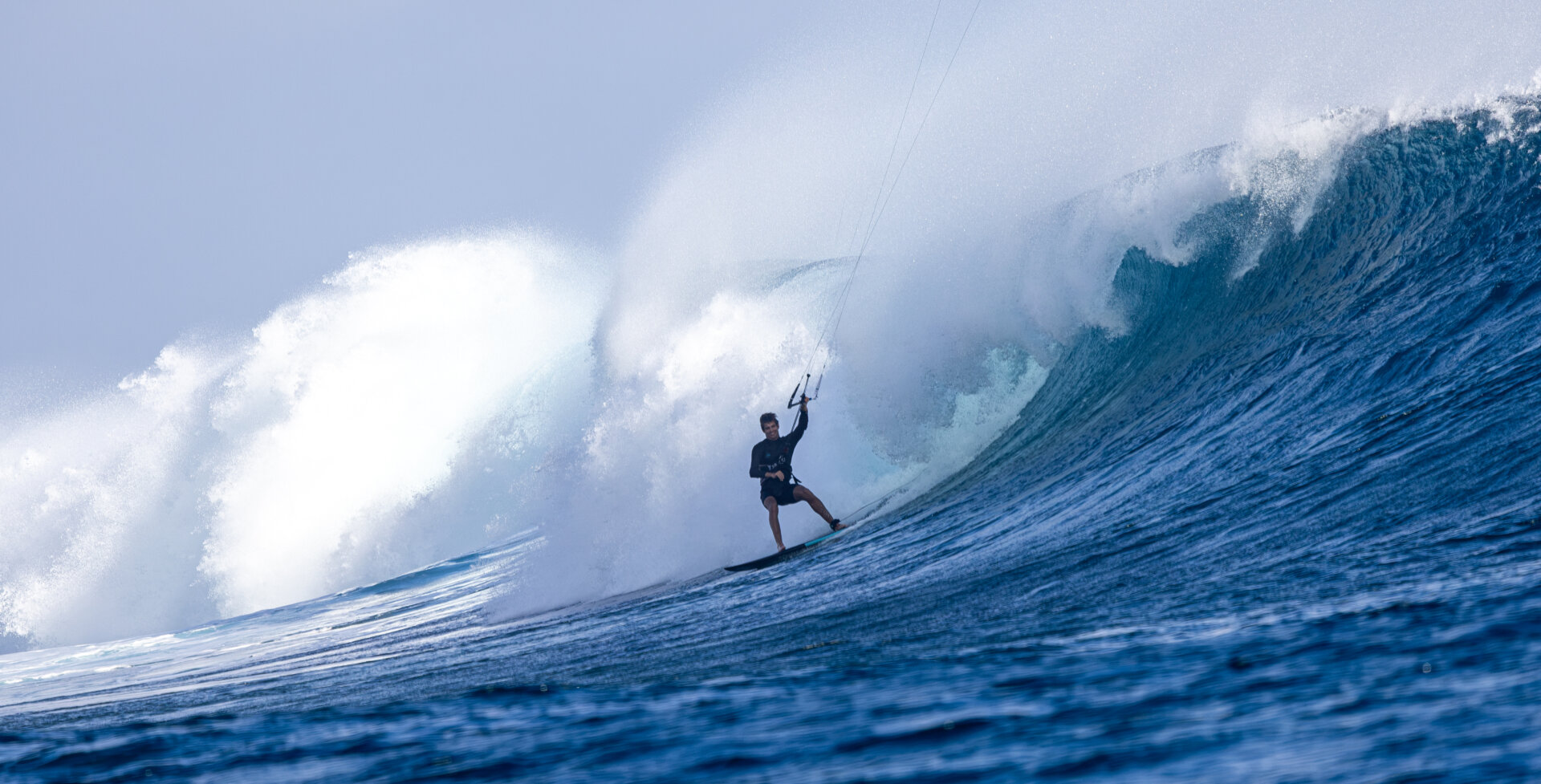
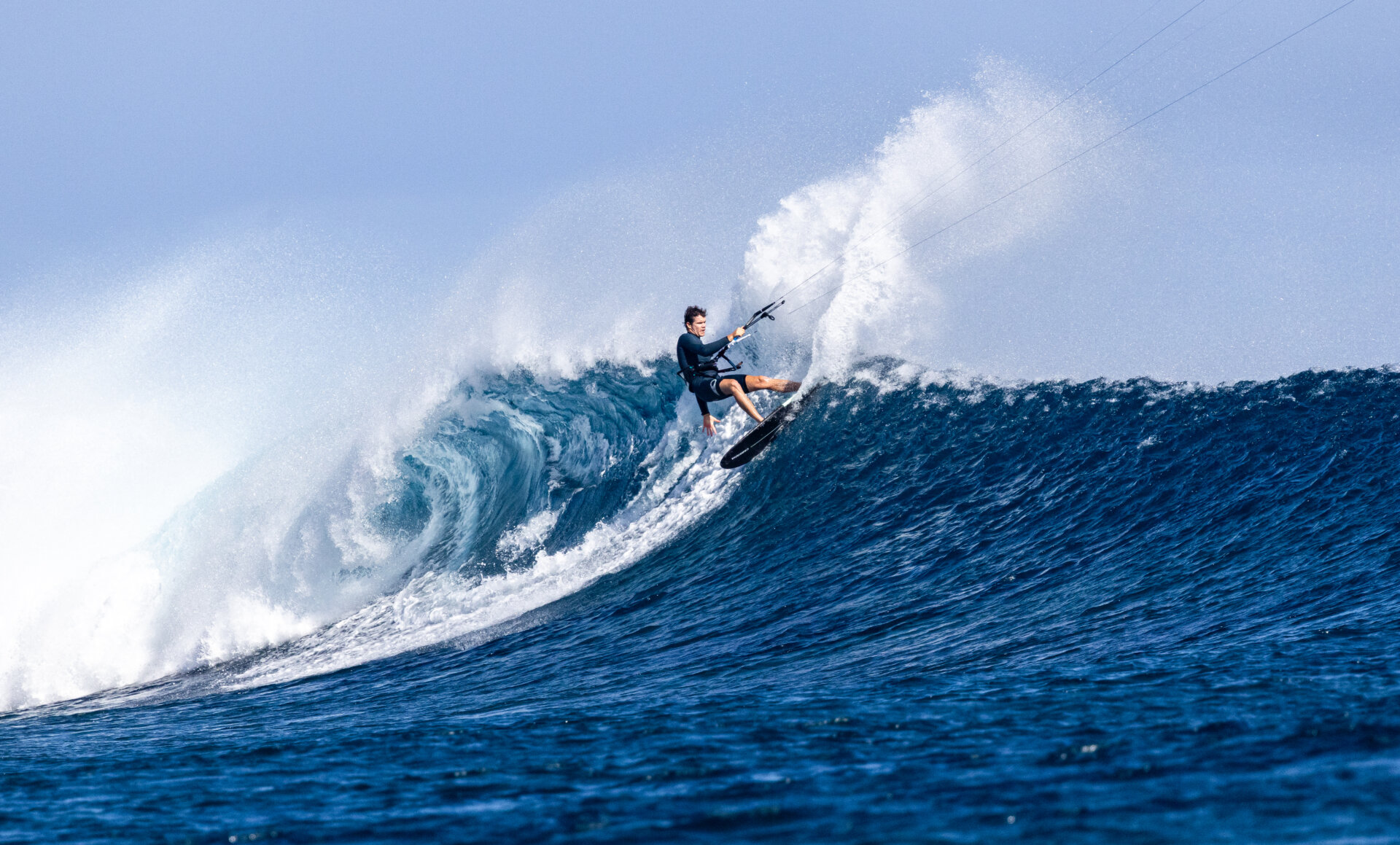
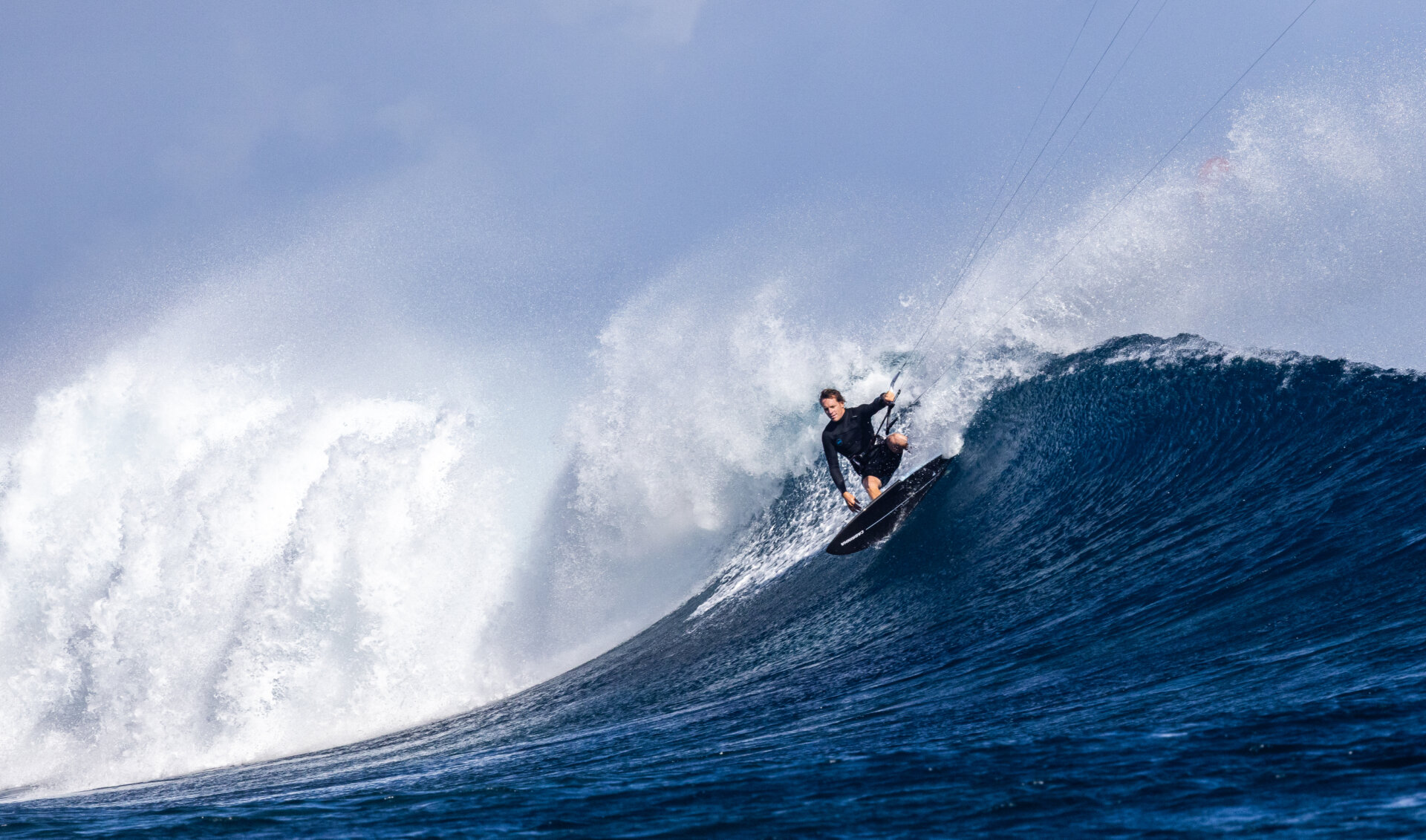
Few waves in kitesurfing have achieved the legendary status of One Eye. Breaking over a shallow coral reef, it’s a fast, cross-offshore left-hander that has featured on countless magazine covers and in some of the sport’s most iconic photographs. It’s the wave that every serious kite wave rider dreams of.
Reaching both Manawa and One Eye means heading well offshore. When you stop and look back towards Le Morne, the mountain suddenly looks surprisingly small, and you realise just how far out into the Indian Ocean you’ve travelled. By the time you arrive at One Eye, you’re riding a shallow reef break in the middle of the ocean, with cross-offshore wind and very little margin for error. It isn’t a place for riders who aren’t completely comfortable in challenging conditions.
The wave itself is actually easier to ride than many people imagine. The real challenge lies in the consequences of making a mistake. The reef is incredibly shallow, and one of the golden rules of kite wave riding becomes even more important here: don’t drop your kite. If you do, there’s a good chance your kite will end up wrapped across the reef while you’re dragged through sharp coral trying to recover it. Most of the serious incidents at One Eye begin with a dropped kite rather than a difficult wave.
Like any world-famous break, One Eye can become crowded, particularly on smaller days. Everyone wants the wave of their life, and at times it can feel a little chaotic. Understanding wave etiquette is essential. Know who has priority, respect other riders and be prepared to assert yourself if someone drops in on a wave you’ve clearly claimed. As the swell builds, though, the crowds begin to thin out, leaving the better riders to enjoy the conditions the spot is famous for.
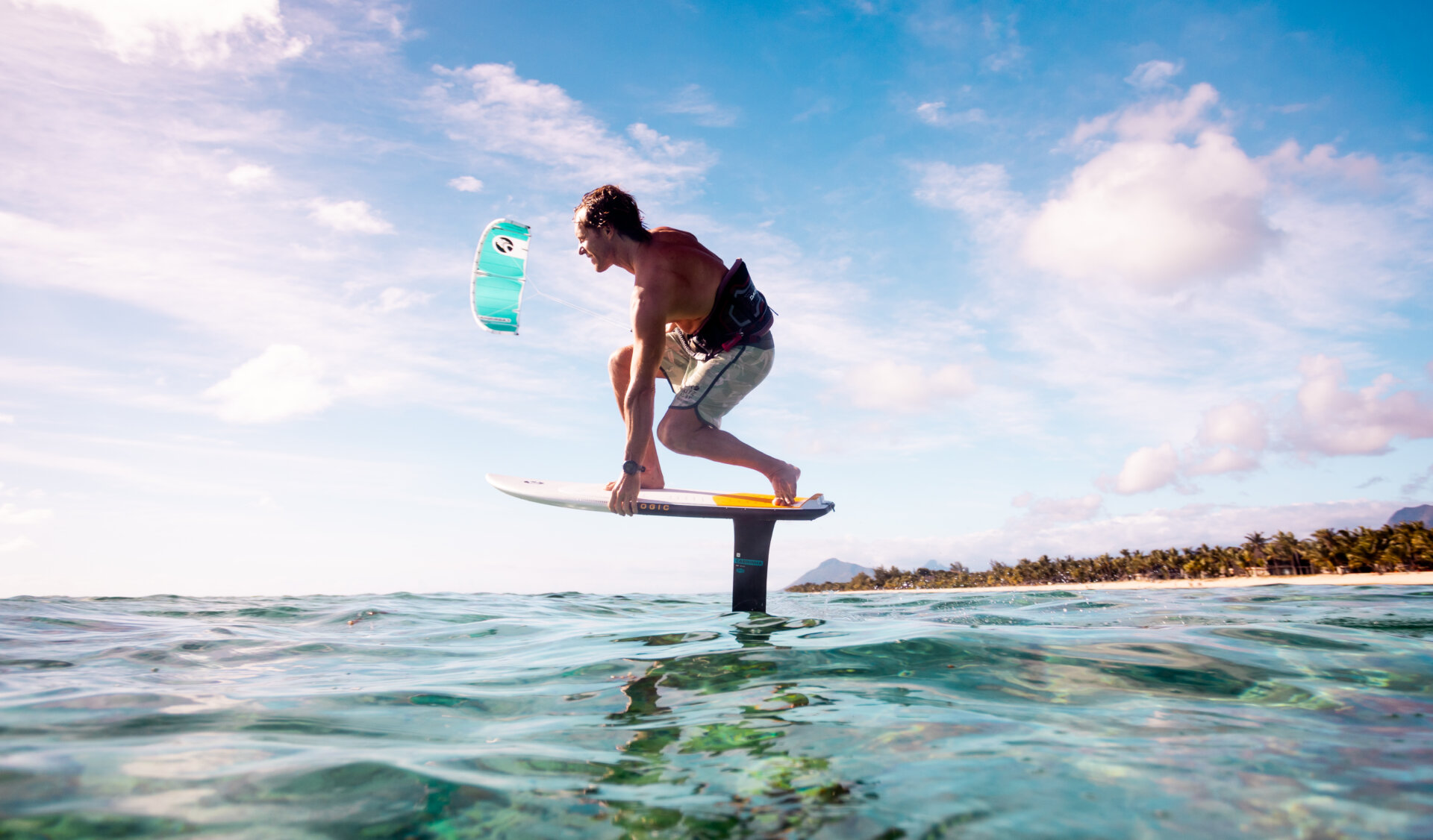
Some of my most memorable sessions have happened here. One evening, as the sun dropped towards the horizon, I found myself sharing double overhead waves with Raphael Salles from F-ONE. By that stage, almost everyone else had gone in, leaving just the two of us trading wave after wave beneath Le Morne. Those are the sessions that stay with you forever.
Getting to the breaks is all part of the adventure. The easiest route to Manawa is through the main channel, although there’s a huge amount of water moving through it, and the trade winds often begin to ease later in the afternoon. Make sure you’re confident before heading out, and always leave yourself enough wind to get home. You can sneak out across the reef towards One Eye on higher tides, but it’s an easy way to lose a fin if you misjudge the depth. My favourite route on bigger days is simply to head out through the channel and approach One Eye from behind. It saves battling through the largest sets on the way out and makes for a far more relaxed journey. It’s always a long ride back upwind if you head home the way you came, and with the wind usually dying at 4 pm, make sure you take this into consideration.
With so much attention focused on big air these days, I sometimes think riders overlook just how incredible wave riding can be. Le Morne remains one of the finest wave kitesurfing destinations on the planet, and if you’re making the journey here, bring a surfboard. You’ll thank yourself later.
Of course, not everyone travels to Mauritius purely for the waves. Plenty of visitors spend their entire holiday cruising the lagoon, practising new tricks or simply enjoying the freedom that comes from riding in warm water beneath one of the world’s most spectacular backdrops.
That’s perhaps what makes Le Morne so unique. You don’t have to be chasing double overhead reef breaks to appreciate everything the area has to offer.
Just a few minutes inland lies the small village of La Gaulette, which has quietly become the home of the local kitesurfing community. While many visitors choose the luxury resorts dotted along Le Morne Beach, countless experienced travellers prefer to stay here instead.
La Gaulette has a wonderfully relaxed atmosphere. Small cafés spill onto the roadside, local restaurants serve generous portions of Creole cuisine, supermarkets stock everything you’ll need for a week’s stay, and almost every conversation seems to revolve around the forecast for the following day. After the beach, riders gather for a cold drink, compare stories from the day’s sessions and watch the evening unfold at a pace that feels refreshingly removed from everyday life.
It also makes a perfect base. The beach is only a short drive away, accommodation tends to be more affordable than the large resorts, and it offers a more authentic glimpse into Mauritian life than many visitors experience if they remain within the hotel grounds.
One of the pleasures of staying in Le Morne is that there’s never any pressure to fill every hour on the water. Even when the wind takes a day off, the area offers more than enough to keep you occupied.
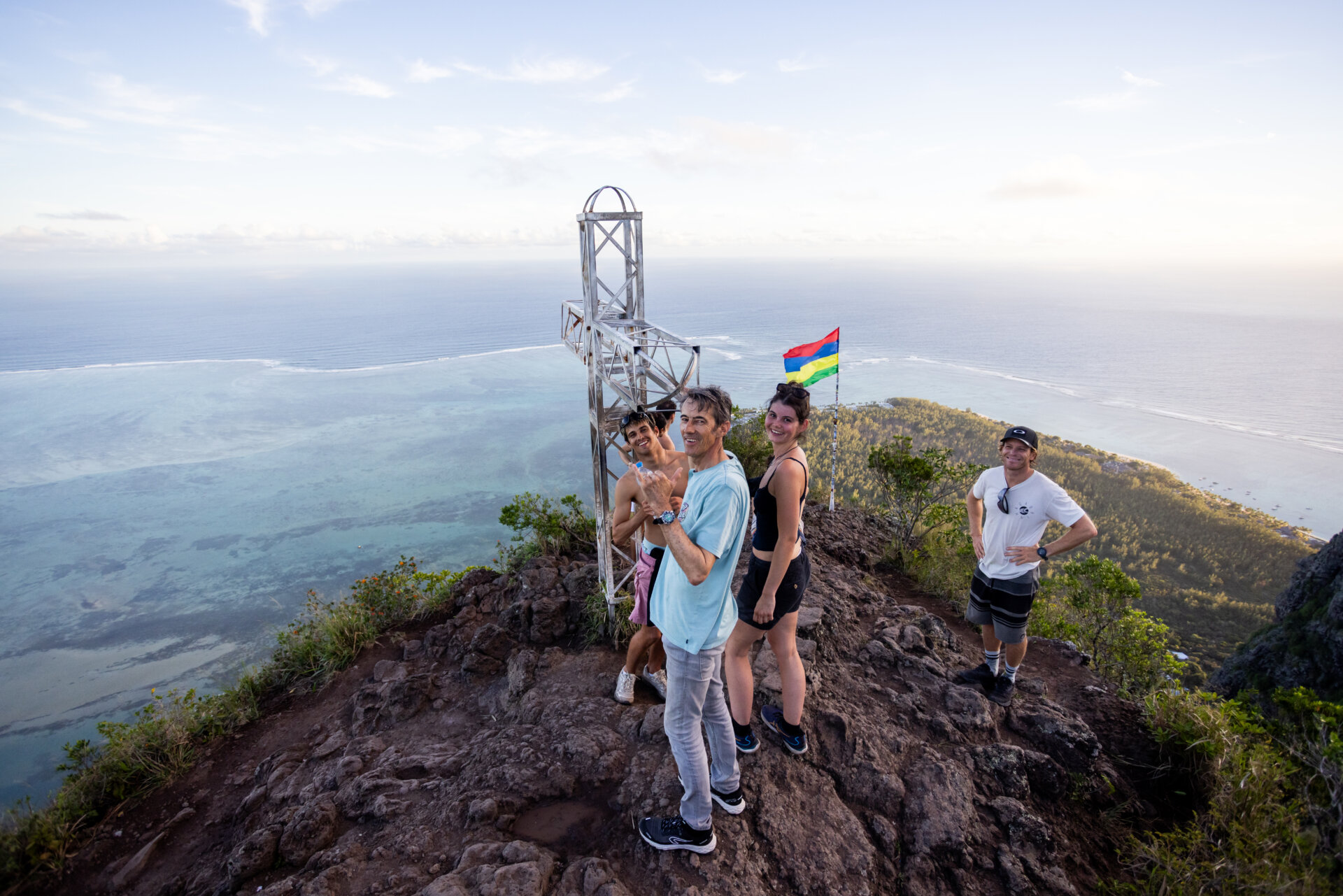
The most obvious adventure is the climb to the summit of Le Morne itself. The hike takes around three to four hours and rewards those willing to make the effort with breathtaking panoramic views across the lagoon, reef and Indian Ocean beyond. Looking down from the summit, it’s impossible not to appreciate the scale of the playground below. The reef stretches for miles, the colours of the lagoon change with every passing cloud, and the tiny kites dancing across the water remind you just how vast the landscape really is.
Out on the water, boat trips regularly head towards the famous Crystal Rock, one of the most photographed landmarks in Mauritius. Snorkelling among the coral reefs reveals an entirely different world beneath the surface, while early morning dolphin excursions have become a popular way to experience the calm waters before the trade winds arrive.
Back on land, quiet coastal roads wind through sugar cane fields towards viewpoints, beaches and small villages, making it easy to spend a day exploring beyond the kite beach. The pace of life feels wonderfully unhurried. There are no crowded promenades or noisy beach resorts here. Instead, Le Morne has managed to retain much of the relaxed character that first attracted travelling kitesurfers more than twenty years ago.
Food is another highlight. Fresh fish, octopus curry, grilled seafood and traditional Mauritian dishes can all be found within a few minutes of the beach. The island’s unique blend of Indian, African, Chinese and French influences has created a cuisine every bit as colourful as its landscape. Whether you’re grabbing a quick lunch between sessions or settling in for a long evening meal with friends, eating out quickly becomes part of the experience rather than simply a necessity.
As the afternoon draws to a close, the beach takes on a different atmosphere. The trade winds begin to soften, the golden light catches the face of Le Morne, and riders squeeze in one final session before the sun drops below the horizon. Some head back to their apartments in La Gaulette, others relax on the beach with a cold drink, but almost everyone pauses for a few moments to watch another spectacular sunset paint the sky.
It’s often during these quiet moments that Le Morne leaves its biggest impression.
There are destinations with stronger wind statistics. There are places with bigger waves or flatter water. But very few locations combine everything quite so effortlessly. The scenery, the climate, the quality of the riding, the welcoming local community and the relaxed rhythm of daily life all come together to create something that’s difficult to put into words until you’ve experienced it for yourself.
Perhaps that’s why so many people return.
Ask anyone who has spent time in Le Morne, and they’ll usually begin by talking about the wind or the waves. Continue the conversation a little longer, though, and they’ll start talking about the mountain, the sunsets, the cafés in La Gaulette, the friends they made and the feeling of driving back from another unforgettable session with salt still drying on their skin.
In the end, that’s what makes Le Morne truly special.
It isn’t simply one of the world’s greatest kitesurfing destinations.
It’s one of those rare places that reminds you why you fell in love with the sport in the first place.