

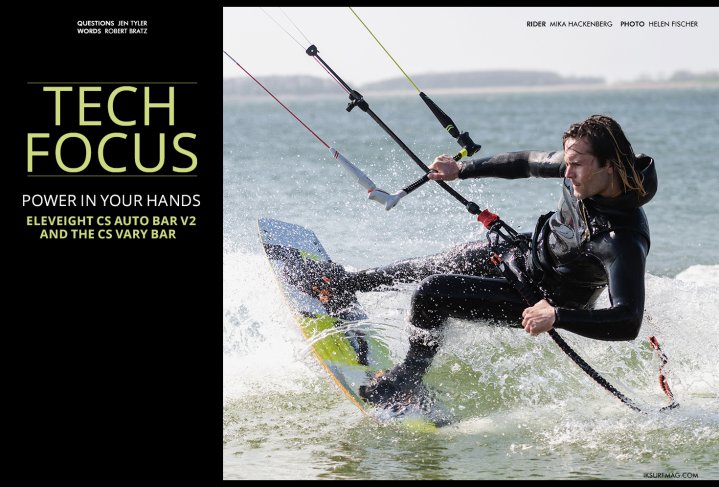
Tech Focus: Power in Your Hands: Eleveight CS AUTO Bar V2 and the CS Vary Bar
Issue 113 / Sun 2nd Nov, 2025
In this Tech Focus: Power in Your Hands, we speak with Robert Bratz about the evolution of Eleveight’s CS AUTO Bar V2 and CS Vary Bar Plus, exploring how these refined systems deliver smoother handling, cleaner lines, and the confidence to push your limits. Find out more here!
Hi Robert, thanks for joining us today! What were the main goals when redesigning the CS AUTO Bar V2 and the CS Vary Bar Plus?
Hi Jen, thank you! Our primary goal was to implement the new Quick Matic III, offering the best quick-release system that is easy to use and very safe. We also worked on a few refinements by taking what we already had and making it feel even more precise, intuitive, and clean. With our flagship Auto Bar V2, we included fine-tuning the mechanics by improving the auto-swivel system, reducing friction, and providing riders with a smoother, more direct connection to the kite.
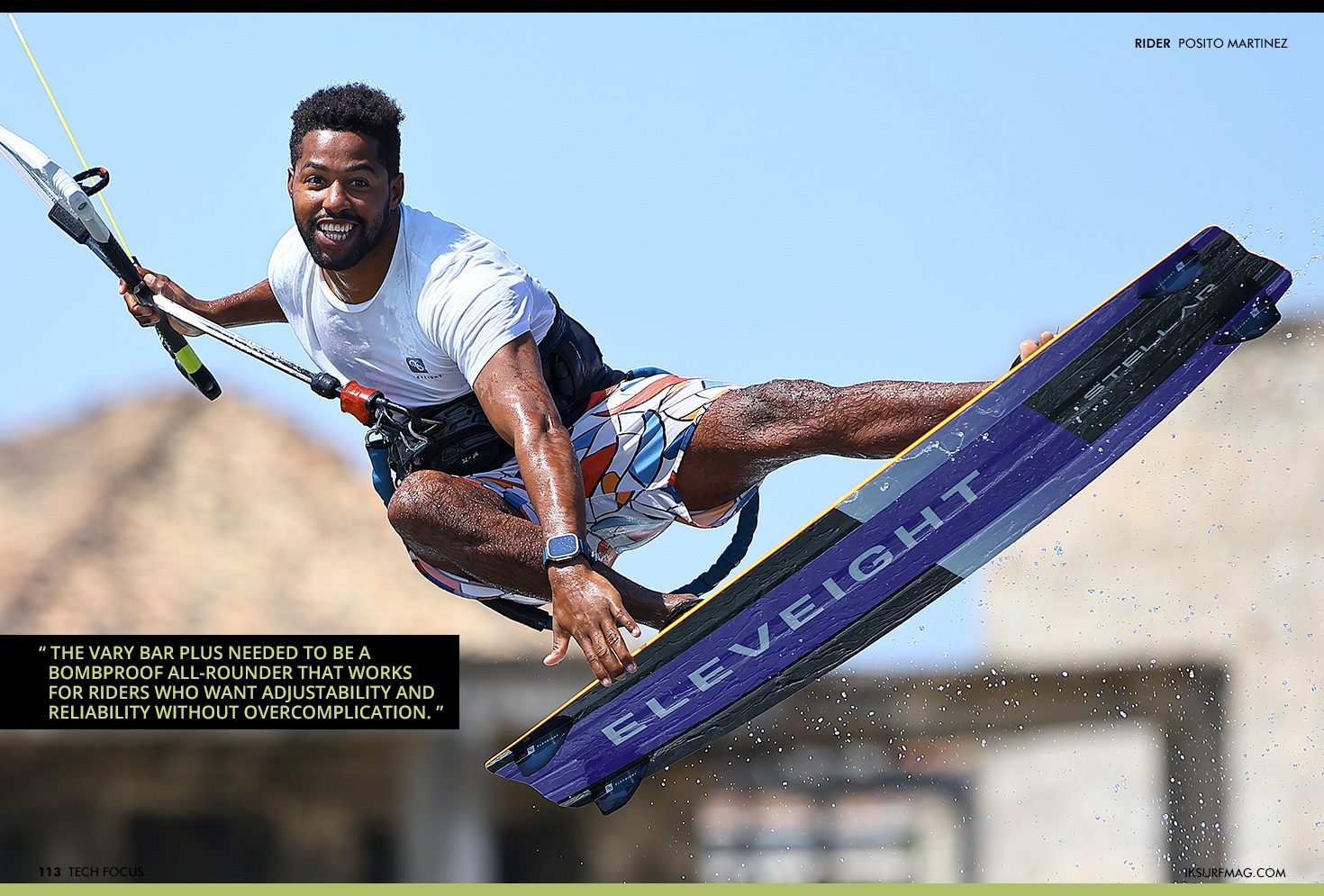
For the Vary Bar Plus, we also added a round-shaped, dual-cavity TPU tube to house both the depower and safety lines, keeping them separated within a unified system. The aim was to minimise friction on the lines to reduce wear and tear and increase durability, while maintaining the bar's incredible versatility. The Vary Bar Plus needed to be a bombproof all-rounder that works for riders who want adjustability and reliability without overcomplication.
Both bars share the same DNA, but we wanted to give riders two distinct experiences: one built for maximum performance, and one designed for universal compatibility and ease of use.
How is this year’s V2 AUTO Bar different from the first version?
The V2 maintains the same concept but elevates everything to a higher level. Implementing the Quick-Matic III release is the biggest upgrade as the improved inner body takes releasing and assembling to the highest safety standard and allows for smoother, lighter trigger action. The new ceramic bearing in the auto-untwist system also ensures it will spin with almost no resistance, even after heavy use in salt or sand. That means cleaner lines and consistent handling, no matter how hard you loop.
The grip has also been reshaped, featuring dual-density EVA and an oval profile that fits naturally in your hand. You feel more connected, more comfortable, and less fatigued. It might seem subtle, but it makes a huge difference. V2 features numerous new technologies that collectively result in a noticeable difference on the water.
Why did you introduce two separate bar models rather than one all-rounder?
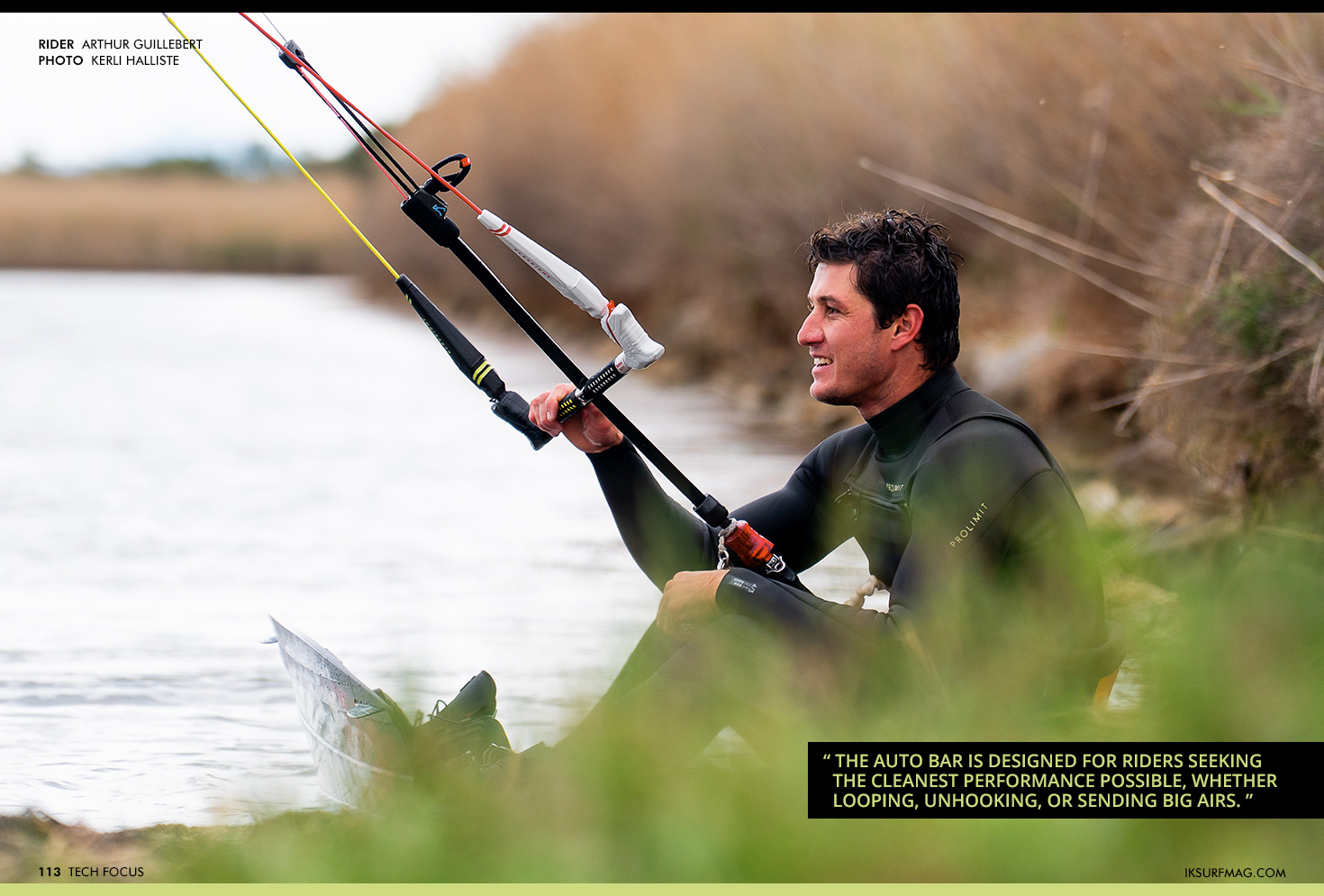
Because, honestly, no single bar can do everything perfectly for everyone. The Auto Bar is designed for riders seeking the cleanest performance possible, whether looping, unhooking, or sending big airs. It’s a precision tool with minimal friction and automatic untwisting.
The Vary Bar Plus, on the other hand, is built for adjustability and broad compatibility. Its variable width makes it ideal for different kite sizes or travel setups. We could have tried to combine both concepts, but it would’ve meant compromise, and we prefer to keep each with a specialism.

Can you explain how the auto-untwist ceramic ball-bearing system works in real riding conditions?
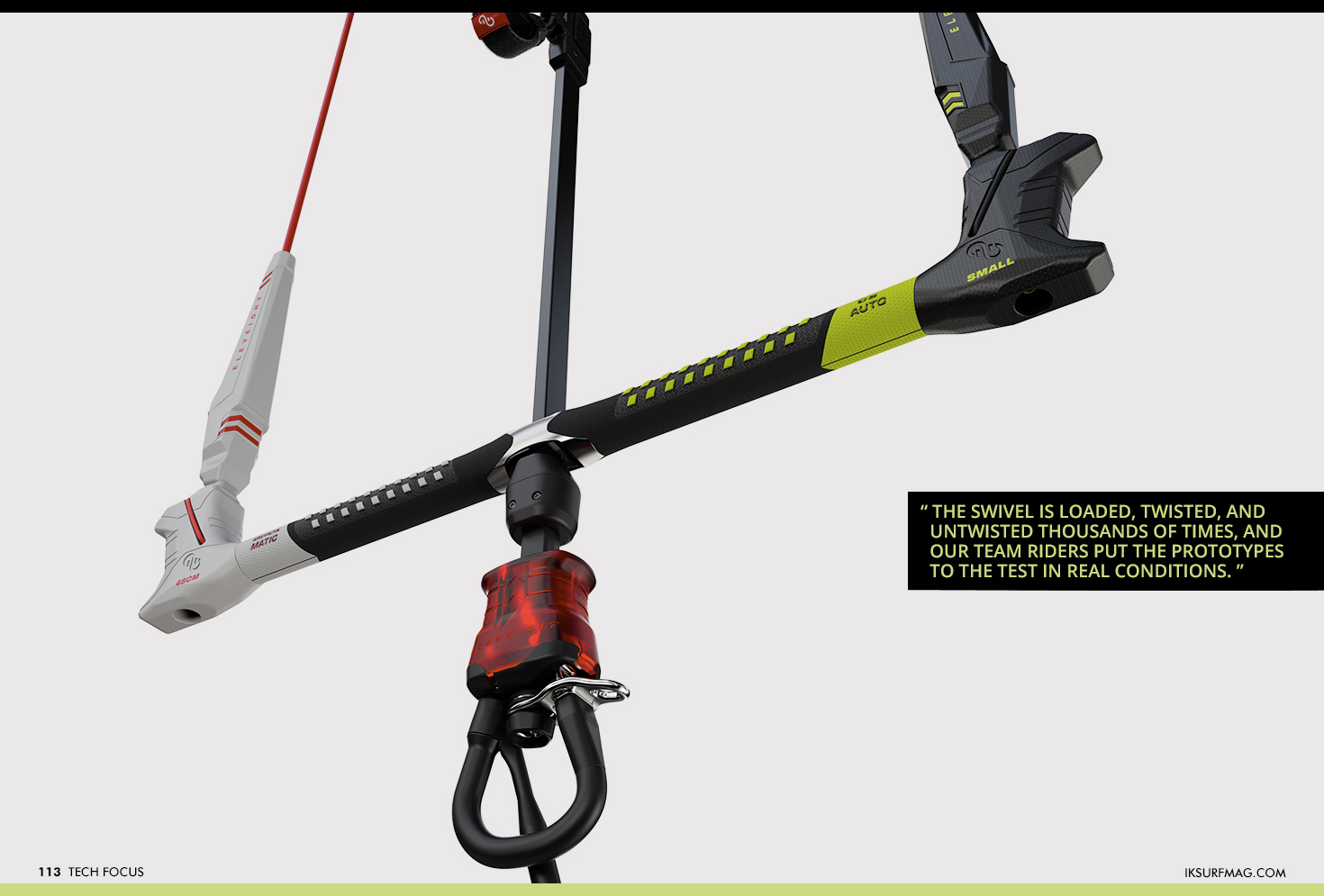
Every time you spin or loop, the lines twist. Normally, you’d have to untwist them manually, but with the Auto Bar V2, the system does it for you. Once looped, simply spin the bar so the backlines are untwisted, and the front lines will follow.
The bearing material is key as ceramic doesn’t corrode, and it stays smooth even when full of salt and sand. You don’t really notice it working, which is the best compliment, and it just keeps your setup perfectly clean while you focus on the ride.
What sort of testing goes into making sure the ball-bearing swivel and the cleat systems stay reliable after heavy use?
Let’s just say we’re a bit obsessive about testing! We test the components under every condition we can find and expose them to saltwater, freshwater, sand, cold, and UV. The swivel is loaded, twisted, and untwisted thousands of times, and our team riders put the prototypes to the test in real conditions. For the cleat system, we conduct abrasion and tension tests to ensure everything operates smoothly and remains jam-free over time, even after hundreds of sessions.
The dual-cavity tube is a big talking point. What problem does it solve for riders and how?
This one’s simple but clever. The dual-cavity tube separates the depower and safety lines inside the centre system. On most bars, they share a single path and rub against each other, which creates friction and uneven wear. By separating them, both lines run smoothly and will last longer. It also keeps everything tidy and less prone to tangles, delivering a simple but really effective upgrade.
What improvements were made to the Quick-Matic safety release systems (V3 on AUTO and V2 on Vary)?
The Quick-Matic system has undergone continuous refinement over several generations. On the Auto Bar V2, the Quick-Matic III release has a redesigned internal layout for lower friction and faster reset. You can feel that it is smoother and more intuitive.
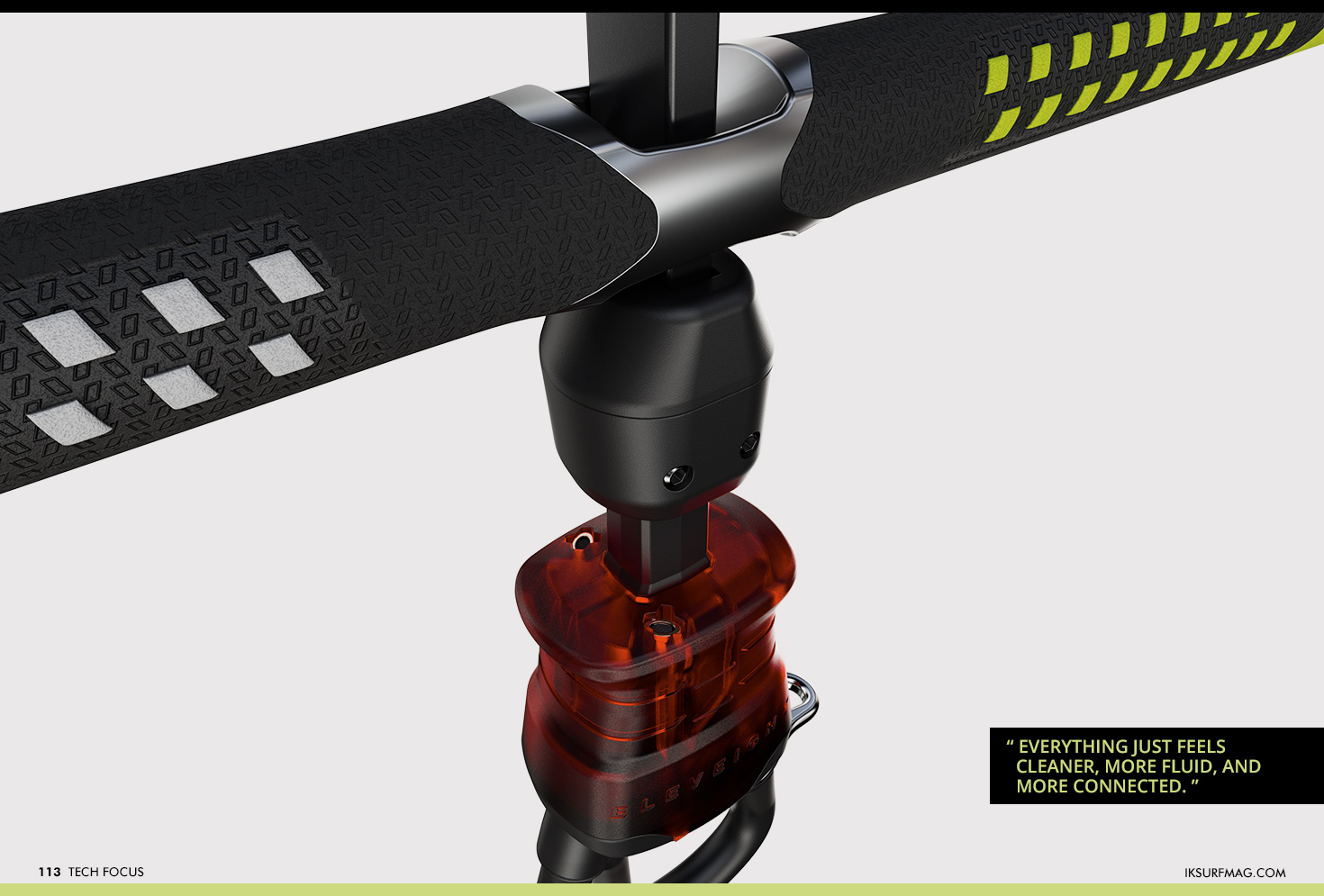
The Vary Bar Plus utilises the same QR II, a proven and reliable system. Still, we took it a step further by redesigning the swivel function and incorporating a ceramic ball bearing. The result is a cleaner, more predictable system that operates effortlessly, even under heavy use or in challenging conditions.
Which riders or riding styles will feel the biggest benefit from the AUTO Bar’s auto-swivel feature?
If you’re looping, spinning, or riding waves, you’ll love it, particularly in big-air, freestyle, and for wave riders. The auto-swivel keeps the front lines perfectly untwisted, so the kite always responds the same, no matter how many rotations you’ve done. Once you’ve used it, you don’t want to go back, as for these disciplines, everything just feels cleaner, more fluid, and more connected.
How does the new low-resistance click-in release improve rider confidence in emergencies?
All our Eleveight bars feature an easy-release system that meets all relevant standards. In 2017, we were the first company to introduce the click-in reassembly mechanism, which has since become the universal standard. This should provide a high level of confidence. However, development never stops, and for the new Quick Matic III, we wanted to do it even better. The new system is very smooth. Even under full load, the release is consistent and easy to trigger, which gives you confidence that it’ll work instantly if you ever need it.
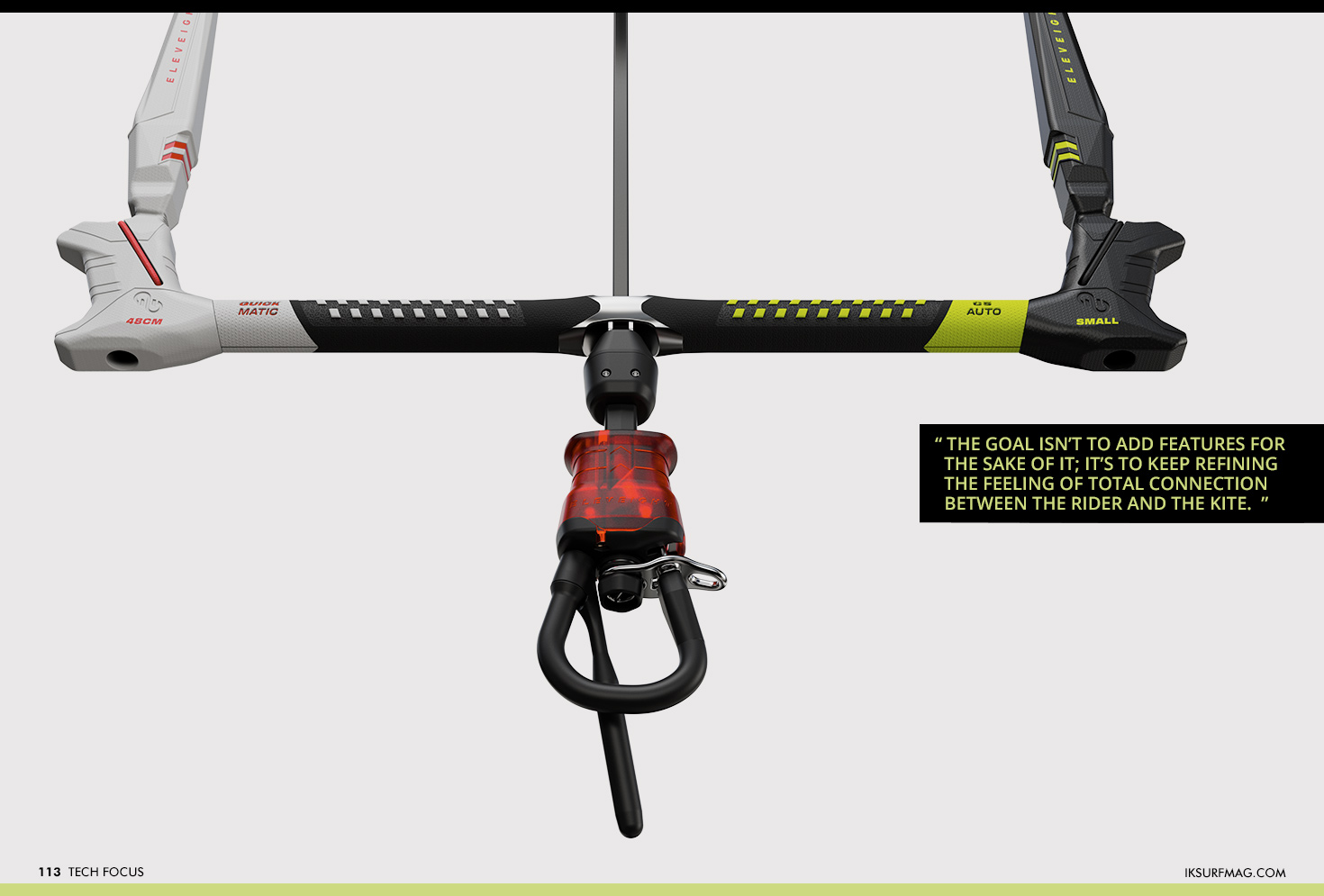
Resetting it is also more intuitive with a simple and clean 'click-in' that takes seconds, even in the water. That simplicity means riders are also more likely to check or practise it regularly, which keeps their reactions sharp.
In your opinion, why is bar development just as important as kite development for performance, progression, and safety?
The bar is your control system, and where you feel the kite and how you interact with it is a bit like a steering wheel. You can have the best kite in the world, but if the bar feels heavy, sticky, or imprecise, you’ll never unlock its full performance.
Quite often, we also forget to talk about the lines in our bar systems. They serve as connection points and play a crucial role in performance; for us, this topic is critical. Each year, we test various lines and configurations to ensure that the impulse from the bar is effectively translated into the kite. Eleveight bars are made with Sk99 lines from a leading supplier to offer unmatched durability, which is key to optimal performance.
A well-designed bar improves responsiveness, comfort, and control. It also gives you the confidence to push harder, knowing everything will be safe and behave exactly as expected. That’s why we invest just as much time into bar development as we do into kite design.
How does improving the bar system influence a rider’s ability to push limits in loops, unhooked tricks, or big-air?
Precision and trust are the key words here. When your lines stay clean, your release works perfectly, and your steering feels instant, you can focus completely on the move.
Less friction and a smoother feel mean you can loop faster, time your moves better, and recover more naturally. It’s the kind of improvement that gives you confidence to send it a little harder each session.
Looking ahead, what future innovations in bar design do you think will most change how riders interact with their kites?
We see a lot of developments that might be great on paper, but in reality, they are too complex. The depower system and the related clam cleat have been on the market for a long time and are very reliable. However, we can likely expect some updates in this area that will make the functionality easier.

Material and weight will always play a role. Lines are very solid these days with little stretch, but the line industry is also working on new concepts to decrease stretch even further. Lines have the most impact on performance, so that is our number one topic.
We’re moving toward even smoother, more responsive and lighter systems, with less friction and maintenance. Materials are improving rapidly, with advancements in coatings, bearings, and overall quality.
I also think modularity will grow with bars that can easily adapt to different riding styles or kite setups without adding complexity. The goal isn’t to add features for the sake of it; it’s to keep refining the feeling of total connection between the rider and the kite. That’s where real innovation happens.
Great, thank you so much, Robert!
Thanks, Jen!
By IKSURFMAG
