

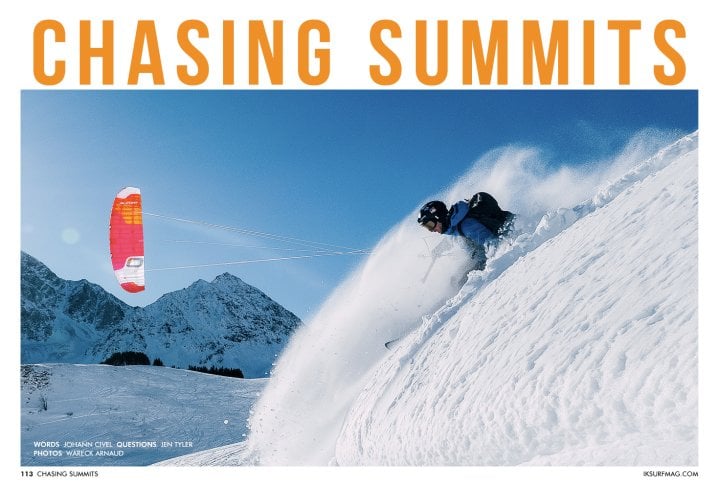
Chasing Summits
Issue 113 / Sun 2nd Nov, 2025
Not many riders know the art of snowkiting in the mountains like Johann Civel. For more than two decades, he and the Ride Up crew have chased wind and snow across peaks from the Lautaret Pass to Alaska and beyond. We caught up with Johann to hear how it all began, what drives his passion for kiting up and skiing down, and the lessons he’s learned in the high mountains.
Johann, you and the Ride Up crew always send us such impressive snowkite photos. We thought it was time to learn more about what you do! How did you first get into snowkiting, and what inspired you to use a kite for climbing mountains?
Hi Jen! I started snowkiting and kitesurfing back in 2000. My mother came back from Quebec with my very first two-line kite, and that’s where it all began. Growing up surrounded by big mountains and already in love with snowboarding and skiing, it felt natural to take the kite into the mountains. That mix of wind, snow, and terrain instantly hooked me and set the path for everything that came after.
Where did you meet the Wareck Arnaud and Hugues Beaume?
I met Wareck and Hugues around 2004 during the SKM, but we had already been crossing paths at the same spot on the Lautaret Pass. We spent a lot of time riding there together, sharing sessions and pushing each other on the mountain.


Do you remember your very first ascent and descent? When was it, and what was it like?
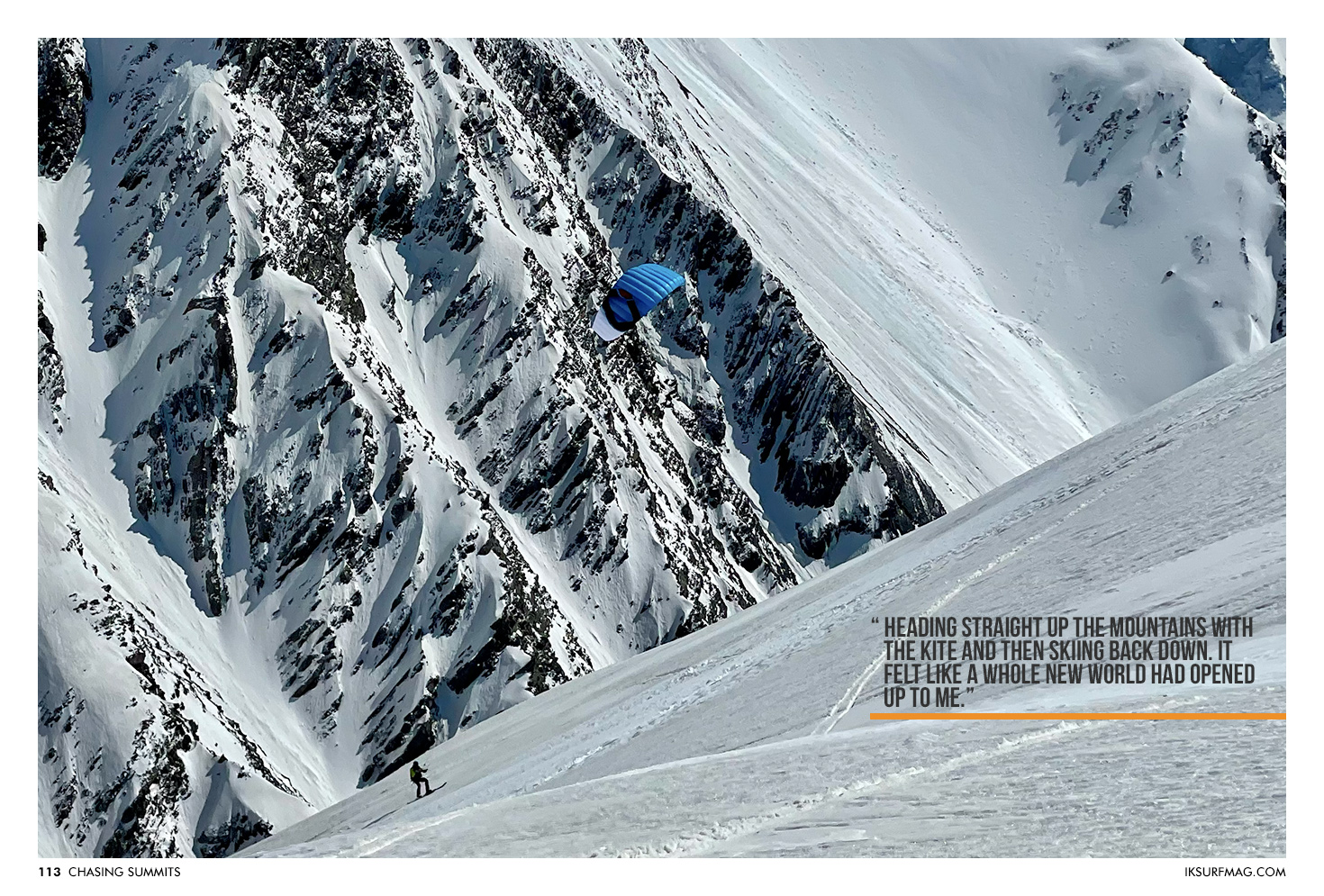
It was around 2003 when I started riding directly from the Lautaret Pass. That was really the beginning of the dream, heading straight up the mountains with the kite and then skiing back down. It felt like a whole new world had opened up to me.
Do you usually plan these trips as a team, or do you chase conditions more spontaneously?
The weather forecast is often the most challenging aspect of the job. When you know that just 5 knots is enough to get a big flight or a slow ride up the mountain, you start to feel like any day could work. Giving a chance is the best way to find out for sure. Most of the time, the team is just two people, sometimes three.
Have you ever been on an expedition where everything went wrong and you were genuinely worried about the outcome?
About ten years ago, we started doing traverses in the mountains. I mean riding up one side, skiing down the other, and carrying on like that for as long as the wind would power us. Some days, we would cover around 60 kilometres with 6,000 metres of elevation gain without ever retracing our tracks.
One day, at the end of a long traverse, we had to walk at the bottom of a steep valley to get back to civilisation. It was warm. We came across a dead ibex that wolves had eaten during the winter, and a few minutes later, we saw live ibex. They were startled by us and began moving above us in the same direction.
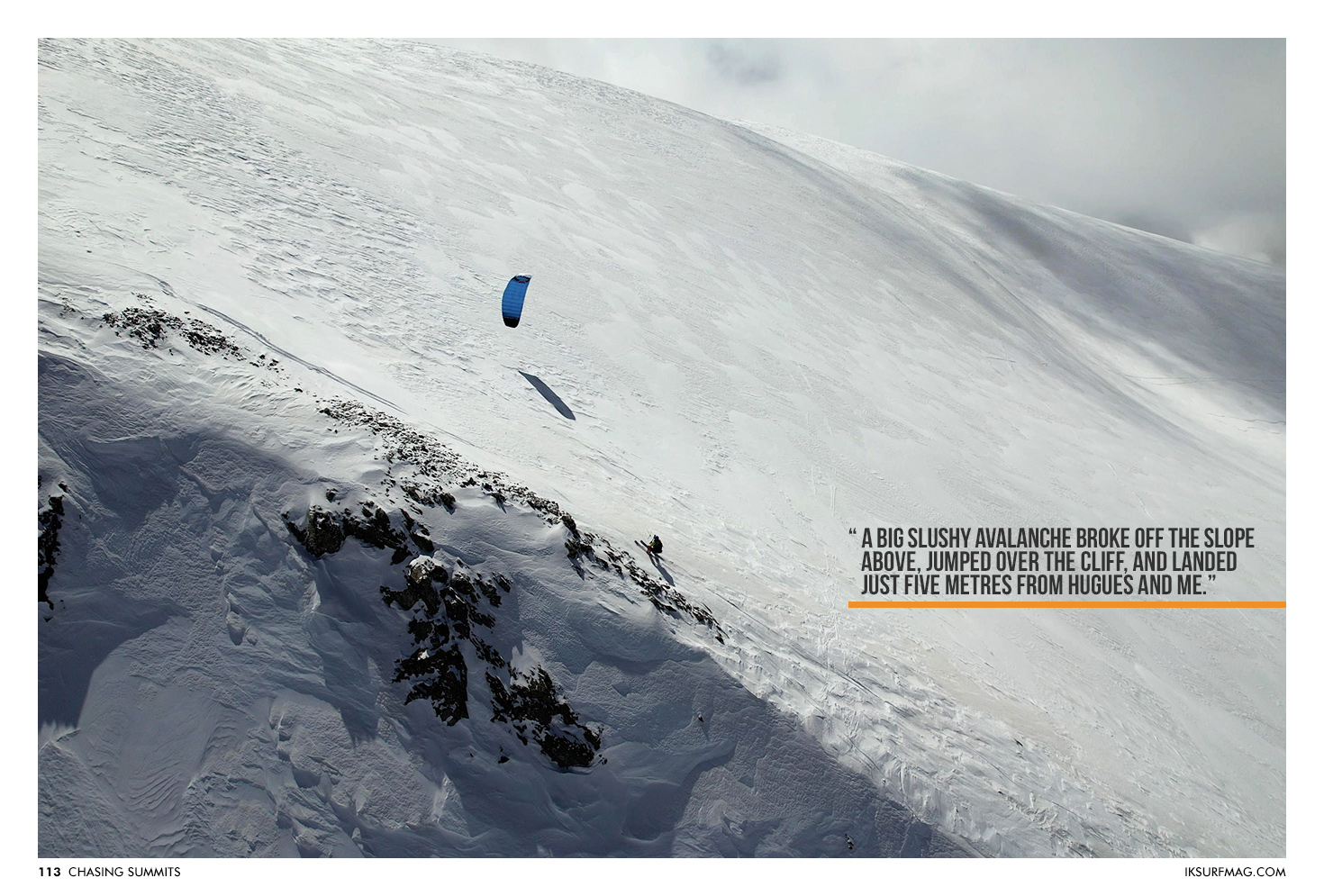
A few minutes after that, a big slushy avalanche broke off the slope above, jumped over the cliff, and landed just five metres from Hugues and me. That day, I felt more than ever that the mountain was not my place at that time. The outcome was my worst experience in the mountains, topped off with a ten-kilometre walk back.
Which Ozone kites do you use for these missions, and what makes them suited for mountain ascents?
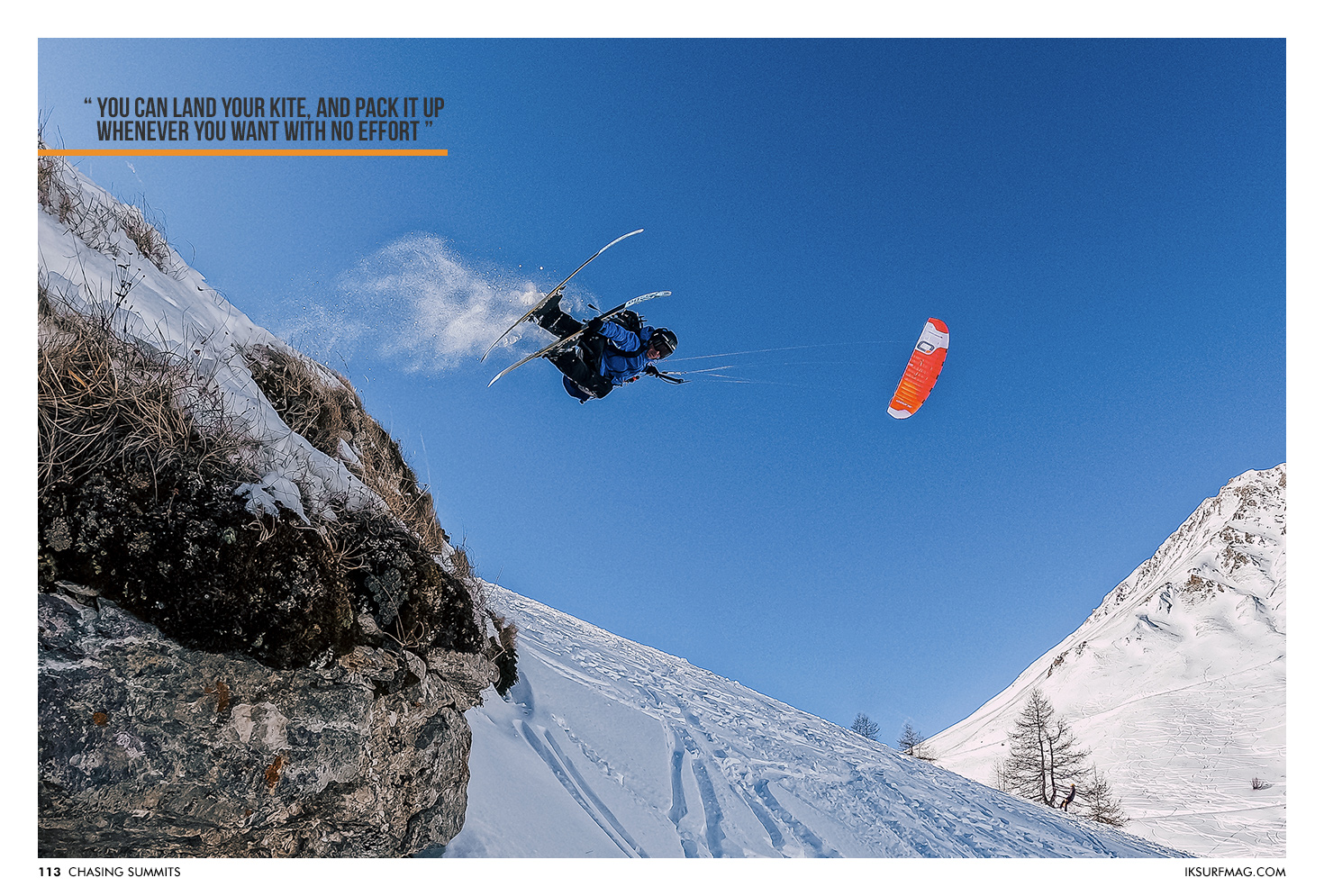
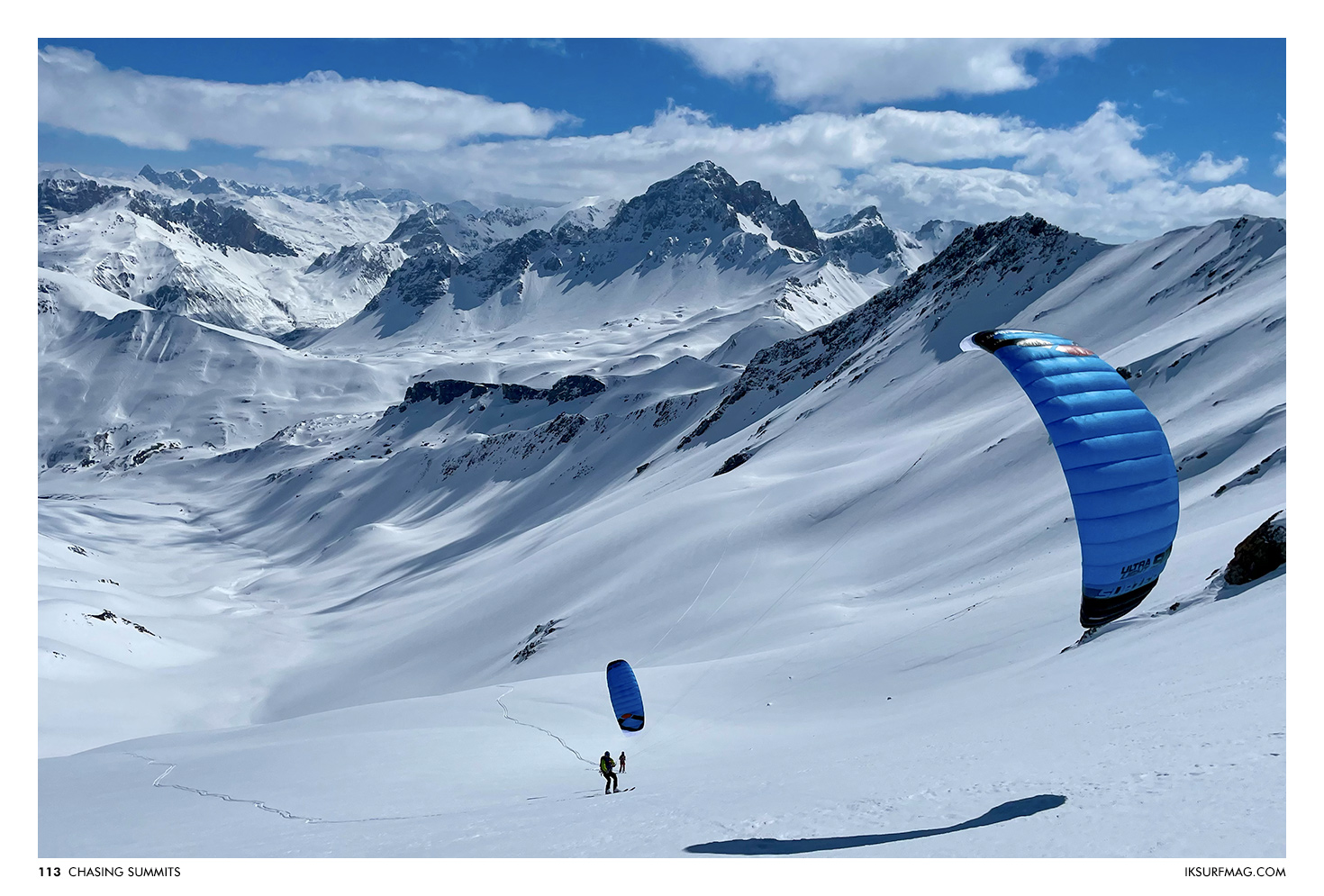
I use the Subzero a lot for this kind of expedition. This kite performs perfectly in the mountains with a fast loop, good backstall control, and no cravats thanks to its compact shape. As soon as the wind picks up, I switch to the single-skin Explore. There is no better way to stay safe in strong and gusty winds.
All the models are well-suited because they all have the magic fifth line. You can stop your kite and pack it whenever you want with no effort, in very little time, no matter how intense the wind is. This system is the best I have ever used, and it is what makes Ozone the best snowkite on the market.
The Hyperlink is incredibly high-performing. I really love it for flying in wide open areas, on slopes over 30 degrees, or when I want to optimise in really light wind. It just performs too well for wild and steep expeditions. When you gain performance, you lose some safety and ease of use.
How has Ozone supported you over the years on these expeditions?
Ozone is like a family. They have supported me for 20 years, and none of this would have been possible without them. Their support has allowed me to travel the world, meet incredible people, and discover new snowkite areas. Thanks to them, I have been able to spend a big part of every winter chasing the wind and reaching new summits.
How do you decide on the right kite size and ski setup for each ride?
First, it depends on whether I plan to fly or go on an expedition. For flying, I use the bigger kites. If I am riding up the mountain, I often use the 9. If the weather forecast predicts strong wind, I will take the seven-metre kite or pack an extra four-metre kite in my bag.

Aside from kites and skis, what specific gear is essential for safety and performance?
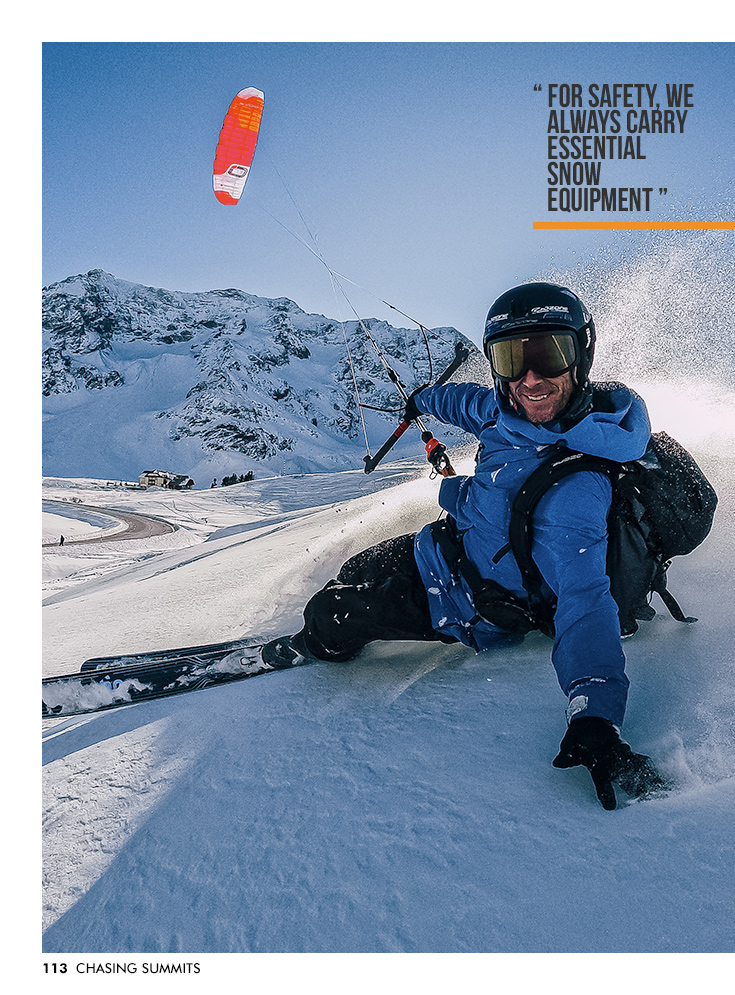
For safety, we always carry essential snow equipment: a transceiver, shovel, probe, and an airbag is a huge plus. When we go on glaciers, we also bring a rope and carabiners in case of a crevasse fall.
For performance, we use freeride or touring skis with skins, along with a kite made from light material to optimise in light wind. A reliable safety system is essential, such as Ozone’s internal re-ride system, which is perfect for these conditions.
How much does weight and packability influence your gear choices?
During our daily expeditions, we spend between five and nine hours outside, so keeping the weight down is crucial. Light skis, light boots, and only carrying what you truly need in your bag is the key. These days, we avoid carrying two kites in the bag whenever possible.
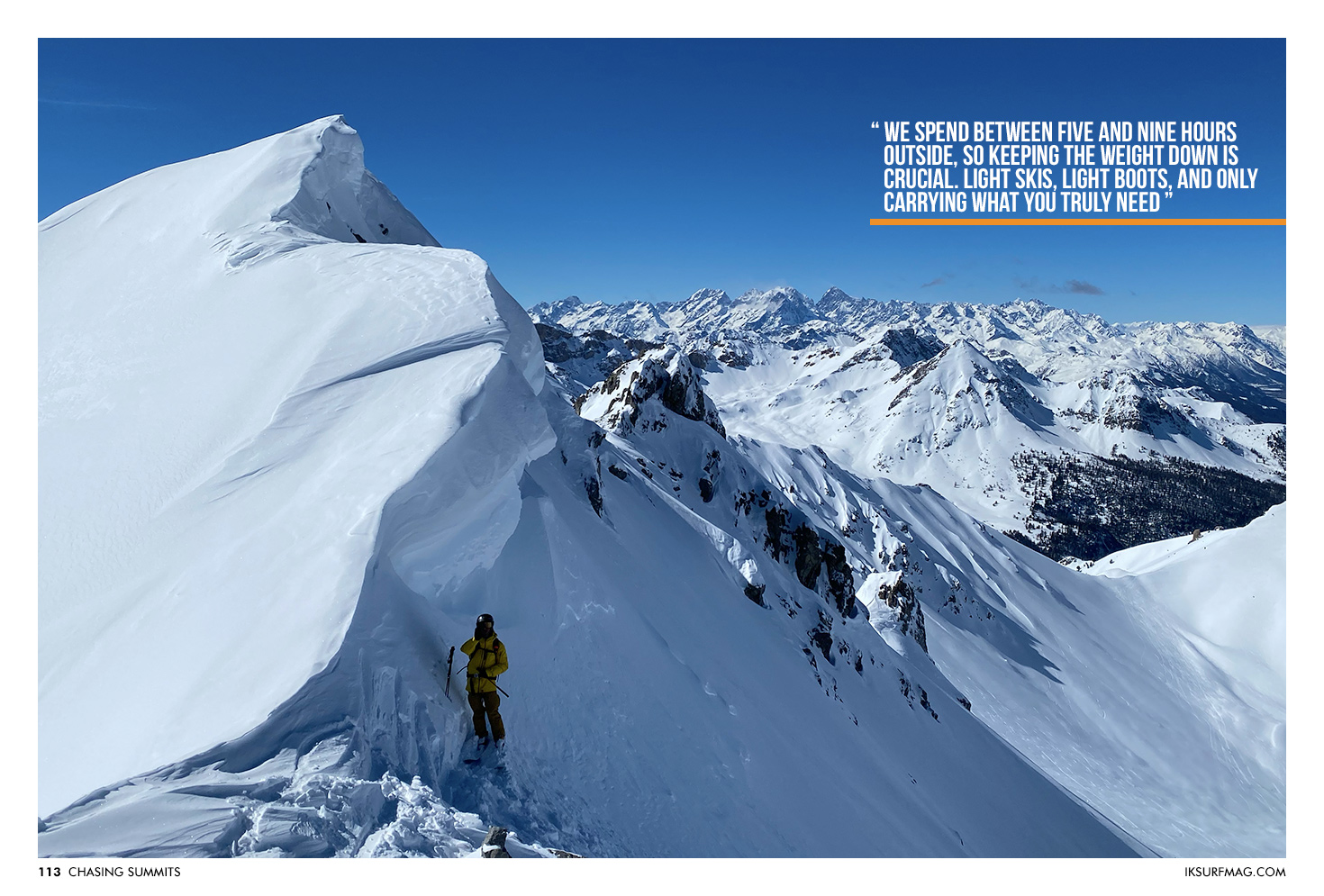
What goes into picking the perfect day to kite up a mountain?
Fresh powder, steady wind, and plenty of free time, the perfect combination!
How do you read the wind and snow conditions to decide if it is safe?
That is the hard part of the job. These days, there are too many wind models, and they often do not say the same thing for the same day, so we can never be sure what we will get. It is really hard to plan anything precisely. First, you have to go, and second, you have to be opportunistic with whatever the wind and snow give you.

What makes a good spot for kite ascents, and what are the red flags that tell you not to go?
All mountains can be a good spot one day; you just have to be there at the right time. The red flag to watch is the BRA, or the Avalanche Risk Bulletin; however, just because it indicates a risk level of one out of five does not mean it is safe. The real danger comes from the mountains, not from the kite.
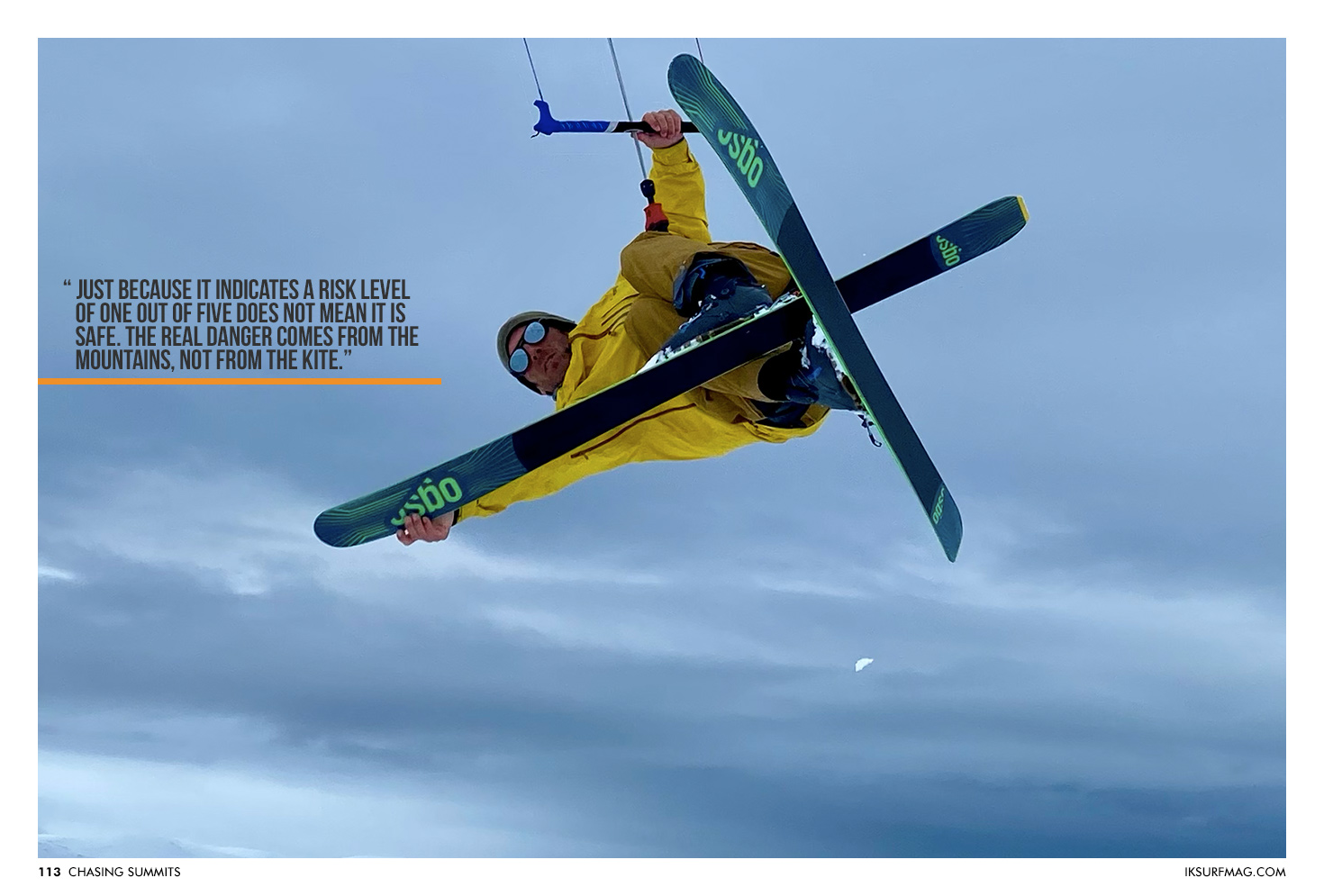
Where have you found the most memorable places for kiting up and skiing down? Is there one mountain or region that stands out as your all-time favourite?
Home! We have the perfect maps, roads everywhere in the mountains, and our own knowledge of the terrain. Argentina, Alaska, and Turkey have also been incredible places to explore.
What do you do in the summer months when there is no snow? Do you switch back to kitesurfing?
I have been kitesurfing for 25 years, but I am no longer kiting. These days, I am winging it, though my primary focus is on surfing. Surfing and snowkiting will always be my passions. In these two sports, regardless of age or physical strength, experience continues to allow for improvement. That is what I love about them.
What advice would you give to someone who wants to try snowkiting in the mountains for the first time?
- Start on skis. The more time you spend practising on them, the faster you will improve at snowkiting.
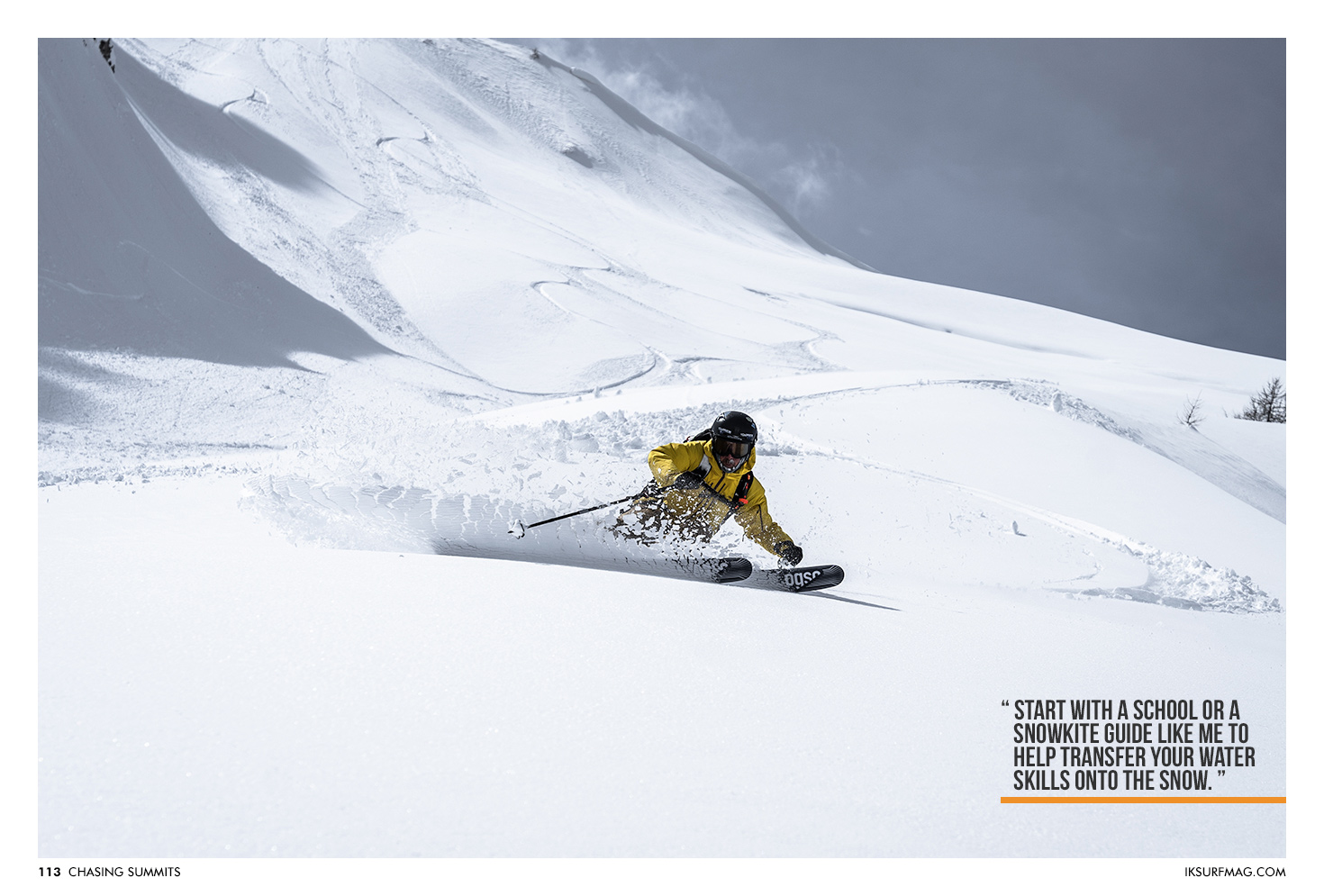
- Start with a school or a snowkite guide like me to help transfer your water skills onto the snow.
- Take a guide if you are heading into the mountains and it is not your usual playground.
What is the most important lesson you’ve learned from years of chasing wind and snow in the high mountains?
Be opportunistic and seize the chance. You have to go to know!
Videos

By IKSURFMAG
