

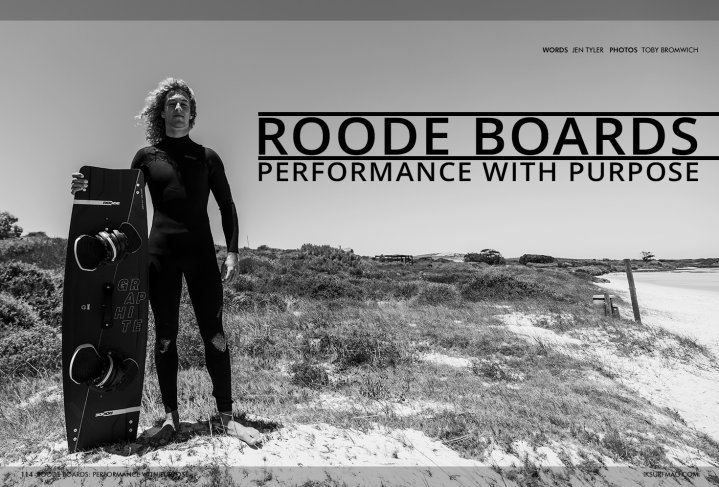
ROODE Boards: Performance With Purpose
Issue 114 / Thu 19th Feb, 2026
Roode is not trying to reinvent kiteboarding, it is refining it. With a focus on performance, durability and clean design, the brand is positioning itself as a serious contender for riders who care about feel as much as function. The statement became even louder with big air powerhouse Jamie Overbeek signing with the brand, a move that signals serious intent and puts Roode firmly in the high-performance spotlight.
In a market dominated by global production lines and polished marketing campaigns, ROODE Boards feels refreshingly grounded. Born from curiosity in the Netherlands and shaped through hands-on craftsmanship, the brand has been in development for the last four years, building and experimenting until they were 100% happy with the finished product. They are now available to you, and they are boards that Jamie Overbeek chooses to ride. ROODE is a brand that will never try to shout the loudest; instead, it builds boards with intent.
ROODE is driven by a simple belief that performance and responsibility can coexist. Every decision, from shaping and lay-up to packaging and shipping, reflects that mindset. This is not a brand chasing trends. It is a brand refining a process, session by session, board by board.
From Curiosity to Craft
ROODE began with a straightforward question: What if we built our own kiteboard? That question led to a workshop in Eindhoven, experimentation with materials, and countless hours refining shapes and construction methods.
In the beginning, there was no grand commercial strategy. The focus was purely on feel. How should a board respond when you load the edge hard for take-off? How should it track in the messy North Sea chop? How can it remain playful underfoot while still delivering serious lift and control?
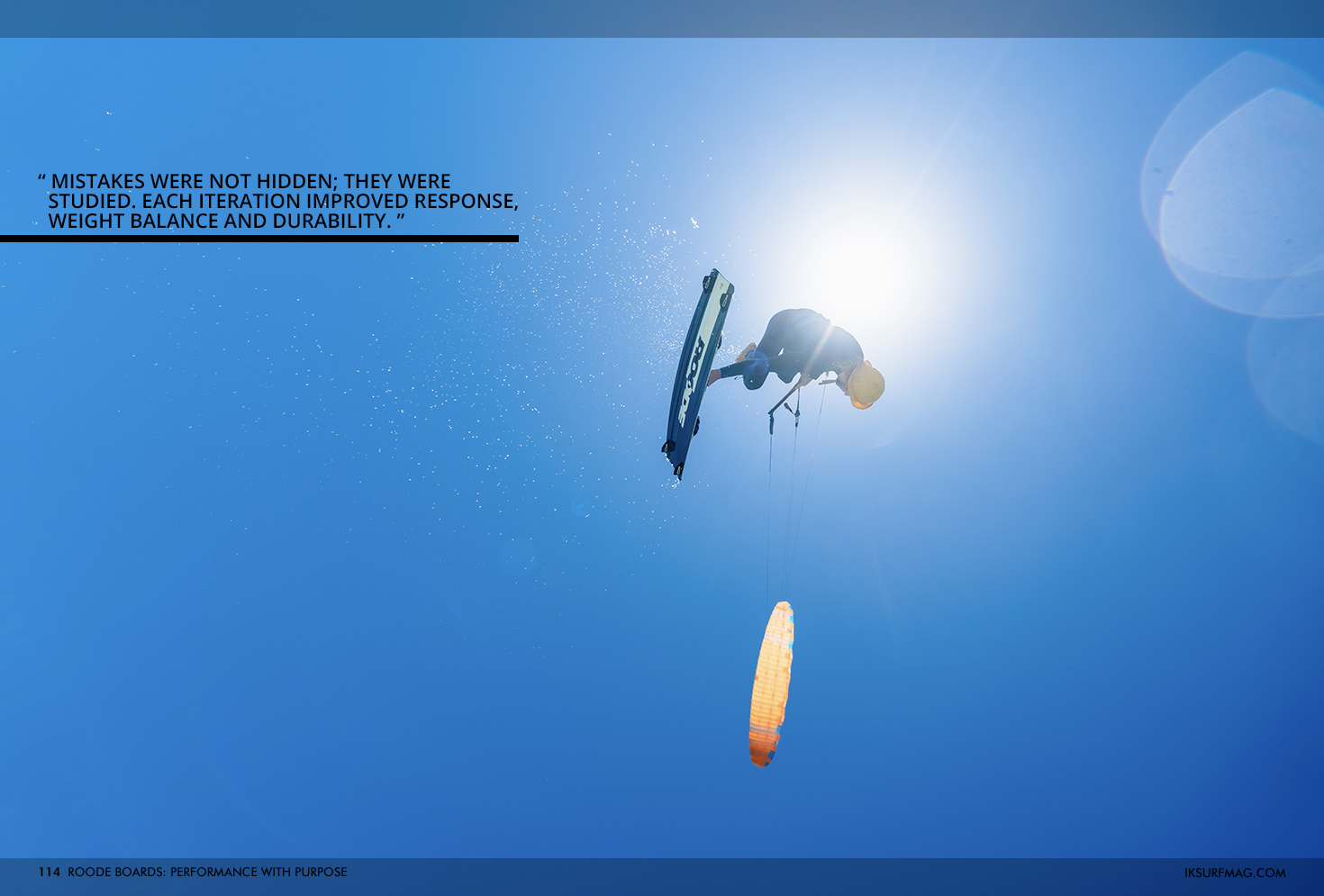
The team quickly realised that building the boards they envisioned required more than ordering parts and assembling them. Machines had to be developed in-house. Moulds were refined repeatedly. Flex patterns were adjusted by millimetres. Mistakes were not hidden; they were studied. Each iteration improved response, weight balance and durability.
That process built more than boards; it built knowledge. Today, the same hands that shape and finish the boards are deeply involved in their design. Feedback comes from endless real-world sessions, in the cold and rough conditions of the North Sea. The result is a tight feedback loop between idea, execution and performance on the water.
Built In-House, Built With Intent
At a time when much of the industry relies on large overseas factories, ROODE builds every board in-house in the Netherlands. This decision is not romantic; it is practical. Controlling production allows for precision, consistency and constant refinement.
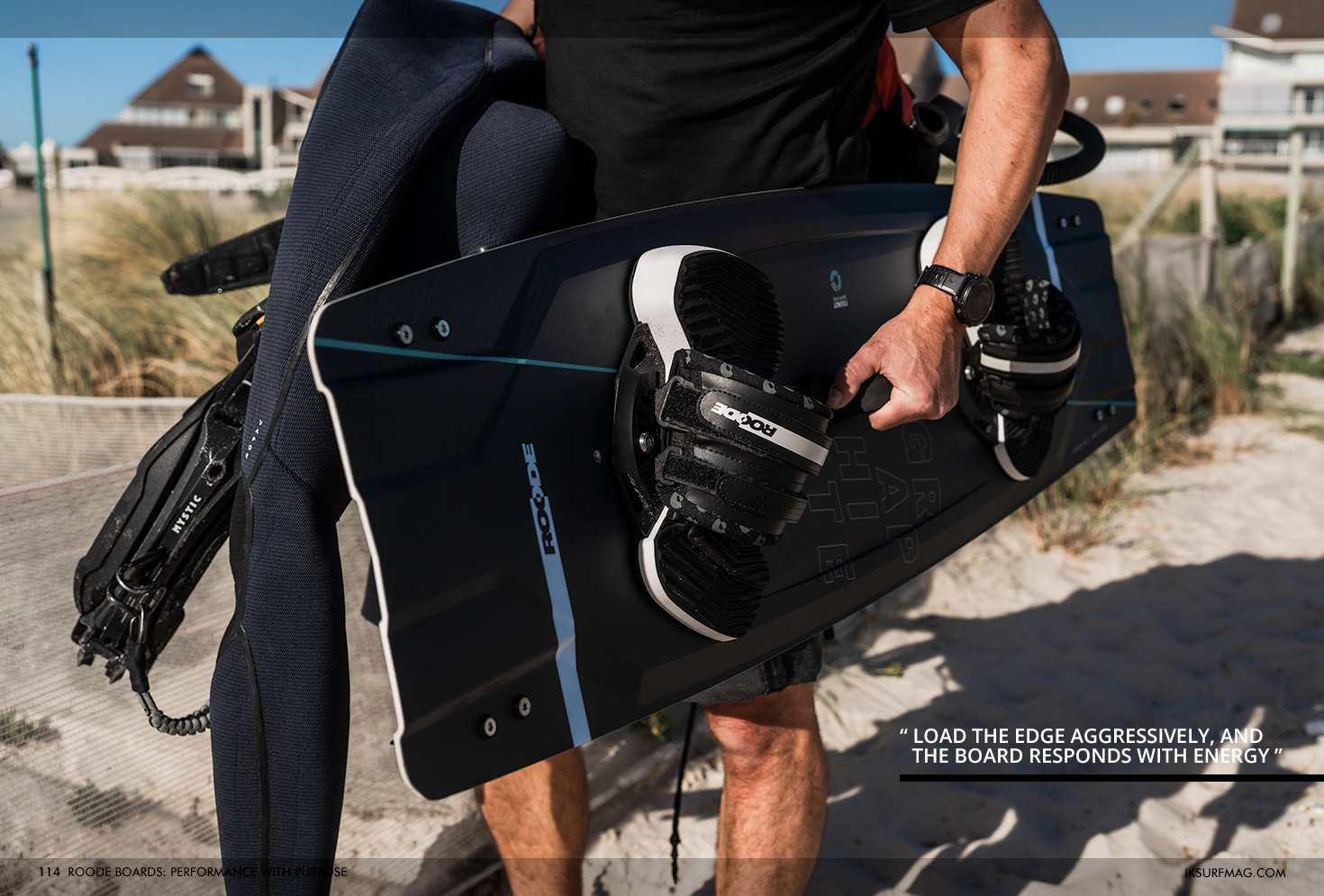
Advanced CNC milling ensures accuracy in shaping. Hand lay-ups ensure feel and flex are tuned carefully. The finishing process remains hands-on, because subtle details matter when you are edging hard at speed or loading for a big send.
Boards are produced to order, not in vast seasonal batches. That approach eliminates unnecessary overproduction and keeps quality control tight. There are no warehouses full of excess stock. Each board has a rider waiting for it.
The benefit of this approach is tangible. Every curve, channel and rocker line has been shaped with intention. You feel that coherence when you ride it.
Performance First
For all the emphasis on craftsmanship and responsibility, performance remains the core of ROODE’s identity. These boards are built to be pushed.
On the water, the sensation is immediate. They track cleanly upwind and hold a confident edge even when conditions become demanding. Through chop, the ride feels composed rather than nervous. Load the edge aggressively, and the board responds with energy, storing power before releasing it cleanly into lift.
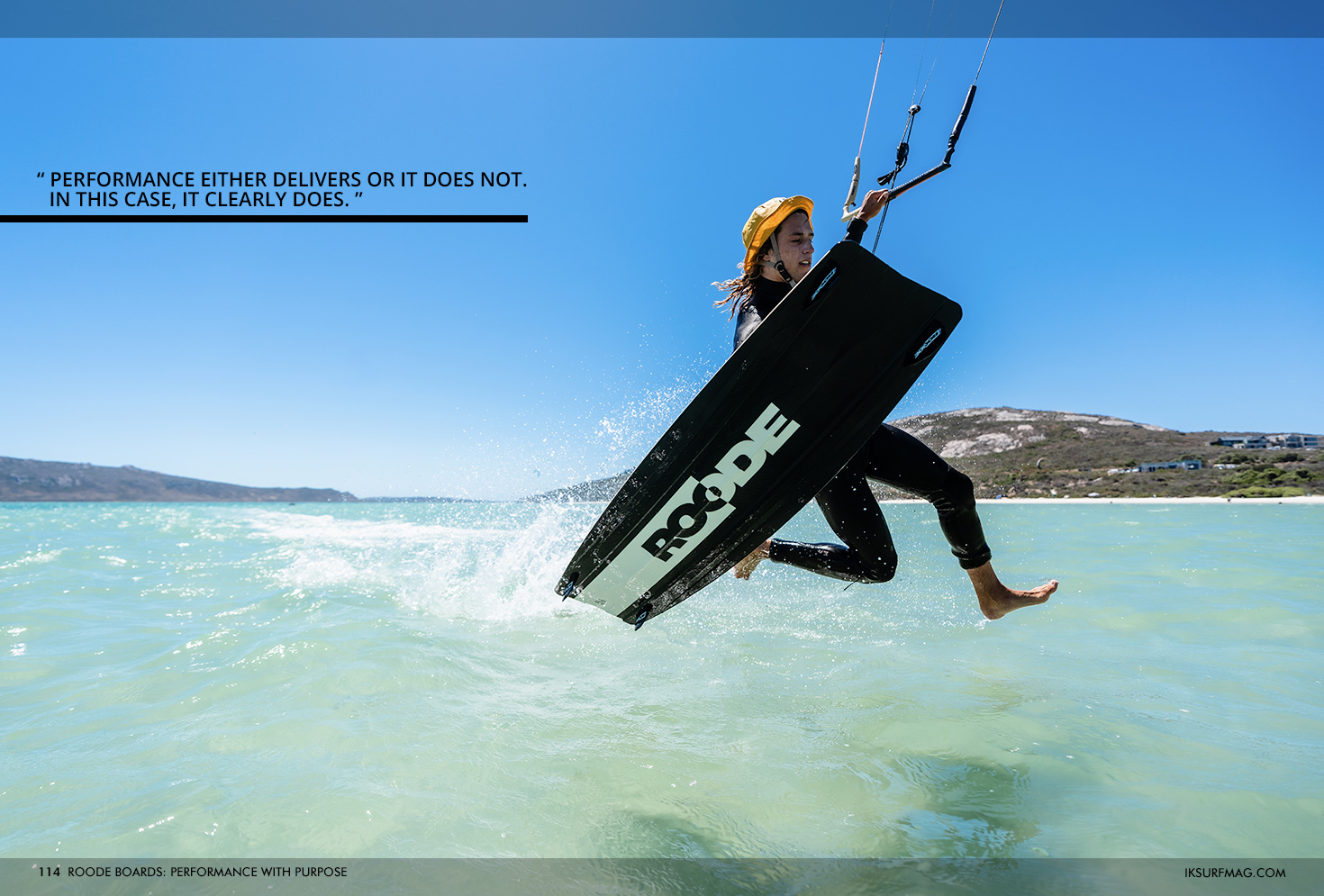
Pop feels direct and predictable. There is no delay between rider input and board response. At the same time, the flex profile absorbs harsh landings without feeling lifeless. That balance between stiffness and forgiveness is where many boards struggle, yet it is where ROODE feels most dialled.
Perhaps most importantly, they feel intuitive. You do not spend sessions fighting your equipment. Instead, you spend them progressing.
That performance focus has attracted attention at the highest level of the sport. Dutch big-air rider Jamie Overbeek chose to ride ROODE boards because of how they performed under his feet. For a rider known for sending it in serious wind and pushing technical combinations at height, equipment is non-negotiable.
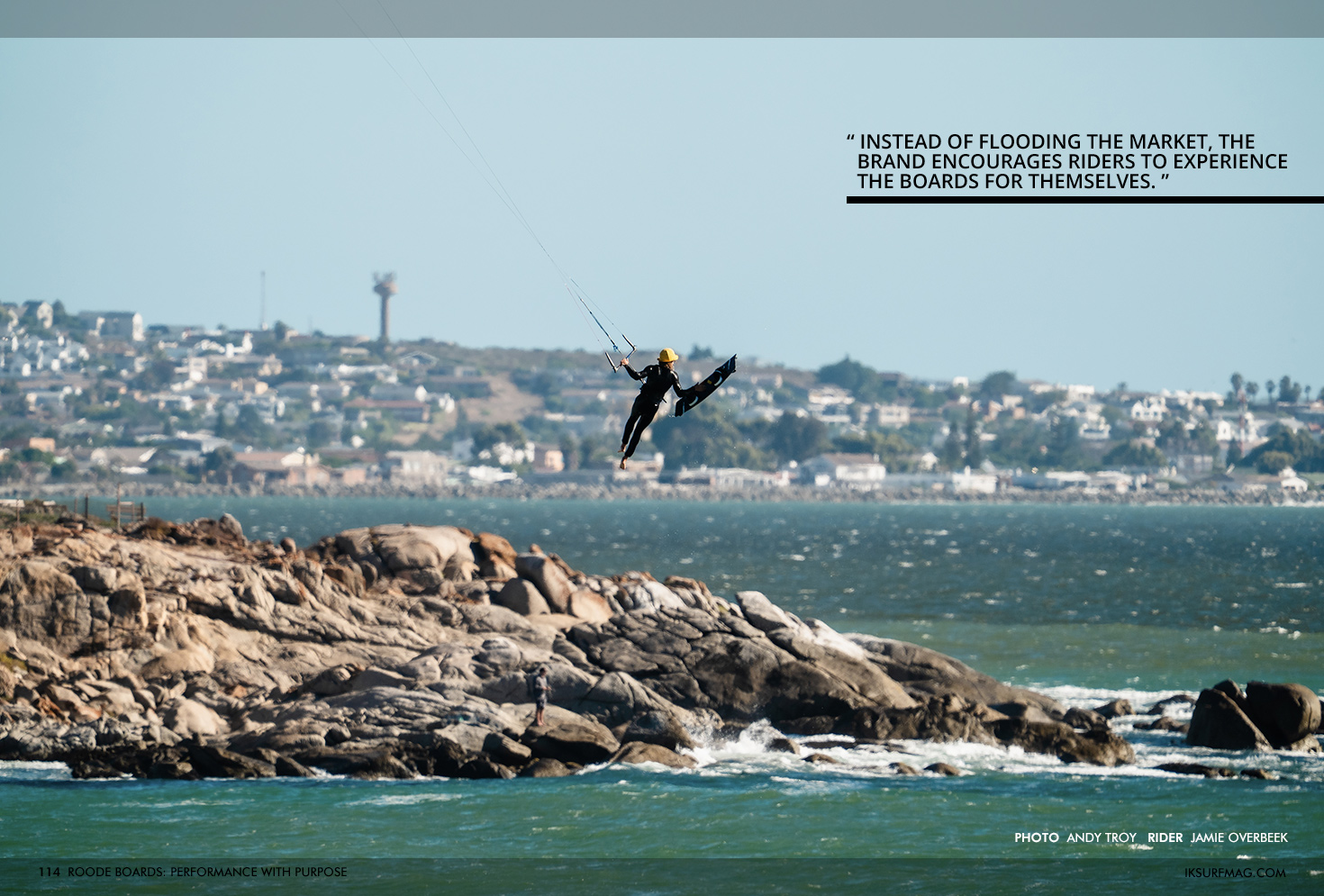
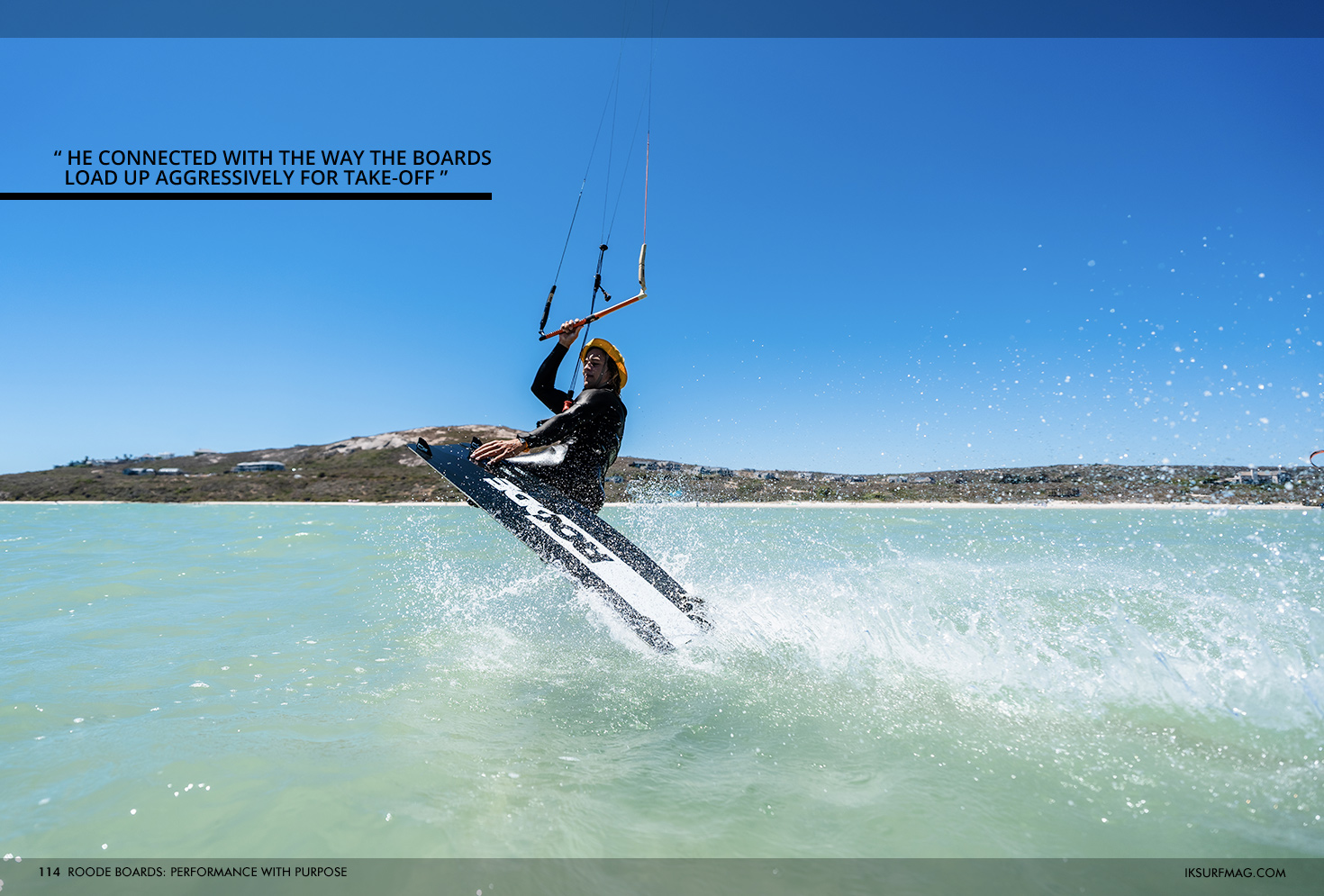
Jamie’s decision was not based on branding or hype. It came down to feel. He connected with the way the boards load up aggressively for take-off, the way they hold an edge at speed and the way they release cleanly off the water. When you are chasing height while maintaining control, those characteristics are critical.
Having a rider of Jamie’s calibre choose the boards speaks volumes. At that level, there is no room for compromise. Performance either delivers or it does not. In this case, it clearly does.
Sustainability Is Key
Sustainability in watersports can often become a headline rather than a reality. ROODE treats it as an ongoing process.
No composite kiteboard is impact-free. The brand is open about that. Instead of claiming perfection, it focuses on improvement.
Because boards are made to order, overproduction is eliminated. Materials are sourced predominantly within Europe wherever possible, reducing transport distances compared to global supply chains. While some specialised components must travel further, the intention is always to shorten that chain without sacrificing quality.
Packaging is completely plastic-free. Boxes are produced in-house from recyclable materials and secured with cardboard strapping rather than synthetic tape. Even protective bags are biodegradable where required. It is a detail many riders might overlook, yet it reflects a broader philosophy. Responsibility does not stop at the board itself.
Material choices also reflect that mindset. ROODE incorporates bio-based epoxy resins and carefully selected components designed to lower environmental impact. Paulownia wood cores, sourced from fast-growing trees known for high carbon absorption and lightweight strength, form the heart of each board.
The brand is also investing time into exploring recycling solutions for old kiteboards. Composite products are notoriously difficult to repurpose, yet ROODE is experimenting with shredding and reprocessing techniques to extend material lifecycles. It is not a solved problem, but it is being addressed rather than ignored.
Beyond manufacturing, the company commits one percent of its annual revenue to environmental initiatives, supporting projects such as coral restoration and seagrass meadow planting. For a brand built around wind and water, giving back to marine ecosystems is a natural extension of its values.
Community Over Noise
ROODE’s growth has been steady rather than explosive. Instead of flooding the market, the brand encourages riders to experience the boards for themselves. Demo opportunities and direct engagement allow feedback to shape future refinements.
This openness builds trust. Riders are not treated as consumers at the end of a supply chain, but as participants in a process. Real-world testing informs design adjustments. Conversations at the beach influence subtle tweaks in flex and outline.
There is a sense of long-term thinking in this approach. Rather than chasing seasonal trends, ROODE is building a foundation based on craftsmanship and rider connection.
Looking Forward
What began as a workshop experiment has developed into a brand with clear direction. ROODE Boards sits at the intersection of local production, considered materials and high-level performance.
The industry is evolving. Riders are asking tougher questions about where their equipment is made and how it impacts the environment. At the same time, expectations for performance continue to rise, especially in disciplines like big air, where margins for error are slim.
ROODE’s response is not to compromise one for the other. It is to refine both. Produce locally. Build intentionally. Push performance. Improve materials. Stay transparent about challenges.
The presence of Jamie Overbeek on ROODE boards reinforces that this is not a niche project. These boards are being pushed in strong winds, loaded hard and sent high. They are proving themselves where it matters most, on the water.
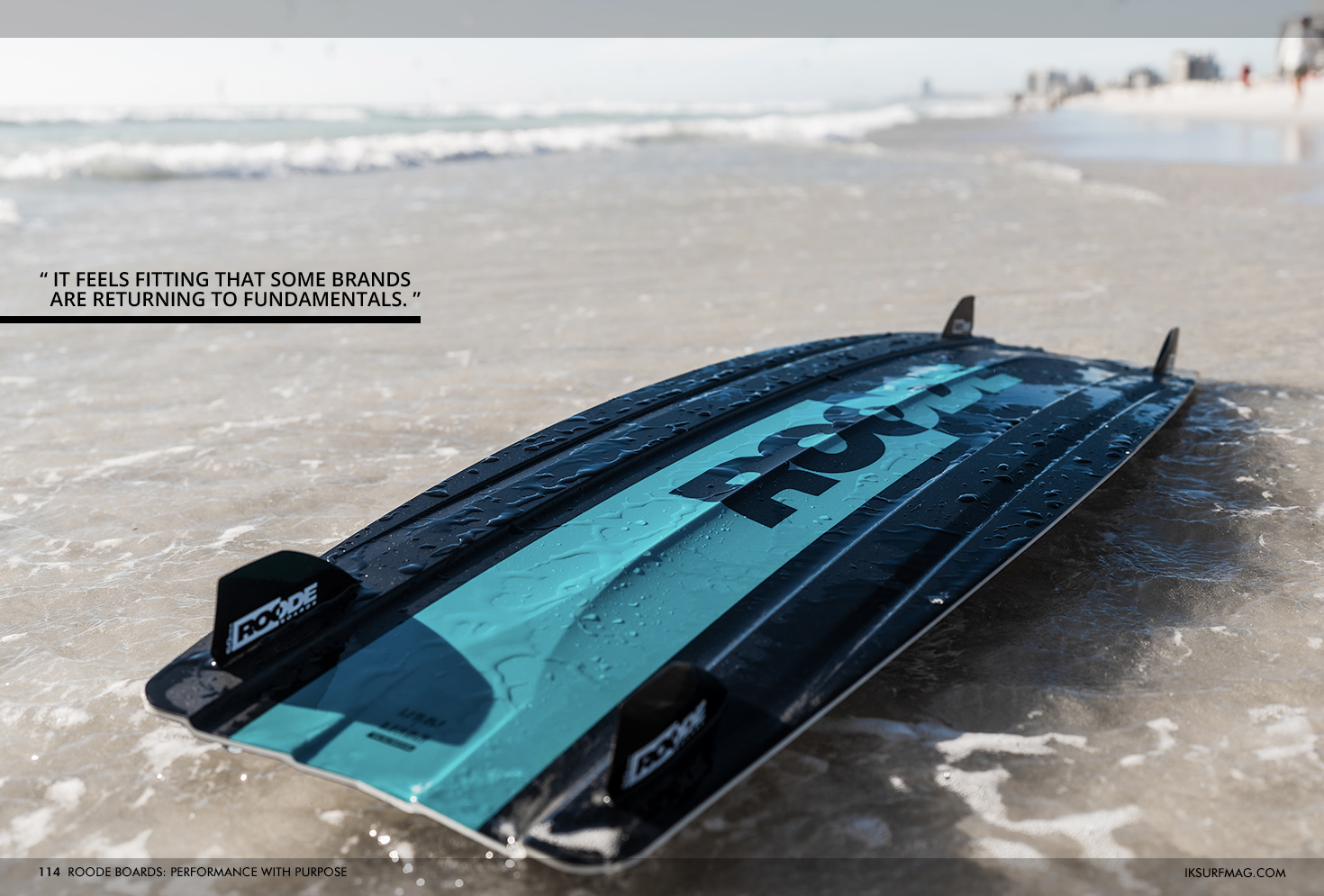
In a sport defined by freedom, speed and connection to the elements, it feels fitting that some brands are returning to fundamentals. Make great boards. Respect the environment that makes the sport possible. Stay close to the community.
ROODE Boards may still be young compared to industry giants, but their foundations are solid. Thoughtful design, in-house craftsmanship and genuine performance are not marketing angles; they are operating principles.
For riders seeking equipment that delivers when it counts and aligns with a more conscious way of building, ROODE offers a compelling option. Not noise, not exaggeration, just boards shaped with intent and tested in real wind.
And in the end, that clarity might be its greatest strength.
Videos

By IKSURFMAG
