

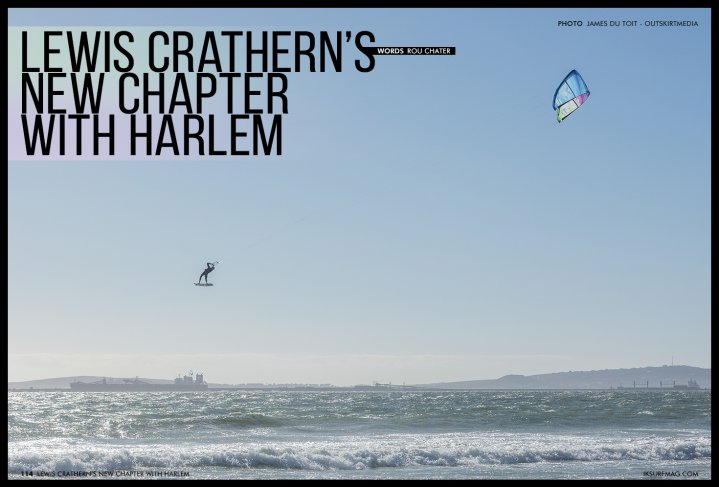
Lewis Crathern’s New Chapter With Harlem
Issue 114 / Thu 19th Feb, 2026
Kiteboarding has seen many characters, but few have shaped the sport through as many roles as Lewis Crathern. From body dragging at Whitstable without a board to becoming a national champion, from soaring over Brighton Pier to becoming one of the most recognisable voices in global events, his journey has always been defined by passion and purpose. Now, with a fresh chapter at Harlem Kitesurfing, Lewis brings new energy to his riding, a deeper commitment to young people and a renewed focus on wind-powered education.
Very few riders in modern kiteboarding have lived as many different lives inside the sport as Lewis Crathern. He arrived on my radar as the kid turning up at Whitstable without a board, determined to go kiting regardless of the fact that he couldn’t afford a board, and yes, he used to body drag around in the sea! He grew into a local talent and eventually rose to become a national champion. He became the viral pioneer who jumped Brighton Pier long before viral culture existed. Later, he evolved into the commentator whose voice is recognised at major world events. Alongside all of this, he is also the educator who walks into schools with colourful kites and a message about wind, energy and possibility.
At forty years old, he finds himself standing at the edge of a fresh chapter of his life, which feels both unexpected and completely logical. His move to Harlem Kitesurfing is far more than a change of sponsor; it represents a shift in identity, purpose and connection at a moment where he wants to contribute more widely to the sport and the world around it. He’s not only working for the brand and riding for them, he and Aaron Hadlow will also be taking over the sales of the brand in the UK.
A decade at Duotone and a natural moment to evolve
Lewis speaks warmly about his ten years with Duotone Kiteboarding. Those years were filled with achievement and growth, and he has no interest in pretending otherwise. Early in his time with the brand, he suffered the crash at Red Bull King of the Air that placed him in an induced coma and fundamentally changed the conversation around safety in strong-wind big-air competition. He had only recently signed with the team, and the uncertainty around his future as an athlete was real and intense. Duotone stayed by his side through his recovery and showed him that they valued more than results, they valued the person behind the kite. From that moment, the relationship deepened.
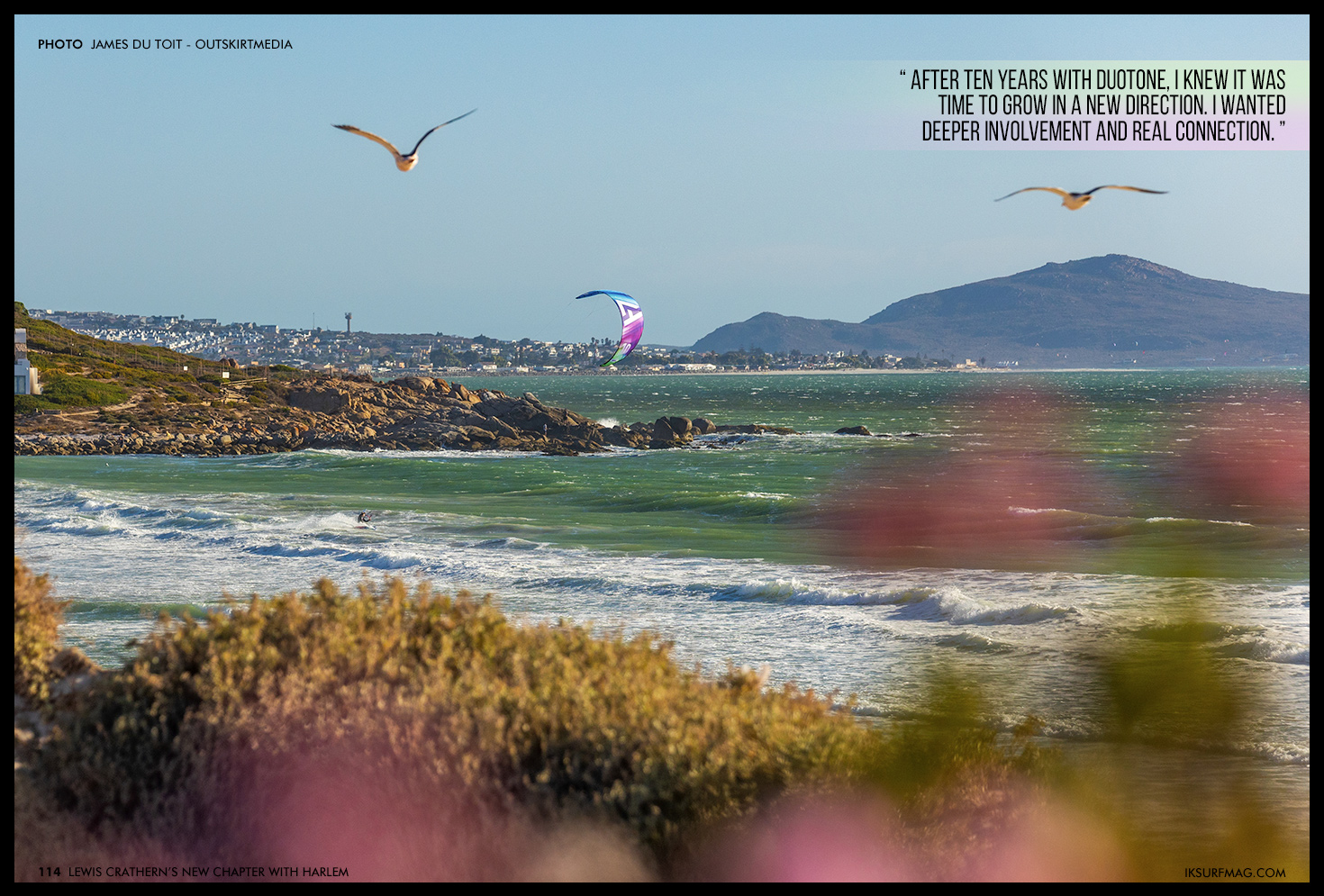
Over the following decade, Lewis built a strong role within the team. He worked closely with the UK distributor, Emma Beckensale; he helped develop young riders through the Young Bloods programme, and he demonstrated that professional value can come from much more than contest podiums. His coaching sessions became part of the fabric of the British scene, and his presence on the beach made him a recognisable mentor for new generations of riders. Yet after ten years, he found himself looking for something different. He felt ready for a shift toward a smaller team, a closer network and a more intimate relationship with the people behind the brand. He wanted to be more involved with the running of a brand and have more influence over it, using his vast knowledge of the sport. That desire lined up with a series of conversations that would eventually lead him to his new role at Harlem.
The Harlem atmosphere, people before scale
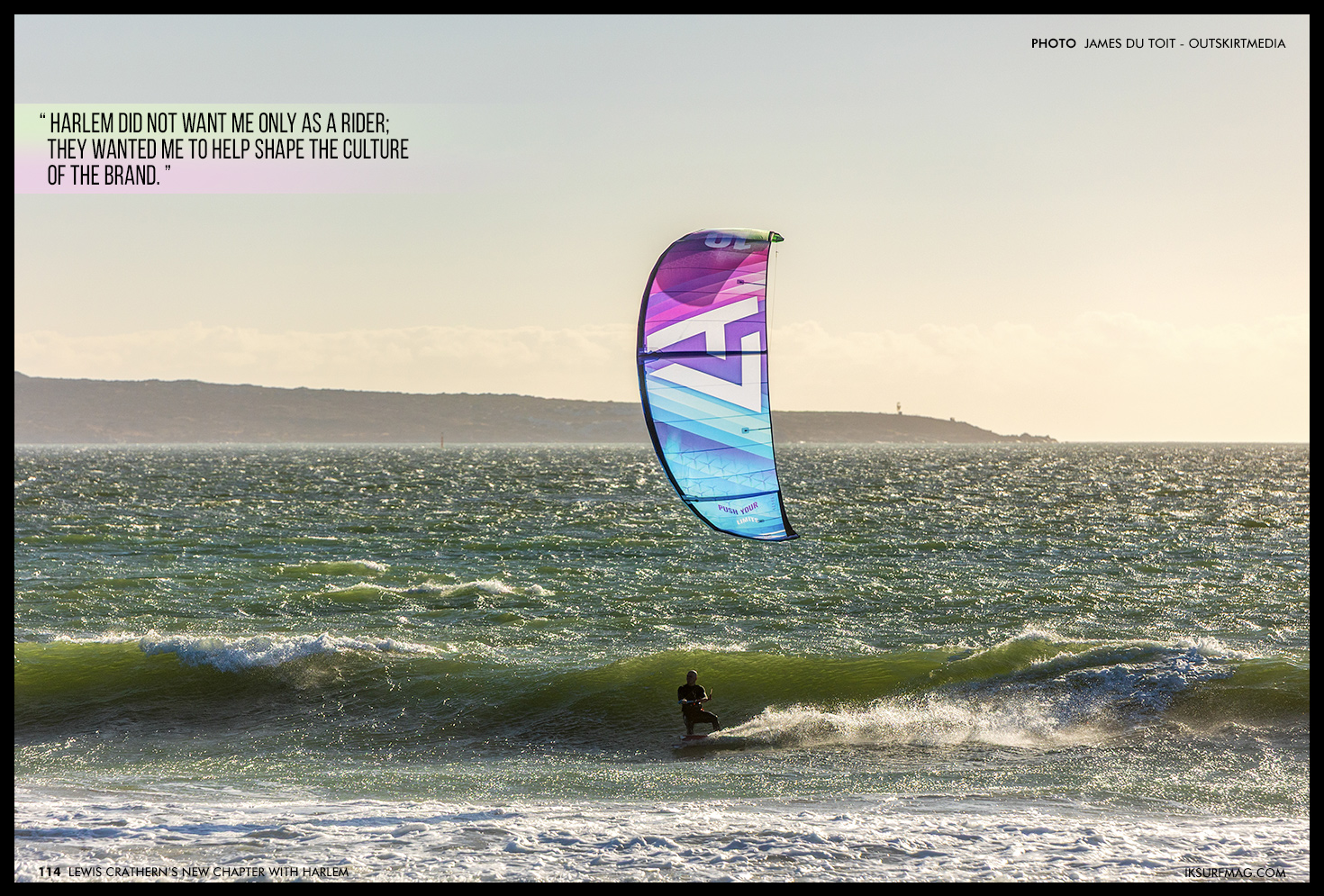
Harlem Kitesurfing could not be more different from the industry giants. It is a tight-knit brand made up of a small team of passionate individuals, many of whom juggle multiple roles within product development, marketing, design and rider support. This size and focus appealed to Lewis immediately. He felt he could contribute directly, speak to everyone inside the organisation and play a meaningful part in shaping the culture of the brand.
A large influence was his close friend and neighbour, Aaron Hadlow. Aaron joined Harlem almost two years ago, and the transformation Lewis saw in him was significant. Harlem involved Aaron in deeper levels of product development, future planning and structured leadership. The brand offered roles that allowed a rider to think beyond simply producing content or performing at events. Seeing Aaron grow inside the brand made Lewis realise that Harlem was a place that encouraged riders to expand their role and knowledge.
When Lewis finally spoke to Harlem’s CEO Alex, he expected a traditional conversation about team roles and content creation. Instead, Alex explained that he did not want Lewis solely as a team rider. He wanted him inside the company structure, contributing to storytelling, marketing, youth development, shop relations and the long-term British market. He wanted someone who understood education, sustainability and communication as deeply as he understood big air riding. This direct honesty caught Lewis off guard in the best possible way. He found himself excited by the idea of belonging to a brand not just as a rider but as a contributor with several meaningful responsibilities.
First flights and an unexpected rediscovery of confidence
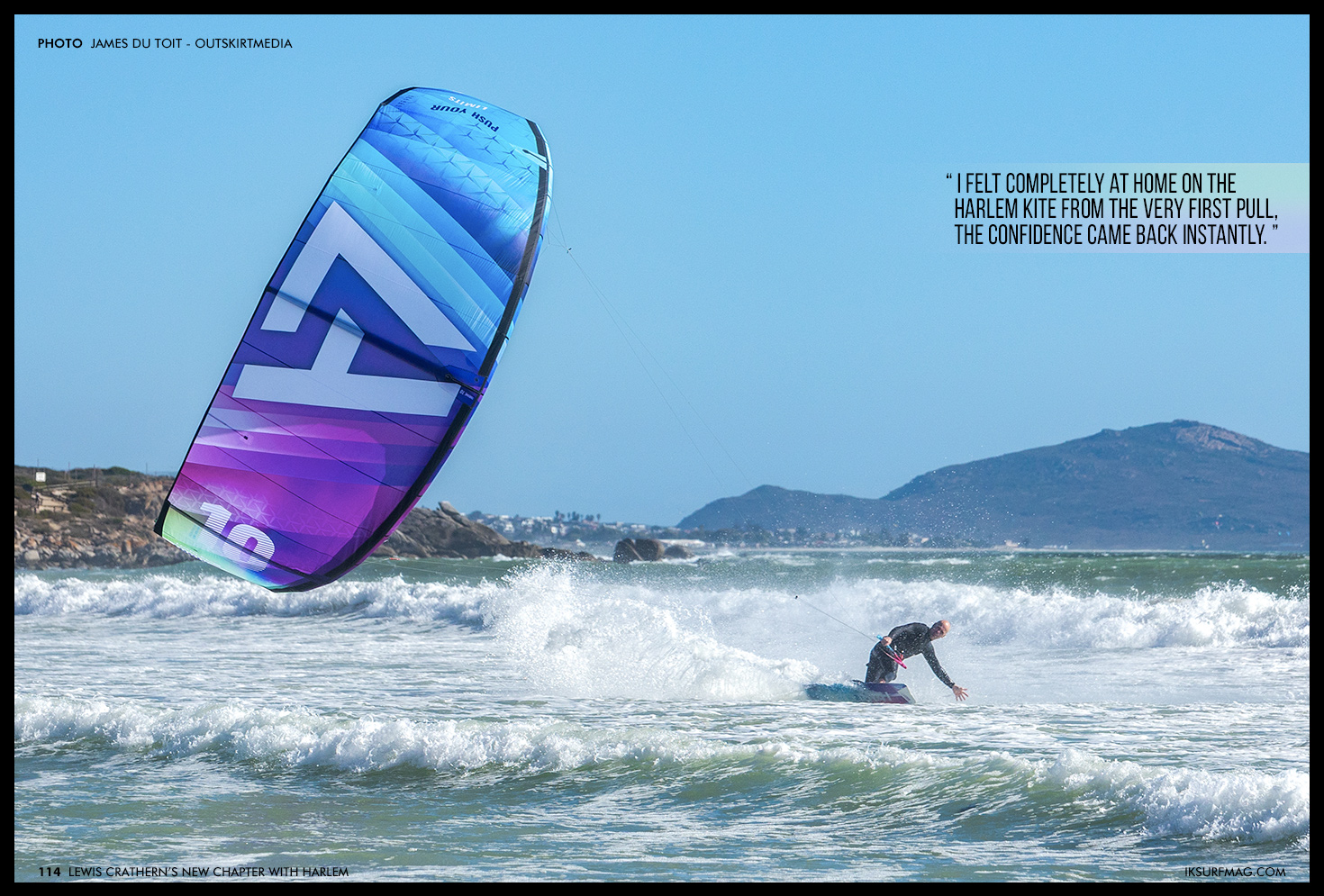
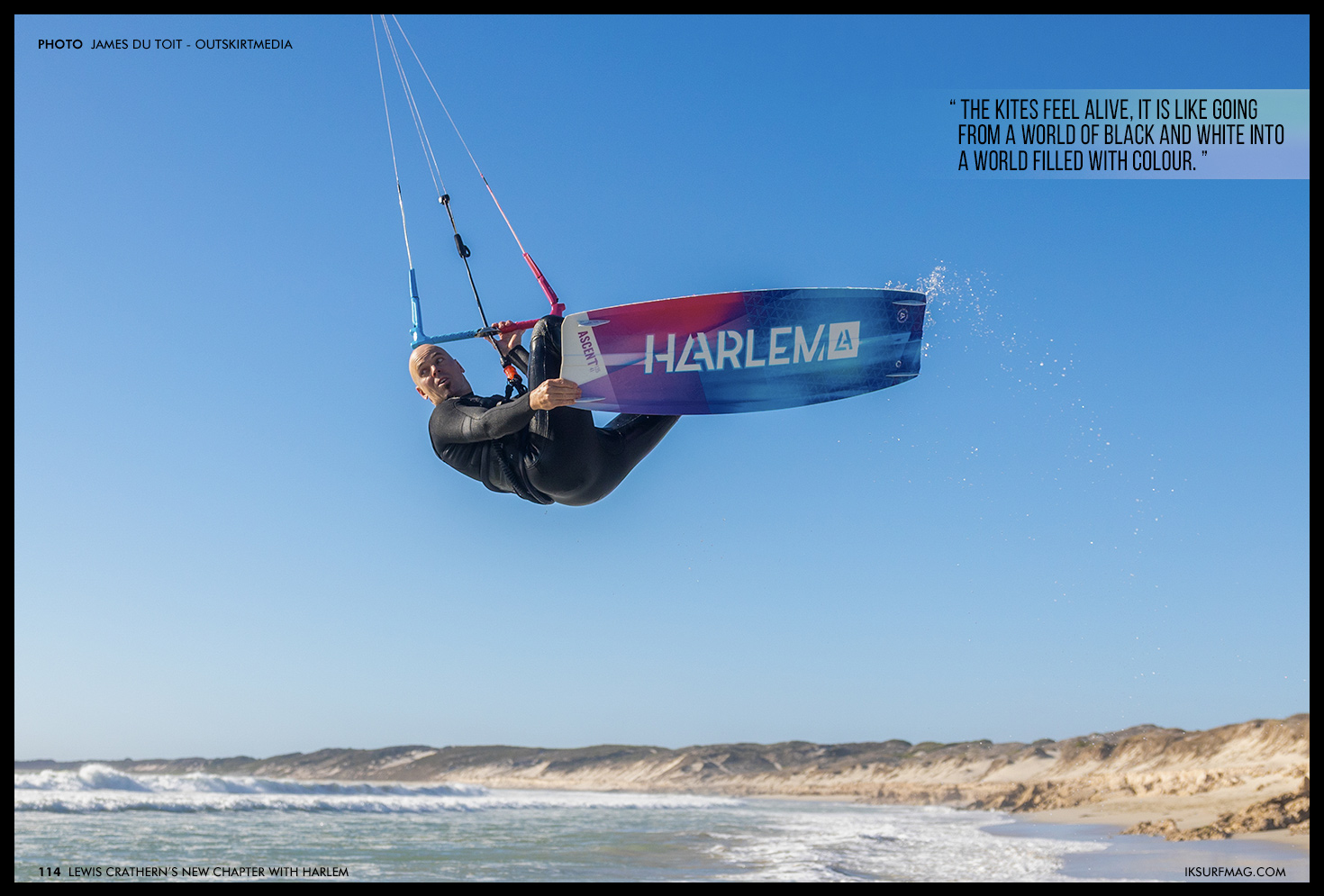
Out of respect for his Duotone contract, Lewis waited until the year turned before touching a Harlem kite. That meant his first session happened on a bitterly cold English day in early January. Wrapped in a thick wetsuit with a hood, he launched the kite with the expectation that something would feel unfamiliar or awkward. Instead, he felt immediately comfortable. The bar connection felt intuitive, and the kite delivered both control and power in a way that surprised him. Rather than being tentative, he found himself grinning at the sensation of being completely at home on a brand new setup.
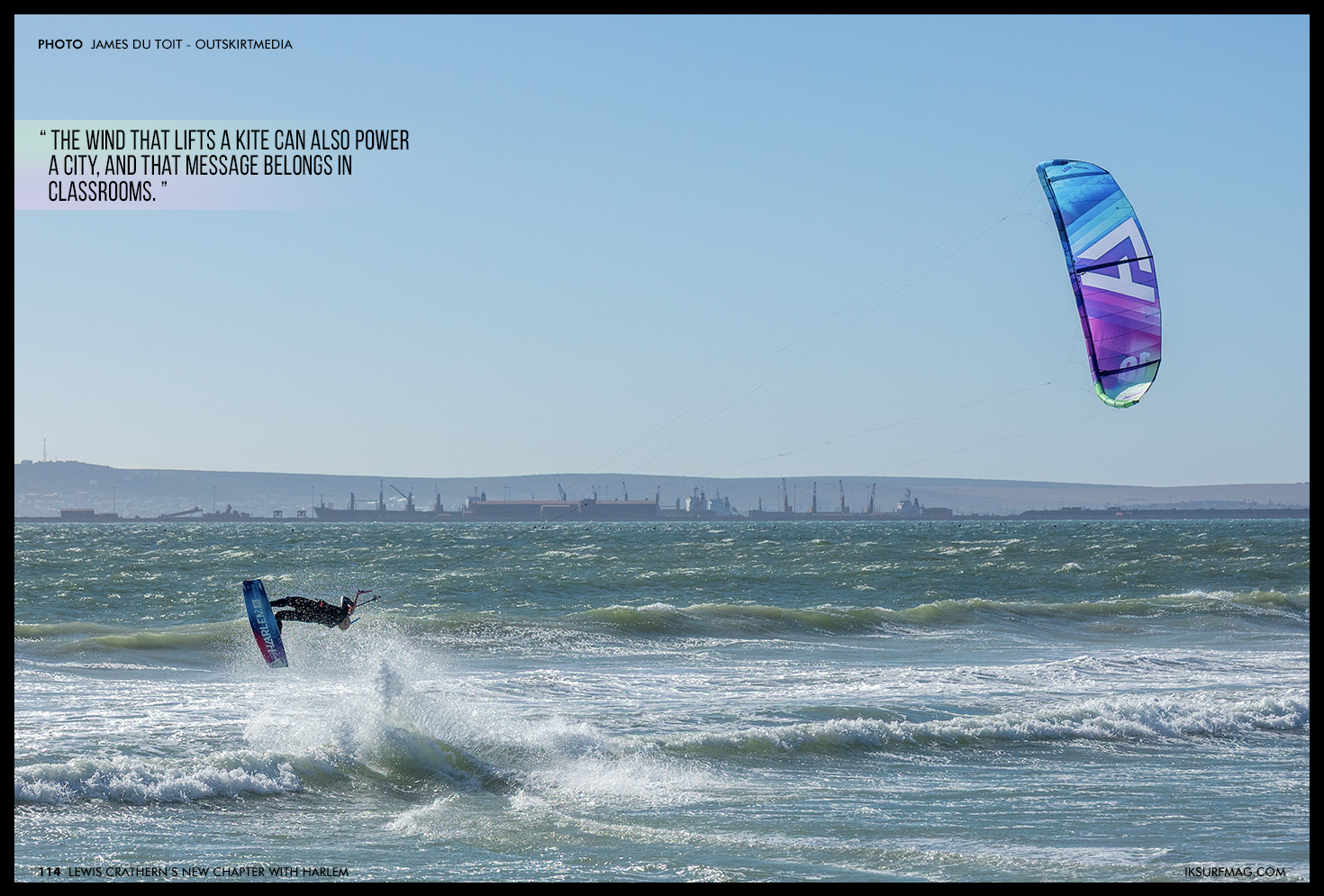
The real test came in Cape Town a few weeks later. After a windless December and a very traditional British Christmas, he had not been riding much at all. Yet once he hit the Cape Town wind, the kites brought out his riding in a way he had not experienced for a long time. He found himself getting massive jumps with minimal effort. He landed tricks with freedom and fluidity. He even recorded one of the biggest jumps among the Harlem riders during the GKA Woo Challenge. At forty years old and after a little while off the water, these performances mattered to him. They were confirmation that his instinct to change brands had been right.
One of the unexpected pleasures was the return of colour. After seasons of riding undyed white Concept Blue kites, in line with his values, the vivid design of the Harlem range felt energising. He laughs about how alive his kit feels on the water now and how the graphics brighten even the greyest British days. On a personal level, he was also genuinely moved by the wind turbine motifs printed across the bars and boards, which link directly to his parallel work in wind energy education. The symbolism felt almost poetic, a merging of two worlds that have shaped his life.
Helping young riders stay grounded in a noisy world
Lewis hasn’t always been a natural mentor, but it’s a role he has developed over his career and now he relishes it. He enjoys speaking to young riders, listening to their concerns and helping them navigate the mental side of the sport. Yet in recent years, he has become increasingly aware of the pressures created by social media. He has seen talented young riders measured by follower counts, engagement graphs and content frequency rather than by passion, creativity or personal growth. He has seen two clips of the same trick performed at the same level generate wildly different reactions simply because the algorithm chose one and ignored the other. The inconsistency and randomness frustrate him because he sees the effect it has on riders who are still shaping their identity.
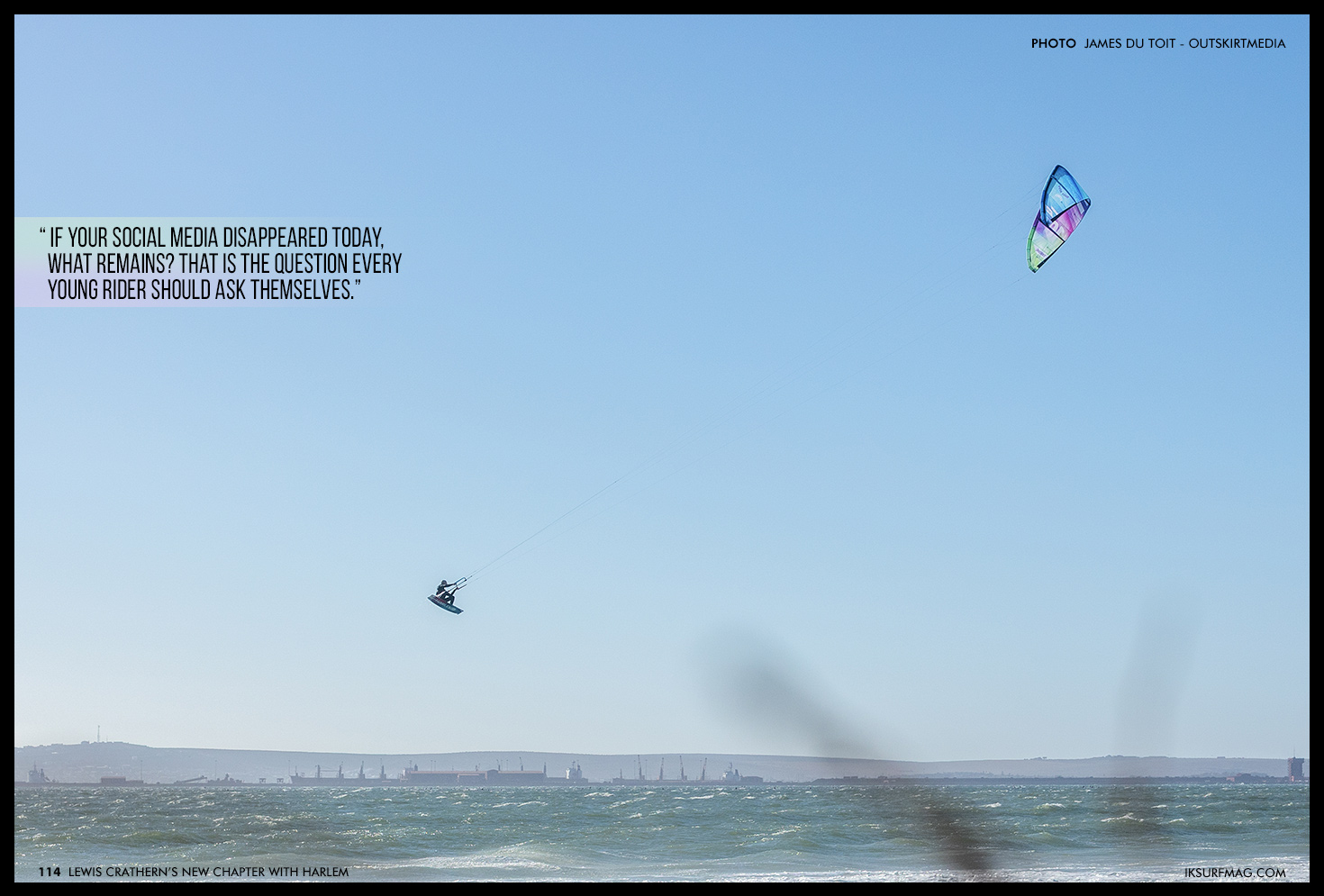
He encourages young athletes to build value that exists independently of social platforms. His favourite question to ask is simple. If your social media disappeared today, what remains? He wants young riders to develop skills that last. He teaches them to speak confidently in front of groups, to write updates for sponsors, to build their own small websites, to lead sessions in their local communities and to understand that their real value is found in their character and contribution, not in numbers on a screen.
He worries that the focus on social media alone places young athletes at risk of burnout or insecurity. He believes the industry needs to have an honest conversation about the mental health effects of constant comparison and algorithm-driven pressure. While he respects the importance of online platforms, he wants young riders to see them as tools rather than measures of worth.
The classroom connection and the power of wind
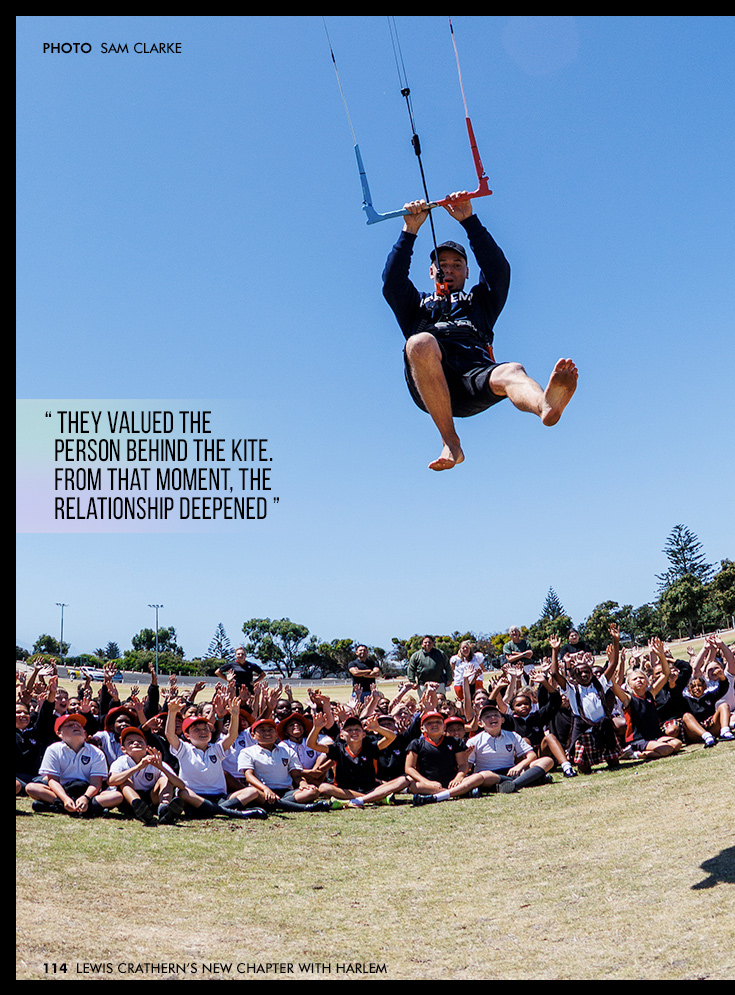
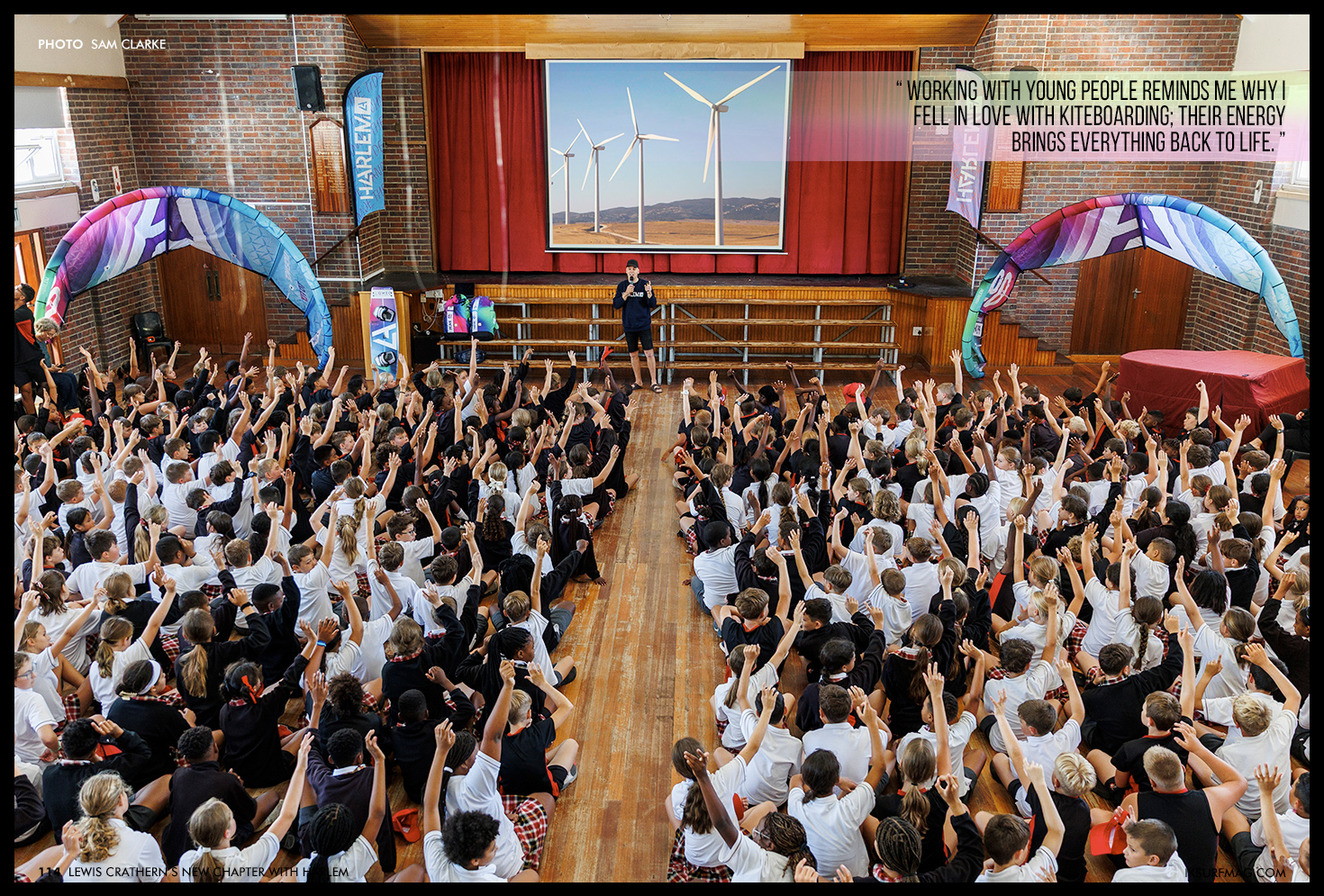
Some of the most meaningful work Lewis does has nothing to do with contests or content. It happens in school halls, playing fields and classrooms across the country. His journey into education began when his old secondary school invited him to speak about sport and ambition. He expected to feel uncomfortable returning to that environment, but instead, he discovered that he loved speaking to students. He enjoyed their curiosity, their humour and their openness. He realised that kites are perfect tools for teaching children about wind, weather, movement, confidence and science.
He developed his school presentations freely and voluntarily. He never charged; he simply wanted to give something back to communities that might never encounter kiteboarding otherwise. He crafted sessions that explained how wind energy works and how a kite harnesses invisible forces. He would bring kites onto school fields and allow students to feel the power of the wind through their hands. For many children, this became a moment of wonder and discovery. For Lewis, it became one of the most fulfilling elements of his life.
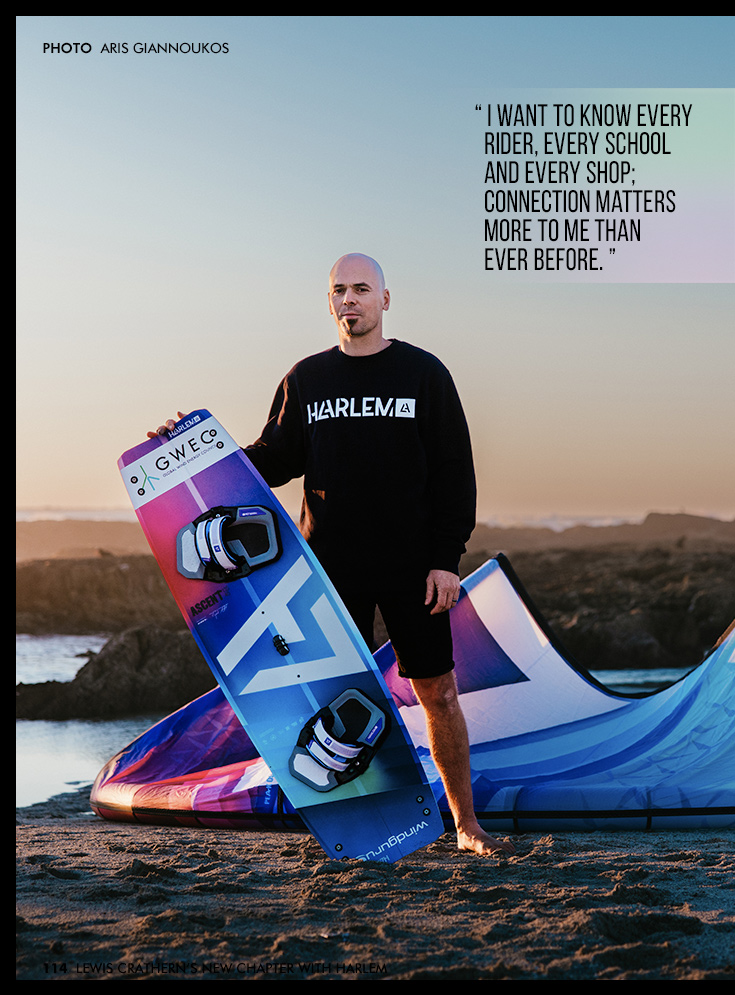
His educational work eventually caught the attention of the Global Wind Energy Council. They saw in Lewis a rare combination of communication skills, scientific enthusiasm and genuine passion. They invited him to become an ambassador for wind energy and provided him with the opportunity to represent the industry at conferences, summits and international meetings. He has since visited offshore wind farms, spoken at major events, collaborated on youth initiatives and connected with global leaders who share an interest in renewable energy.
His work with Harlem now strengthens this mission. Harlem’s approach to production is clean, thoughtful and environmentally aware. Their use of undyed materials, eco-printing, agile manufacturing, and reduced waste aligns perfectly with Lewis’s educational message. He plans to create content, develop school sessions and bring together the worlds of kiteboarding and renewable energy in ways that will introduce young audiences to both science and sport.
A new professional challenge in the UK market
One of the most exciting parts of Lewis’s move to Harlem is his new role supporting the brand in the UK alongside Aaron Hadlow. Together they will act as agents, guiding shops, organising demos and introducing riders to the equipment. For Lewis, this feels like an authentic extension of who he already is. He loves bringing people onto the water, helping them understand their equipment and celebrating their progress. He sees demo days not as work but as opportunities to create memorable experiences.
Harlem’s business model makes this work appealing. The brand avoids forcing shops into large preseason orders. Instead, it operates with flexible production, steady stock rotation and realistic expectations. This reduces waste and reduces stock left over at the end of the season. Lewis believes this will resonate strongly with retailers who have struggled with the traditional surplus-driven system. As an educator and mentor, he wants to support both riders and shops with honesty, clarity and enthusiasm.
Still the same rider who fell in love with wind
Lewis has always been driven by passion rather than circumstance. He remembers his early days in the sport when he had a kite but couldn’t afford a board, and he’d just go body dragging around among the kiters. He was just so stoked to be flying a kite and learning what he could from it. That early sense of joy and resourcefulness still lives in him. He has experienced the highs of competition, the challenges of injury, the responsibilities of commentary and the demands of professional coaching. Yet none of these roles has changed the core feeling he gets when he launches a kite into the sky.
His move to Harlem is not about reinventing himself for the sake of reinvention. It is about continuing a life shaped by curiosity, community and commitment. He wants to ride at a high level for as long as he can, he wants to nurture young talent, he wants to support British shops, and he wants to teach children that the same wind that lifts a kite can generate clean energy for entire cities.
Lewis Crathern remains one of the most grounded and generous characters in the sport. Whether he is coaching in Cape Town, speaking on a school field or discussing sustainability with industry leaders, he carries the same enthusiasm that first put him in the water all those years ago.
Videos


By IKSURFMAG
