

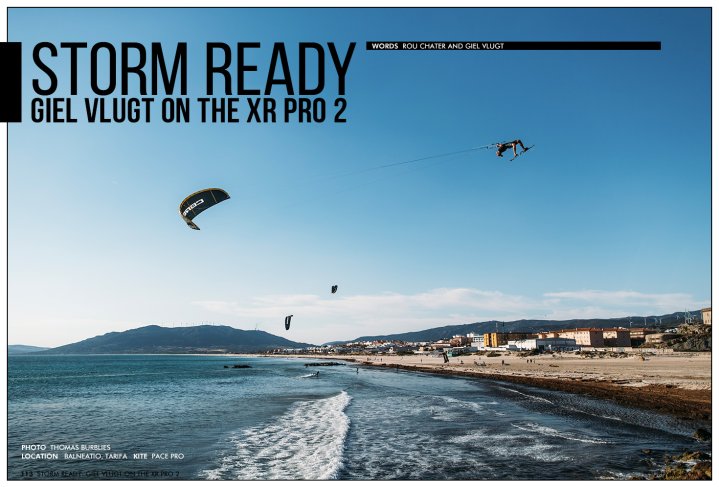
Storm Ready: Giel Vlugt on the XR PRO 2
Issue 113 / Sun 2nd Nov, 2025
Tarifa’s Balneario was once off-limits; now it’s the go-to big air arena. On any windy afternoon, you’ll find Giel Vlugt parked in his van, watching flags whip and waiting for the call. We caught up with him as the new XR PRO 2 hits the water to talk progression, pressure, and why this kite raises the bar while keeping that unmistakable CORE feel!
Tarifa’s Balneario used to be a hard no. Now it is a launchpad for the world’s most committed big air riders, and on any windy afternoon, you will find CORE’s Giel Vlugt parked up in his van, watching flags snap straight and waiting for the green light. We caught up with him just as the new XR PRO 2 lands in shops to talk progression, pressure, and why this latest XR keeps that signature “CORE feel” while raising the ceiling for height and control.
Giel did not grow up by the sea. He discovered kiting at 18 while training as an outdoor sports instructor, then spent seven seasons teaching in Tarifa. Those summers were a grind: eight hours a day on the beach, two weeks straight if the Levante allowed it. He loved it, but saved every euro to buy himself a year off to train. He converted a van, slept at the spot, and put in six to eight hours on the water whenever the wind blew.
The breakthrough came in Cape Town. He went for a Back loop board off “just for the photo” and landed it after a handful of tries. That was the moment he decided to go all in. A few years later, he was the first to land a double loop, and overnight, his name was everywhere.
The Head Game
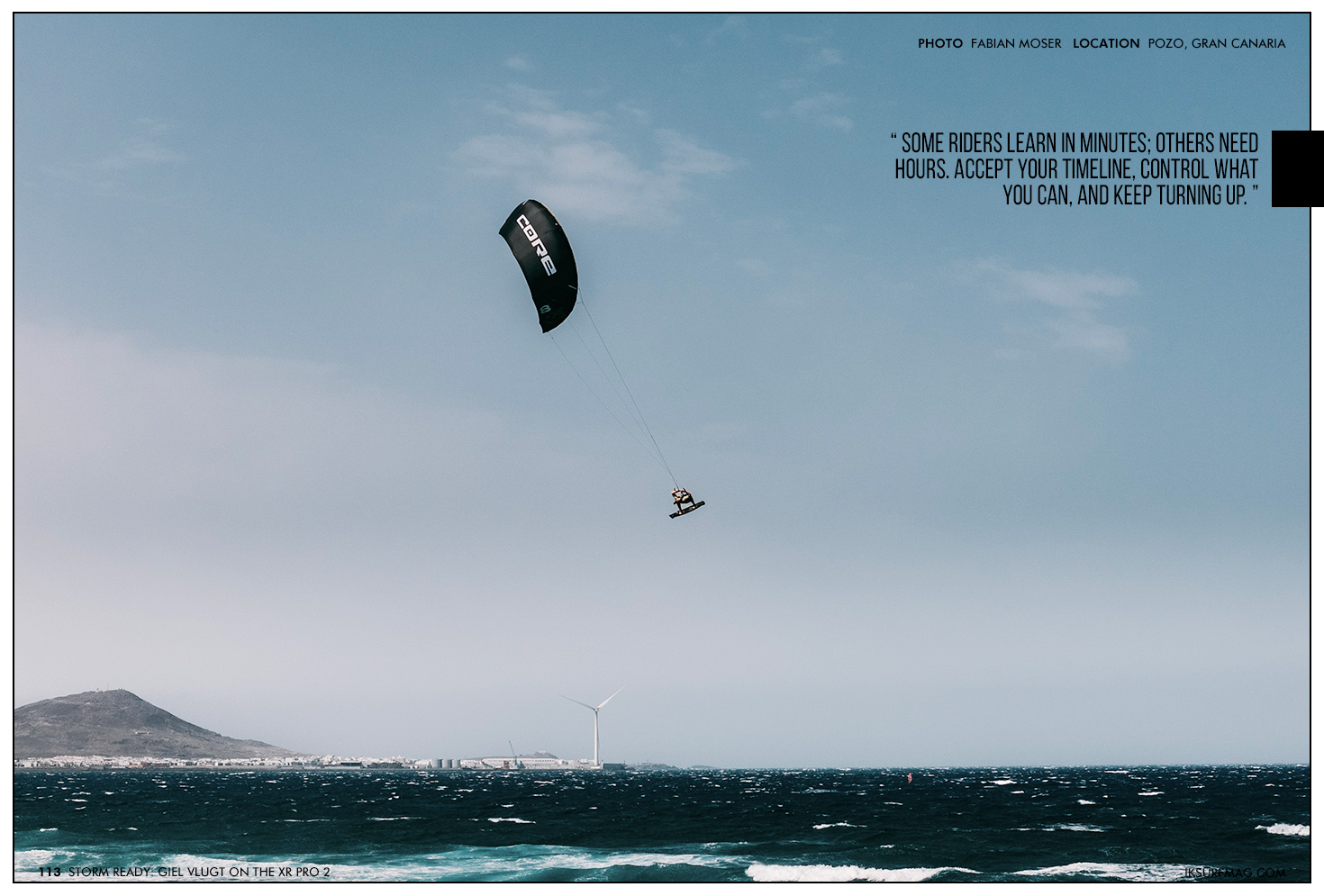
Ask Giel for learning advice, and it is simple: do not give up. Some riders learn in minutes; others need hours. Accept your timeline, control what you can, and keep turning up. That mindset also carried him through his toughest setback, a stubborn ankle injury. He built a recovery team around him and did exactly what the specialists asked. No shortcuts, no ego.
Chasing the Judging
Competition formats shift. Cold Hawaii 2025 rewarded massive height and power. Doubles scored fewer than in previous seasons. Giel adapted. If the judges want big singles at 25 to 30 meters with technical board-offs, that is what he will bring. The goal is simple: read the scoring, ride to it, then push the level inside that window.
Why the XR Has A Following
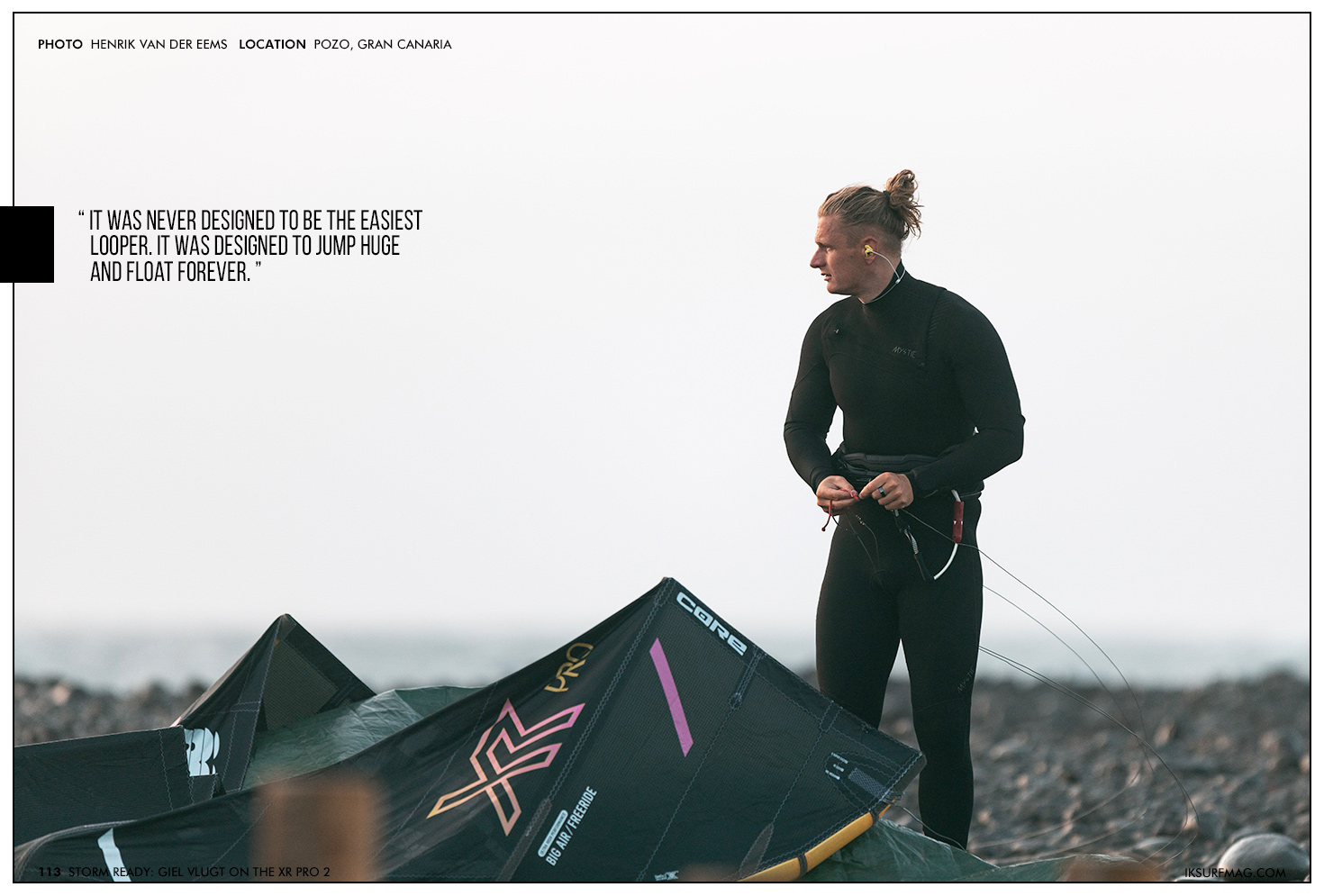
For years, the XR has been the go-to tool for breaking personal bests. The recipe is well-known. Fly fast, edge hard, sheet in, go up. Crucially, when you sheet out the XR, it dumps power quickly, which lets you hold a bigger kite and still build speed for takeoff. That is why you see riders on nines and tens when others are on eights. It is also why the XR has constantly looped with consequence. It was never designed to be the easiest looper. It was designed to jump huge and float forever.
What is New in the XR PRO 2
The brief from CORE’s lead designer, Frank, was clear: keep the XR DNA and raise the ceiling. According to Giel, they did more than that.
- More height: the XR PRO 2 lifts higher again.
- More hang time: longer, cleaner flight windows.
- Faster turning: especially noticeable on 10-meter sizes, where Giel is now training and landing new tricks he previously reserved for smaller kites.
- Smoother loops: refinement in materials and geometry rounds out the loop without losing that XR punch.
“It feels like a new kite, but it still feels like a CORE. You know where it is at all times. Bar feedback is lighter than older XRs, yet the connection is still there, even when you are upside down after a kicker,” says Giel.
Materials And Stiffness Where It Counts
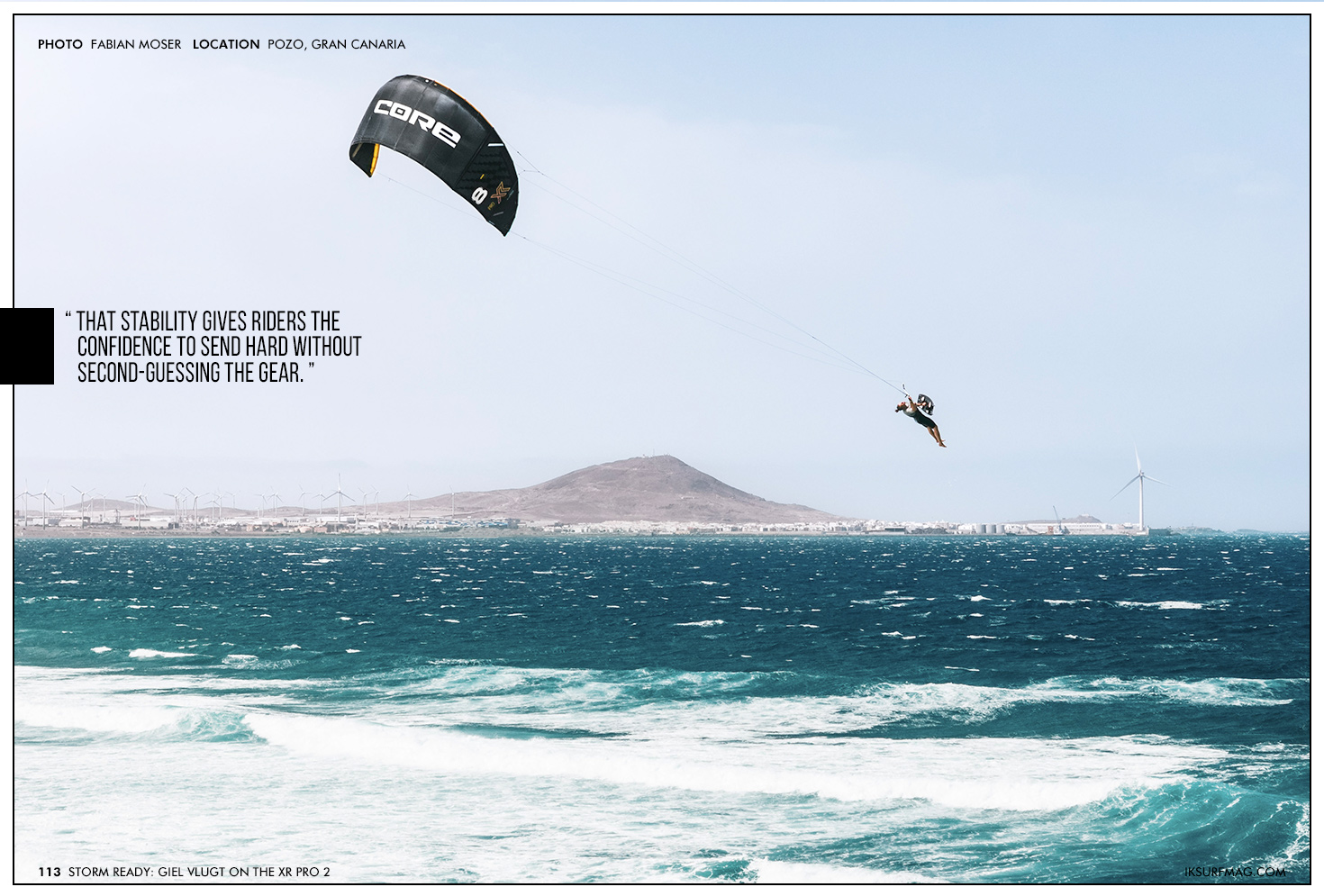
The XR PRO 2 uses an Aluula airframe, and while the early buzz around exotic frames was about weight, Giel says the real magic shows up when it is howling. In 40 to 50 knots, the kite stays locked in shape. No jellyfishing, no collapsing wing tips. That stability gives riders the confidence to send hard without second-guessing the gear. “In Cold Hawaii on a nine, I never worried about my equipment. All my focus was on the trick,” he says.
Wind Range That Rewards Commitment
Low end is better than before, says Giel Vlugt, and the High-end remains the XR’s superpower thanks to that sheet-out depower that lets you hold more kite than the next rider. If you are chasing WOO numbers in gusty storms, this is the trait you care about.
The Bar System That Plays Well With Others
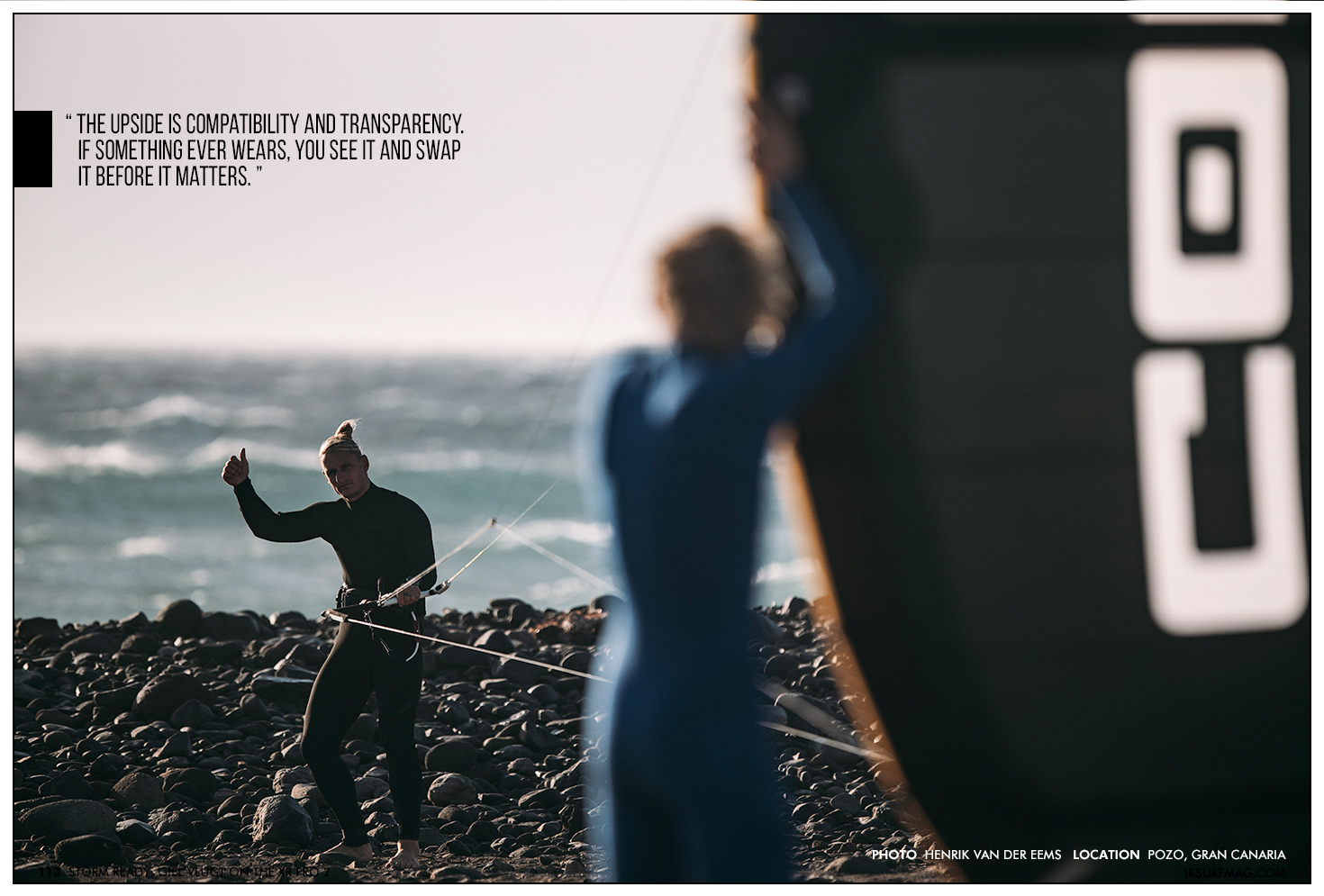
CORE’s Sensor offerings keep single front-line safety while giving riders the option to run a high or low split. There is an extra visible centre line in the core of the system. It looks unusual the first time you lay it out, but on the water, you do not notice it. The upside is compatibility and transparency. If something ever wears, you see it and swap it before it matters.
Tuning Options You Will Actually Use
The XR PRO 2 carries meaningful on-kite tuning:
- Wingtip settings: Easy, Super Easy, and Medium for the steering feel you prefer.
- Backline knots: adjust bar pressure from low to high. Giel loops on the low setting for a free, responsive feel.
- CIT bridle points: choose Tight Loop, Normal, or Wide Loop to change how the kite pivots and drives through a loop. On larger sizes, he prefers the Tight Loop setting for crisper turning.
XR or Pace, Pro or Standard
CORE has kept the line-up clean and distinct.
XR family: built for height, hang time, and storm control, with loops that carry real pull. Choose the XR8 if you want best-in-class boosting and board-off progression at a more accessible price. Choose the XR PRO 2 if you want the same DNA with a stiffer frame, more height, cleaner loops and the most control when it is nuclear.
Pace family: built for looping feel and progression across all sizes. If your priority is smooth loops, tighter pivots and playful handling, Pace is the faster path to confidence. You will still jump high, but it is the loop experience you are buying.
Who should step up to the PRO frame? If your home spot rarely tops 30 knots and you do not loop much, XR8 is a smart buy. If you ride storms, chase records, or want the most composed loop and bar feel under serious load, the XR PRO 2 earns its premium. The difference is not only for pros. Intermediate riders who push in strong wind will feel it.
On the Water with the XR PRO 2
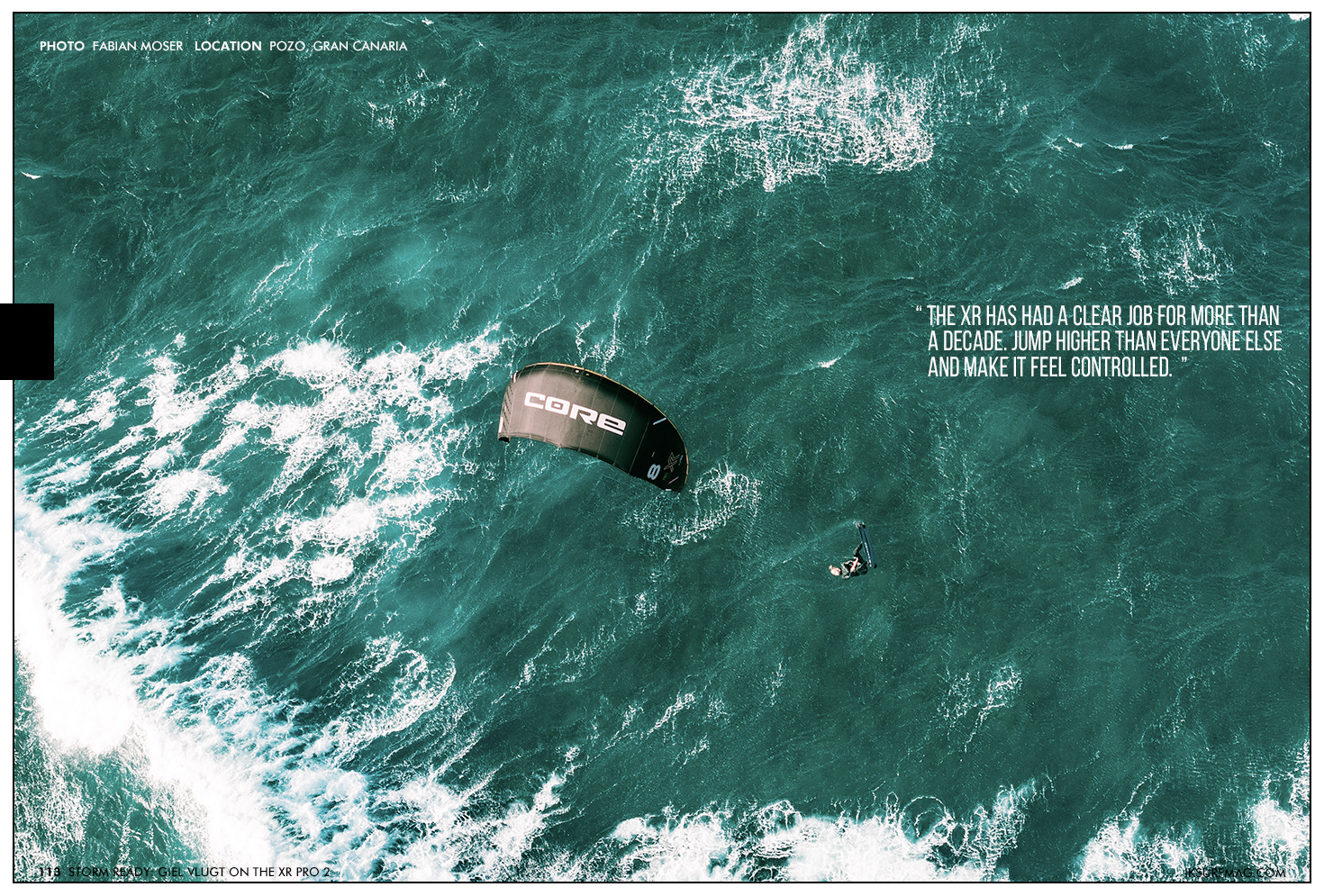
The most telling feedback is how Giel rides it. He is training new tricks on a 10, holding bigger kites deeper into storms, and stacking 27-meter jumps without thinking about canopy flutter or tip fold. He puts the improvement in simple terms: more confidence to push, and more usable performance in the sizes and conditions that score.
Big air has never moved faster. Formats evolve, tricks cycle, and conditions seem wilder every season. Through that churn, the XR has had a clear job for more than a decade. Jump higher than everyone else and make it feel controlled. The XR PRO 2 keeps that promise and adds speed and smoothness, opening the door to bigger single loops and more technical board-offs at real height.
If you have the chance, test one back-to-back with your current storm kite. Set the bar pressure where you like it, try the Tight Loop bridle setting on larger sizes, and find a proper gust. The numbers on your WOO will tell part of the story. The rest you will feel in your hands and your gut when you sheet in.
Videos

By IKSURFMAG
