
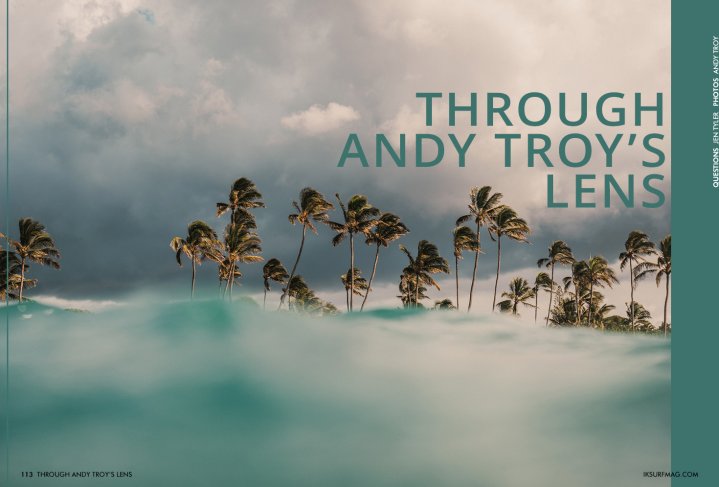
Through Andy Troy’s Lens
Issue 113 / Sun 2nd Nov, 2025
From chasing storms to chasing sheep across Irish beaches for the perfect kiteloop shot, Andy Troy has become one of the most recognisable photographers in the kitesurfing world. Jen Tyler finally catches up with him to talk ocean roots, road trips, and the stories behind some of his most iconic shots!
Hi Andy, we’ve been wanting to interview you for a while, and I’m glad we finally have the chance! Let’s start at the beginning: growing up in Zeeland with the sea on your doorstep, did you become a photographer because of the ocean, or were you a surfer who just happened to pick up a camera?
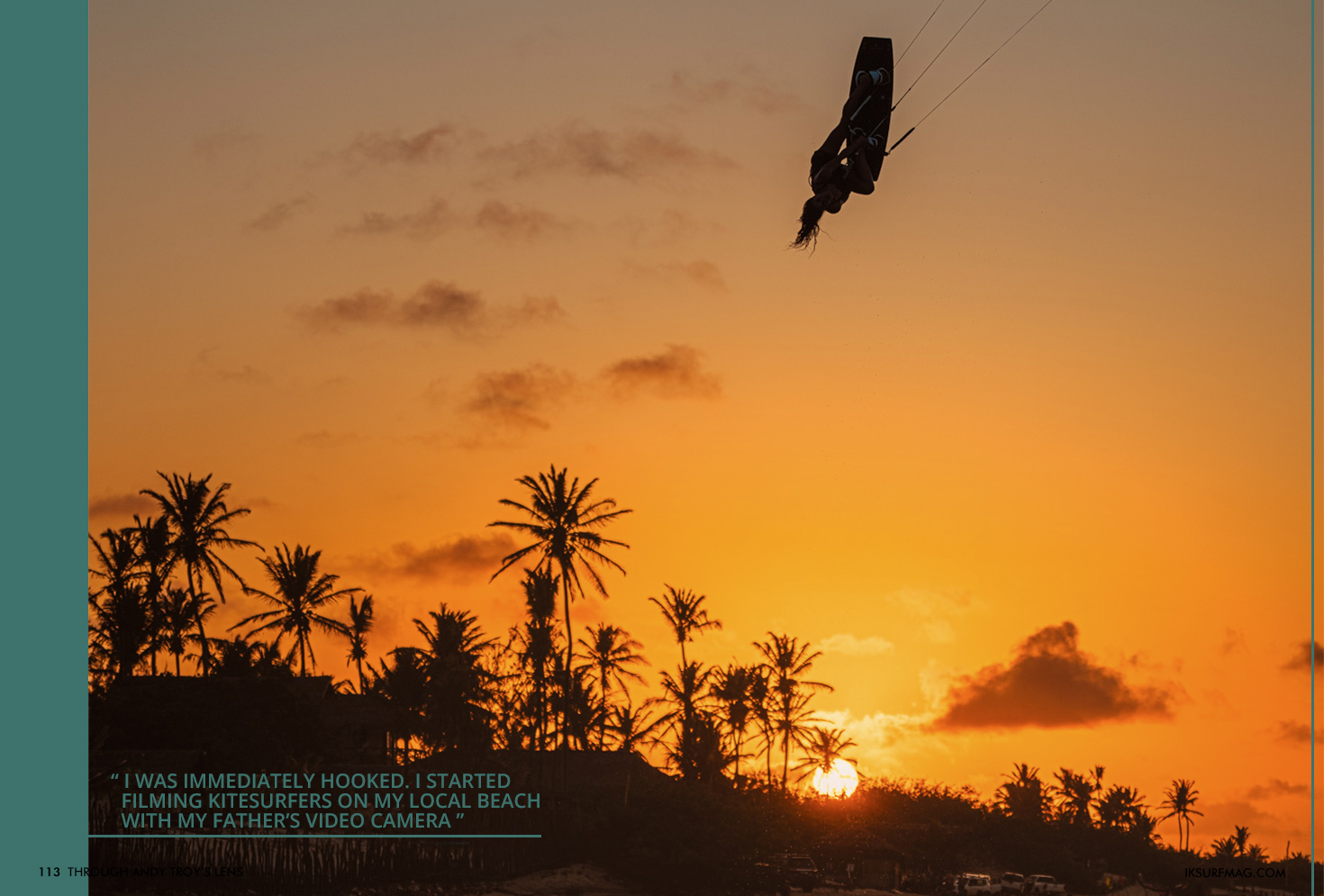
Hi Jen, great to be here! I’ve always been connected to the sea since I was a baby. My parents would take me along on their sailboat, so being on the water felt natural from the start. During my secondary school years, around age 12 or 13, I started flying small power kites, and later that year, I bought a kite buggy. This was around 2000, before kitesurfing had really become a thing. A year later, in 2001, I saw a classmate, Reinier Korstanje (now a KOTA judge), kitesurfing for the first time with a 2-line kite. Later that same year, I went to the beach with another classmate who had just bought a Wipika Classic 8.5m and a directional board to try kitesurfing for the first time. I was immediately hooked. I started filming kitesurfers on my local beach with my father’s video camera and even created a small kitesurfing website as a hobby.
In the following years, I mostly filmed my kitesurfing friends just for fun and uploaded the videos to my site. In 2005, I met Youri Zoon, who lived nearby, and we started making some videos together that got really good reactions. That was the moment I realised I wanted to do more with video and, later on, photography.
At the time, I was mainly focused on filming, occasionally taking photos with a simple camera. During my studies, I interned at a marketing company that also owned one of the bigger Dutch kitesurfing websites. They gave me a professional camcorder to shoot kitesurfing videos and content for their business. After that, I wasn’t quite sure which direction to take, so I decided to start freelancing, mainly building websites while also doing video and photography. My father lent me the money to buy my first DSLR, the Canon 7D, which was excellent for both video and photography. That gave me the chance to learn how to really use a proper camera.
In the years that followed, I mostly shot kitesurfing for fun with friends and occasionally with pro riders like Youri Zoon. I also contributed a couple of articles each year to the Dutch magazine Access, mainly to earn extra money to cover costs. At the time, most of my work was in corporate video and photography, and I did a lot of filming for a big travel agency, shooting hotels and destinations.
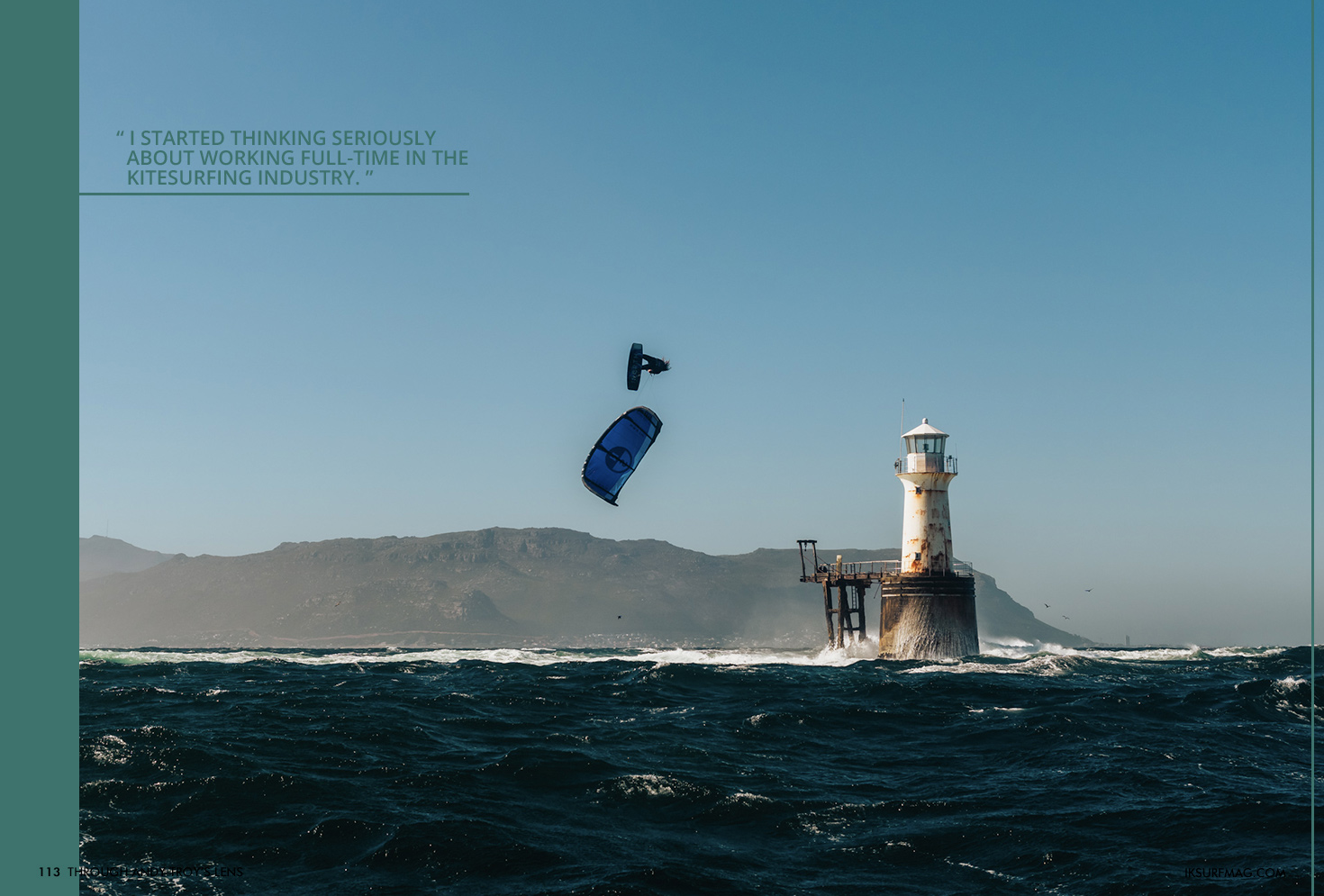
The turning point came during COVID in 2021, just after I returned from working abroad on a big TV show. Kevin Langeree called to ask if I was available in the next two weeks to shoot his new Reedin gear on a road trip to Spain. Ydwer had just had his accident, and there was no other photographer available. That road trip turned out to be such an incredible experience that I started thinking seriously about working full-time in the kitesurfing industry.
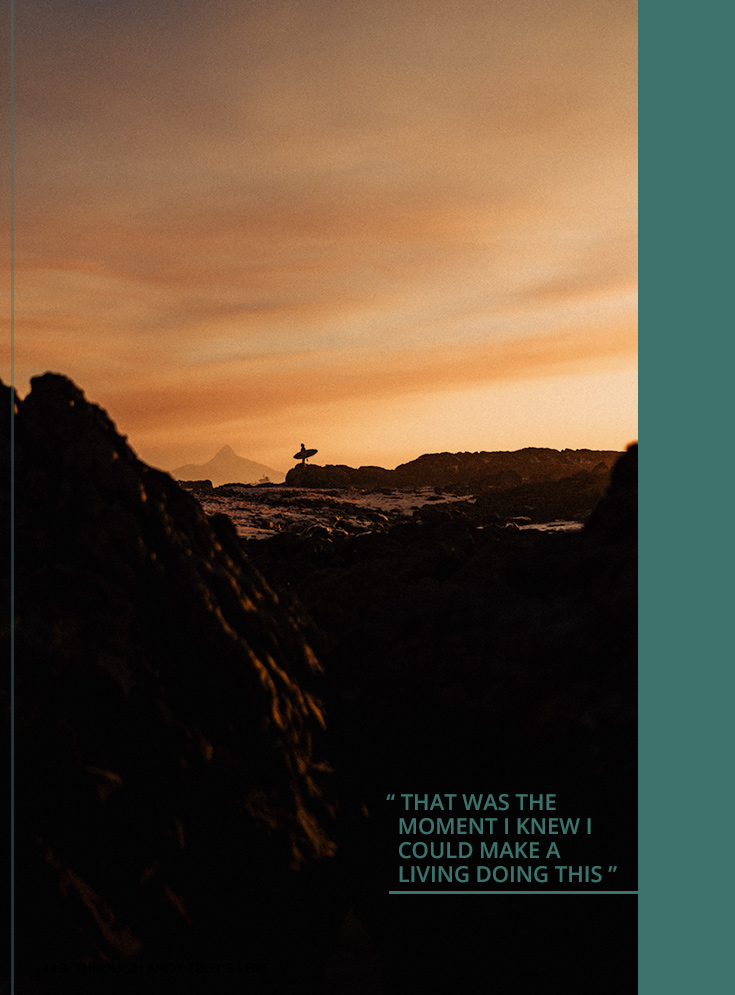
That idea grew even stronger when I met Ruben and Aaron again in Denmark and did an FPV drone shoot with them. At the end of 2021, I decided to take a big risk: I went to Cape Town with all my camera gear and drones. With a bit of luck, I met the people behind BAKL at an after-party and got to know most of the big air riders. That was the moment I knew I could make a living doing this.
FPV drones really helped me break into the scene and pushed me to further develop my photography skills. That same year, I also travelled with Hannah Whiteley, which gave me a huge boost in exposure and helped me get my name out there in the kitesurfing community.
You shoot commercial campaigns, travel stories, and raw action on the water. How do you switch mindsets between creating something polished for clients and capturing action shots?
The past few years have been mainly focused on commercial and product shoots, which are entirely different from just following riders. There’s a lot of planning involved with the brands, making sure the shoot matches their style and vision. These projects are usually scheduled months in advance, so even if the conditions aren’t great, the riders and I still have to make it work.
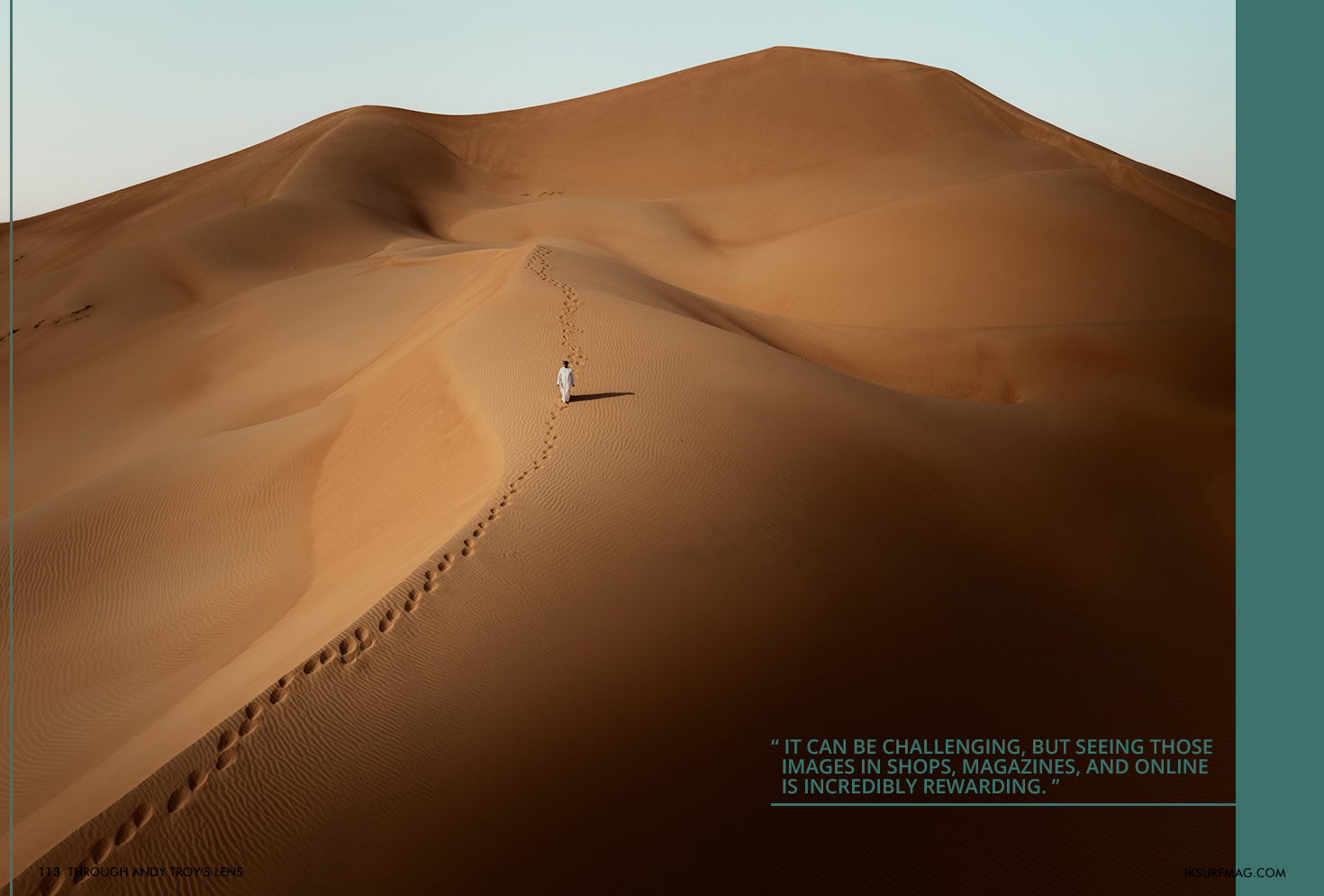
Commercial shoots often mean working closely with the brand’s team, their R&D department, and the rider, sometimes in harsh or less-than-ideal conditions, to get the perfect shot. It can be challenging, but seeing those images in shops, magazines, and online is incredibly rewarding. Most people never realise who’s behind those shots, which makes it even more satisfying.
When I’m shooting with riders while travelling, there’s a lot more freedom to chase the best conditions. These sessions also give me space to experiment with new angles, techniques, or gear. Over the past few years, I’ve done a lot of these freeride-style shoots with Stig Hoefnagel, which resulted in six cover shots in just over a year.
These shoots feel more spontaneous and go with the flow, while commercial shoots require careful daily planning and coordination. I think the experience I gained from over a decade of corporate shoots, TV shows, and festivals has helped me switch mindsets and adapt to both styles of work.
In kitesurfing photography, timing is everything. Do you see yourself more as a hunter waiting for the perfect shot, or as a storyteller who shapes whatever moment unfolds?
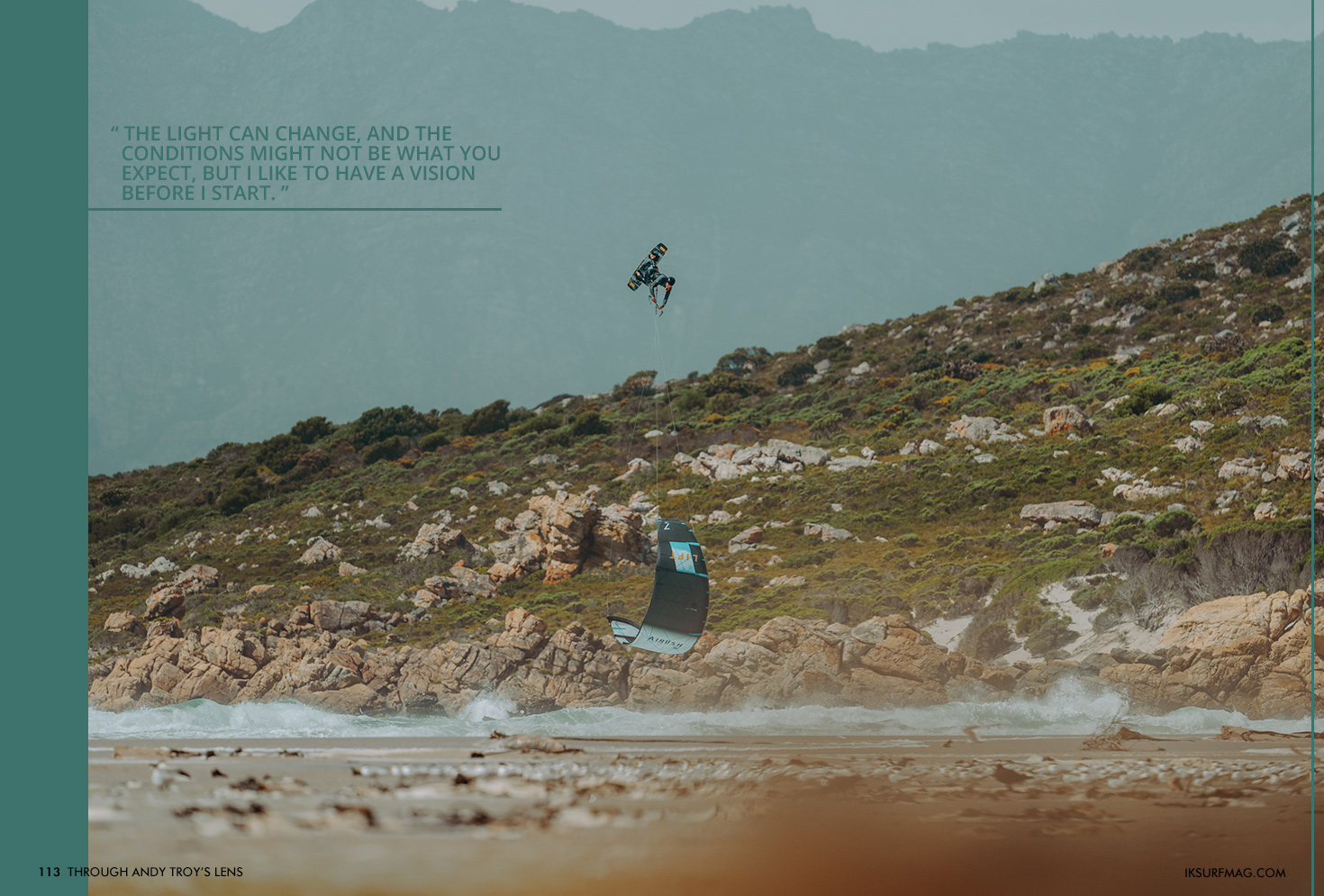
There is always some uncertainty when shooting kitesurfing. The light can change, and the conditions might not be what you expect, but I like to have a vision before I start. On most shoots, I try to shape things toward the image I want to capture. Of course, there is always an element of luck involved, like the cover shot of Stig doing a kiteloop with the sheep in the foreground. I had imagined that shot when I was in Achill Island in Ireland, but everything had to line up perfectly. Right after that jump, the sheep wandered off, so we never got a second chance. I enjoy that and the high-risk, high-reward approach to shooting because it makes those moments even more special when they come together.
Where is the most off-the-beaten-path place you’ve travelled to that left you creatively inspired?
For kitesurfing, I really enjoyed Oman, Madagascar, and Los Roques in Venezuela. These are remote places with almost no one around, surrounded by raw nature, where you really have to explore to discover the best spots to shoot.
Every photographer has a “magic shot” burned into their memory. What’s the one image you’ve taken that still gives you goosebumps, and what’s the story behind it?
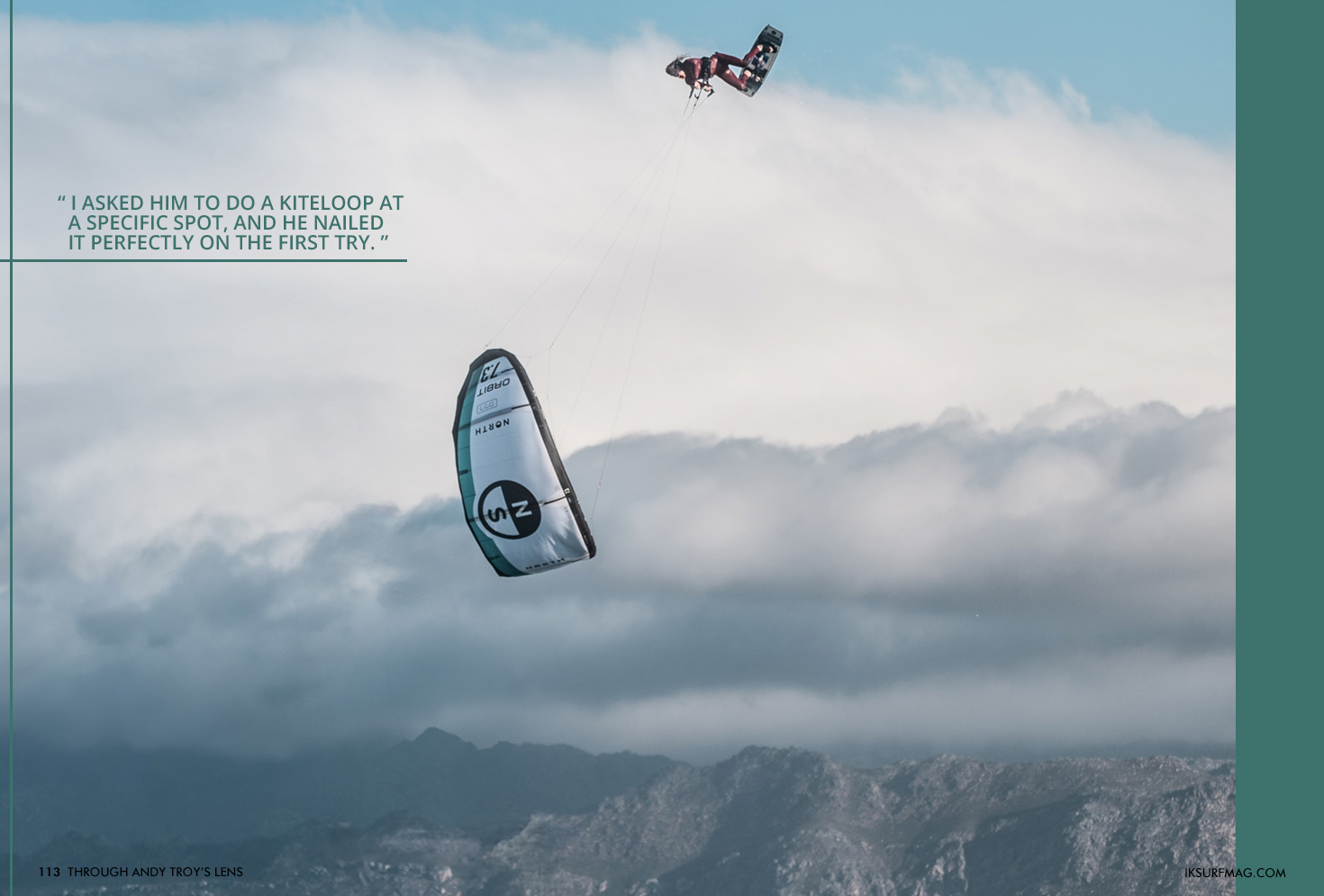
Maybe not the most technical shot, but definitely the one I remember most from last season in Cape Town. It was with Jett on a nuking day at Macassar, with winds hitting 50 to 60 knots, making it almost impossible to even walk on the beach, with things flying around. I had just finished another shoot when I spotted Jett throwing some insane short line late backs. I asked him to do a kiteloop at a specific spot, and he nailed it perfectly on the first try. At the time, it was his highest short line loop ever on 10-meter lines, reaching over 19 meters on Surfr.
Who is your absolutely favourite rider to team up with for a shoot?
There are so many great riders to work with. Kevin Langeree and Stig Hoefnagel are always easy and quick to shoot with, while Lorenzo is incredibly technical. Cohan van Dijk and Jett Bradshaw constantly push each other during the North shoots, and Jason and Luca bring their short line loops to the mix. The girls, like Francesca, Zara, and Nathalie, are so motivated and bring amazing energy to every session. And this year, shooting with Robby Naish in Maui for the Naish shoot was a real highlight. It is hard to pick just one favourite.
Can you tell us about your recent trip to Egypt? How was Kite Fest 2025 from behind the lens? Were there any funny photography mishaps along the way, and who were some of the other photographers you teamed up with during the event?
I’ve been helping out with Kitefest as part of the media team since the very first year. It is entirely different from most kite safaris because it is not just about kiting; it has a more festival vibe. This year, we were incredibly fortunate with the conditions; wind every single day. I worked alongside Nikola Bagarov on video and editing, and Eslam Piko on photography, while I focused mainly on special shots, such as slow-motion video and flash photography. There might even be a few funny slow-motion crashes coming out soon.
Action sports photography can look glamorous from the outside, but what’s one behind-the-scenes reality that people rarely see?
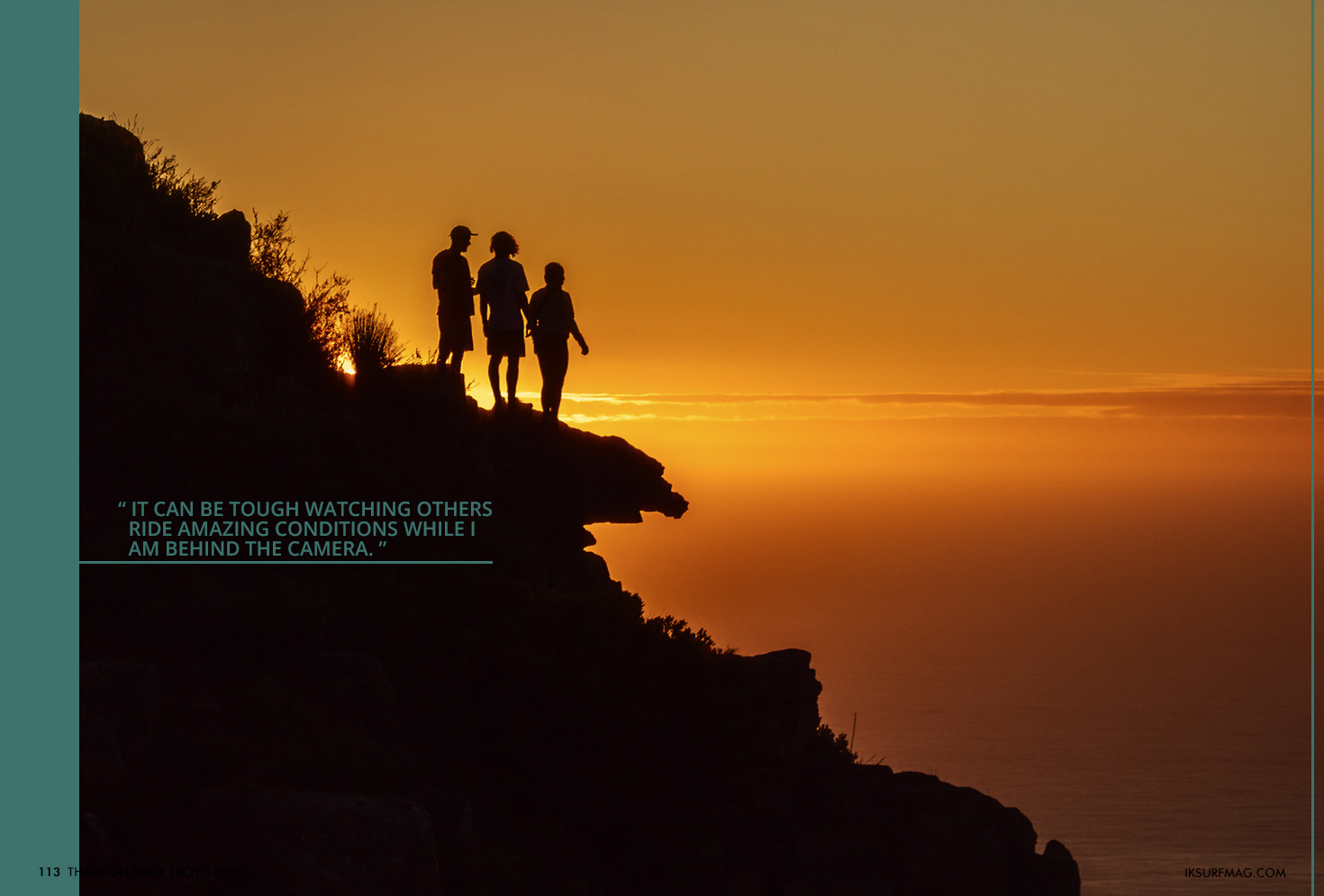
The places I travel are what many people dream of, but they often forget that I spend 8 to 9 months of the year on the road. I am standing on stormy beaches in the rain, in fifty-degree deserts, carrying bags full of heavy equipment while the gear is getting sandblasted on the beaches of Cape Town. And of course, as a kitesurfer myself, it can be tough watching others ride amazing conditions while I am behind the camera. To capture those unique shots, we often have to reach places that are hard to get to or hard to ride, even if the photos make it look effortless.
Looking ahead, if you could design your dream project with no limits, destination, riders, or style, what would it look like?
I am already working with Stig on some exciting projects, and we have some great ideas that will resonate more with the general public. I have always found that remote and raw locations work best, exploring places few people have ever been. We want to focus on tricks and actions that are easy for non-kiters to appreciate, with a small crew to keep things simple and efficient. Hopefully, you will see the results next year.
Great, thanks, Andy!
Thank you, Jen!
By IKSURFMAG
