
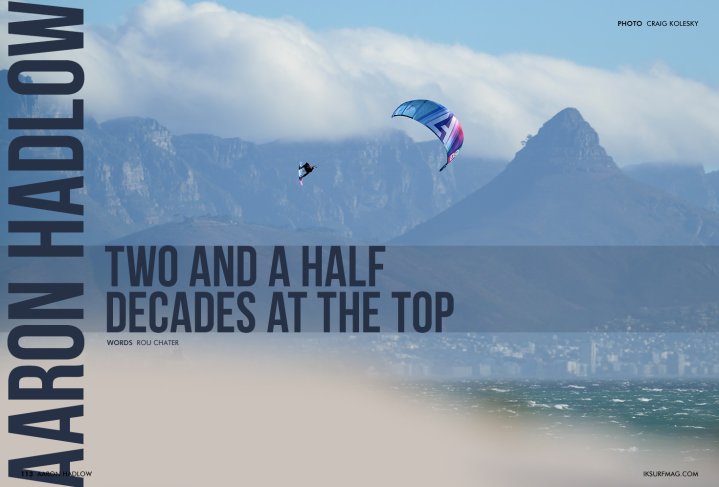
Aaron Hadlow: Two and a Half Decades at the Top
Issue 113 / Sun 2nd Nov, 2025
Few names in kiteboarding command the same respect as Aaron Hadlow. A five-time World Champion, two-time King of the Air winner, and one of the sport’s defining figures, Aaron has been part of kiteboarding’s story since the very beginning. Over the years, Rou Chater and he have crossed paths at beaches, competitions, and photoshoots all over the world, and his passion for the sport has never faded. In this feature, we rewind to where it all began: from those early Cornish days to the world stage, tracing the evolution of a rider who helped shape modern kiteboarding.
Cornwall Beginnings
“It must have been around 1998,” Aaron recalls, thinking back to when he first saw a kite. “It was through my dad, really. He was deep into windsurfing at the time. We lived in Cornwall, and our local beach was Gwithian, a place anyone in the UK wind or surf scene probably knows.”
Aaron’s dad was part of that pioneering group of windsurfers who couldn’t resist the pull of this strange new sport. “He’d come home with a Ram Air kite full of sand, having been dragged up the beach,” Aaron laughs. “Eventually, I started flying his kites in light winds. When the Wipika Classic came out, the first inflatable, it suddenly felt safe. I must have been about ten years old.”
Those early sessions were as raw as they come. Gwithian isn’t exactly the easiest spot to learn, with cold Atlantic winds and rolling surf. But that wild Cornish environment shaped him. “The conditions were always changing: the wind, the tides, the water state. You had to adapt constantly, and that adaptability became one of my biggest strengths in competition.”
From the Estuary to the World
Aaron’s first competition came soon after. “It was in Weymouth. Back then, the BKSA didn’t even have a junior division; they literally made one up for me on the day!”
That improvised start kicked off a whirlwind few years. “I worked my way up through the ranks: junior, amateur, then pro. By the time I was twelve or thirteen, I was already competing internationally. It all happened fast, a blur, really, but my clearest memories start around 2004 when I won my first world title.”
He never did clinch a UK Championship, something he still finds amusing. “By the time I got to that level, my mindset was already international. I was chasing world titles. But the British scene was amazing; riders like Sam Light and Lewis Crathern came through that same pathway.”
The Flexifoil Years
Before the global spotlight, there were small beginnings, borrowed kites, snapped lines, and local sponsors. “My first proper deal was with Flexifoil,” Aaron says. “Before that, I’d get small discounts from Wipika through West Country Watersports. Pete Stevens helped us out loads.”
“Jason Furness from Flexifoil scouted me, got me on the team, and we started developing kites together. He later helped me land Red Bull and clothing sponsors, and he became like an older brother. We still talk today.”
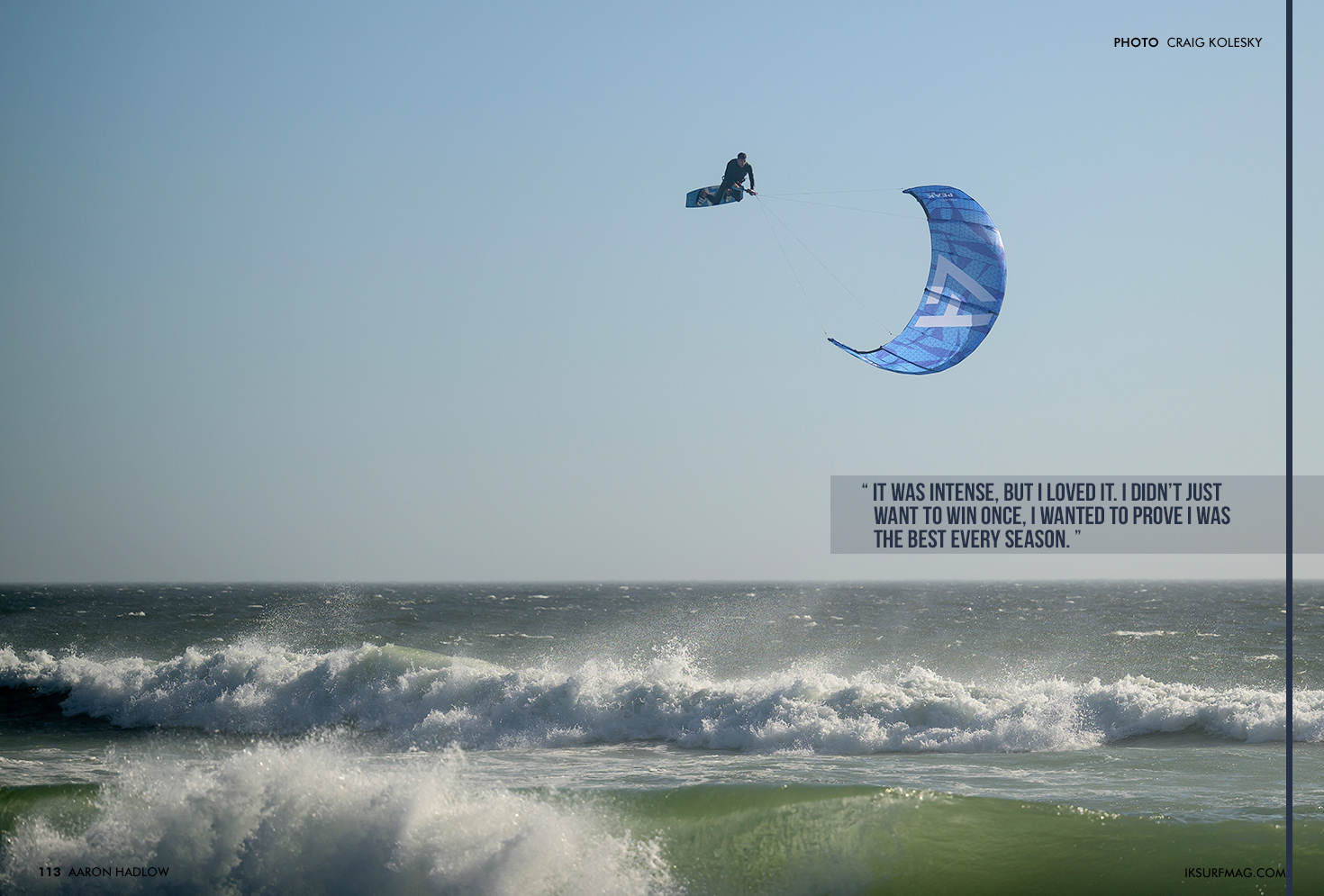
From there, things snowballed. Ten or more events a year on the PKRA tour, constant travel, and relentless competition. “It was intense, but I loved it. I didn’t just want to win once, I wanted to prove I was the best every season.”
That drive carried him through one of kiteboarding’s most competitive eras. The PKRA tour back then was a grind, long travel days, constantly changing conditions, and no safety net. “It was the best education possible,” he says. “You learned to read people, to manage pressure, and to find consistency when everything around you was chaos.”
The Art of Reinvention
After dominating freestyle, Aaron’s focus shifted toward creative projects. “Andy Gordon and I met in Australia and started filming without any expectations. Six months later, he sent me an edit that blew my mind. That’s when we really started pushing production, using helicopters, cranes, and multiple cameras. This was before drones, and the results still hold up today.”
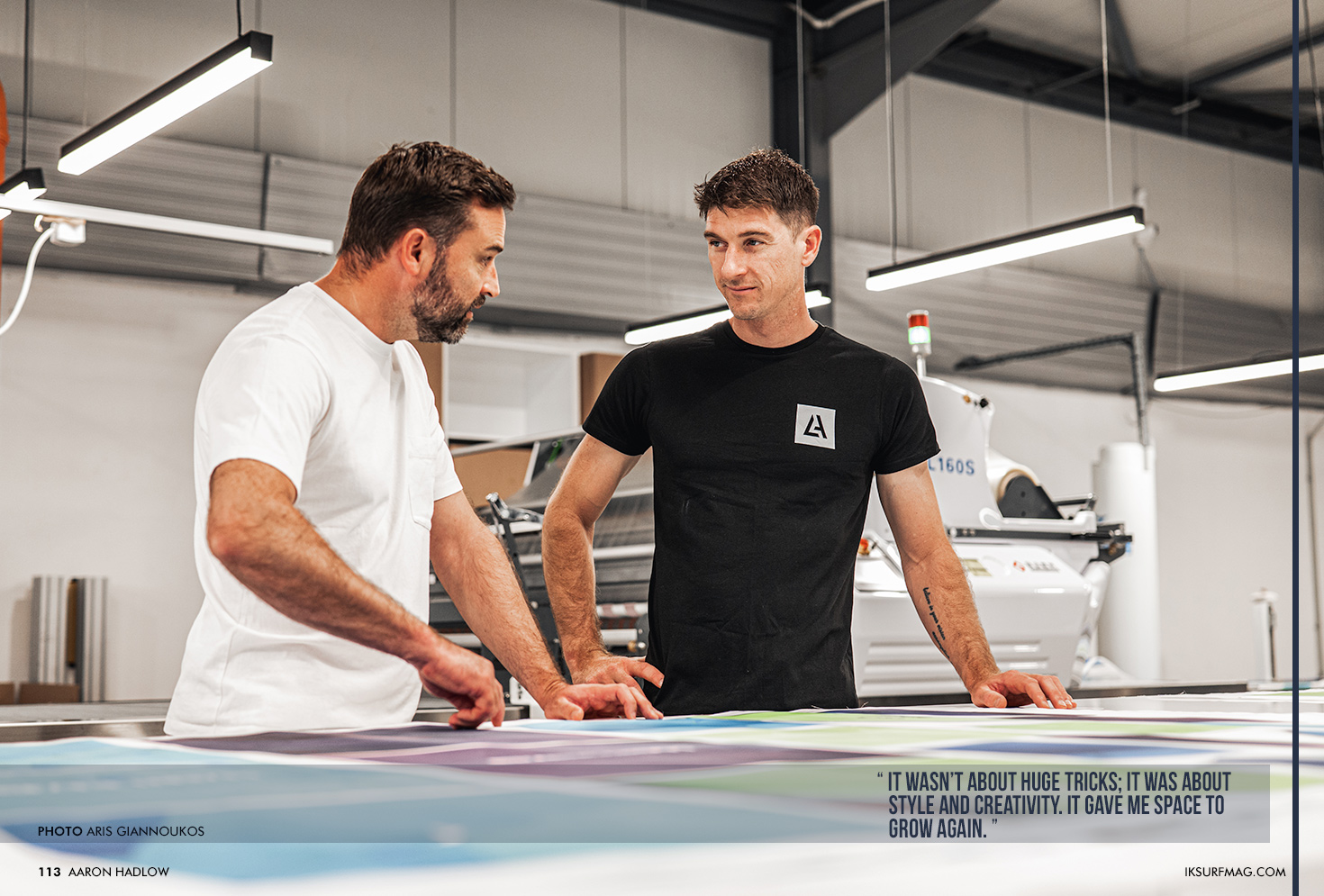
Then came park riding and the Triple S events; a chance to reset and rediscover the sport. “It wasn’t about huge tricks; it was about style and creativity. It gave me space to grow again.”
And when Big Air came back into focus, Aaron was right there. “Ruben and I were already looping in Cape Town before King of the Air returned. Big Air gave me a way to keep pushing without the same level of freestyle impact. I won King of the Air twice and had a few podium finishes that extended my career and kept the fire alive.”
A Longterm Collaboration
Throughout that evolution, one constant thread has been Ralf Grösel, one of the sport’s most respected kite designers and a long-time collaborator. “I met Ralf during my North Kiteboarding years,” Aaron says. “From the first time we worked together, there was a real connection. He’s an engineer, I’m a rider, but we both obsess over how things feel in the air. That mix of precision and intuition has always clicked.”
Their partnership helped produce some of the most iconic kites of the modern era, designs that balanced performance and predictability, setting new benchmarks. “Working with Ralf taught me so much about design,” Aaron explains. “I’d give him feedback on a feeling or behaviour, and he’d translate that into measurable design changes. It was a proper back-and-forth, the kind of relationship every rider dreams of having with a designer.”
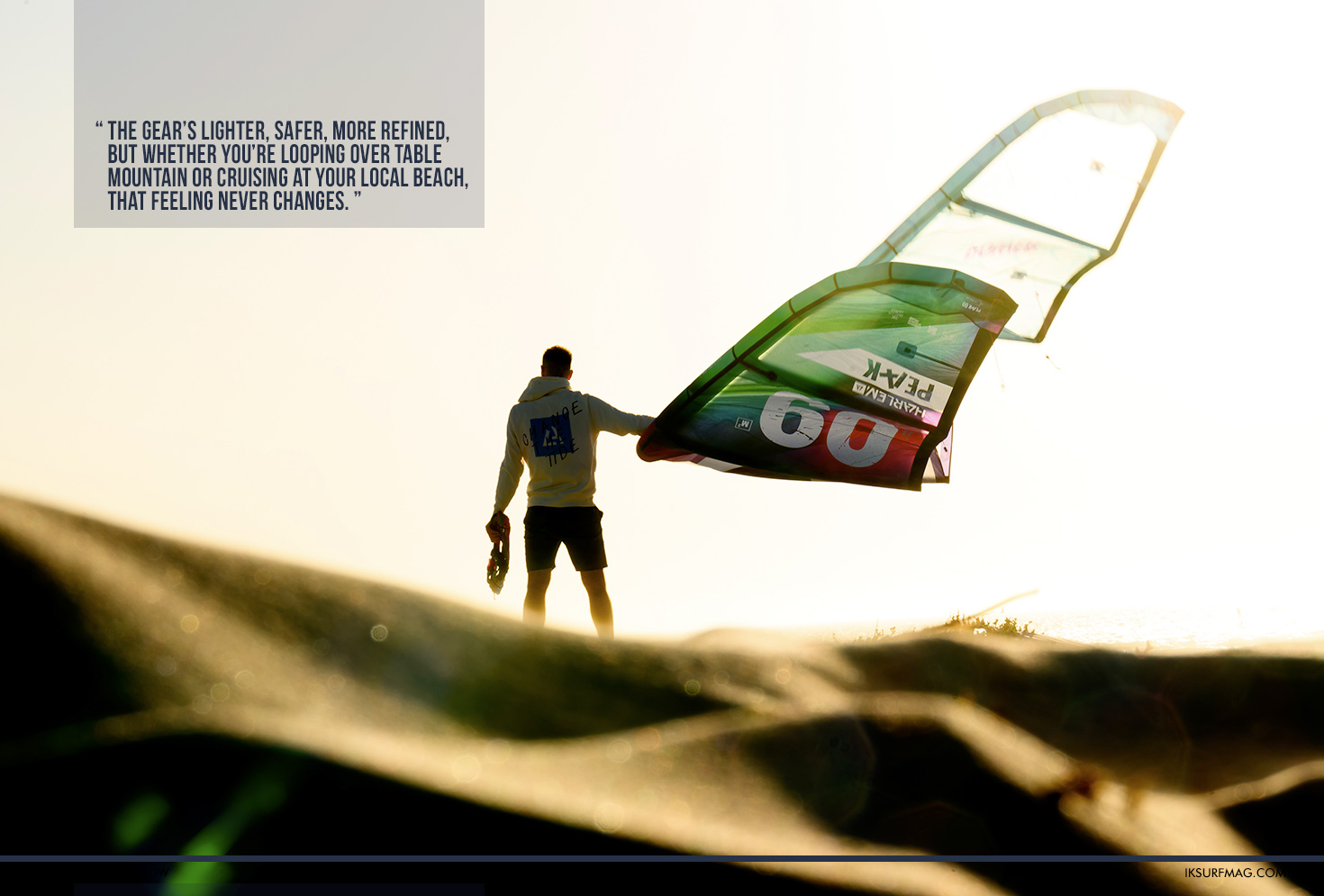
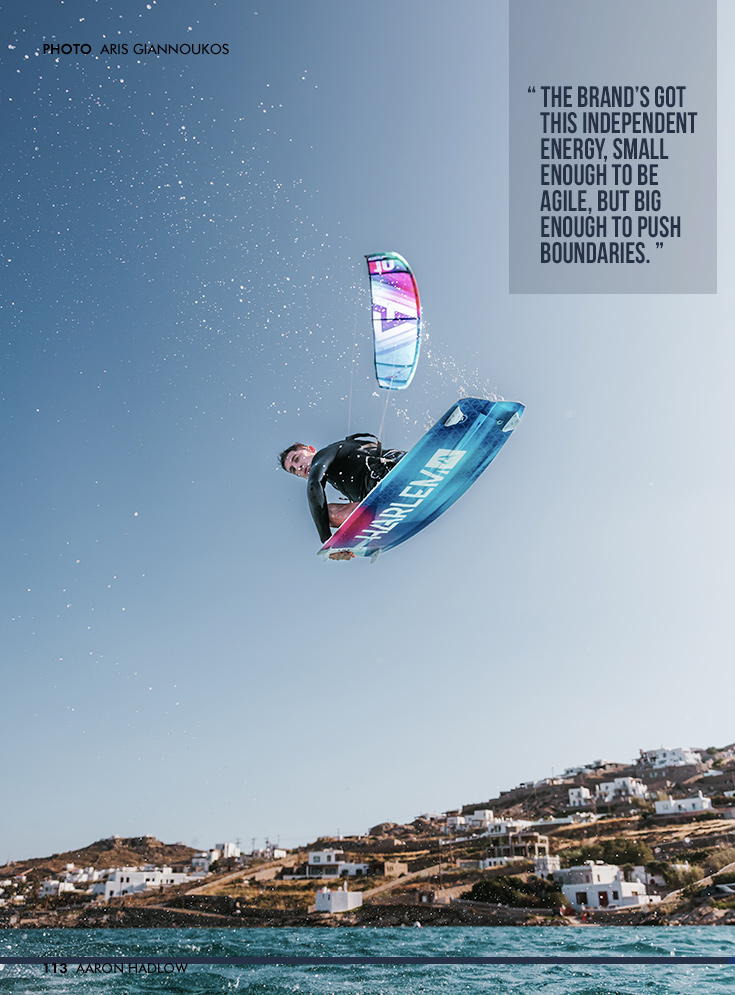
That shared understanding has carried through into Aaron’s current role with Harlem Kitesurfing, where Ralf now leads the design program. “When Ralf joined Harlem, it felt natural to reconnect. The brand’s got this independent energy, small enough to be agile, but big enough to push boundaries. I loved that. It reminded me of the early days, when innovation came from passion rather than process.”
Aaron’s role at Harlem isn’t just about lending his name to a kite. He’s actively involved in testing, development, and shaping the brand’s performance direction. “We’re not just tweaking things for the sake of it. Every session, every prototype, is about refining how the kite feels; the feedback through the lines, the lift, the recovery, all of it. It’s that same obsession with the details that’s driven me since I was a kid.”
He speaks with genuine enthusiasm about the collaboration. “Ralf’s designs have always had soul; they’re engineered, but they also have that magic you can’t quite quantify. To be part of that process again, helping to create kites that push the sport forward, feels amazing. It’s a full circle, really, from learning on my dad’s gear in Cornwall to helping shape what the next generation will ride.”
Still Sending It
Now, more than 25 years since those first sessions at Gwithian, Aaron remains one of kiteboarding’s most respected voices. “The sport’s evolved massively, but the essence is still the same,” he says. “Everyone’s chasing that feeling of freedom. The gear’s lighter, safer, more refined, but whether you’re looping over Table Mountain or cruising at your local beach, that feeling never changes.”
And he’s not done yet. “It’s been an incredible ride, full of learning and fun. I’m still as passionate as ever,” he grins. “Who knows, maybe I’ll still be out there in another 25 years.
By IKSURFMAG
