

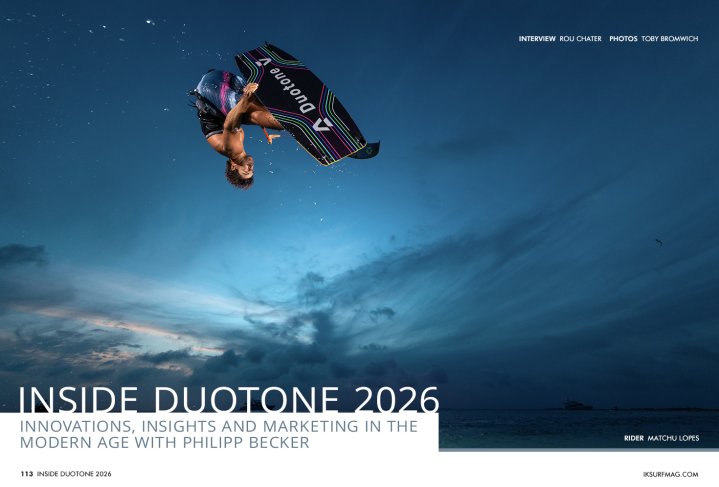
Inside Duotone 2026, Innovations, Insights And Marketing In The Modern Age with Philipp Becker
Issue 113 / Sun 2nd Nov, 2025
Behind the Duotone brand is Philipp Becker, the brand’s Marketing and Communications Manager, who’s been part of the ride for 15 years. As the new gear hits stores, we caught up with him to chat about Young Blood, D/LAB, and how Duotone keeps pushing the sport forward.
If you have followed kiteboarding for any length of time, you have felt the ripples from Duotone’s marketing engine. At the centre of that machine is Philipp Becker, International Communications and Marketing Manager, who has been with Boards and More through the North to Duotone era for roughly 15 years. He has seen social media platforms rise and fragment, watched team riders grow from groms to world champions, and helped guide some of the sport’s most ambitious product launches from first sketch to shop floor.
We caught up with Philipp as Duotone’s latest gear hits stores to talk about everything from the Young Blood program to DLAB materials and why “not changing for change’s sake” is a real product strategy.
From One Facebook Page to a Thousand Touchpoints
“When I launched the first Facebook channel, it was just Facebook,” Philipp says. Those days are gone. Modern brand storytelling now spans product pages, short videos, films, pro centres, the academy app, sustainability projects, and youth development. “Everything is faster. Attention spans are short, but we still need to communicate real information, not just TikTok snippets.”
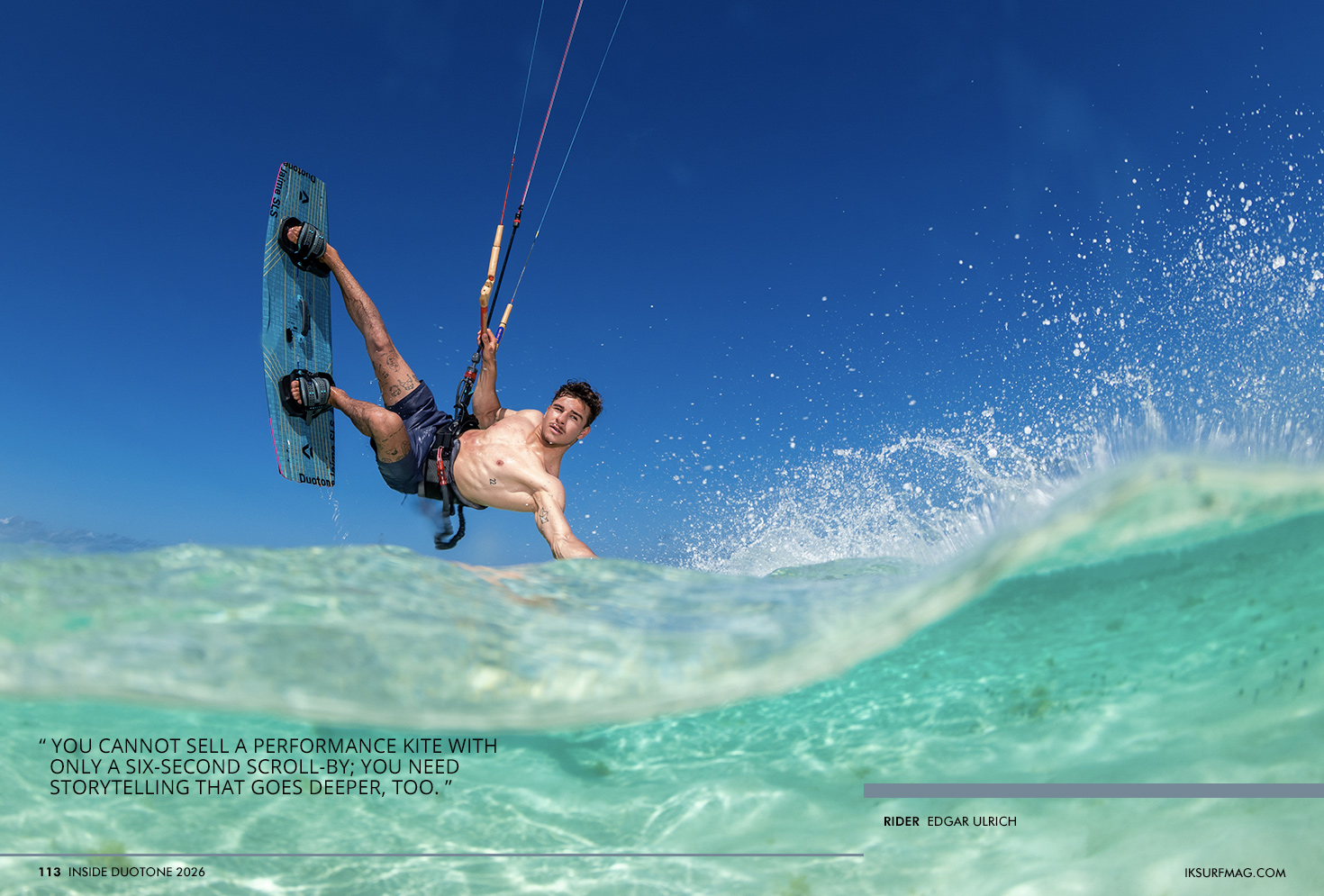
The team has grown with the times, bringing together a larger in-house crew and a close circle of longtime collaborators, including photographer Toby Bromwich and filmmaker Carlos Guzman. The goal is consistency across all platforms. You cannot sell a performance kite with only a six-second scroll-by; you need storytelling that goes deeper, too.
Building the Next Generation: Young Blood Reimagined
Duotone’s Young Blood initiative has existed for two decades, but has evolved from a fun week on the water into a structured pathway. Camps are now international and national, filled with sessions on mindset, athlete professionalism, editing, content creation, and how to be valuable to sponsors.
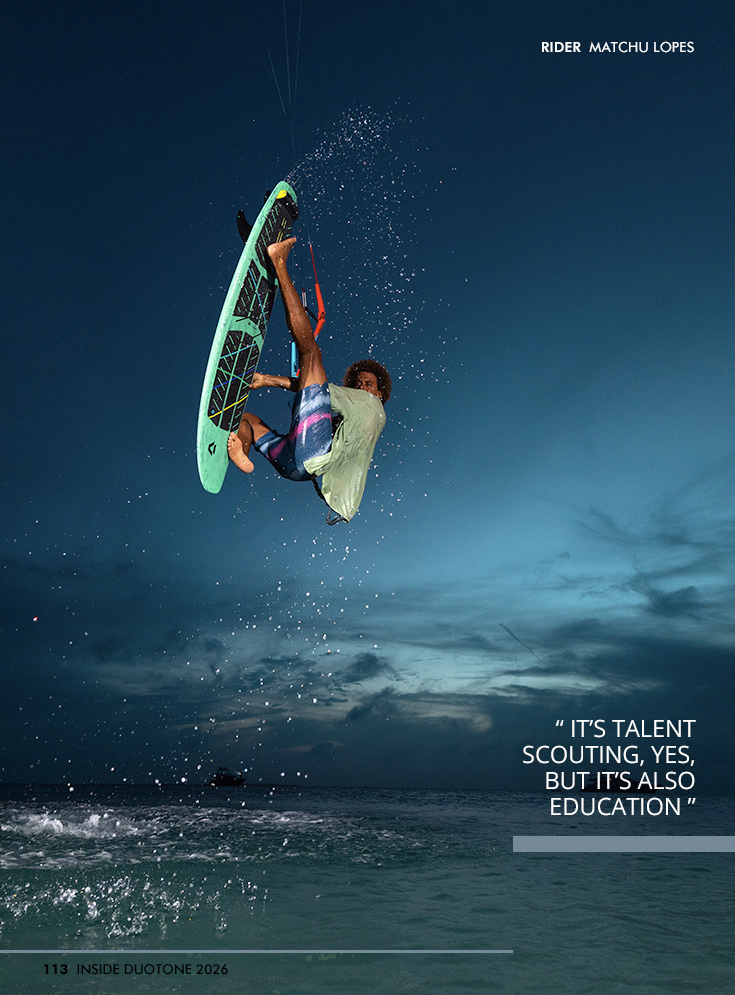
“It’s talent scouting, yes, but it’s also education,” Philipp explains. Porsche supports the program with guest mentors, including sports psychologists who typically work with racing drivers and non-water sports creators who teach social media skills. Riders like Andrea Principi and Lorenzo Casati came through Young Blood before becoming world champions, and alums often return to mentor.
One standout moment came during the Youth Worlds in Tarifa when Philipp hosted a short Q&A with athletes Mathea, Mikaili, and Liam. Two and a half hours later, not one kid had looked at their phone. “They were hanging on every word,” he says.
The Hardest Part of the Job: Content, Content, Content
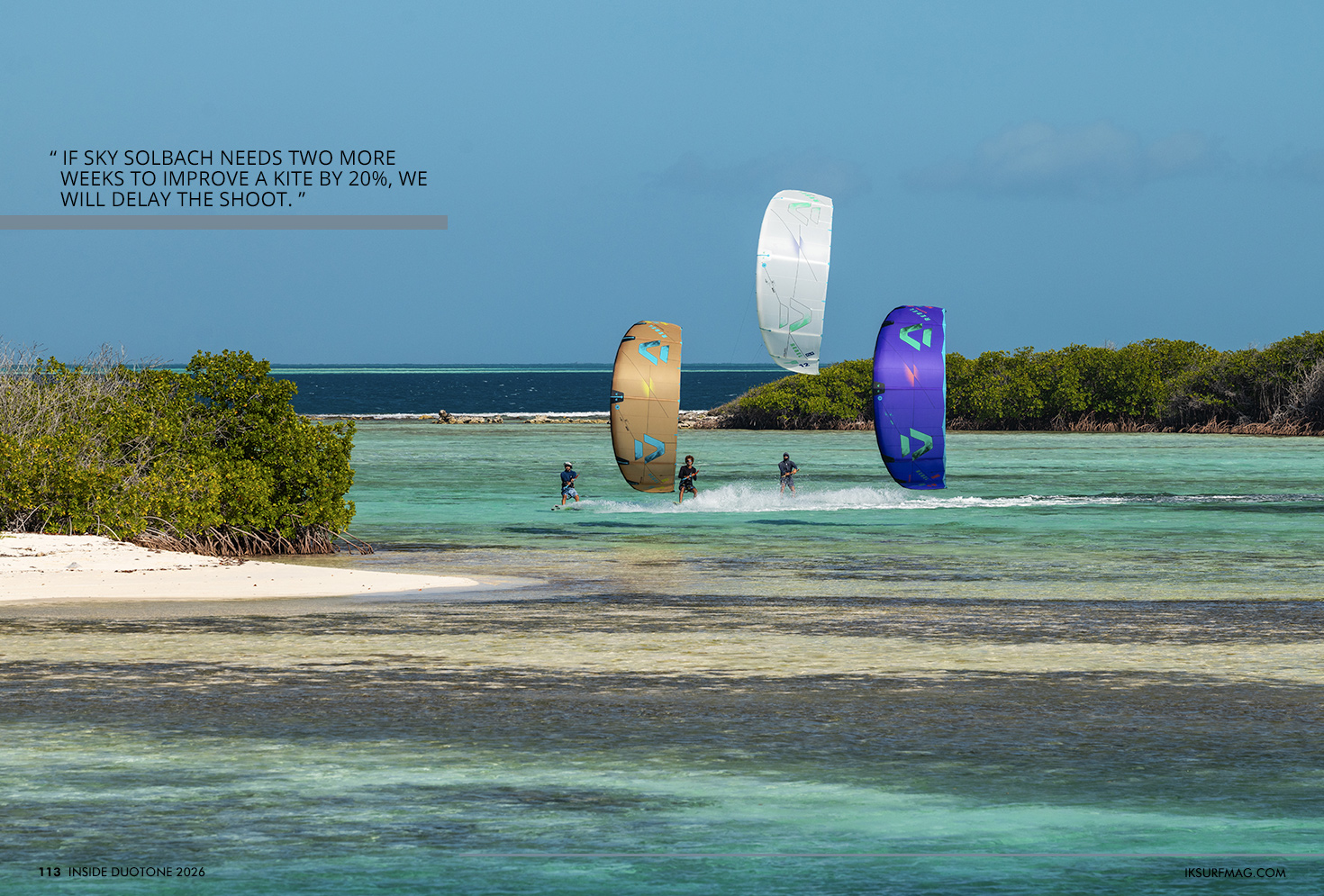
Lining up photo and video production each year is “probably the hardest challenge,” Philipp admits. Kites and boards must be finalised, riders and creatives booked, weather windows targeted, and logistics sorted. Then you just hope for the right wind and waves. “If Sky Solbach needs two more weeks to improve a kite by 20%, we will delay the shoot. We change flights. That’s the priority.”
Duotone relies on proven spots that balance reliability and variety. Venezuela has been a recent favourite for its turquoise water and steady wind, while Fuerteventura offers easy logistics and consistent conditions. Wave shoots still chase dream setups in places like Mauritius, but the focus is always on delivering clean, realistic product content.
Gear often arrives as finished pre-production, hand-carried from Munich to avoid customs issues. It is not glamorous, just a lot of lists, long days, and late nights.
Team Building in the Big Air Era
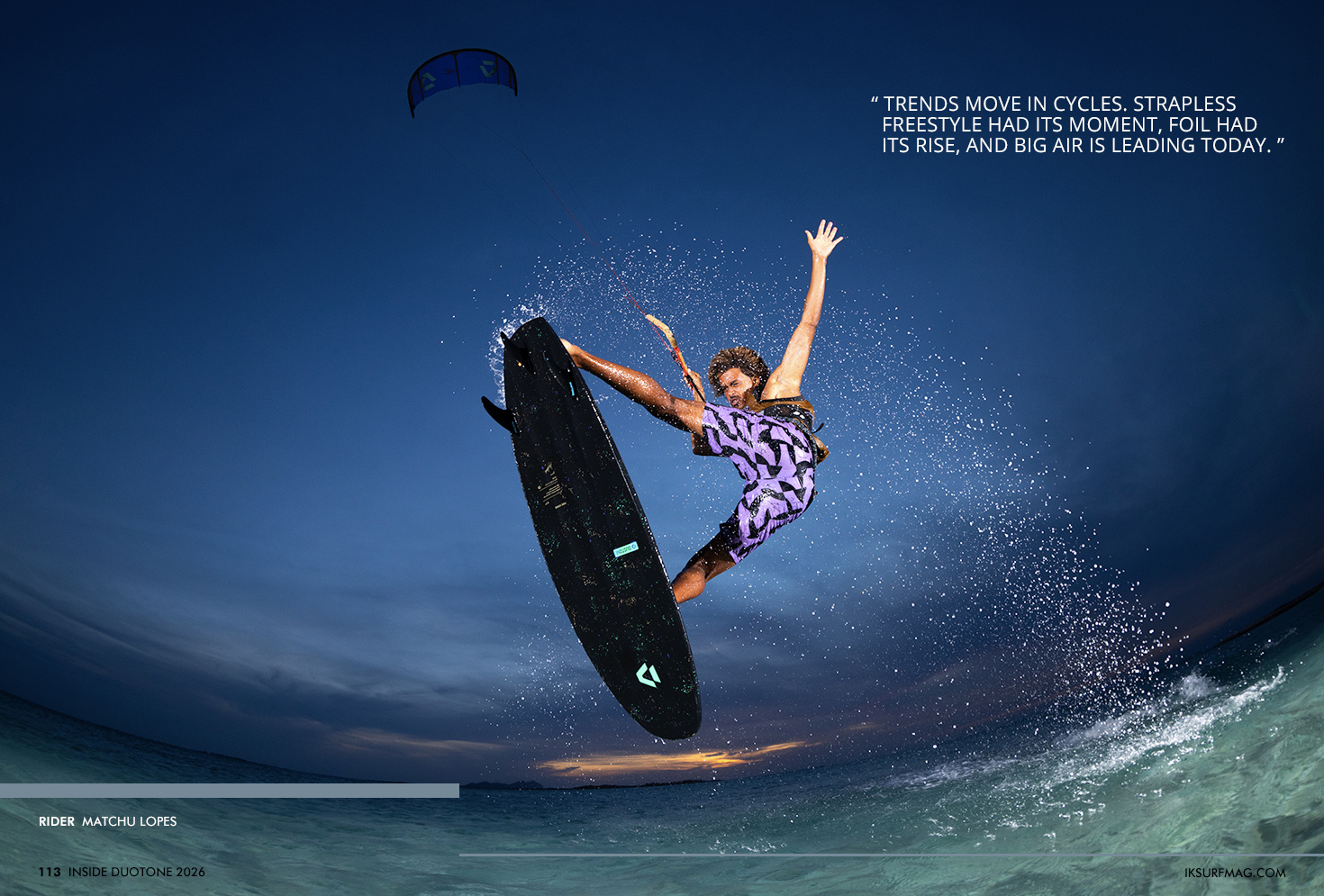
Big air dominates attention and sales right now, but Duotone avoids simply buying champions. The focus is on discovering talent early through Young Blood and national programs and supporting riders as they grow. Philipp points out that waves and foiling remain key parts of Duotone’s DNA. “We are pushing those categories too. The Neo comes in Original, SLS, and DLAB for a reason,” he says. Trends move in cycles. Strapless freestyle had its moment, foil had its rise, and big air is leading today. Duotone’s lineup balances all of them.
Why Three Constructions
Duotone’s approach to Original, SLS, and DLAB balances performance needs and accessibility. Original offers proven performance at the best price. SLS gives a lighter, stiffer feel and more durability. DLAB, made with advanced materials like Aluula, pushes top-end performance. “We started DLAB to show what’s possible,” Philipp says. “We never expected demand to explode like it did.”
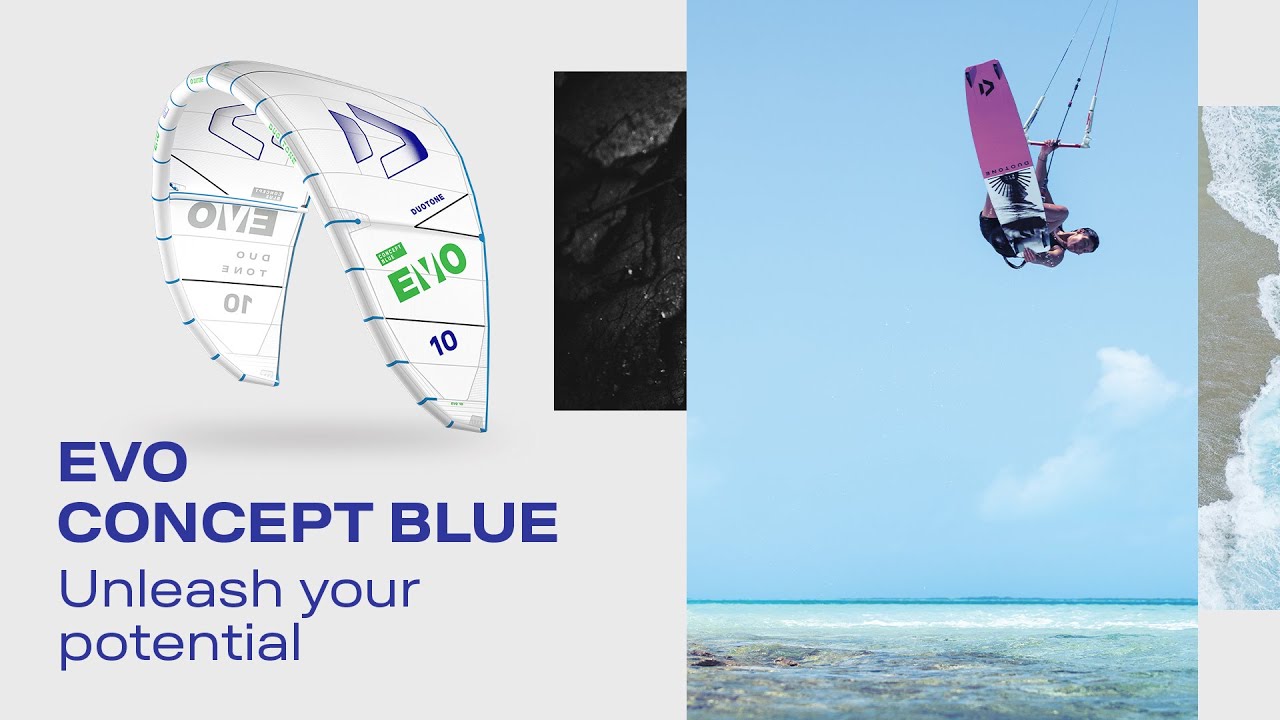
Concept Blue offers an eco-friendly option where performance stays the same while the environmental footprint is reduced through undyed canopy fabric, recycled plastics, and bio-based bladders. “Around 30% of buyers choose Concept Blue when it’s available,” he says.
Inside the Materials Pipeline
Duotone’s lab in Munich constantly tests new fabrics and runs long-term durability studies. Aluula supply can be a challenge, and the material itself has evolved. The brand works closely with suppliers, as it once did with Teijin, to fine-tune materials for both performance and production. “There are even more exotic materials out there,” Philipp says, “but we don’t want kites to become unaffordable.”
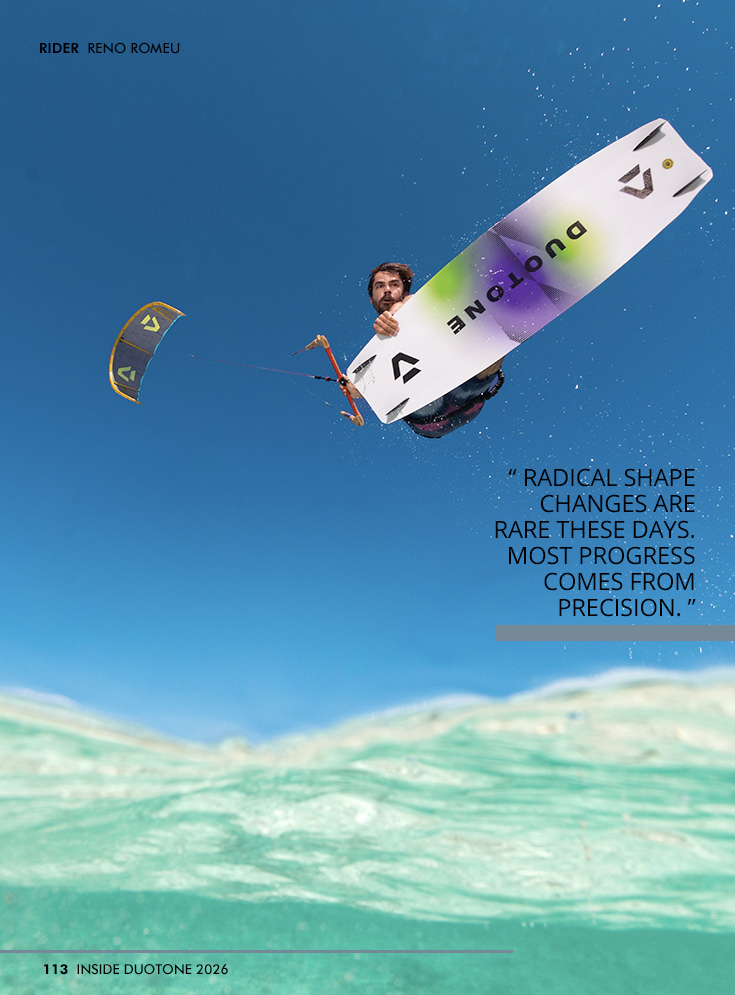
Beyond fabric, the main developments now come from leading-edge design, pressure, and structural refinement. Radical shape changes are rare these days. Most progress comes from precision.
What’s New Right Now
This year’s highlights include the Rebel DLAB and Juice DLAB. The Rebel DLAB focuses on accessible top-end big-air performance with a five-strut frame and smooth hangtime, while the Juice DLAB delivers true light-wind fun with fast, agile handling and plenty of pop even in single-digit winds.
Neo development continues under Sky Solbach, refining the kite’s signature drift and reactive steering across all constructions.
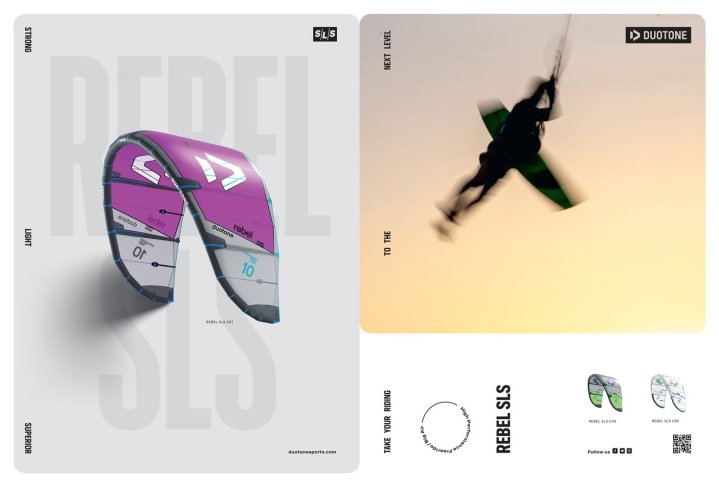
Evo versus Rebel remains a common question. The Evo, a three-strut kite, feels faster and more playful, especially in smaller sizes for looping. The Rebel, with five struts, is stiffer and steadier in gusts, built for big jumps and long hangtime. Many team riders use both depending on the conditions.
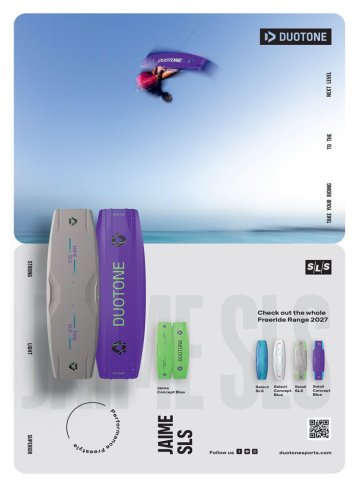
On the twin-tip side, Philipp suggests most riders chasing an upgrade should look at the Jaime or Jaime SLS instead of the whole Team Series Big Air board. “Grip is similar, comfort and fun are higher, and your knees will thank you,” he says.
Don’t Guess. Go Test
Duotone puts a big focus on demos. Distribution teams run beach events across Europe and beyond, offering multiple constructions and sizes to test. The Try It Now program through local shops makes it easy to borrow gear. “Try it for five minutes or an hour. If you don’t like it, don’t buy it,” Philipp says. “But most people feel the difference.”
The Constant Thread: Make It Better or Leave It Alone
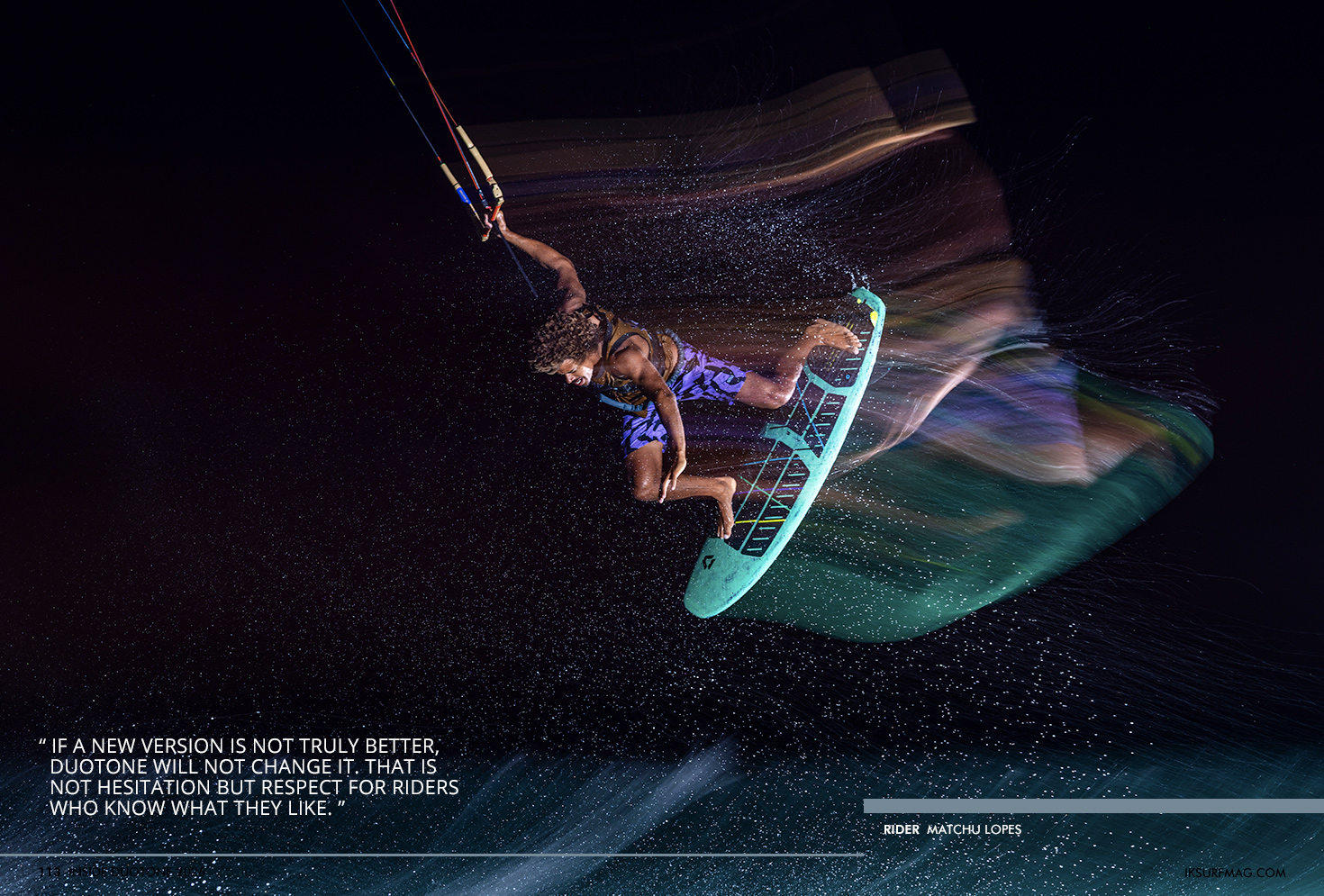
Philipp’s key philosophy is simple. If a new version is not truly better, Duotone will not change it. That is not hesitation but respect for riders who know what they like. When the Rebels’ pulleys were removed, some riders needed time to adjust, but the payoff in handling made sense for modern big air.
That mindset, innovate when it counts, support the next generation, and keep standards high, explains why Duotone continues to lead. As the 2026 gear lands, there is plenty of substance behind every clip you scroll past.
Videos

By IKSURFMAG
