

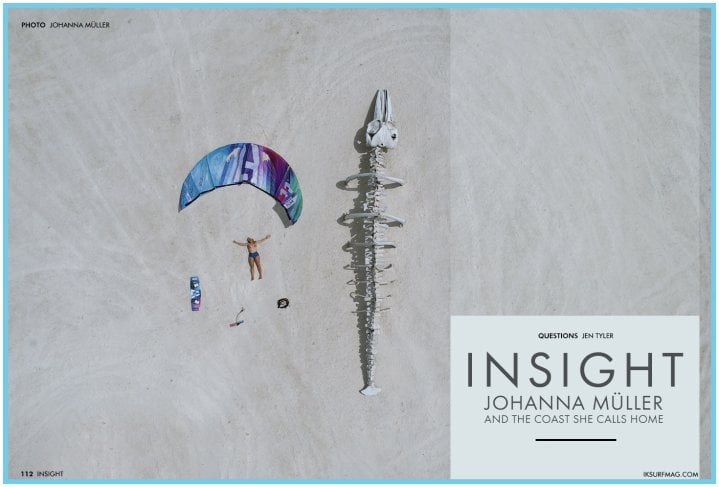
Insight: Johanna Müller & The Coast She Calls Home
Issue 112 / Tue 19th Aug, 2025
Johanna Müller grew up running barefoot through wadis, sailing with her dad, and soaking up the wild beauty of Oman’s coastline. These days, she’s riding the Khareef winds, running her own kite school, and inspiring others to follow their passion. We caught up with Jo to hear all about life in Oman, how she got into kiteboarding, and what it’s like building a business by the beach in the Middle East!
Jo! Great to chat with you, and we can’t wait to hear your exciting story! Can you tell us a bit about where you grew up and what life in Oman was like for you as a kid? What first brought your family to the Middle East?
Growing up in Oman in the ‘90s and early 2000s was a true adventure. My dad was posted to Oman in 1996. Although I was born a year later in Austria, my mum flew me back to Oman just two weeks after I was born, where we lived with my dad and two older brothers.
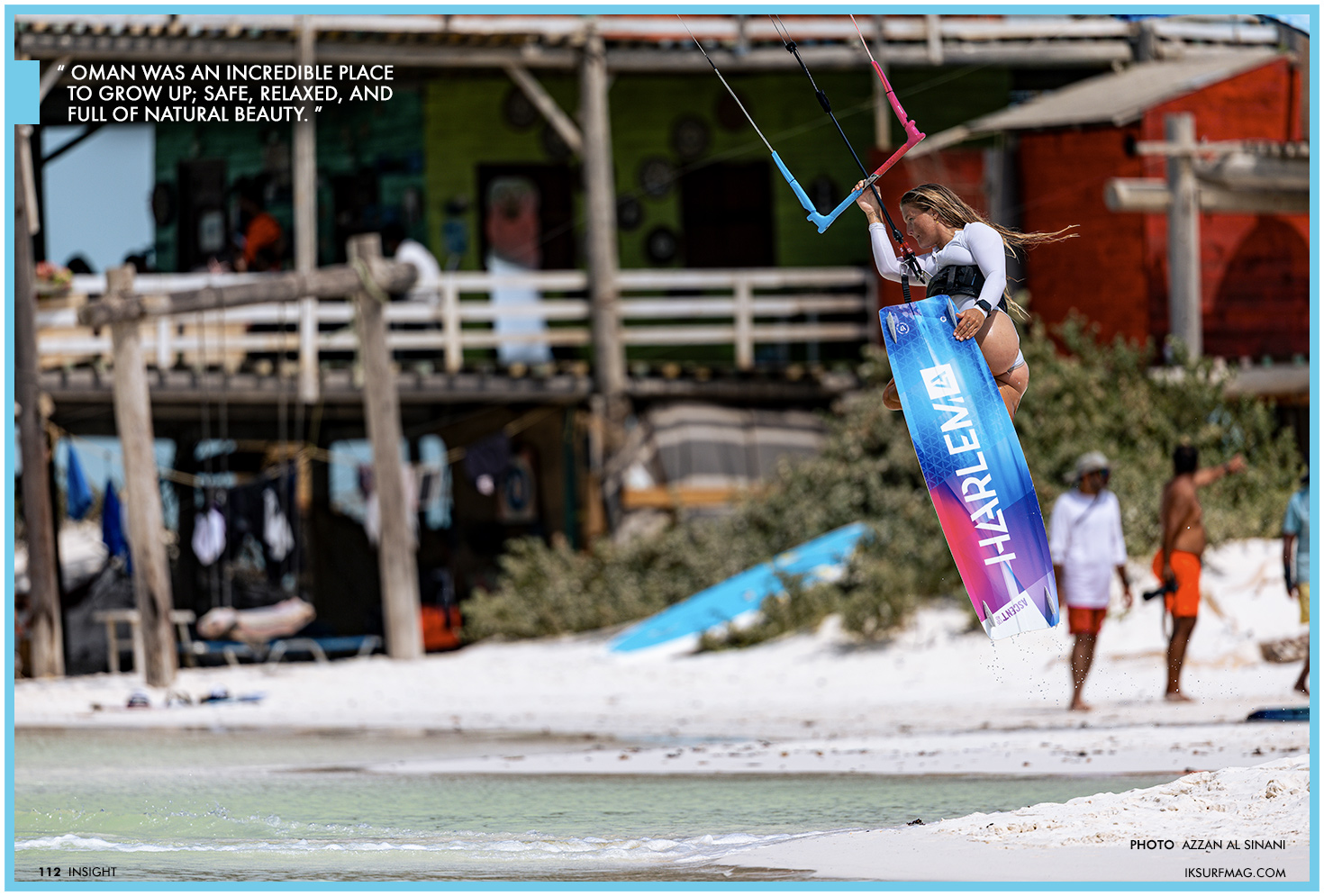
Oman was an incredible place to grow up; safe, relaxed, and full of natural beauty. It was such a wild and wonderful childhood. Our neighbourhood was just five minutes from the beach and surrounded by mountains and wadis (canyons), with trees and boulders to climb; the perfect natural playground for kids. We spent most of our childhood outdoors, barefoot, running or skateboarding through the neighbourhoods for hours.
It was also a true cultural melting pot. Every neighbour was from a different country, and we grew up surrounded by both locals and expats. Watching Muscat grow over the years was fascinating. Back then, there was just one shopping mall about an hour away, and a desert stretch that felt endless to get there. Things have changed immensely!
Birthday parties were held in wadis, on hidden beaches, or among the dunes. Our lives revolved around the outdoors. My dad, an avid Hobie Cat sailor who competes internationally, introduced me to sailing at a very young age. My parents also taught me to ski when I was three on our visits back to Austria. I looked up to my brothers immensely and wanted to do everything they did, from motocross to skateboarding. So, I quickly switched from skis to snowboards, skateboards, and wakeboards—basically, all the board sports. The next one to come along for all of us was kitesurfing.
When and how did you first get introduced to kiteboarding?
I was about 15 or 16 when my dad first suggested we try kiteboarding, after years of sailing and other sports. At the time, the sport was almost unheard of in Oman. However, we gave it a shot with barely any wind; we would fly 15 to 19 meter kites without much luck.
It wasn’t until I was 20 and back in Oman visiting my parents that we gave it another go. My Dad and I went on a camping trip, and that’s when I met Paris, who was out kiteboarding and jumping 10 meters high. That was the first time I truly saw what kitesurfing could be; I was instantly convinced. I had to learn this sport. The rest is history; kiting became my whole focus from then onwards. I played football for 12 years, and then kitesurfing took over completely.
What’s the kiteboarding season like in Oman? When would you recommend us to visit?
While we run the kitesurfing school all year round, the high season is from May to September in the mid-to-southern regions of the country- about five hours south of Muscat. The strongest months are June, July and August, during the Khareef (monsoon) season, when southeast trade winds travel up the coast of Oman, offering excellent conditions between 25-35 knots. It’s the best time to visit Oman for kitesurfing.
If you enjoy hiking and exploring, Oman’s mountain ranges, such as Jebel Shams and Jebel Akhdar, or the lush green landscapes of Salalah, are also spectacular during this time of year.
Can you share your top 3 favourite kite spots in the country?
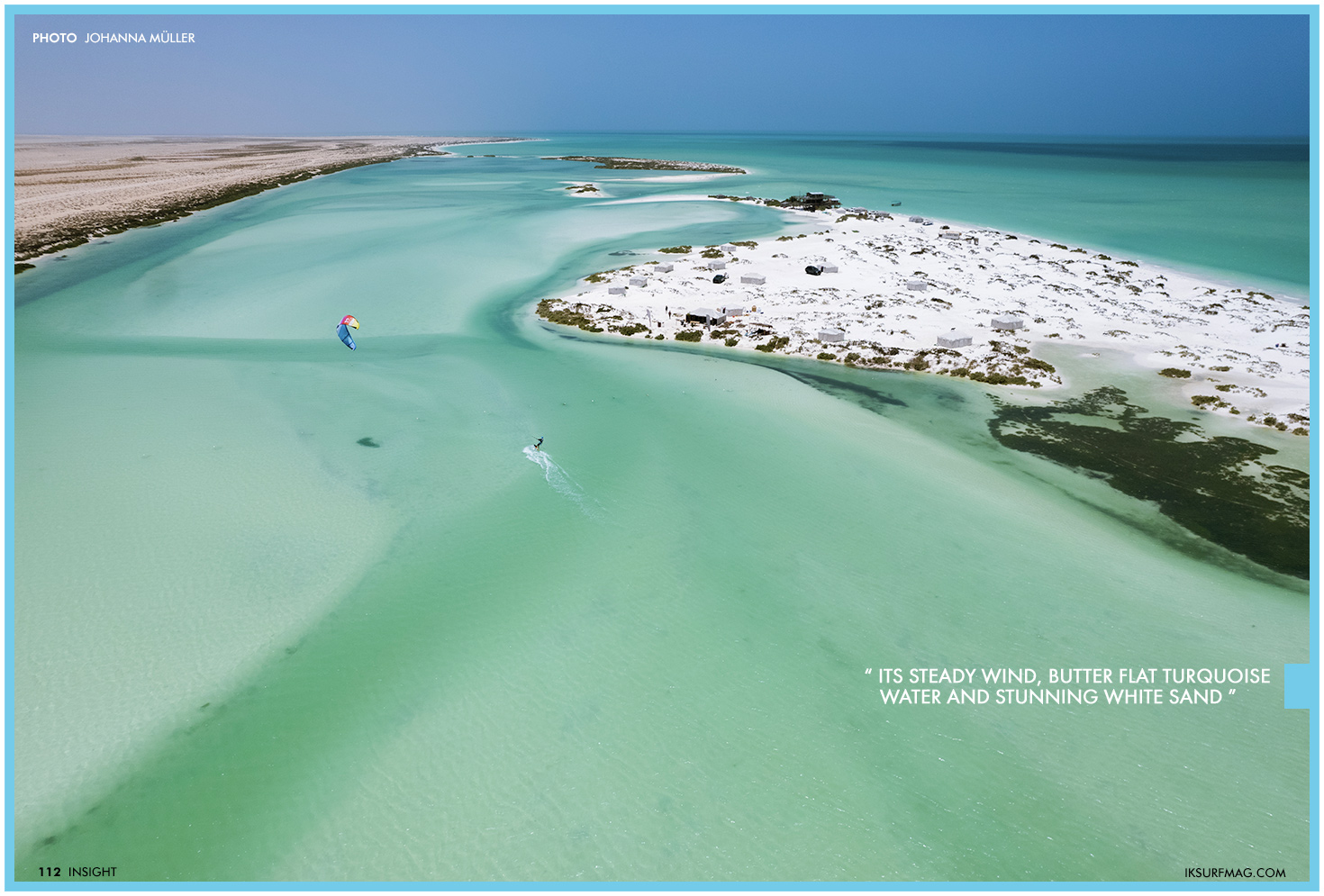
My top 3 favourite kite spots in the country would be Bar Al Hikman lagoon for its steady wind, butter flat turquoise water and stunning white sand, Monkey Bay on Masirah Island for the magic gust that allows fun lofty jumps (both summer spots) and Quriyat, a winter spot with kickers and 20-35 knots about an hour south of Muscat.
What kind of conditions can riders expect during the Khareef season?
The summer kitesurfing season runs from May to September. Wind tends to be lighter (15–25 knots) early and late in the season, peaking at 25–35 knots or even up to 40–45 knots mid season. The wind is consistent and steady, though less dense than in colder regions; however, it can get chilly in the middle of the season. A wetsuit and warm clothing are recommended due to the wind chill.
Bar Al Hikman and Masirah Island’s west coast offer ideal, butter-flat conditions, the perfect take-offs for jumping. If you prefer wave riding, the east coast of Masirah offers phenomenal waves, reaching up to 4 meters. If you drive the coastal road of Oman, around three hours south of Muscat, you can stop for a kite session in Asylah, another hotspot for wave riding.
How would you describe the local culture to someone who’s never visited? Are there any local foods, traditions, or experiences you think every visitor should try or avoid?!
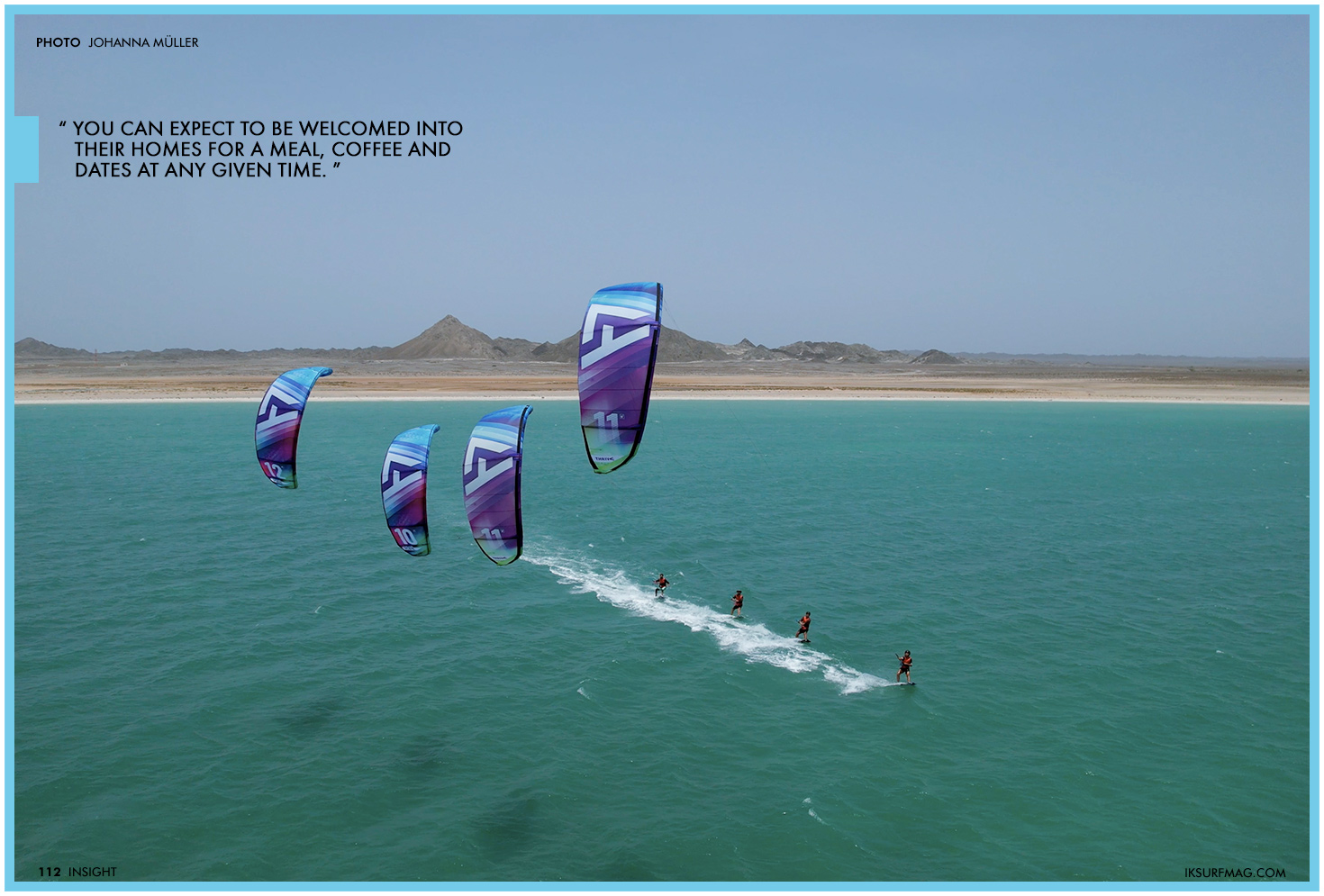
The people of Oman are incredibly friendly, hospitable and kind. You can expect to be welcomed into their homes for a meal, coffee and dates at any given time. If you get stuck in the desert or your car breaks down, the locals will immediately stop to help you, often with a flask of karak chai for all.
In terms of local cuisine, their mishkak (meat kebabs) would be my go-to. They often have roadside food stalls serving fresh mishkak off the grill: lamb, beef, chicken, squid, or a favourite camel mishkak. Shuwa is a lovely traditional dish, slow-cooked lamb, wrapped in banana leaves and left underground for at least 24 hours.
The list of local experiences goes on, from visiting beautiful sweet-water wadis to attending traditional camel races. The camel races offer a truly authentic experience, with locals from all over the country gathering to enter their camels in the race. The local souqs/bazaars, such as the Mutrah Souq or Nizwa Souq, offer an excellent insight into local handicrafts, spices, and livestock.
How’s the nightlife and accommodation scene for kite travellers?
The accommodation scene varies depending on the location. In Bar Al Hikman, for example, the accommodations are basic; there are a couple of beach camps with large canvas tents or wooden bungalows. The nightlife is intimate, there isn’t much signage, and considering everyone is living together on the beach, you get to know people much quicker, have BBQs together, and ‘forget’ about the world outside. It’s a truly unique experience and in my opinion, one of a kind. Disconnecting from the digital world and reconnecting with like minded people and nature, kitesurfing from morning till night on a lagoon right outside your ‘doorstep’. There are not many places left in the world like this.
Masirah Island is more developed. There is a city in the northern part of the island with hotels, guest houses, cafés, restaurants, and even a resort where you can enjoy a drink. It is perhaps the ‘comfier’ option for longer stays.
We’ve seen lots of videos pop from Oman lately. How would you describe the kiteboarding scene in Oman right now?
Over the past decade, Oman’s kitesurfing scene has grown steadily from a handful of kiters to its current state, also thanks to the rise of social media. In the past 3 years, it has bloomed into a proper kitesurfing destination, with kitesurfers and kite professionals travelling from all over the world to enjoy the consistent winds and beautiful landscapes.
I still remember Bar Al Hikman eight years ago; only fishermen and a handful of kitesurfers knew about the spot. For three weeks straight, we didn’t see another car or person. I’d post photos online, and even locals would ask me where the place was. One of the first drone shots we captured ended up on Oman News and quickly spread across social media.
Today, we welcome riders from all over the world. And yet, there’s still so much untouched coastline; vast, open, and uncrowded. It’s bittersweet watching an undiscovered gem slowly get discovered, but it’s also incredibly rewarding to see Oman finally gaining recognition as a world class kitesurfing destination.
Just this week, we wrapped up an amazing coaching clinic in Bar Al Hikman with Harlem teammate, Lorenzo Casati and his family, Renato and Leonardo Casati. It was our second year in a row inviting the Casatis to Oman, and we had a great turnout, nice wind and a lot of progression sessions amongst all the participants. We aim to host clinics more frequently, to further boost the kite scene in Oman and offer something new and exciting each time.
What’s the story behind the name “Khareef”? What inspired you and Paris to launch Khareef Kiteboarding?
After years of kitesurfing together and organising bespoke kite camps, Paris and I started Khareef Kiteboarding, our kite school, in 2021. I was 23 at the time, and although I had several years of experience running others’ kite schools and camps under my belt, it was a big, new chapter for us, and we were over the moon. Since we had been kiteboarding in Oman during the early days and were immersed in the country, its locals, and landscapes, we wanted our kite school’s name to reflect something truly local. We aimed to establish Oman as a hotspot further and place it on the global kitesurfing map.
‘Khareef’ means “autumn” in Arabic, but is used to refer to the summer monsoon season, bringing the fresh and consistent southeast winds up the coast of Oman. This is the best time to kitesurf here. And so, Khareef Kiteboarding was born.
When did you first get sponsored by Harlem, and in what ways have they supported your growth in the sport and your business?
We launched our kite school using gear from a different brand, which unfortunately didn’t hold up well. The kites wore out quickly and weren’t ideal for teaching beginners. In 2022, we were eager to try Harlem gear, especially given the demanding conditions we often face, to see if it would be the right fit for our kite school.
We reached out to the Harlem team and were impressed by how responsive, helpful, and committed they were. We formed a strong bond from the get-go, and from the beginning, it felt like family. The gear was solid, incredibly durable and built to last. After testing one 10m Go kite, we upgraded our entire kite school exclusively with Harlem gear. Many of those kites have lasted 8 seasons.
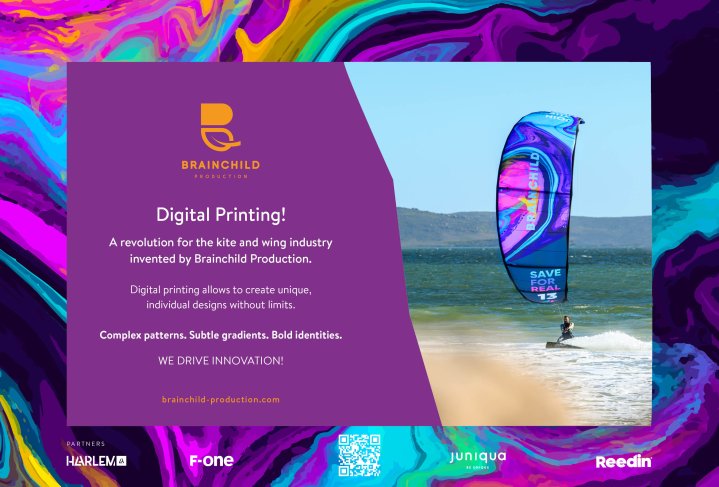
I trained with all the early models, such as the Harlem Go, Light, and Pro, before they launched the Harlem Strike, their new big air kite at the time, which helped me take a further step into the kitelooping scene. Over the years, our connection with the Harlem team has grown, as has our kite school and social media presence. In summer 2023, Victor, Harlem’s team manager, visited us in Bar Al Hikman and Masirah with prototypes of what would become the Harlem Force, the first big air kite developed with Brainchild. I instantly loved it. It was unlike anything I had flown before.
I signed my first full contract with Harlem in 2023 and again in 2025. I value our partnership; their dedication to innovation, performance, and sustainability in kite manufacturing. I trust the gear I ride. Progressing with the Force, Thrive, and Peak has been a joy, and I’m excited for what’s still ahead.
You’re also a graphic and communications designer. How do you balance that with your kiting life? Do you work remotely full-time, or is kiteboarding now your main focus?
I studied graphic and communication design in Vienna and Berlin, and learned to kite properly during a holiday back in Oman. In my final year of university, I started working remotely for a company in Oman. When I graduated in 2019, I moved back to Oman full-time to continue that role as a graphic designer and marketing specialist.
Luckily, my job was quite flexible, and I could work remotely for two months during the summer season. Most of the year, I’d be in the office, and during the summer, I helped Paris run kite camps. We started Khareef Kiteboarding while I was still working full-time, so I’d work weekdays in the office and teach kitesurfing on weekends and holidays with our team.
By the end of 2022, I left that job to focus entirely on the kite school, while still freelancing graphic design projects when I wasn’t on the water as Khareef grew and especially after signing with Harlem. I took on fewer freelance jobs but continued to work with long-term clients during the off season.
Although kitesurfing is now my primary focus, keeping my creative work in the mix brings a nice balance and allows me to fuel both sides of my passion, artistic and athletic. I feel incredibly grateful to be living two of my biggest passions.
Does your creative background influence how you present or market Khareef Kiteboarding?
From the start, I’ve aimed to combine my creative career with my passion for kitesurfing, professionally, for both myself and Khareef Kiteboarding.
My background in design has shaped every aspect of the Khareef brand, from the logo and brand identity to corporate design, web design, merchandise, marketing strategies, campaigns, social media, content creation, and post-production. Building all of this ourselves wasn’t easy, but it was incredibly rewarding and a lot of fun.
In parallel, I’ve applied the same principles to my social media, creating a sort of ‘personal brand’ that complements the visual identity of Khareef Kiteboarding. I often think about how to express my interest in flow, symmetry, and geometric lines, not just in my design work, but also in my riding style. I aim to capture those visual elements in content that feels unique and meaningful. I hope that through both my design and riding, I can help inspire other women to get into kitesurfing and pursue their passions- just as I was inspired.
What advice would you give to other women looking to turn their passion for kiting into a career?
If you’re passionate about turning kiting into a career, go for it. Don’t overthink it. Every day is a good day to begin. Once you start, it’s a chain reaction; things start falling into place. Of course, having a job or school can make it harder to commit fully, but it’s not impossible. I was on the fence about leaving my full-time job for seven months before I took the leap. However, before that (and even still), I squeezed every moment I could to be on the water; weekends, holidays, practising new tricks, refining what I already knew.
I’d ask friends, family, or Paris to film almost everything, both to understand my technique better and also to gather content, which would help grow my social media page and that of Khareef’s. That helped grow the kiting scene in Oman as a whole.
So, ride as much as possible and practice regularly. Instead of watching Netflix, consider learning how to film and edit videos, improving your marketing skills, watching kite tutorials, learning to repair gear or sew, studying how videographers and filmmakers capture motion and light, colour grading, or learning how to fly a drone. Every skill you gain will connect with another, creating momentum. It will have a positive chain reaction, leading you in the right direction.
Most importantly: don’t be afraid to ask questions. That’s something I’ve struggled with too. But the worst that can happen is someone says no, and you’ll move on! But if you never ask, you’ll never know. So be curious, be bold and go for it!
Thanks so much, Jo!
Thanks, Jen!

By Jen Tyler
Italian/Egyptian Jen Tyler grew up on the sandy beaches of the Red Sea and has been on the IKSURFMAG & Tonic Mag team since 2017.
