

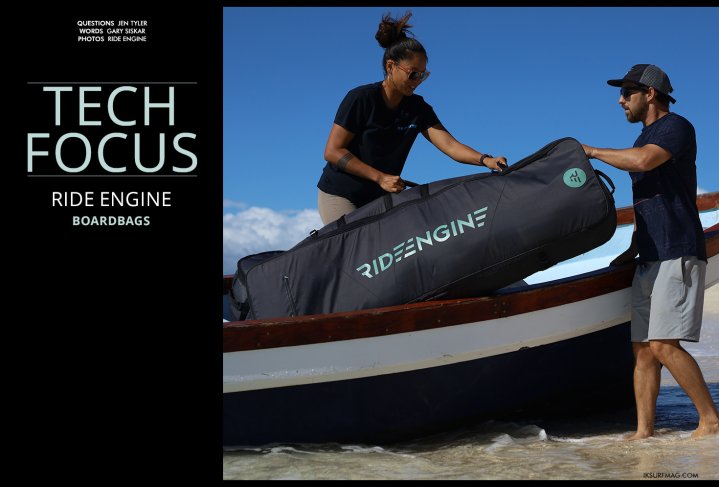
Tech Focus Ride Engine Boardbags
Issue 112 / Tue 19th Aug, 2025
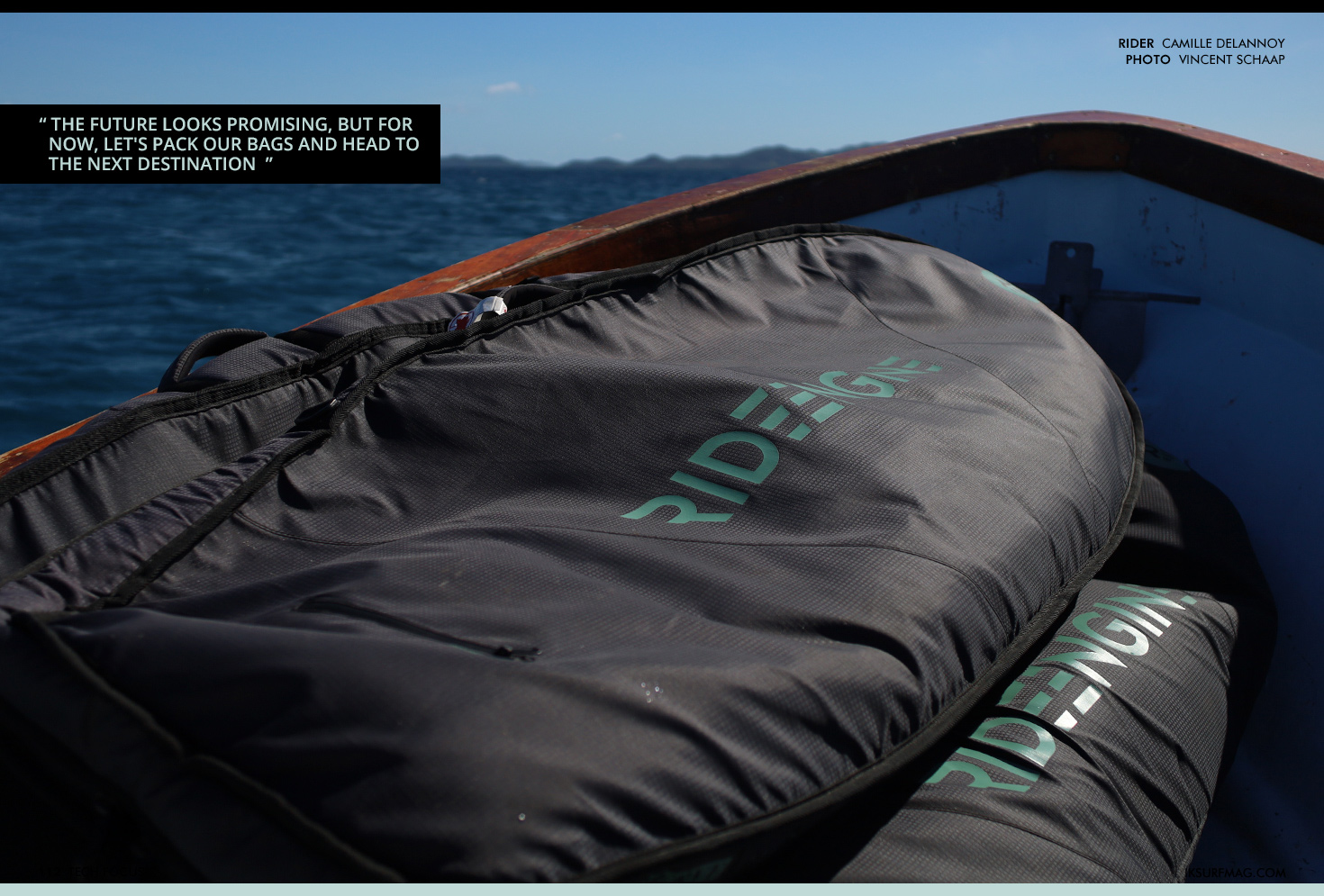
This issue, we’re diving into an unsung hero of every trip: the board bag! We caught up with Gary Siskar from Ride Engine to chat about their range, smart design details, and the travel hacks that keep your gear safe from the garage to the other side of the world.
For this issue, we’re shining the spotlight on Ride Engine’s board bags range. Gary, thanks for joining us! Which Ride Engine board bag is currently your best seller, and why do you think it stands out?
Thanks so much! I’m always stoked to give you and your readers an inside look at what’s happening at Ride Engine. This time, it’s all about our range of board bags! It’s tough to pick a single “best seller” because we’ve dialled in the lineup to cover the essential needs of both travel and everyday protection. We offer two distinct ranges: the RE_Serve Series, our premium wheeled travel bags designed to get your gear to and from your destination safely, and the Solar Shield Series, our go-to day bags that keep your board protected whether it’s in the garage, on the way to the beach, or parked on the sand.
What kind of gear setups do the Seafarer and Golf Coffin work best for?
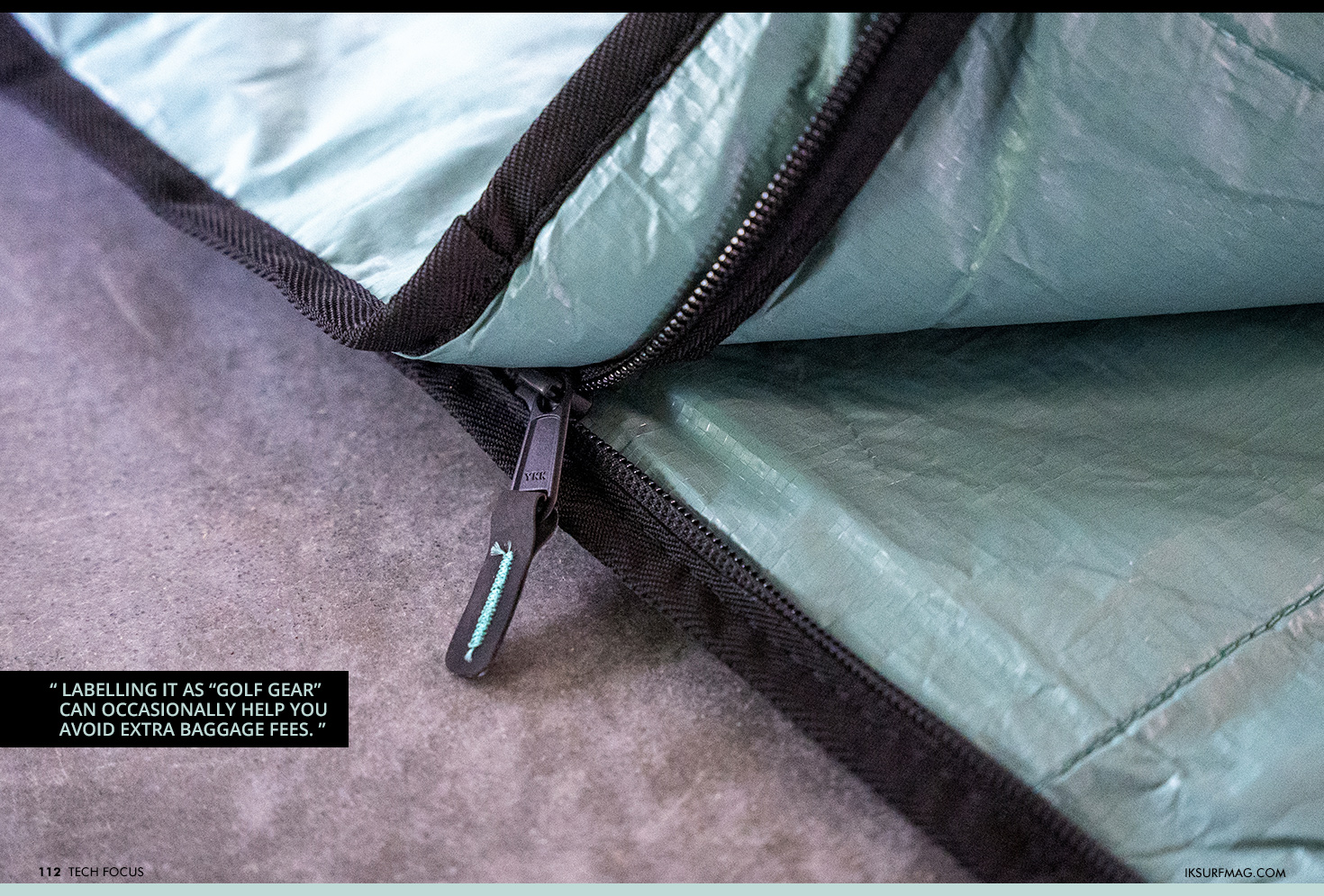
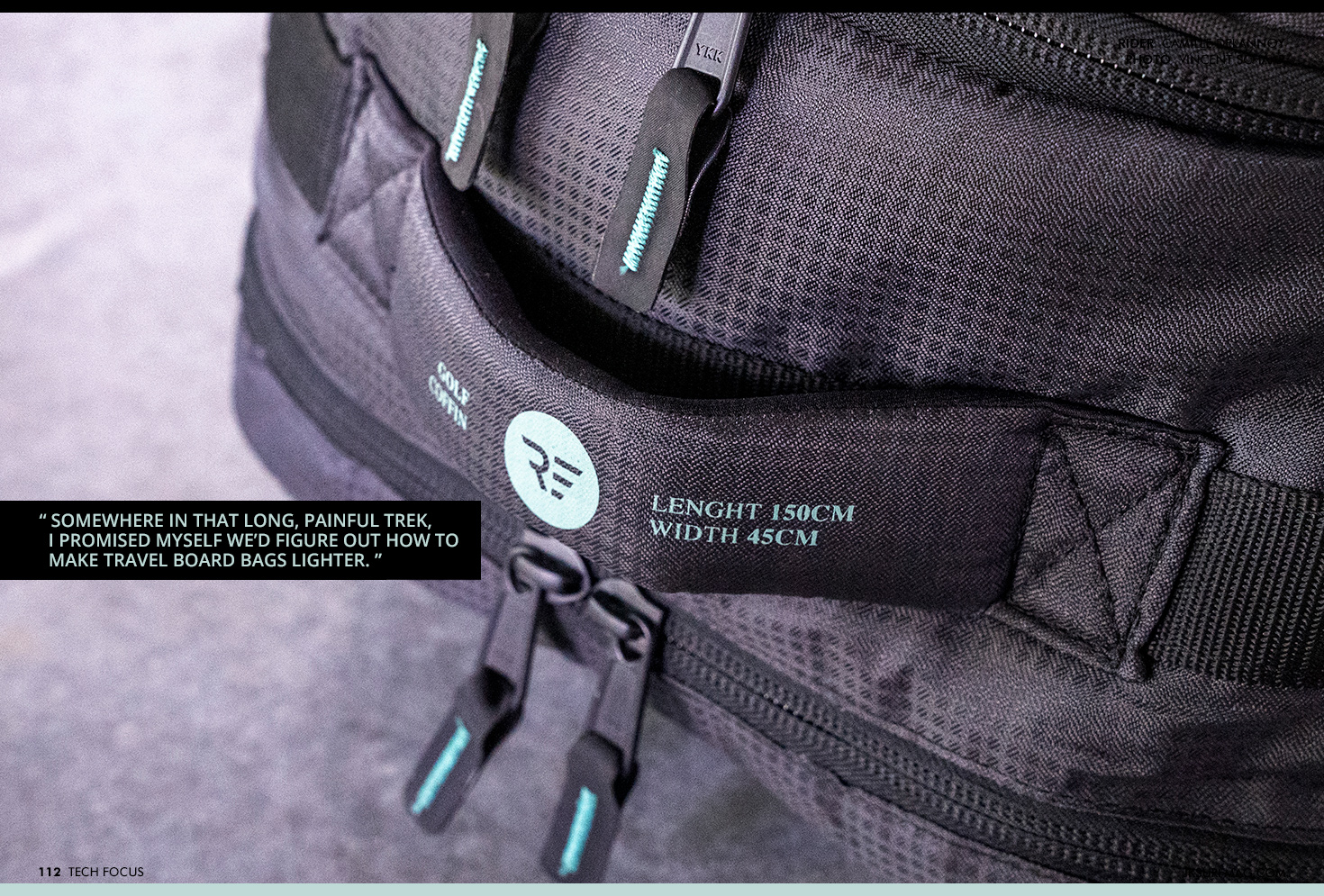
Both are excellent options for the travelling kiteboarder, lightweight, durable, and versatile. One advantage of the Seafarer is that it’s specifically sized to fit many of the modern blunt-nose surfboard shapes that the strapless crew is charging on these days. As for the Golf Coffin… well, let’s just say it still flies under the radar with some airlines. Labelling it as “golf gear” can occasionally help you avoid extra baggage fees. Just cross your fingers they don’t unzip it and ask, “What kind of golf club is that?”
Do you have a personal favourite in the range, and what makes it your go-to board bag for travelling?
I do! I tend to gravitate toward the RE_Serve Surf Travel Coffin. Most of the destinations on my hit list are surf-focused, but as we all know, there’s always a chance of getting skunked. That’s why I like to throw a twin tip in the mix as well. The RE_Serve Surf Coffin fits it all, my surfboard (sometimes two), a twin, kites, bars, and I always pack my wetsuits around the nose and tail for a bit of added padding and protection.
How do you decide which features to include in each bag? Are you working off team rider feedback or your own travel nightmares?
It’s a mix of input from all over. Our team riders always have a say in what we’re working on, and we pull a lot from our own travel experiences. On top of that, we get some incredible suggestions from people who’ve bought the bags and reached out with great ideas, some of which have us wondering, “Why didn’t we think of that?” As for travel nightmares, oh man, where do I even start? I’ve had more than I can count. But one that stands out was a trip to Fortaleza, Brazil. My connection in São Paulo was in a terminal that may as well have been in another zip code. I was hauling four board bags, sweating, swearing, and my hands were hurting, etc. Somewhere in that long, painful trek, I promised myself we’d figure out how to make travel board bags lighter.
Can you tell us more about the padding systems you use, like the 10mm PE closed-cell foam, and how well it protects the gear?
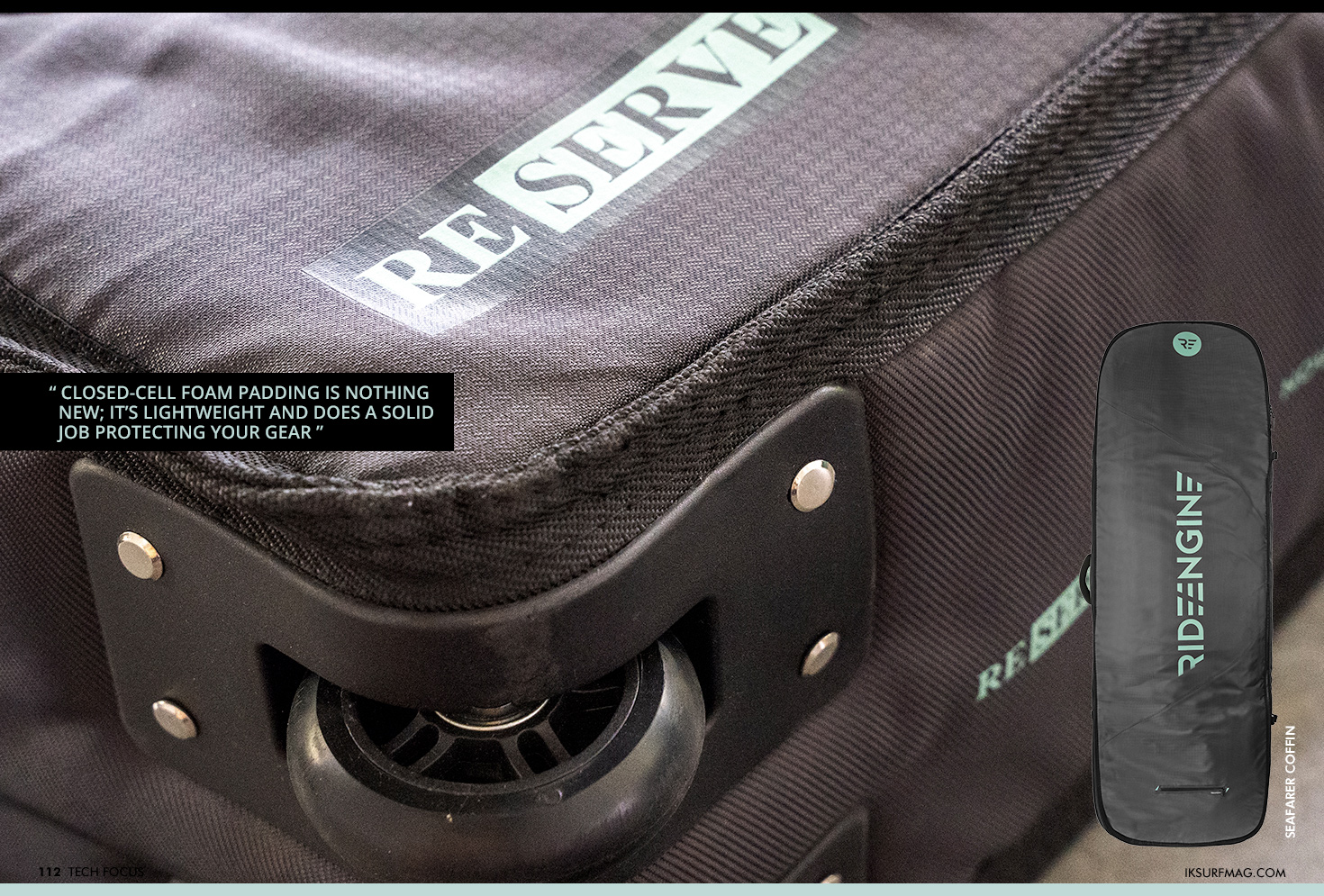
Of course, the first job of a board bag is to hold all your gear, but its most important job is to protect it. That protection comes down to a careful balance of padding, outer and inner materials, and, for travel bags, the wheel configuration. And all of it has to be considered with weight in mind. Starting with a lighter bag means less stress in packing all the necessary gear for your trip and potentially avoiding extra fees. Closed-cell foam padding is nothing new; it’s lightweight and does a solid job protecting your gear, which is why it’s the backbone of our designs. All of our RE_Serve wheeled travel bags feature 10mm of closed-cell foam padding around the entire perimeter, which is key when you consider how “gentle” some baggage handlers can be. For our Solar Shield day bags, we use 5mm padding, ideal for milder situations such as daily transport and storage. Additionally, our day bags offer enhanced protection from heat and sun exposure.
How important is the reflective foil in the Day Strike bag, and how much of a difference does it make temperature-wise?
A core function of the Solar Shield bags is to protect against UV and direct heat. Prolonged UV exposure can degrade surface materials and cause discolouration, often resulting in that yellowing effect you see over time. More critically, excessive heat from direct sunlight can lead to delamination, especially in boards with composite and vacuum bag construction. The Solar Shield bags are engineered with a light coloured exterior to minimise heat absorption and help regulate internal temperatures, offering both UV and thermal protection in addition to the padding.
Are there any small but genius features hidden in these bags that are a real game-changer?
One standout feature of our RE_Serve Series is the internal load stabilisation straps, which can be adjusted fore and aft. It might sound like a minor detail, but it makes a significant difference when it comes to securing and compressing your gear inside the bag. This added adjustability keeps everything stable during transit, preventing unwanted shifting and helping protect your equipment. It’s one of those features that, once you’ve used it, you’ll never want a travel bag without it.
Why did you opt for marine-grade YKK zippers across the range? Do they really make a difference in salty or humid environments?
Let’s face it, we leave our bags on the beach, stuff them with soggy kites, wet wetsuits, harnesses, and more. Therefore, it makes sense to use corrosion-resistant zippers. That said, speaking as a seasoned traveller, even the best zippers need a little TLC. Salt buildup can cause them to stick, but a quick rinse with fresh water usually does the trick.
What’s your best tip for keeping gear safe during air travel?
Use your gear, like kites, wetsuits, and harnesses, as extra protection inside your board bag. One trick I always recommend is to remove the harness spreader bar and use the harness to pad the nose or tail of your board(s). With the RE_Serve series bags starting super light, you’ve got the weight allowance to throw in an extra wetsuit or two without worry.
What new materials or design evolutions can we expect from Ride Engine in the next range?
We’re always pushing the next evolution of our products forward. Material innovation has been part of our DNA since the creation of the first hard-shell carbon harness. We are constantly exploring exciting new materials, such as ultra-strong Dyneema blends and Aluula, a name familiar to kiteboarders, which is now making its way into the outdoor industry with backpacks and expedition gear. The future looks promising, but for now, let's pack our bags and head to the next destination and make the most of it!
Awesome, Thanks, Gary!
Thanks, Jen!
By Jen Tyler
Italian/Egyptian Jen Tyler grew up on the sandy beaches of the Red Sea and has been on the IKSURFMAG & Tonic Mag team since 2017.
