

Features
SurfSignal: Never Miss Another Session
The Forecast That Works Around You
Every kitesurfer knows the feeling. You’ve been sitting in the office all day, working away, only to discover that the wind has been absolutely pumping and you’ve missed an epic session. Or perhaps you’ve spent the week religiously checking the forecasts, only for the conditions to change at the last minute. Weather forecasting has come a long way over the years, but sometimes it feels like we spend more time looking at charts than actually getting on the water.
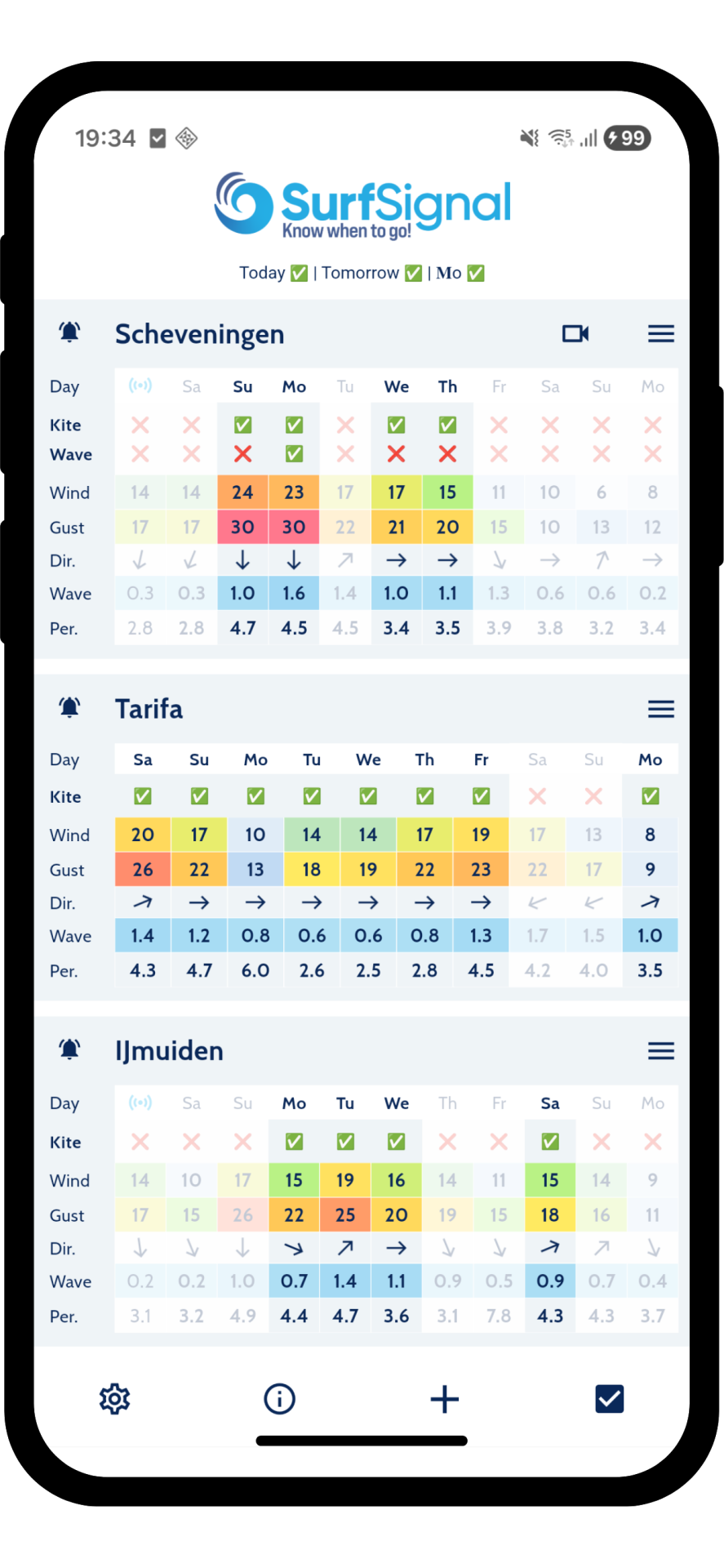
SurfSignal is a forecasting app looking to change that. Rather than simply presenting weather data and leaving you to work out when and where to go, it allows you to define the conditions that work for your favourite spots and then tells you when those conditions are coming.
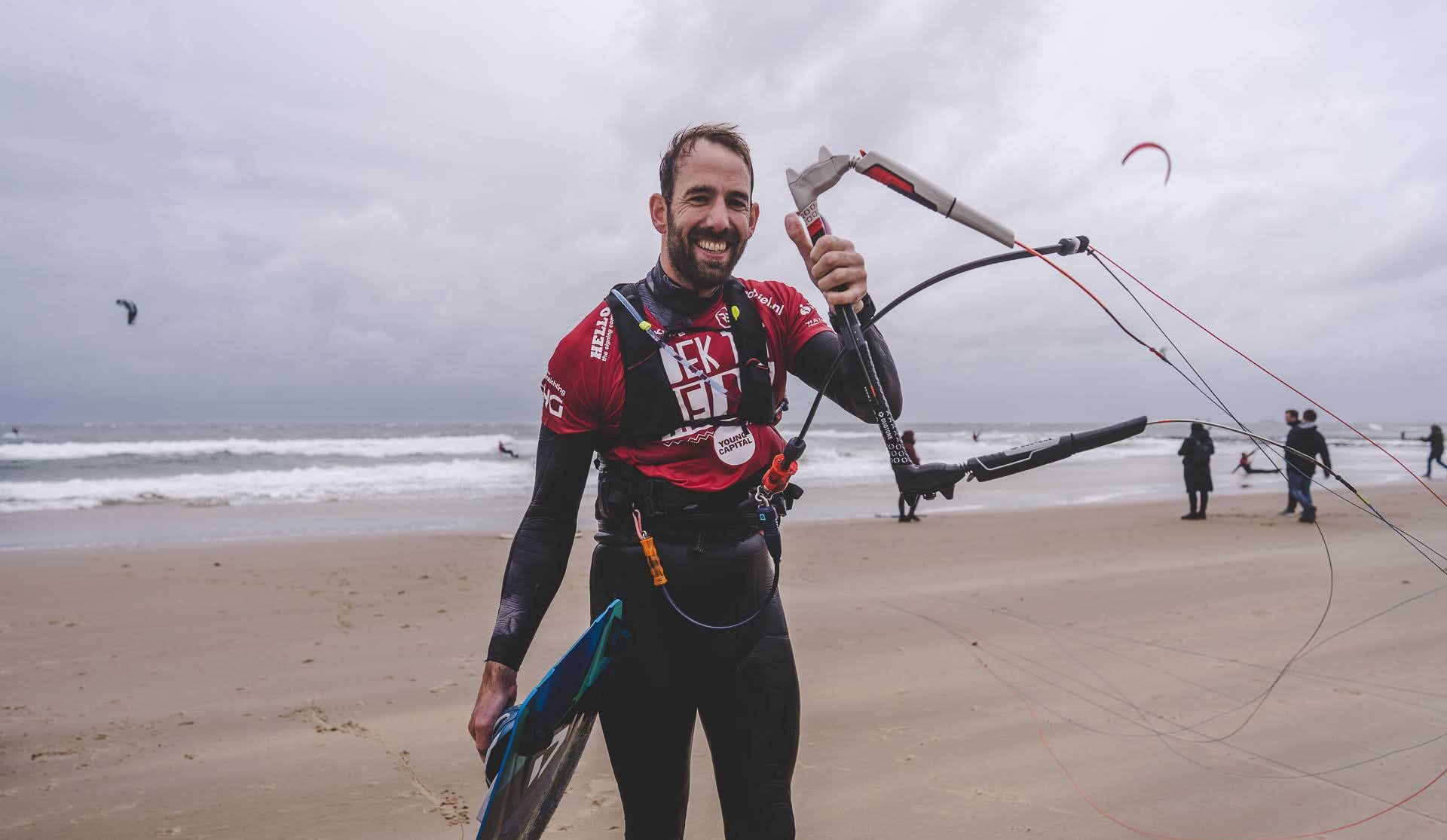
We caught up with its creator, Dutch kitesurfer Sebastiaan Dalmeijer, on The Kite Pod to find out how it works, what makes it different and whether it could help us all squeeze a few more sessions into our busy lives.
A Different Approach To Forecasting
For most of us, weather forecasting is a familiar routine. Open Windy, Windguru or whichever app you prefer, look at the wind strength and direction, check the tide, perhaps glance at the swell forecast and then make an educated guess about where to go.
It’s a process that becomes second nature after years on the water. You learn which beaches work on different wind directions, which tides produce the best conditions and how particular weather systems affect your local spots.
The problem is that you still need to remember to check the forecast.
"Sometimes it feels like we spend more time looking at charts than actually getting on the water."
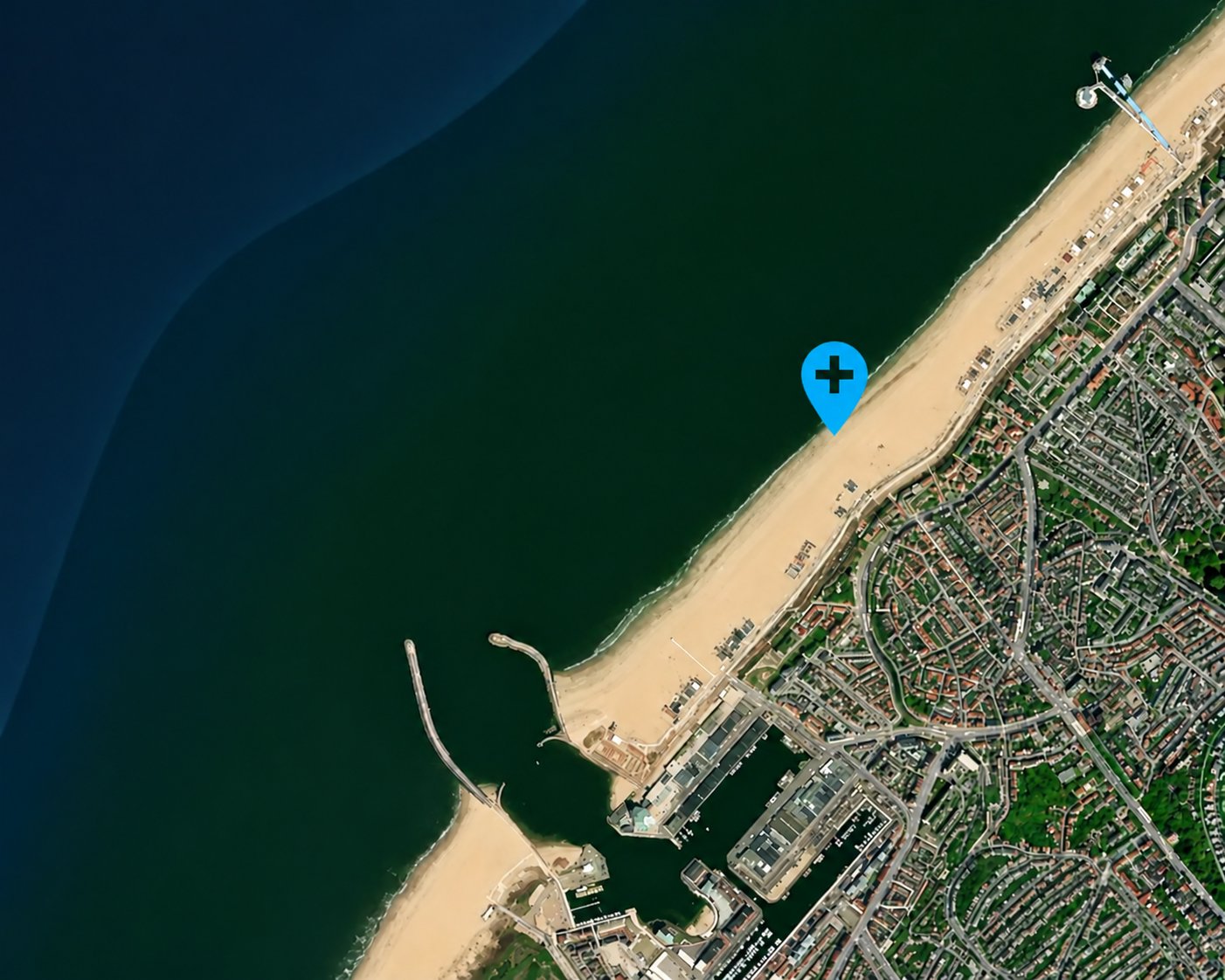
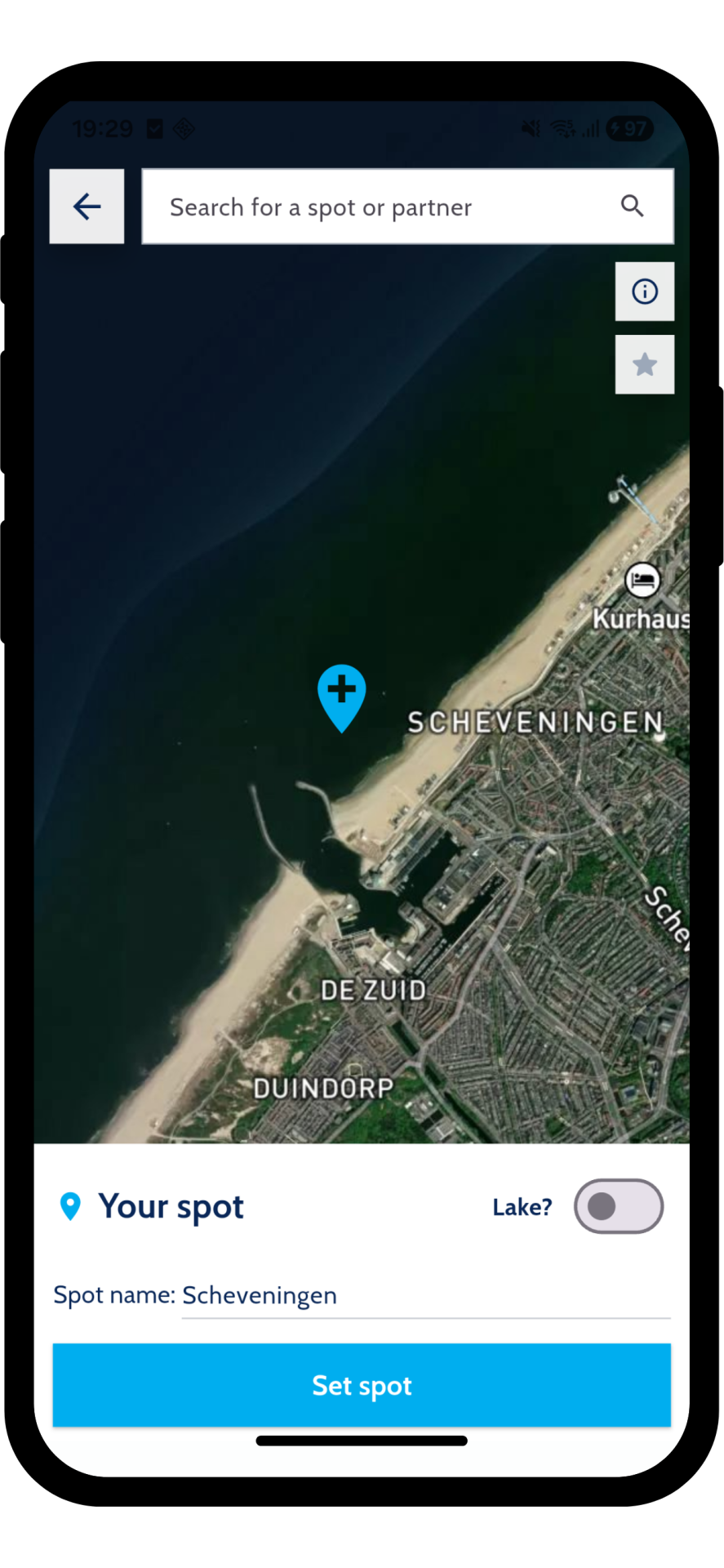
That frustration was precisely what inspired Sebastiaan to develop SurfSignal. A keen kitesurfer living in Scheveningen in the Netherlands, he found himself looking out of his office window one day at perfect southwesterly winds, the exact conditions he loves, and realising he’d missed his opportunity.
With work, family commitments and a busy life, he needed something that would give him enough warning to organise his schedule around the wind.
Existing forecasting apps weren’t quite delivering what he wanted. Some sent notifications when conditions were already good, which was too late to rearrange his day. Others provided advance alerts, but packed so much information into them that he still needed to interpret the forecast.
"Rather than relying on an app to decide what constitutes good conditions, you tell it exactly what you're looking for."
He decided there had to be a better way.
Your Spots, Your Conditions
At the heart of SurfSignal is a relatively simple concept. Rather than relying on an app to decide what constitutes good conditions, you tell it exactly what you’re looking for.
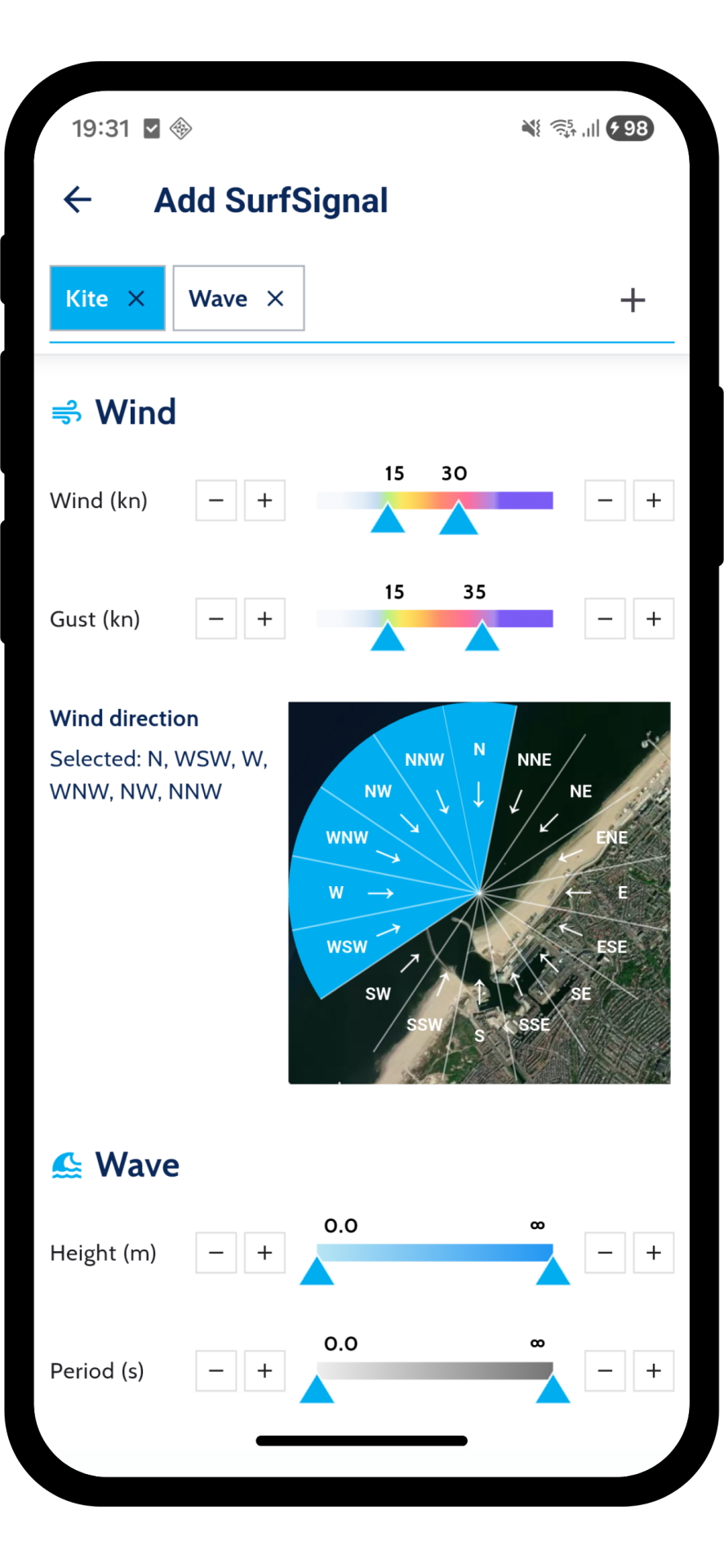
Choose a location on the map and configure the wind direction, strength, gusts, swell, wave period and tidal conditions that make it work.
If your favourite flat-water spot needs a northwesterly breeze between 18 and 25 knots, you can set those parameters. If your local wave spot only comes alive with a particular swell direction and a rising tide, you can build that into the configuration too.
The app then monitors the forecast and identifies the periods when those conditions align.
Sebastiaan has put considerable effort into making this process intuitive. Wind and swell directions are selected using a compass rose overlaid on the map, allowing you to visualise exactly how the conditions relate to the coastline.
"Once configured, SurfSignal does the checking for you."
Once configured, SurfSignal does the checking for you.
Living in Pembrokeshire, this approach immediately appealed to me. We’ve got an incredible variety of beaches, reefs and sheltered locations, but the tidal range is enormous and conditions can change dramatically from one spot to another.
My brother and I have often talked about creating an ‘if this, then that’ system for our local conditions. If the wind is blowing from a particular direction, the swell is above a certain height and the tide is doing something specific, we know exactly where we should be heading.
"Knowing when the wind is going to blow is only half the battle. Finding the time to take advantage of it is often the bigger challenge."
SurfSignal effectively allows you to automate that process.
Let The Forecast Come To You
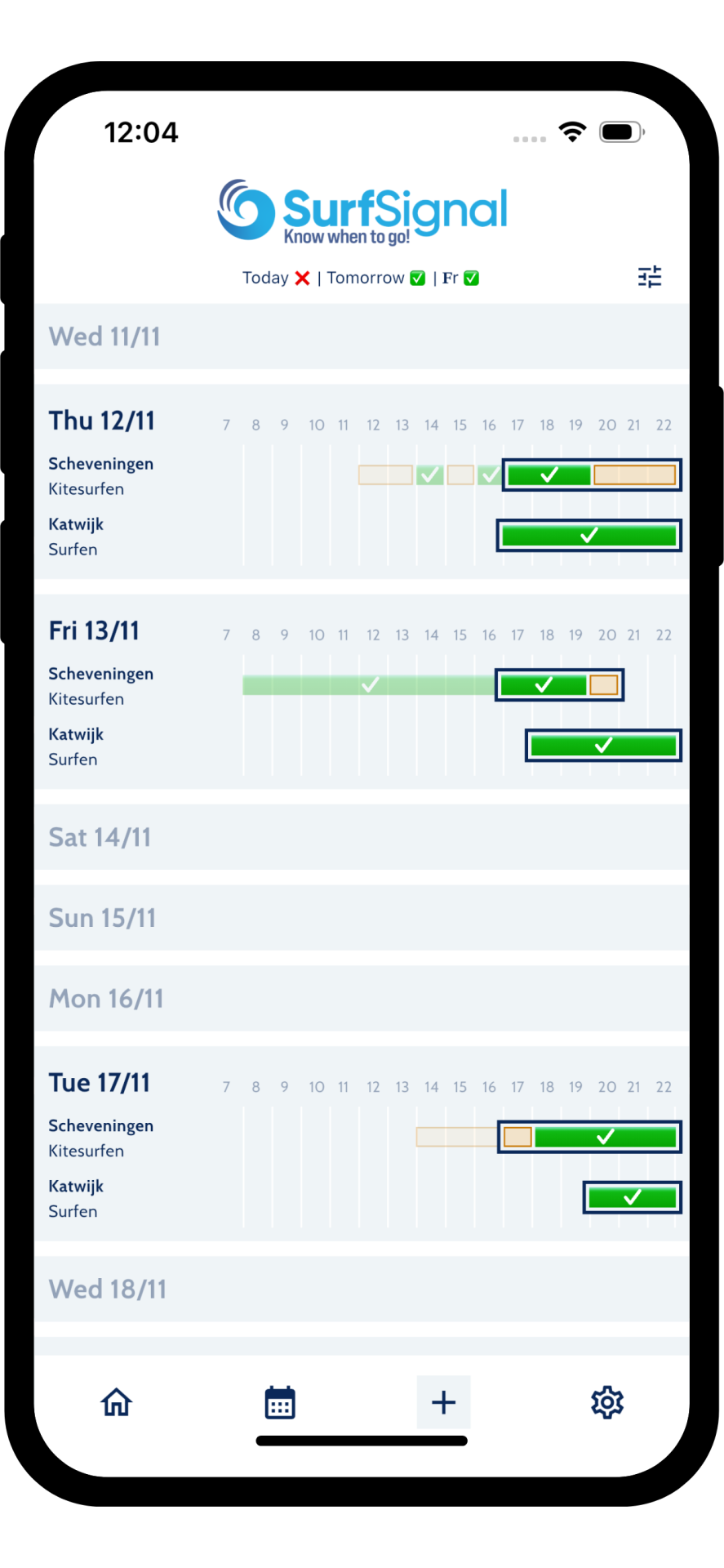
Perhaps the biggest attraction is the notification system. You choose when you want to receive an update, and SurfSignal checks the latest forecast against your configured conditions.
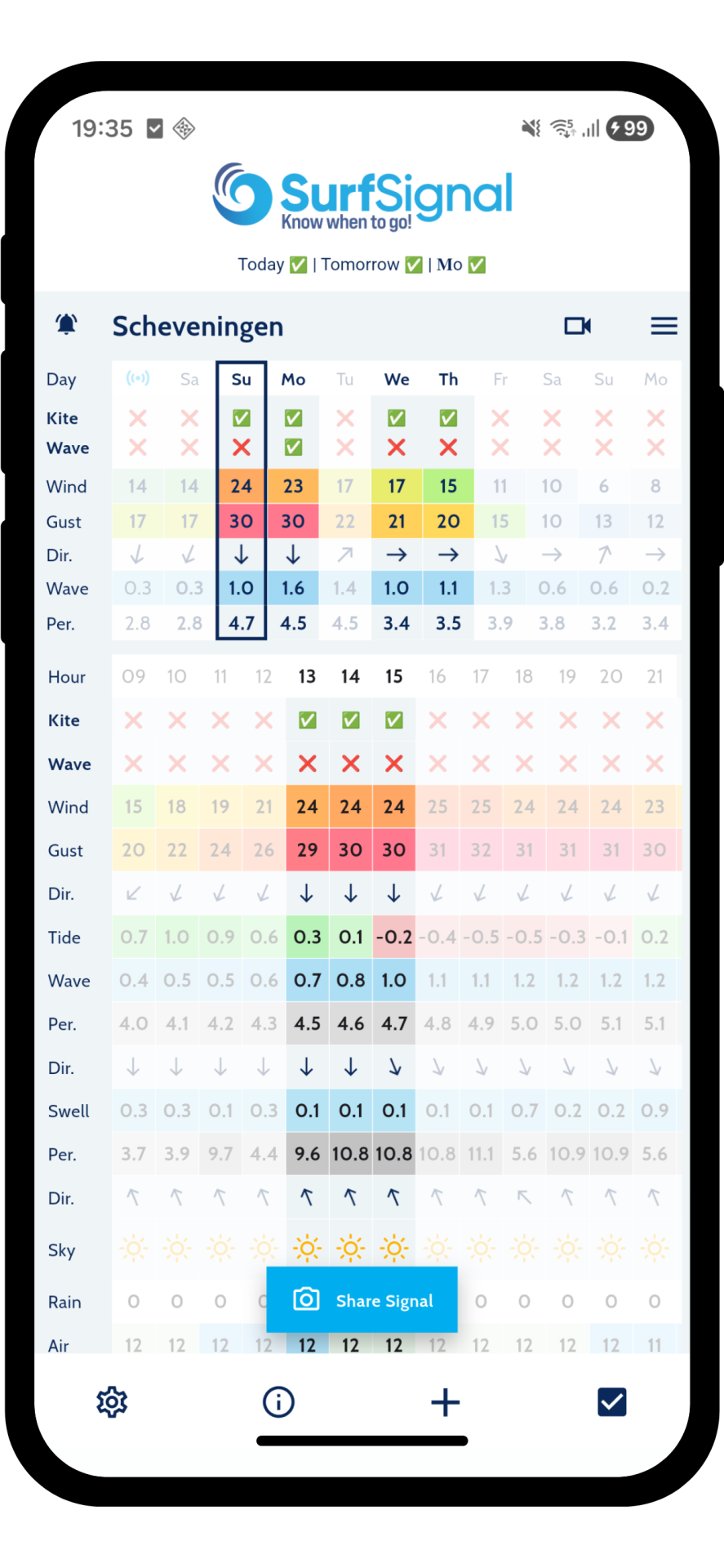
Rather than sending a complicated chart to decipher, it presents the opportunities to get on the water over the coming days.
"The app isn't claiming to predict the weather more accurately than everyone else. Its strength lies in interpreting the available information according to your personal requirements."
There’s also an option to highlight suitable weather windows within the forecast itself, making it immediately obvious when your chosen conditions are expected.
For anyone juggling work, family and other commitments, that’s potentially a game changer.
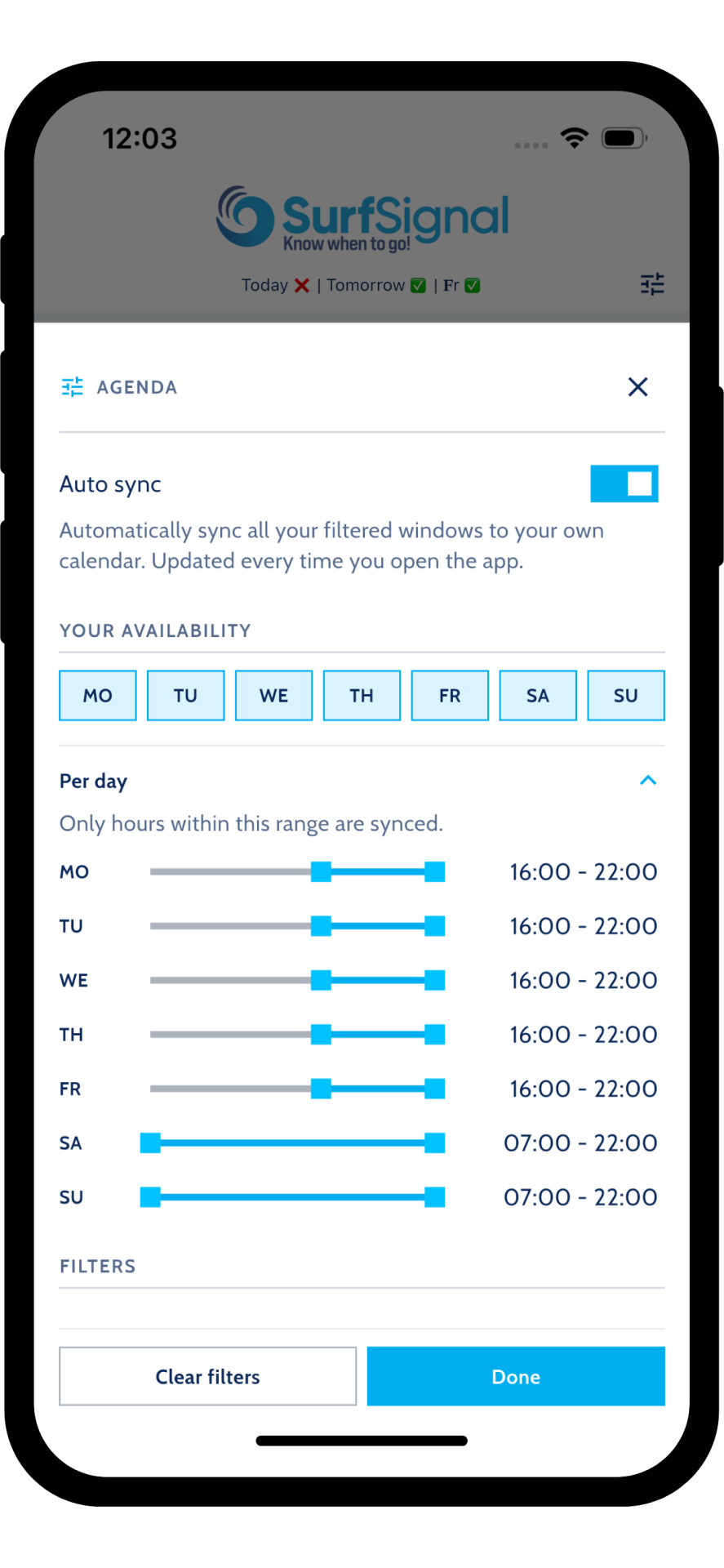
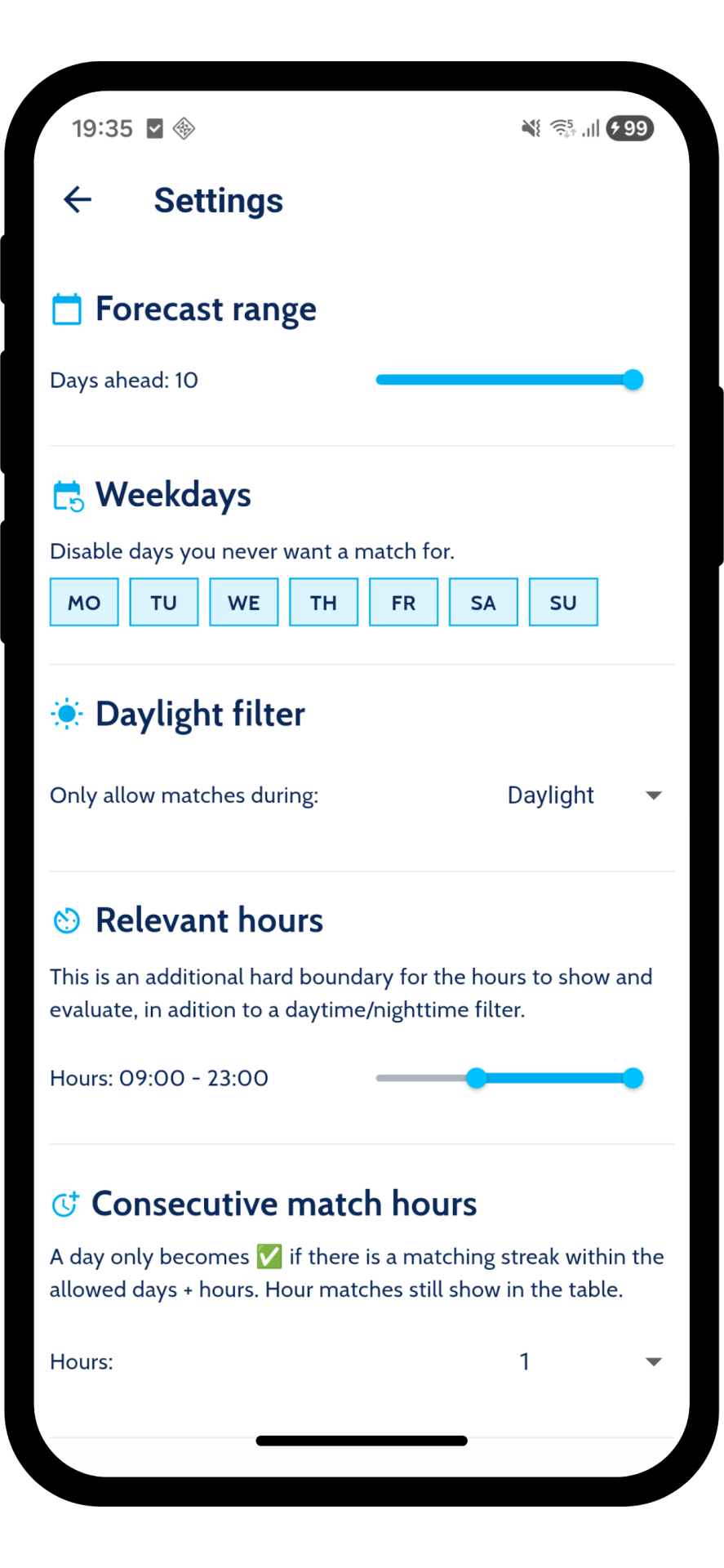
The app also features calendar integration, allowing suitable sessions to be synchronised with your schedule. You can configure your availability so that you’re concentrating on the times when you can actually get to the beach, rather than being told about sessions you know you will miss due to other commitments…
"Your personal configurations remain private unless you choose to share them, which is good news for anyone protective of their favourite secret spots."
It’s a clever addition because knowing when the wind is going to blow is only half the battle. Finding the time to take advantage of it is often the bigger challenge.
As Sebastiaan explained during our conversation, the whole idea is to reduce the amount of effort involved in deciding when to go. Once you’ve configured your spots, the app can quietly do its job in the background.
The Technology Behind The Forecast
Of course, a clever notification system is only as useful as the weather information powering it.
"There's something refreshing about an app that doesn't demand your attention every day."
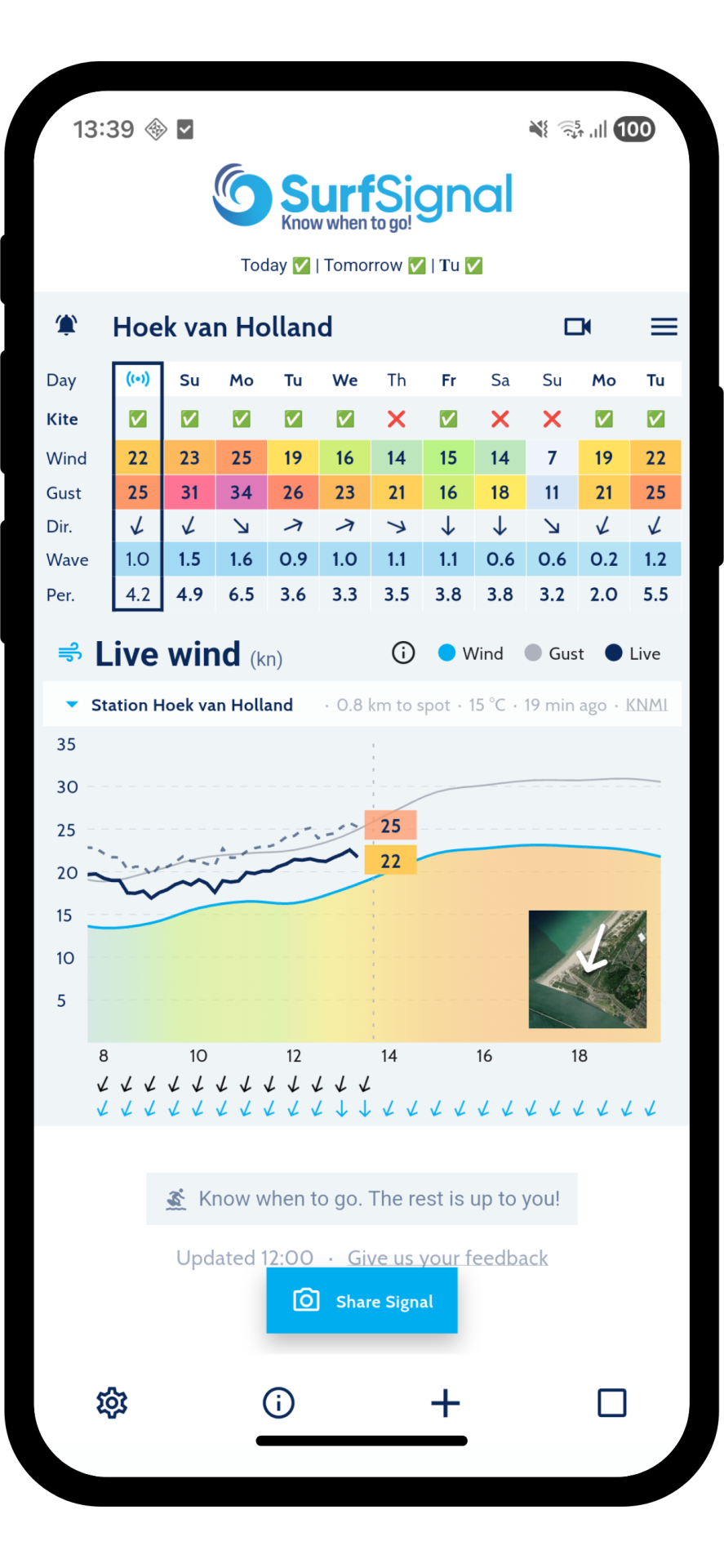
SurfSignal uses high-resolution forecast data and checks every 15 minutes to see whether updated model information is available.
The free version provides forecasts extending seven days ahead, while the paid tier increases that to ten days.
There’s also live weather station data available across much of the world, allowing users to compare the forecast with actual conditions before leaving home.
"If it helps you catch even a handful of sessions you might otherwise have missed, it's doing exactly what it was designed to do."
This is particularly useful because forecasting is never an exact science. Longer-range models are excellent for identifying approaching weather systems, but local conditions can still change considerably as the day approaches.
Sebastiaan recognises that the final decision often depends on live measurements, webcams and local knowledge. SurfSignal doesn’t attempt to eliminate those considerations. Instead, it helps identify promising opportunities in advance, allowing riders to concentrate on the finer details closer to the session.
It’s an important distinction. The app isn’t claiming to predict the weather more accurately than everyone else. Its strength lies in interpreting the available information according to your personal requirements.
"Less time staring at forecasts and more time on the water. Ultimately, isn't that what we all want?"
One Spot, Multiple Sports
Another interesting feature is the ability to create different condition sets for the same location.
Many of us no longer concentrate on one watersport. We might kitesurf when it’s blowing hard, wingfoil in lighter conditions, or head out surfing when the swell arrives without the wind.
SurfSignal accommodates that by allowing different configurations for each activity.
Sebastiaan uses his home spot of Scheveningen as an example. For kitesurfing, he prefers strong southwesterly winds. When wingfoiling, he is happy with a different range of conditions, including offshore winds, while kite foiling brings another set of preferences.
Each activity can be configured separately, allowing the app to identify the relevant opportunities.
The same principle applies when discovering new locations. Find a spot that works particularly well in certain conditions, save those parameters, and SurfSignal can notify you the next time a similar forecast appears.
Your personal configurations remain private unless you choose to share them, which is good news for anyone protective of their favourite secret spots.
Helping The Next Generation
SurfSignal is also finding an audience among kitesurfing schools.
While experienced riders generally know what conditions work for their local beaches, beginners don’t necessarily have that knowledge.
The app allows participating schools to publish their preferred spot configurations, which students can then download and use.
This means instructors can share the wind directions and strengths suitable for lessons, helping students identify potential opportunities without having to become forecasting experts overnight.
For schools, there’s an obvious advantage too. Rather than constantly messaging students when the weather looks promising, they can use SurfSignal to help keep everyone informed.
Sebastiaan has already established relationships with a number of schools in the Netherlands and sees expanding that network as an important part of the app’s future.
More Time On The Water
Having spent some time using SurfSignal myself, I can see the appeal. I’m someone who has been checking weather charts for decades, and old habits are difficult to break. I still enjoy analysing a forecast, comparing models and trying to work out what the weather is going to do.
But there’s something refreshing about an app that doesn’t demand your attention every day.
Sebastiaan isn’t trying to reinvent meteorology or replace every forecasting tool you already use. He’s simply taking the knowledge you’ve accumulated over years on the water and using technology to make it work for you.
The free version includes two spots, seven-day forecasting and the notification system, without requiring an account, making it easy to give it a go.
Will it replace all your other weather apps? Perhaps not, but that’s not necessarily the point.
If it helps you catch even a handful of sessions you might otherwise have missed, it’s doing exactly what it was designed to do.
And ultimately, isn’t that what we all want? Less time staring at forecasts and more time on the water.
We spoke to Sebastiaan in detail on The Kite Pod about the development of SurfSignal, the future of weather forecasting and how technology is changing the way we plan our sessions. Listen to the full episode to discover more.