

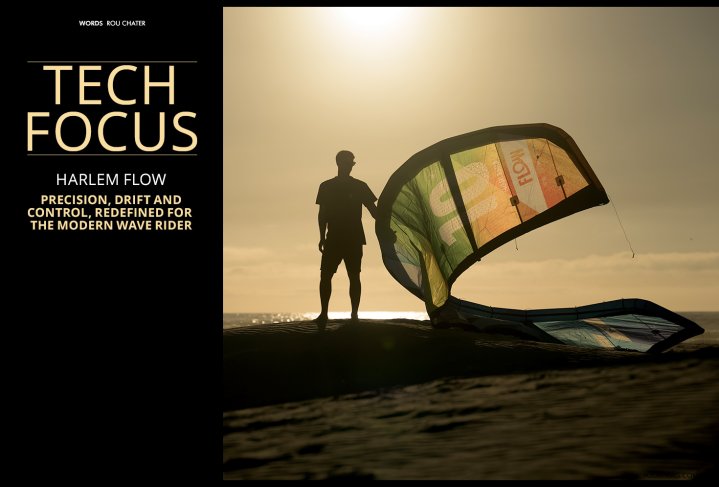
Tech Focus - Harlem Flow
Issue 115 / Tue 21st Apr, 2026
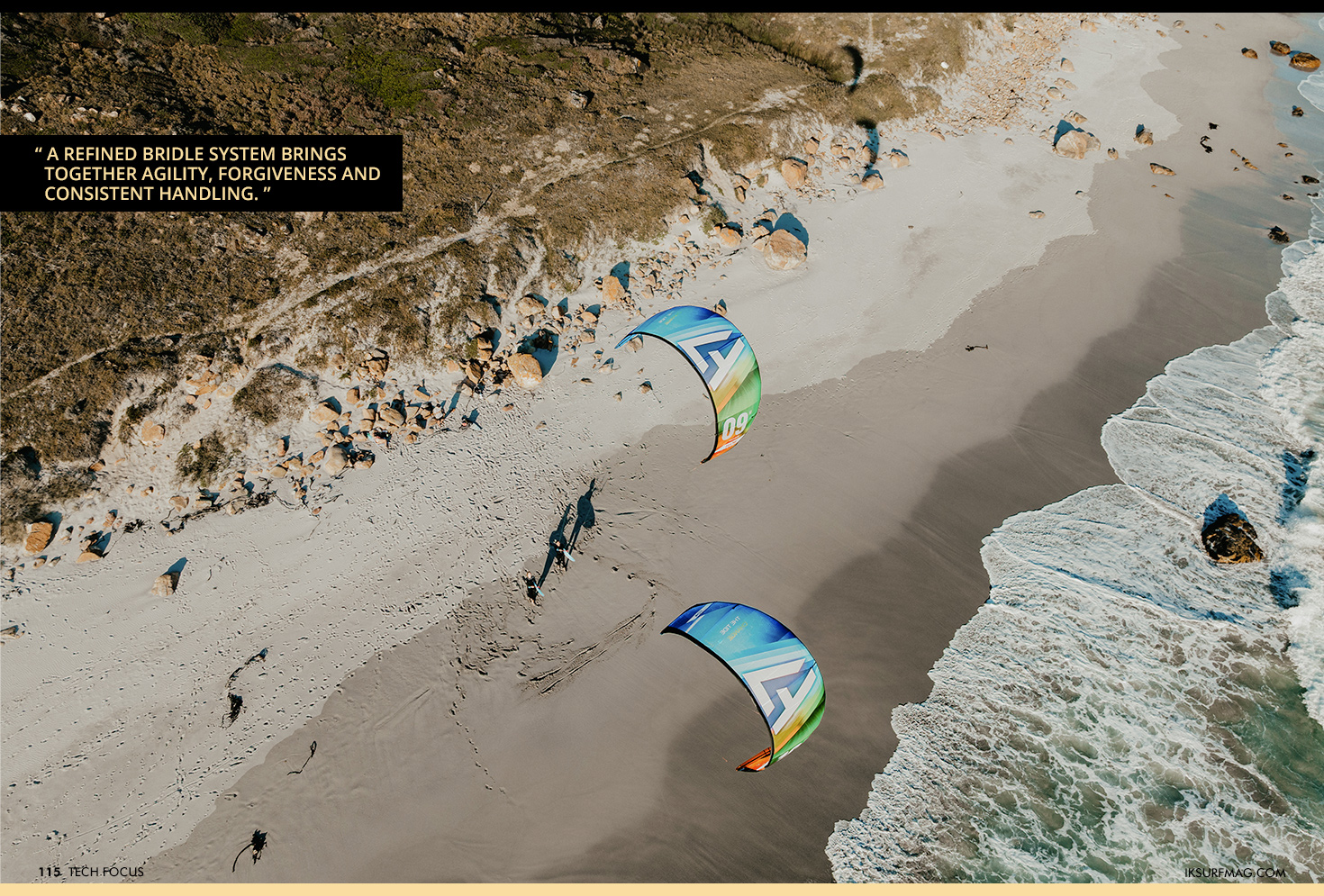
Wave riding has always been about feel. It is the discipline in kiteboarding, where subtlety matters more than spectacle and control outweighs raw power. The new Harlem Flow arrives with that philosophy at its core, a dedicated wave kite designed not to dominate the session, but to disappear into it. Built for riders who want to focus purely on the wave, it promises precision, drift and a level of predictability that lets you commit fully to the steepest of sections.
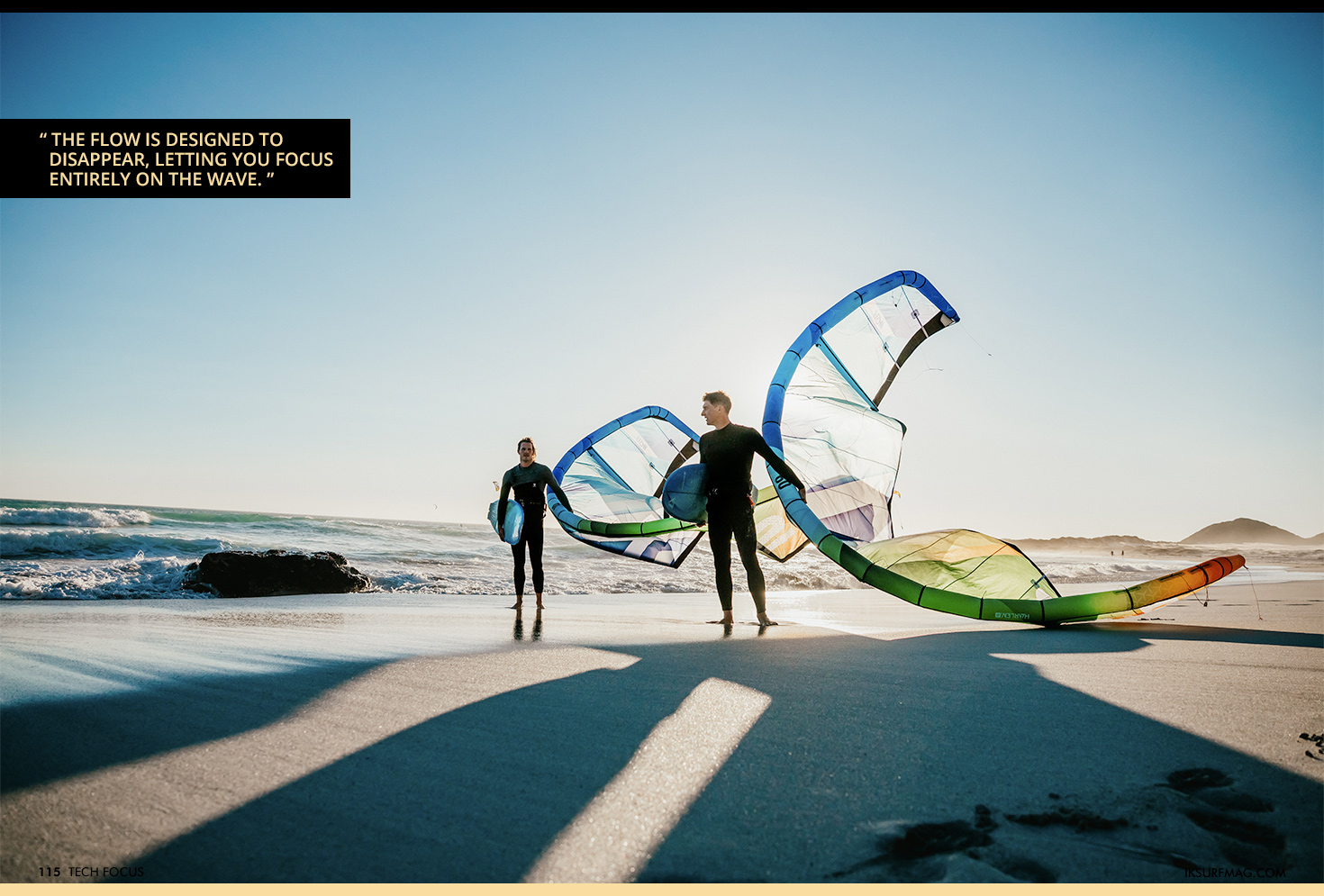
There is a certain purity to wave riding with a kite. Strip away the megaloops, the hangtime and the spectacle, and what remains is something far more nuanced. Timing, positioning, feel. It is about reading the ocean and letting the kite take a back seat, becoming almost invisible. That is exactly the space the new Harlem Flow is designed to occupy.
Developed by Ralf Groesel and Aaron Hadlow, the Flow is Harlem’s dedicated wave kite, a clean-sheet design focused entirely on surf performance. No crossover ambitions, no compromise. Just a kite built to sit in the pocket, drift when needed, and respond instantly when called upon.
At its core, the Flow reflects a very deliberate design philosophy. Everything about it points towards control, predictability and connection to the wave rather than raw power or explosive lift. In a market where many kites aim to do everything, the Flow stands out by doing one thing exceptionally well.
Built for the pocket
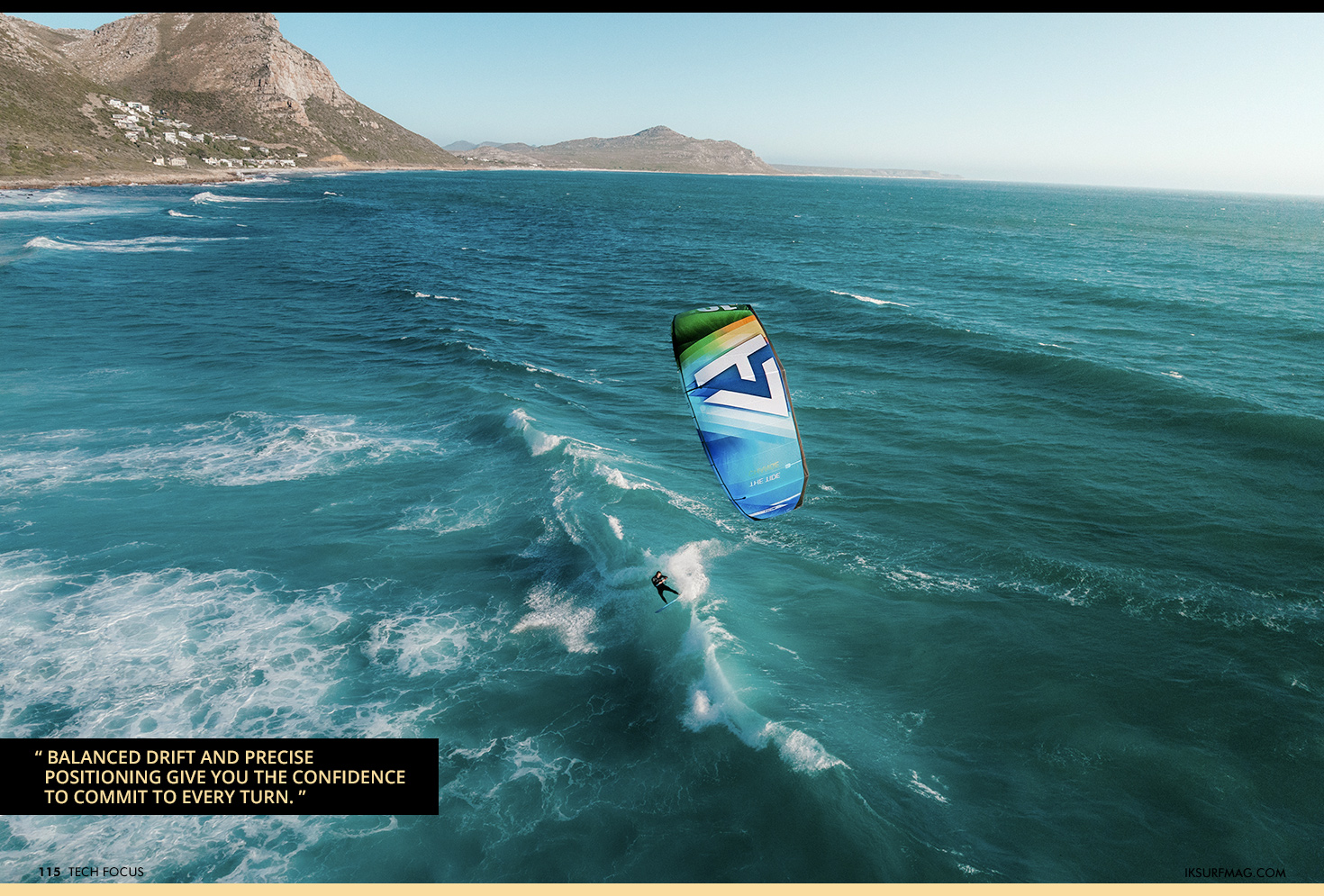
Wave kites live and die by their drift, and Harlem has clearly prioritised this from the outset. The Flow is designed to sit exactly where you place it, holding position down the line without surging forward or stalling unpredictably. This stability is what allows riders to fully commit to their riding, especially in critical sections where hesitation is not an option.
In onshore and side-shore conditions, where maintaining tension in the lines can be tricky, this becomes even more important. The Flow’s balanced drift keeps it responsive even when the lines momentarily slacken, giving riders the confidence to focus entirely on their turns rather than babysitting the kite.
This sense of “set and forget” positioning is what separates a true wave kite from a freeride crossover. The Flow is not trying to pull you off the wave; it is there to support your movement, not dictate it.
Compact design, fast response
The Flow uses a low-aspect, three-strut platform with a compact outline. This combination is key to its turning characteristics. Rather than sweeping through large arcs, the kite pivots tightly, allowing for quick redirection in the pocket in onshore conditions.
This tight turning radius is particularly noticeable during bottom turns and cranking top turns. The kite reacts immediately to input, but without feeling twitchy or overly sensitive. It is a controlled responsiveness in which speed is matched with stability.
The three-strut layout also helps reduce overall weight while maintaining sufficient structure to keep the canopy stable in gusty conditions. The PROWELD further reduces the kite's weight while increasing the stiffness of the leading edge. The result is a kite that feels light in the air, but maintains smooth handling in gusty or overpowered conditions.
Predictable power delivery
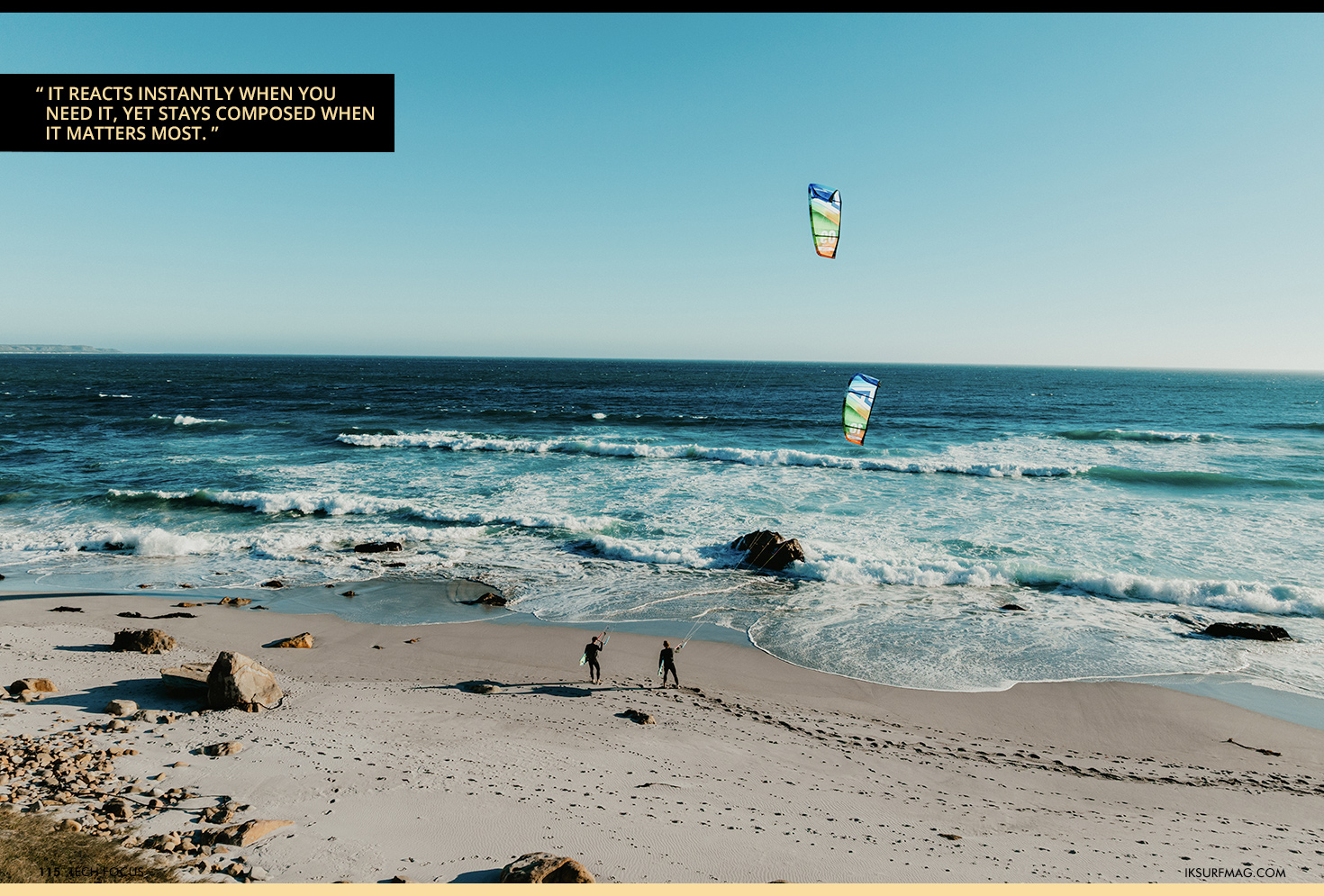
One of the defining characteristics of the Flow is its smooth and predictable power delivery. This is not a kite that surprises you. Instead, it builds power progressively, allowing riders to anticipate exactly how it will behave through each phase of a turn.
Bar pressure is kept deliberately light, reducing fatigue over long sessions while still providing enough feedback to know where the kite is at all times. This balance is crucial. Too light, and the connection is lost. Too heavy, and it becomes a distraction. The Flow sits comfortably in the middle, offering clarity without effort.
This predictability extends across a wide range of conditions. Whether underpowered in marginal surf or holding it together in stronger winds, the kite maintains a consistent feel. That consistency is what allows riders to push harder, knowing the kite will respond exactly as expected.
Relaunch and usability
Wave riding does not always go to plan. Missed sections, mistimed turns, or simply getting caught inside can all lead to time in the water. The Flow addresses this with a straightforward and reliable relaunch.
A single pull on a steering line is enough to roll the kite onto its side and bring it back into the air. The process is quick and predictable, which is exactly what you want when waves are approaching and time is limited.
This ease of use reinforces the kite’s overall philosophy. It is designed to minimise complications, allowing riders to stay focused on the conditions rather than equipment management.
Advanced construction
Beyond its on-water behaviour, the Flow incorporates a range of modern construction techniques aimed at improving both performance and durability.
The PROWELD leading edge is a standout feature, increasing structural integrity while reducing weight. By welding rather than stitching the leading edge sections, Harlem achieves a cleaner and more consistent frame, which translates into better load distribution and long-term reliability.

The struts use laminated Mylar, a material choice that helps maintain rigidity without adding unnecessary bulk. This contributes to the kite’s responsive feel while ensuring it holds its shape under pressure.
The canopy itself is built from FlyLite material, chosen for its lightweight properties and efficient energy transfer. A lighter canopy reacts faster to input and drifts more effectively, both critical factors in wave riding.
Together, these elements create a kite that feels refined and purpose-built, rather than over-engineered.
Eight-point bridle system
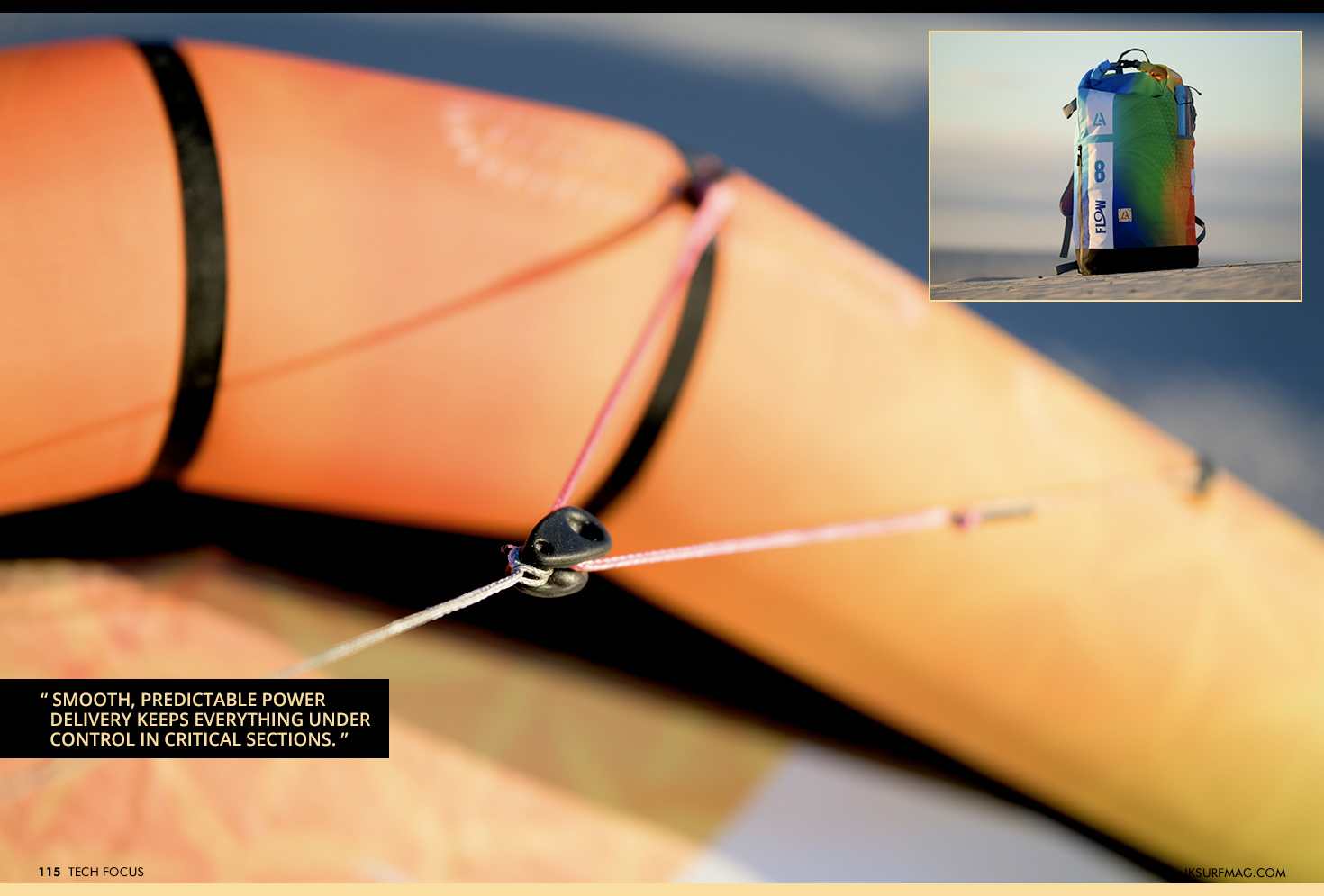
A key part of the Flow’s handling comes from its newly developed eight-point bridle system. This setup, combined with a floating tip pulley, allows for more direct steering input while maintaining stability across the wind window.
The benefit here is twofold. First, it enhances turning precision, giving riders a more immediate connection to the kite. Second, it adds a level of forgiveness, smoothing out aggressive inputs and helping maintain control in turbulent conditions.

Bridle design often goes unnoticed, but it plays a crucial role in how a kite feels. In the Flow, it is clear that significant attention has been paid to refining this balance between responsiveness and stability.
Sustainability and production
The Flow is produced at Brainchild Production in Europe, reflecting Harlem’s commitment to more sustainable manufacturing processes. This includes the use of advanced materials and digital eco-printing technology, reducing waste and environmental impact.
While sustainability is becoming more common across the industry, Harlem’s approach integrates it directly into the product without compromising performance. The kite remains fully customisable, allowing riders to personalise their setup while maintaining a responsible production footprint.
Final thoughts
For riders who want to surf waves with minimal interference from their kite, the Flow offers exactly the kind of performance needed to stay connected to the ocean. Fast when required, stable when it matters, and always predictable, it aims to deliver a riding experience that feels intuitive from the first session.
In a category where subtle differences make a huge impact, the Flow stands out by getting the fundamentals right. It does not shout for attention, but once on the water, it quietly does everything you need it to
By IKSURFMAG
