
The Interview - Matchu Lopes
Issue 115 / Tue 21st Apr, 2026
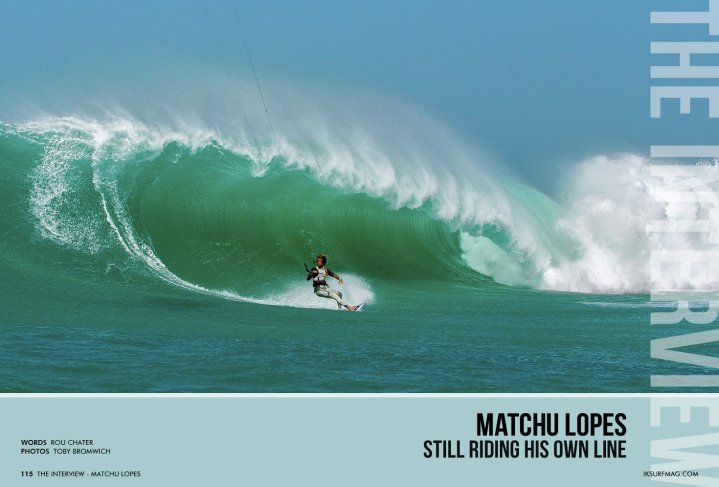
For more than a decade, Matchu Lopes has been one of the defining figures in strapless kiteboarding. Alongside Airton Cozzolino and Mitu Monteiro, he helped turn a small Cape Verdean scene into a global movement, pushing surfboard riding to the very front of the sport. Now based on Boa Vista, where he runs a Duotone Pro Centre and spends more time at home, Matchu reflects on the journey that took him from a small island to the world stage, and why wave riding still means everything.
For more than a decade, Matchu Lopes has been one of the defining figures in strapless kiteboarding. Alongside Airton Cozzolino and Mitu Monteiro, he helped turn a small Cape Verdean scene into a global movement, pushing surfboard riding to the very front of the sport. Now based on Boa Vista, where he runs a Duotone Pro Centre and spends more time at home, Matchu reflects on the journey that took him from a small island to the world stage, and why wave riding still means everything.
Rou Chater: Let’s go right back to the beginning. How did kiteboarding first come into your life?
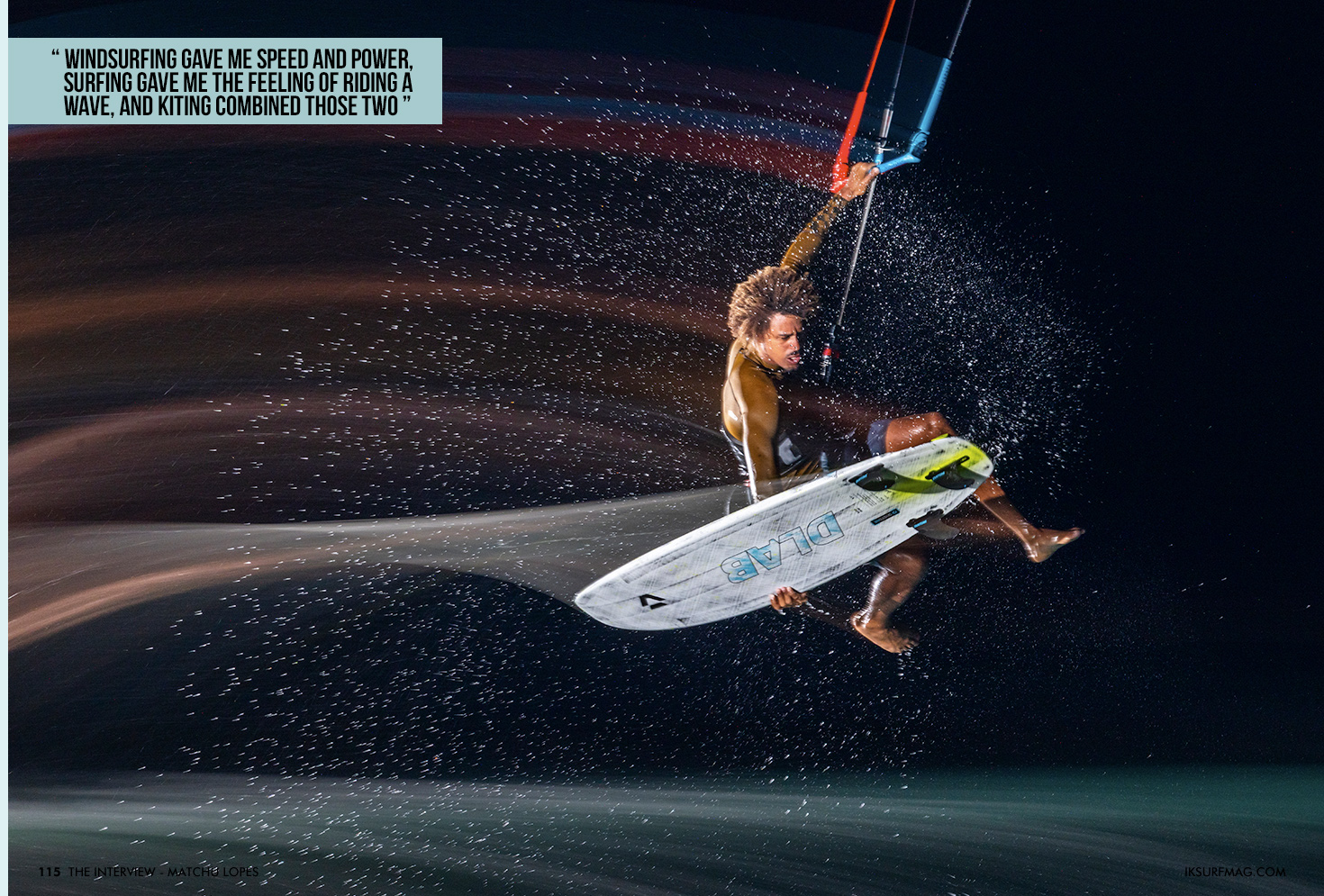
Matchu Lopes: Kiteboarding came into my life at the perfect moment. I was already windsurfing, and before that, I had spent years surfing, so when I first tried a kite, it felt like everything came together. Windsurfing gave me speed and power, surfing gave me the feeling of riding a wave, and kiting combined those two while adding something completely new.
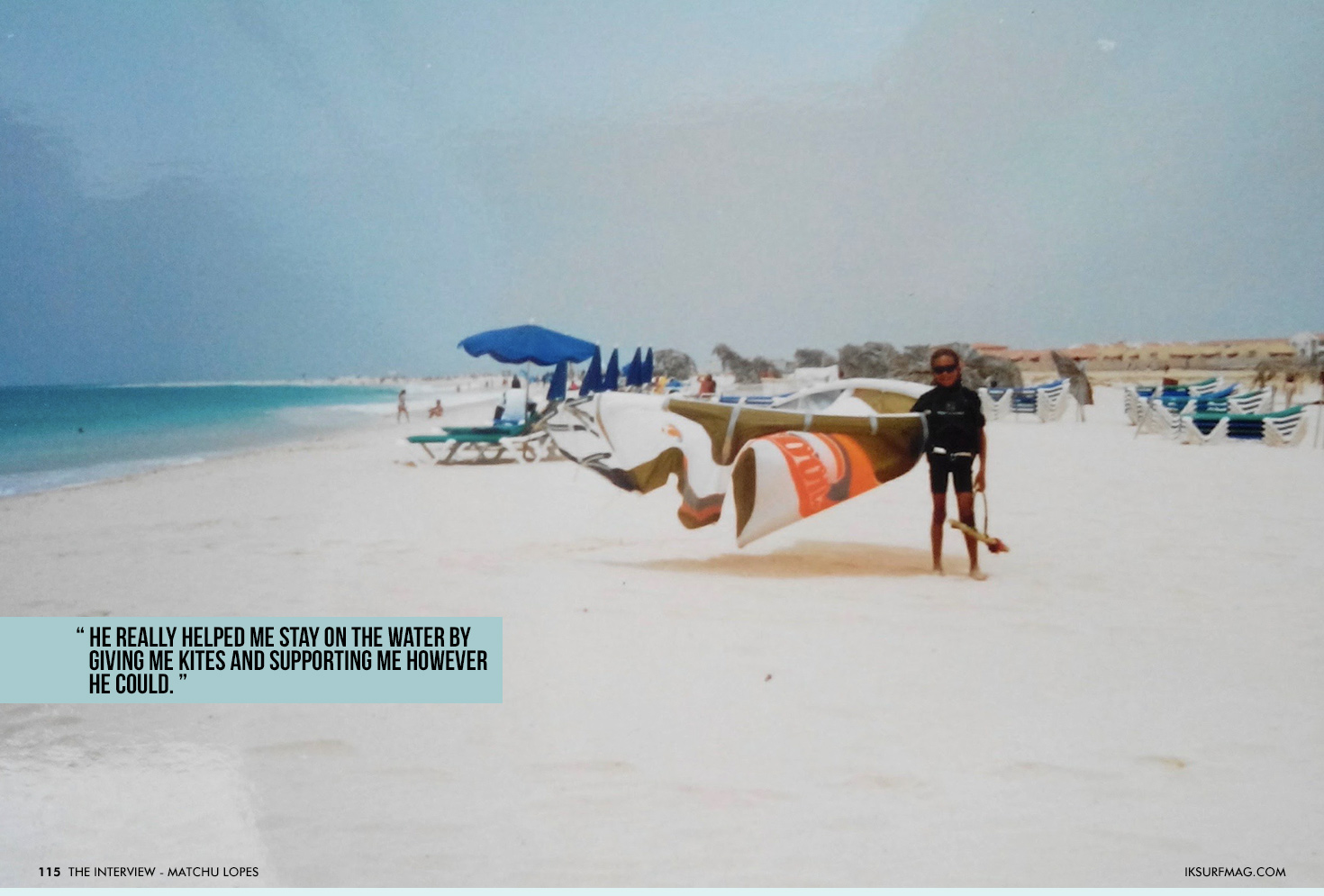
However, the first time I tried it was actually terrible. I started on two-line kites, which were really difficult to control, especially at my age and weight. I would ride a few metres, lose control, crash, lose the kite and then spend a long time swimming after it. When I finally got back to the beach, the lines would be completely tangled, and because they were all white, it was almost impossible to sort them out.
After about a week and a half of that, I gave up completely. It just felt too complicated and frustrating compared to windsurfing, where I was already progressing and enjoying myself. It wasn’t until a few years later, when I tried again with better equipment, a 4-line kite, that everything changed. Within a day, I was riding properly, and that’s when it really clicked for me.
What really struck me was how much freedom I suddenly had. Instead of paddling and waiting for waves, I could move quickly, position myself exactly where I wanted and catch more waves in a single set. That feeling of control and flow was something I had never experienced before. From that moment on, I was completely hooked.
Rou: You were already pretty deep into windsurfing at that point. Was it a difficult decision to switch?
Matchu: In a way, it should have been, because I was already competing and had some support in windsurfing, but once kiteboarding clicked it didn’t feel like a decision at all. I became completely obsessed with it. Everything else just faded into the background.
I would sit in school staring out of the window, thinking about the wind, the beach and the tricks I wanted to try. Eventually, I changed my schedule so I could work at a kite school during the day and go to school in the evening. That allowed me to spend as much time on the water as possible while also supporting myself.
It wasn’t always easy. During the windy season, I was constantly tired, and my grades would drop because I was pushing everything towards kiteboarding. But I loved it so much that it never felt like a sacrifice. Those years were intense, but they shaped everything that came after.
Rou: Who were the key people supporting you in those early days?
Matchu: Before any brands got involved, the biggest support came from the people around me, especially Airton Cozzolino’s father, Libero. He really helped me stay on the water by giving me kites and supporting me however he could. He believed in me, and that made a big difference.
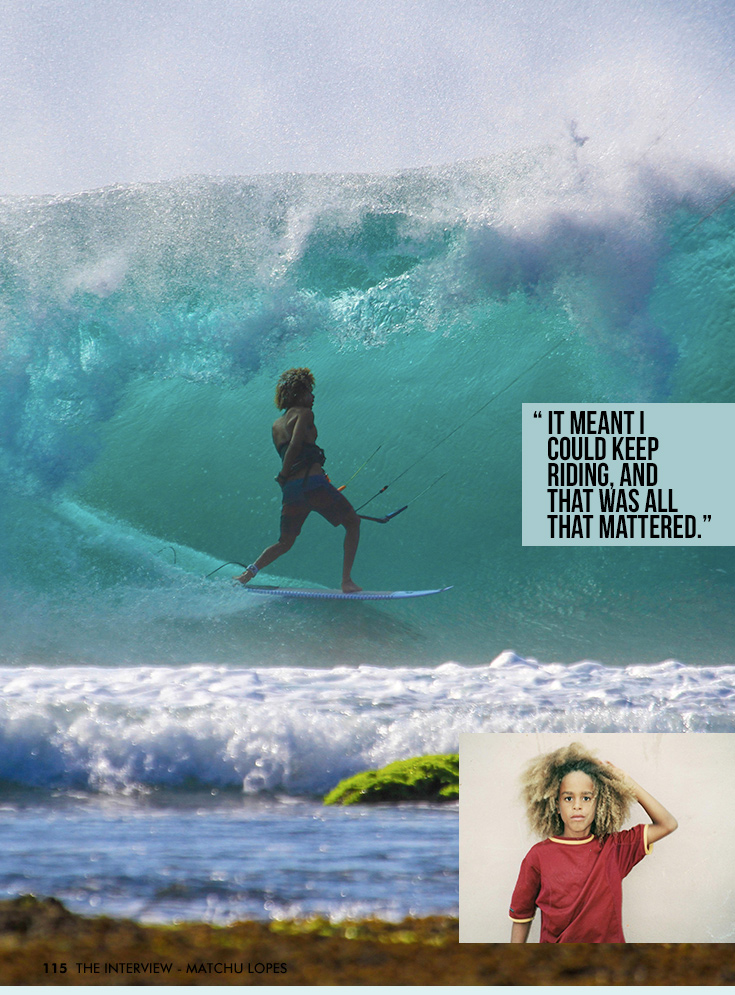
I remember one kite in particular that he left with me for the summer. I used it every day, and by the time he came back, it was full of tiny holes. I had patched it everywhere with tape just to keep it going. It looked terrible, but it meant I could keep riding, and that was all that mattered. Libero couldn’t believe what I had done to it when he saw it again!
My first brand support came from F-ONE, who gave me some kites and a board. One of those boards had belonged to Mitu, and he’d won the World Title on it, which for me was something really special. It felt like I was following a path that someone from my own country had already opened.
Rou: Your first competition was a big moment. How did that come about?
Matchu: That was a huge step for me. I went to Sardinia for my first international competition, not really knowing what to expect. It was a completely new environment, new riders, new level, and I was definitely nervous.
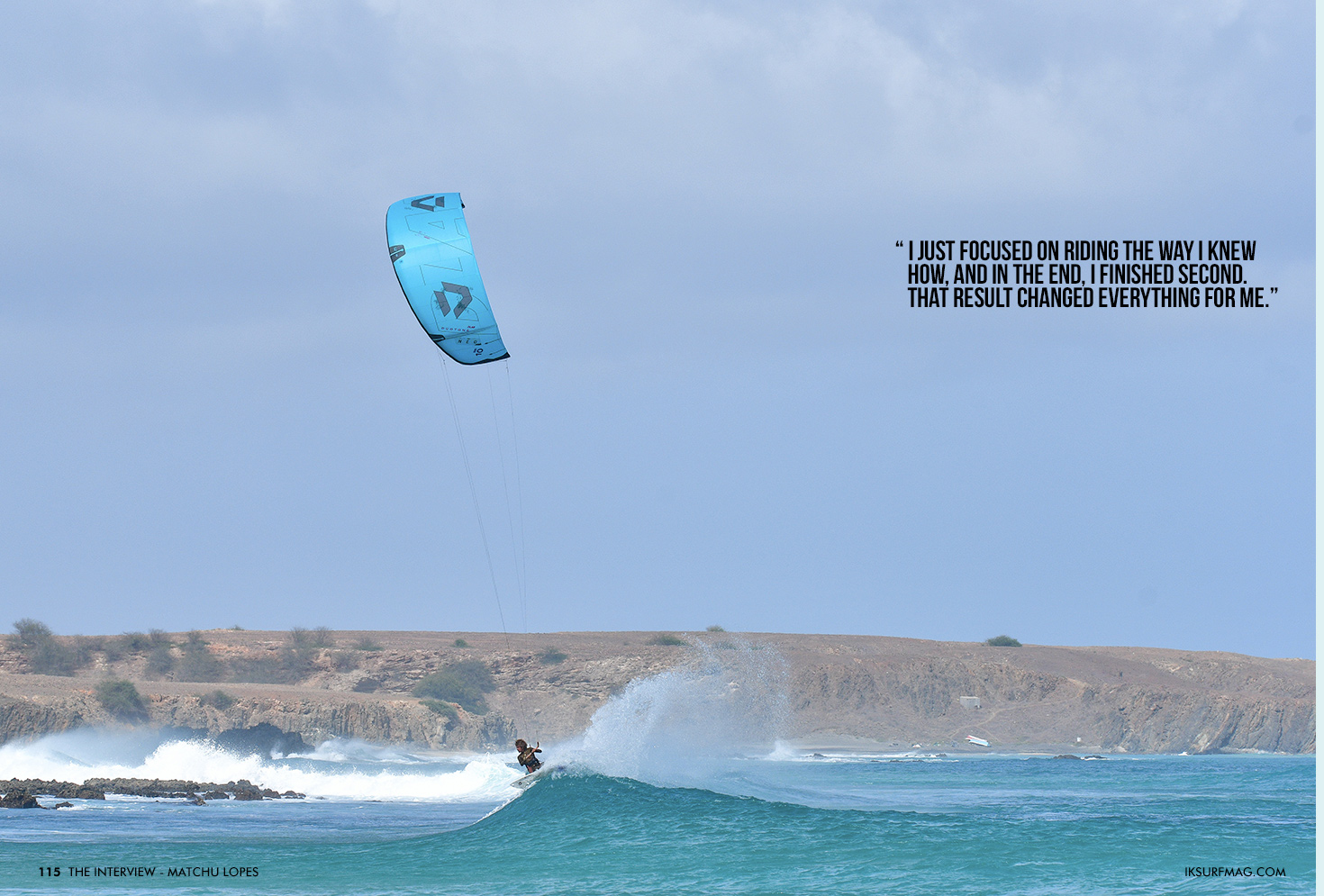
But once I got in the water, everything felt natural. I just focused on riding the way I knew how, and in the end, I finished second. That result changed everything for me. Straight after the event, I was offered a contract with Duotone, then known as North, and that marked the beginning of my professional career. I have ridden for them ever since, and I am really grateful for all the opportunities they have given me.
Rou: Getting to those events wasn’t always straightforward, though, was it?
Matchu: No, that was probably the hardest part of my journey. Travelling from Cape Verde was always complicated. I often had to travel to another country just to apply for a visa, which meant extra costs, extra time and a lot of uncertainty.
Even when I had everything ready, crossing borders could still be difficult. I was questioned a lot about where I was going, why I was travelling and whether I had enough money. Sometimes people didn’t believe I was an athlete at all.
To deal with that, I started carrying magazines with me that featured my photos and interviews. Showing them what I did helped a lot, sometimes more than any official document. It was a strange situation, but it worked.
Duotone supported me massively through all of this. They helped with paperwork, gave me backing and stood by me when things were difficult. That support was really important, and it’s a big reason why I’ve stayed with them for so long.
Rou: You’ve been with Duotone a long time now. What’s kept that relationship so strong?
Matchu: It has always felt like more than just a sponsor. From the beginning, they supported me not just as a rider, but as a person. Especially during those early years when things were difficult, they were there for me.
When we travelled and worked on shoots, it never felt like work. We were riding from sunrise to sunset, trying to get the best out of every session. We were young, motivated and fully focused on progression. It felt like the best job in the world.
Over time, that connection grew into something like a family. After so many years, that kind of relationship means a lot, and it’s something I really value.
Rou: There was a time when strapless riding exploded. Surfboards were everywhere. What did that feel like from your perspective?
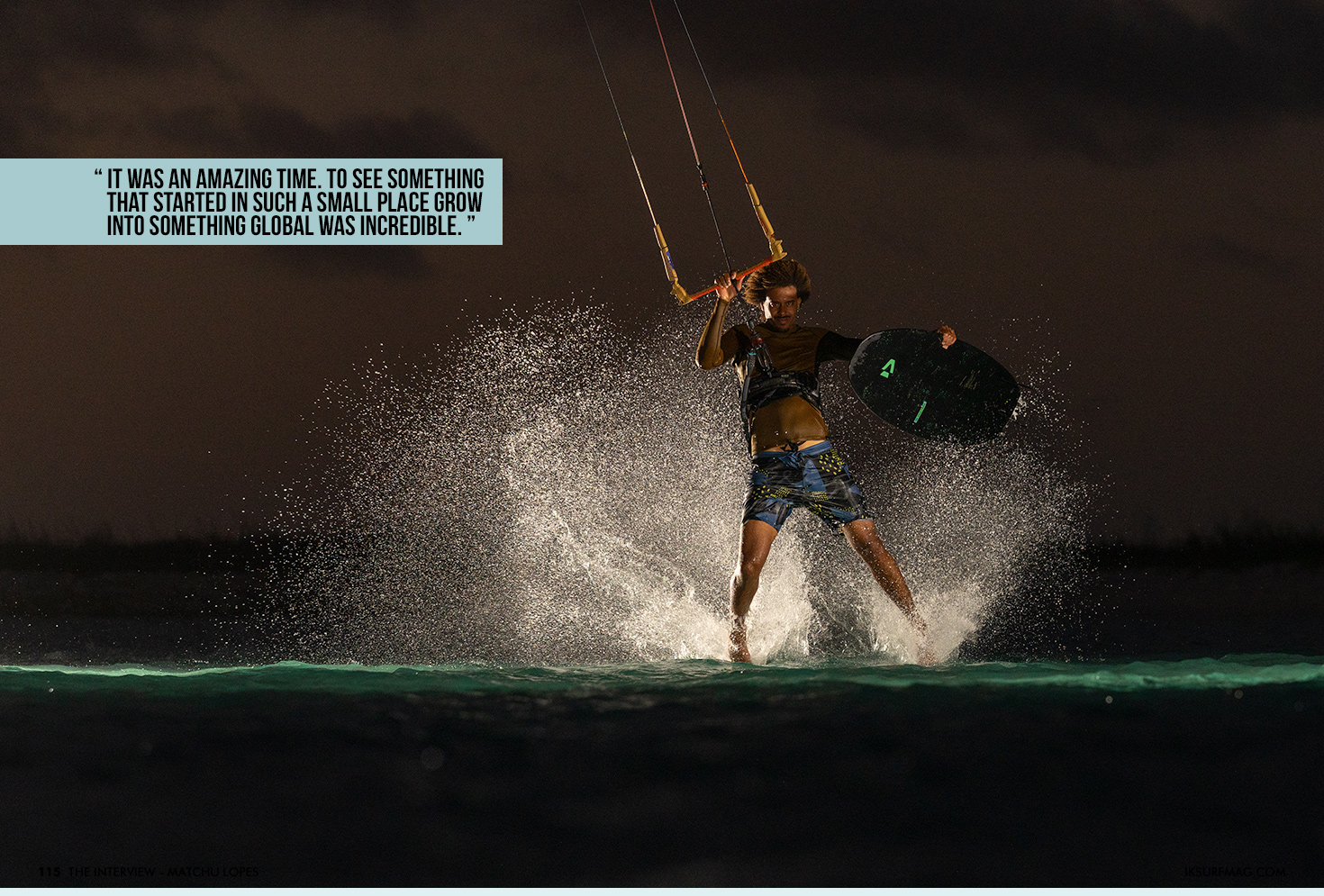
Matchu: It was an amazing time. To see something that started in such a small place grow into something global was incredible. We were just riding the way we loved, pushing each other, trying new tricks and new styles, but suddenly people all over the world were doing the same thing.
I think what people connected with was the freedom and the creativity of riding a surfboard. It gave kiteboarding a different feeling, something more fluid and expressive. Even in places with no waves, people wanted to ride strapless because of that style.
Looking back, it still feels surreal that three riders from the same small town could have that kind of impact on the sport.
Rou: Now, big air is dominating. How do you feel about that shift?
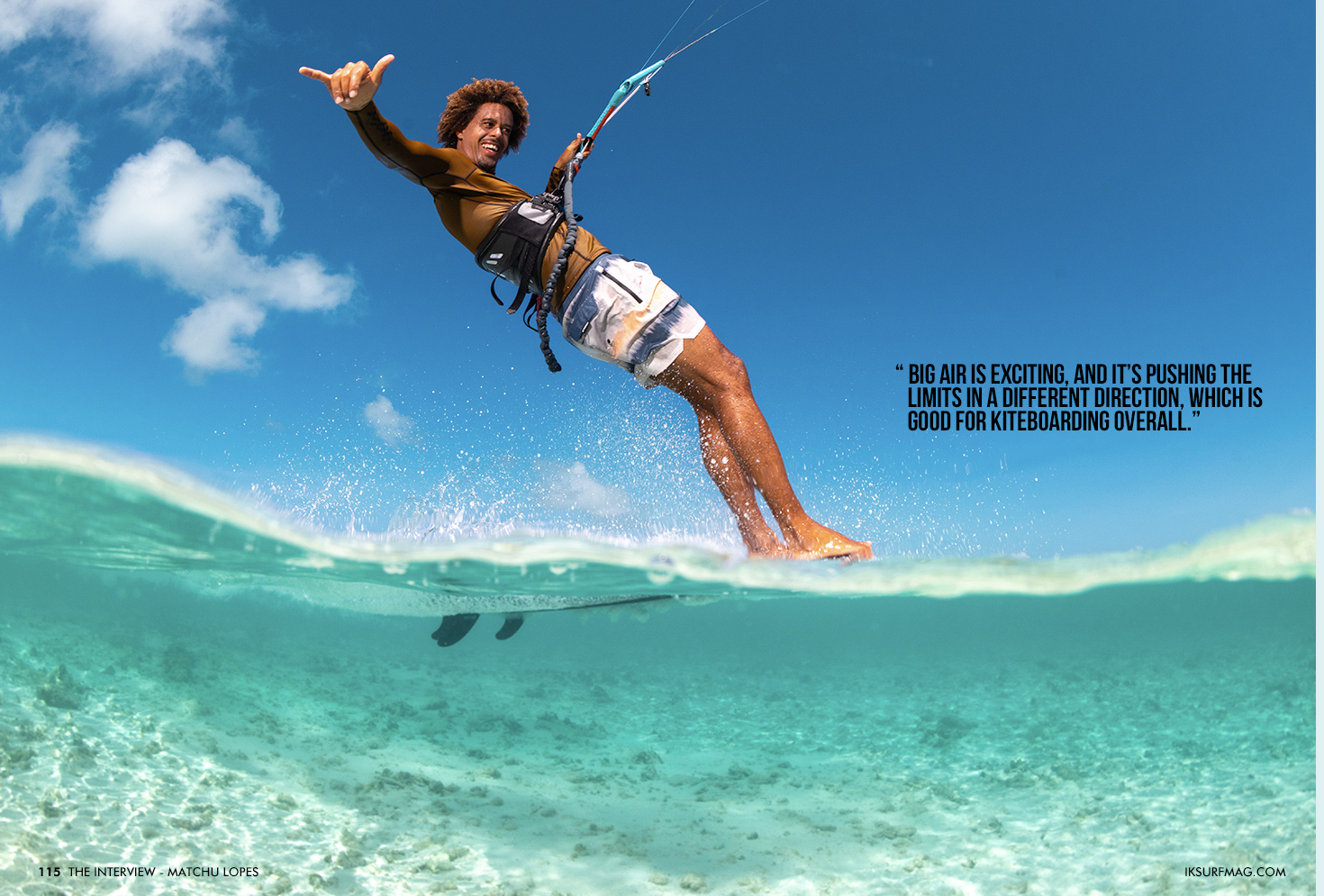
Matchu: For me, it’s all part of the sport evolving. Big air is exciting, and it’s pushing the limits in a different direction, which is good for kiteboarding overall.
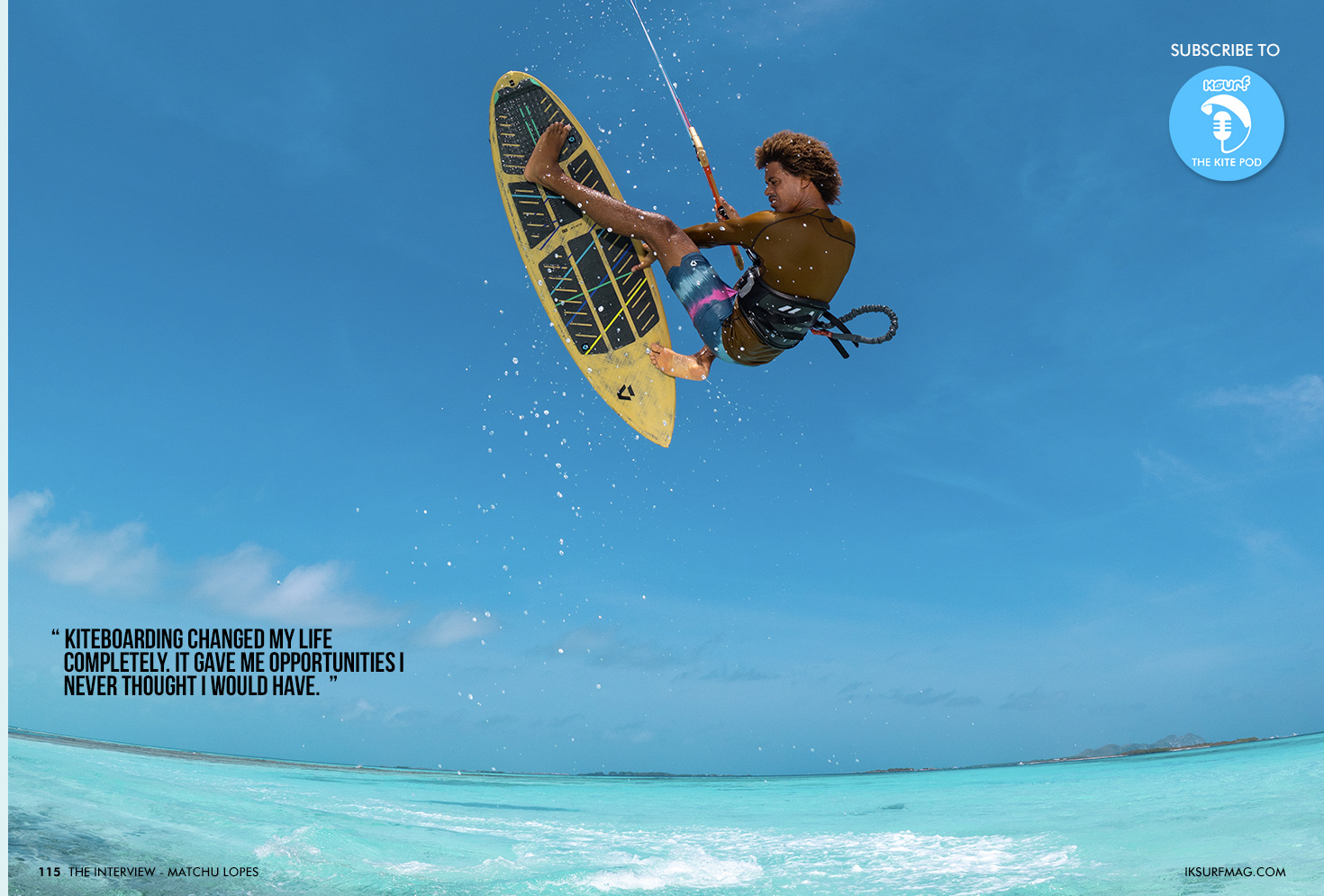
At the same time, wave riding will always have its place. There is something about riding a wave that you can’t replace. The feeling of drawing a clean line or getting a good barrel is unique, and it’s something that keeps me motivated.
The sport moves in cycles, and maybe one day the focus will come back to surfboards again. But even if it doesn’t, wave riding will always be there for the people who love it.
Rou: You’ve stepped back from competing a bit and are now based in Boa Vista. What drew you there?
Matchu: Boa Vista has everything I was looking for. There are so many different spots, so much space and not too many people on the water. You can find waves, flat water, good wind and still have that feeling of exploring something new.
What I really like is the connection to nature. It’s not overdeveloped, it still feels raw, with fishing communities, simple living and a slower pace. That’s something that became more important to me over time.
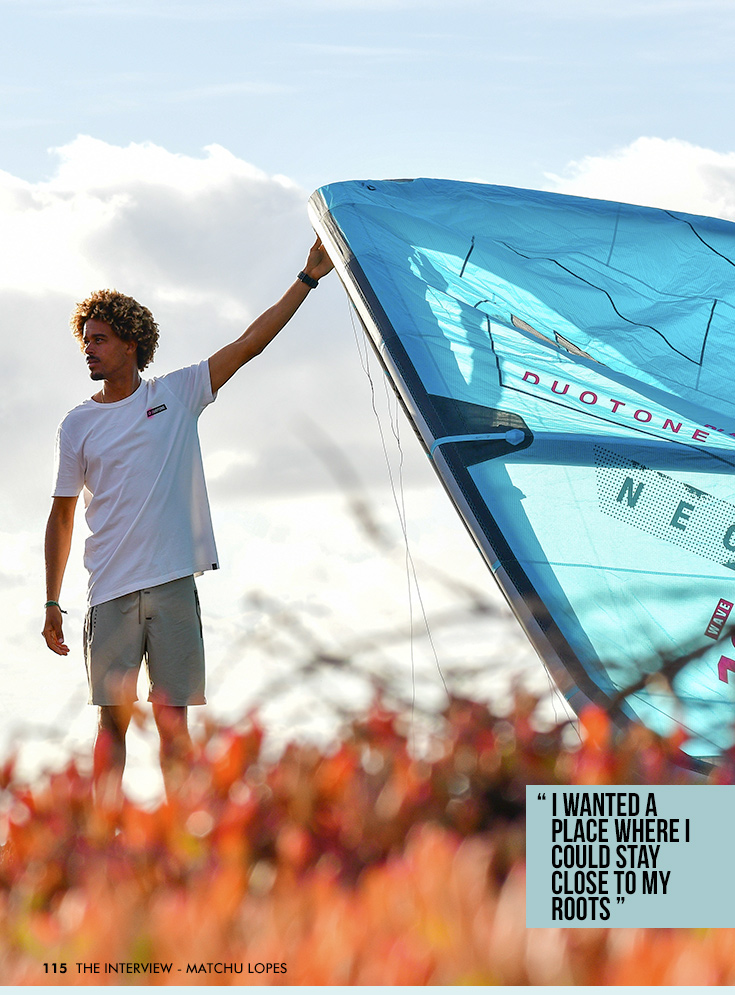
I wanted a place where I could stay close to my roots, keep progressing and also enjoy life in a more balanced way. Boa Vista gives me that.
Rou: And the school you’re running there, how does that fit into everything?
Matchu: The school is a big part of my life now. We opened the Duotone Pro Centre here, and it’s been going really well. The conditions are perfect for teaching, especially in the bay, and for more experienced riders, there is so much to explore around the island.
What I enjoy most is sharing the place with people. It’s not just about teaching someone to kite, it’s about helping them discover the island, find new spots and experience what makes this place special.
There is a real sense of adventure here, and that’s something I want people to feel when they come.
Rou: Final question. What advice would you give to young riders who want to follow a similar path?
Matchu: The most important thing is to believe in yourself and be willing to work for it. I came from a small island with very limited opportunities, but I saw Mitu do it, and that made me believe it was possible.
From there, it was about putting in the time, staying focused, and not giving up when things got difficult. There were a lot of challenges along the way, especially with travel and resources, but step by step, things started to happen.
Kiteboarding changed my life completely. It gave me opportunities I never thought I would have. So my advice is simple: don’t focus only on the limitations. Focus on what’s possible, work hard and keep going. That’s how it starts.
By IKSURFMAG
