

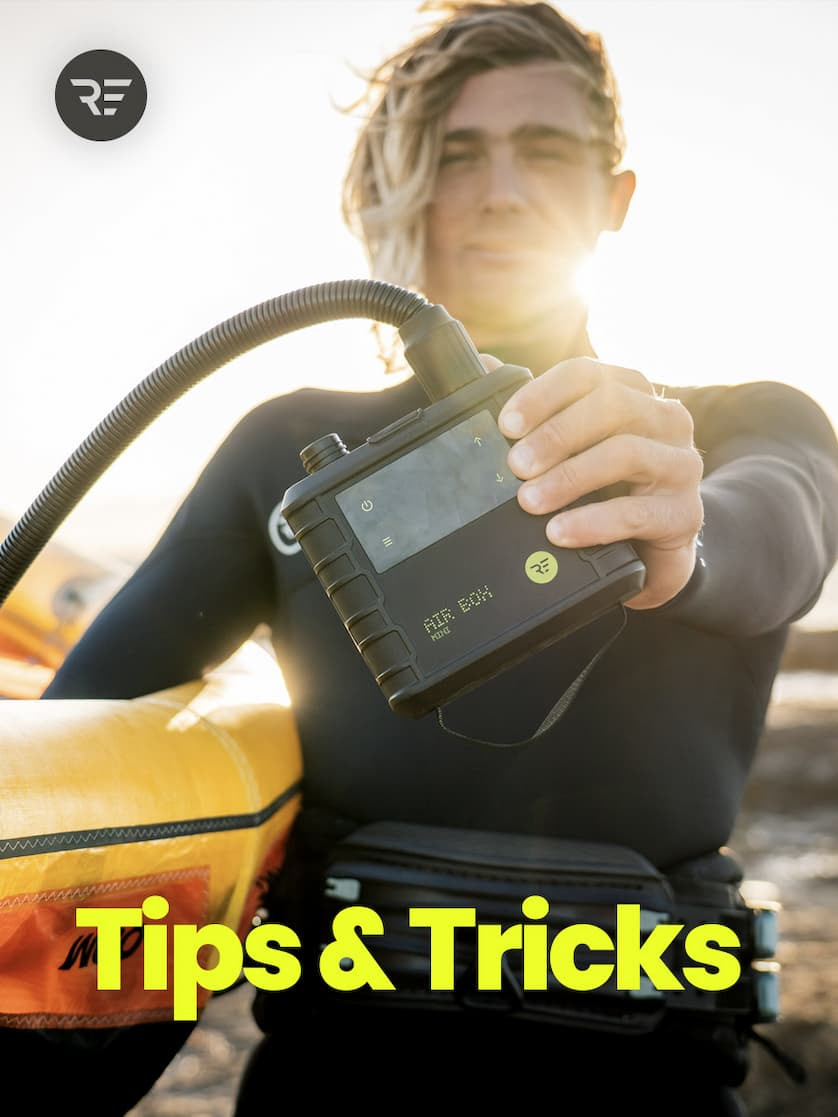
Tips & Tricks for Your E Pump
Tips and Tricks for Your E Pump
The Air Box Mini makes inflation easy.
But a few simple habits can help you get even more from it.
From choosing the right nozzle and setting the correct pressure to managing battery life, keeping sand away from the intake, and getting the most from the deflation function, we put together our best Air Box Mini tips and tricks in one place.
Whether you use it for kites, wings, SUPs, or other inflatable boards, these are the small things that can make your setup faster, more efficient, and easier on your pump.
Don’t own an Air Box Mini? Still pumping by hand? It might be time for an upgrade.
1. Start With a Charged Battery
One of the easiest ways to get consistent performance from the Air Box Mini is also the most obvious: keep it charged.
Battery consumption varies depending on several factors, including the size of the kite, wing, or inflatable board, the target pressure, environmental temperature, and how many products you inflate consecutively.
For a typical day at the beach, make a habit of checking the battery before you leave home. If you are traveling or inflating equipment for multiple people, starting with a full charge gives you the greatest flexibility.
2. Use the Correct Nozzle and Make Sure the Connection Is Secure
Efficient inflation starts at the valve.
Before turning on the Air Box Mini, make sure you are using the correct nozzle for your equipment and that the connection is fully seated.
A loose connection can allow air to escape during inflation. That means the pump has to run longer to reach the target pressure, wasting both time and battery capacity.
Check these three things before starting:
The correct adapter is installed.
The adapter is securely connected to the pump hose.
The connection to the inflatable valve is properly seated.
3. Know the Recommended Pressure for Your Equipment
Not every kite, wing, SUP, or inflatable board is designed to perform at the same pressure.
Always follow the inflation pressure specified by the manufacturer of the equipment you are pumping.
Correct pressure is important for performance, structural support, and product longevity. Adding more pressure than recommended does not necessarily improve performance and can place unnecessary stress on seams, valves, and internal construction.
Before starting inflation, confirm the recommended pressure and set the Air Box Mini accordingly.
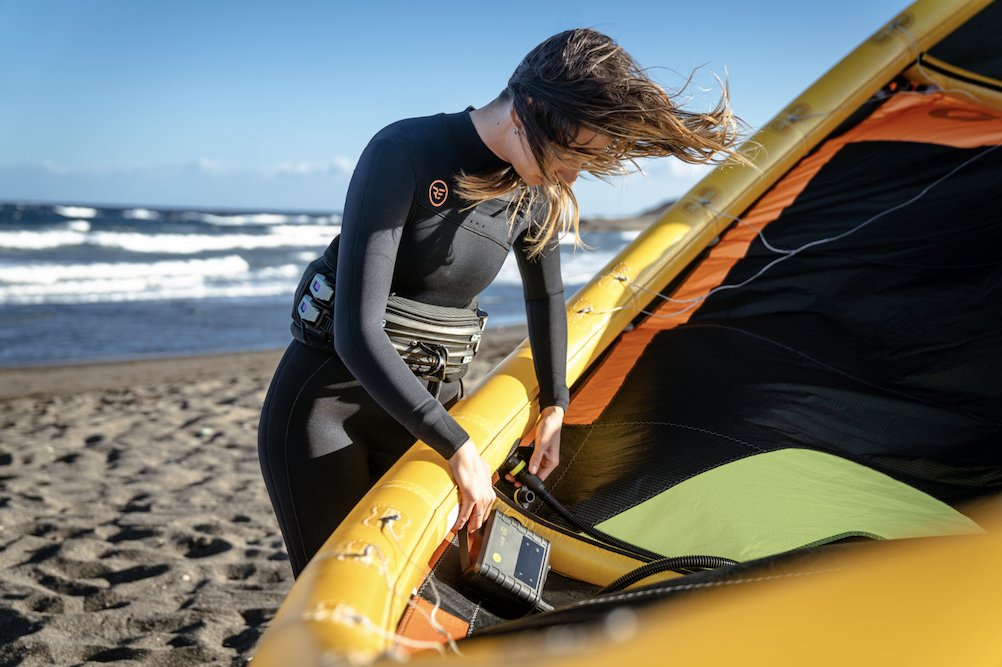
This is especially important when switching between different categories of equipment. A kite, wing, SUP, and inflatable foil board may each have very different pressure requirements.
4. Let the Automatic Shutoff Work for You
One of the biggest benefits of using a rechargeable e pump is that inflation no longer needs your full attention.
Connect your equipment, select the correct pressure, start the Air Box Mini, and allow the pump to do its job.
The automatic shutoff stops inflation once the selected pressure is reached. While your kite or wing is inflating, you can organize your lines, assemble your foil, put on your wetsuit, or prepare the rest of your equipment.
5. Keep Sand Away From the Air Intake
Anyone who spends time around wind sports knows that sand eventually finds its way into almost everything.
Electric pumps need unrestricted airflow to operate efficiently, so keeping loose sand and debris away from the Air Box Mini intake areas is an important part of maintaining performance.
Whenever possible, avoid placing the pump directly in deep or loose sand.
Place it on a cleaner surface such as:
The canopy of the kite or wing
A board bag
A changing mat
A stable piece of equipment clear of loose debris
After your session, take a quick look at the pump and intake areas before storing it. Removing visible sand and debris before it works deeper into the equipment is much easier than dealing with it later.
6. Give the Pump Room to Breathe
Moving and compressing air generates heat.
When the Air Box Mini is running, make sure there is adequate airflow around the pump. Avoid covering it with a wetsuit, towel, changing robe, board bag, or other equipment while it is operating.
This becomes even more important when inflating several products consecutively.
On extremely hot days, avoid unnecessary exposure to direct sunlight while the pump is running. A shaded area near your vehicle or rigging zone can provide a better operating environment than leaving the pump exposed on a hot surface.
7. Be Strategic When Inflating Multiple Products
If you are setting up more than one kite or wing, think about your inflation order before you start.
Inflate the product you are most likely to use first.
For example, if the wind is still building, start with the size you expect to launch. You can then evaluate the conditions while preparing additional options.
This approach is especially useful for:
Travel days
Coaching sessions
Families or groups sharing a pump
Anyone rigging multiple kite or wing sizes
Having a simple plan helps you use both setup time and available battery capacity more efficiently.
8. Use the Deflation Function When Packing
An electric pump can be just as useful at the end of the session as it is at the beginning.
The Air Box Mini deflation capability can help remove remaining air from compatible inflatable equipment, allowing it to roll or fold into a more compact package.
This can be particularly useful when:
Packing several kites or wings into a vehicle
Reducing the volume of equipment in a travel bag
Preparing gear for air travel
Fitting several inflatables into limited storage space
Removing trapped air can make packing cleaner, tighter, and easier.
9. Keep Your Nozzles and Accessories Together
The most powerful pump in the world is not much help if the adapter you need is sitting at home.
Keep the Air Box Mini, charging equipment, hose, and commonly used nozzles stored together as one inflation kit.
Before leaving for a trip, especially an international trip or remote kite destination, take a minute to confirm that you have the adapters required for all the equipment you are bringing.
This becomes even more important if you use the Air Box Mini across several disciplines. Your kite valve may not use the same connection as your wing, SUP, or another inflatable product.
10. Treat It Like the Electronic Equipment It Is
The Air Box Mini was designed for life around water sports, but it is still a rechargeable electronic device.
Salt water, standing water, excessive sand, and prolonged moisture are never ideal environments for electronics.
After use:
Remove visible sand and debris.
Wipe down the exterior when necessary.
Do not leave the pump sitting in the rain.
Avoid storing it underneath wet wetsuits or saturated equipment.
For longer periods when the pump will not be used, check the battery periodically and recharge it when appropriate.