
Kiteboarding Harness Connections Explained
Kiteboarding Harness Connections Explained:
Fixed hook, closed metal loop, full sliding rope, or mini rope loop? Your harness connection influences how directly you feel the kite, how freely your body can rotate, how securely you remain connected, and whether unhooked riding is possible.
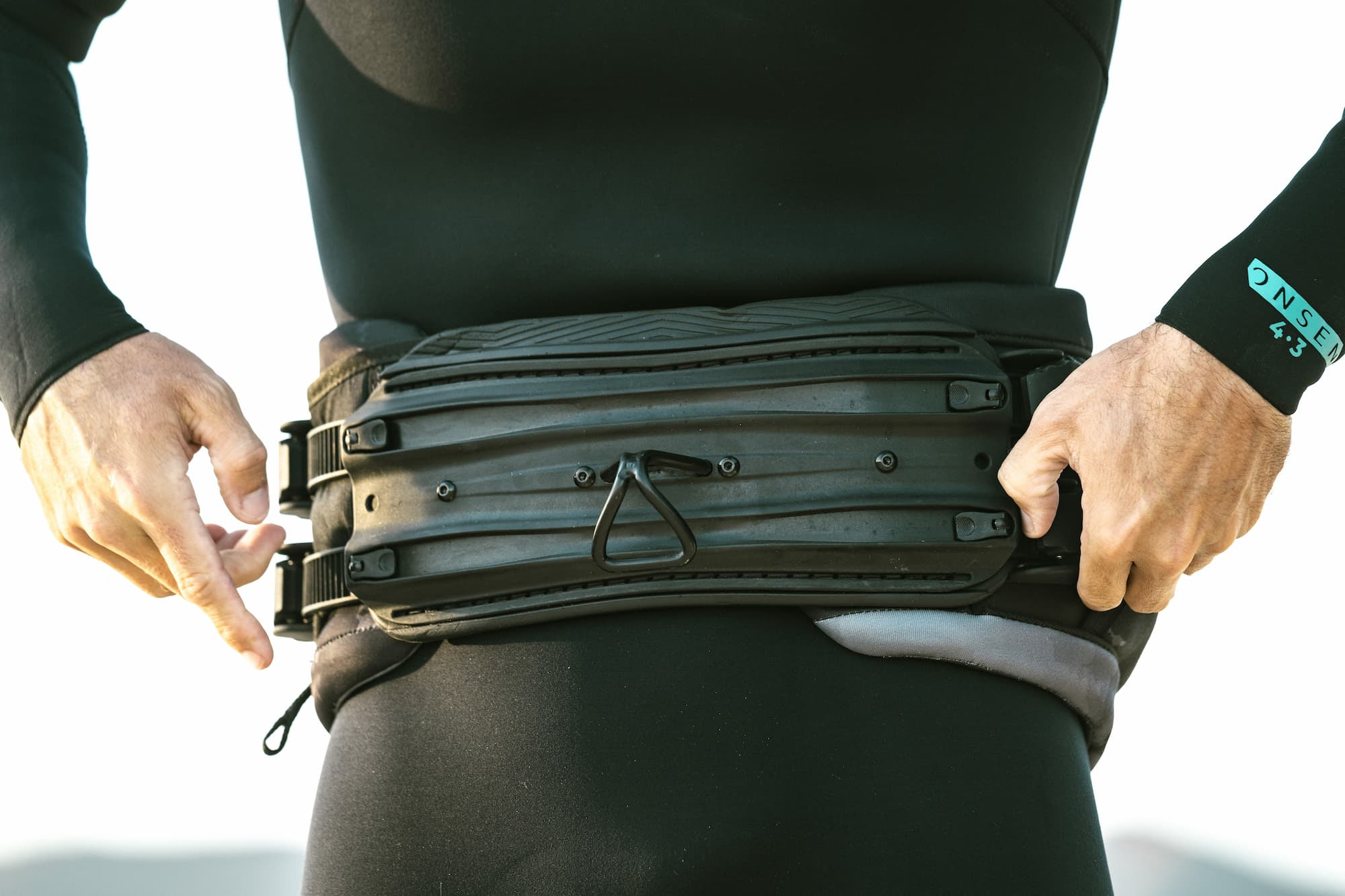
Most kiteboarders refer to the connection on the front of their harness as a harness hook. Technically, however, only one of the primary connection options is actually a hook.
The traditional fixed kite hook has an open hook geometry. A closed metal loop and sliding rope system are better described as connection options because the control system loop must be opened, passed through the connection point, and securely reassembled.
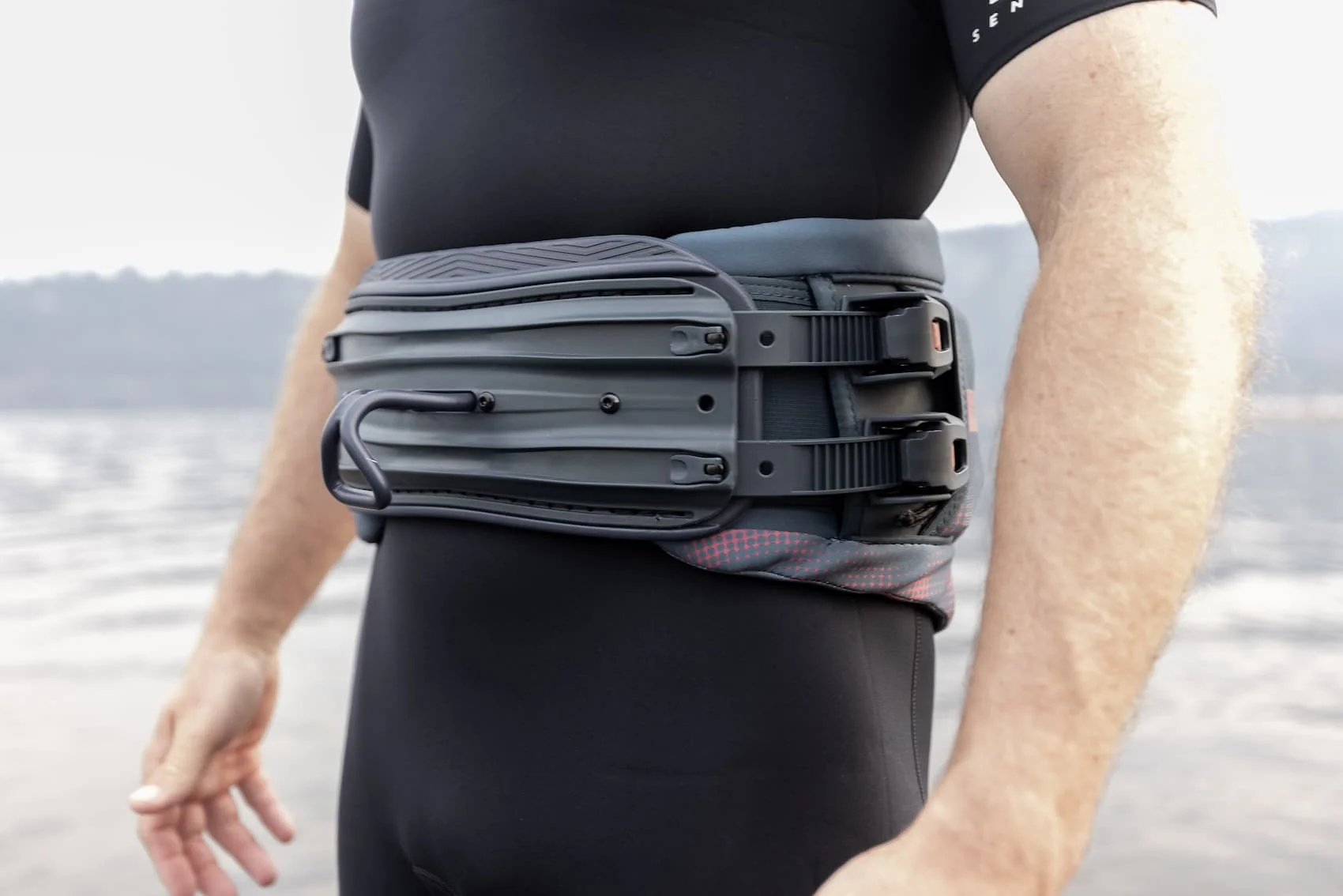
That distinction is more than terminology. Your connection choice can influence how directly you feel the kite, how freely your hips and upper body can rotate, how easily you can unhook, and how securely the control system remains connected to the harness.
After years of harness design, development, and time on the water, we have learned that there is no single connection that is best for every kiteboarder. The right option depends on your discipline, how you move on the board, and the type of connection feel you prefer.
The Fixed Kite Hook: The Familiar Standard
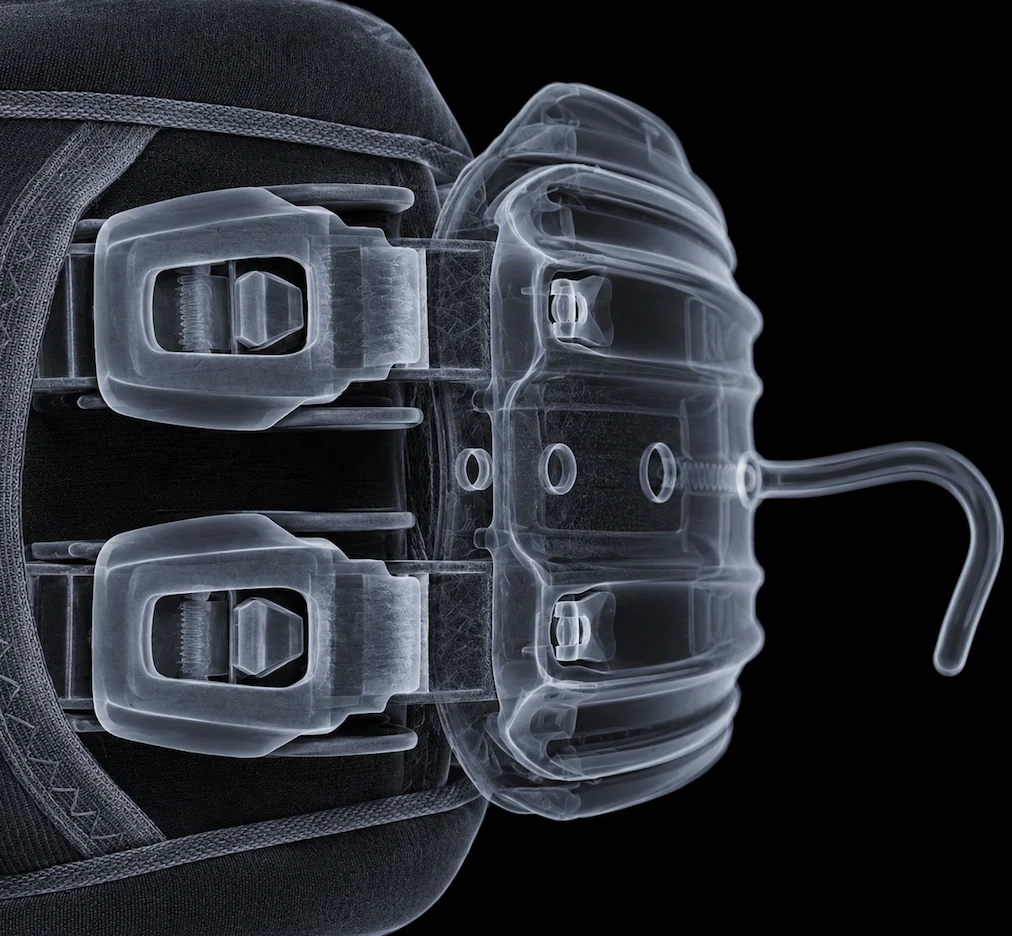
The fixed kite hook has been the standard connection since the early days of kiteboarding. Originally adapted from windsurfing harnesses, its simple open hook geometry remains the most widely recognized and commonly used option.
To connect, the chicken loop is placed on the hook and secured with the control system’s retaining finger or safety pin. Once the kite is powered and the connection is loaded, the chicken loop is pulled securely into the base of the hook.
A fixed hook creates a centered and direct connection between the kite and harness. This geometry provides consistent feedback and a locked-in feel that many kiteboarders have used throughout their entire progression.
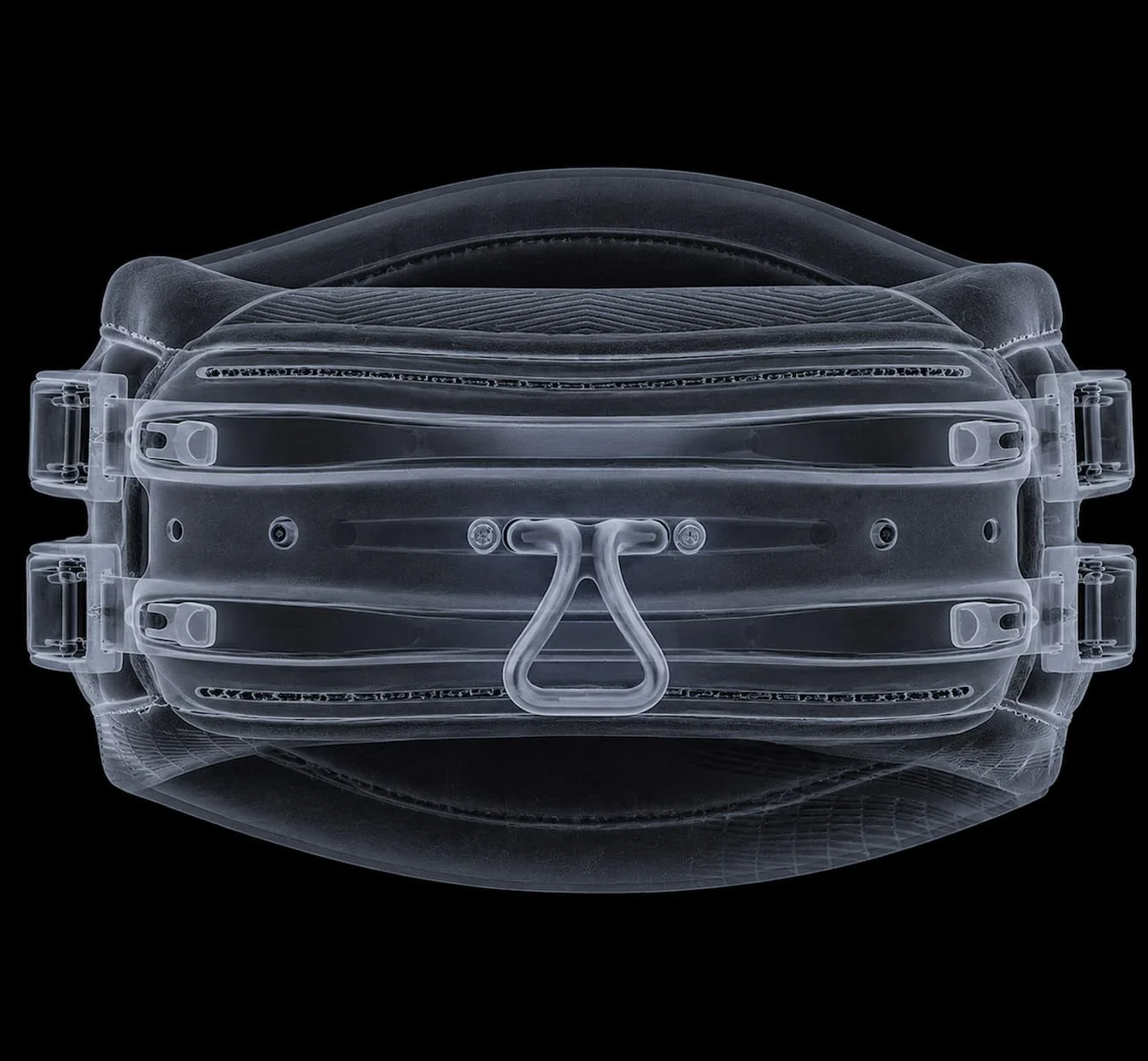
At Ride Engine, we consider the fixed hook the most direct connection option, making it particularly well suited for big air, freeriding, hydrofoiling, and technical freestyle.
The Closed Metal Loop: Maximum Connection Security
A closed metal loop replaces the open hook with a continuous metal connection point.

Instead of placing the chicken loop over an open hook, the kiteboarder activates the push-away safety release, passes the control system loop through the closed metal loop, and then correctly reassembles and resets the safety system.
Once connected, the chicken loop cannot simply lift or fall away from the harness connection. The closed geometry removes the open hook interface and greatly reduces the possibility of false hooking or accidental unhooking.
Ride Engine’s Hyperlock Closed Metal Loop uses a precurved 8 millimeter stainless steel loop designed to work with common chicken loop geometries.

The Sliding Rope Connection: Freedom Through Movement
A sliding rope system replaces the fixed hook with a high-strength rope positioned across the front of the spreader bar.
Depending on the configuration, the control system connects around the rope or through a smaller fixed rope loop known as a mini loop.
The full sliding configuration allows the kite connection to move from one side of the harness to the other. As the kiteboarder rotates into toe side, carves through a turn, or changes direction on a wave, the connection can travel toward the hip instead of forcing the body to rotate against a fixed center point.
Ride Engine rope conversion systems use Dyneema rope and can be configured with either a full slider or mini loop connection.
The Mini Rope Loop: A Balance of Security and Movement
The mini loop offers a middle ground between a fixed metal connection and a full sliding rope.
Rather than allowing the connection to travel across the entire spreader bar, the chicken loop is secured through a compact rope loop. The rope can articulate and change angle under load, but the connection remains relatively centered.
This provides more freedom than a rigid fixed hook or closed metal loop without creating the full side-to-side travel of a sliding ring.
Matching the Connection to Your Discipline
Big air: The decision often comes down to the fixed hook or closed metal loop. The fixed hook provides the traditional direct connection, while the closed metal loop provides additional security for riders who never need to unhook.
Wave riding: A full sliding rope generally provides the greatest freedom, although a closed metal loop may appeal to someone who prioritizes connection security.
Hydrofoiling: Both the full slider and mini loop can work well. The full slider offers maximum freedom, while the mini loop creates a more controlled and centered connection.
General freeriding: All options are valid. The choice is largely about whether you prefer direct feedback, maximum security, or increased movement.