

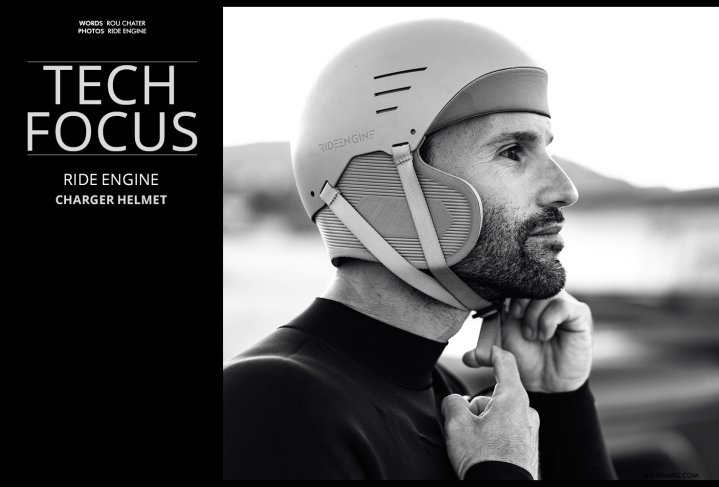
Tech Focus - Ride Engine Charger
Issue 115 / Tue 21st Apr, 2026
Helmets have long sat on the fringes of kiteboarding, but that is starting to change as the sport pushes into faster, more extreme territory. The Ride Engine Charger is built for this new era, combining a low-profile design with serious on-water performance. It is all about protection without compromise, something you will actually want to wear every session.
Big air has never been more extreme. Riders are going higher, faster, and pushing harder than ever before, and with that progression comes a shift in how we think about safety. Helmets are no longer reserved for stormy days or when you are learning. They are becoming part of the conversation at every level of the sport.
Ride Engine’s Charger helmet is built specifically for modern water use, not borrowed from another discipline, and it arrives at a time when protection is starting to feel less optional and more essential.
Big Air Changes the Safety Equation
Kiteboarding has always carried an element of risk, but the pace of progression in recent years has taken things to another level.
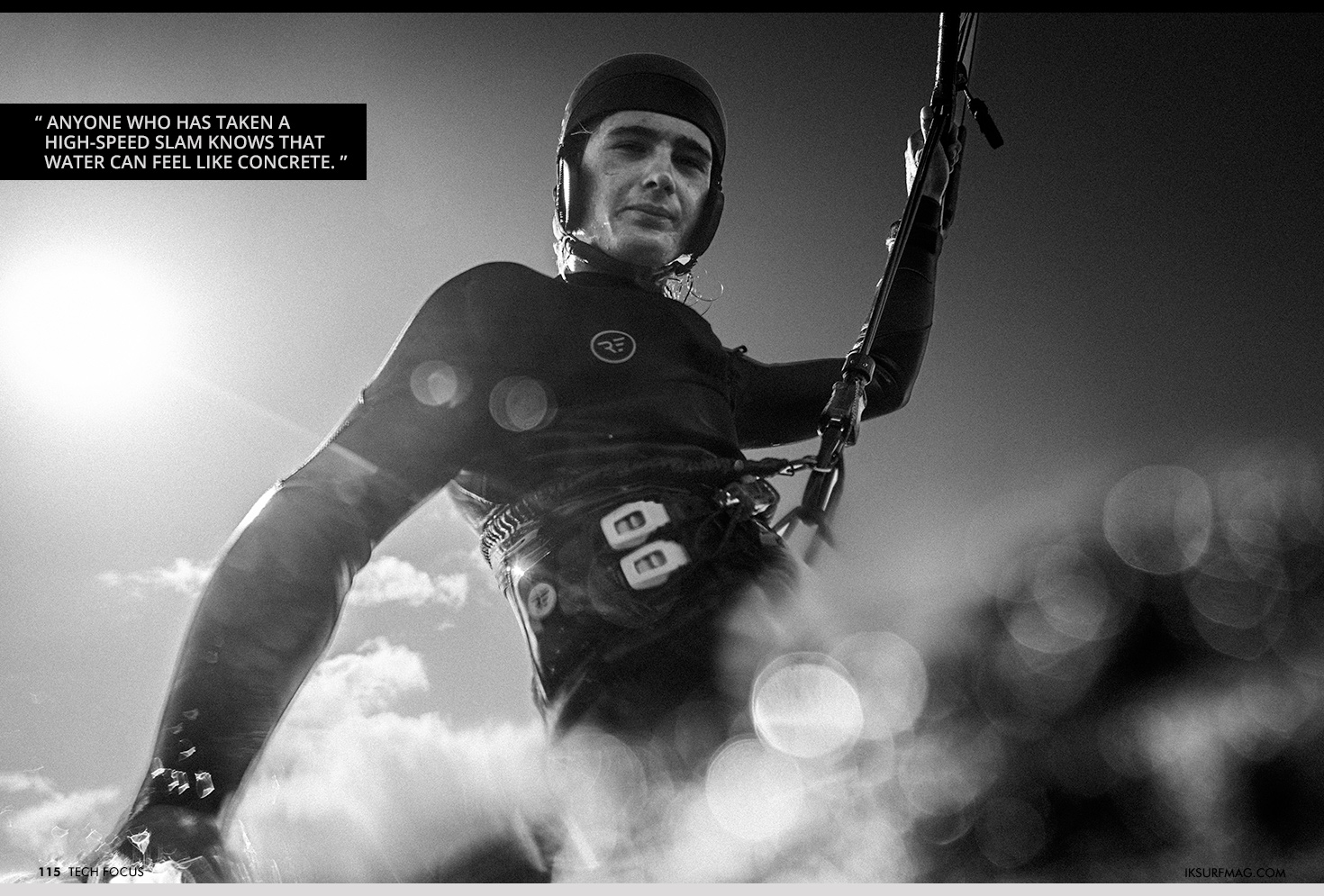
With riders regularly hitting serious height and speed, crashes are no longer just about losing an edge or mistiming a landing. When things go wrong, the impact with the water can be heavy, unpredictable, and occasionally disorientating. Anyone who has taken a high-speed slam knows that water can feel like concrete.
In big air, the combination of vertical drop and forward momentum creates a unique type of impact. Riders can fall from a significant height, often still travelling downwind at speed, increasing both the force and the complexity of the crash. It is not just about the initial hit either; it is the rotational forces, the secondary impacts, and the potential for losing consciousness in the sea, which is the worst-case scenario.
This is the environment the Charger has been designed for.
Why Traditional Helmets Fall Short
Most helmets used in watersports today come from other disciplines. Wakeboarding, kayaking, and even cycling designs are often waterproofed and sold to us. While they offer protection, they are not designed for the way kiteboarders interact with the water.
The biggest issue is drag.
Bulky, high-volume helmets tend to catch water during a crash, creating a sudden stop at the head while the body continues moving. That mismatch can increase strain on the neck and amplify the forces involved in the impact.
They can also feel awkward in the water. Whether you are body dragging, relaunching your kite, or getting worked in waves, excess volume creates resistance and discomfort.
The result is simple: if a helmet feels restrictive or awkward, most riders will not wear it.
Ride Engine’s approach with the Charger is to remove those barriers.
Hydrodynamics First
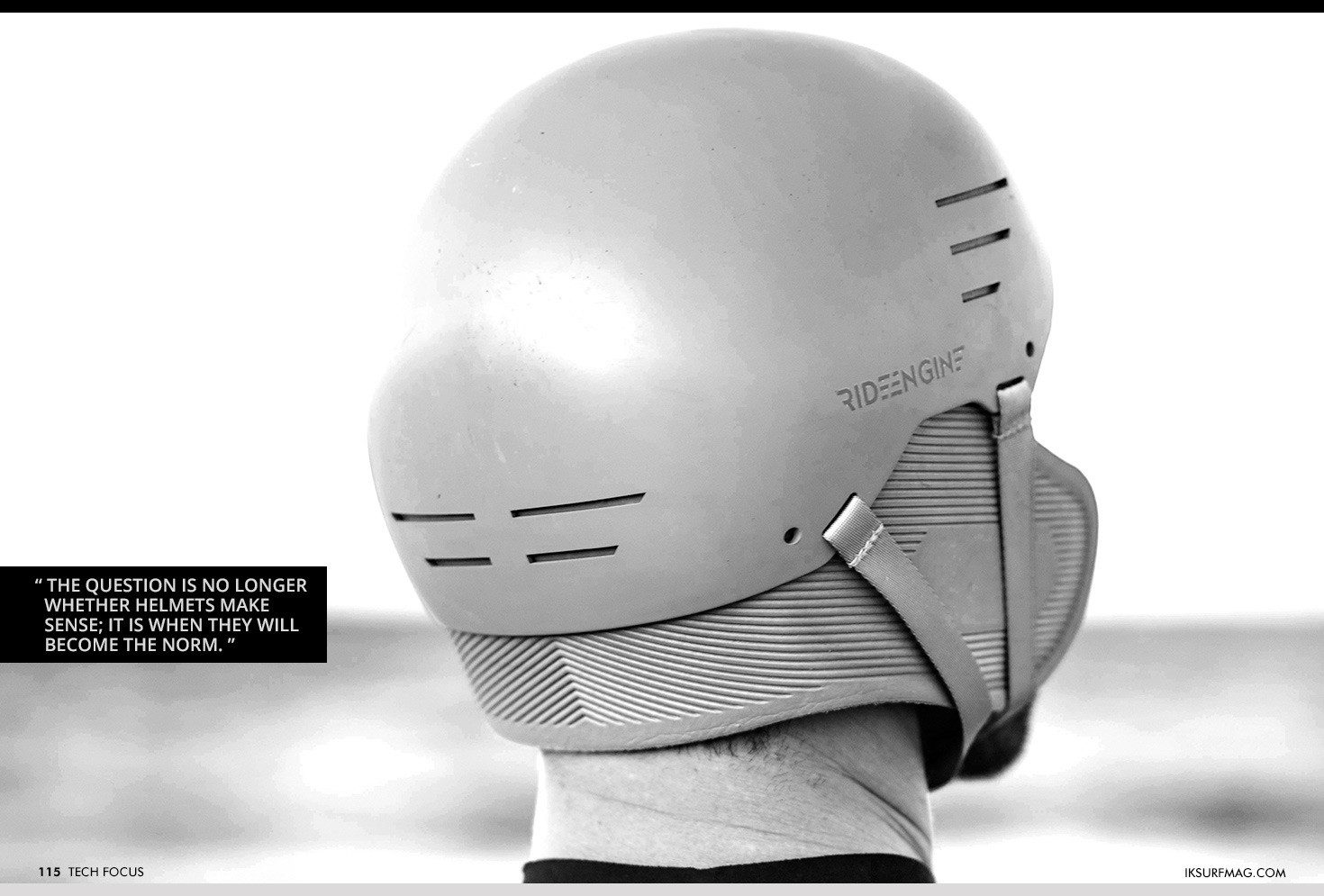
The defining feature of the Charger is its low-profile design.
Instead of sitting away from the head like a traditional “bucket” helmet, it fits close to the skull, following the natural shape of the head. This reduces drag and allows the helmet to move cleanly through the water during a crash.
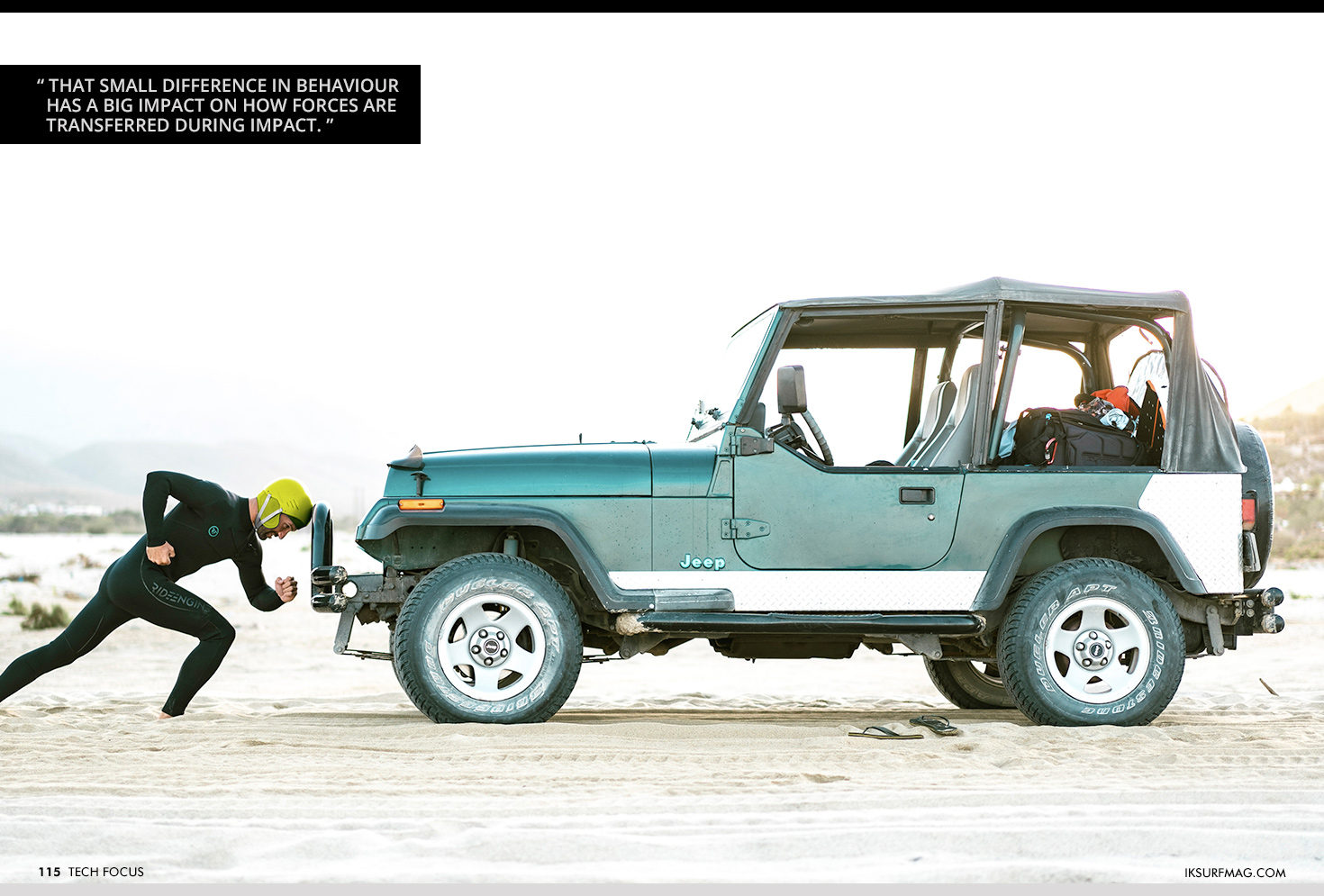
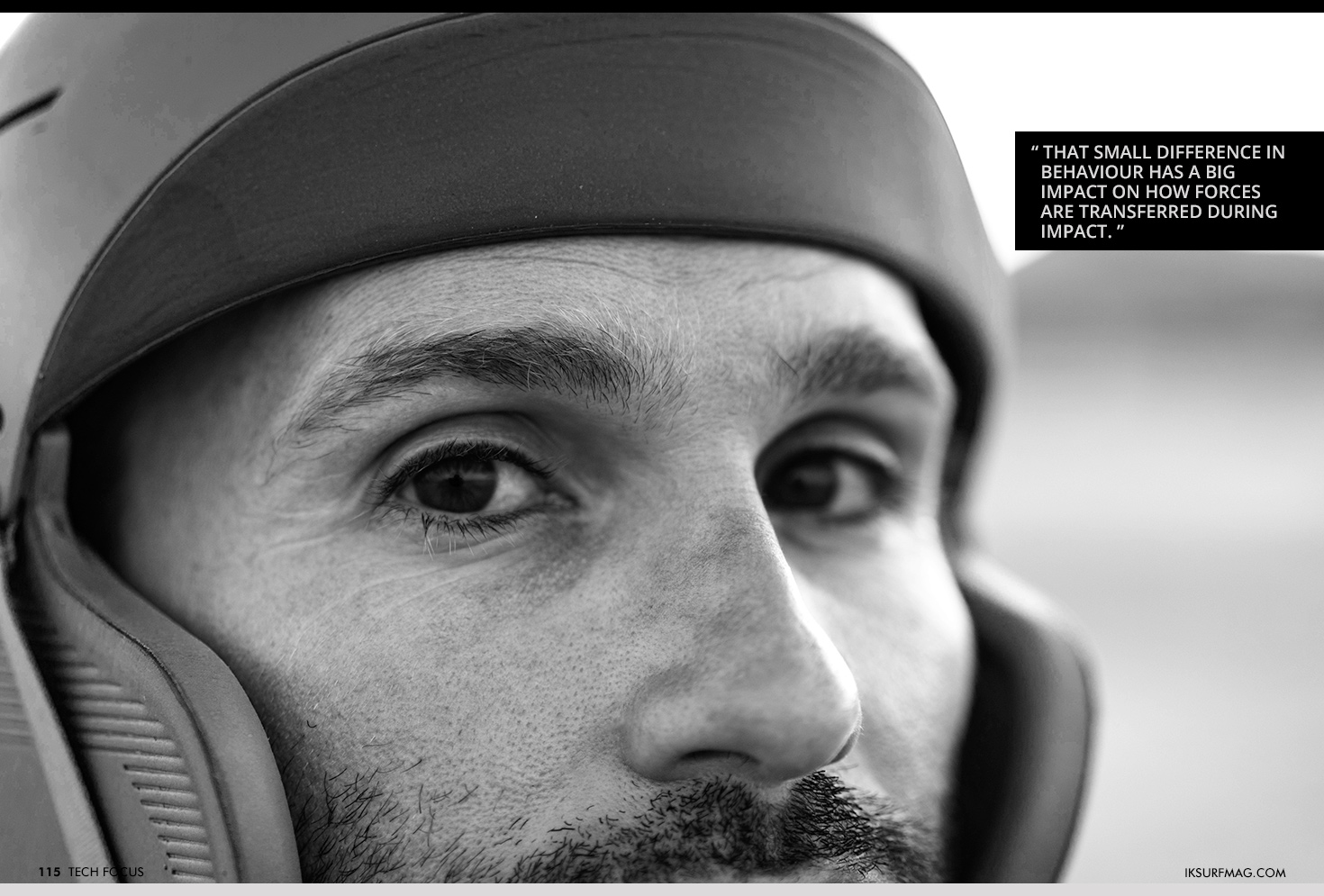
Rather than slapping onto the surface, the Charger is designed to penetrate it. That small difference in behaviour has a big impact on how forces are transferred during impact.
For big air riders, where high-speed crashes are part of progression, this hydrodynamic efficiency is a key advantage. It reduces the abrupt deceleration that can happen with bulkier helmets and helps the helmet stay stable and in position when it matters most.
It is a subtle shift in design thinking, but one that directly reflects how kiteboarders actually ride.
Materials and Impact Protection
At its core, the Charger is still about protection.
The outer shell is constructed from injected glass-filled nylon, chosen for its strength and durability. Inside, EVA impact foam is used to absorb and disperse energy from collisions, whether that is with the water, your board, or in rare cases, another rider.
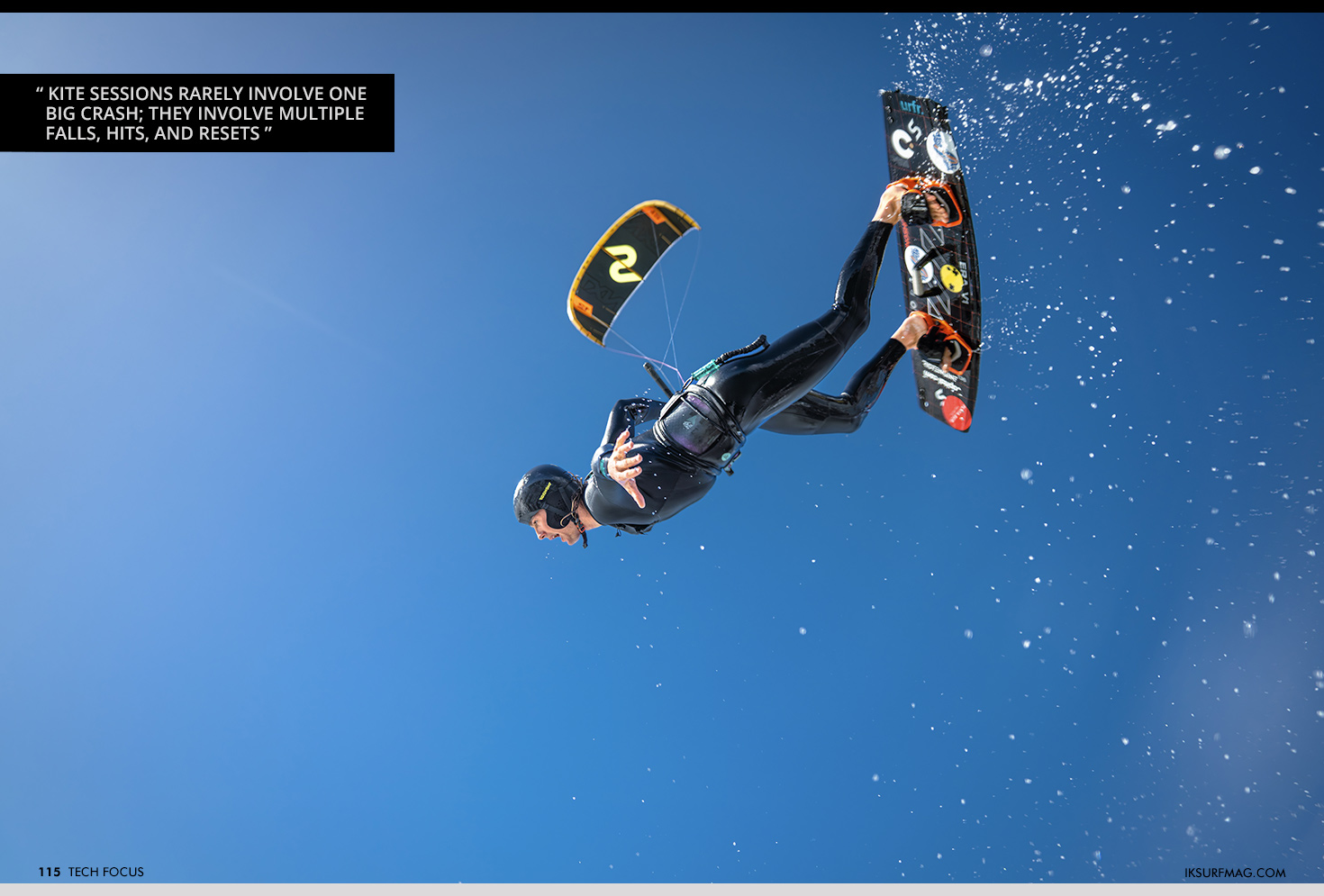
Unlike single-impact helmets designed to crush and be replaced, the Charger is built for repeated use in real-world conditions. Kite sessions rarely involve one big crash; they involve multiple falls, hits, and resets, and the helmet is designed to handle that reality.
It also meets CE certification standards, ensuring it passes recognised impact testing for hard-object protection, an important benchmark as helmets become more common in the sport.
A Different Approach to Fit
Fit is where the Charger really separates itself.
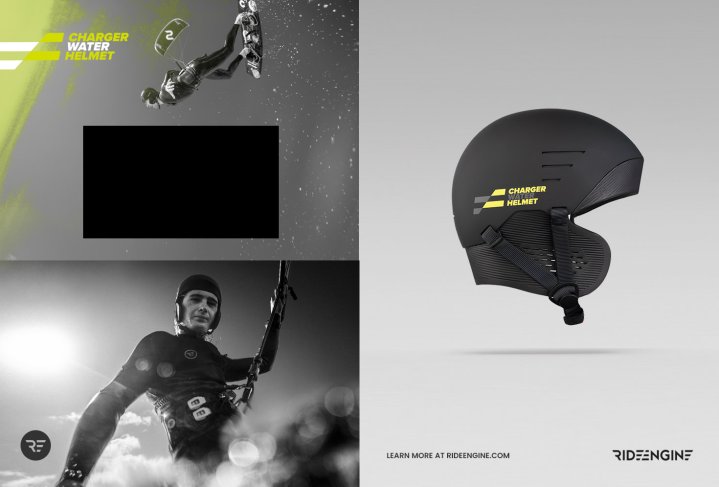
Instead of relying on dial systems or mechanical adjusters, Ride Engine has gone for a customisable internal fit using EVA inserts. The helmet comes in two shell sizes, and riders fine-tune the fit by adding or adjusting padding inside.
It is a simple idea, but highly effective.
By eliminating moving parts, the helmet stays lighter and avoids the long-term issues that can come with saltwater exposure. At the same time, it allows for a much more precise fit.
Once dialled in, the helmet feels secure and stable, with minimal movement even during heavy wipeouts. That locked-in feel is crucial because a helmet that shifts on impact is far less effective.
It takes a little time to get right, but the end result is worth it.
Protection Where It Matters
One of the standout features of the Charger is the extended protection around the ears and upper jaw.
In kiteboarding, side impacts are more common than many riders realise. Whether it is your board rebounding in a crash or an awkward landing, the sides of the head can be vulnerable.
The Charger addresses this with EVA padding that wraps around these key areas, offering additional coverage without significantly increasing bulk.
Importantly, this protection is adjustable. Riders who prioritise hearing and reduced wind noise can trim or remove sections of the padding, adapting the helmet to suit their riding style and conditions.
That flexibility makes it just as relevant for freeride sessions as it is for high-wind big air.
The Bigger Picture
There is a clear shift happening in kiteboarding.
Helmets are becoming more visible, not just among beginners, but at the highest levels of the sport. As progression continues, the risks become harder to ignore, and the stigma around protective gear is slowly fading.
Snowboarding went through the same transition years ago. What was once rare is now standard. Kiteboarding is not quite there yet, but it is moving in that direction.
The Charger is a reflection of that shift. It is not just about protection; it is about making helmets that riders actually want to wear. The Ride Engine Charger Helmet is not trying to reinvent safety; it is refining it for the realities of modern kiteboarding. By focusing on hydrodynamics, fit, and real-world usability, Ride Engine has created a helmet that feels purpose-built for the sport rather than adapted from something else.
As big air continues to push boundaries and everyday riding speeds increase, the question is no longer whether helmets make sense; it is when they will become the norm. Products like the Charger suggest that the shift is already underway.
By IKSURFMAG
