

St Martin
Issue 115 / Tue 21st Apr, 2026
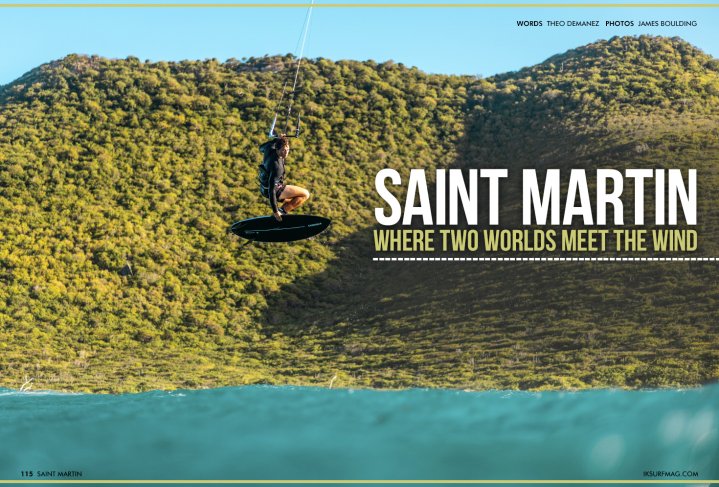
Saint Martin isn’t your typical kite destination. It’s an island where two cultures sit side by side, where conditions shift from flat water to reef breaks in a single session, and where the experience goes far beyond the time you spend on the water. From the steady trade winds of Orient Bay to the raw energy of the outer reefs, and from long French lunches to late nights on the Dutch side, it’s a place that delivers far more than just good kiting. For Theo Demanez, it’s home, and even after travelling the world, it’s still one of the most complete destinations he knows.
Saint Martin isn’t just another Caribbean kite destination. It’s a place where cultures collide, conditions shift from one session to the next, and the overall experience goes far beyond time on the water. One minute you’re cruising across turquoise flat water, the next you’re lining up clean lines on a reef, and by the evening you’re choosing between a quiet French dinner or a full-blown party night on the Dutch side.
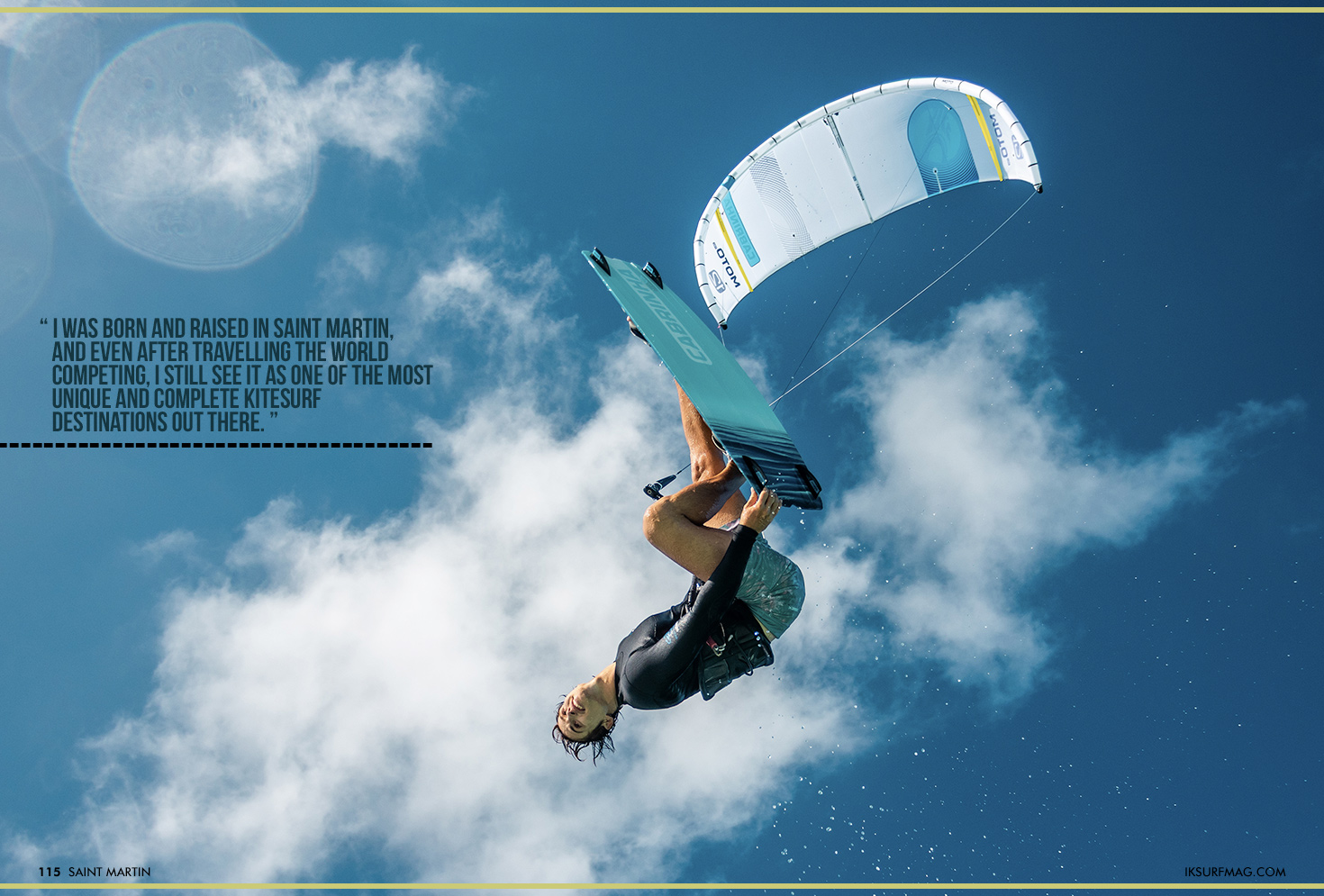
For Theo Demanez, this isn’t a destination you discover; it’s home. Born and raised on the island, and having travelled the world competing, he still sees Saint Martin as one of the most best kitesurfing destinations out there. Not just because of the wind or the variety of spots, but because of everything that surrounds it.

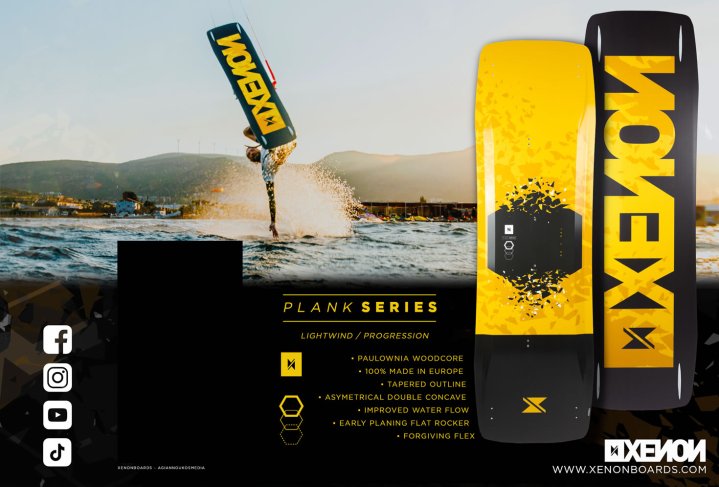
“I was born and raised in Saint Martin, and even after travelling the world competing, I still see it as one of the most unique and best kitesurfing destinations out there.”
Two Sides, One Island
Saint Martin might be small on the map, but its identity is anything but simple. The island is split into two distinct parts, the French side and the Dutch side, also known as Sint Maarten. You can cross from one to the other in a matter of minutes, but the change in atmosphere is immediate.
The French side is defined by a slower pace. Life here leans towards nature, good food, and a more relaxed rhythm. It’s the kind of place where time stretches out, where long lunches turn into evenings, and where the focus is on enjoying the moment rather than rushing through it.
On the Dutch side, things shift in the opposite direction. It’s livelier, more built up, and carries an international energy. Beach clubs, casinos, and nightlife create a constant sense of movement. It’s where people go when the sun goes down and the day doesn’t feel like it’s finished yet.
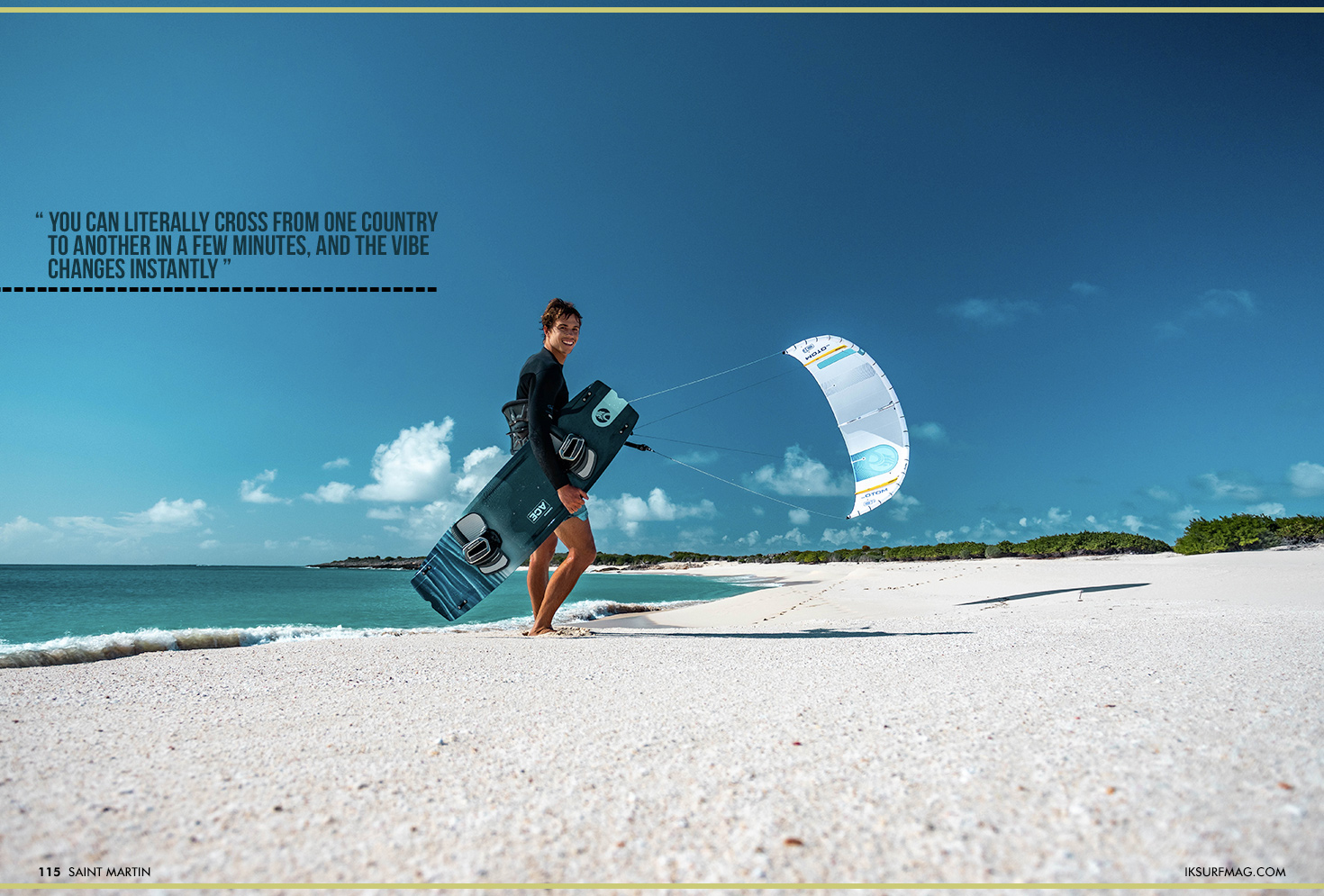
This contrast is what gives Saint Martin its depth. You don’t have to choose between a quiet escape and a more dynamic trip, both exist side by side, and moving between them is effortless.

“You can literally cross from one country to another in a few minutes, and the vibe changes instantly.”
Kite Spots for Every Style
From a kitesurfing perspective, that same diversity carries through into the conditions. The island offers a range of spots that work across different wind directions and riding styles, making it suitable for a wide variety of riders.
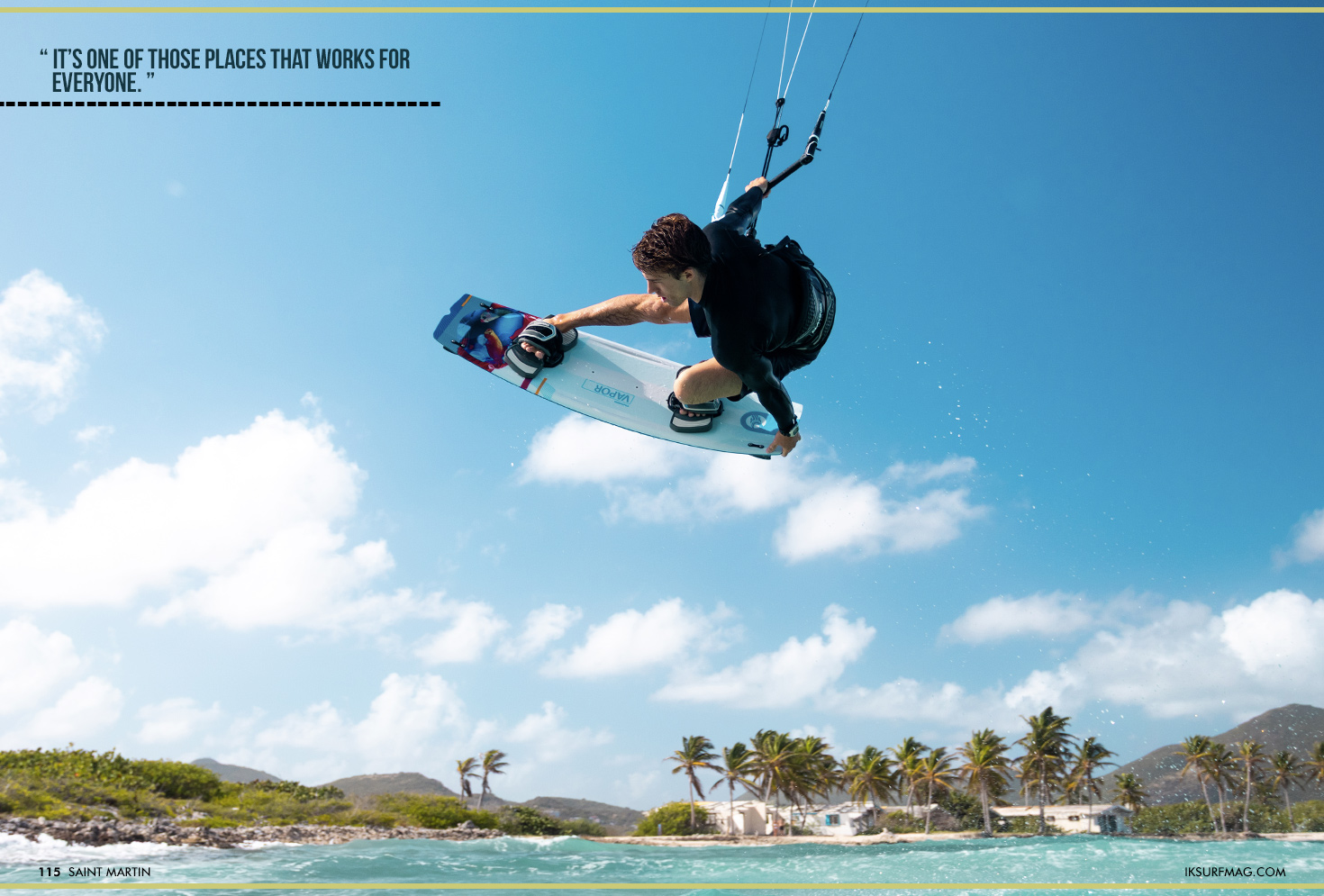
Orient Bay, The Heart of the Scene
Orient Bay is the main kitesurfing hub on the island, and for most riders, it’s the starting point. A wide, open bay with turquoise water and a sandy bottom, it offers consistent trade winds blowing side onshore, creating reliable and accessible conditions.
What makes it stand out is how adaptable it is. Beginners can stay closer to shore, where the water is flatter and more forgiving, making it an ideal place to learn and build confidence. At the same time, more experienced riders can push further out towards the reef, where the waves start to form.
The setting adds to the appeal. Orient Bay isn’t just a spot; it’s a full-on beach village. Restaurants, bars, and kite schools line the shore, creating a space where everything is within reach. You can rig, ride, eat, and relax without ever leaving the area.
“It’s one of those places that works for everyone.”
Observatoire, Raw and Rewarding
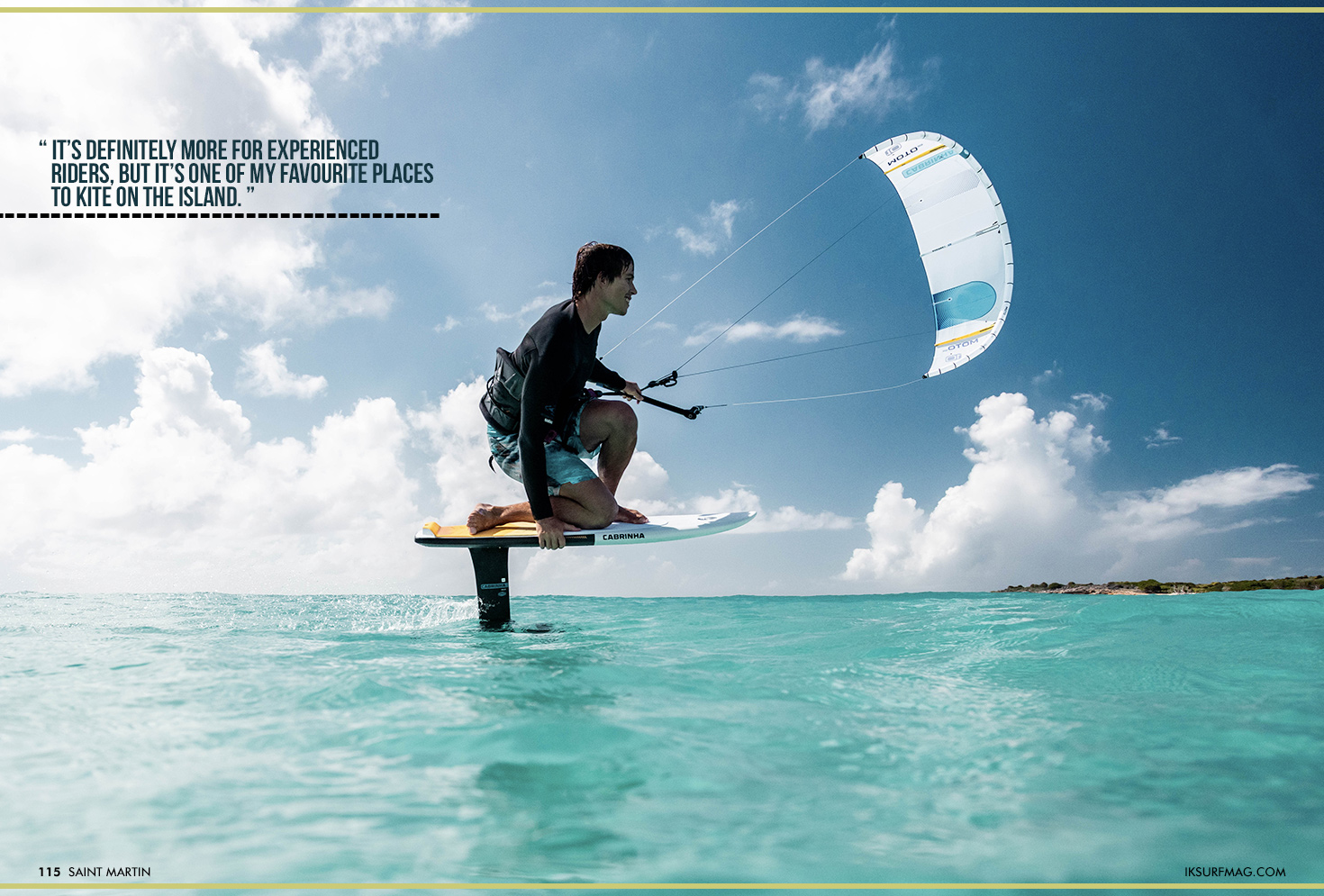
For riders looking to step away from the main scene, Observatoire offers something more exposed and less predictable. It’s a spot that leans heavily towards wave riding, and when the swell lines up, it delivers a completely different experience.
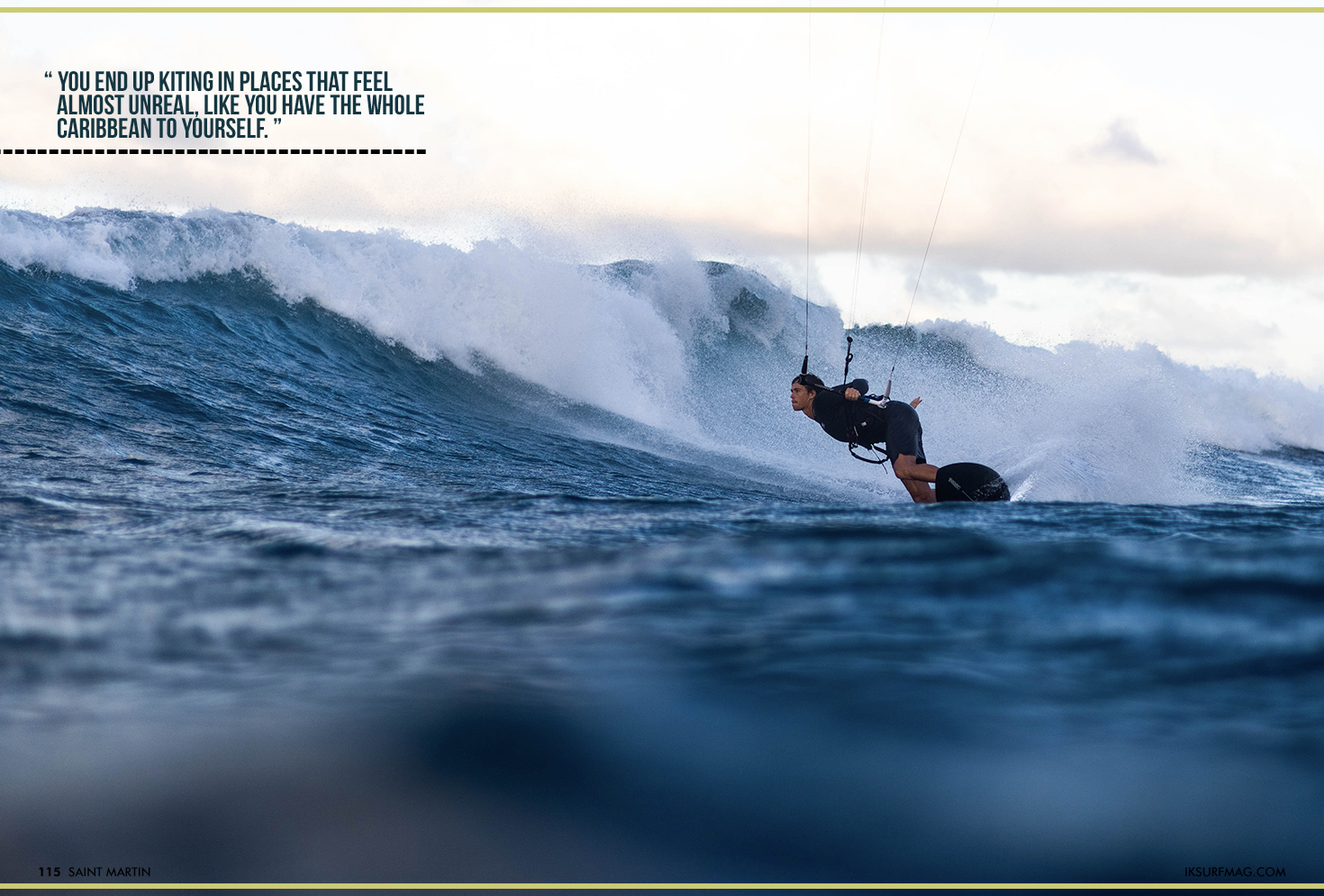
The concept is simple: launch from the shore and head out to the reef, where the waves break cleanly across the outside section. When it’s working, the rides are long and flowing, with space to draw proper lines.
It’s not a place for beginners. The conditions require confidence and awareness, and the launch demands a more considered approach. But for those with the ability, it’s one of the most rewarding places to ride on the island.
“It’s definitely more for experienced riders, but it’s one of my favourite places to kite on the island.”
Beyond the Island
One of Saint Martin’s biggest advantages isn’t just what’s on the island itself, but what surrounds it. Positioned in the heart of the Caribbean, it sits close to a number of other islands, including Saint Barthélemy and Anguilla, each offering its own unique conditions.
Through organised excursions, particularly with operators like Wind-Adventures, it’s possible to access more remote locations. These trips open the door to small islands, untouched beaches, and clear lagoons where there are often no other riders around.
These sessions shift the experience again. Away from the main beaches, the scale of the Caribbean becomes more apparent, and the sense of space changes completely. It’s no longer just about riding a spot, it’s about exploring a region.
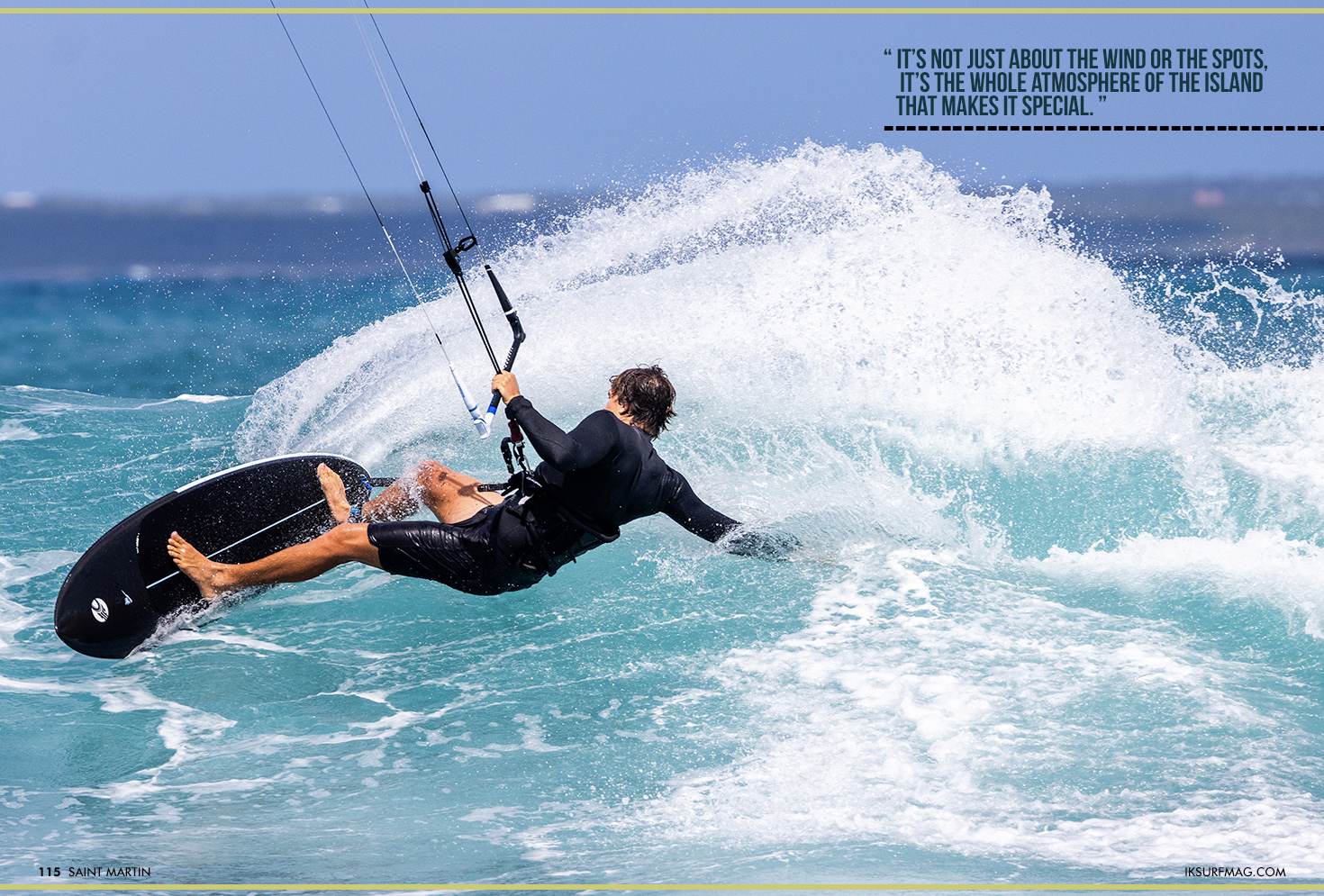
“You end up kiting in places that feel almost unreal, like you have the whole Caribbean to yourself.”

Wind and Conditions
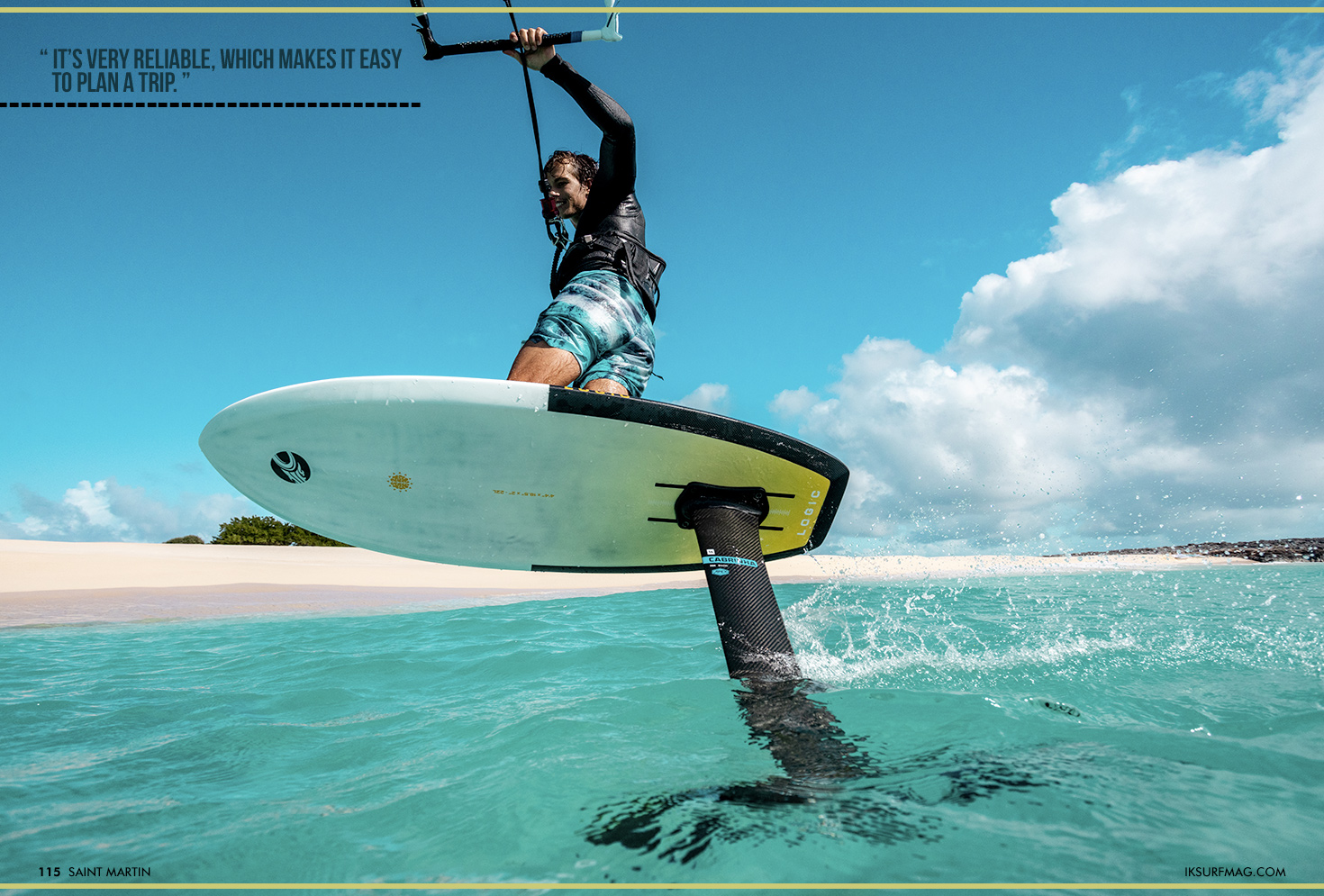
The reliability of the wind is one of the key reasons Saint Martin works so well as a destination. The trade winds typically run from November through July, with December and January often delivering the most consistent conditions.
On stronger days, the wind can blow steadily throughout the day, giving you plenty of time to get on the water. Even outside of peak wind season, there is usually enough breeze to get on the water, particularly if you can ride a foil.
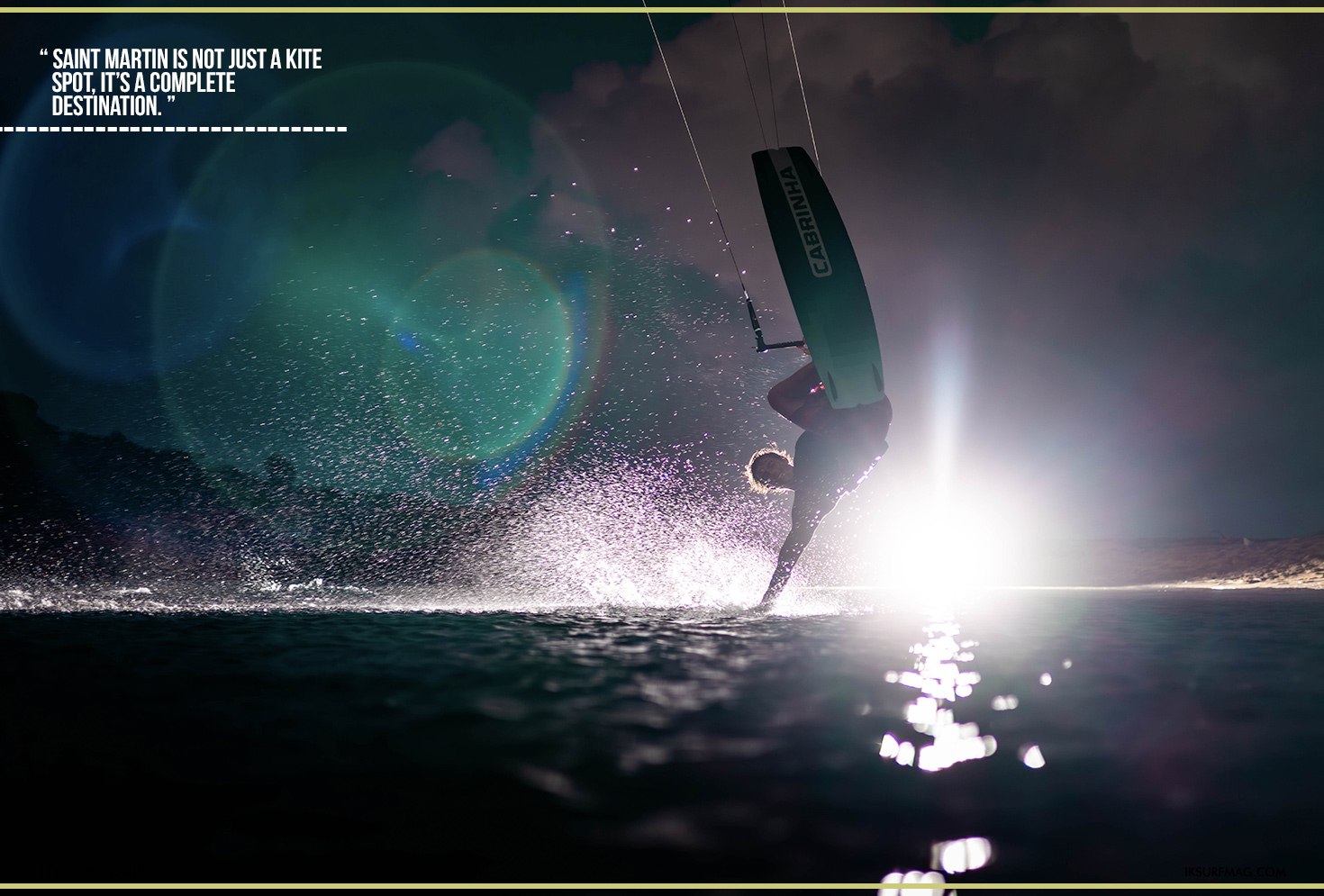
That flexibility is important. Whether riding a twintip, surfboard, foil, or wing, there is almost always a way to make the most of the conditions. Instead of waiting for perfect days, riders can adjust and keep progressing. It’s definitely the kind of place where you want to pack all your toys so you can make the most of whatever the conditions throw at you.
“It’s very reliable, which makes it easy to plan a trip.”
A Growing Wing Scene
While kitesurfing remains central to Saint Martin’s identity, the island is also seeing steady growth in wingfoiling. The same conditions that make it ideal for kiting naturally support winging as well.
Steady wind, warm water, and a combination of flat and wave spots create an environment where both beginners and experienced riders can progress. Orient Bay offers a safe and accessible place to learn, while other areas provide opportunities to ride waves and push further.
This crossover between disciplines adds another layer to the destination. It’s no longer just about one way of riding, but about having options depending on the day.
“It’s a great place to learn but also to progress quickly.”
More Than Just Kiting
What sets Saint Martin apart isn’t just the time spent on the water, it’s everything that comes with it.
The island is known as the culinary capital of the Caribbean, and that reputation is well deserved. The quality and variety of food is unusually high, with a mix of local Caribbean flavours and strong French influence shaping the dining scene.
After a long day riding, it’s incredible to be able to eat some of the finest food you will ever experience. There aren’t many places in the world like that; the incredible food and atmosphere become part of the overall experience. It’s not just about refuelling, it’s about entertaining your taste buds as much as you’ve been entertaining yourself on the water.
Beyond food, there’s a wide range of activities. Hiking routes lead to stunning viewpoints across the island, offering a different perspective on the landscape. Diving opens up another side of the ocean, while quieter beaches provide space to step away from the main spots.
When it comes to nightlife, the Dutch side is where things come alive. It’s energetic, international, and always moving. The French side, by contrast, remains quieter, better suited to slower evenings and a more relaxed pace.
“It’s not just about the wind or the spots, it’s the whole atmosphere of the island that makes it special.”
Getting There and Getting Around
Accessibility is another factor that works in Saint Martin’s favour. Compared to many Caribbean destinations, it’s relatively straightforward to reach.
The island is served by two airports. Princess Juliana International Airport on the Dutch side handles most international flights, while Grand Case Airport on the French side connects to regional destinations.
There are direct flights from major cities in the United States and Canada, and from Europe, there are regular connections, particularly from Paris, as well as routes through Amsterdam.
Once on the island, distances are short, and moving between different areas is quick. This makes it easy to explore multiple spots, switch between the French and Dutch sides, and experience different conditions without spending too long in a vehicle, speaking of which, if you do decide to visit, be sure to rent a car so you can make the most of the place and get to the best spots for kiting and the best places to eat.
“Whether you’re coming from Europe or the Americas, it’s a very accessible destination.”
Why It Still Stands Out
For Theo Demanez, growing up in Saint Martin played a defining role in his development as a rider. Having access to flat water, chop, and waves within such a small area creates an environment that encourages progression.
Each session brings something slightly different, and that variety builds adaptability over time. Even after travelling and competing across the world, that same mix continues to stand out.
Saint Martin isn’t about chasing a single perfect condition. It’s about having options, reading the day, and making the most of whatever is on offer.
“Saint Martin is not just a kite spot, it’s a complete destination.”
And that’s ultimately what defines it. You might arrive for the wind, but it’s everything else, the lifestyle, the culture, and the range of experiences, that make you want to stay, and come back again and again.
By IKSURFMAG
